Gradient and Photo Print Umbrellas for Retail Brand Artwork
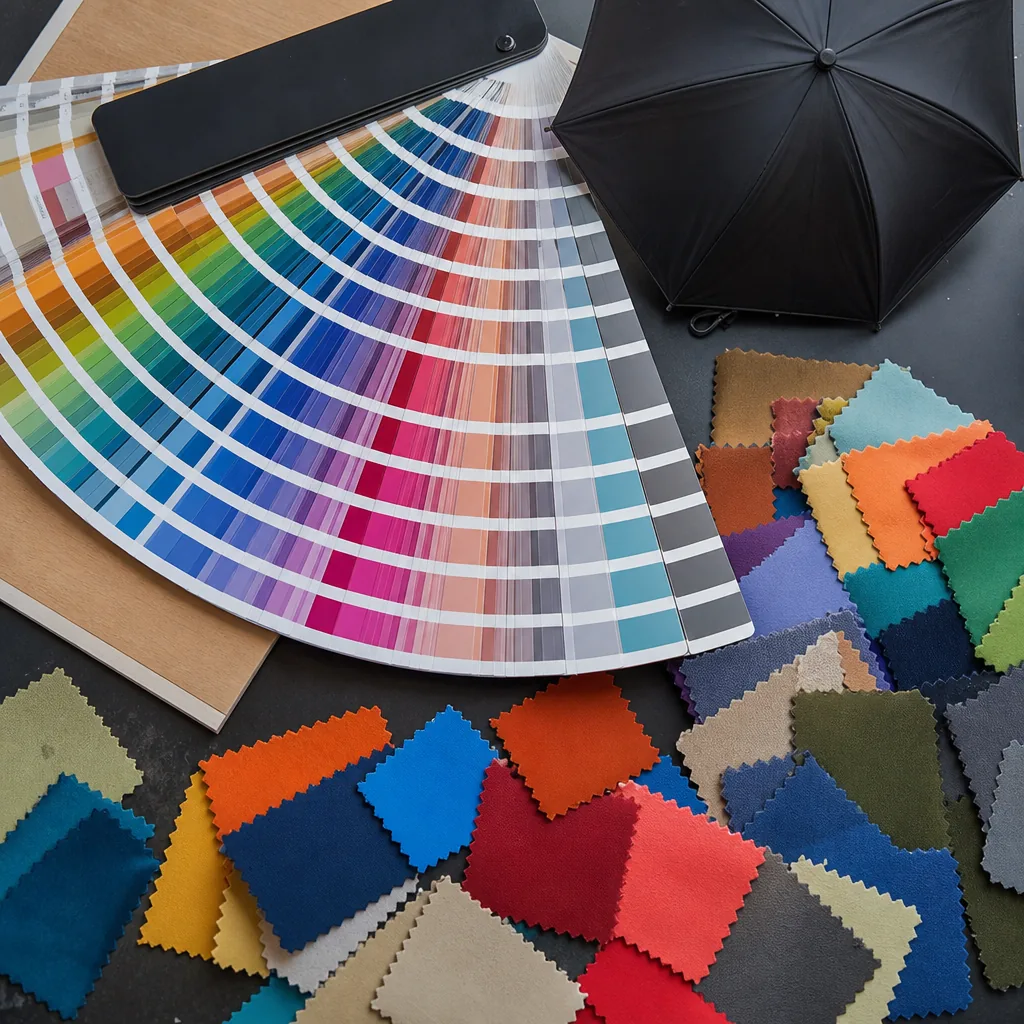
Retail artwork that looks perfect on a screen can drift, blur, or misalign once it is divided across umbrella panels, especially with gradients and photographic images. In our Songxia workshop, we see the real risks behind photo print umbrellas wholesale orders: fabric stretch, panel cutting tolerance, ink density, and rib-to-seam positioning all affect how sharp the finished canopy looks. Getting this right starts before bulk printing, with disciplined file setup, strike-off sampling, and line inspection.
When to Use Gradient or Photo Printing
Use gradient umbrella printing or photo print umbrellas wholesale when the umbrella itself is part of the retail story, not just a carrier for a logo. Museum shops, fashion capsules, destination retail, licensed character art, and seasonal drops all fit this category because the buyer is paying for image density, color transitions, and shelf impact. A simple 1-color or 2-color spot logo usually makes sense for golf programs, trade shows, and internal promotions, where the brand mark needs to read from 10 feet away and the decoration cost must stay low. Photo printing is different: it is chosen when the artwork has fine lines, faces, skies, textures, or layered gradients that would break apart in screen printing. In practice, digital print umbrellas are the better choice for retail umbrella artwork when the design has to look close to the approved file on a phone screen or in a lookbook, not like a simplified imprint.
The real tradeoff is setup versus visual coverage. Spot-color logo printing on pongee 190T or 210T canopy panels is cheaper because each color needs a screen, registration, and a simpler cutting plan; that works well for one logo on a 23" or 27" frame with limited artwork. Photo printing, especially full color umbrella branding, needs higher-resolution artwork, color management, and more careful panel matching, so the per-unit price is higher and the proofing cycle is longer. On the factory floor, I treat anything with soft gradients, skin tones, or photographic backgrounds as a digital job first, then check whether the canopy size gives enough printable area without distortion at the seams. A 21" compact umbrella with narrow panels is much less forgiving than a 30" golf canopy, which is why photo printing usually looks better on larger formats.
For seasonal campaigns and licensed artwork, the decision should follow the retail calendar and the sell-through target. If the design is tied to a movie release, city campaign, museum exhibit, or a fashion collab, the artwork often needs full color umbrella branding to preserve recognition and justify a higher ticket price. That is where photo print umbrellas wholesale makes sense, because buyers are evaluating presentation value, not just unit cost. Our standard practice is to confirm whether the canopy will be polyester pongee, POE, or PVC, because each material handles ink coverage, gloss, and color saturation differently. Gradient umbrella printing also works well for destination retail where the visual cue is atmosphere rather than a hard logo. If the design can be simplified into a few flat colors and still sell, use spot printing. If the image depends on realism, tonal shifts, or licensed detail, digital print umbrellas are the safer commercial choice despite the extra setup and proofing time.
Artwork Resolution and Panel Layout Rules
The first rule for retail umbrella artwork is to design at the real canopy size, not as a small square graphic stretched later. For photo print umbrellas wholesale, we usually ask for layered AI, PSD, or PDF files with embedded images at 150 to 300 dpi at final print size; a 23" 8K umbrella may need an open canopy diameter around 102 to 105 cm, while a 30" golf umbrella can exceed 130 cm. Low-resolution web images that look acceptable on a phone will fall apart on 190T or 210T pongee after sublimation, especially in skin tones, gradients, and product photography. CMYK files are safer for color expectation, but we still run a printed strike-off because fabric, coating, and heat pressure change the result. Gradient umbrella printing is particularly sensitive: banding appears when designers use compressed JPGs, narrow tonal ranges, or flat vector gradients without enough steps.
Panel layout must follow the umbrella structure. An 8K umbrella divides the canopy into eight triangular panels; a 16K umbrella uses sixteen narrower panels and gives a smoother round shape but creates more seam interruptions. Each panel needs bleed, usually 10 to 15 mm beyond the cut line, plus seam allowance where sewing will consume fabric. Critical logos, faces, QR codes, product shots, and horizon lines should stay away from rib lines and panel seams by at least 20 to 30 mm. Our standard practice at ZheBrella is to provide a dieline showing the rib position, center cap area, fabric grain direction, and safe zone before mass production. For digital print umbrellas, artwork should be split panel by panel, not simply dropped across a circle, because the printed fabric is cut as wedges and then sewn into a three-dimensional dome.
The common failures are easy to predict if the designer respects the ribs. A straight beach horizon crossing all panels may step up and down after sewing because every panel has cutting tolerance, fabric stretch, and seam tension; even with AQL 2.5 inspection, a 2 to 3 mm shift per seam can be visible. Faces placed near the panel edge can be cropped by stitching, handle alignment, or the top notch around the ferrule. Full color umbrella branding also needs attention to rib-line interruptions: a model’s eye, a retail slogan, or a product bottle should not land exactly over a steel or fiberglass rib shadow. For photo print umbrellas wholesale, I recommend approving a one-piece sample under daylight and indoor retail lighting before bulk production, especially when the order uses auto-open frames, 8K layouts, or high-contrast photographic backgrounds.
Fabric Choices for Full-Color Results
For photo print umbrellas wholesale, 190T and 210T pongee are the two fabrics I would actually shortlist first, because they behave differently on press and in the hand. 190T is lighter, slightly softer, and usually gives a clean surface for digital print umbrellas when the artwork has gradients, skin tones, or fine text. It is easier to keep the canopy flat during heat transfer or direct digital work, so small details stay sharper. 210T feels denser and a little more premium; the weave is tighter, which helps the canopy look fuller on shelf and gives better body under retail umbrella artwork. The tradeoff is that very dark or heavily saturated gradients can lose a little smoothness if the print file is weak or the fabric tension is inconsistent. For full color umbrella branding, I usually tell buyers to choose based on positioning first: 190T for value-driven promo programs, 210T for retail sets where hand feel and drape matter.
On gradient umbrella printing, the fabric shade and coating matter as much as the artwork file. White or light pongee gives the most predictable color match, while tinted fabrics will shift blues, reds, and skin tones unless the proofing is corrected for the exact roll lot. With photo print umbrellas wholesale orders, I always want a strike-off on the actual panel size, because a logo that looks fine on a flat swatch can band or darken once it wraps over the rib arcs. That is where 210T often wins on retail umbrella artwork: it gives a cleaner visual field and less show-through from the inside. But if the buyer wants a lighter carry weight or a lower landed cost, 190T remains the practical choice. The print resolution is not only about DPI; it is about how much ink the weave can hold before edges feather.
Coated UPF 50+ fabrics and black-out layers change the appearance enough that they should never be approved off a standard white-fabric proof. A UV coating can mute saturation and add a slight sheen, which is fine for outdoor retail use but can flatten subtle tonal transitions in digital print umbrellas. Black-out lining is even trickier: it blocks light beautifully, but it can make outside colors look deeper and inside colors irrelevant, so the buyer needs to sample both daylight and backlit conditions. For full color umbrella branding, that means separate approval for the exact canopy stack-up, not just the artwork file. On photo print umbrellas wholesale runs, I would sample the final panel construction, stitch type, and coating batch before production release. Otherwise the same artwork can look like two different products when one version is sold as a gift item and the other as a premium retail umbrella.
Color Consistency Across Bulk Production
Color consistency starts before bulk cutting, not at final inspection. For digital print umbrellas, we first lock a calibrated print proof on the actual canopy fabric, usually 190T or 210T pongee, because the same gradient file looks different on polyester with PU coating than it does on uncoated sample cloth. For photo print umbrellas wholesale orders, I do not approve production from a PDF on screen; we need a physical strike-off under D65 light and, when possible, a comparison under store lighting around 4000K. Gradient umbrella printing is especially unforgiving because a 2% ink drift can show as a visible band across an 8K canopy. Our standard practice at ZheBrella is to keep the approved proof, ink batch number, fabric roll number, and print machine settings together in the job traveler so the printing line cannot “adjust by eye” halfway through the order.
When the base fabric color is part of the retail umbrella artwork, lab dips are necessary before printing. A pale blue ground, beige canopy, or fashion-season custom tone will shift the printed photo and can make skin tones, logos, and gradient fades look dirty. We normally request two to three lab dip options and measure them by spectrophotometer, but I still insist on visual approval because umbrella panels curve after assembly and reflect light differently from flat fabric. Tolerance between panels matters as much as the master color. On a 23-inch 8-rib umbrella, each triangular panel must match its neighbor at the seam; otherwise a sunset gradient or full color umbrella branding layout will look like eight separate prints. For large runs, we control panel orientation during cutting, mark print direction, and avoid mixing panels from different print batches on one frame.
Inspection has to catch print defects before the umbrella is sewn shut. At incoming printed-fabric inspection, we check registration on panel edges, logo position against the seam allowance, color banding in gradient zones, ink bleeding around dark artwork, and pinholes or white scratches caused by poor fabric feeding. During sewing, line QC checks that the image continues correctly across adjacent panels and that the top notch, tips, and strap position do not cut through key artwork. Final inspection follows AQL 2.5 sampling, but for photo print umbrellas wholesale projects with retail packaging, I add a focused color review across multiple cartons because carton-to-carton shade drift is a common complaint. We open umbrellas fully under neutral light, compare them with the approved proof, and reject pieces with obvious panel mismatch, muddy photo detail, or registration errors visible at normal viewing distance.
Production Planning for Retail Launches
For a retail launch, the first decision is not the umbrella size or handle; it is the artwork lock date. Photo-real canopies expose every weak file, so photo print umbrellas wholesale programs need artwork frozen earlier than a standard one-color logo job. For a normal 23" auto-open straight umbrella with a small screen-printed logo, we can often move after a 3 to 5 day digital proof. For gradient umbrella printing or full-panel photo layouts, plan 7 to 10 days for file checking, strike-off printing, color adjustment, and buyer approval. Typical MOQ is 500 pieces per SKU for digital print umbrellas, but 1,000 pieces gives better fabric yield and steadier unit cost, especially on 190T or 210T pongee. If the design has edge-to-edge retail umbrella artwork across 8 panels, we recommend locking both Pantone references and CMYK print targets before sampling, because changing the sky, skin tone, or gradient after cutting wastes fabric and delays sewing.
Bulk lead time depends on print method and frame complexity. A simple 21" compact manual umbrella with digital transfer can run in about 25 to 35 days after sample approval, while a 23" or 27" auto-open straight model with fiberglass ribs, UV coating, and full color umbrella branding usually needs 35 to 45 days. A double-canopy vented windproof model, 8K or 10K, adds sewing steps and inspection points, so we normally plan 45 to 55 days before shipment. Photo print umbrellas wholesale orders should also include a production pre-sample from bulk fabric, not only a lab dip or PDF proof. Our standard practice at ZheBrella is to check panel matching at the seams, print density after water-repellent treatment, opening force, rib alignment, and AQL 2.5 final inspection before cartons are closed. For launch calendars, I tell buyers to approve samples before placing retail advertising, not after.
Carton planning should be settled before production starts, because retail packaging changes carton size, loading quantity, and DDP landed cost. A 23" straight umbrella often packs 24 pieces per export carton, while compact 21" auto-open-close umbrellas may pack 36 or 48 pieces depending on sleeve, hangtag, and individual polybag thickness. If the order uses gift boxes, belly bands, barcode stickers, or master carton marks for retail DC routing, confirm these files with the artwork, not at the end. For FOB Ningbo or Shanghai, buyers mainly need carton dimensions, gross weight, HS code, and ready date for forwarder booking. For DDP to the U.S. or Europe, carton cube matters more because umbrellas are long, low-density cargo; ocean freight may beat air by a large margin on 5,000 pieces. I also recommend adding 2% spare retail sleeves and labels, since damaged packaging causes more warehouse chargebacks than failed canopy fabric.
Frequently Asked Questions
Can one photo cover the entire umbrella canopy?
Yes, but the image must be separated by panel and adjusted for seams, ribs, and canopy curvature. A pre-production sample is essential before approving bulk production.
Do photo print umbrellas cost more than screen printed logo umbrellas?
Usually yes, because full-color digital printing needs more file setup, proofing, and print control. The final cost depends on canopy size, fabric, print coverage, MOQ, and packing requirements.
What artwork resolution is typically required for photo print umbrellas?
Most factories request at least 300 dpi at final print size, with vector logos supplied as AI, EPS, or PDF when possible. For full-panel photo graphics, the file should be large enough to avoid soft edges after panel distortion and seam placement are added.
How many sample rounds are normal for retail umbrella artwork approval?
A standard program usually goes through 1 round of digital proofing and 1 physical pre-production sample. Complex gradients or photo composites may need a second adjustment sample if seam alignment or color density needs correction.
What inspection points matter most for gradient umbrella printing?
Buyers usually check panel-to-panel color consistency, seam registration, and whether the fade transitions band or shift under different light. For retail brands, factories often confirm Pantone targets, print sharpness, and any white-edge visibility at panel joins.
Looking to Launch Your Custom Umbrella Line?
ZheBrella is a Zhejiang-based OEM/ODM umbrella manufacturer with 17 years of export experience. Free design, low MOQ from 100 pieces, windproof construction, full-color print.
Get Free Quote Now »People Also Search For
Related Articles
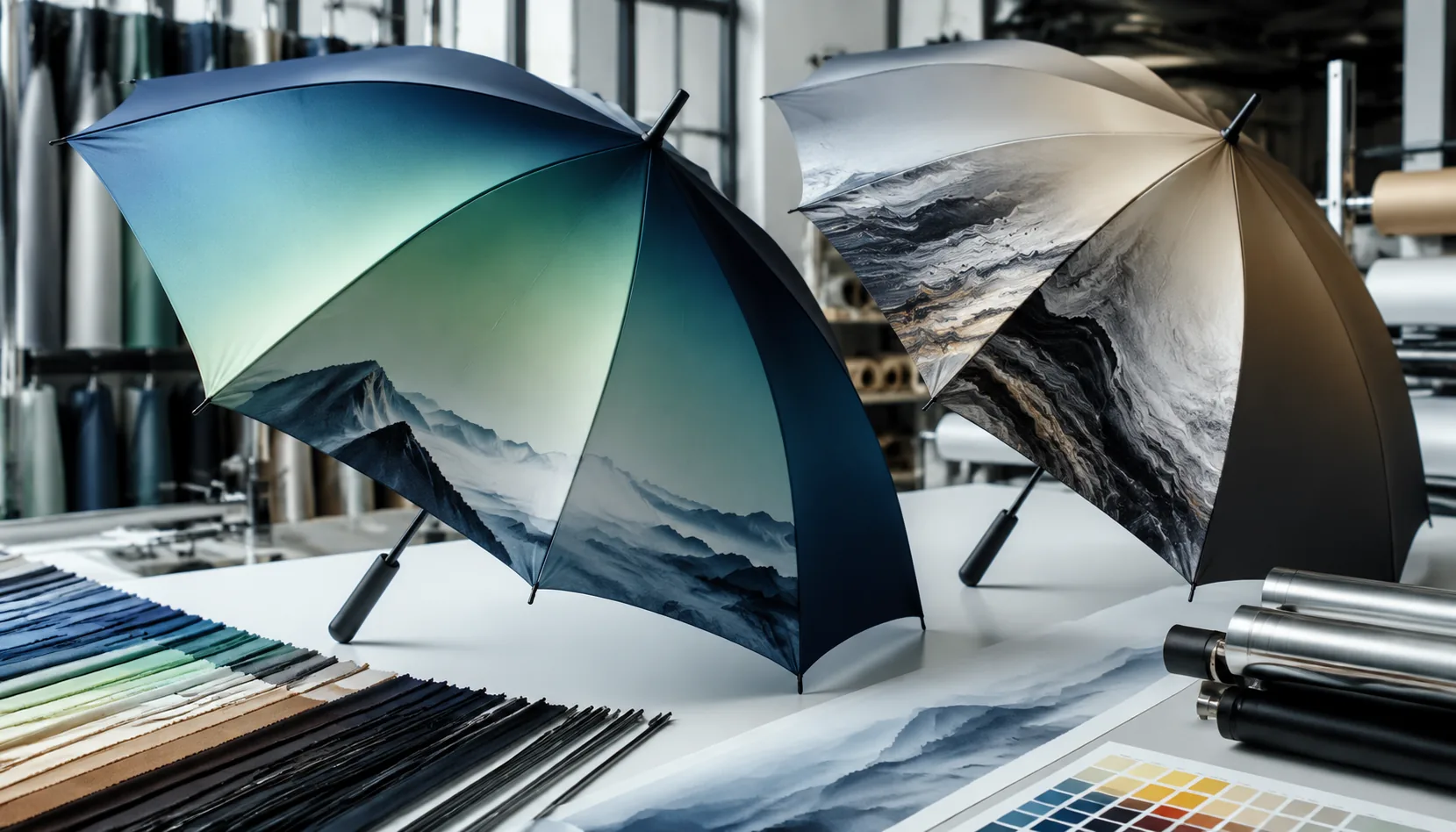
Gradient and Photographic Umbrella Prints for Brand Campaigns
Plan photo, gradient, and all-over digital umbrella prints with file specs, 190T/210T fabric choices, panel seams, lead ...
Read More »
Gradient and Photo Print Umbrellas for Retail Brand Stories
Plan photographic and gradient canopy art with 210T pongee, digital print sampling, panel seams, and lead times that fit...
Read More »
Gradient and Photo-Print Umbrellas for Brand Campaigns
Specify gradient and photo-print umbrellas with realistic color control, fabric choices, sample approvals, and productio...
Read More »