Gradient and Photo-Print Umbrellas for Brand Campaigns
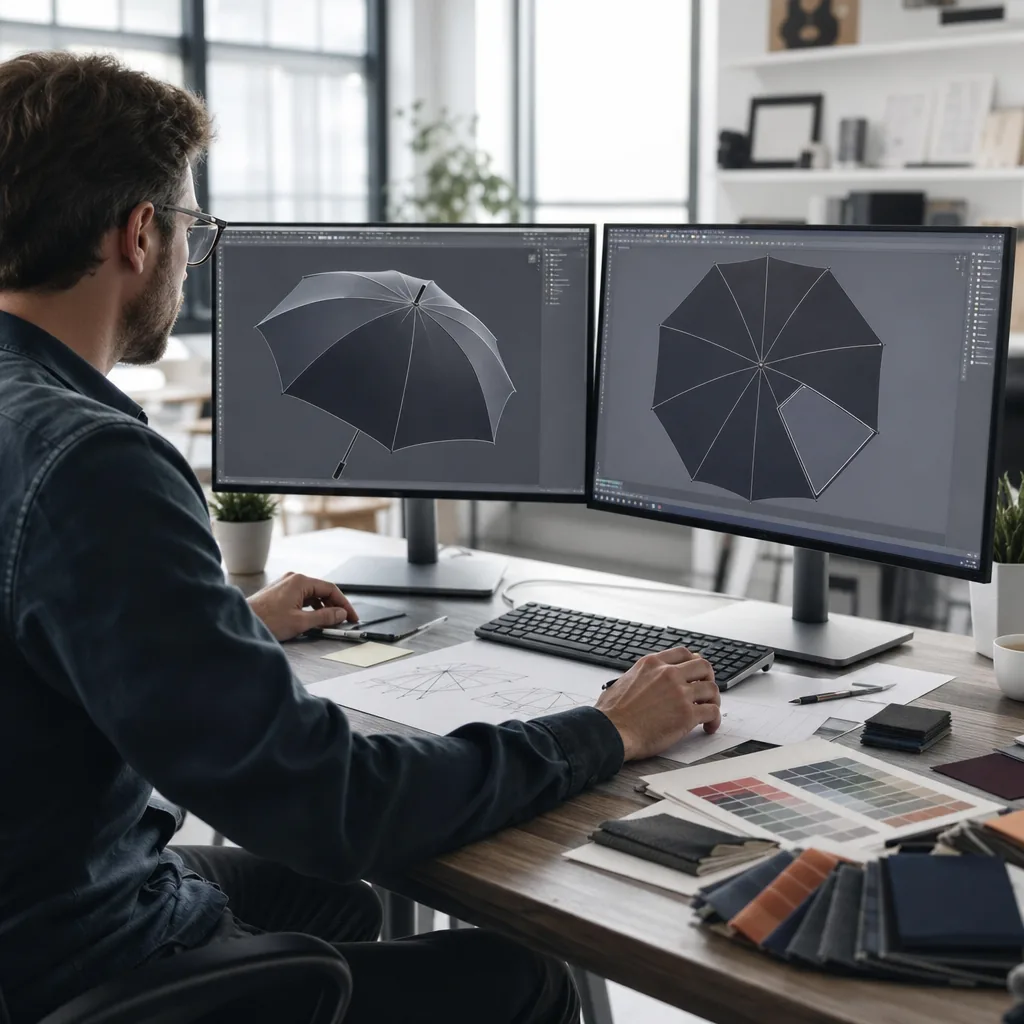
Campaign buyers often approve a vivid mockup, then lose time when the real canopy prints darker, banding appears in the gradient, or the fabric choice changes handfeel and lead time. On our Songxia factory floor, photo print umbrellas are controlled through artwork separation, fabric testing, strike-off samples, and panel matching before bulk cutting, because a clean campaign result depends as much on production limits as on the design file.
Decide When Photo Printing Fits the Campaign
Photo print umbrellas make sense when the umbrella is part of the product story, not just a logo carrier. I recommend them for event launches where the canopy needs to show a skyline, beverage splash, game character, car render, or fashion campaign image across multiple panels. They also work well for destination retail and museum stores: city maps, botanical illustrations, landmark photography, exhibition artwork, and seasonal gift-shop collections can justify a higher unit cost because the umbrella feels like merchandise, not a giveaway. For limited-edition merchandise, a 23" straight umbrella with 8K fiberglass ribs or a 21" auto-open-close folding model can carry the same campaign visual as posters, tote bags, and packaging, which gives buyers a cleaner retail set. Simple trade-show handouts usually do not need this treatment; a one-color screen-printed logo on 190T pongee is cheaper, faster, and less risky.
The file requirement is the first serious filter. A standard logo placement can often run from vector artwork at 300 dpi equivalent, but gradient umbrella printing and photographic layouts need much cleaner source files because each canopy panel is cut, sewn, and viewed at arm’s length in daylight. For a digital printed umbrella canopy, we normally ask for layered AI, PSD, or PDF files with embedded images at 150–300 dpi at final print size, plus Pantone references if brand color matching matters. A 23" 8K umbrella has eight triangular panels, so faces, text, and horizon lines must be positioned away from seam allowances and panel tips. If the buyer sends a 1200-pixel social media image and expects a sharp full color umbrella print, the result will look soft, especially on light 190T or 210T pongee.
Campaign umbrella branding also needs the right print process. Sublimation is usually best for all-over photo and gradient work on polyester pongee because the color bonds into the fabric and keeps the hand feel soft; heat transfer can handle smaller high-color graphics but may feel heavier and can crack if overused near fold lines. Screen printing is still the workhorse for bold logos, but it is not the right tool for smooth sunsets, watercolor fades, or photographic detail. For retail programs, I would pair photo artwork with a Teflon-coated 210T pongee canopy, fiberglass ribs, and AQL 2.5 inspection because printing defects are more visible on full-panel art than on a corner logo. MOQ and lead time also move: sample proofing often takes 7–10 days, and bulk production commonly needs 25–35 days after artwork approval.
Prepare Artwork for Curved Panel Layouts
Artwork for curved umbrella panels has to be built on the actual rib count, not stretched from a flat circle at the last minute. For photo print umbrellas, we ask for 300 dpi at final print size for close-view retail work, and no less than 150 dpi for event giveaways where viewing distance is 3–6 feet. A 23" 8K umbrella usually has eight wedge panels, each with its own grain direction, seam allowance, and arc distortion; a 30" golf umbrella may use 8K, 10K, or 16K construction depending on the frame. Our standard practice at ZheBrella is to send AI/PDF panel templates with cut line, safe image zone, 10–15 mm bleed, and 8–12 mm seam allowance marked separately, because sewing eats more artwork than buyers expect.
Image continuity is the hard part in gradient umbrella printing and full photographic layouts. A digital printed umbrella canopy is assembled panel by panel, so a skyline, face, product bottle, or logo crossing a seam must be split with compensation for fabric stretch, hemming, and operator tolerance. On 8K canopies, each panel is wide enough to carry a strong hero image, but rib lines are more visually obvious; on 16K canopies, the curve is smoother, yet there are twice as many seams interrupting the artwork. I prefer putting gradients, textures, clouds, water, or abstract brand color fields across seams, while keeping eyes, faces, product names, QR codes, and campaign claims inside one panel whenever possible.
Strong subject matter should stay away from rib lines, top caps, tips, and vent overlap areas because those zones move, fold, or get covered after assembly. For campaign umbrella branding, keep critical text at least 25–35 mm from panel edges and 50–70 mm below the top notch, especially on double-canopy vented windproof umbrellas where the upper layer can hide part of the image. A full color umbrella print also needs test positioning before bulk cutting: we normally strike one printed canopy, assemble it on the intended 8K or 16K frame, then check alignment under tension. What looks perfect on a flat proof can shift 3–5 mm after sewing and mounting, which is acceptable for gradients but very noticeable on faces and straight architectural lines.
Select Fabric, Coating, and Print Process
For smooth gradient umbrella printing, I normally push buyers toward 210T pongee before discussing artwork. The yarn is finer and the weave is tighter than 190T, so transitions from navy to cyan or peach to cream look less banded after heat transfer or digital printing. 190T pongee is still a solid campaign fabric, especially for 23" and 27" promotional umbrellas where budget matters, but it has a slightly more open texture that can break up soft shadows and skin tones. On a digital printed umbrella canopy, that difference shows up most around faces, water, sky, and product photography. If the design is mostly logos, blocks of Pantone color, or a simple two-step fade, 190T can pass AQL 2.5 visual inspection without issue. For premium retail or photo print umbrellas, 210T is the safer base fabric because it holds finer detail and gives a cleaner hand feel after cutting and sewing.
Coating choice should be confirmed before final color approval, not after sampling. A silver UV back coating, black glue coating, or UPF 50+ treatment improves sun protection, but it can change the way the printed face reads under daylight. Darker UV coatings may cool the color temperature, while some water-repellent or Teflon-style finishes reduce ink absorption and make dense areas look slightly lighter. This is why our standard practice at ZheBrella is to print a strike-off on the actual bulk fabric, with the same coating, before approving campaign umbrella branding colors. A lab dip alone is not enough for photo work. If the umbrella uses 190T or 210T pongee with a white front face and UV coating on the reverse, we check both wet and dry rubbing, seam needle marks, and color shift after canopy curing. For outdoor events, UPF 50+ can be worth the trade-off, but the artwork file may need 5–10% density adjustment.
Digital printing is preferred when the buyer wants a full color umbrella print with photography, gradients, small text, or multiple campaign visuals across different panels. Screen printing is faster and cheaper for one- to four-color logos, especially on 8K or 10K straight umbrellas with repeat orders above 1,000 pieces, but every screen adds setup cost and registration risk. For photo print umbrellas, digital transfer or direct digital printing avoids the hard edges and halftone compromises that screen printing creates on faces, buildings, and lifestyle images. Sublimation works best on polyester pongee and produces strong wash and rub resistance, but the artwork needs proper ICC profiling and enough bleed at the panel edges because sewing eats 8–12 mm. For small-batch launches, influencer kits, museum shops, and event merchandise, digital printing also lets each PO run different images without rebuilding screens, making it the practical choice for complex campaign artwork.
Approve Color With Physical Samples
Approve color on fabric, not on a monitor, because umbrella canopies behave like moving light boxes. A PDF proof may look perfect on a calibrated screen, then shift once printed on 190T pongee, 210T pongee, POE, or PVC because each surface has different sheen, ink holdout, and translucency. For photo print umbrellas, I always ask buyers to approve either a strike-off panel or a full pre-production sample before bulk cutting. The strike-off should use the same canopy fabric, coating, print method, and panel shape planned for production; a flat paper proof is not a substitute. Backlighting matters too: a digital printed umbrella canopy can look warmer when held against daylight and darker when viewed under retail LED lighting. Wet testing also changes perception, especially on dark gradients and skin tones, because water beads, Teflon finish, and fabric tension can deepen contrast by one or two visual steps.
Tolerance language should separate brand anchors from photographic areas. For campaign umbrella branding, specify that critical logo colors must match approved Pantone or LAB targets within an agreed tolerance, commonly Delta E 3.0 to 4.0 on fabric, while gradient transitions and photo areas are approved visually against the signed sample. Gradients are especially sensitive because small banding, panel-to-panel angle change, and seam interruption become obvious on 8K or 10K canopies. I recommend defining acceptable gradient umbrella printing as “smooth visual transition at 1 meter viewing distance, no hard banding, no abrupt hue break at seams,” rather than pretending every pixel can match a digital file. For skin tones, approve a printed face area at actual scale; faces that look healthy on coated pongee can turn red, gray, or overly yellow after heat transfer if the ICC profile is wrong.
For a full color umbrella print, the approval sample should also confirm registration across panels, logo placement from rib tips, and the look of the print on both open and closed umbrellas. A photo that wraps across 8 panels will never read like a flat billboard; ribs, seams, and canopy curvature distort straight lines, faces, and product shots. Our standard practice at ZheBrella is to mark one approved strike-off as the color master, keep one in QC, and send one to the buyer or distributor for sign-off before mass printing. Bulk inspection can then use AQL 2.5 with practical defect definitions: obvious color drift from the master, wrong logo color, visible banding, print contamination, or mismatched panels are rejectable; minor shade variation caused by fabric batch and heat press position may be acceptable if it stays within the signed tolerance. This avoids arguments after 3,000 or 10,000 pieces are already sewn, packed, and booked for FOB or DDP shipment.
Plan Bulk Production and Inspection
Lock the production calendar before you approve artwork, because gradient and photo print umbrellas have less room for last-minute correction than spot-color logo jobs. For most campaign umbrella branding programs, practical MOQ starts around 500 pieces per design for digital print and 1,000 pieces when the fabric, handle color, sleeve, or carton mark is customized. A strike-off or pre-production sample normally takes 5–10 days after we receive vector logos, high-resolution images, Pantone targets, and panel layout approval. For a full color umbrella print, I always ask buyers to approve the sample under daylight and office LED light, because some blues, reds, and skin tones shift visibly between screens, paper proofs, and coated pongee.
Bulk lead time is usually 30–45 days after sample approval and deposit, but the real schedule depends on print method, frame choice, and packing complexity. A 23 inch 8K auto-open umbrella with 190T pongee and a digital printed umbrella canopy moves faster than a 30 inch golf umbrella with 16K fiberglass ribs, double-canopy venting, UPF 50+ coating, and individual retail boxes. FOB Ningbo or Shanghai works when your forwarder already controls the vessel or air booking; DDP is safer for fixed event deadlines because duty, customs clearance, and last-mile delivery are built into one timetable. For North America and Europe events, I advise adding 7–14 buffer days after the quoted arrival date, especially before trade shows, sports tournaments, and rainy-season launches.
Inspection must focus on print consistency, not only frame function. Our standard practice at ZheBrella is AQL 2.5 for major defects, checking banding in gradient umbrella printing, color shift against the approved sample, panel-to-panel mismatch at the seam, ghosting, ink spots, white pinholes, blurred photo edges, and upside-down panel placement. Function tests should include auto-open firing force, runner lock, tip alignment, rib riveting, shaft straightness, and open-close cycling; on photo print umbrellas, poor tension can distort faces or product images even when the print itself is correct. Final cartons should be checked for SKU labels, barcode readability, inner polybag warnings, sleeve matching, and export carton strength before release, because a perfect canopy is still a failed order if the event team cannot identify and distribute stock quickly.
Frequently Asked Questions
Can a photographic image wrap perfectly around an umbrella canopy?
It can be planned to look continuous, but seams, ribs, and the peak cap interrupt the image. The safest approach is to place key subjects inside panels and use gradients or background textures across joins.
Are photo-print umbrellas suitable for windproof frames?
Yes, photo printing can be used on fiberglass-rib and double-canopy windproof umbrellas. For vented canopies, the artwork should account for the overlapping upper layer so important image details are not hidden.
What artwork files are needed for gradient or photo-print umbrella canopies?
Provide AI, PDF, PSD, or TIFF files at full canopy scale when possible, with images at 150–300 dpi. For panel-based umbrellas, artwork should include bleed beyond each panel seam to avoid white gaps after cutting and sewing.
Can photo-print umbrellas match exact brand colors?
Digital printing can get close to Pantone targets, but exact matching depends on fabric, coating, and image colors. Most factories recommend a printed strike-off or pre-production sample before bulk production, especially for gradients and skin tones.
What is the typical MOQ and lead time for full-color campaign umbrellas?
A practical MOQ is often 500–1,000 pieces per design for digital printed umbrellas. Sampling usually takes 7–12 days after artwork approval, and bulk production is commonly 25–40 days depending on order quantity and canopy complexity.
Looking to Launch Your Custom Umbrella Line?
ZheBrella is a Zhejiang-based OEM/ODM umbrella manufacturer with 17 years of export experience. Free design, low MOQ from 100 pieces, windproof construction, full-color print.
Get Free Quote Now »People Also Search For
Related Articles
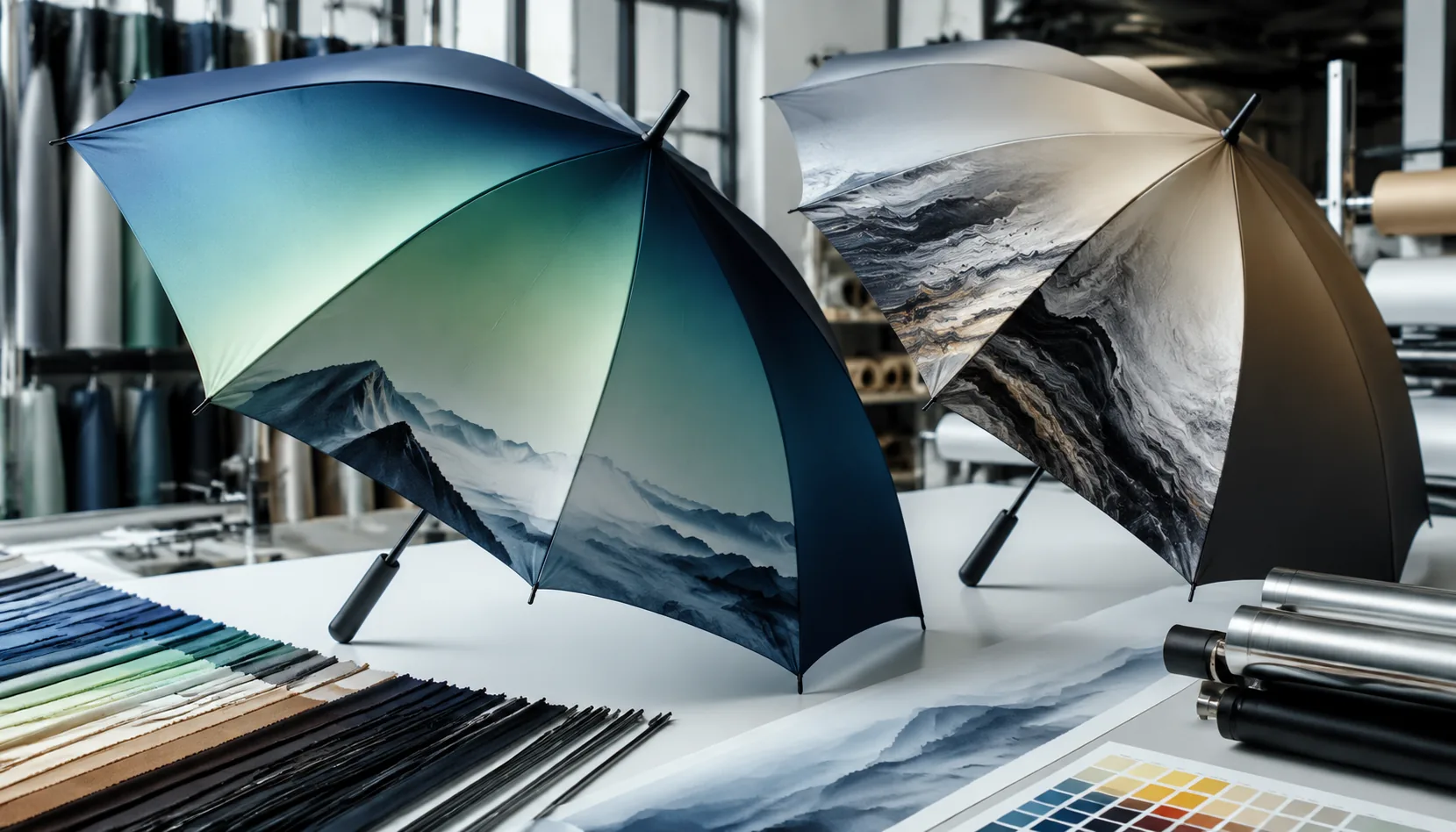
Gradient and Photographic Umbrella Prints for Brand Campaigns
Plan photo, gradient, and all-over digital umbrella prints with file specs, 190T/210T fabric choices, panel seams, lead ...
Read More »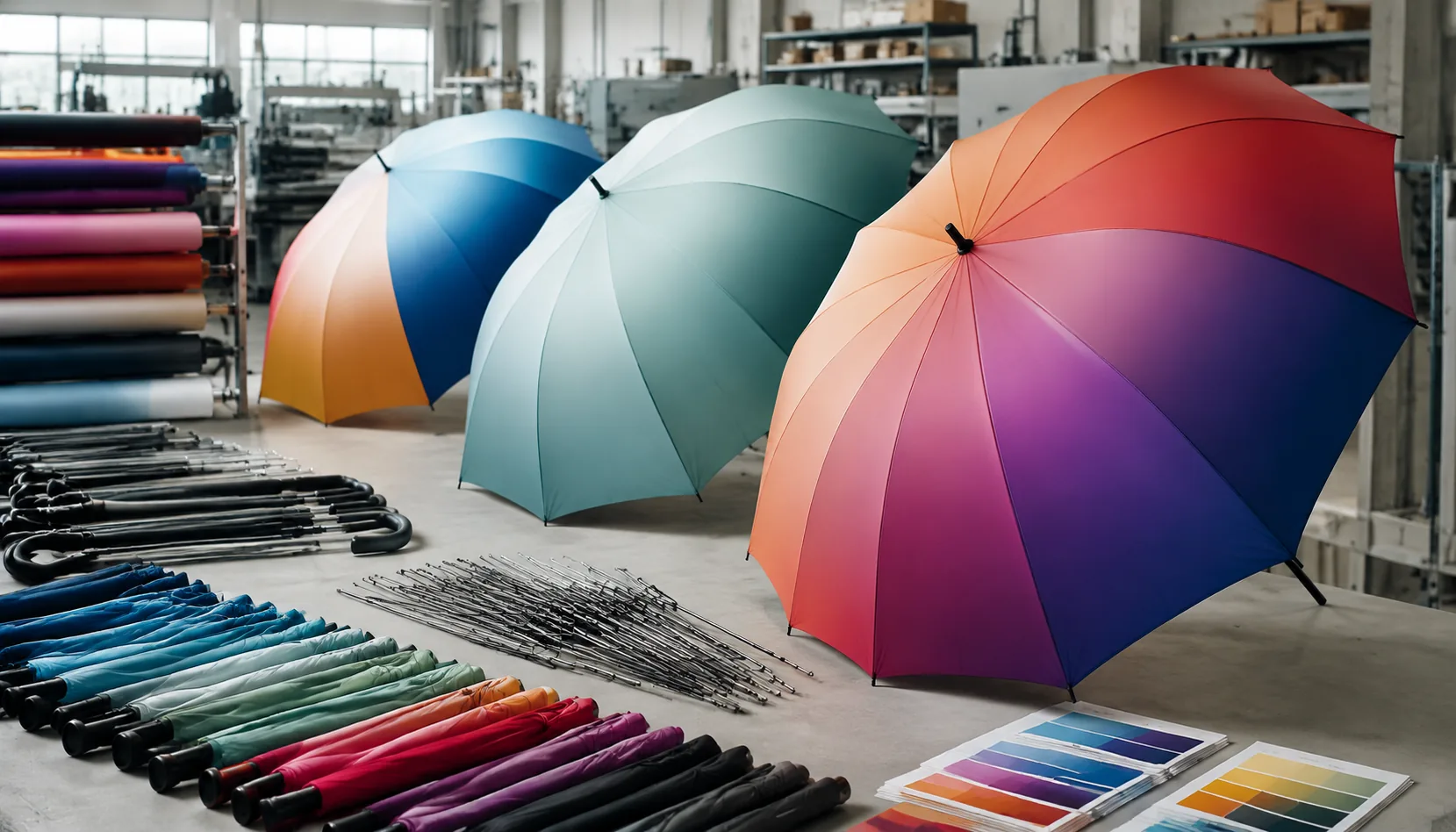
Gradient Umbrella Printing for Branded Color Campaigns
Learn how to specify gradient umbrella prints with realistic color transitions, fabric choices, sampling steps, and prod...
Read More »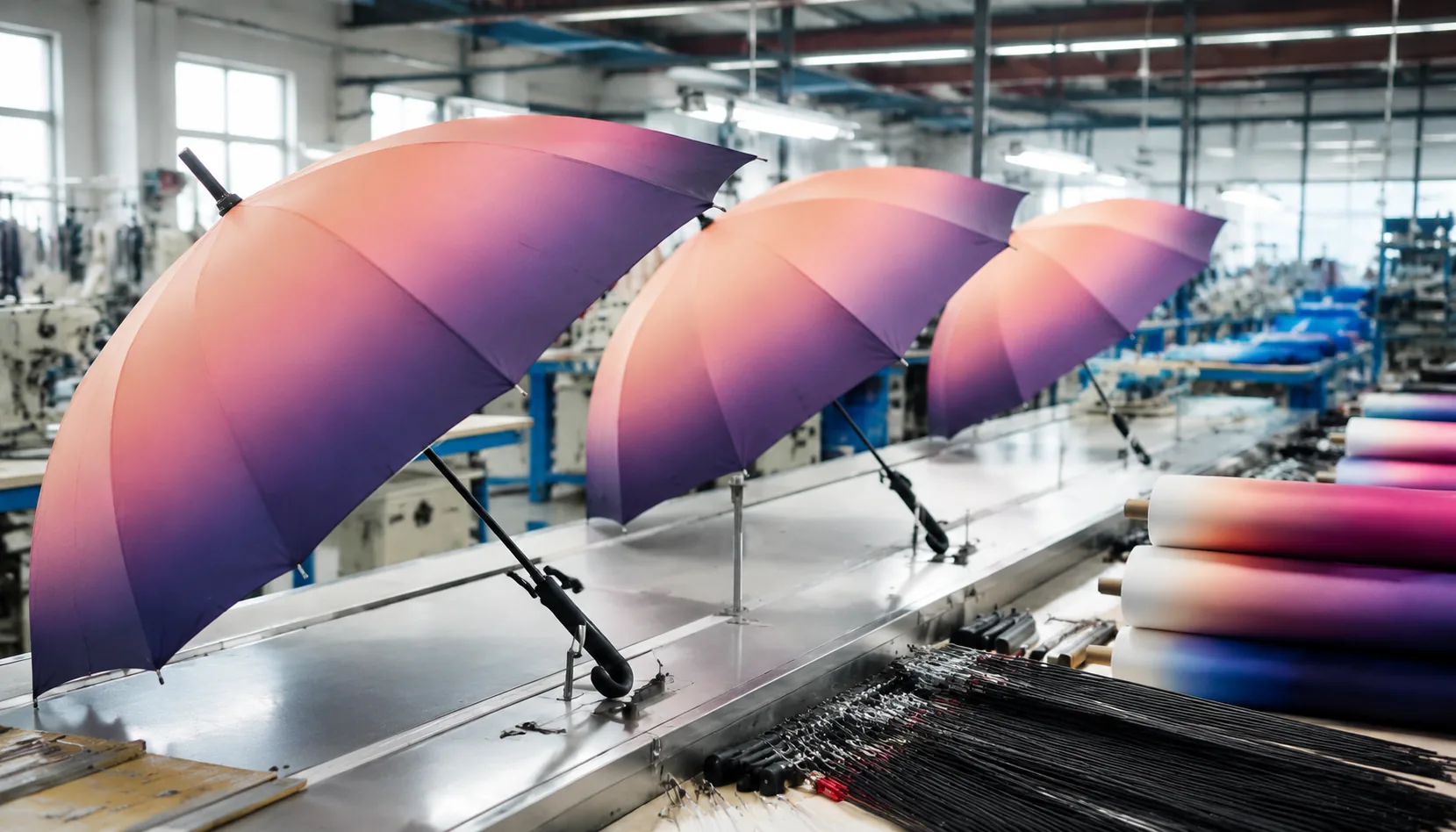
Gradient and Photographic Umbrella Prints for Retail Brands
Build retail umbrella prints with photo clarity, correct fabric specs, sample approvals, and QC checks for gradients, ar...
Read More »