Gradient and Photo Umbrella Printing for Branded Campaigns
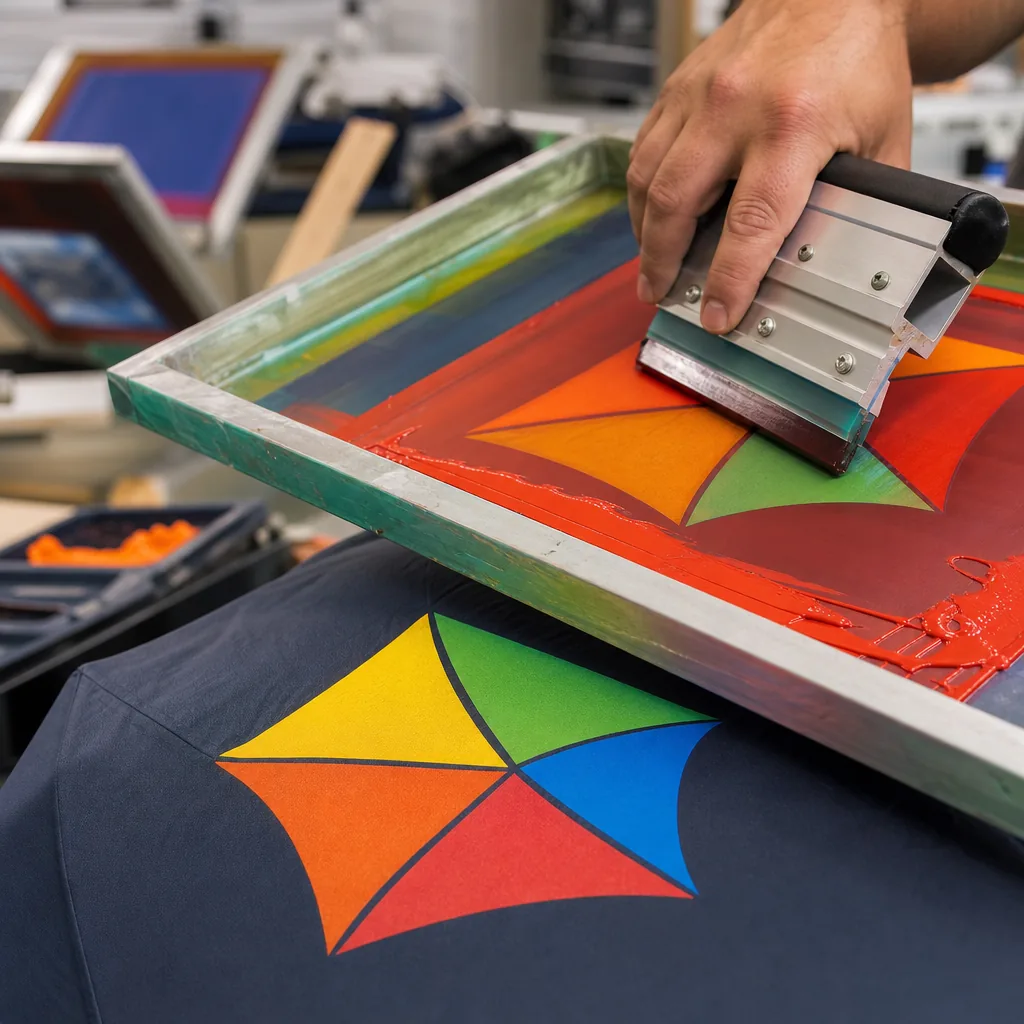
Photos, soft gradients, and layered campaign artwork can look very different once they move from a backlit screen to water-repellent pongee stretched over umbrella ribs. When buyers ask for photo print umbrellas bulk, the real risks are usually file resolution, panel distortion, color shift after coating, and skipping a proper proof. On our Songxia production floor, we check artwork panel by panel before printing because one small mismatch can repeat across thousands of canopies.
Best Campaign Uses for Photo and Gradient Umbrellas
Photo and gradient umbrellas work best when the umbrella is treated as a walking poster, not just a rain tool with a logo. Destination marketing is a good fit: skyline panoramas, beach sunsets, mountain trails, and city map graphics can wrap across 8K or 10K panels and still read clearly from 10 to 20 feet away. Museum shops use branded photo umbrellas for exhibit artwork, archive photography, or architectural details because the canopy gives more storytelling space than a tote bag. Sports campaigns usually favor high-contrast player images, stadium lights, or team-color gradient umbrella printing, especially on 23" and 27" golf umbrellas where the print area is large enough for crowd visibility. For photo print umbrellas bulk orders, we normally recommend 190T or 210T pongee with digital printing or sublimation, because the fabric surface holds color better than low-grade polyester and looks more retail-ready after folding.
Photo artwork needs different planning than a simple one-color logo because every panel seam, rib line, and fabric curve affects the final image. A logo print can be positioned on one or two panels with screen printing and still pass AQL 2.5 inspection if the registration is within a few millimeters. Digital printed umbrellas with full-canopy photography are less forgiving. Faces should not cross the top cap or rib seams, horizon lines must be panel-matched, and important text should stay away from the edge binding by at least 15 to 20 mm. Gradients also need careful color management; a smooth navy-to-cyan fade on a monitor can band or shift purple on coated fabric if the file is not profiled correctly. Our standard practice at ZheBrella is to request layered AI, PSD, or high-resolution TIFF files at actual scale before sampling, not after deposit.
Fashion capsules and product launches are where custom canopy artwork can justify higher unit costs, because the umbrella becomes part of the visual identity rather than a giveaway item. A beauty brand may use a soft blush-to-champagne gradient on a 21" auto-open folding umbrella; an automotive launch may choose a 30" double-canopy golf umbrella with a metallic car detail printed across alternating panels. For retail programs, photo print umbrellas bulk production should also consider frame strength and coating, not only artwork. Fiberglass ribs handle wind better than thin steel ribs, and a vented double canopy can survive 50+ mph wind-tunnel testing when the runner, tips, and stitching are specified correctly. If the campaign is outdoors, add UPF 50+ or Teflon water-repellent coating, but confirm it does not dull the photo saturation during sampling. Typical lead time is 7 to 10 days for strike-off samples and 25 to 35 days for mass production after artwork approval.
Digital Printing Limits on Umbrella Canopy Fabrics
190T and 210T pongee are the two fabrics I look at first for digital printed umbrellas, because the weave controls how much detail survives on the canopy. 190T is fine for simple logos and solid fills, but photo print umbrellas bulk orders with skin tones, small text, or soft gradient umbrella printing usually read cleaner on 210T because the tighter surface gives a more uniform dot pattern. That said, tighter weave does not magically fix a bad file. A low-resolution image will still break up at the panel seams, especially on 8K and 10K frames where each panel has limited printable width. For branded photo umbrellas, I always want the art built at final size with seam allowances and a clear safe zone near the tips and runner area.
Coated UV fabrics change the conversation because the coating affects both ink laydown and color shift. On a very slick PU or silver-backed UV canopy, the ink can sit higher on the surface, which makes dark colors look sharper but can also make gradients look banded if the printer profile is weak. Water-repellent treatment adds another variable: if the surface tension is too low, droplets spread less evenly and the first wash of color can appear slightly cooler or less saturated than the proof. That is why custom canopy artwork should be sampled on the actual fabric lot, not just on a paper proof. On production runs, ZheBrella’s standard practice is to strike off the same ink set on the final coated panel material before approving bulk printing.
UPF 50+ canopies need a double check because print color and sun-protection performance can work against each other if the construction is changed carelessly. Heavy coverage, especially large dark photo areas, can alter the way the coating or base fabric performs under UV testing, so the buyer should confirm both the visual match and the protection claim on the finished umbrella, not on the blank cloth. This matters most for photo print umbrellas bulk programs aimed at outdoor promotions, retail, or event use, where the canopy has to look accurate and still pass the spec sheet. In practice, I recommend testing one full panel for shade consistency, one for seam registration, and one for any abrasion or wash resistance requirement before releasing digital printed umbrellas to mass production.
Artwork File Requirements for Clean Reproduction
Clean reproduction starts with the file, not the press. For gradient umbrella printing and branded photo umbrellas, send vector AI, EPS, or PDF for logos and text, and use 300 dpi at final printed size for photographic areas whenever possible. If the image will cover a full 23-inch or 27-inch canopy, a small web JPEG will fall apart after panel cutting and heat transfer. We prefer artwork built in CMYK, not RGB, because bright screen colors often shift when printed on 190T or 210T pongee. Rich blacks, skin tones, and corporate blues should be checked with actual CMYK values before sampling. For photo print umbrellas bulk orders, I also recommend supplying the original layered PSD or TIFF so the factory can adjust panel splits, color density, and edge extension without damaging the main image.
Umbrella artwork must be built on the correct panel template, not a flat circle guessed by a designer. An 8K umbrella has eight triangular panels, while 10K or 16K frames divide the artwork differently, so the same image will not align the same way across rib positions. Each panel needs bleed beyond the cut line, usually 10–15 mm, plus safe space away from stitching and rib seams. On a standard straight umbrella, the seam allowance can hide fine borders or thin lettering if the layout is too tight. Our standard practice at ZheBrella is to mark cut line, bleed line, stitch line, top cap area, and rib seam direction on the template before proofing. Important faces, product packs, QR codes, and brand slogans should sit well inside the panel center, not on the valley where two panels are sewn together.
Proofing should be scaled and judged like a finished umbrella, not like a brochure. Tiny text under 8–10 pt, thin serif fonts, low-contrast gray-on-blue details, and fine photographic textures often disappear once printed onto coated fabric and viewed outdoors. Digital printed umbrellas can hold good detail, but canopy weave, Teflon coating, UV coating, and heat pressure all soften edges slightly compared with paper. For custom canopy artwork with a sky gradient, crowd photo, or product montage, request a 1:1 panel proof or strike-off before approving production, especially if the order is 500 pieces or more. I also ask buyers to review a mockup showing the umbrella open, not just flat panels, because rib seams break the image rhythm. A good proof should confirm scale, color, face placement, logo clearance, and whether the design still reads from 6 to 10 feet away.
Frame and Canopy Choices That Support Visual Impact
Large artwork needs canopy real estate before it needs fancy hardware. A 23" straight umbrella gives a clean, round layout for gradient umbrella printing and branded photo umbrellas, while a 27" or 30" golf umbrella is better when the image has faces, buildings, product packs, or campaign text that cannot be chopped into tiny panels. Folding umbrellas, especially 21" 3-fold auto-open-close models, are easier for retail sets and travel giveaways, but the shorter panels and more seam interruption make photo alignment less forgiving. For photo print umbrellas bulk orders, I usually push buyers toward 8K straight or golf styles if the artwork is continuous, because the panel count keeps distortion manageable and sewing registration is easier to control than on 10K or 16K layouts.
Frame choice changes both the selling position and the failure rate after distribution. Steel shafts with steel ribs are the lowest-cost route and still acceptable for indoor events, hotel front desks, and short campaign cycles, but they add weight and bend instead of recovering in gusts. Fiberglass ribs cost more, usually adding noticeable cents per unit depending on size and rib count, but they flex back better and pair well with digital printed umbrellas that a brand expects people to keep. An 8K frame is the practical baseline; 16K construction looks premium and holds the canopy shape nicely, but every extra rib adds sewing points, inspection time, and more chances for artwork misalignment across seams. Auto-open mechanisms are worth it on straight and golf umbrellas because the user experience feels higher grade, while auto-open-close on folding models raises cost and should be tested carefully for spring strength and runner smoothness.
Double-canopy windproof umbrellas are the best choice when the campaign will be used outdoors in coastal cities, golf events, campus tours, or real estate launches where wind is not theoretical. The vented top layer relieves pressure, and with fiberglass ribs we can build styles that survive 50+ mph wind-tunnel testing when the frame geometry is correct. The tradeoff is artwork planning: the top vent and lower canopy overlap, so custom canopy artwork must allow for hidden zones and panel breaks. Our standard practice at ZheBrella is to review the image against the cutting template before sampling, especially for faces, logos, QR codes, and skyline photos. For photo print umbrellas bulk programs, a 27" 8K vented golf umbrella in 190T or 210T pongee is often the strongest balance of visibility, durability, and landed cost.
Proofing, Bulk Approval, and Color Control
For gradient umbrella printing, the proofing step needs to happen on actual canopy fabric, not just a PDF mockup. A digital strike-off is usually one or two printed panels on the selected material, such as 190T pongee, 210T pongee, POE, or PVC, using the same sublimation, heat-transfer, or digital print process planned for bulk production. This is where we check whether a sunset gradient, product photo, or sponsor logo holds detail after the fabric absorbs ink and is cut into curved umbrella gores. For branded photo umbrellas, I prefer approving both a flat panel and one assembled sample because seams, rib positions, and panel rotation can change how the image reads. For photo print umbrellas bulk orders, buyers should allow about 3 to 5 days for artwork adjustment, 5 to 7 days for strike-offs, and another 7 to 10 days for a pre-production sample if frame tooling, special handles, or UPF 50+ coating is involved.
Color control is not reliable if it is only done under office lighting. We review digital printed umbrellas in a D65 lightbox, then compare them under warehouse daylight and warm retail-style lighting because deep blues, skin tones, and gray gradients shift badly on coated fabric. Wet-fabric review is also important: we spray or soak printed panels, then check whether the image darkens unevenly, whether black areas bleed visually, and whether a Teflon or UV coating changes surface gloss. Our standard practice at ZheBrella is to keep an approved strike-off, a signed pre-production sample, and a printed panel from the first bulk roll together at the inspection table. That gives QC a physical reference instead of asking operators to judge custom canopy artwork from a phone screen or a compressed JPG.
Bulk approval should be tied to measurable inspection, not only visual preference. Under AQL 2.5, inspectors pull samples from finished cartons and check print streaks, ink banding, poor registration across seams, upside-down panels, mixed left/right photo panels, and color drift between production lots. Photo and gradient designs are less forgiving than spot-color logos because one wrong panel can break the image across an 8K or 10K umbrella canopy immediately. For a normal 1,000 to 3,000 piece order, I plan 20 to 30 days after sample approval for printing, cutting, sewing, frame assembly, drying, packing, and final QC; larger retail runs or DDP shipments need more buffer. If the campaign date is fixed, lock the bulk approval standard early and avoid changing Pantone targets after the pre-production sample is signed.
Frequently Asked Questions
Can a photograph be printed across the entire umbrella canopy?
Yes, but the image must be adapted to the umbrella panel template. Important details should not sit on seams, rib lines, or the canopy top where distortion is most visible.
Will printed gradients look the same as they do on screen?
Not exactly. Fabric texture, coating, and lighting affect the final result, so buyers should approve a digital print proof or pre-production sample before bulk production.
What file setup reduces banding on large gradients across umbrella panels?
Use vector artwork when possible, or 300 dpi raster files at full print size, and add 3-5 mm bleed past each panel edge. For soft gradients, avoid very short tonal transitions and request a stitched-panel proof to check how the blend reads across seams.
Can the same photo be aligned continuously across all canopy panels?
Yes, but the art must be separated panel by panel based on the canopy template, with seam overlap and rib positions accounted for. For most OEM orders, the factory will ask for layered AI or PSD files and provide a digital mockup before sampling.
How much extra time should buyers allow for photo or gradient umbrella projects versus simple logo prints?
Complex digital artwork usually adds 3-7 days for file checking, color adjustment, and proof approval. Production for bulk orders often lands around 25-35 days after approval, depending on quantity, canopy material, and packaging requirements.
Looking to Launch Your Custom Umbrella Line?
ZheBrella is a Zhejiang-based OEM/ODM umbrella manufacturer with 17 years of export experience. Free design, low MOQ from 100 pieces, windproof construction, full-color print.
Get Free Quote Now »People Also Search For
Related Articles
Gradient and Photographic Umbrella Prints for Brand Campaigns
Plan photo, gradient, and all-over digital umbrella prints with file specs, 190T/210T fabric choices, panel seams, lead ...
Read More »
Gradient and Photo Printing Specs for Branded Umbrellas
Set buyer-ready specs for photo and gradient umbrella prints, from file resolution and pongee fabric to digital sampling...
Read More »
Gradient Umbrella Printing for Retail and Event Campaigns
Plan gradient and photo umbrella prints with realistic color control, fabric selection, panel alignment, sampling steps,...
Read More »