Gradient Umbrella Printing for Retail and Event Campaigns
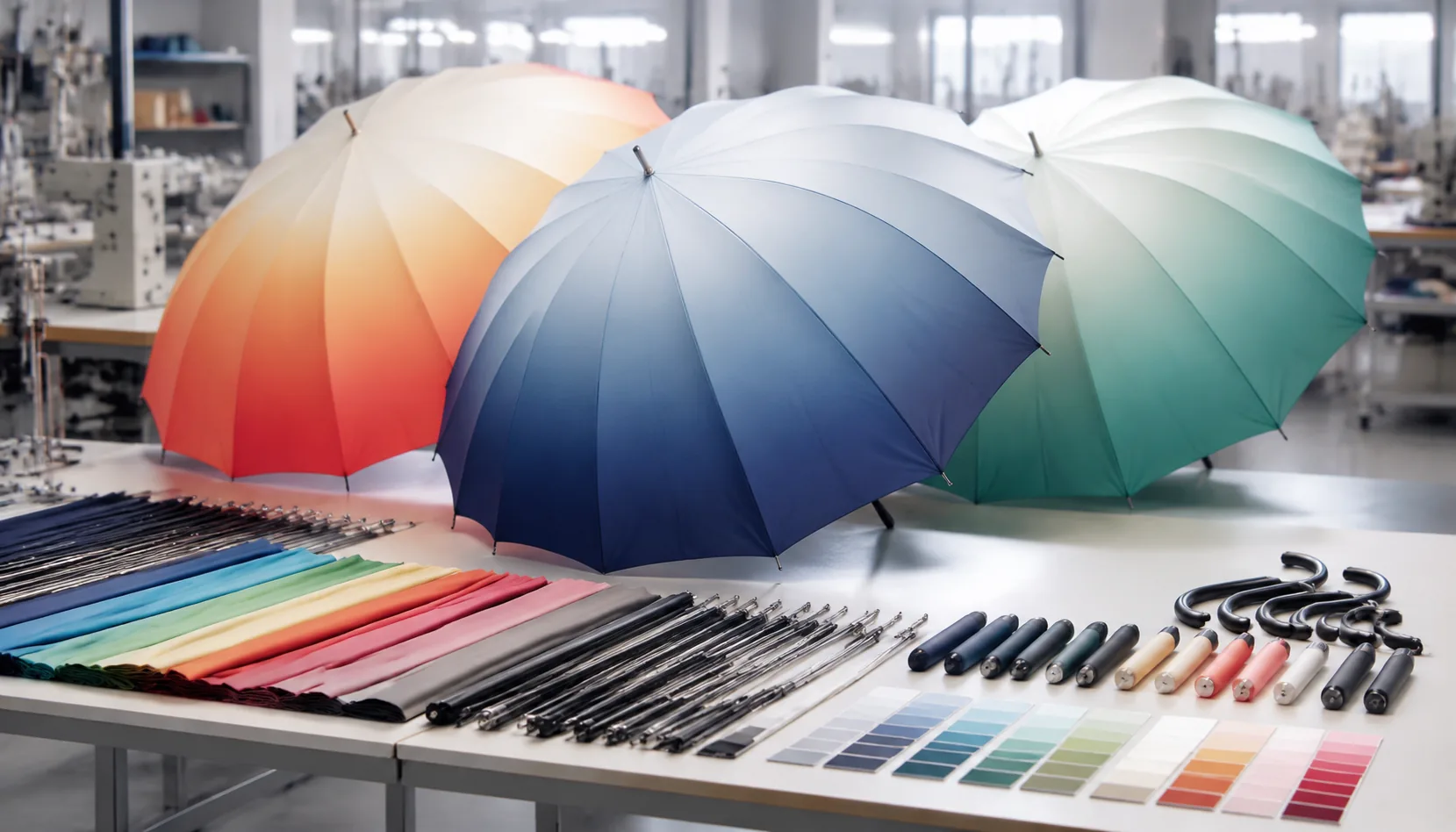
Retail and event buyers often approve a smooth digital mockup, then discover on press that gradients shift, band, or break at panel seams. In our Songxia workshop, gradient umbrella printing starts with fabric choice, ink limits, RIP settings, and panel layout before a bulk PO is released. Getting those details right in sampling is what keeps campaign colors consistent, logos readable, and delivery dates realistic.
Best Uses for Gradient and Photo Canopy Designs
Gradient umbrella printing earns its cost when the canopy itself is the merchandise, not just a place to park a logo. For retail launches, museum shops, tourism campaigns, festivals, and brand activations, a full-canopy fade or photographic layout gives the buyer something they can imagine carrying after the event. A single logo panel on 190T pongee works for low-cost giveaways, but it rarely creates shelf value. A sunset skyline for a coastal tourism board, a gallery ceiling pattern for a museum shop, or a soft color transition tied to a cosmetics launch can turn a 23" auto-open umbrella into a retail item instead of a disposable promo. For this type of retail umbrella artwork, I usually push buyers toward 8K or 10K fiberglass ribs, 190T or 210T pongee, and a matte water-repellent coating, because the frame and fabric must feel equal to the artwork.
Photo print umbrellas are strongest when the image wraps across multiple panels and still reads correctly from 6 to 10 feet away. That matters at outdoor festivals, city walks, college events, and brand activations where the umbrella is seen moving through a crowd. A digital print umbrella canopy can carry gradients, paintings, maps, architectural details, food photography, or campaign landscapes with far better impact than spot-color screen printing. The tradeoff is production discipline: artwork must be built to the actual panel template, not a flat circle, with safe zones near rib seams and tips. On a standard 8-panel 23" umbrella, thin text crossing seams will distort; large color fields and central image subjects survive much better. For premium event programs, a 27" golf umbrella with a double-canopy vent gives more artwork area and better wind performance, often surviving 50+ mph wind-tunnel tests when paired with fiberglass shaft and ribs.
For branded event umbrellas, gradients and photo canopies make the most sense when the campaign needs atmosphere, location, or emotion. A beverage brand can use a cold blue-to-silver fade for a summer launch; a tourism bureau can print a mountain panorama; a museum can sell umbrellas using an exhibit texture instead of a basic logo repeat. Our standard practice at ZheBrella is to sample these designs by sublimation or digital transfer first, then check panel alignment, color shift, and seam interruption before bulk cutting. MOQ is usually higher than simple screen print work, commonly 300 to 500 pieces depending on size and fabric, with sampling around 7 to 10 days and bulk production around 25 to 35 days after artwork approval. Buyers should also specify AQL 2.5 inspection, UPF 50+ if sun protection is part of the story, and FOB Ningbo or Shanghai versus DDP delivery before confirming final pricing.
Choosing Digital Print or Sublimation for Artwork
Screen printing still has a place for one- to three-color logos on branded event umbrellas, but it is the wrong tool for smooth gradients, photographic images, and soft shadow effects. A screen can simulate tone with halftone dots, yet the result looks coarse on curved umbrella panels, and each extra color adds film, screen setup, registration risk, and drying time. For MOQ, digital printing is usually practical from 100 to 300 pieces, depending on size and panel count, while sublimation often becomes more cost-efficient around 300 to 500 pieces because setup is lower than screen but heat-press handling is still labor intensive. For bulk retail runs above 1,000 pieces, the decision is less about the word “digital” and more about fabric color, expected color tolerance, and whether the campaign needs photo realism or hard-edged branding. In AQL 2.5 inspection, I pay close attention to panel-to-panel color shift, seam alignment, ink rub, and whether the gradient banding is visible under daylight.
Panel Layout Rules for Continuous Visuals
Continuous artwork lives or dies at the rib seams. On an 8K umbrella, each panel covers about 45 degrees of the canopy, so a sunset fade, skyline, or product photo has fewer seam breaks but larger distortion from the curved panel shape. A 16K frame splits the same circle into narrower 22.5-degree panels, which improves the roundness of a gradient but creates twice as many seam interruptions. For gradient umbrella printing, I prefer 16K when the visual is abstract, radial, or color-transition based, and 8K when the design includes large logos or readable campaign messaging. A digital print umbrella canopy is not a flat poster; each panel is cut as a wedge with bias stretch, hem turn-in, and seam allowance. If the artwork is supplied as one circular image without panel mapping, the factory has to slice it, compensate for curvature, and decide where visual loss happens.
Build the layout with bleed and safe zones from the start, not after the artwork is approved. For 190T or 210T pongee, I usually require 10-15 mm bleed around each panel edge, plus a 20-25 mm safe zone inside rib seams for logos, faces, QR codes, and legal text. Seam allowance typically consumes 6-8 mm per side after sewing, and the rib pocket or binding can visually hide more, especially on heavier POE, PVC, or EVA canopies. The center cap is another common failure point: radial artwork must align to the ferrule hole and top notch, or the entire image looks twisted once the runner is locked open. Our standard practice at ZheBrella is to mark panel number, grain direction, top-center point, and seam match points on the print file before sublimation or heat transfer sampling.
Do not place faces, eyes, key text, sponsor names, or retail umbrella artwork details across rib seams unless the broken effect is intentional. Photo print umbrellas are especially unforgiving because even a 3 mm sewing shift can cut through a face or make a product edge look bent. For branded event umbrellas, put the primary logo on one full panel or repeat it every other panel rather than forcing one oversized mark across the canopy. Gradients tolerate seams better, but the color ramp still needs panel-to-panel calibration; dark navy to cyan, for example, will show mismatched density faster than a soft beige-to-cream fade. Before mass production, approve one opened sample under daylight and indoor lighting, then check seam continuity, center cap rotation, hem cropping, and rib-tip alignment against the digital proof. That sample is the real proof, not the flat PDF.
Fabric and Color Management Considerations
Gradient umbrella printing succeeds or fails on fabric choice before artwork ever reaches the printer. For most retail umbrella artwork, 190T pongee is the cost-effective base: tight enough for clean digital print umbrella canopy work, light enough for 21" and 23" folding umbrellas, and stable under heat-transfer or sublimation. 210T pongee gives a smoother handfeel and slightly better ink definition, which matters on premium 27" or 30" golf umbrellas where a sky fade, sunset band, or photographic background covers a large panel area. Polyester base color is critical. A white canopy gives the cleanest gradient, while ivory, silver-gray, navy, or black base cloth will pull the whole print warmer, duller, or darker. If the buyer wants photo print umbrellas with skin tones, cloud detail, or soft brand-color transitions, I recommend starting with white 190T/210T pongee rather than trying to rescue color later with heavier ink.
White underlayers are often misunderstood in gradient umbrella printing. On dark polyester, PVC, POE, or coated pongee, a white ink base can help logos and solid blocks stand up, but it does not make a perfect photographic canvas. Gradients expose every limitation: dot gain, panel-to-panel sewing variation, rib shadows, and the difference between wet ink density and dry fabric appearance. For branded event umbrellas viewed from 10 to 30 feet away, we usually prioritize smooth transition and logo contrast over laboratory Pantone matching. A 10K or 16K frame also means more narrow panels, so a continuous radial gradient must be split carefully in the artwork file; otherwise the color banding becomes visible after sewing. Our standard practice at ZheBrella is to request vector logo layers plus a high-resolution raster gradient at final panel scale, not a flattened low-resolution mockup.
UPF 50+ coatings, Teflon water-repellent finishes, and silver or black UV back coatings can shift tones more than buyers expect. A bright cyan-to-lime gradient on untreated 190T pongee may become slightly gray after UV coating, while warm reds and oranges can deepen under heat-transfer film. Pantone references are still useful for anchor colors, especially brand logos, but a gradient cannot always match a Pantone book exactly because it is made from process color percentages across a curved fabric surface. For serious retail programs or event campaigns above 500 to 1,000 pcs MOQ, insist on a strike-off proof before bulk cutting. A good proof should show one full printed panel, coating finish, stitching thread, and handle sample under daylight and indoor light. Approving only a screen PDF is risky; AQL 2.5 inspection will catch defects, but it cannot fix a color expectation that was never physically proven.
Approval Workflow and Bulk QC Checks
Approval should start before cloth is cut, because gradient umbrella printing hides fewer mistakes than buyers expect. We first lock the retail umbrella artwork as a scaled digital proof showing panel layout, rib direction, logo position, bleed, and seam allowances. For a 23" or 27" umbrella, artwork usually needs 10-15 mm bleed per panel because the sewing line eats more fabric than a flat PDF suggests. If the job uses photo print umbrellas or a full digital print umbrella canopy, I ask buyers to approve both RGB-to-CMYK conversion and a printed fabric swatch, not just a screen proof. A 190T or 210T pongee swatch is enough to catch gradient stepping, muddy shadows, and logo color drift under water-repellent coating. For serious retail programs, we measure key colors against Pantone targets with an agreed tolerance, usually Delta E under 3 for brand colors and slightly looser for photographic gradients.
The pre-production sample is the real checkpoint, because printing, cutting, sewing, and frame assembly all affect the final look. On gradient panels, inspectors should check color banding at arm’s length and again under daylight, especially where pale colors move into dark blues, reds, or blacks. Seam matching matters more on 8K and 10K umbrellas because each panel break can interrupt the gradient; for 16K golf umbrellas, mismatched panels become obvious from across an event venue. We also test practical construction details: canopy tension, tip alignment, runner movement, manual or auto-open action, and whether the printed coating cracks at fold lines after repeated closing. For branded event umbrellas, I prefer one signed pre-production sample kept at the factory and one with the buyer, so bulk inspectors can compare actual goods against something physical instead of arguing over a monitor image.
Bulk QC should be written into the purchase order, not negotiated after cartons are packed. Our standard practice at ZheBrella is AQL 2.5 for major defects, with checks covering print registration, gradient smoothness, seam matching, stains, broken stitches, bent steel or fiberglass ribs, and auto-open function testing across the sampled lot. For auto-open or auto-open-close models, inspectors should open and close each sampled umbrella multiple times, not once, because weak springs and sticky runners often show up after cycle two or three. Carton inspection should confirm SKU labels, polybag warnings, handle material, hangtags, and retail barcodes before shipment. Delivery planning belongs in the same QC window: FOB Ningbo or Shanghai works when the buyer controls freight, while DDP is better for event deadlines because duty, trucking, and final delivery are already priced. Leave 3-5 days after inspection for rework or carton replacement, especially before seasonal retail launches.
Frequently Asked Questions
Can a gradient run smoothly across all umbrella panels?
It can be planned, but seams and rib curvature will interrupt the image slightly. A production-ready layout should include bleed and avoid critical artwork on panel joins.
What fabric is best for photo-quality umbrella printing?
White 190T or 210T pongee is commonly used because it supports brighter color reproduction. Coated UPF 50+ fabric should be sampled first because coatings can affect color and hand feel.
What artwork format is best for gradient or photo umbrella printing?
Vector files are preferred for logos, while photo or gradient artwork should be supplied as high-resolution PSD, TIFF, PDF, or AI files at 150–300 dpi at actual print size. For panel canopies, include bleed and allow for seam loss between panels.
Can gradient colors match Pantone references exactly on umbrella fabric?
Pantone matching is possible for solid logo areas, but gradients and photo prints can vary by fabric, ink, and coating. A printed strike-off sample is recommended before bulk production, especially for retail artwork with strict color standards.
What is the usual sampling and bulk lead time for photo print umbrellas?
Digital print samples usually take 7–12 days after artwork confirmation. Bulk production is commonly 30–45 days depending on order quantity, fabric choice, frame style, and packaging requirements.
Looking to Launch Your Custom Umbrella Line?
ZheBrella is a Zhejiang-based OEM/ODM umbrella manufacturer with 17 years of export experience. Free design, low MOQ from 100 pieces, windproof construction, full-color print.
Get Free Quote Now »People Also Search For
Related Articles
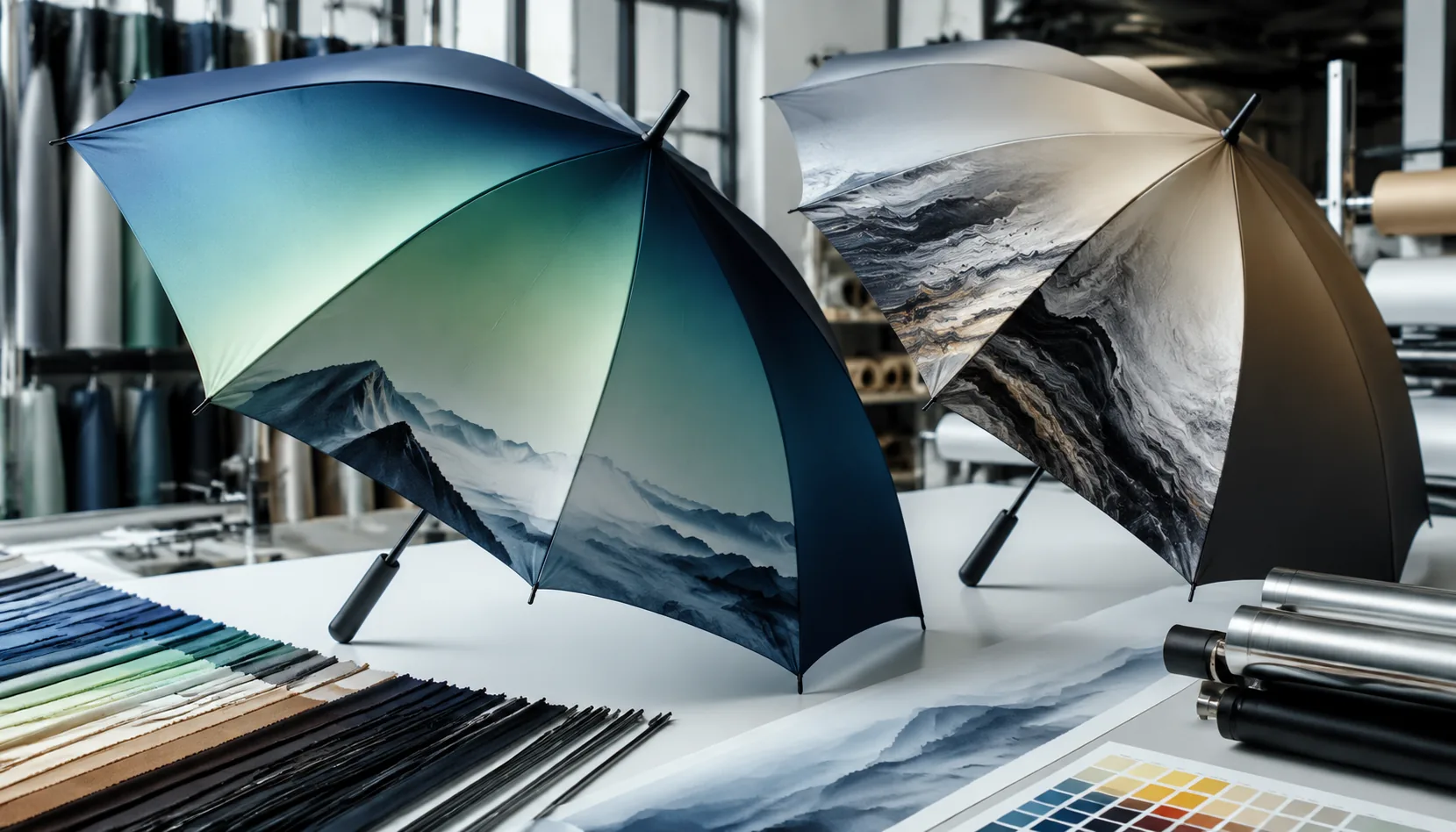
Gradient and Photographic Umbrella Prints for Brand Campaigns
Plan photo, gradient, and all-over digital umbrella prints with file specs, 190T/210T fabric choices, panel seams, lead ...
Read More »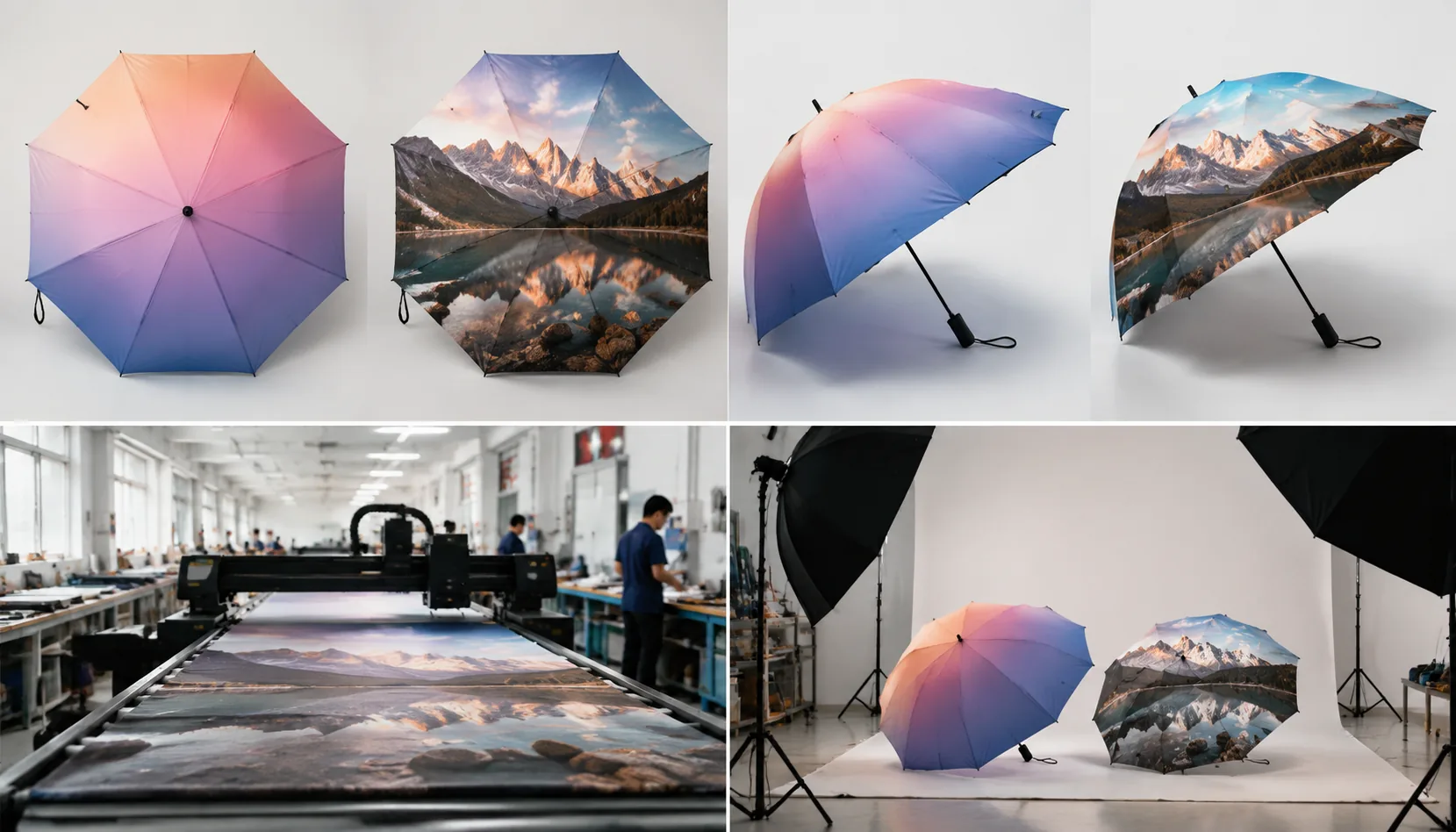
Gradient and Photo Printing Specs for Branded Umbrellas
Set buyer-ready specs for photo and gradient umbrella prints, from file resolution and pongee fabric to digital sampling...
Read More »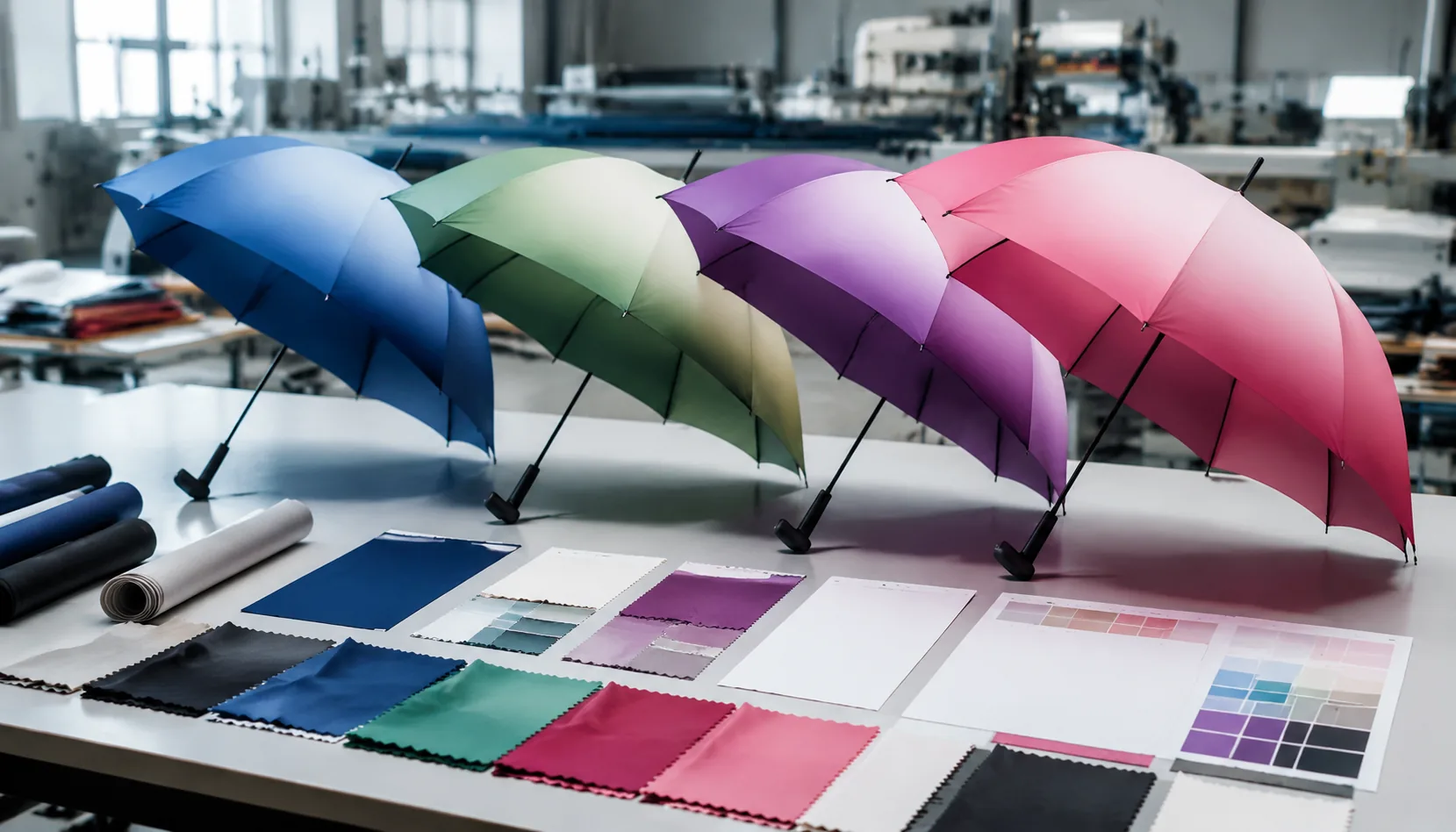
Gradient Umbrella Printing for Retail and Event Branding
Learn when gradient umbrella prints work best, how digital files should be prepared, and which canopy specs support smoo...
Read More »