Pongee 190T vs 210T Umbrella Canopies: Buyer Spec Guide
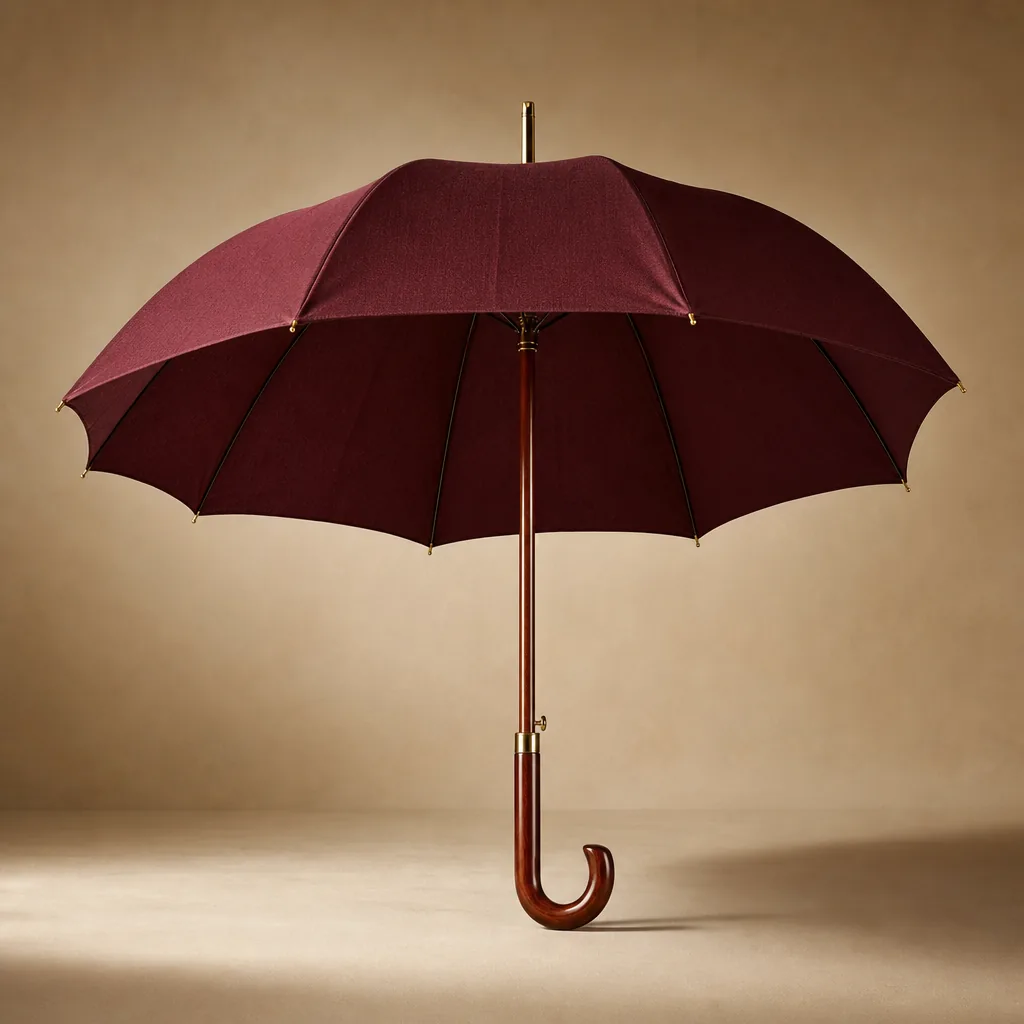
When buyers compare 190T and 210T canopies, the real question is not just fabric count but how the umbrella will feel, print, and hold up on the line. At the factory floor, we see pongee umbrella fabric chosen for different reasons depending on whether the priority is softer drape, better opacity, sharper decoration, or tighter cost control. The right spec depends on the product tier, the printing method, and the performance target you need to hit.
What T-Count Means in Pongee Fabric
T-count is a weave density marker, not a strength rating. In pongee umbrella fabric, 190T pongee usually means a slightly looser weave than 210T pongee, so the cloth can feel a bit lighter and more pliable, while 210T tends to sit flatter and look cleaner on a finished frame. In practice, that changes coverage and drape: a tighter weave blocks pinholes better, reduces the chance of see-through panels under bright light, and gives a more uniform surface for logos and full-color artwork. For buyers comparing pongee umbrella fabric, the difference is usually visible before it is dramatic in hand feel. A 21-inch compact with 210T often looks sharper when opened, while 190T can be perfectly acceptable for price-sensitive promotions if the rest of the build is controlled.
What most buyers miss is that higher T-count does not automatically make a better umbrella. A 210T shell with weak stitching, poor seam sealing, or the wrong resin or PU coating can still leak, flutter, or tear at the panel corners. Real durability comes from the whole system: fabric weight, coating, thread quality, seam density, and how the canopy is cut and tensioned on the ribs. If you want an UPF 50+ canopy, the coating matters at least as much as the weave because UV performance depends on opacity and finish, not just the label on the cloth. As an umbrella canopy supplier, I would treat 190T as a workable baseline for volume programs and 210T as the better choice when you want cleaner print definition, better drape, and a more premium opening appearance without changing the frame spec.
190T vs 210T in Real Buying Scenarios
For a value-driven promotion, 190T pongee is usually the right call when the umbrella is a giveaway, trade show handout, school campaign, or event item that needs acceptable print quality at the lowest usable cost. In this range, the pongee umbrella fabric is light, packs compactly, and still sews cleanly without giving the sloppy hand-feel you get from thin polyester. The practical difference is not just the thread count on paper; 190T typically looks a little more translucent under strong light, so single-color logos and simple graphics hold up better than photo-heavy designs. If the buyer cares more about unit cost, fast turnover, and meeting a large MOQ than about a premium tactile impression, 190T is enough for many promotional programs.
210T pongee makes more sense when the umbrella is being sold at retail, used as a gift-with-purchase, or specified in a corporate program where the canopy has to feel more substantial in the hand. Compared with 190T, 210T pongee is usually denser, less see-through, and gives a cleaner surface for branding, which matters when the canopy is expected to look sharp in photos and on a shelf. That extra density also helps the umbrella read as a better-made product, even before you talk about frame quality. For an umbrella canopy supplier, this is one of the easiest upgrades to justify because the cost increase is small relative to the jump in perceived value. If the buyer is positioning the item as premium, 210T is the safer spec.
There is also a functional angle. A darker or more opaque 210T canopy can support a stronger visual contrast for logos and can pair better with an UPF 50+ canopy requirement, especially on styles sold for sun use as well as rain. ZheBrella’s standard practice is to treat 190T as the sensible baseline for utility promos and 210T as the better default when the umbrella must survive closer inspection from end users, distributors, or retail buyers. The decision usually comes down to how much the canopy contributes to the product story: if the frame is basic and the umbrella is disposable in the buyer’s mind, 190T is fine; if the canopy needs to carry the impression of quality, 210T is the better spec, even before you factor in print, trim, and packaging.
Coatings, Water Resistance, and UPF Ratings
Coating matters more than buyers usually think because the weave alone does not decide performance. A bare 190T pongee or 210T pongee shell can look similar on a sample table, but PU, silver, and black coatings change how the fabric behaves in rain and sun. PU coating is the practical choice when you want better water resistance and cleaner shedding after a storm; it helps the umbrella dry faster and reduces seep-through at the stitch lines. Silver coating reflects heat and light, so it is commonly used on UV-focused styles, but it can also make the canopy feel stiffer. Black coating blocks light more aggressively from the inside, which improves shade and gives a cleaner appearance on premium promotional and retail umbrellas made from pongee umbrella fabric.
For water resistance, do not judge by coating color alone. Thickness of the coating layer, fabric density, seam quality, and panel tension all affect how long the canopy keeps water from penetrating. In factory testing, a well-applied PU-coated 210T pongee usually sheds water better than a thinner finish on 190T pongee, but a poor coating application will fail faster than a properly controlled lower-denier build. If you are sourcing from an umbrella canopy supplier, ask for spray test results, hydrostatic or water-repellency data if available, and confirm whether the coating is on the inside, outside, or both sides. That detail changes cost, hand feel, and how the umbrella packs after repeated opening and closing.
For UV programs, request UPF 50+ canopy verification, not just a marketing claim. A silver-coated or black-coated umbrella canopy can deliver strong sun protection, but buyers should ask how the result was measured, whether the lab tested the full panel fabric, and whether the coating was part of the tested construction or only a raw fabric swatch. With pongee umbrella fabric, the final UPF depends on both the base weave and the coating system, so a clean specification is more useful than a generic ‘UV protection’ statement. ZheBrella’s standard practice is to separate rain-performance specs from UV-performance specs in the PO, because the wrong coating choice can give you a waterproof umbrella that underperforms in sunlight, or a sun umbrella that sheds water poorly.
Print Compatibility and Color Control
For print work, the fabric density changes everything. A 190T pongee umbrella fabric has a slightly more open structure, so it takes ink well but also lets fine dots spread a little more at the edge. That is usually acceptable for solid logos, simple text, and large coverage prints, but it is not the best choice when the artwork has thin strokes, tight registration, or small reversed-out type. A 210T pongee weave is tighter and more uniform, so screen print edges stay cleaner and digital print detail holds better, especially on dark canopy colors. The tighter surface also reduces visible strike-through from the inside, which matters when the umbrella is held against light. If the canopy carries a UPF 50+ canopy coating, expect the print house to test adhesion and cure temperature, because the coating can change how the ink sits on the yarns.
Color control starts before bulk production, not after. A serious umbrella canopy supplier should approve strike-offs on the exact fabric, coating, and print method that will be used in production, because a sample on paper or on a different weave is not a valid reference. For screen print, I want to see the strike-off under daylight and indoor light, on both the outer and inner faces, with clear sign-off on line weight, ink opacity, and any haloing around edges. For full-color digital print, lab dips matter just as much: confirm the canopy base color against a physical standard, then verify that the print still reads correctly after heat setting and waterproof finishing. On 190T pongee, darker base colors can mute logos faster than buyers expect; on 210T pongee, the same artwork usually reads cleaner, but the tighter weave also makes white ink failures more obvious. Lock the strike-off and lab dip first, then release bulk.
Sampling, AQL, and Commercial Minimums
A pre-production sample is not a presentation piece; it is a build check. For pongee umbrella fabric, we inspect seam alignment at every panel junction, panel symmetry around the shaft, and whether the crown gathers evenly without twisting. If the canopy is supposed to be 190T pongee or 210T pongee, we confirm the hand feel, yarn density, and coating weight match the approved swatch, because a thin-looking sample often hides uneven PU or water-repellent coverage. On an UPF 50+ canopy, coating consistency matters even more than color accuracy, since missed zones show up later as weak water beading or poor UV performance. A serious umbrella canopy supplier should also verify stitch tension, tip reinforcements, and whether the closure strap lands in the right position when the umbrella is fully folded.
For commercial minimums, the right answer depends on how many variants you are carrying. Basic stock construction usually starts with a lower MOQ tier for one panel print or one colorway, while custom frame colors, special handles, or mixed size programs push the minimum up because each change adds setup, labeling, and packing loss. Sample lead time is typically faster than bulk, but buyers should still plan for 7 to 15 days on a true pre-production sample if tooling, print strike-offs, or color matching are involved. Our standard practice at ZheBrella is to treat the signed sample as the control standard: once that sample is approved, any change to panel count, coating, or logo placement needs a fresh sign-off before bulk starts.
Final inspection should be written around AQL 2.5 for major defects, not a loose visual check at the packing table. That means seam skips, canopy holes, crooked ribs, failed open-close function, wrong print placement, and coating blotches must be counted against the lot, not argued away as acceptable variation. For buyer programs, FOB works best when the customer already has freight control and customs handling in place, especially for repeat orders and mixed SKU replenishment. DDP is better when the program needs landed-cost simplicity, but it only works cleanly if carton count, HS code, and destination charges are stable. If the order is tied to a retail launch, ask for the inspection report, carton drop test, and photo record before balance payment so the bulk shipment matches the approved pongee umbrella fabric sample, not a verbal promise.
Frequently Asked Questions
Does 210T pongee automatically mean a better umbrella?
Not by itself. 210T usually gives a denser, more premium hand feel and better color depth, but frame quality, stitching, and coating matter just as much. A poorly built 210T umbrella can still fail early.
Should I request UPF 50+ on rain umbrellas?
Only if the umbrella will also be used for sun protection or outdoor events. For that use case, ask for documented UPF 50+ fabric and confirm the coating does not compromise water resistance.
For retail umbrellas, when should I choose 190T instead of 210T pongee?
Choose 190T when you need a lower-cost canopy for promotional or entry-level retail umbrellas. It is usually the better fit for large-volume programs where print quality and basic weather protection matter more than a premium hand feel.
Does 210T pongee usually improve print results for logos and all-over patterns?
Yes. The tighter weave typically gives sharper print edges and better color consistency, especially for full-panel graphics. Buyers often specify 210T when the umbrella is part of a branded retail line.
What MOQ and lead time should I expect for custom pongee canopies?
For OEM umbrella programs, MOQ is commonly 500 to 1,000 pieces per color or design, depending on the frame and print setup. Sample development usually takes 7 to 10 days, and bulk production is often 25 to 35 days after approval.
Looking to Launch Your Custom Umbrella Line?
ZheBrella is a Zhejiang-based OEM/ODM umbrella manufacturer with 17 years of export experience. Free design, low MOQ from 100 pieces, windproof construction, full-color print.
Get Free Quote Now »People Also Search For
Related Articles
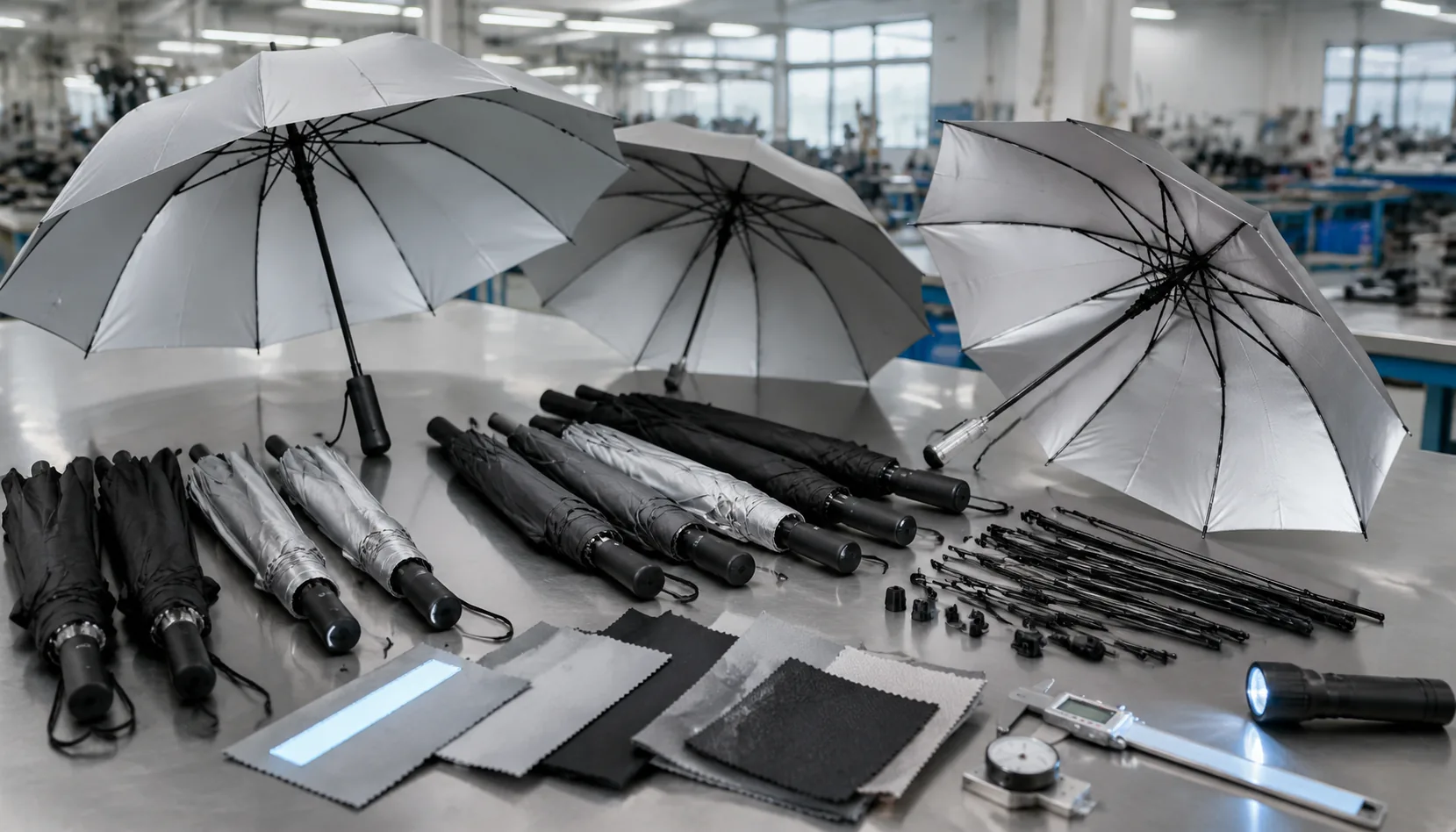
Reflective Umbrellas for Commuters: Buyer Spec Guide
Specify reflective commuter umbrellas with the right fabric, rib count, print placement, and QC checks for safer retail ...
Read More »
190T vs 210T Pongee Umbrella Canopy Fabric: Buyer Guide
Choose 190T or 210T pongee with confidence by comparing weight, print clarity, water repellency, UPF 50+, MOQ, and lead-...
Read More »
Water-Repellent Umbrella Canopies: Coatings Buyers Compare
Compare DWR, PU, and laminated umbrella coatings to balance runoff, hand feel, UV performance, and drying time across re...
Read More »