190T vs 210T Pongee Umbrella Canopy Fabric: Buyer Guide
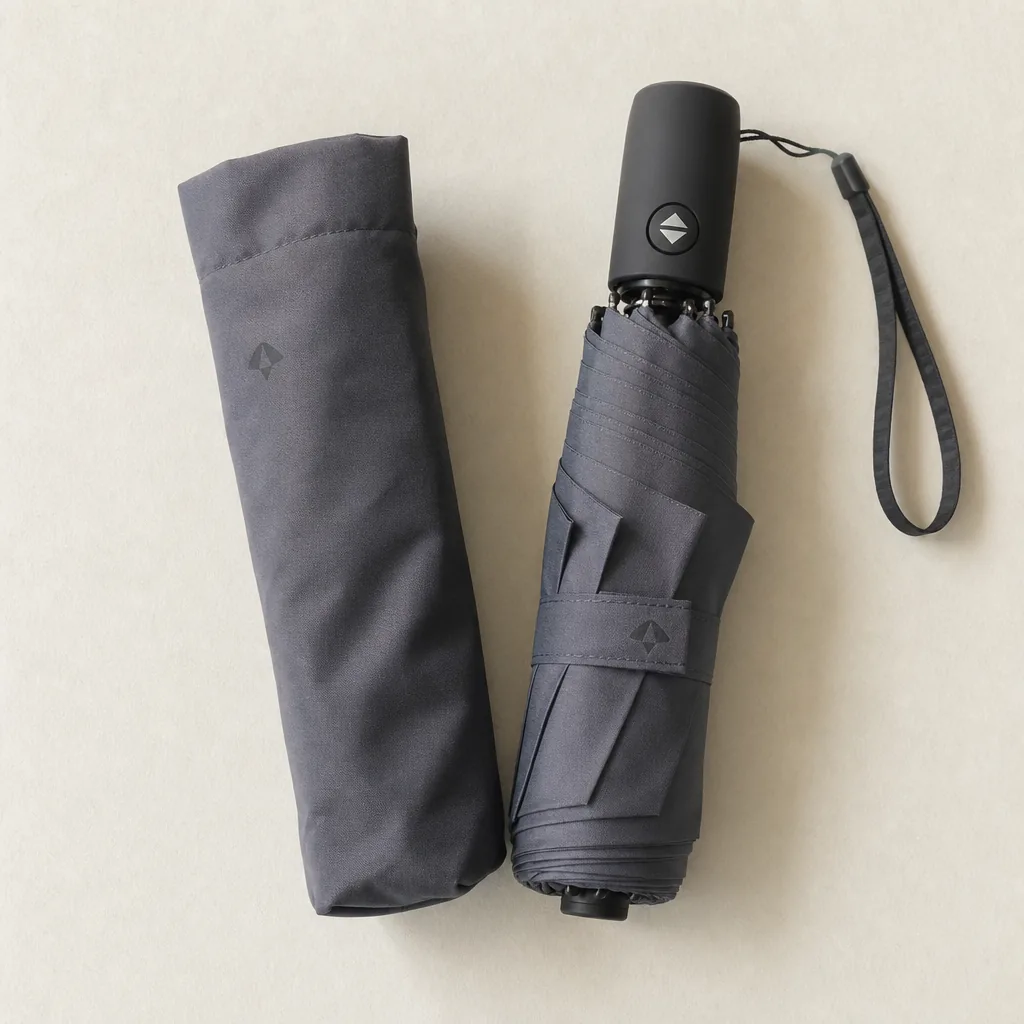
Choosing between 190T and 210T pongee umbrella fabric is usually less about a catalog spec and more about balancing hand feel, print sharpness, water resistance, UV performance, and unit cost against MOQ and lead time. On the factory floor, the real difference shows up in weave density, coating behavior, and how consistently the canopy runs on production lines, which is why the wrong choice can raise returns or slow delivery.
How Pongee Fabric Density Is Measured
190T and 210T are density ratings used for pongee umbrella fabric, and the higher number means a tighter weave with more yarns packed into the same area. In practical terms, 210T pongee usually feels a little firmer in the hand, hangs with a cleaner drape, and resists needle distortion better during panel sewing. 190T pongee is lighter in feel and often cheaper, but the lower yarn density can show up as a softer canopy edge, more visible puckering at seams, and slightly less consistent tension after heat cutting. On the floor, that difference matters because a canopy that feeds smoothly through stitching and binding machines gives fewer skipped stitches and less seam creep later in use.
Weight alone does not tell you enough. Two fabrics can weigh almost the same but behave very differently if one has a tighter weave, a different filament count, or a different finish. For umbrellas, density affects how the cloth blocks pinholes, how cleanly it accepts sublimation or screen ink, and how well it holds a sharp panel shape after repeated opening and closing. That is why umbrella print fabric for retail programs usually benefits from higher density, even when the buyer is not changing overall fabric GSM. If the product needs a cleaner logo edge, better color uniformity, or a more premium handfeel, density is often more important than chasing a small weight difference.
The point becomes obvious on a UPF 50+ umbrella or any canopy expected to see heavy handling, because a tighter weave gives the coating and print layer a more stable base. ZheBrella’s standard practice is to match density to the end use: 190T can be acceptable for low-cost promotion or short-life event umbrellas, while 210T is the safer choice for better drape, better sewing behavior, and stronger perceived quality. If the buyer wants wind resistance, UV performance, or a more polished retail presentation, I would look at density first, then confirm coating, yarn type, and seam construction before approving the spec.
Water Resistance, Coatings, and Drying Time
Water resistance starts with the base cloth, but the coating decides how the umbrella behaves in real rain. A 190T pongee canopy with a light PU backing sheds water well, keeps the hand feel soft, and usually dries faster than heavier laminated builds because the coating does not trap as much moisture in the weave. A 210T pongee umbrella fabric has a tighter yarn count and usually gives better holdout under wind-driven rain, but once you add a thicker PU layer the canopy can feel stiffer and take longer to air out. For buyers comparing travel formats, that matters more than the catalog spec: a compact umbrella that stays wet in the bag is the one that causes odor complaints later.
Silver and black coatings solve different problems. Silver-coated canopies reflect solar load, so they are common on an UPF 50+ umbrella where heat rejection matters as much as rain resistance, but the metallic layer adds some weight and can make the canopy less packable if the coating is heavy or uneven. Black coatings are less about sunlight and more about opacity and a cleaner look from the inside; they also help hide the wet-water patching that cheap umbrella print fabric can show after repeated use. In practice, a well-applied black PU back coat usually gives the best balance for retail packaging because it keeps the umbrella compact, lowers visual clutter, and dries without leaving the shiny, plasticky look some buyers dislike.
Drying time is mostly a function of coating thickness, not just the fabric itself. On pongee umbrella fabric, a thin PU layer beads water and shakes off quickly, while a thick silver or multi-layer black coating can hold droplets on the surface longer and slow evaporation. That extra retention also affects odor control after rain, because trapped moisture in the canopy and sleeve is what leads to mildew smells in cartons, closets, and car trunks. If the umbrella is meant for commuters, I would avoid overcoating unless the use case truly needs extra UV or blackout performance. The better tradeoff is a reasonably tight 190T or 210T weave with a controlled coating weight, so the umbrella stays light enough for daily carry, packs down cleanly, and does not come back from the field smelling damp two days later.
Print Quality and Color Consistency
For print quality, 210T pongee usually gives you a cleaner result because the yarn count is tighter and the surface is more stable under heat transfer, screen printing, or sublimation. On a dark canopy, that matters: thin lines hold better, small text stays legible, and solid blocks look denser instead of uneven or slightly grainy. If the program needs a premium-looking umbrella print fabric, 210T is the safer choice, especially for logos with gradients or tight registration. It also pairs better with an UPF 50+ umbrella spec because the tighter weave helps the coating sit more evenly across the panels, which reduces visual patchiness after curing.
190T pongee still has a place, but mainly when the buyer is building a value program and accepts a little more print drift. It can handle simple one-color logos, basic spot art, and lower-risk giveaways without trouble, especially on 21" or 23" folding styles where the canopy area is smaller. The limitation is that 190T pongee shows seam lines and panel distortion more easily, so if the pattern crosses a seam, the artwork needs more tolerance. In our standard practice, we check whether the logo sits on a single panel or spans multiple panels before locking the print method, because a design that looks fine on a flat proof can move once the canopy is sewn and tensioned.
Color consistency depends as much on cutting and sewing as on the fabric spec itself. If the panels are not cut with the same grain direction, a batch of pongee umbrella fabric can show slight shade differences under the same ink because light reflects differently off each panel. That is why panel alignment, seam visibility, and batch-to-batch color matching need to be controlled together, not treated as separate issues. For repeat orders, we hold shade standards against a physical master sample and watch for drift across dye lots, especially on navy, red, and charcoal where mismatches are easiest to see. The cleaner the print requirement, the more 210T pongee helps, but even then you still need AQL checks on sewing tension and panel registration if you want the finished umbrellas to match across production runs.
Sun Protection and Color-Fast Requirements
If you want a real UPF 50+ umbrella, do not accept a vague marketing claim on the carton. Specify the test standard in writing, usually AS/NZS 4399 or the equivalent lab method your buyer requires, and require the test to be run on the finished canopy after coating and printing, not on the raw cloth. With pongee umbrella fabric, the base weave matters, but the UV blocking usually comes from the coating system, the yarn density, and the final color. A true 210T pongee generally gives you more cover than a loose 190T pongee because the fabric is tighter and less porous, but the coating is what pushes the result into UPF 50+ territory. For procurement, I would call out the minimum UPF value, the test report date, and whether the result applies to unprinted fabric or the final umbrella canopy.
Colorfastness is where buyers get burned, especially on umbrella print fabric. If you are printing logos or full panels, specify the testing method up front, such as ISO 105-B02 for light fastness and ISO 105-C06 for wash or rubbing where relevant, even though the umbrella is not a garment. For outdoor use, I would also ask for wet-rub and dry-rub results, because a coated 190T pongee can look fine on day one and still bleed on a rainy event if the pigment system is weak. Darker colors usually improve UV blocking because they absorb more radiation, which is why black, navy, and deep green often outperform pale shades in a UPF 50+ umbrella. The tradeoff is that darker dyes and higher-grade disperse printing systems usually raise material cost and can add test time if the factory needs to rework the color formula.
Coatings change both performance and production reality. A PU, silver, or acrylic UV coating can improve the lab result and help the canopy hold color, but each coating has a different hand feel, drying time, and minimum curing window. That is why a coated 210T pongee often costs more than a plain 190T pongee and can add several days to lead time if the mill or sewing line needs extra curing or inspection. If the umbrella is intended for retail or promotions, I would lock the spec to the exact cloth weight, coating type, print coverage, and final color standard before sampling, then require a cut panel retention sample. On factory orders, the difference between acceptable and rejected usually comes down to whether the buyer defined performance at the fabric stage or only after the umbrella was already assembled.
Ordering Fabric by the Roll or by the Program
When buyers order pongee umbrella fabric by the roll, the first question is MOQ, because mill setup and dye-lot consistency drive the economics. For 190T pongee, a practical MOQ is usually one full roll per color, often around 1,000 to 2,000 linear meters depending on roll width and mill policy; 210T pongee usually sits in the same range but can move slower because the heavier weave costs more and takes longer to weave and inspect. If you only need one logo program, ask whether the supplier can combine a stock base cloth with custom printing instead of opening a fresh dye lot. That is where pongee umbrella fabric gets expensive fast if the order is too small. ZheBrella typically treats roll orders as a production program, not a one-off craft order, so the quote should clearly separate fabric mill MOQ, printing MOQ, and finished umbrella assembly MOQ.
Sample yardage should be requested before any bulk commitment, and it needs to be enough to judge hand feel, coating, and print behavior. A pre-production swatch set should include unprinted fabric, printed fabric, and if relevant an PU or water-repellent coated sample, because the same 190T pongee can look acceptable in raw form and still fail on color density or ink bleed after printing. For an umbrella print fabric approval, ask for at least A4 swatches and one larger cut, ideally 0.5 to 1 yard, so you can check thread count, coating uniformity, and how the fabric folds around ribs. If you are specifying a UPF 50+ umbrella, request the lab basis for the UV claim, not just a hang tag, because black-out coating, silver coating, and fabric density all change the result.
Lead time is affected more by fabric choice than many buyers expect. Standard stock 190T pongee can move into cutting faster, while 210T pongee often adds several days because weaving, heat-setting, and inspection are tighter. Custom color matching, digital or screen printing, and special finishes such as Teflon water repellency or UV blocking can add 7 to 15 days before the canopy even reaches sewing. The cleanest way to approve a full order is to ask for a pre-production swatch, then a stitched pilot sample from the actual canopy pattern, so you can verify seam alignment, panel size, and print placement before releasing bulk. For larger programs, approve by swatch, then by pilot umbrella, then by mass production lot; that sequence prevents surprises in shade variation, ink migration, and panel shrinkage that are common with pongee umbrella fabric.
Frequently Asked Questions
Which fabric is better for full-color logo printing?
210T pongee usually gives a smoother, denser surface and slightly better image definition. For simple logos or cost-sensitive promotions, 190T is often acceptable if color matching is controlled.
Can a pongee canopy be specified with UPF 50+?
Yes, but the claim should be tied to the full fabric system, not density alone. Ask for lab testing on the finished canopy, because coating, dye, and color all affect UV performance.
What is the practical difference in weight between 190T and 210T pongee for umbrellas?
210T pongee is typically denser and slightly heavier than 190T, which can improve the hand feel and print sharpness. In sourcing terms, the price gap is usually modest, but 210T is often chosen for premium retail umbrellas while 190T is common for cost-sensitive promo orders.
Which fabric is better for detailed logo printing on custom umbrellas?
210T pongee usually gives cleaner edges and stronger color saturation because of the tighter weave. For simple one-color logos, 190T is usually enough; for full-panel artwork or fine gradients, 210T is the safer choice.
What MOQ and lead time should a buyer expect for 190T or 210T umbrella canopies?
For OEM/ODM orders, many factories set MOQ around 500 to 1,000 pieces per color or design, depending on frame type and print method. Sample development often takes 5 to 10 days, while bulk production is commonly 20 to 35 days after artwork approval.
Looking to Launch Your Custom Umbrella Line?
ZheBrella is a Zhejiang-based OEM/ODM umbrella manufacturer with 17 years of export experience. Free design, low MOQ from 100 pieces, windproof construction, full-color print.
Get Free Quote Now »People Also Search For
Related Articles
Pongee 190T vs 210T Umbrella Canopies: Buyer Spec Guide
Learn how 190T and 210T pongee differ in hand feel, opacity, print quality, and cost so you can spec the right canopy fo...
Read More »
Choosing Canopy Fabric for Custom Umbrellas: Weight, Feel, and Finish
Learn how canopy fabric weight, weave, and coating affect print quality, water resistance, UV protection, and landed cos...
Read More »
Buyer Guide to Sun and Rain Umbrella Specs for Dual Use
Specify one umbrella for sun and rain with the right fabric, frame, coating, and testing so retail and promo programs me...
Read More »