Choosing Canopy Fabric for Custom Umbrellas: Weight, Feel, and Finish
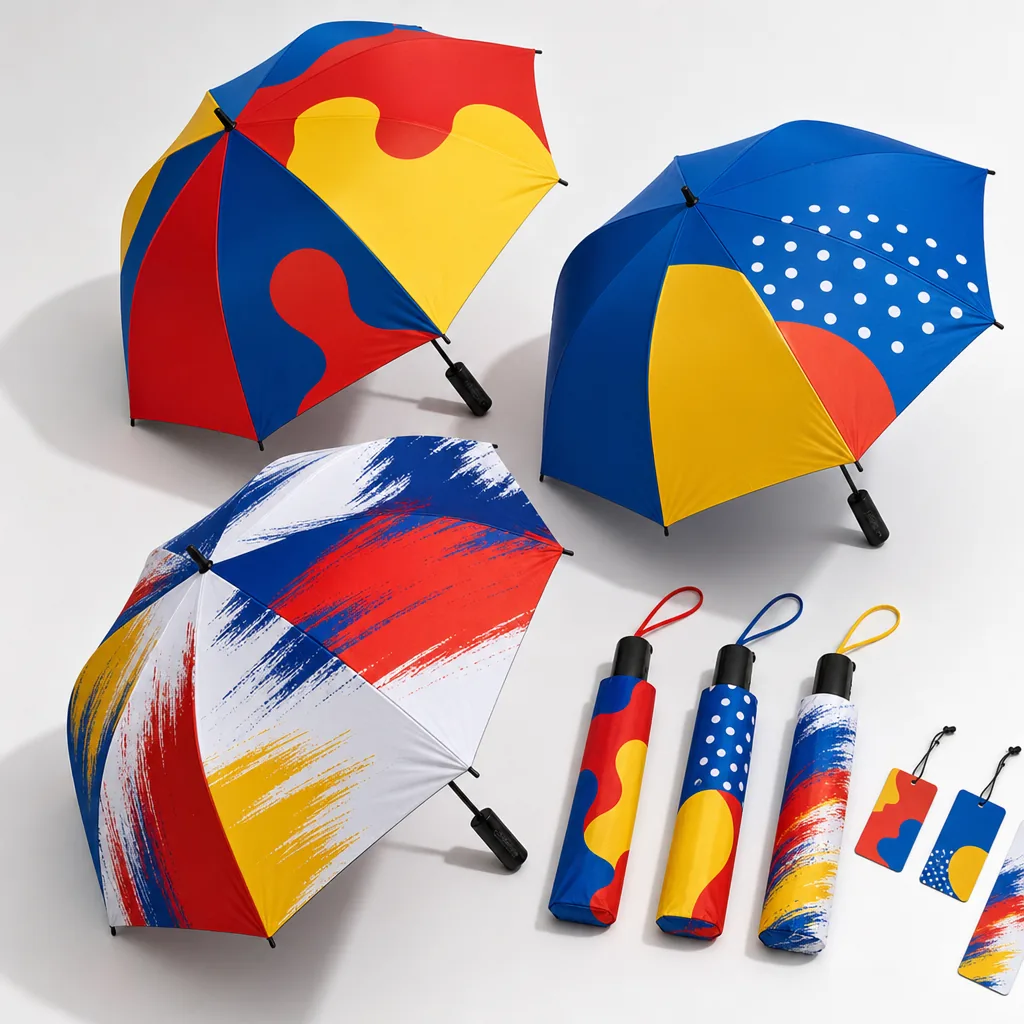
Choosing the right umbrella canopy fabric is rarely about looks alone. On the factory floor, we see how weight, weave, and coating change everything from print sharpness and hand feel to water resistance, UV performance, seam stability, and landed cost. For buyers balancing brand appearance with real-world durability, the wrong fabric choice can create rejects, complaints, and hidden cost overruns.
What 190T and 210T pongee mean in procurement
In procurement, 190T and 210T pongee are fabric codes, not brand names. The “T” refers to the weave density in a fixed area, so 210T is tighter than 190T. On umbrella canopy fabric, that usually means a firmer hand, slightly better opacity, and a smoother surface for sewing and print registration. That is why pongee 190T 210T dominates custom umbrella orders: it is light enough for folding umbrellas, durable enough for repeated opening and closing, and easier to cut and stitch than heavier laminates or PVC. For a standard polyester umbrella canopy, 190T is typically the entry option, while 210T adds material cost but improves how the canopy hangs over the ribs and how it looks in solid colors or under dark artwork.
190T is the lower-cost choice. It drapes more loosely, feels softer in hand, and works well for volume promotional programs when paired with a basic water repellent coating. 210T costs more per unit, but the denser yarn spacing improves shape retention, reduces light bleed, and gives a cleaner retail appearance. On common 21-inch, 23-inch, and 27-inch umbrellas, the difference is visible but not dramatic; the bigger issue is landed cost across large runs. If the brief calls for a premium finish or an UPF 50 umbrella position, 210T is usually the safer spec because it holds coating and color more consistently.
Buyers should specify the full package, not just the thread count: base cloth, coating, print method, and inspection standard. A 190T or 210T polyester umbrella canopy can be finished with a water repellent coating, but performance still depends on sewing quality and the chosen finish. Ask for swatches, confirm gsm or denier if available, and lock in an AQL 2.5 inspection plan before production. That reduces the risk of uneven opacity, weak drape, or poor print results. For most custom orders, the decision is straightforward: 190T for price-sensitive giveaways, 210T for better presentation and a more durable retail impression.
Polyester, nylon, and pongee in B2B use cases
Polyester is the lowest-cost umbrella canopy fabric that still works for most B2B programs. For giveaways, trade-show handouts, and short-life promotions, a 190T polyester umbrella canopy is usually enough: it dries quickly after rain, accepts screen print or heat-transfer logos with acceptable edge definition, and keeps unit cost down. Nylon can feel lighter, but it is less dimensionally stable under heat and UV, so it is a poor fit when print consistency and long-term shape matter more than weight. If the order is built around basic branding, fast turnaround, and low landed cost, polyester remains the practical choice. A standard 21" or 23" giveaway umbrella with steel ribs is typically the right platform for this material.
Pongee is the better umbrella canopy fabric when the product needs to look and sell like retail or a gift item. Pongee 190T and 210T have a tighter, more even weave than basic polyester umbrella canopy materials, so logos print cleaner, color laydown is more uniform, and image distortion is lower on curved panels. It also takes a water repellent coating more evenly, which helps droplets bead and run off instead of soaking into the cloth, and it is a better base for a UPF 50 umbrella because the denser weave helps reduce pinholes and visible light leakage. In practical terms, pongee gives you faster visual recovery after rain and a cleaner presentation under store lighting.
Durability is where the sourcing decision usually becomes obvious. Polyester is adequate for low-price 21" or 23" umbrellas with steel ribs when the buyer expects normal wear, some fade, and a shorter service life. Pongee is preferred for 23", 27", and 30" retail umbrellas, hotel amenities, and branded gift programs where drape, stitching appearance, and panel shape retention affect perceived value. Nylon is rarely the best middle ground because it trades print stability for a lighter hand feel. If you need a promotional item, choose polyester; if you need a retail or gift program with stronger shelf appeal and better finish, choose pongee.
Coatings that change performance: DWR, PU, and UV layers
Buyers should separate three coating functions before approving umbrella canopy fabric: water shedding, anti-drip performance, and UV blocking. On a polyester umbrella canopy, a DWR water repellent coating makes droplets bead and roll off, while a light PU back-coating slows strike-through but usually adds weight and a firmer handfeel. With pongee 190T or 210T, the tighter weave helps the finish look more even, but coating quality still determines whether the surface dries cleanly after repeated open-close cycles or turns patchy. Anti-drip finishes matter most on folding umbrellas because they keep the collapsed canopy from dumping water onto the user, the handle, or retail packaging. Buyers should also inspect seam lines and hem edges: if needle holes are oversized or the edge is poorly heat-set, water can travel through the stitch line even when the face fabric passes a basic spray test.
For sun products, a UPF 50 umbrella should be specified as a measured result, not inferred from color or darkness. A UV layer may be applied over the base cloth, but the purchase spec should state whether the rating applies to the raw umbrella canopy fabric, the printed fabric, or the finished canopy after sewing. Dark dyes alone do not guarantee protection, and vents, seams, and edge binding can reduce the effective rating. When sampling, verify the coating claim on the actual production color and construction, then ask for the test method, sample condition, and whether results were taken before or after printing and washing. Avoid vague claims like “UV proof”; ask for the exact basis of the UPF 50+ report and check that the supplier’s sample matches the planned lot.
Sample checks should be practical and tied to production risk. Ask for a spray rating test, a wetting-and-dry cycle, and a wipe test to see whether the finish leaves residue, whitening, or a sticky handfeel. After drying, inspect for streaking, gloss change, and uneven coverage between panels, then repeat the test after several open-close cycles to confirm the water-repellent coating still beads and does not absorb along the seams. For purchased lots, keep the approval standard tied to the production sample and an acceptable defect level such as AQL 2.5 for appearance issues, so the coating is judged on the same umbrella canopy fabric you will actually ship, not only on a clean preproduction swatch.
How fabric choice affects decoration and color matching
Umbrella canopy fabric drives decoration quality as much as the artwork file. A polyester umbrella canopy in pongee 190T or 210T gives a tighter, flatter print surface than a looser weave, so screen print edges stay cleaner, heat transfer bonds more evenly, and sublimation reproduces smaller type with less feathering. Denser fabric also cuts show-through from ribs, stitches, and seam allowances, which matters when a logo crosses a panel seam or the umbrella is held against light. On 10K and 16K frame constructions, the fabric is usually under more even tension, so the graphic reads more consistently across the canopy. That does not fix poor art prep, but it gives the printer a more stable base and usually improves logo sharpness at the canopy level.
Sublimation works best on white or very light pongee 190T/210T because the dye penetrates the fiber instead of sitting on the surface, which makes it the best choice for full-panel graphics, gradients, and photo-style color. Dark fabric usually pushes buyers toward screen print or heat transfer instead. Heat transfer can work well on a smooth polyester umbrella canopy, but a heavy water repellent coating can reduce adhesion and cause fine edge lift or pinholes in small text. If the product is specified as a UPF 50 umbrella, the UV finish can change surface gloss and apparent color, so decoration should be approved on the finished panel, not only on a Pantone swatch. A production sample should be checked under daylight and indoor LED before bulk release.
Treat decoration approval as a fabric-and-finish decision, not just a print decision. Ask the factory to test the chosen method on the same lot of umbrella canopy fabric, because coating level and cure conditions can change ink anchorage and transfer bonding. Review logo sharpness, opacity, and backlight show-through on the actual panel, then confirm the result after drying or heat pressing. For repeat orders, lock the spec to the exact cloth type, weave count, and finish so the printer does not have to compensate with heavier ink, extra heat, or multiple passes. That reduces rework risk and keeps color matching tighter across replenishment runs.
Spec checklist for RFQs and sample approval
Lock the umbrella canopy fabric spec before bulk cutting. Start with the base cloth: pongee 190T or 210T for a smoother, tighter face, or a polyester umbrella canopy if cost and stiffness matter more than handfeel. Then list the finished weight in gsm, weave, yarn count if available, and the coating on the face or back. If the product needs sun protection, require UPF 50 umbrella performance and name the test method; “UV coated” is not enough to control output. Add the target handfeel—soft, crisp, or dense—because that affects resin add-on, coating thickness, fold recovery, and panel behavior on a 21" compact frame versus a 30" golf frame. Tie those choices to the end use so the supplier knows whether to prioritize pack size, wind performance, or print sharpness.
Color, shrinkage, and finish need the same level of control. Specify Pantone or LAB targets for the canopy and state whether the approved strike-off becomes the master standard for bulk. Require a numeric shrinkage limit after heat and water exposure, plus the test method used. For repellency, name the finish type—DWR, PU, or acrylic—and the target spray rating so the water repellent coating has a measurable result. For printed programs, define color placement tolerance and panel-to-panel shade variation. Approve lab dips, strike-offs, and pre-production panels against the signed standard under both daylight and warehouse light, because shade shift often appears only on full panels or after coating.
Write seam tape and inspection requirements into the RFQ. For vented or double-canopy styles, specify tape width, adhesive type, and full edge coverage after needle perforation. For sewn seams, define SPI, thread type, and whether the seam holes must be sealed for rainproof use. Link the spec to AQL 2.5 by defining critical, major, and minor defects before production starts: coating pinholes, color drift outside tolerance, shrinkage over limit, tape lift, and seam slippage should already be classified. That gives the factory one approval standard, one sealed reference sample, and one lot-record trail for production consistency. If a lot fails, the buyer can reject it on the same numbers used at sample approval, not on subjective judgment.
Frequently Asked Questions
Is 210T pongee always better than 190T?
Not always. 210T usually feels a bit denser and more premium, but 190T can be perfectly suitable for bulk promotional umbrellas when price and volume matter more than hand feel.
Can UPF 50+ be added to any umbrella fabric?
Not by default. The fabric, weave density, and coating system all matter, and the finished umbrella should be tested or documented to support the UPF claim before buyers approve it.
How does 190T compare to 210T pongee for custom umbrella canopies?
210T pongee is generally denser and feels slightly heavier than 190T, which can improve print sharpness and hand-feel. In most projects, 190T is chosen for lower landed cost, while 210T is selected when the buyer wants a more premium look or better opacity.
Does a water-repellent coating change how the umbrella prints?
Yes. A standard DWR or water-repellent finish can slightly affect ink absorption and surface feel, so print tests are recommended before mass production. For full-color logos or photo prints, factories often adjust the fabric finish or print process to keep colors consistent.
What canopy fabric specs are best for UPF 50 umbrella orders?
For UPF 50, buyers usually ask for tightly woven polyester or pongee with a dark inner coating or silver backing, depending on the design. Final UV performance should be confirmed with lab testing, since fabric weight alone does not guarantee UPF 50.
Looking to Launch Your Custom Umbrella Line?
ZheBrella is a Zhejiang-based OEM/ODM umbrella manufacturer with 17 years of export experience. Free design, low MOQ from 100 pieces, windproof construction, full-color print.
Get Free Quote Now »People Also Search For
Related Articles
Choosing Umbrella Canopy Coatings for Rain and UV Sales
Compare canopy coatings for rain and UV products, including water repellency, UPF 50+, hand feel, and order specs buyers...
Read More »
UPF 50+ Umbrellas: Choosing Fabrics, Coatings, and Frames
Learn how to specify UPF 50+ umbrellas with the right fabric, coating, frame, and venting for outdoor retail, events, an...
Read More »UPF 50+ Umbrella Fabric and Frame Guide for Sun Protection
Specify fabrics, coatings, canopy coverage, and frames that deliver UPF 50+ performance for retail and promotional sun u...
Read More »