Reflective Logo Printing for Branded Umbrella Safety Campaigns
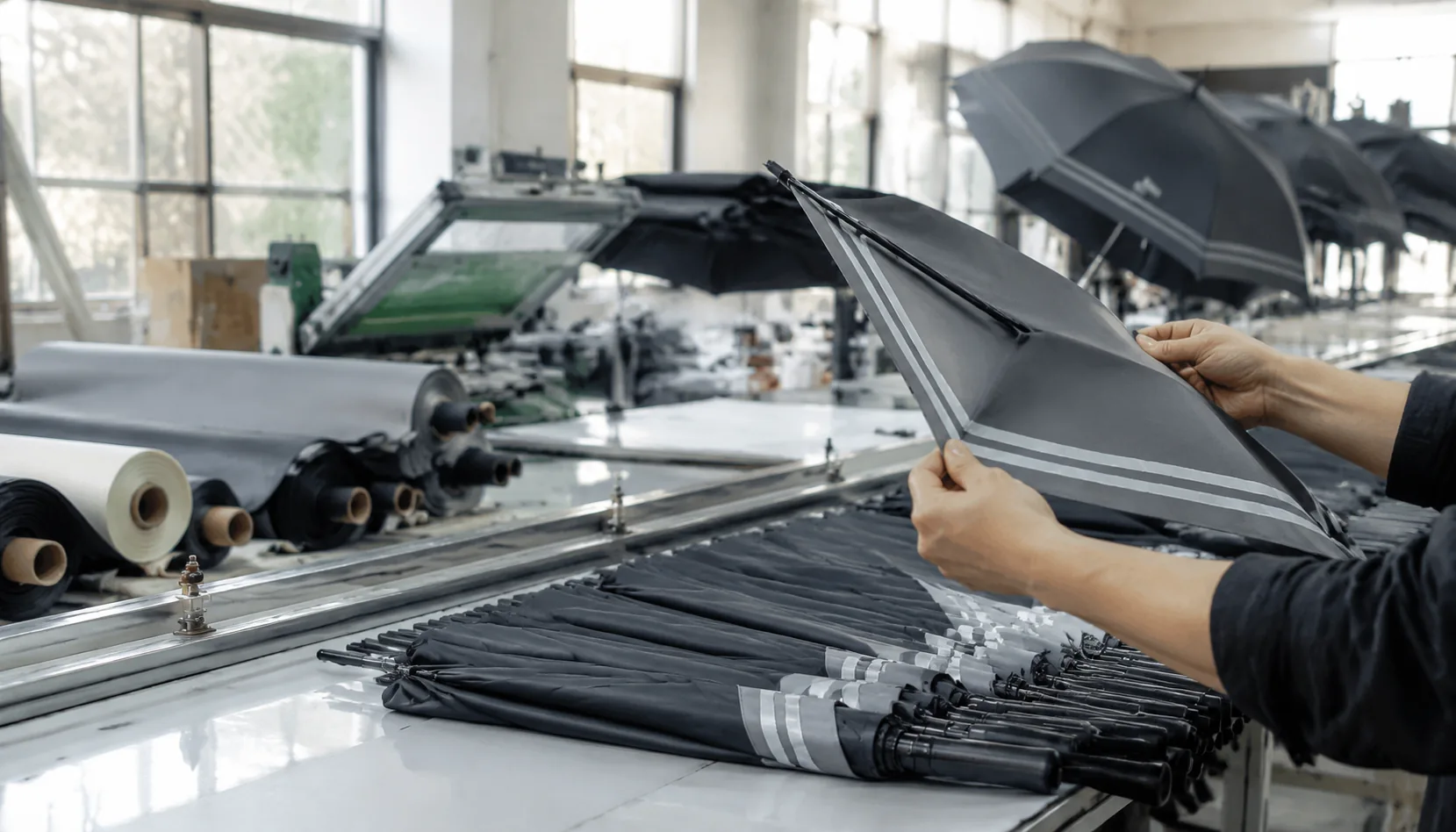
Buying reflective logo umbrellas for safety campaigns sounds simple until the print dulls under streetlights, the coating flakes after a few rains, or the frame fails before the event ends. From the factory floor in Songxia, we see the same pattern every season: the right result depends on matching fabric, reflective ink, rib construction, and test standards to your MOQ and lead time, not just placing a logo on a canopy.
Where Reflective Branding Works Best
Reflective branding earns its keep in places where people move near vehicles or in low light: road safety campaigns, school crossings, university security patrols, warehouse yards, logistics depots, hotel entrances, and event parking zones. For these jobs, I prefer a 23" or 27" straight umbrella with 190T or 210T pongee, fiberglass ribs, and an auto-open frame, because the user is often carrying a radio, clipboard, parcel scanner, or traffic baton. A small reflective logo on two opposite panels, plus a reflective binding or strip near the canopy edge, gives drivers a moving light catch without turning the umbrella into a glare sheet. These are the reflective logo umbrellas that actually get used, not just photographed for a procurement file.
Running events and night-shift hospitality teams have different pressure points. Marshals at a 5K or marathon need high visibility umbrellas that can survive gusts around open roads, so a double-canopy vented 27" model with 8K or 10K fiberglass ribs is a safer choice than a cheap steel-rib giveaway. Hotel doormen, valet teams, and resort security usually care more about presentation, so black, navy, or charcoal pongee with a silver reflective transfer keeps the brand premium while improving visibility at curbside. For corporate safety giveaways, I would not overload the canopy with slogans. A compact logo, emergency hotline, or campaign mark prints cleaner, passes inspection more reliably under AQL 2.5, and still reads when the umbrella is tilted in rain.
Reflective umbrella printing works best as accent branding because retroreflective ink or film is functional material, not normal decoration ink. Large reflective areas add stiffness, increase transfer risk on folded panels, and can crack faster at rib contact points after repeated wet folding. Full-canopy decoration also creates uneven hand feel and may interfere with water repellency if the surface treatment is not controlled after printing. Our standard practice at ZheBrella is to keep reflective elements on high-movement visual zones: panel edges, alternating lower panels, sleeve logos, or a vertical strip aligned with a rib seam. That placement gives branded safety umbrellas a useful visibility signal while leaving the main canopy available for Teflon coating, UPF 50+ treatment, or standard screen and heat-transfer branding.
Choosing Fabric, Color, and Reflective Materials
For safety campaigns, I usually start with 190T or 210T pongee because both print cleaner than cheap polyester, but they behave differently under reflective work. A 190T pongee canopy is lighter, folds smaller, and is fine for 21" or 23" auto-open promotional umbrellas where the logo area is moderate. A 210T pongee has a tighter weave and slightly better hand feel, so reflective transfer film sits flatter and screen-printed reflective ink has less edge bleeding. If the buyer wants reflective logo umbrellas for daily staff use, a 23" or 27" frame with 210T pongee and fiberglass ribs is the safer specification than a low-cost steel 8K frame, especially if the campaign is tied to road work, school crossings, or night events.
Dark canopy colors make reflective elements work harder. Black, navy, charcoal, and forest green give the best contrast for reflective umbrella printing, while white or silver can make the reflective logo look weak in daylight and less obvious under headlights. Reflective ink is the softest option and works well for simple corporate marks, but it needs controlled curing and usually cannot match the brightness of transfer film. Reflective transfer film gives sharper logos and stronger nighttime return, but it adds a slightly stiffer hand on 190T fabric. Sewn reflective tape is the most durable choice for high visibility umbrellas, especially around canopy edges or alternating panels, but it changes the sewing process because tape tension can distort panel shape if the operator pulls too hard.
The surface finish matters as much as the reflective material. UPF 50+ coatings, Teflon-style water-repellent finishes, and silicone-heavy repellents can reduce adhesion, so we never approve branded safety umbrellas from artwork alone. Our standard practice at ZheBrella is to run a small panel test before bulk cutting: cross-hatch adhesion, wet rub, fold testing, and at least 24 hours after curing before judging the result. For corporate safety giveaways, I would specify the fabric color, coating, reflective method, logo size, and test standard in the purchase order, then inspect under AQL 2.5 with special attention to peeling, cracking on fold lines, panel distortion, and inconsistent reflectivity between panels. That prevents a good-looking sample from turning into a field complaint after the first rainstorm.
Frame Specs That Support Safety Positioning
For safety-driven programs, fiberglass ribs beat steel almost every time when the umbrella is actually used outdoors, not just handed out for a photo. Steel adds weight and bends with a hard set; fiberglass flexes and springs back, which is what you want on commuter routes, campus walks, and roadside events where gusts hit from the side. For 8K and 16K stick umbrellas, that flexibility matters even more because the rib count changes how the load spreads across the frame. A well-built fiberglass frame gives reflective logo umbrellas a better chance of staying usable after repeated openings in bad weather, which is the real test for branded safety umbrellas. If the goal is corporate safety giveaways that people keep in a bag or by the door, frame durability matters more than a cheap cost delta on the first order.
Double-canopy windproof construction is the other frame detail worth paying for, because it lets air bleed through instead of turning the canopy into a sail. That matters on high visibility umbrellas used at outdoor activations, transit programs, and safety campaigns where the umbrella is expected to perform in wind, not just rain. I prefer auto-open mechanisms for those programs because one-handed opening is practical when someone is carrying a phone, badge, or tote; it also reduces fumbling in crowds. In reflective umbrella printing, you also want a frame that stays stable so the print area does not warp when the canopy snaps open. On production floors, the failures I see most are cheap steel ribs, weak runners, and loose stretch in the canopy, not the reflective film itself. The frame has to support the message first, or the branding looks good only on the sample table.
For commuter and event use, the safest spec is usually a fiberglass frame with a vented double canopy, auto-open release, and enough rib count to keep tension even across the panel seams. That combination gives reflective logo umbrellas better wind tolerance without making the umbrella heavy in the hand, which is important when people carry it for a full day. It also helps reflective umbrella printing stay aligned, since the canopy does not distort as much under load. If the campaign is focused on visibility near traffic, transit, or night events, the structure should support that message instead of fighting it. In practice, that means choosing a frame that survives real gusts, opens fast, and does not feel fragile after a few uses.
Artwork Size, Placement, and Night Visibility
For reflective logo umbrellas, writers should specify the artwork by usable width, not just by nominal file size. On a 21" or 23" folding canopy, a logo that reads cleanly at night usually needs to sit around 80-140 mm wide per panel, with minimum line thickness no thinner than 1.2-1.5 mm if the reflective film or ink is going to hold up after cutting, stitching, and repeated opening. Very fine serifs, hairline strokes, and dense gradients look good on screen and fail fast on fabric. For branded safety umbrellas and corporate safety giveaways, keep the mark simple: one strong icon, one line of text, and enough blank space around it so the reflective area can catch light instead of disappearing into the panel seams.
Placement matters as much as artwork size. Put the logo on one panel if the goal is low-cost brand recognition, on two opposing panels if you need a stronger side profile, or on alternating panels if the umbrella will be viewed from moving traffic or crowds. That alternating layout works well for high visibility umbrellas because it gives drivers and pedestrians multiple angles to catch the reflection. Avoid placing critical text near the seams, the runner, or the vent edges on double-canopy styles, because those zones distort the print and break the reflection line. For reflective umbrella printing, I usually ask for a panel map with exact center points and stitch offsets before production starts, otherwise the artwork ends up too close to a rib fold and loses legibility.
Night visibility should be tested the same way the umbrella will be seen in the real world: at 10, 20, and 30 meters under vehicle headlights or bright event lighting. That distance range tells you whether the reflective layer flashes back strongly enough or only looks acceptable in a close-up photo. For reflective logo umbrellas, ask for a mockup in both dry and wet conditions, because water on the canopy can change the contrast and make weak artwork disappear. If the campaign is for road crews, stadium ingress, or evening outdoor promotions, require a pass/fail sample with the umbrella held at walking height and at shoulder height. That is the only practical way to know whether the branded safety umbrellas will actually be visible when someone is moving, turning, or partially blocked by other people.
Sampling, QC, MOQ, and Shipping Timelines
Reflective logo umbrellas need sampling before price is treated as final, because reflective film behaves differently from ordinary screen ink on 190T or 210T pongee. For a pre-production sample, I want the buyer to approve three things: logo brightness under direct light, edge definition after heat pressing, and adhesion after the canopy is flexed on the frame. Our standard check is a cross-hatch adhesion test on the reflective area, followed by dry and wet rub testing, usually 20 cycles with white cotton cloth to catch silver transfer. On dark navy, black, or forest green canopies the logo reads stronger; on yellow or white, the reflective effect is weaker unless we add a contrast outline. Pre-production samples normally take 7-10 days after artwork confirmation, including film cutting, heat-transfer setup, and one round of photo or video review.
For QC, do not only inspect the printed panel flat on a table. Reflective umbrella printing must be checked after the canopy is sewn and tensioned, because ribs can pull fabric and crack a poorly cured logo near seam lines. We run open-close testing on representative pieces, typically 300 cycles for manual and auto-open models, and more careful checks on auto-open-close folding umbrellas where the canopy snaps harder. Inspectors also check rib alignment, runner lock, tip stitching, handle fit, and whether the reflective logo stays smooth after the umbrella is fully opened for 24 hours. Final inspection is normally AQL 2.5 for major defects and AQL 4.0 for minor defects, with reflective peeling, incorrect logo position, weak spring action, broken ribs, and water leakage treated as major issues for branded safety umbrellas.
MOQ depends on umbrella type and reflective process, not just logo size. For straight 23 inch or 27 inch corporate safety giveaways with one-position reflective transfer, a practical MOQ is usually 500-1,000 pieces per design; compact 21 inch auto-open-close models often start around 1,000 pieces because frame and handle sourcing is less flexible. Custom canopy color, UPF 50+ coating, fiberglass ribs, or double-canopy vented windproof builds can push MOQ to 2,000-3,000 pieces. Bulk production normally takes 30-45 days after sample approval and deposit, with extra time before rainy-season peaks or large retail packaging requirements. FOB Ningbo or Shanghai works best for importers with their own forwarder; DDP is better for event planners ordering high visibility umbrellas into the U.S. or EU who need duty, customs, and last-mile delivery bundled into one landed cost.
Frequently Asked Questions
Can reflective printing be applied to any umbrella fabric?
It works best on smooth 190T or 210T pongee in darker colors. Coated UPF 50+ fabrics need adhesion testing before bulk production.
Is reflective branding more expensive than standard screen printing?
Yes, reflective ink or transfer film usually costs more than standard one-color screen printing. The final cost depends on logo size, panel count, MOQ, and whether reflective tape is sewn into the canopy.
What fabric works best for reflective logo printing on umbrellas?
For most safety campaigns, polyester pongee or recycled polyester works well because it accepts reflective print cleanly and keeps the canopy smooth. A tighter weave usually gives better logo edge definition and more consistent reflectivity.
What MOQ is typical for branded safety umbrellas with reflective logos?
For OEM/ODM production, MOQ is often 500-1,000 pieces per design, depending on panel count, print method, and canopy color. If you need multiple logo placements or special reflective ink, the minimum may be higher.
How should reflective umbrella samples be tested before bulk order?
Ask for print adhesion, abrasion, rain exposure, and visibility checks under low-light conditions. For campaign use, many buyers also request wind testing for the frame and a 24- to 48-hour waterproofing check on the canopy.
Looking to Launch Your Custom Umbrella Line?
ZheBrella is a Zhejiang-based OEM/ODM umbrella manufacturer with 17 years of export experience. Free design, low MOQ from 100 pieces, windproof construction, full-color print.
Get Free Quote Now »People Also Search For
Related Articles
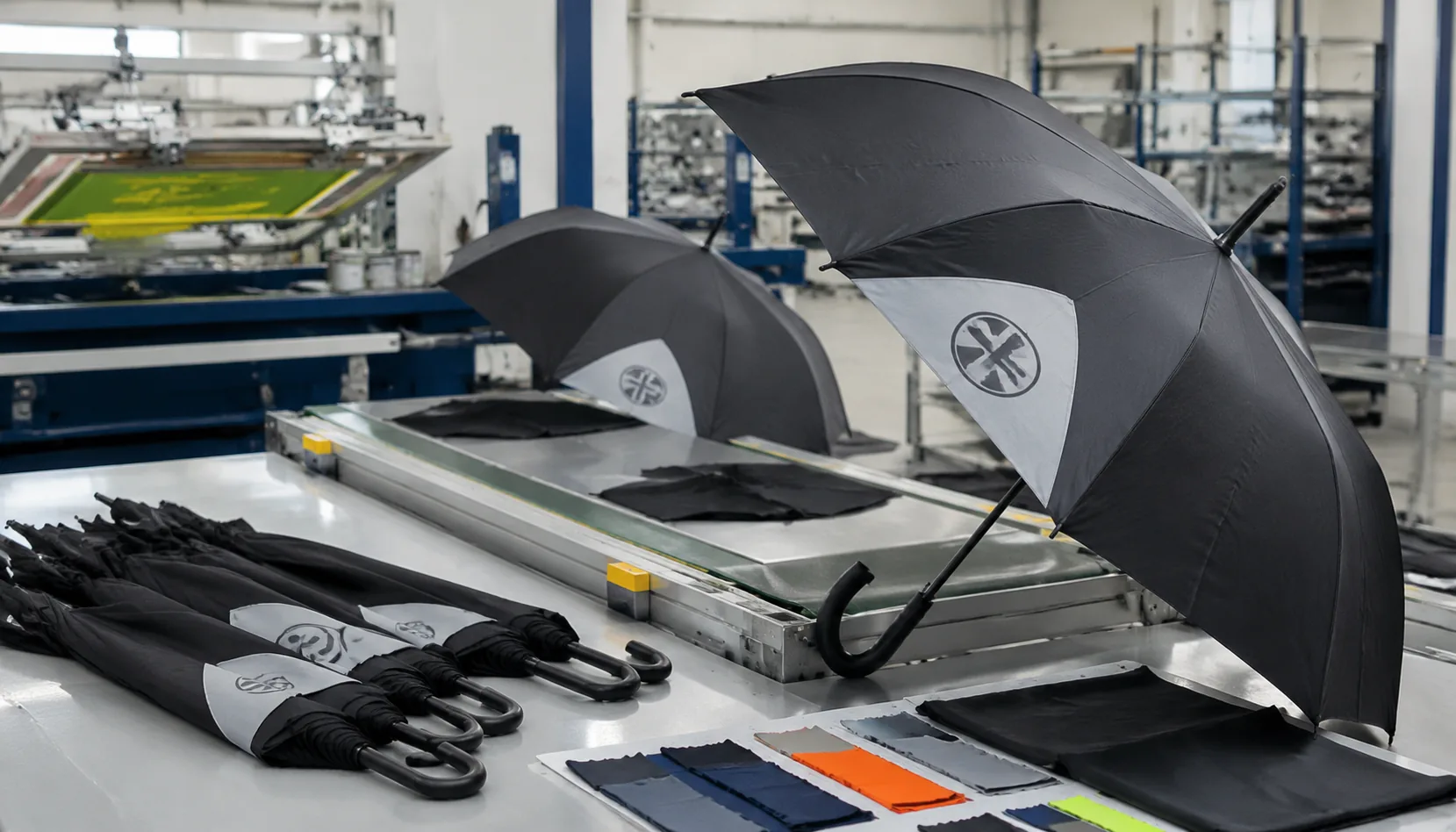
Reflective Logo Printing on Umbrellas for Safety Campaigns
Compare reflective logo placements, ink options, and AQL checks for umbrellas used in safety campaigns, outdoor events, ...
Read More »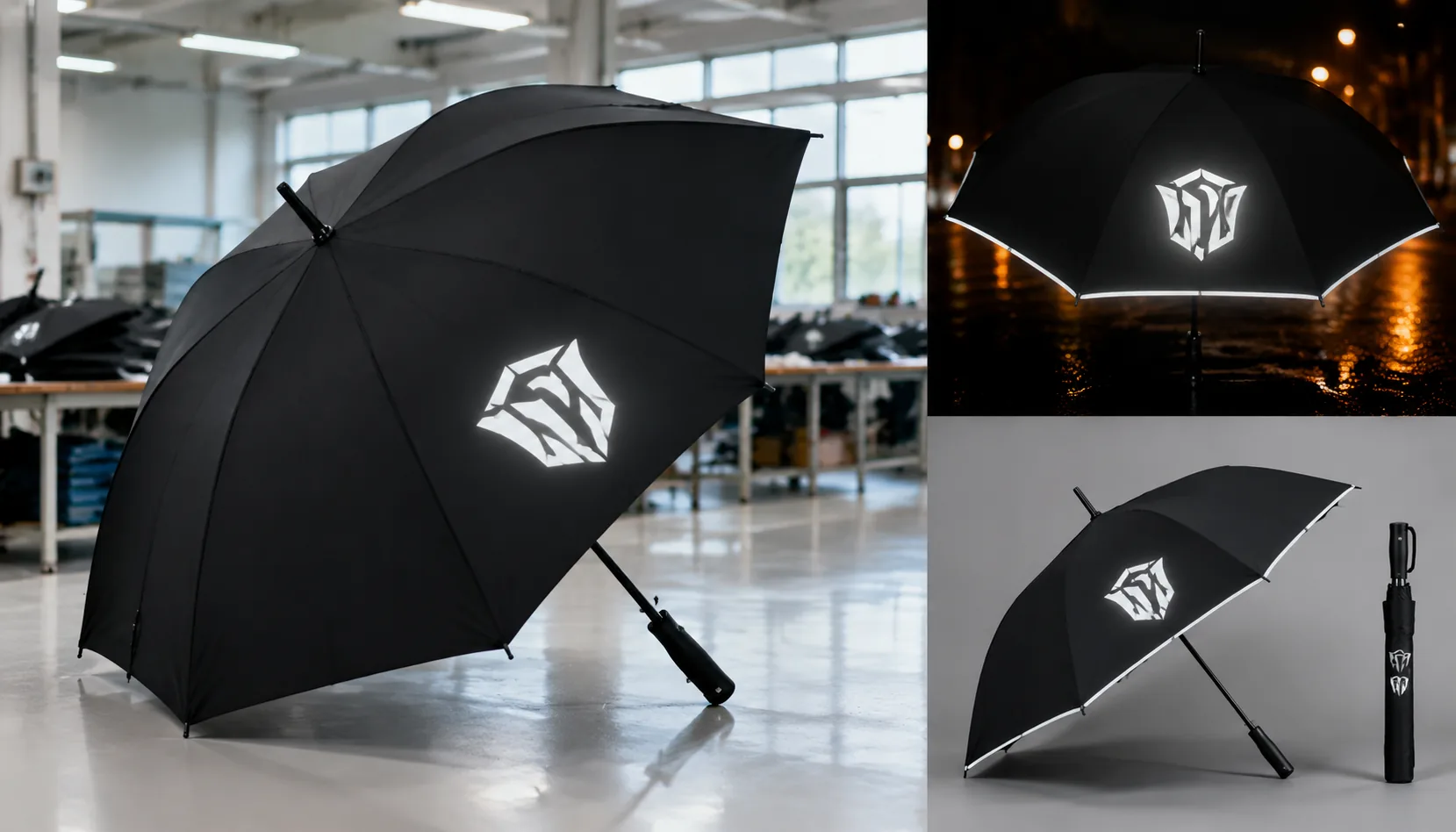
Reflective Umbrella Logos for Night Events and Safety Brands
Use reflective umbrella logos for night events, campuses, and safety brands while balancing visibility, durability, fram...
Read More »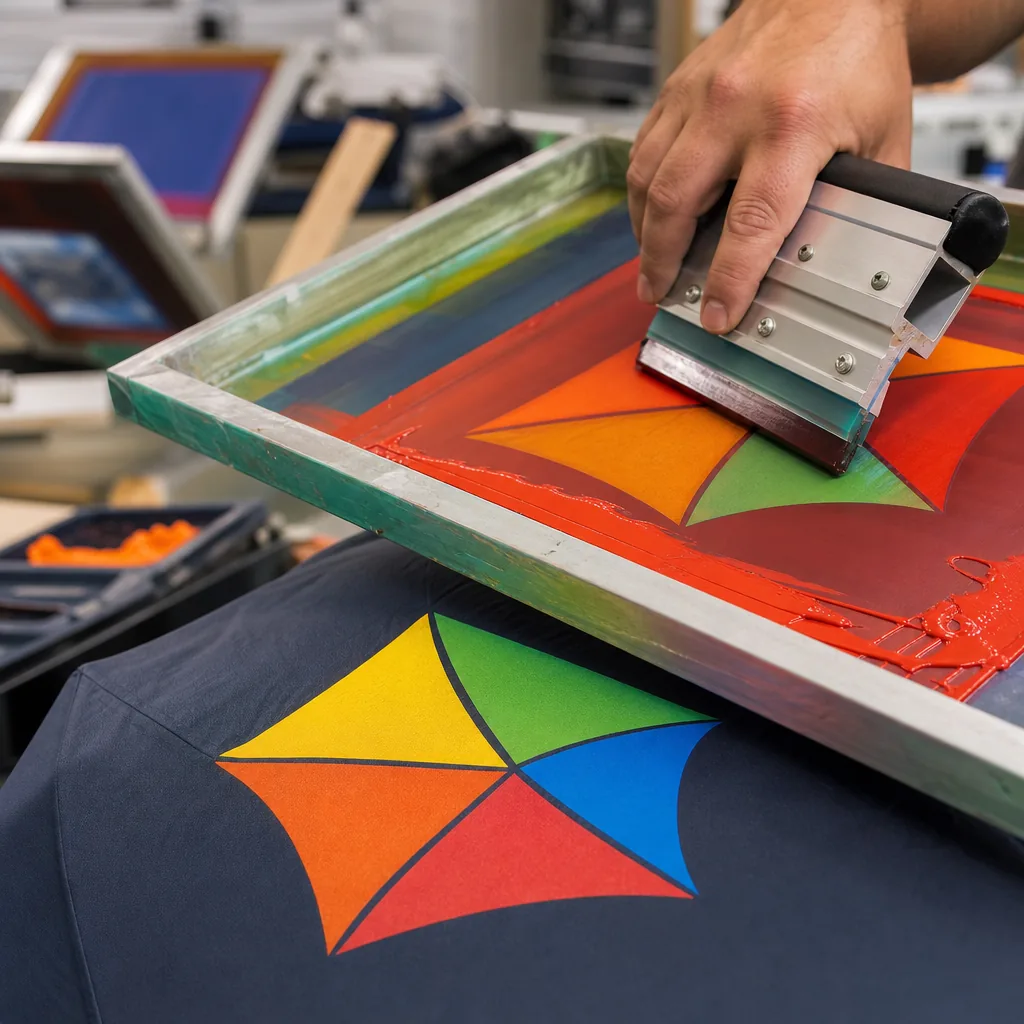
Reflective Umbrellas for Safety Programs: Materials and QA
Source reflective safety umbrellas with the right tape, prints, windproof frames, and AQL checks for utilities, campuses...
Read More »