Reflective Umbrellas for Safety Programs: Materials and QA
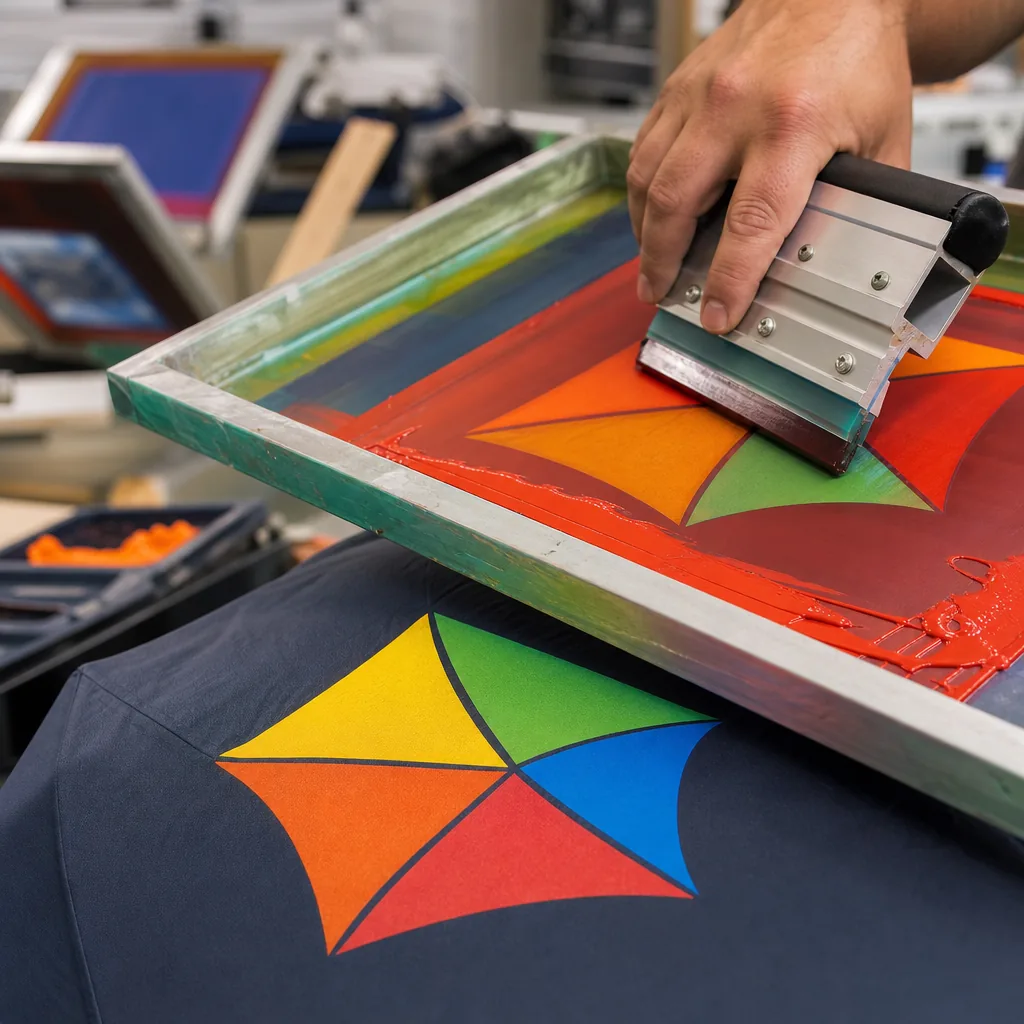
For utilities, campuses, worksites, and night events, reflective safety umbrellas fail fast when the tape curls, the print washes out, or the frame twists in gusts. On our Songxia production floor, we check reflective tape adhesion, panel alignment, ink cure, rib strength, and AQL sampling before bulk cartons close, because a safety program needs repeatable visibility and durability—not just a bright sample.
Match Reflective Umbrella Specs to the Use Case
Match the frame size to the job first, because visibility fails when the umbrella is too small, too weak, or too awkward to hold. For utility crews, parking teams, and road-adjacent staff, I normally specify straight 23" or 27" stick umbrellas with fiberglass ribs, a steel or fiberglass shaft, and an EVA or rubberized handle that can be gripped with wet gloves. An 8K frame is acceptable for basic patrol use, but 10K ribs give better canopy tension and less flutter beside traffic. For reflective safety umbrellas, the safest fabric setup is usually 190T or 210T pongee in fluorescent yellow, orange, or lime, with 360-degree reflective tape on every panel seam or as a wide perimeter band. If the user stands near moving vehicles, do not rely on a small printed logo as the visibility feature; reflective material must wrap the canopy where headlights actually catch it.
Campuses, transit stops, and parking operations need different details than highway work. A 23" auto-open straight umbrella is fast for guards and attendants who step in and out of rain, while a 27" model gives better shoulder coverage over radios, tablets, and ticket machines. For night events, branded safety umbrellas should balance crowd visibility with carry comfort, so we often use 190T pongee, black fiberglass ribs, reflective piping, and a logo printed below the reflective band instead of on top of it. Reflective umbrella printing can be screen print, heat transfer, or reflective silver transfer film, but the artwork must leave enough unprinted reflective area to pass a practical flashlight check at 30–50 meters. For schools and corporate campuses, UPF 50+ coating is worth adding because the same umbrella gets used for summer traffic control, sports events, and rainy-day crossing duty.
Golf umbrellas belong where staff stay posted outdoors for long periods, not where they must move through tight crowds. A 30" double-canopy vented windproof model with fiberglass ribs and shaft can survive 50+ mph wind-tunnel testing when the runner, tips, and rib joints are specified correctly, but it is bulky for employee kits. Compact 21" auto-open-close umbrellas fit onboarding packs, vehicle glove boxes, and emergency worksite rain gear, though their reflective surface area is smaller and the frame is less forgiving in gusts. High visibility umbrellas for fleet or municipal programs should be sampled in the actual use environment: under headlights, sodium streetlights, and rain glare, not only in an office. Our standard practice at ZheBrella is to check reflective tape adhesion, canopy seam strength, opening force, logo placement, and carton labeling under AQL 2.5 before FOB Ningbo or DDP shipment, with typical custom production lead times around 25–40 days depending on MOQ and print method.
Choose Reflective Materials and Logo Methods
Reflective tape gives the strongest return under headlights, but it is the least forgiving material on an umbrella canopy. We usually specify 10–25 mm silver or lime reflective tape along the lower panel edge or on alternate panels, then stitch it before final canopy closing so the seam allowance stays flat. Curved seams are the problem: a 23" auto-open umbrella has enough crown radius that wide tape can wrinkle, tunnel, or lift after repeated wet-dry cycles. Reflective piping is cleaner for high visibility umbrellas because it follows the rib line and outer edge better, especially on 8K or 10K frames, but its visible area is smaller than tape. For reflective safety umbrellas used in roadside, campus, or plant safety programs, I prefer piping plus two printed reflective zones rather than forcing tape around every curve.
Silver reflective ink is useful when the buyer wants a logo, slogan, or hazard stripe without sewing extra material onto the canopy. It works best by screen printing on 190T or 210T pongee, with a controlled flash cure so the ink bonds without making the panel stiff. The limitation is brightness: reflective ink will not match certified microprismatic tape, and fine logo strokes below about 1.5 mm lose effect after coating and curing. Heat-transfer reflective films can look sharper on branded safety umbrellas, but durability depends on adhesive quality, press temperature, and fabric finish. On Teflon-coated pongee, low-grade transfers may edge-lift after 500–1,000 open-close cycles or after being packed damp in PE sleeves.
Panel printing still gives the best brand control for worksite rain gear because the artwork is printed flat before sewing. 210T pongee has a tighter weave and smoother hand than 190T, so reflective umbrella printing shows cleaner edges, denser color, and less ink spread; 190T is acceptable for bold icons, safety messages, and one-color logos, but small QR codes or thin type should be avoided. If the umbrella uses a double-canopy vented windproof structure, the logo should stay on the outer canopy panels, away from vent overlap and rib tips where abrasion is highest. Our standard practice at ZheBrella is to run a pre-production strike-off, then inspect logo position, reflectivity consistency, seam puckering, and tape adhesion under AQL 2.5 before bulk packing.
Engineer the Frame for Rain and Wind Exposure
For reflective safety umbrellas, the frame is not the place to save pennies. Steel ribs look strong on a spec sheet, but after repeated gust loading they bend, stay bent, and start rubbing the canopy at the seam allowance. Fiberglass ribs flex and recover, which is why I recommend fiberglass for any worksite rain gear expected to face open parking lots, road crews, logistics yards, or outdoor security posts. An 8K frame is the practical baseline for 23" and 27" umbrellas because it balances cost, weight, and repair rate. For larger golf-style 30" canopies, or when the umbrella will be issued to supervisors and reused for seasons, 16K fiberglass gives better load distribution and less canopy flutter. I would only use steel for budget city umbrellas where wind exposure is low and replacement cost matters more than service life.
The opening system also needs to match the jobsite behavior. Manual open is durable, but workers carrying radios, cones, clipboards, or tool bags usually prefer auto-open because it deploys one-handed in 1–2 seconds. For branded safety umbrellas used at gates, events, utilities, and construction access points, we normally specify an auto-open shaft with a metal runner, reinforced spring, and a positive lock that does not collapse when the canopy is shaken dry. Auto-open-close is convenient on compact 21" models, but for 27" or 30" safety umbrellas I prefer straight auto-open because the spring loads are lower and the mechanism survives more cycles. Reinforced tips matter more than buyers think: plastic tips pop off after repeated impact against trucks, fencing, and concrete, so riveted or stitched-in tips reduce field failures.
A double-canopy vent is worth adding when the umbrella will be used in open wind, especially with reflective umbrella printing or high visibility umbrellas where the canopy surface is often 190T or 210T pongee with reflective tape, silver transfer print, or fluorescent panels. The vent lets pressure bleed through instead of turning the canopy into a sail, and a well-built fiberglass 8K vented umbrella can survive 50+ mph wind-tunnel gusts without inverting permanently. On 16K golf builds, I also check rib-to-stretcher rivets, tip pull strength, and seam alignment around the vent layer during AQL 2.5 inspection because poor sewing there causes early tearing. Our standard practice at ZheBrella is to test repeated open-close cycles, shake resistance, and canopy tension before packing, not just visual appearance.
Confirm Compliance, Color, and Visibility Needs
Reflective placement matters more than buyers expect. A single ring near the canopy edge gives 360-degree recognition for vehicles approaching from the side, while vertical or radial reflective strips help a standing worker show movement when the umbrella tilts in wind. For 23-inch and 27-inch umbrellas, I like 20–25 mm reflective bands placed close to the lower canopy perimeter, plus optional rib-line strips on alternate panels; on 30-inch golf umbrellas, wider 25–50 mm tape is easier to see without making the canopy stiff at the seams. For daytime outdoor crews, specify UPF 50+ coating on fluorescent pongee so the same high visibility umbrellas also reduce UV exposure during inspections, queue control, and field maintenance. Our standard practice at ZheBrella is to check color under daylight, warehouse LED, and low-angle headlight conditions before bulk cutting, then record results in the pre-production sample file for AQL 2.5 inspection reference.
Inspect Reflectivity and Durability Before Shipment
Reflective performance has to be checked in a dark corner of the inspection room, not just under white factory lights. For reflective safety umbrellas, we inspect the reflective tape or printed reflective ink at low angle with a flashlight from 10–15 feet, because that is closer to how a driver, forklift operator, or site supervisor actually sees it in rain. On high visibility umbrellas, the reflective area should appear continuous, without dead gray patches, cracked coating, or cloudy lamination edges. If the order uses reflective umbrella printing instead of sewn tape, we add a rub test and check whether the ink sits cleanly on 190T or 210T pongee without bleeding into the logo area. Branded safety umbrellas also need logo alignment checked against the panel seam: we normally allow only a few millimeters of visual drift, because a crooked logo on alternating reflective panels looks worse than the same error on a plain canopy.
Our standard practice at ZheBrella is AQL 2.5 final inspection for safety-program orders, with critical attention on tape adhesion, open-close cycling, rib flex, and water repellency. Reflective tape should not lift after thumb pressure at the tape end or light cross-hatch pulling; sewn tape should have even stitch density without skipped stitches that can tear under wind. Each sampled umbrella is opened and closed repeatedly to catch weak auto-open springs, sticky runners, loose tips, or shaft wobble. For worksite rain gear, I prefer fiberglass ribs over thin steel ribs when the umbrella will be used around yards, ports, construction entrances, or utility crews; fiberglass has better recovery after gust loading. We flex sampled 8K or 10K frames by hand and check rivets, stretchers, and rib tips for deformation. Water repellency is tested by spray or poured water: droplets should bead and roll off, not darken the fabric immediately.
Plan production timing around inspection, not just printing time. After the approved pre-production sample, normal lead time for branded safety umbrellas is 30–45 days, depending on frame type, reflective material availability, and whether the canopy uses simple panel printing, heat transfer logos, or full reflective tape sewing. A 23-inch auto-open umbrella with 8 fiberglass ribs moves faster than a 27-inch golf umbrella with double-canopy venting, 10K ribs, UPF 50+ coating, and multiple reflective zones. Buyers should also reserve time for carton drop checks, barcode verification, and any DDP documentation if the shipment goes directly to a safety distributor or jobsite program warehouse. The biggest mistake I see is approving the artwork but not approving the reflective placement sample; once bulk sewing starts, moving tape 15 mm higher on every panel is no longer a small adjustment. Inspect early, then hold AQL 2.5 at shipment.
Frequently Asked Questions
Can reflective umbrellas be ANSI 107 certified?
An umbrella alone is usually not certified like a safety vest. Buyers should specify reflective performance requirements and test reports, but avoid ANSI claims unless a qualified lab confirms the finished item’s compliance.
Is reflective tape or reflective ink better for branded umbrellas?
Reflective tape is usually more visible and durable for safety programs, while reflective ink offers more design flexibility. Tape works best on panel edges or bands where stitching and adhesion can be controlled.
What reflective materials are typically used on safety umbrellas?
Most B2B reflective safety umbrellas use silver reflective tape, reflective piping, or reflective ink panels. For worksite and utility programs, buyers often specify tape widths of 1–2 cm and request visibility testing under headlights before bulk production.
Can reflective umbrellas be printed with a company logo without reducing visibility?
Yes. Logos are usually screen printed or heat transferred onto non-reflective panel areas, while reflective tape or piping remains unobstructed. For high visibility umbrellas, artwork placement should leave the reflective zones clear and consistent across all panels.
What QA checks should importers request for reflective safety umbrellas?
A typical inspection should include AQL checks for frame strength, open-close function, print adhesion, tape alignment, stitching, water repellency, and carton labeling. For windproof models, buyers can also request frame flex testing and sample testing before mass production.
Looking to Launch Your Custom Umbrella Line?
ZheBrella is a Zhejiang-based OEM/ODM umbrella manufacturer with 17 years of export experience. Free design, low MOQ from 100 pieces, windproof construction, full-color print.
Get Free Quote Now »People Also Search For
Related Articles
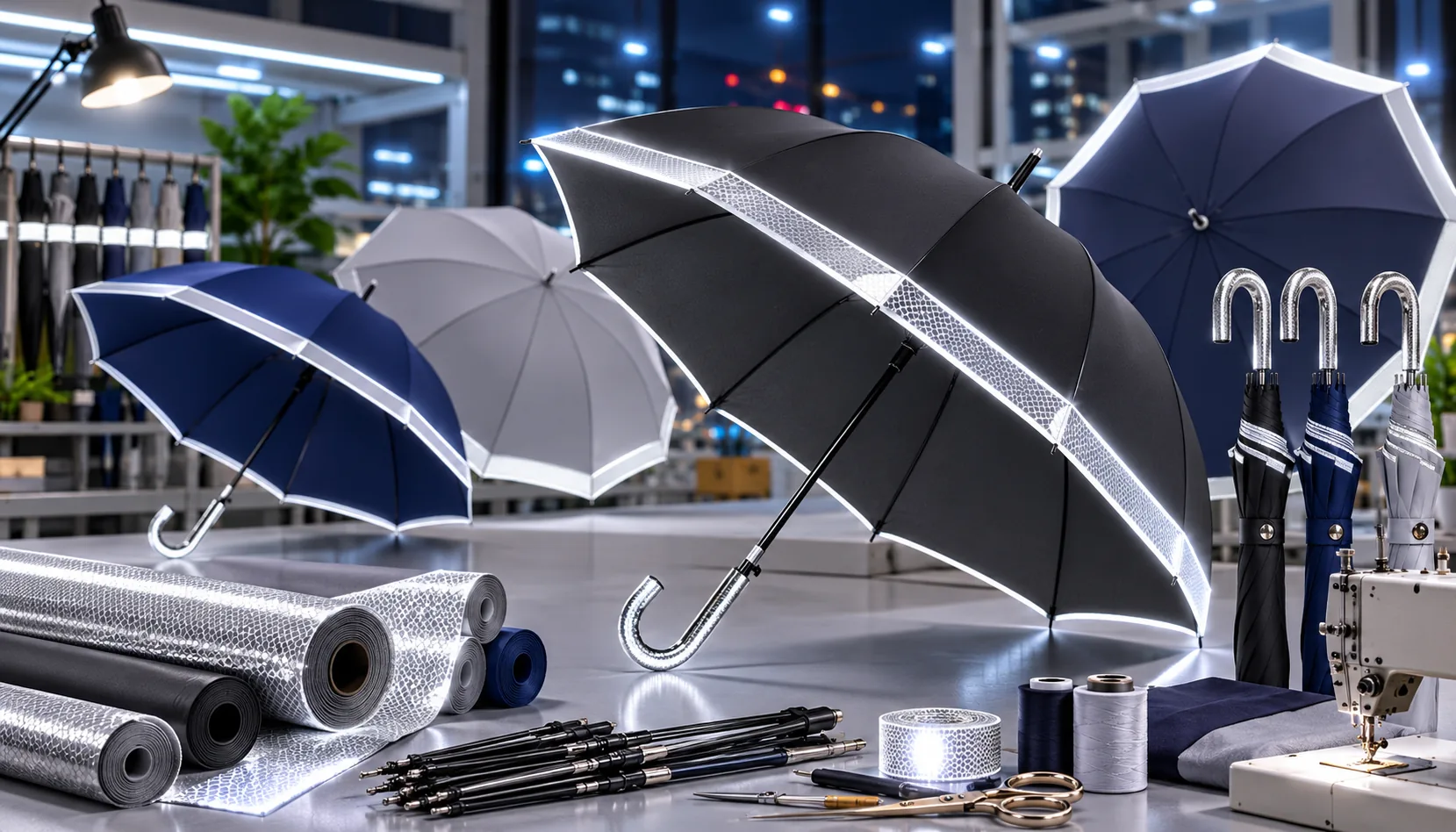
Custom Reflective Umbrellas for Night Safety Campaigns
Specify reflective umbrellas for commuter, school, and safety campaigns with fabric, print, rib, and inspection details ...
Read More »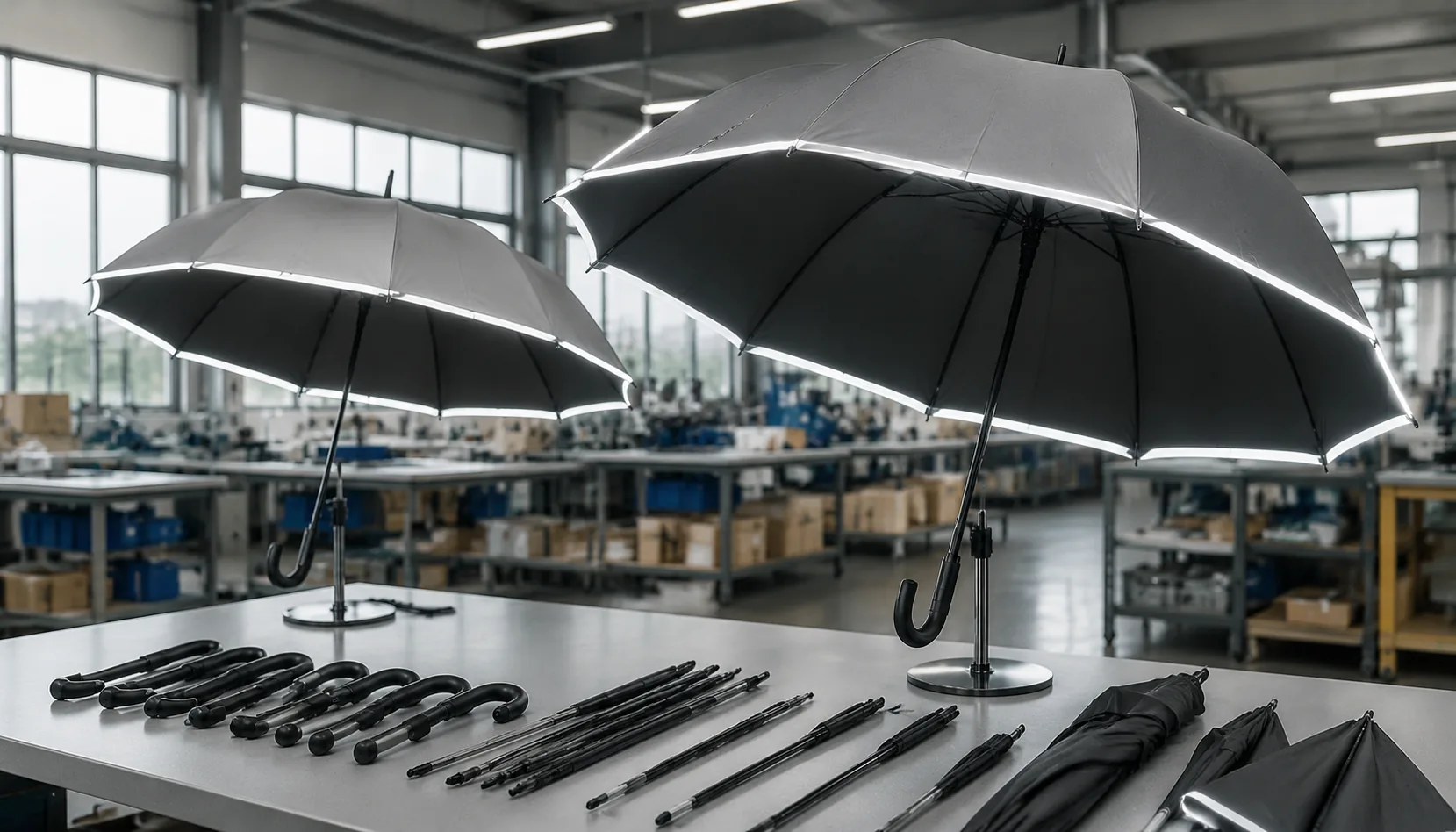
Reflective Safety Umbrellas for Corporate and Campus Programs
Specify reflective safety umbrellas with strip placement, canopy fabric, rib materials, print methods, and inspection ch...
Read More »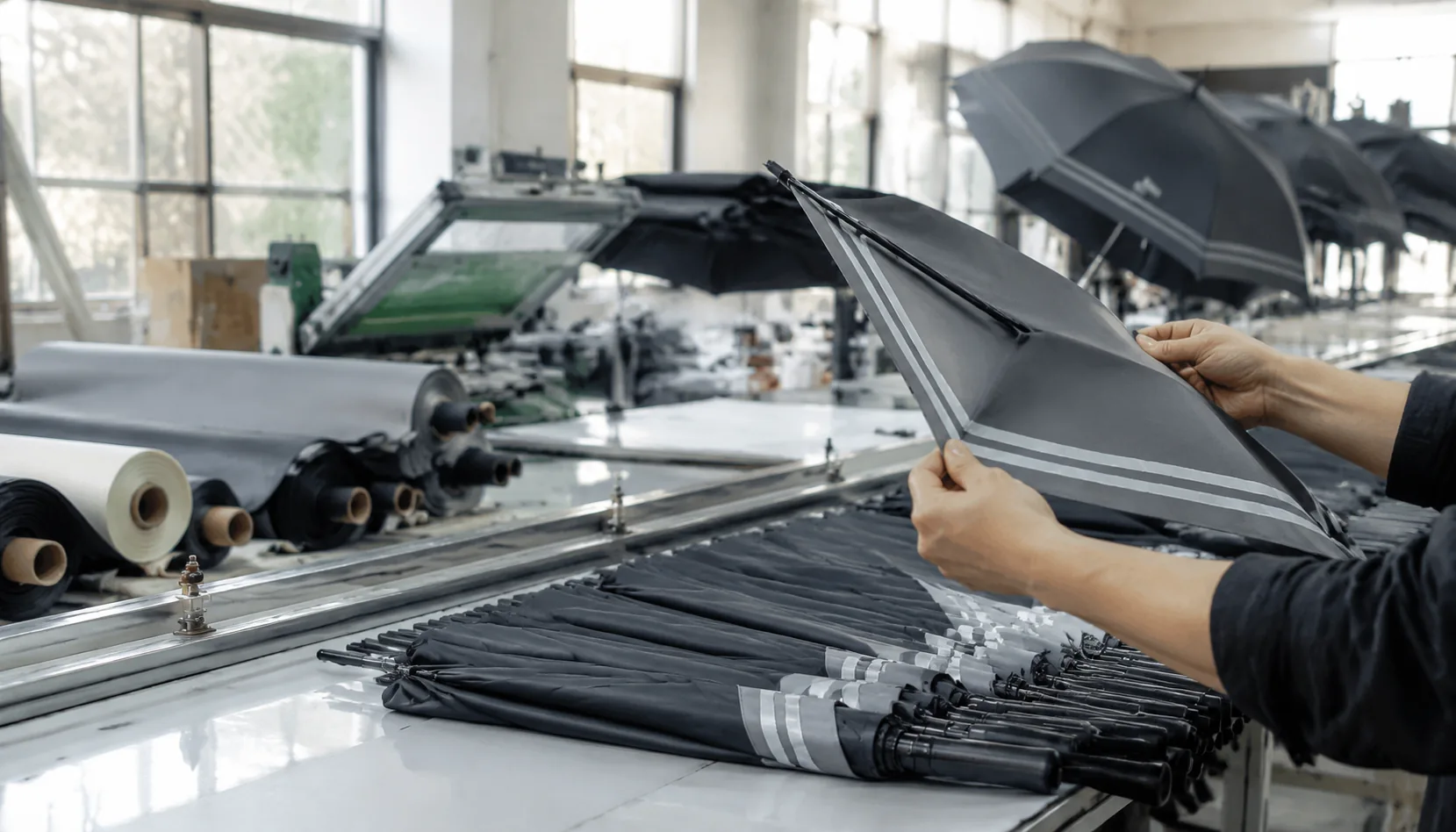
Reflective Logo Printing for Branded Umbrella Safety Campaigns
Plan reflective logo umbrellas with the right fabric, ink, rib structure, testing, MOQ, and lead time for safety campaig...
Read More »