Reflective Logo Printing on Branded Umbrellas for Events
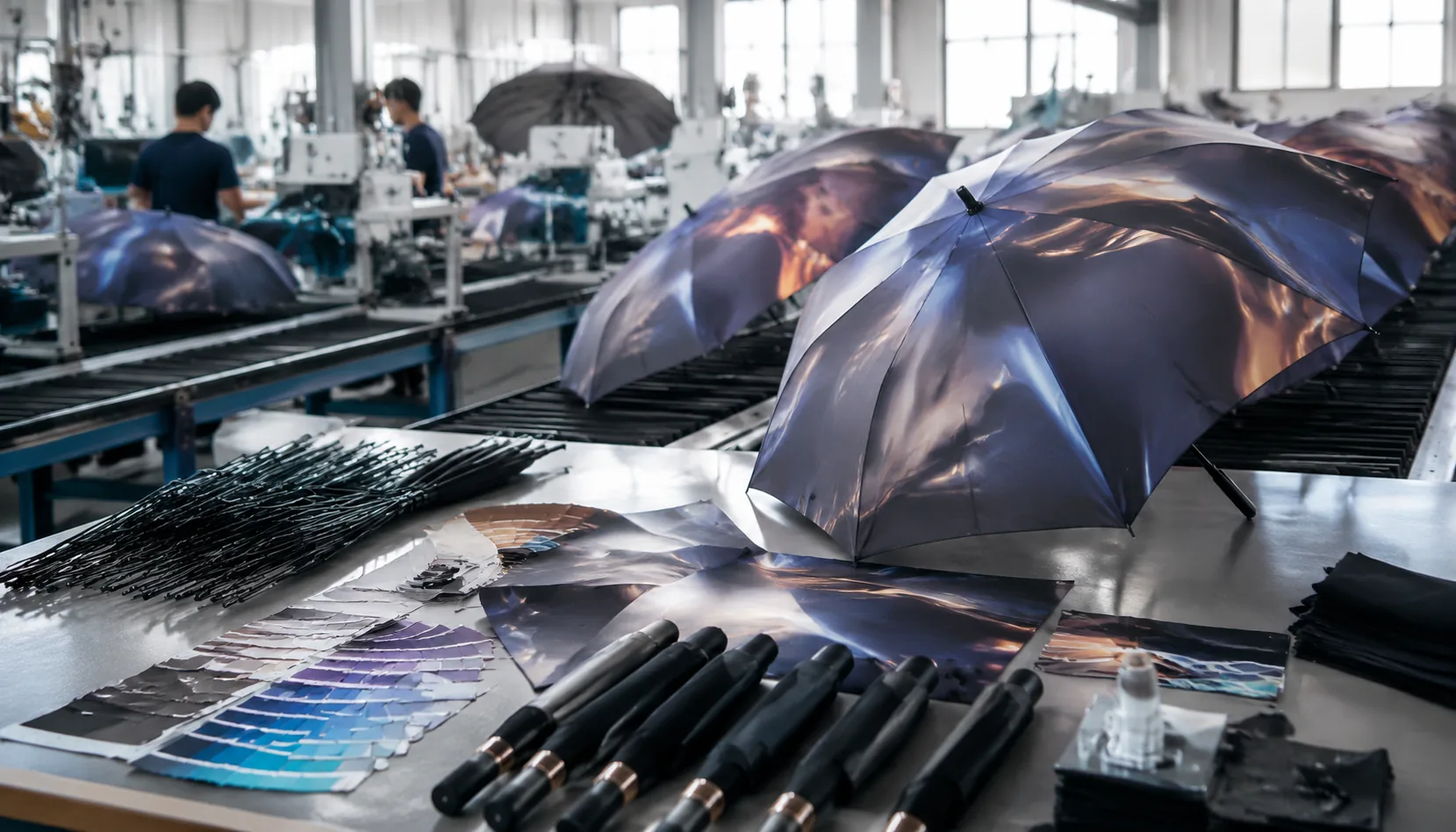
For night races, concerts, campus security, and roadside promotions, a logo that looks sharp at noon can disappear once the lights drop. When buyers ask us for reflective logo umbrellas, the real work is matching reflective ink or film to the umbrella fabric, print position, folding stress, MOQ, and sampling schedule before mass production starts. On our Songxia factory floor, most durability problems show up early in adhesion tests, rub checks, and panel-by-panel inspection.
When Reflective Branding Makes Sense
Reflective branding makes sense when the umbrella is part of a safety system, not just a giveaway. For night marathons, charity walks, campus escort teams, parking attendants, railway staff, and airport shuttle crews, the logo needs to be seen by drivers before the person is close. Standard silver ink only looks metallic under room light; true reflective umbrella printing uses glass-bead or micro-prismatic transfer film that returns light back toward headlights, flash photography, and security lighting. On a 23" or 27" straight umbrella, I prefer placing the reflective logo on two opposite panels rather than all eight panels, because the canopy keeps rotating in use and opposite placement gives better chance of exposure without making the umbrella look like roadwork gear.
For concerts, festivals, outdoor product launches, and city activations, reflective logo umbrellas are useful when staff must be identifiable in rain, dusk, or crowded exit areas. A 190T or 210T pongee canopy with a heat-transfer reflective mark holds a cleaner edge than screen-printed reflective paste, especially on small sponsor text below 8 mm stroke width. On POE clear umbrellas, reflective film can work well for security teams because the wearer keeps sightlines while the mark catches phone flash and vehicle lights. We normally test adhesion with cross-hatch tape after 24 hours and open-close cycling, because reflective transfers are stiffer than standard ink and can crack if they sit across heavy seam tension.
Procurement teams should specify reflective area, placement, and viewing purpose before asking for pricing on promotional safety umbrellas. A small 70 mm chest-style logo on one panel may look fine in a sample photo but do little for night visibility umbrellas used by traffic guides or campus patrols. For real visibility, use a 120-180 mm wide mark, a reflective strip near the lower canopy edge, or a combination of brand logo plus safety band. The frame also matters: fiberglass ribs and shaft tolerate wind gusts better than low-cost steel, especially on 8K or 10K event branded umbrellas used in open streets. For large event orders, I would run a pre-production sample, then inspect under normal light, headlight angle, and flash before approving bulk production under AQL 2.5.
Best Umbrella Styles for Reflective Prints
Golf umbrellas give the cleanest reflective hit because the canopy is large, stable, and usually carried higher in a crowd. A 27" or 30" arc golf model in 190T or 210T pongee gives enough panel height for a 10–14 inch reflective logo without squeezing the artwork into the seam allowance. For event branded umbrellas used at stadium exits, parking lots, resorts, or night walks, I prefer an 8K fiberglass frame over steel because the ribs flex under gusts instead of taking a permanent bend. A 16K golf umbrella looks premium, but the extra panel segmentation cuts the printable area into narrower slices, so large reflective umbrella printing needs more careful logo sizing and placement.
Straight umbrellas are a good middle ground when the buyer wants visibility but also easier handout logistics. A 23" straight auto-open umbrella with 8K fiberglass ribs gives a broad enough canopy for reflective transfer film while still fitting into event cartons better than oversized golf models. The handle is also easier for ushers, volunteers, and security teams to grip for long shifts. For reflective logo umbrellas, straight models usually work best with one large reflective panel print plus a smaller opposite-side logo, because too many reflective placements can look patchy once the umbrella is opened and rotating in moving light.
Folding umbrellas are convenient for VIP bags and commuter giveaways, but they are the weakest option for maximum night visibility umbrellas because the canopy is smaller and the folds can crease reflective film if the transfer temperature or dwell time is wrong. A 21" or 23" 3-fold auto-open-close model can still work for promotional safety umbrellas if the logo is compact, the film is tested after 300 open-close cycles, and the print is kept away from fold stress lines. For exposed venues, specify a double-canopy vented windproof build on straight or golf styles; it reduces inversion in 40–50+ mph gust testing and keeps the reflective mark facing outward instead of turning into a broken, wrinkled billboard.
Fabric, Ink, and Placement Limits
Reflective ink behaves best on 190T and 210T pongee when the fabric has a stable PU or Teflon water-repellent finish and the print shop controls curing temperature instead of chasing speed. On 190T pongee, the weave is slightly more open, so reflective umbrella printing can look a little softer at the edge of small letters; I usually keep logo strokes above 1.2 mm and avoid tiny registration marks. On 210T pongee, the tighter yarn count gives cleaner edges and better repeatability for corporate marks, especially on 23 inch and 27 inch event branded umbrellas. Dark canopy colors matter because reflective pigment works by bouncing light back, not glowing by itself. Black, navy, charcoal, bottle green, and deep red give the strongest day-and-night contrast. White, silver, yellow, and pale blue can still work, but the reflective layer loses visual punch unless we add a dark base print underneath, which increases cost and stiffness.
For reflective logo umbrellas, the safest placement is one or two canopy panels, not all eight panels. A 120–180 mm wide logo on a single 8K panel is easy to align, keeps the umbrella retail-clean, and avoids heavy ink buildup along fold lines. Two opposite panels work well for event staff or sponsor visibility, but printing across rib seams is a bad idea because steel or fiberglass ribs create pressure points during closing. Keep reflective transfers at least 25–35 mm away from the rib seam and 40–50 mm above the lower hem so the fabric can fold naturally into the strap. For auto-open or auto-open-close compact umbrellas, I am stricter: large heat-transfer logos near the crown can wrinkle after repeated closing because the canopy stacks tightly around the shaft.
Straps, sleeves, and edge bands are useful for promotional safety umbrellas, but they have limits. A reflective mark on the closure strap is visible when the umbrella is folded, which is good for giveaways at evening events, but the artwork should stay below 20–25 mm high so the strap can still pass through the buckle and hold tension. Sleeves can take larger reflective transfer logos because they are flat fabric tubes, though buyers should specify whether the sleeve is 190T pongee, oxford, or PVC because each material needs a different adhesive film. Reflective edge bands create strong night visibility umbrellas, especially on golf sizes like 27 inch and 30 inch, but the band should be narrow, typically 10–15 mm, and segmented if necessary. A continuous thick band looks bright, but it can reduce foldability and cause bulky tips during packing.
Sampling, Testing, and Brand Approval
For reflective logo umbrellas, the pre-production sample is not a formality; it is where we catch the failures that only appear after the umbrella is used like a real event item. I ask buyers to approve at least one open sample and one folded sample, especially on 190T or 210T pongee where panel tension changes the logo shape. Reflective umbrella printing should be checked under direct phone flash, a car headlight beam at 10–15 feet, and normal indoor light, because some inks look strong in a studio photo but dull on a rainy street. On 8K and 10K frames, the logo can stretch across the panel seam when opened; on 16K golf umbrellas, the wider panel arc can make straight text look slightly bowed. We photograph the canopy flat, fully opened, half-closed, and strapped to show distortion, fold marks, and how the reflective area sits against ribs and seams.
Adhesion testing needs to be tougher than normal promotional printing because night visibility umbrellas are often opened wet, rubbed against coats, and packed before fully dry. Our standard practice at ZheBrella is to run dry rub and wet rub tests on the reflective print, then inspect for silver transfer, edge lifting, cracking, and dull patches. For heat-transfer reflective film, I check whether the film bridges over stitched seams or sits too close to the panel edge, because those are the first failure points after repeated folding. For screen-applied reflective ink, we look for pinholes, uneven glass-bead distribution, and opacity loss after 24 hours of curing. I also recommend 30–50 open-close cycles on manual, auto-open, and auto-open-close samples before approval, since snap force and canopy tension can expose weak adhesion faster than a static desk inspection.
Final brand approval should include photo and short video evidence, not just a couriered sample viewed under office lighting. For event branded umbrellas and promotional safety umbrellas, we usually record the logo under direct white LED light and a moving flashlight beam to show real reflectivity across the printed area. AQL 2.5 inspection points should include logo position tolerance, print size, color contrast in daylight, reflective brightness consistency, scratches, fold-line whitening, ink bleeding, and handle or sleeve branding alignment. If the order uses a double-canopy vented windproof construction or a 23-inch auto-open frame, inspectors should also confirm the logo does not disappear into the vent overlap or crease along the main fold line. Once the buyer signs off on the sealed sample, production should match that sample, not a revised digital proof, because reflective materials change appearance with angle, pressure, and fabric tension.
MOQ, Lead Time, and Shipping Planning
MOQ should be planned around both the umbrella body and the reflective process, because the reflective film is not handled like normal screen ink. For basic event branded umbrellas with one-position screen printing on 190T pongee, a realistic MOQ is 300–500 pcs for straight umbrellas and 500–1,000 pcs for compact 21" auto-open models. If the buyer wants reflective umbrella printing by heat-transfer film, I usually set the practical MOQ at 500 pcs per artwork, because cutting, weeding, positioning, and press testing waste more material than standard logo printing. For full custom reflective panels, shaped transfers, or multiple logo positions on 23"/27" golf umbrellas, 1,000 pcs is a safer planning number. Fiberglass 8K frames, double-canopy vented windproof construction, or UPF 50+ coated pongee do not always raise the MOQ by themselves, but they do tighten material scheduling when the same order also needs night visibility umbrellas for a fixed event date.
Samples need more calendar time than buyers expect, especially when reflective placement must pass both appearance and adhesion checks. A plain stock umbrella with standard white screen print can usually be sampled in 5–7 days, while custom reflective logo umbrellas normally need 10–14 days because we test film grade, heat temperature, dwell time, and peel strength on the actual canopy fabric. On POE, PVC, and EVA canopies, we also check for shrinkage or edge lifting after folding, because glossy plastic behaves differently from 190T/210T pongee under heat. Bulk production for promotional safety umbrellas is typically 20–30 days after sample approval for 500–2,000 pcs, and 30–45 days for larger programs using 10K/16K golf frames, custom handles, woven labels, or carton marking by event destination. Our standard practice at ZheBrella is to lock artwork, Pantone, reflective film, and AQL 2.5 inspection criteria before cutting bulk fabric, because late logo changes create more delay than frame assembly.
FOB works best when the buyer has a strong forwarder and the event date is not dangerously close, because it gives better control over consolidation, sailing schedules, and destination clearance. For North America or Europe, sea freight under FOB Ningbo or Shanghai usually needs 25–40 days on the water plus booking and customs time, so I would not use it for reflective logo umbrellas needed in less than eight weeks unless inventory is already finished. DDP is better for event planners and promotional distributors who need one landed cost and fewer handoffs, especially for multi-city deliveries where cartons must arrive at hotels, stadiums, or conference warehouses. Air freight can move 300–1,000 pcs in roughly 5–9 days after production, but umbrellas are bulky, so freight can exceed the product cost on 27" and 30" models. The cleanest plan is sample approval at least 45–60 days before the event, with carton labels, delivery address, and customs documents confirmed before final AQL inspection.
Frequently Asked Questions
Can reflective logos be printed on UPF 50+ umbrellas?
Yes, but the reflective layer must be tested on the specific coated fabric. Some UPF 50+ coatings reduce ink adhesion, so a sample should be folded and rubbed before bulk approval.
Is reflective printing suitable for automatic open umbrellas?
Yes, if the logo is placed away from high-stress fold lines. Auto-open mechanisms should be cycle-tested after printing to confirm the canopy still opens smoothly.
What fabric colors work best for reflective logo printing on umbrellas?
Dark colors such as black, navy, and charcoal usually give the strongest contrast for reflective logos. For most polyester canopies, reflective effects are most visible on panels with a smooth, tight weave and a matte finish.
What MOQ is typical for event branded umbrellas with reflective printing?
For OEM/ODM programs, MOQ is often 300 to 500 pieces per design and color, depending on panel count and print complexity. Sampling usually takes 5 to 10 days, while bulk production is commonly 25 to 35 days after sample approval.
How do you QC reflective umbrella printing for outdoor use?
A good QC plan checks adhesion, wash/rub resistance, fold-line cracking, and visibility under low light. Buyers often also request open-close cycle testing and water-spray checks to confirm the print stays readable after repeated event use.
Looking to Launch Your Custom Umbrella Line?
ZheBrella is a Zhejiang-based OEM/ODM umbrella manufacturer with 17 years of export experience. Free design, low MOQ from 100 pieces, windproof construction, full-color print.
Get Free Quote Now »People Also Search For
Related Articles
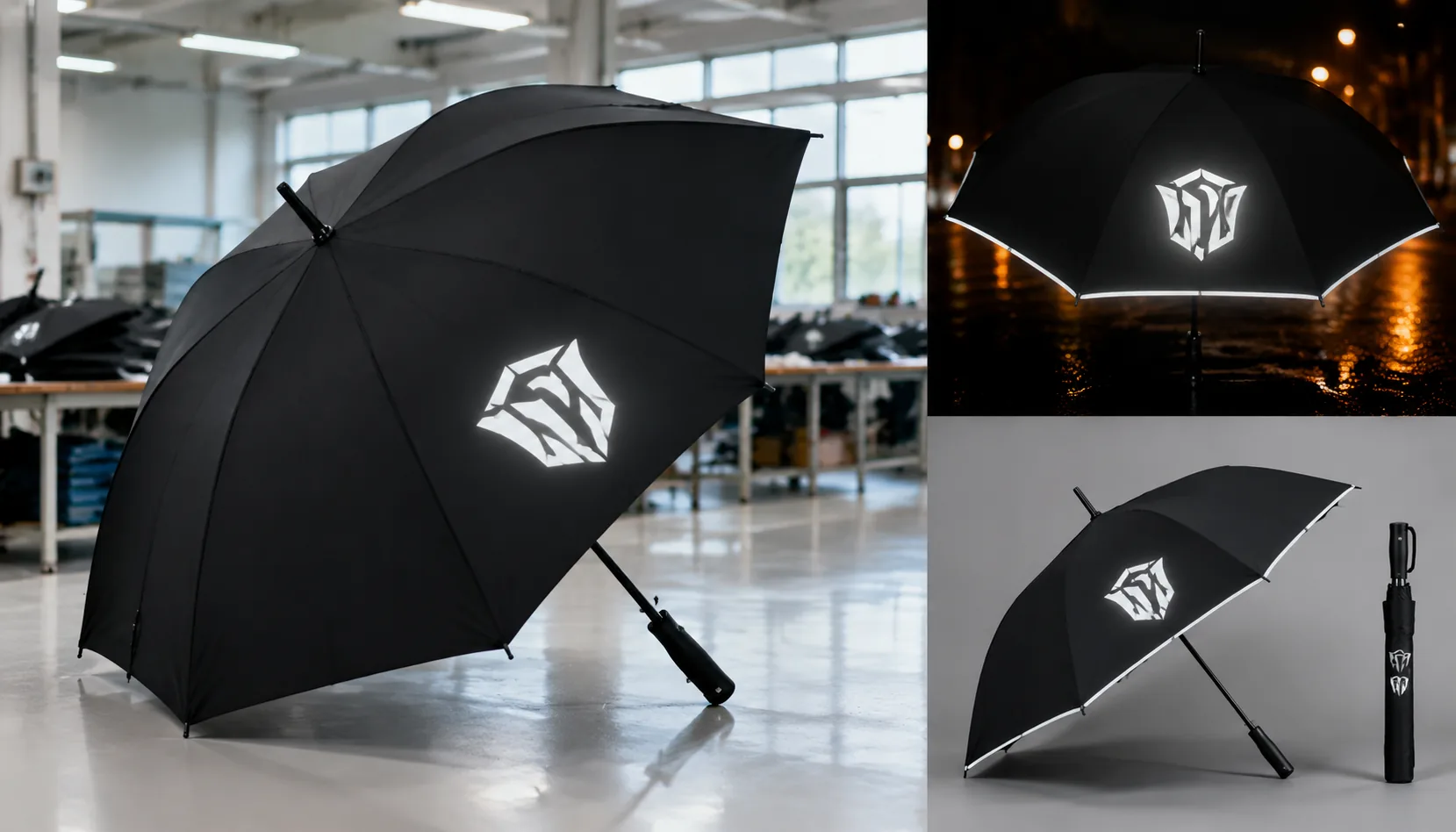
Reflective Umbrella Logos for Night Events and Safety Brands
Use reflective umbrella logos for night events, campuses, and safety brands while balancing visibility, durability, fram...
Read More »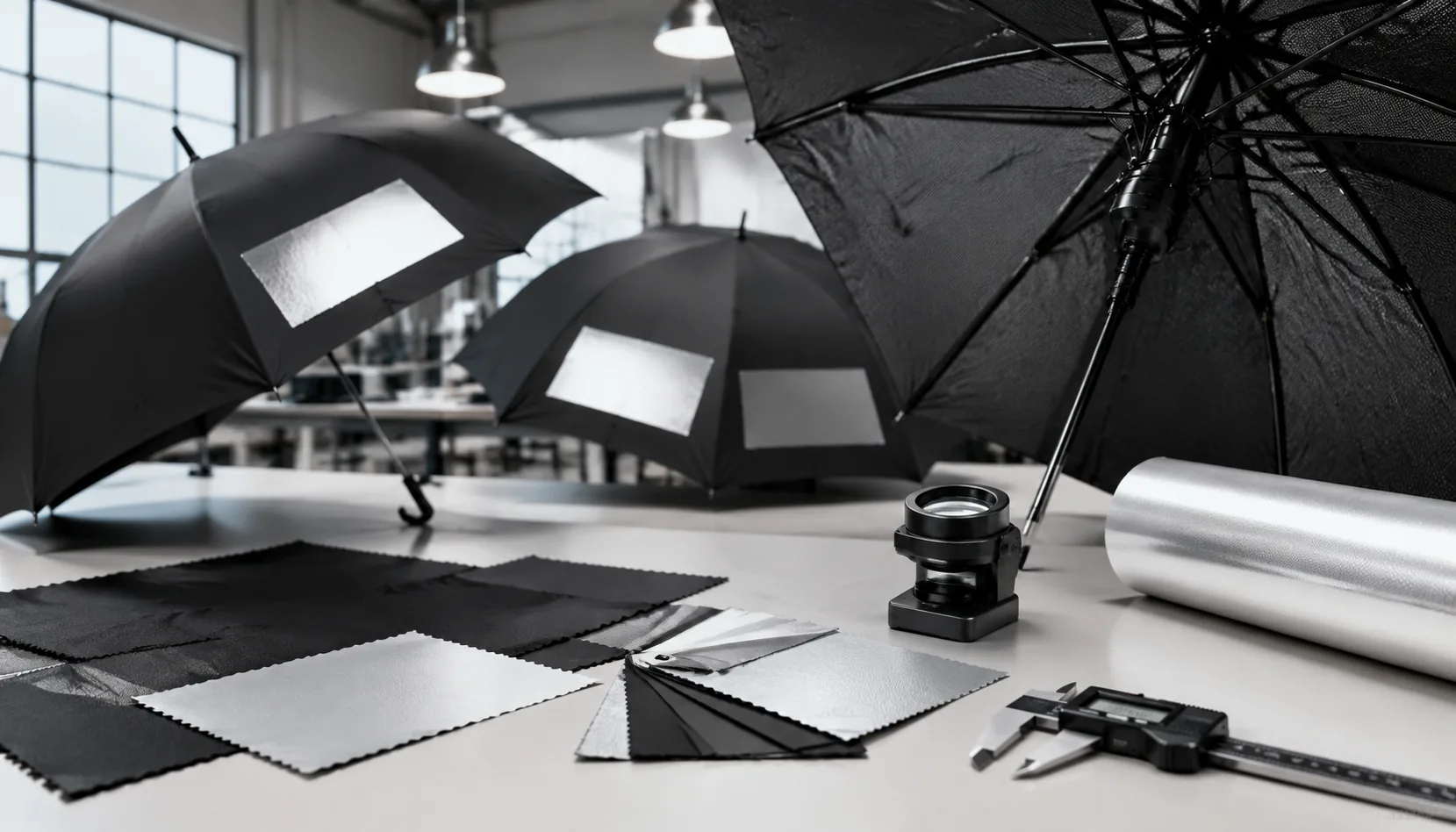
Reflective Umbrella Logos for Safety Brand Campaigns
Specify reflective logo films, panel locations, and AQL checks for promotional umbrellas used in night events, campuses,...
Read More »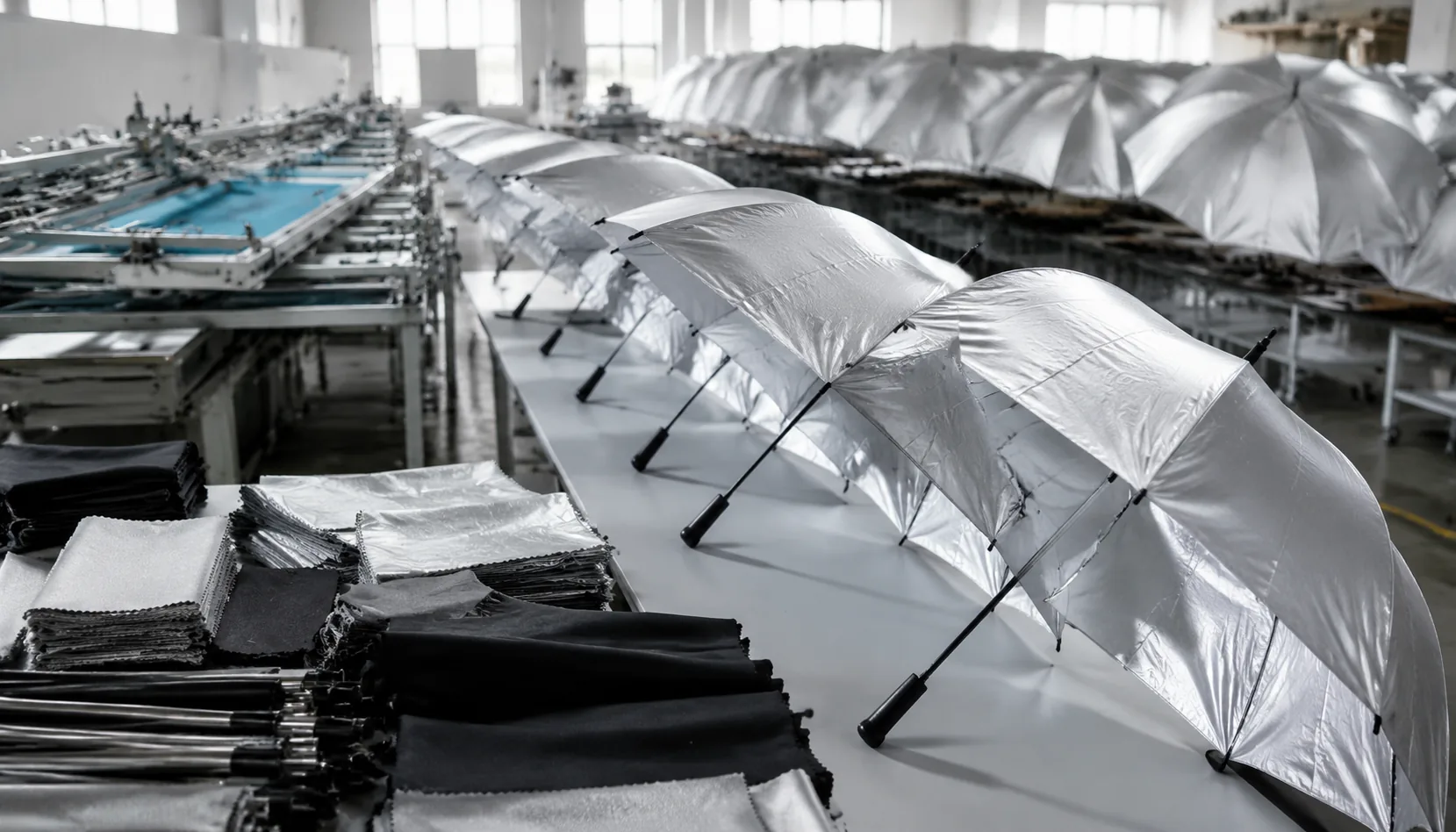
Reflective Umbrella Printing for Nighttime Brand Visibility
Plan reflective logos or trims that improve night visibility, with fabric, ink, MOQ, testing, and lead-time notes for B2...
Read More »