Reflective Safety Umbrellas: Buyer Guide for Night Events
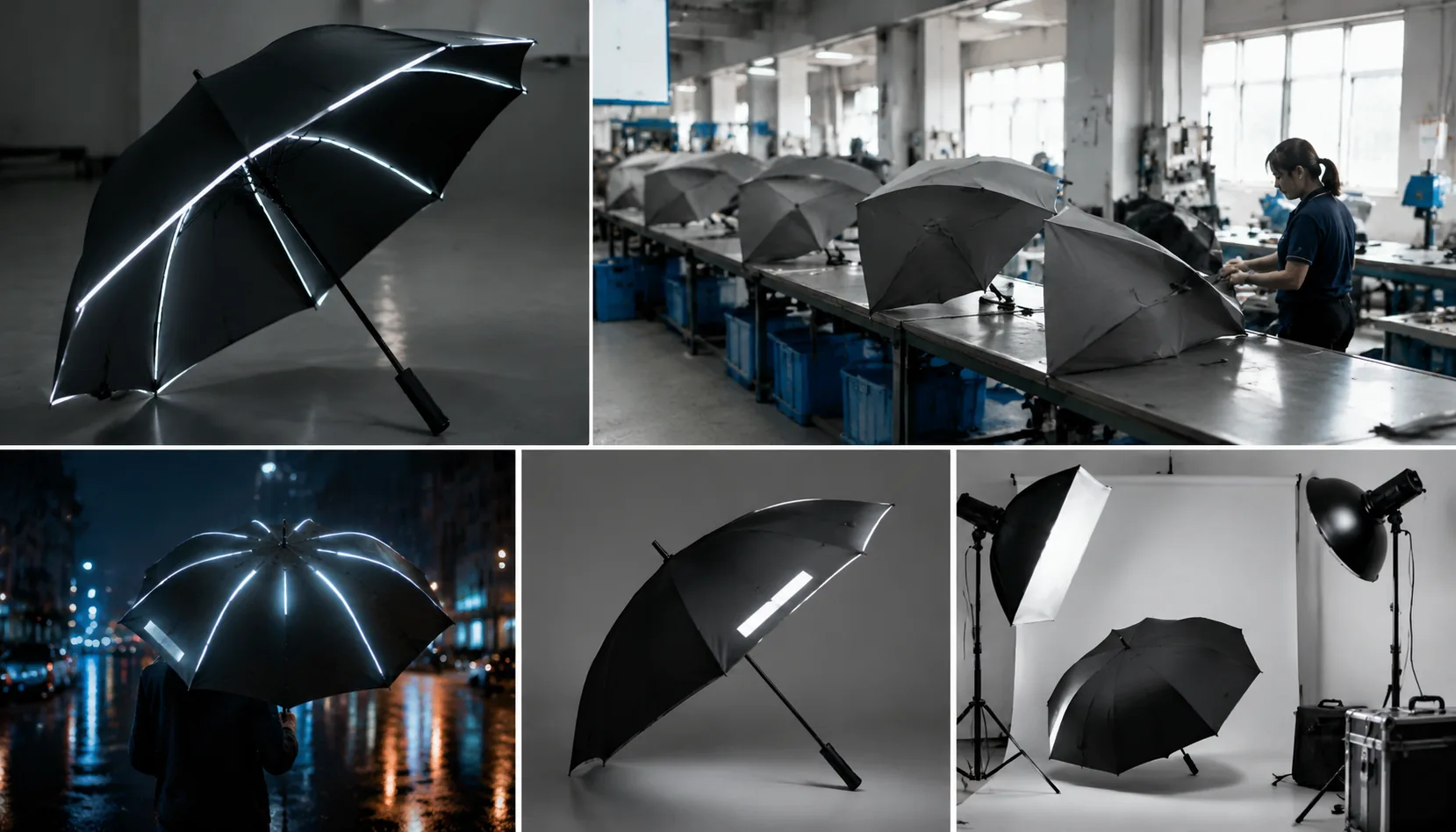
Night-event buyers often discover too late that visibility is not just about adding shiny tape; poor placement, weak stitching, and the wrong canopy coating can turn a safety item into a complaint risk. On our Songxia factory floor, reflective safety umbrellas are checked from tape alignment and panel tension to windproof ribs, logo registration, and packed-carton moisture control before shipment.
Define the Safety Use Case and Visibility Goal
Start with the risk pattern, not the umbrella shape. Night event umbrellas used for marathon volunteers, concert queue marshals, parking guides, school pickup routes, roadside survey teams, and security staff all need different visibility angles. A 23" auto-open stick umbrella with reflective edge piping works for pedestrians moving through a campus, but a 27" or 30" golf umbrella with 8K or 10K fiberglass ribs is better for a roadside flagger standing near traffic because the larger canopy creates a wider reflective target. For children’s school routes, I prefer manual or simple auto-open designs with rounded tips, 190T pongee, and reflective tape placed low enough to be seen by headlights, not only by adults looking straight ahead.
Reflective safety umbrellas should be specified by where light will hit them: canopy perimeter, alternating panels, vertical seams, or logo zone. Reflective piping on canopy edges gives a clean outline and is the least likely to crack during folding, while 10–20 mm reflective tape on two or four panels gives stronger headlight return but must be stitched evenly to avoid canopy puckering. Reflective printing can carry a sponsor logo, school name, or emergency wording, but it should be tested after wet rubbing and repeated opening cycles because some reflective inks lose brightness faster than sewn tape. For safety promo umbrellas, I usually recommend a dark canopy color such as navy, black, or charcoal with silver reflective treatment; white logos alone do not perform like true retroreflective material.
Set a practical visibility goal before asking a reflective umbrella supplier for pricing. For general pedestrian guidance, reflective edges visible from 50–80 meters under vehicle headlights may be enough; for roadside crews or security staff, specify high-return tape on at least four canopy faces plus a bright handle tag or sleeve label. Custom reflective umbrellas can still use standard 190T or 210T pongee with Teflon water-repellent coating, fiberglass ribs for wind resistance, and AQL 2.5 inspection, but the reflective parts need their own checks: tape adhesion, stitch spacing, alignment tolerance, and folding abrasion. Our standard practice at ZheBrella is to approve a pre-production sample under both warehouse lighting and low-angle headlight simulation before bulk cutting, because visibility failures are much cheaper to catch before 3,000 canopies are sewn.
Select Canopy Fabric and Reflective Materials
For night event umbrellas, I normally push buyers toward 210T pongee when the budget allows, because the denser weave gives better rain beading, cleaner logo edges, and more stable coating results than 190T. A good 190T pongee canopy is not weak; with proper PU or Teflon water-repellent treatment it can pass normal shower use and keep unit cost down for high-volume safety promo umbrellas. The tradeoff is hand feel and print sharpness. On 190T, fine white lettering and small sponsor marks can feather slightly after screen printing, especially if the factory overloads ink to cover a dark panel. On 210T, the yarn count supports smoother heat-transfer film bonding and more consistent sublimation output, so gradients, QR codes, and thin reflective outlines hold better. For reflective safety umbrellas, fabric testing should include spray rating after opening cycles, not just a flat fabric water test, because ribs stretch the canopy and expose weak coating adhesion near the seams.
Reflective material choice matters more than many buyers expect. Standard reflective tape is usually 10 mm, 15 mm, 20 mm, or 25 mm wide; I prefer 20 mm for event staff umbrellas because it is visible without making the product look like roadwork gear. Tape can be sewn along panel seams, around the canopy edge, or placed as short vertical strips between ribs, but every stitch line creates a water-entry risk if the operator uses the wrong needle or thread tension. Heat-transfer reflective logos are cleaner for custom reflective umbrellas because there is no needle hole, and they work well on 190T/210T pongee when the press temperature, dwell time, and peeling method match the film supplier’s spec. Cheap reflective film cracks after repeated folding; proper material should tolerate at least 300 open-close cycles on a 23 inch or 27 inch umbrella before edge lifting appears.
Dark canopy colors improve safety visibility because contrast is what the eye catches first under streetlights, car headlights, and LED event lighting. Black, navy, charcoal, deep green, and burgundy make silver reflective tape and heat-transfer logos read much brighter than white or light gray canopies. If a buyer wants a brand color, I ask for Pantone references and then test a small reflective patch on the actual dyed fabric, not on a catalog swatch, because coating gloss changes the perceived brightness. Our standard practice at ZheBrella is to run adhesion and fold tests before bulk cutting, then inspect reflective placement under both daylight and low-angle flashlight conditions during AQL 2.5 final inspection. A serious reflective umbrella supplier should also confirm whether the umbrella is manual, auto-open, or auto-open-close, because faster spring impact can stress reflective logos near fold lines over time. For most promotional night runs, 23 inch 8K fiberglass frames balance visibility, weight, and wind resistance better than the cheapest steel 8K build.
Choose a Frame for Outdoor Reliability
Frame choice matters more than most buyers realize because night event umbrellas get handled hard: security staff lean on them, volunteers open and close them repeatedly, and guests use them in crowded wind corridors between tents, stages, and parking lots. For windy event sites, fiberglass ribs are usually the better specification than painted steel ribs. Fiberglass flexes and recovers when a gust hits, so an 8K fiberglass frame on a 23" or 27" umbrella will survive abuse that can permanently bend a thin steel rib. Steel still has a place when the budget is tight or the order is for one-night distribution, but I would avoid light steel ribs for staff-use umbrellas expected to last through a full season. For reflective safety umbrellas, the frame should support the safety function instead of becoming the weak point after the first storm front.
An 8K build is the normal starting point for standard event orders because it balances cost, weight, and production stability. On a 190T or 210T pongee canopy with reflective piping or reflective print panels, 8 ribs keep the canopy clean enough for logos while staying easy to pack by the carton. If the buyer wants a stronger visual structure, especially for custom reflective umbrellas used by marshals, parking teams, or VIP escorts, a 16K frame gives a rounder canopy and more visible panel segmentation under headlights. The tradeoff is weight and price: more ribs mean more assembly points, more QC checks, and slightly slower opening action. Our standard practice at ZheBrella is to recommend 16K when the umbrella is part of the uniform look, not just a rain backup.
Where gust resistance matters, specify a double-canopy vented windproof frame instead of only asking for “strong ribs.” The vent lets air escape through the upper canopy, reducing inversion when wind rolls across open plazas, stadium gates, waterfront venues, or exposed parking areas. A good fiberglass shaft-and-rib system with a vented 27" golf size can be tested to survive 50+ mph gusts, though real-world performance also depends on handle grip, runner quality, and whether the user faces the umbrella into the wind. For night event umbrellas and safety promo umbrellas, I prefer auto-open for staff who need one-hand deployment, while manual open is fine for giveaways. A serious reflective umbrella supplier should confirm rib material, rib count, shaft diameter, runner type, and wind-test method before quoting, because “windproof” without those details is just a label.
Plan Branding Without Reducing Reflective Performance
Branding has to be planned around the reflective geometry, not added after the umbrella is already specified. On reflective safety umbrellas, the safest layout is usually a 23" or 27" 8K frame with reflective tape running near the panel edge, because the moving silhouette is visible from more angles when users cross parking lots or event entrances. If the buyer wants a larger logo, I prefer one or two panels printed with a controlled mark around 120–180 mm wide, rather than filling all 8 panels with opaque ink. On 10K or 16K umbrellas, panel seams create more interruption points, so artwork needs a panel-by-panel proof instead of a flat mockup. For night event umbrellas, reflective zones should remain continuous across at least 50–70% of the perimeter, especially on the pedestrian-facing lower arc.
Large opaque prints are the common mistake. A white, black, or full-color screen print sitting over reflective tape can reduce return brightness sharply, even if the umbrella still looks good under warehouse lights. For custom reflective umbrellas, we normally keep logos inside the upper third of the panel or place them between reflective bands, leaving a 10–15 mm clearance from tape edges so sewing tolerance does not cover the reflective film. Heat-transfer logos can work on 190T or 210T pongee, but the adhesive temperature and dwell time must be tested because some reflective films wrinkle or lose gloss under excessive heat. If the canopy is POE, PVC, or EVA, ink adhesion and cracking need a separate rub test, since clear materials behave differently from coated pongee.
Sleeve branding is the cleanest way to get big visual identity without damaging nighttime visibility. A reflective umbrella supplier should offer a printed sleeve, woven label, hangtag, or handle sticker as the main branding surface, while keeping the canopy reflective layout functional. Safety promo umbrellas often go to marathons, concerts, campus events, and roadside campaigns, so the sleeve is also where you can add QR codes, sponsor lists, or event instructions without cluttering the canopy. I would not approve mass production from a digital mockup alone; the buyer should request a pre-production sample, photograph it with flash at 10–20 meters, and inspect whether logos interrupt reflective bands. For FOB/DDP orders, build that sample check into the timeline: 5–7 days for artwork and material confirmation, then 3–5 days for sample production before the bulk lead time starts.
Set QC, Lead Time, and Import Requirements
QC for reflective safety umbrellas should be written into the purchase order before artwork approval, not negotiated after packing. For bulk orders, I recommend AQL 2.5 for major defects and AQL 4.0 for minor appearance issues, with a separate critical check for sharp rib tips, failed runners, or unsafe handles. Reflective tape adhesion needs a cross-hatch or peel check after sewing and after light rubbing, because cheap tape can look fine at inspection but lift at the stitched edge after one wet event. Canopy leakage should be tested around the reflective panels, top notch, and seam intersections using a spray or shower test for at least 3 minutes. Rib strength matters more on 23 inch and 27 inch event models because users often hold them in wind while walking; fiberglass ribs with steel shaft usually outperform all-steel ribs for flex recovery. If auto-open is specified, inspectors should cycle the mechanism 20 to 30 times per sample, checking spring force, button return, runner lock, and whether the reflective trim catches during opening.
MOQ depends on how the reflective element is applied. A stock 190T pongee umbrella with one-color logo and sewn reflective tape can often start around 500 pieces per color, while custom reflective umbrellas with all-over print, special tape layout, EVA handle, or matched sleeve usually sit closer to 1,000 to 3,000 pieces. Pre-production samples normally take 5 to 10 days for screen print or heat-transfer logos, and 10 to 15 days if the buyer needs a new tape pattern, sublimation canopy, or custom carton marks. Bulk lead time is commonly 25 to 35 days after sample approval and deposit for standard manual or auto-open models; auto-open-close compact umbrellas, double-canopy windproof builds, or 16K fiberglass frames may need 35 to 50 days in peak season. A serious reflective umbrella supplier should also confirm the tape width, candlepower or reflective grade, Pantone color tolerance, and whether the product is intended for rain use, visibility promotion, or staff safety at controlled night events.
Import requirements are where many safety promo umbrellas get messy, especially for public events with multiple delivery points. FOB Ningbo or Shanghai is cleaner when the buyer has a forwarder and wants control of ocean freight, customs, and insurance; DDP is better for distributors shipping directly to warehouses, stadiums, hotels, or charity-event organizers who do not want to touch import paperwork. Carton labeling should be locked before production: PO number, item code, color, quantity, gross/net weight, carton size, country of origin, barcode or FNSKU if needed, and any event-specific routing mark. For night event umbrellas, I prefer inner polybag warnings only when required by the destination market, plus carton drop-test approval if the order uses heavier 27 inch golf frames or metal tips. Our standard practice at ZheBrella is to keep a sealed approval sample, bulk fabric swatch, reflective tape sample, and final packing photo set together, so disputes over shade, brightness, or carton marks can be settled against a physical reference instead of email memory.
Frequently Asked Questions
Can reflective umbrellas still use full-color logo printing?
Yes, but the logo should not cover key reflective strips or piping. Buyers should approve a layout proof and pre-production sample before bulk production.
Which frame is better for reflective umbrellas used by event staff?
Fiberglass ribs are usually better for outdoor staff programs because they flex more than steel in gusts. Steel ribs can be acceptable for lower-cost giveaways in mild weather.
Where should reflective tape be placed on a safety umbrella for night events?
For best visibility, place reflective tape on the valance edge or along the canopy panels where headlights and event lighting can catch it from multiple angles. Many buyers specify 2 to 4 tape segments per umbrella, with placement matched to the logo print so the design stays clear.
What canopy fabric works best for reflective safety umbrellas in outdoor events?
Most buyers choose 190T or 210T polyester with a water-repellent coating because it balances print clarity, weight, and cost. For heavier rain or premium programs, pongee or recycled polyester can be specified, but the coating and color fastness should be tested before mass production.
What QC checks matter most for a bulk reflective umbrella order?
Key checks include reflective brightness, print alignment, frame opening/closing cycle, spray resistance, and carton drop testing. For export programs, buyers often request AQL-based inspection plus a pre-shipment sample to confirm tape adhesion and canopy color consistency.
Looking to Launch Your Custom Umbrella Line?
ZheBrella is a Zhejiang-based OEM/ODM umbrella manufacturer with 17 years of export experience. Free design, low MOQ from 100 pieces, windproof construction, full-color print.
Get Free Quote Now »People Also Search For
Related Articles
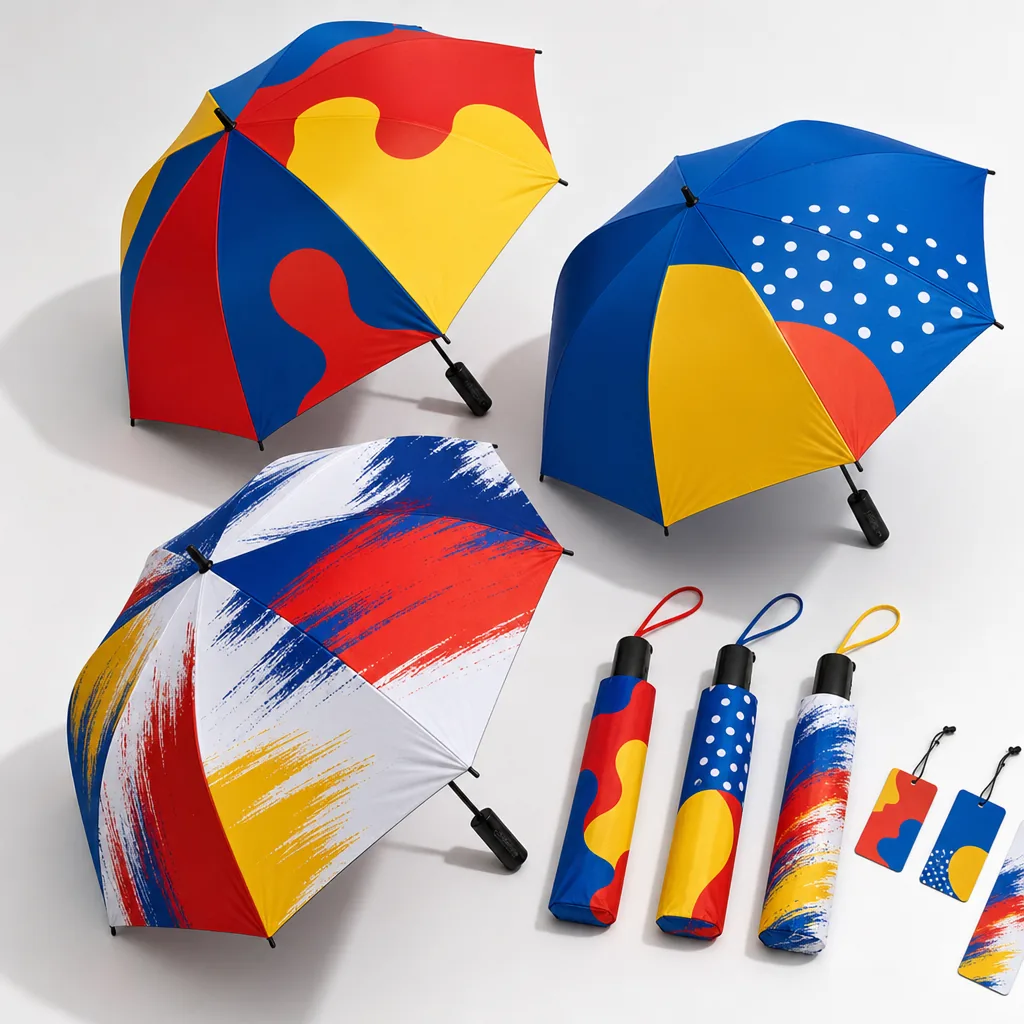
Reflective Safety Umbrellas: Buyer Guide for Night Rain
Specify reflective safety umbrellas with 190T pongee, 360° tape, fiberglass ribs, and AQL 2.5 checks for commuter, schoo...
Read More »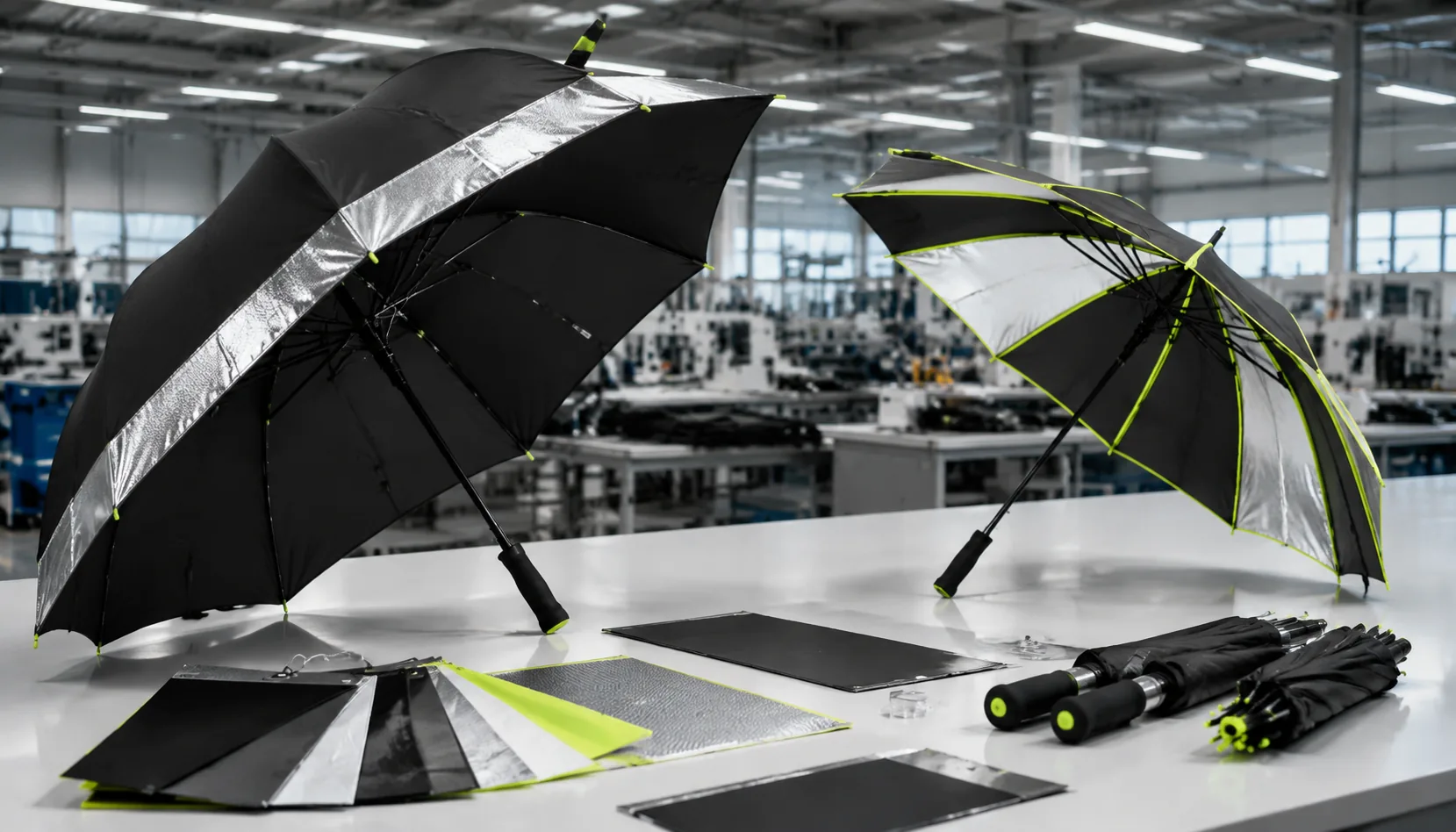
Reflective Safety Umbrellas: Spec Guide for Night Events
Source reflective safety umbrellas with visible trims, windproof frames, pongee canopies, and print zones suited for nig...
Read More »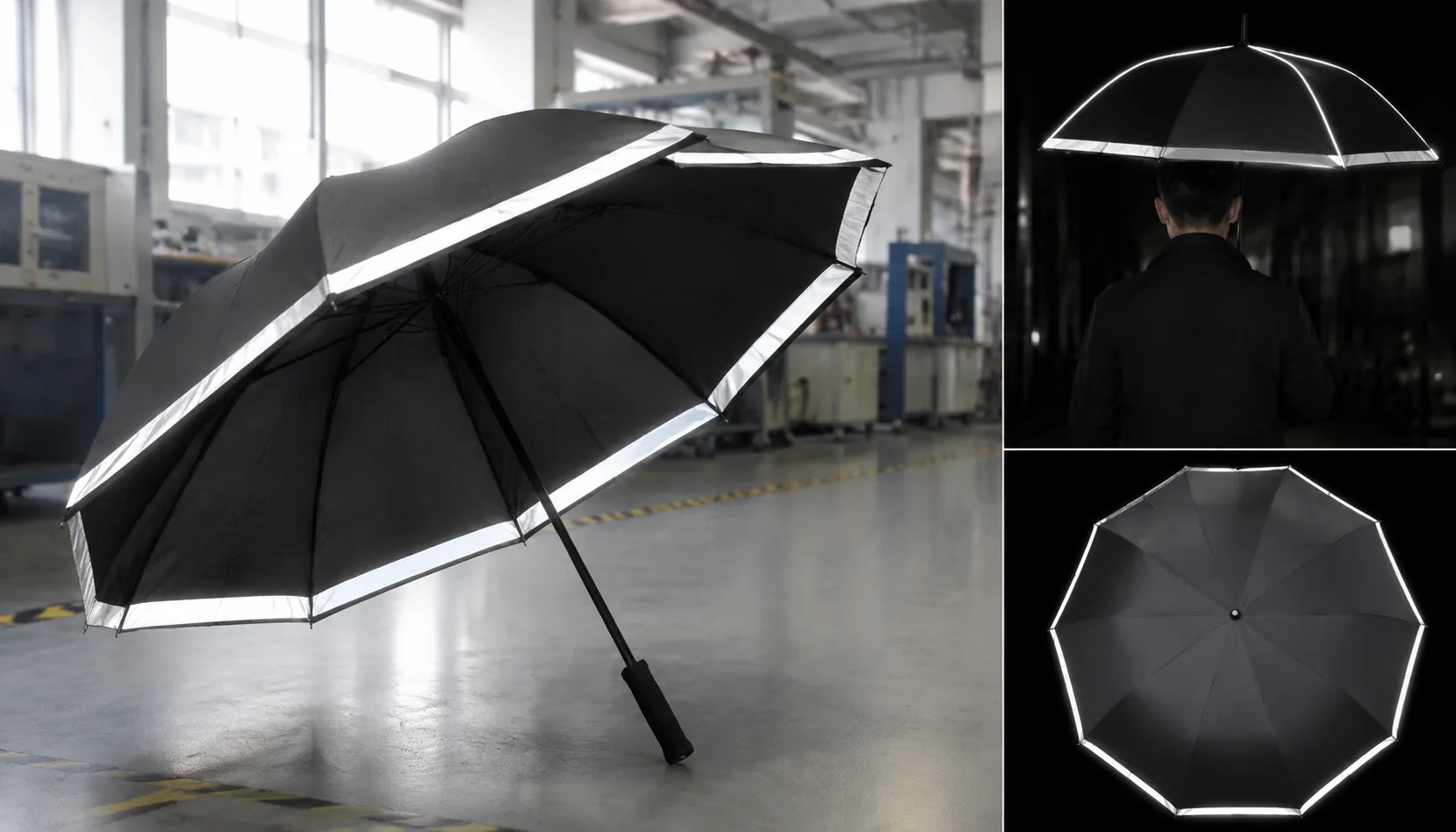
Reflective Safety Umbrellas: Specs for Night Visibility
Learn how to specify reflective safety umbrellas with visible trim, durable frames, compliant printing, MOQ planning, an...
Read More »