Reflective Safety Umbrellas: Buyer Specs for Night Use
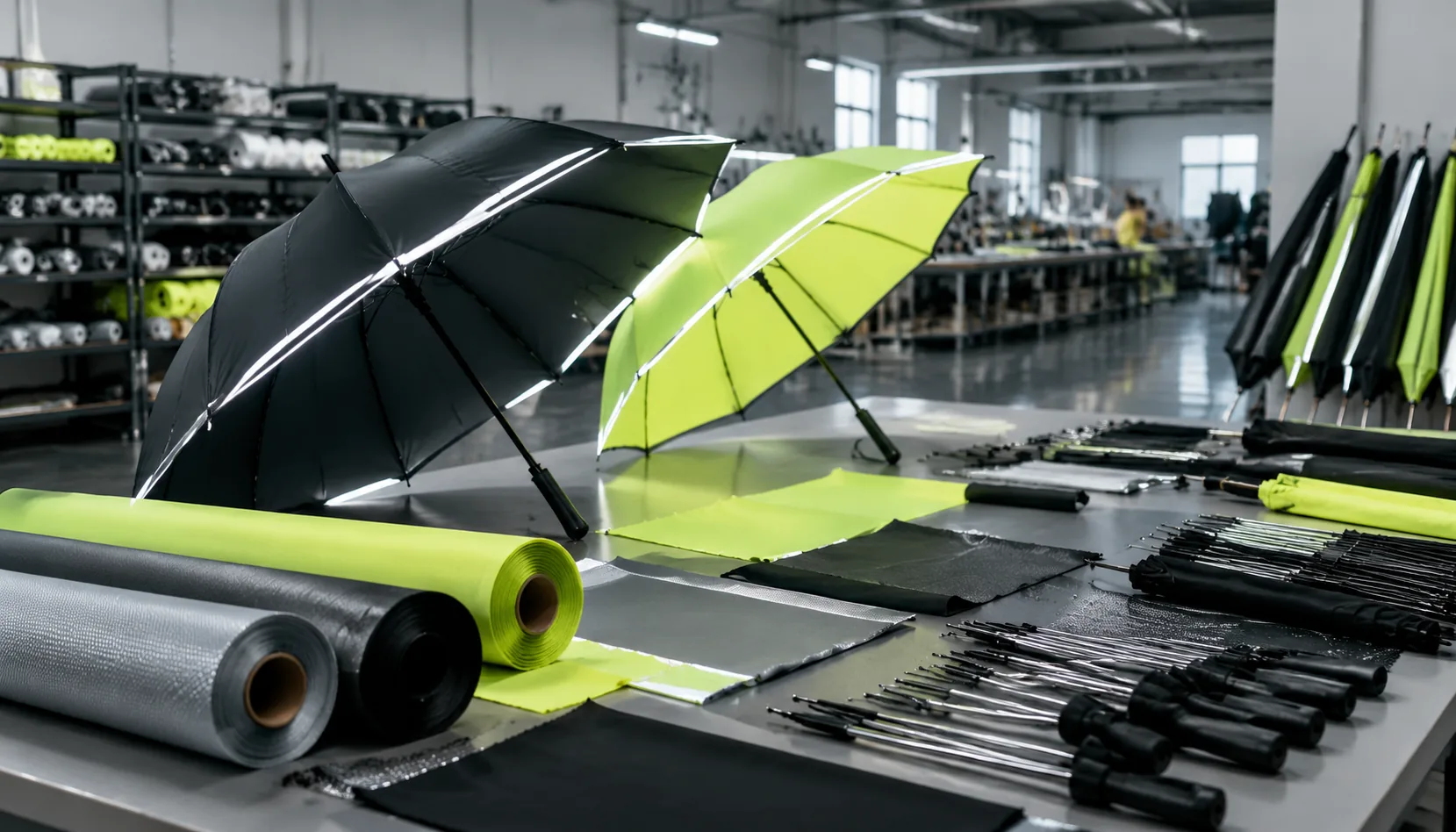
For night-use programs, reflective safety umbrellas fail or pass on details buyers often leave vague: where the tape sits, how it survives folding, and whether the frame still opens cleanly after printing and sewing. On our Songxia production floor, we check reflective trim alignment before canopy closing, balance fabric weight against rib strength, and flag print areas that will crack or block reflectivity before bulk production starts.
Define the Use Case and Visibility Requirement
The first spec decision is not fabric color; it is who needs to be seen, from what angle, and at what distance. Night commute umbrellas used around bus stops, subway exits, factory gates, and parking lots usually need 360-degree edge recognition under low-beam headlights, not just a bright top panel. For a 23" or 27" walking umbrella, I normally recommend reflective piping around the canopy perimeter plus 2 to 4 vertical panel strips so a driver sees movement from the side, not only from the front. For school safety, the priority shifts lower and wider: children hold umbrellas at inconsistent angles, so reflective trim umbrellas should carry edge piping and at least two large reflective blocks on alternating panels. A realistic buyer target is visible recognition at 80 to 150 meters under vehicle headlights, depending on rain intensity, road lighting, and whether the reflective material is glass-bead tape or micro-prismatic film.
Security teams, traffic marshals, and road-event crews need a tougher specification because the umbrella becomes part of a uniform system. For OEM safety umbrellas used by guards, parking staff, marathon volunteers, or roadside check-in crews, I would pair a 27" or 30" canopy with fiberglass ribs, a steel shaft, and a double-canopy vent if wind exposure is likely. Reflective placement should match the working posture: perimeter piping for walking patrols, wide panel strips for static roadside work, and reflective logo accents only as a supplement. A logo printed in silver ink is not the same as certified reflective tape; buyers should ask for reflective transfer film or sewn tape with wash/rub resistance data. If the umbrella must survive open roadside use, specify wind testing around 40 to 50 mph rather than accepting a generic “windproof” claim.
Custom commuter umbrellas can look retail-friendly without losing the safety function, but the artwork has to be planned before sampling. On 190T or 210T pongee, reflective heat-transfer strips sit cleanly if the canopy is cut accurately and the press temperature is controlled; on POE or EVA clear canopies, reflective edge binding often works better than large transfers because plastic can distort under heat. For corporate reflective safety umbrellas, I prefer reflective piping plus a small reflective logo accent near the lower third of one or two panels, leaving the main brand print in normal ink for readability. Our standard practice at ZheBrella is to confirm the visibility requirement in the tech pack, then test one pre-production sample at night under car headlights before bulk cutting. That simple check catches 80% of mistakes: reflective tape placed too high, logo hidden by walking angle, or dark artwork reducing contrast.
Select Canopy Fabric and Reflective Materials
For reflective safety umbrellas, I usually start the specification with canopy density because it affects both rain shedding and how clean the reflective work looks. 190T pongee is the practical baseline for promotional night commute umbrellas: it is light, folds neatly on 21" and 23" compact frames, and takes screen printing or heat-transfer logos without much ink spread if the fabric is properly calendered. 210T pongee feels tighter and slightly smoother, so water beads better with a Teflon coating and fine artwork edges stay sharper, especially on dark navy or black panels. The cost gap is not huge, but on large OEM safety umbrellas it matters; for retail or corporate commuter programs, I would pay for 210T when the buyer wants UPF 50+, a soft hand feel, or multi-color branding that must pass close inspection.
Reflective trim umbrellas need real reflective material, not just gray decorative binding. Silver reflective tape is the most visible option for panel edges, sleeve piping, and canopy seams, but the tape width should be specified clearly: 10 mm looks clean, 15 mm is stronger visually, and 20 mm starts to affect folding bulk on compact auto-open-close models. Heat-transfer reflective logos work well on 190T or 210T pongee when the film is tested for adhesion after humidity exposure; cheap film cracks at rib contact points after repeated wet folding. For custom commuter umbrellas, I prefer reflective tape along the outer canopy perimeter plus one reflective logo panel, because drivers see movement at the umbrella edge before they can read a brand mark.
Durability depends on how the reflective component behaves after the umbrella is closed wet, strapped tight, and left in a bag overnight. In production checks, we open samples after 24 hours of wet folding and look for tape lifting, logo whitening, adhesive migration, and crease marks where the canopy presses against 8K or 10K ribs. A double-canopy vented windproof model with fiberglass ribs may survive 50+ mph gust testing, but the reflective tape still needs flex resistance or it becomes the weak point. Our standard practice at ZheBrella is to run incoming material checks, then use AQL 2.5 final inspection for stitching alignment, reflective placement, coating defects, and print rub resistance before FOB or DDP shipment. For most programs, MOQ starts around 500–1,000 pieces per color, with sampling in 7–10 days and bulk lead time around 25–35 days after artwork approval.
Choose Frame Strength for Daily Carry
Frame strength should be chosen by use pattern, not by the word “windproof” on a spec sheet. For daily-carry reflective safety umbrellas, an 8K folding frame with a steel shaft and fiberglass ribs is usually the best cost-to-performance balance: the steel center rod keeps the runner stable, while fiberglass ribs recover after gust loading instead of taking a permanent bend like low-grade iron ribs. On 21" and 23" compact models, I avoid full-steel rib sets for commuter retail because they save a little money but fail ugly after repeated side wind at station exits. For stick umbrellas, especially 23" and 27" models, a steel shaft with fiberglass ribs gives a firm hand feel and better durability for repeat open-close cycles. If the buyer wants a premium shelf position, specify 10K ribs instead of 8K; the canopy is rounder, panel tension is cleaner, and reflective trim sits flatter along the seam.
Use mixed frames when you need controlled cost, but be precise about which parts are mixed. A practical 8K auto-open folding model can use a black electroplated steel shaft, steel stretchers, fiberglass long ribs, and reinforced plastic joints; that construction is common for night commute umbrellas because it handles torsion better than an all-steel mini frame. For 10K folding models, I prefer fiberglass ribs and fiberglass end ribs with a steel or aluminum center shaft, depending on target weight. Aluminum saves grams but can feel loose if the wall thickness is too thin, so buyers should ask for shaft diameter, wall thickness, and cycle-test results, not just material names. For OEM safety umbrellas, the frame also affects print quality: a shaky rib layout makes reflective tape, silver screen print, or heat-transfer logos look wavy after sewing and tensioning.
Double-canopy vented construction is worth specifying for commuter programs sold in windy cities, but it needs the right frame underneath. A 23" or 27" stick umbrella with 8K or 10K fiberglass ribs, vented pongee 190T or 210T canopy, and elastic wind vents can survive 50+ mph wind-tunnel testing when the runner, notch, and rib tips are properly matched. On folding custom commuter umbrellas, double-canopy adds bulk, so I recommend it mainly for 23" auto-open or 23" auto-open-close models rather than ultra-slim 21" giveaways. Reflective trim umbrellas also need seam planning: reflective piping should sit on the lower canopy edge or alternate panel seams, not across the vent opening where airflow and stitching stress are highest. Our standard practice at ZheBrella is to confirm frame samples with opening-cycle testing, wind inversion recovery, and AQL 2.5 inspection before moving into bulk production.
Specify Opening, Handle, and Size Details
Opening mechanism is not a cosmetic choice on night commute umbrellas; it changes how safely the user reacts at a curb, bus stop, or parking lot. For full-size straight umbrellas, I usually recommend auto-open with a 23", 27", or 30" canopy arc because one-hand deployment matters when the other hand is holding a bag or phone. A good auto-open shaft should lock cleanly in under one second, with no half-catch at the runner, and the spring force must be matched to the frame weight. For folding reflective safety umbrellas, auto-open-close is convenient, but it adds parts that must survive repeated compression, so we test the button, spring, and telescopic shaft more aggressively than a simple manual 3-fold. Manual opening still makes sense for budget OEM safety umbrellas, school programs, and giveaways where lower failure rates matter more than speed.
Format drives both usability and visibility. A 21" or 23" 3-fold compact umbrella fits commuters and retail sets, but the shorter panel geometry limits how much reflective tape can sit in a continuous visible band. A 23" straight umbrella gives a cleaner reflective layout, stronger shaft options, and better rain coverage, while 27" and 30" models suit security staff, parking attendants, hotel doormen, and event crews who need a larger silhouette at night. In production, I prefer fiberglass ribs for commuter and safety programs because they flex better than steel ribs in gusts, especially on 8K or 10K frames. Steel is cheaper and stable enough for basic manual models, but it bends permanently after side wind. If the buyer wants custom commuter umbrellas rated for 50+ mph wind, specify a double-canopy vented build, fiberglass ribs, and a tested runner rather than just asking for a “windproof” label.
Handle and reflective placement should be specified together, not after artwork approval. EVA foam handles are better for cold or wet hands because they stay grippy, while molded plastic handles reduce cost and allow color matching for corporate programs. A straight umbrella can use a J handle, crook handle, or straight EVA grip; folding models normally use a compact plastic or rubberized palm handle because the shaft collapses into the grip. On reflective trim umbrellas, placement changes by format: straight umbrellas can carry reflective piping along all panel seams, a 360-degree edge band, or alternating vertical ribs. Folding umbrellas need shorter reflective segments because the canopy folds into layers; if tape is too wide or badly placed, it cracks at fold lines after packing. For reflective safety umbrellas, I recommend 10–15 mm reflective piping on the canopy edge plus logo-safe reflective panels, then confirm folding marks on a pre-production sample before bulk cutting.
Set QC, MOQ, and Delivery Terms
QC terms should be locked before artwork approval, not after cartons are packed. For reflective safety umbrellas, I would specify AQL 2.5 for major defects and define the checkpoints in the PO: reflective adhesion, print alignment, rib function, and wet-open testing. Reflective tape or heat-transfer film should pass a cross-hatch adhesion check after 24 hours of curing, plus a rub test with a damp white cloth so the buyer is not surprised by silver dusting or edge lift. Print alignment tolerance should be stated in millimeters, especially when reflective trim runs around panel seams; on 8K and 10K canopies, a 3–5 mm drift is usually visible at the tips. Rib function inspection needs open-close cycling, runner lock stability, tip seating, and frame symmetry checks, because a good reflective print does not help if the umbrella twists in wind.
Wet-open testing is where weak night commute umbrellas often fail. We soak finished umbrellas or spray the canopy evenly, close them for a short dwell time, then reopen to check sticking panels, ink transfer, reflective film lifting, and runner jamming. For 190T or 210T pongee with reflective tape, the sewing tension around the trim must be controlled so the canopy does not pucker after water exposure. For POE, PVC, or EVA clear-panel styles, reflective adhesion behaves differently because the surface is less forgiving than woven pongee, so the supplier should confirm the correct film, glue, or high-frequency process. Our standard practice at ZheBrella is to include rib assembly checks for steel, fiberglass, and mixed frames, because OEM safety umbrellas are often ordered for commuters who need reliable auto-open performance in rain and low light.
Commercial terms should be just as specific as the inspection standard. Typical MOQ for custom commuter umbrellas is 500–1,000 pieces per design for basic reflective trim umbrellas, while fully customized canopy printing, molded handles, or special UPF 50+ and Teflon-coated fabric may push MOQ to 1,000–3,000 pieces. Samples usually take 5–7 days for stock-frame mockups and 10–15 days when custom reflective placement or logo screens are needed. Mass production is commonly 25–35 days after sample approval and deposit, longer in peak rainy-season months or before major promotional deadlines. Buyers should ask for both FOB Ningbo or Shanghai pricing and DDP landed pricing if they do not have an import broker. FOB is cleaner for experienced importers; DDP helps event planners and distributors compare true delivered cost, but duties, carton dimensions, and delivery ZIP codes must be confirmed early.
Frequently Asked Questions
Can reflective tape be added to every umbrella panel?
Yes, but full-panel reflective layouts increase sewing time and cost. Many buyers use reflective piping on the canopy edge plus two to four panel accents for a balanced specification.
Does reflective material affect umbrella folding?
Thick reflective tape can make compact umbrellas bulkier when closed. For 3-fold or 5-fold models, thinner heat-transfer reflective logos or narrow edge piping are usually easier to pack.
Where should reflective trim be placed for the best night visibility on a commuter umbrella?
Most buyers place reflective trim on the canopy edge, alternating panels, or one full panel band so the umbrella is visible from multiple angles. For retail programs, a 360-degree edge trim or two opposite panels usually gives the best balance of visibility and print area.
What fabric weight is common for reflective safety umbrellas in OEM production?
For commuter use, many factories quote canopy fabrics in the 190T to 210T range, with 190T being lighter and more cost-effective and 210T feeling a bit more substantial. If the umbrella is for heavier rain or premium retail, buyers often ask for a stronger fabric plus reinforced stitching at stress points.
What MOQ and lead time should a buyer expect for custom reflective umbrellas?
A typical OEM MOQ is 500 to 1,000 pieces per color or design, depending on the frame and print setup. Lead time is usually 35 to 55 days after sample approval, with longer timelines if reflective material, custom handles, or special packaging are required.
Looking to Launch Your Custom Umbrella Line?
ZheBrella is a Zhejiang-based OEM/ODM umbrella manufacturer with 17 years of export experience. Free design, low MOQ from 100 pieces, windproof construction, full-color print.
Get Free Quote Now »People Also Search For
Related Articles
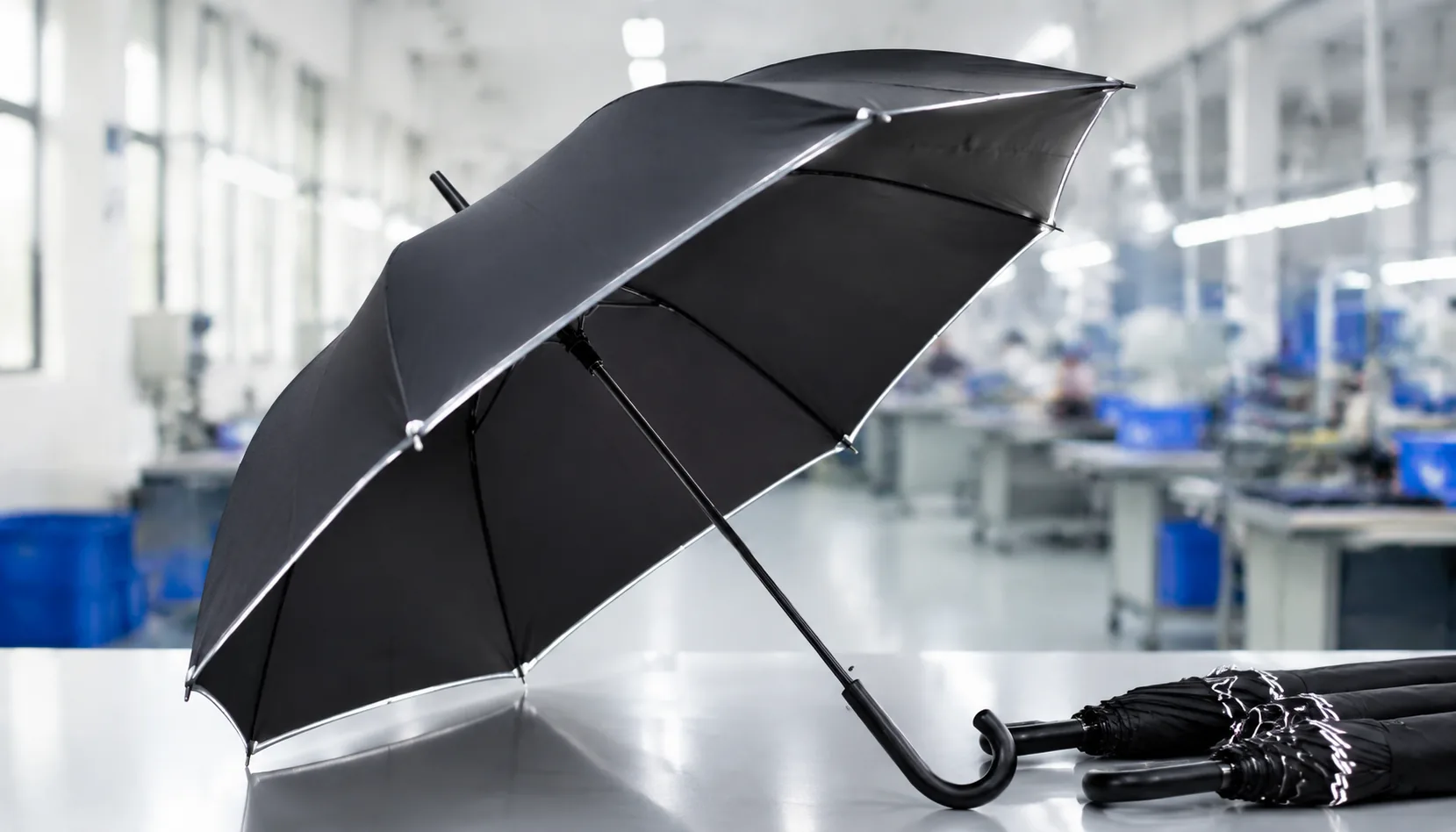
Reflective Trim Umbrellas: Safety Specs for OEM Buyers
Specify reflective umbrellas for commuter, campus, and event programs with trim placement, fabric, frame, MOQ, QC, and p...
Read More »
Reflective Safety Umbrellas: Buyer Guide for Night Rain
Specify reflective safety umbrellas with 190T pongee, 360° tape, fiberglass ribs, and AQL 2.5 checks for commuter, schoo...
Read More »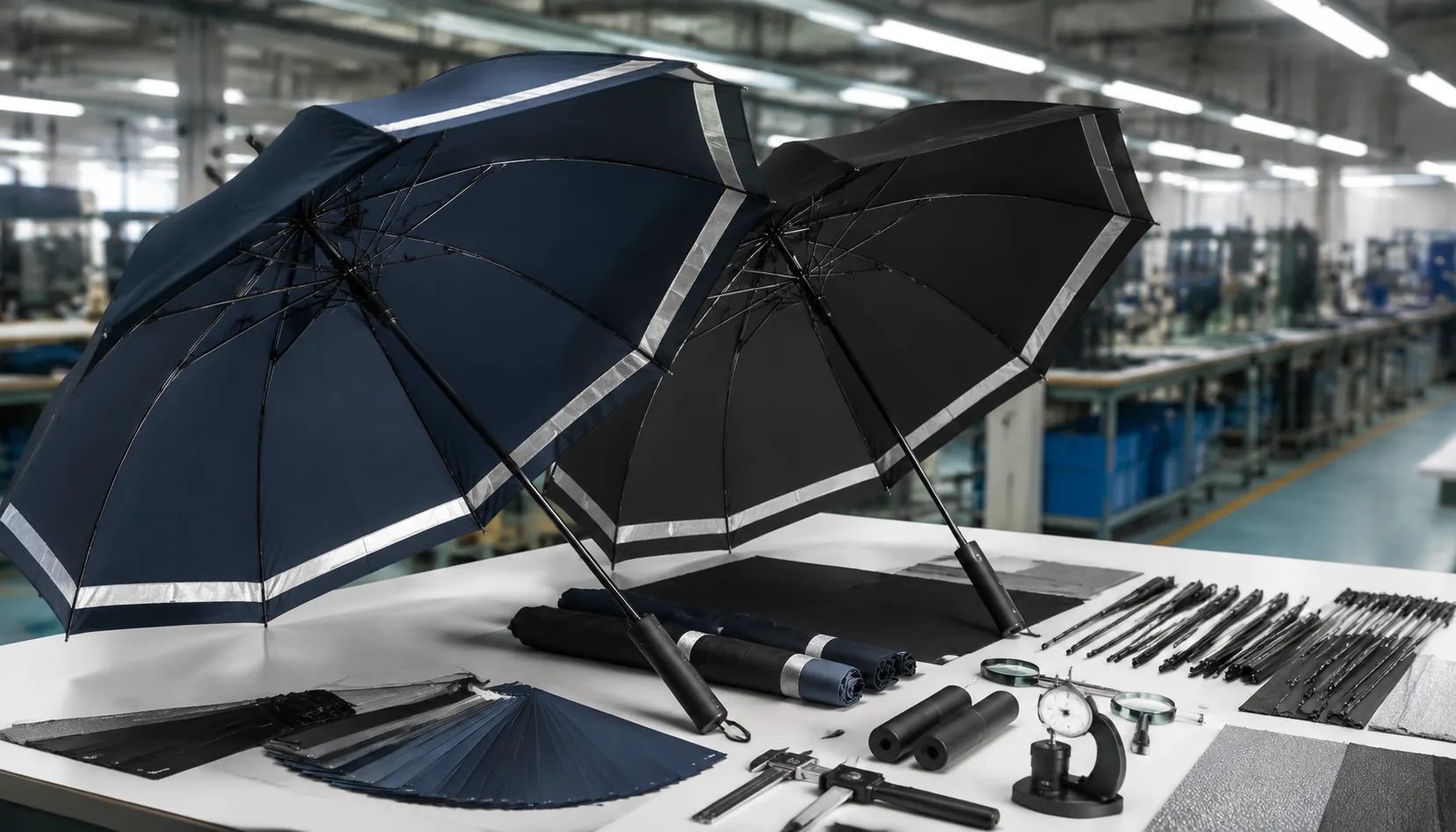
Reflective Safety Umbrellas: Buyer Guide for Night Visibility
Specify reflective safety umbrellas with the right trim, canopy fabric, ribs, testing, MOQ, and packing for commuter, ca...
Read More »