Reflective Safety Umbrellas for Branded Night Events
Night-event umbrellas fail buyers in two places: the fabric looks fine in a sample room but disappears under headlights, or the logo placement fights the reflective tape after production starts. For reflective safety umbrellas, we usually lock the 190T pongee color, tape width, fiberglass rib spec, and print position together before cutting, because one late change can throw off panel balance, opening tension, and visibility on campuses, road crews, or branded giveaways.
Visibility Requirements for Night and Rain Use
Visibility on a rainy night is not about making the umbrella look bright under showroom lights; it is about catching a driver’s headlamp at 30–80 meters while the user is moving, turning, and partly blocked by other people. For reflective safety umbrellas, the most reliable layout is 10–15 mm reflective piping around the canopy edge plus 20–25 mm reflective tape on selected ribs or lower panels. Piping gives a continuous outline from nearly every angle, while tape creates stronger flashes when the umbrella tilts. I prefer silver micro-prismatic or glass-bead reflective trim over printed gray “reflective-looking” ink, because real reflective material returns light sharply under vehicle headlights. On 23 inch and 27 inch umbrellas, we usually place reflective elements near the outer third of the canopy, not close to the shaft, because that area remains visible above shoulders and backpacks.
High-contrast panel layouts matter almost as much as the reflective trim. A black canopy with one or two fluorescent yellow, orange, or white panels reads faster than eight busy printed panels, especially in rain glare. For branded safety umbrellas, keep the logo away from the most critical reflective zone unless it is built as reflective logo umbrellas using reflective heat-transfer film. A 190T or 210T pongee canopy with PU or Teflon water-repellent coating gives a clean surface for tape bonding and printing; PVC and POE clear canopies need different adhesion testing because reflective tape can lift if the surface has plasticizer migration. Our standard practice at ZheBrella is to run a wet rub check, opening-cycle check, and low-light inspection before bulk packing, not just a normal daylight visual check under AQL 2.5.
The highest visibility need is not the same for every buyer. Pedestrians need a strong perimeter outline so cars see body width at crossings. Campus security and parking teams need identification from the front and rear, so custom reflective umbrellas often use alternating high-contrast panels plus two reflective logo positions. Outdoor events need crowd recognition at a distance, which favors 27 inch or 30 inch golf umbrellas with double-canopy venting, fiberglass ribs, and reflective piping on both canopy layers. For night event umbrellas handed out at concerts, races, or festivals, I would avoid fragile thin steel 8K frames if wind is expected; a fiberglass 8K or 10K frame rated around 40–50 mph holds shape better and keeps the reflective edge facing outward instead of collapsing into a dark bundle. Visibility fails quickly when the umbrella flips, so wind stability is part of the safety specification, not a luxury feature.
Frame Specs That Hold Up in Bad Weather
For reflective safety umbrellas, the frame choice matters more than the print method because a bad shaft or weak stretcher will fail before the reflective film ever gets noticed. Steel shafts are still the cheapest option, and they resist bending under straight compression, but they also add weight and can kink hard in side gusts. Fiberglass ribs are the better call for branded safety umbrellas when the buyer cares about repeated open-close cycles and wet, windy commutes; they flex and return instead of taking a permanent set. On a 23" or 27" stick umbrella, I prefer a steel shaft paired with fiberglass ribs and tips, because that combination keeps cost controlled without making the canopy feel like a crowbar. For night event umbrellas, the extra gram weight is less important than how the frame behaves when guests are moving fast in rain, on sidewalks, and around barricades.
8K versus 16K is not a branding question; it is a stiffness and wind-management question. An 8K build uses fewer ribs, larger panel spans, and lower part count, so it is easier to sew and cheaper to assemble, but each panel takes more load and flaps harder in gusts. A 16K umbrella has shorter rib spacing, a rounder canopy, and a cleaner profile under tension, which matters if you are printing reflective logo umbrellas where the artwork must stay readable after repeated flexing. The tradeoff is real: 16K costs more in frame parts, sewing time, and inspection because there are simply more points to align. For custom reflective umbrellas used at outdoor concerts or sports activations, I usually treat 8K as acceptable for light city use and 16K as the safer buy when the site has exposed corners, larger guest flow, or a higher complaint risk if one unit inverts.
A double-canopy windproof structure is worth the added cost when the umbrella must survive lateral gusts rather than just rain. The vented top lets air escape through the crown instead of loading the full panel area, which is why a 23" or 27" double-canopy frame can hold together in 40 to 50+ mph gusts better than a flat single canopy with the same rib count. That extra layer also helps reflective safety umbrellas keep their shape under Teflon or UV-coated pongee 190T/210T, which is important when the buyer wants both visibility and function. I would not spec double canopy for every order; it adds sewing complexity, more fabric, and a higher defect rate if the vents are cut poorly. But for branded safety umbrellas used by event staff, security teams, or late-night city promotions, the windproof premium is usually cheaper than replacing collapsed umbrellas on-site or dealing with a bad logo impression in front of a crowd.
Canopy Fabric, Coatings, and Logo Placement
For reflective safety umbrellas, the canopy base matters more than most buyers expect. 190T pongee is the standard when you want a lighter hand feel, faster drying, and a lower landed cost, while 210T pongee gives a tighter weave, better ink hold, and less puckering after stitching. On branded safety umbrellas and night event umbrellas, I usually prefer 210T if the design carries a large logo field or if the umbrella will be handled hard in crowds, because the fabric keeps its shape better around seams and panels. The reflective film or piping should sit on a stable substrate; cheap, loose-woven fabric telegraphs wrinkles and makes the reflective edge look uneven under flash or headlights.
Water-repellent treatment is not optional if the umbrella is meant to work as an actual rain product. A decent DWR finish should shed water without turning the canopy greasy or blocking print adhesion, and it needs to survive repeated folding at the rib tips. If the client wants extra sun protection, UPF 50+ coatings can be added to pongee, but the chemistry has to be checked against the reflective layer so the coating does not dull the silver return or create a chalky edge. On custom reflective umbrellas, I look at the whole stack: base fabric, coating weight, seam tape behavior, and whether the coating migrates into the reflective zone after heat pressing.
Logo placement is where a lot of reflective logo umbrellas go wrong. Screen printing works well for bold, opaque artwork on solid fabric panels, but it should stay clear of the reflective strip or the ink can reduce retroreflective performance and create visible cracking at the overlap. Heat transfer is better for smaller runs or multi-color graphics, yet the press temperature and dwell time must be controlled so the adhesive does not distort the reflective film or leave gloss rings. My rule is simple: reserve a clean print window, keep reflective areas uninterrupted on the panel edge or top arch, and proof the artwork under flashlight and night-view conditions before production starts.
Ordering Details: MOQ, Sampling, and Lead Time
For reflective safety umbrellas, the MOQ depends less on the umbrella body and more on how the reflective element is applied. If you use an existing 23" or 27" auto-open frame with 190T pongee, a reflective strip on one or two canopy panels, and a one-color screen-printed logo, a practical MOQ is usually 500–1,000 pcs per design. If the buyer wants full-panel reflective piping, heat-transfer reflective logos on multiple panels, custom handle color, or a matched sleeve, 1,000–3,000 pcs is more realistic because the material loss during cutting and alignment setup is higher. For premium branded safety umbrellas with fiberglass ribs, 8K or 10K frames, Teflon water-repellent coating, and UPF 50+ canopy treatment, I would not push below 1,000 pcs unless the event budget can absorb a higher unit price. Very small runs are possible, but they often create more risk than savings because printing setup, reflective tape sourcing, and AQL 2.5 inspection time do not shrink much.
Sampling should be treated as a production rehearsal, not just a photo approval. A normal pre-production sample takes 7–10 days after artwork confirmation, and that includes checking the reflective logo umbrellas under direct light, not only under office lighting. For night event umbrellas, I like to test visibility from 20–30 meters with a phone flash or vehicle headlamp, because some low-cost reflective films look bright on a swatch but dull after heat pressing onto dark pongee. If the order uses custom reflective umbrellas with a double-canopy vented windproof structure, allow one extra sample round for rib balance and vent stitching; reflective tape can stiffen the canopy edge and change how the umbrella folds. Our standard practice at ZheBrella is to approve logo size, Pantone color, reflective placement, closure strap position, sleeve fit, and carton marking before releasing bulk cutting, because fixing a misplaced reflective strip after sewing is almost never economical.
Bulk lead time is usually 25–35 days for straightforward reflective safety umbrellas using stock frames and standard black, navy, red, or white canopy fabric. Orders with custom-dyed 210T pongee, 16K golf frames, POE/PVC/EVA transparent panels, full sublimation printing, or special reflective transfer film should be planned at 35–45 days, especially before spring promotion season or Q4 event schedules. FOB Ningbo or Shanghai gives the buyer more control if they already have a forwarder, but it also means the event planner must manage vessel booking, customs clearance, trucking, and last-mile delivery. DDP costs more on the quotation, yet it is often safer for fixed-date night runs, concerts, school campaigns, and municipal safety events because the factory and logistics partner build the customs and delivery buffer into one timeline. For deadline planning, I suggest locking artwork 60–75 days before the event for sea freight and 30–40 days for air freight, with final AQL inspection completed before the balance payment and shipment release.
Inspection Points Before Shipment
Before release, I start with the reflective strip and canopy build because that is where night event umbrellas fail first. The strip must sit flat with no lifting at the edges, glue bleed, wrinkles, or gaps after folding and reopening. We check peel resistance on representative samples by pressing and flexing the panel around the strip, then rubbing the edge to see whether the adhesive shifts. For reflective safety umbrellas and other custom reflective umbrellas, the strip placement also has to stay centered and aligned with the logo panel so the brand reads cleanly under flash or streetlight. If the product uses screen print or heat transfer near the reflective zone, the print cannot contaminate the adhesive line. Our standard practice is to reject any unit where the reflective tape lifts, clouds, or delaminates after a basic bend test.
Rib flexibility and opening action come next, because branded safety umbrellas are often moved from warehouse to event floor with little handling time. Each frame should open smoothly, lock fully, and close without catching on the stretchers or pinching the canopy. I check fiberglass or steel ribs for equal spring return, no cracking at the joints, and no weak feel at the ferrules or rivets. Auto-open mechanisms need a clean trigger pull and a full canopy spread on the first release, not a half-open stall that later damages the runner. Seam strength is verified by pulling across the panel stitches and checking the thread bite at the canopy edge, tip pockets, and vents; loose stitches, skipped needles, or puckering are not acceptable on reflective logo umbrellas meant for repeated nighttime use. A small frame problem at this stage becomes a return later, so we do not ship if the action feels rough.
Color consistency and final release control are checked after structure testing, because mismatched panels are obvious under event lighting. The canopy body, reflective trim, handle, and tie strap must match the approved shade, and batch-to-batch variation should stay within the signed-off sample. I also verify that all cartons, polybags, and printed marks match the PO and carton plan before loading. For shipment release, the lot should pass AQL 2.5 with a proper random sample covering appearance, function, seam quality, and label accuracy; any major defect in the sample stops the lot, and repeated minor defects trigger rework or 100 percent sorting. On reflective safety umbrellas, that last inspection is not paperwork theater—it is the gate that keeps weak ribs, poor stitching, and bad reflective adhesion out of the shipment.
Frequently Asked Questions
Can reflective tape be added to both folding and straight umbrellas?
Yes. Folding umbrellas usually use reflective piping or narrow strips, while straight umbrellas can support wider reflective bands on the canopy edge or panels.
Does reflective material affect umbrella waterproofing?
It can if poorly stitched or bonded. Factory inspection should include seam leakage checks and adhesion testing, especially on 190T or 210T pongee canopies.
What reflective material is usually used on safety umbrellas for night events?
Most B2B buyers choose reflective tape or reflective print applied to one or more panels, then pair it with 190T pongee canopy fabric for a clean logo area. For higher visibility, the reflective elements are often placed on the canopy edge or alternating panels so they catch car headlights from multiple angles.
What is a typical MOQ for custom reflective umbrellas?
For OEM/ODM production, MOQs commonly start around 300 to 500 pieces per design, depending on the canopy shape, printing method, and reflective application. If you need multiple logo positions or mixed colors, the MOQ may be higher because each setup adds production time.
How long does production take for branded safety umbrellas?
Sample approval usually takes 5 to 10 days, and mass production often takes 25 to 35 days after deposit and final artwork confirmation. If the order includes special reflective printing or custom packaging, buyers should allow a few extra days for QC and packing.
Looking to Launch Your Custom Umbrella Line?
ZheBrella is a Zhejiang-based OEM/ODM umbrella manufacturer with 17 years of export experience. Free design, low MOQ from 100 pieces, windproof construction, full-color print.
Get Free Quote Now »People Also Search For
Related Articles
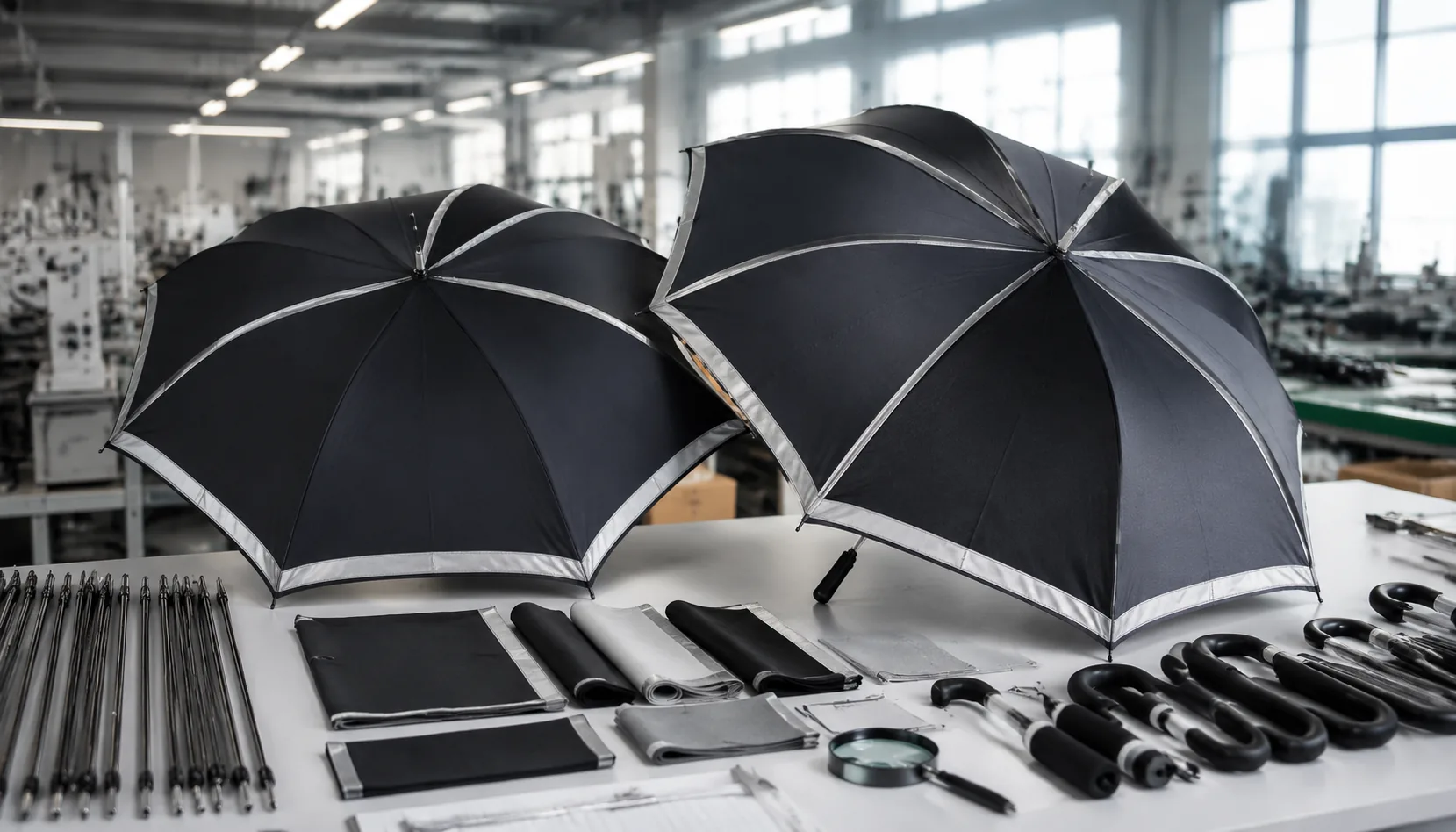
Reflective Safety Umbrellas for Corporate and Event Buyers
Specify reflective safety umbrellas with 190T pongee, fiberglass ribs, and compliant logo placement for night events, ut...
Read More »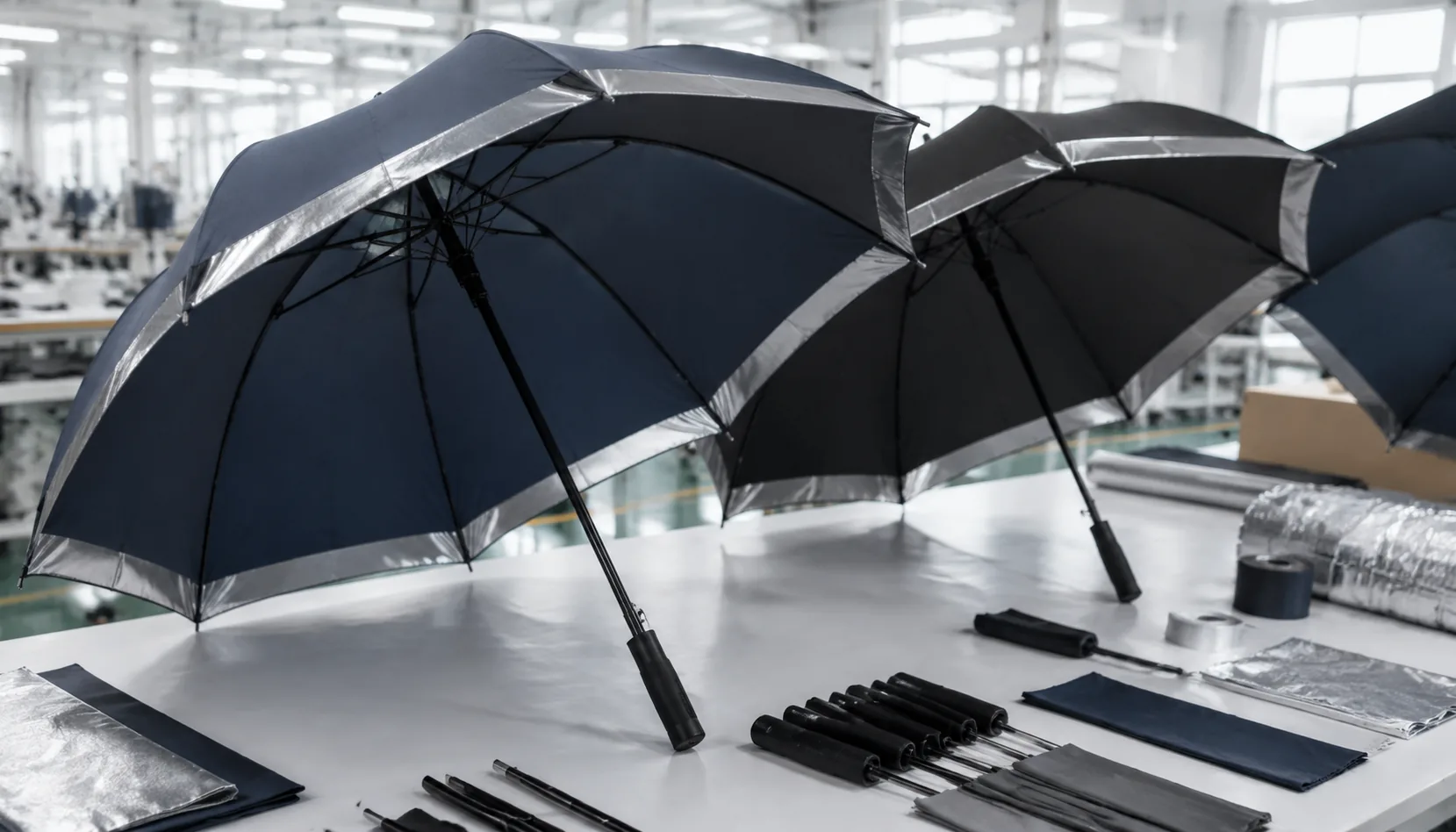
Reflective Safety Umbrellas for Corporate and Event Programs
Specify reflective umbrellas for safety campaigns with the right fabric, rib strength, print areas, visibility details, ...
Read More »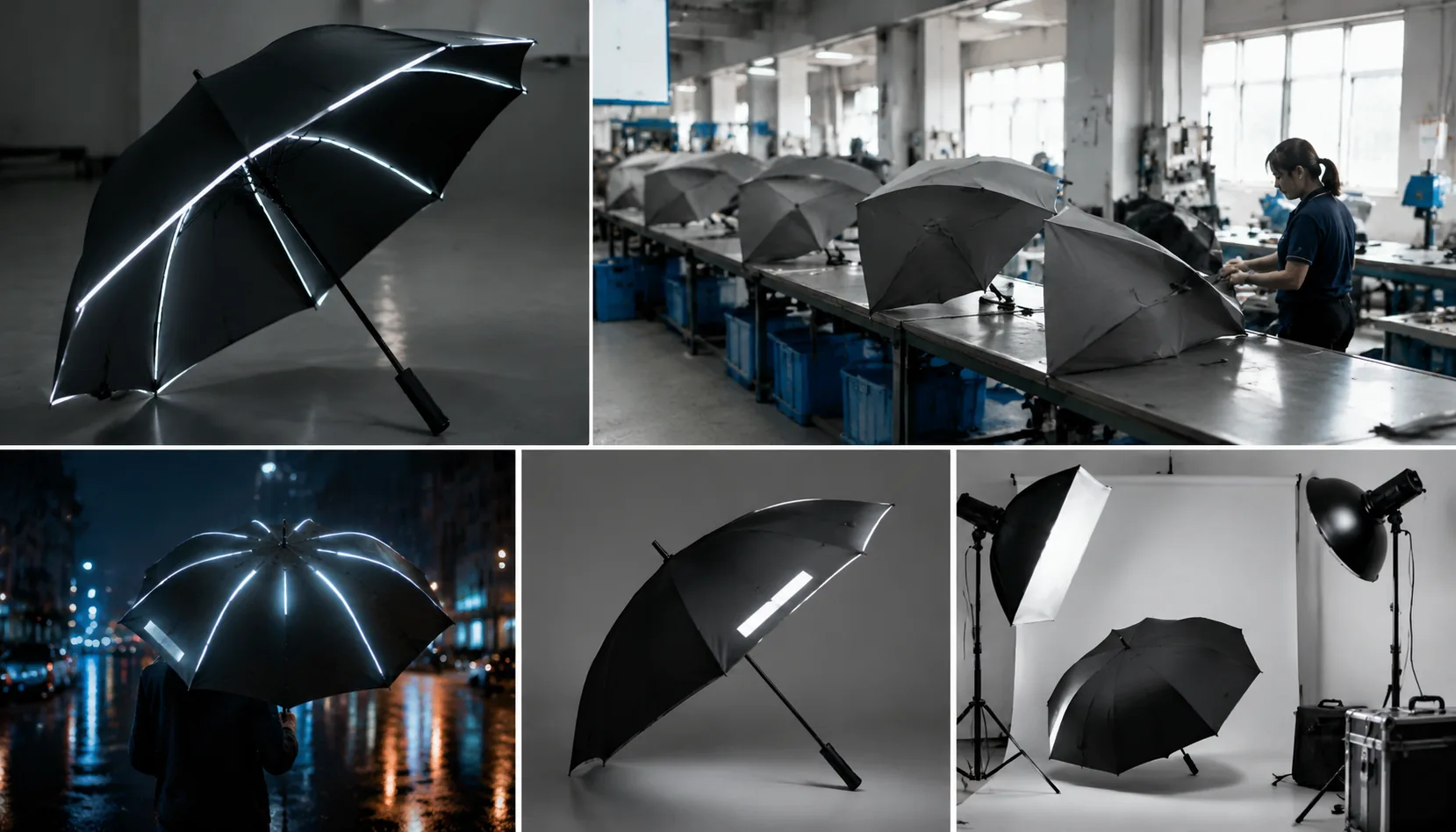
Reflective Safety Umbrellas: Buyer Guide for Night Events
Learn how to source reflective safety umbrellas with the right tape placement, canopy fabric, windproof frame, print pla...
Read More »