Reflective Safety Umbrellas for Commuter and Campus Buyers
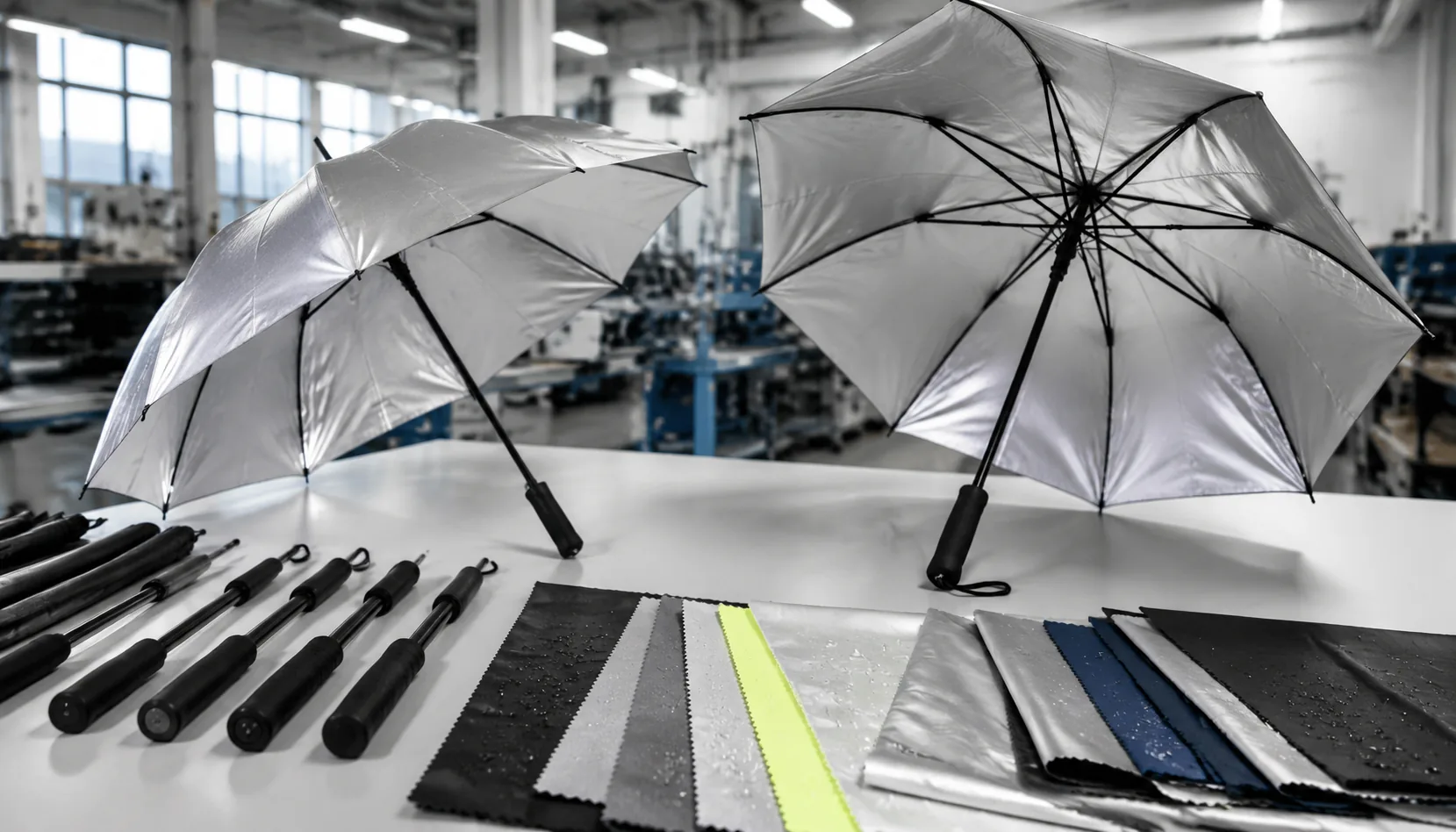
For campus bookstores, transit programs, and commuter retail lines, reflective safety umbrellas have to do more than catch headlights—they need to survive crowded entrances, wet storage bins, and repeat opening cycles. On our Songxia factory floor, the real cost drivers show up in the trim stitching, rib selection, pongee coating, print placement, and windproof frame testing long before cartons are packed.
Identify Where Reflective Umbrellas Add Buyer Value
Transport programs, security teams, hotel shuttles, and night events need OEM safety umbrellas specified by use case, not by catalog photo. A transit agency may need 8K fiberglass ribs, a double-canopy vented 23" stick umbrella, and a wind-tunnel target of 50+ mph, while an outdoor concert sponsor may choose a lower-cost steel shaft model with reflective logo panels for one weekend of pedestrian management. POE or clear PVC canopies help staff maintain sightlines, but reflective edge binding still matters because clear material disappears under headlights and rain glare. For branded orders, the safest approach is usually a normal screen-printed logo on one panel and functional reflective tape or piping on the canopy perimeter; making the whole logo reflective can raise cost and reduce print sharpness. Typical factory lead time is 25–35 days after artwork approval for 1,000–5,000 pieces, with FOB Ningbo or Shanghai and DDP available when the buyer wants freight, duty, and campus delivery bundled into one landed price.
Choose Canopy Fabric and Reflective Placement
For reflective safety umbrellas, I usually steer commuter and campus buyers toward 190T pongee when the target is a practical promo item and 210T pongee when the umbrella needs to survive daily folding in a backpack for a full school year. Both fabrics take a PU or Teflon water-repellent finish well, but 210T has a tighter weave, better hand feel, and slightly cleaner recovery after being wrapped wet around the shaft. On print quality, 190T is fine for one- or two-color screen printing and heat-transfer logos; 210T gives smoother edges on small campus seals, QR codes, and retail branding because the yarn density reduces ink bleed. For OEM safety umbrellas, I would avoid cheap polyester that feels crisp at first but shows crease whitening after 200–300 open-close cycles, especially on 21 inch and 23 inch folding models.
Reflective placement changes both safety performance and sewing difficulty. Reflective trim umbrellas with tape sewn around all panel edges give the best 360-degree visibility, but the seam allowance must be controlled or the canopy will pucker at the rib tips. Alternating reflective panels are cheaper and more visible from the front, useful for campus safety umbrellas handed out at orientation or night events. For commuter umbrellas wholesale, reflective tape on the closing strap and carry sleeve is a good low-cost add-on, but it should not be the only reflective element because sleeves disappear once the umbrella is in use. On 27 inch and 30 inch stick umbrellas, reflective piping along every other rib line balances cost, visibility, and canopy tension better than wide tape across the lower hem.
Reflective material has to be tested after abuse, not just approved on a clean sample table. Our standard practice at ZheBrella is to flex the finished canopy through repeated folding, soak it under simulated rain, then check adhesion, cracking, and reflectivity before shipment; tape that looks bright before sewing can dull quickly if the backing is too stiff or the coating absorbs water at the stitch holes. Buyers should ask for pre-production samples using the exact pongee, coating, reflective tape width, and printing method, then run AQL 2.5 inspection with special attention to loose tape ends, skipped stitches, and panel distortion. If the umbrella is auto-open or auto-open-close, test reflective placement with the mechanism cycling, because sharp fold lines near 8K or 10K ribs are where poor tape usually fails first.
Specify Frame Strength for Urban Wind Conditions
Frame strength matters more than logo size when reflective safety umbrellas are used around train stations, parking decks, and campus crossings. For most commuter umbrellas wholesale programs, I recommend fiberglass ribs because they bend under gust load instead of taking a permanent set. A 23" or 27" stick umbrella with 8K fiberglass ribs, steel shaft, and 190T or 210T pongee canopy is a practical baseline for daily city use. If the budget is tight, steel ribs can work, but buyers should understand the tradeoff: steel is cheaper and crisp-looking out of the carton, yet it is more likely to deform after side gusts or when users shake the umbrella open aggressively. For low-cost event handouts, 8K steel ribs with manual open can pass AQL 2.5 inspection if the rib tips, runner, and stretchers are properly riveted, but I would not position that build as windproof.
For exposed stations, bridges, waterfront bus stops, and long campus walkways, double-canopy construction is worth specifying. A vented top lets pressure escape instead of inverting the frame, especially on 27" and 30" golf-style sizes where the canopy catches more wind. In our factory floor testing, the weak point is rarely the reflective trim itself; failures usually start at the rib joint, stretcher rivet, or runner notch. A stronger OEM safety umbrellas spec should use fiberglass ribs, a reinforced steel or fiberglass shaft, double-canopy venting, and a clean binding seam around the reflective strip so water does not wick into the edge. For premium campus safety umbrellas, 16K ribs give a fuller round profile and better fabric support, which makes reflective trim umbrellas look more stable in motion and less floppy during night patrol, alumni events, or student escort programs.
Rib count should match the buying purpose, not just the catalog photo. An 8K frame is lighter, faster to assemble, and usually the best choice for standard 21" folding commuter models or 23" stick umbrellas carried on buses and subways. A 16K frame adds material, labor, and carton weight, but it gives a stronger premium look and distributes canopy tension more evenly, which helps when reflective piping is sewn into every panel seam. For reflective safety umbrellas ordered in mixed-color campus or transit authority programs, I would set the frame requirement before discussing print method: manual open for lowest failure risk, auto-open for retail convenience, and auto-open-close only after cycle testing because compact mechanisms add stress to the ribs. Typical production lead time is 25–35 days after artwork approval, with MOQ depending on frame type, reflective layout, and whether FOB Ningbo/Shanghai or DDP delivery is required.
Match Opening Mechanism and Size to the User
Auto-open folding umbrellas make the most sense when the user is moving through a station gate, holding a coffee, scanning a campus ID, or carrying a laptop bag. A 21" or 23" 3-fold frame with an auto-open button lets the canopy deploy in one hand before the first hard gust hits the entrance. For commuter umbrellas wholesale programs, I usually steer buyers toward 23" over 21" if the budget allows: the packed length is still bag-friendly, but the arc gives better shoulder and backpack coverage. On reflective safety umbrellas, the mechanism must be tested with the added reflective tape or printed trim already sewn on, because extra seam thickness can affect canopy tension and closing force. A decent auto-open unit should pass repeated open-close cycling without the runner sticking, and the button should not feel loose after 500 cycles.
Manual mechanisms are still the right choice when cost control, durability, and simple field replacement matter more than one-hand convenience. A manual 21" folding umbrella has fewer springs, fewer button parts, and less chance of failure after being tossed into lockers, buses, or maintenance carts. For schools buying campus safety umbrellas by the carton, that matters because loss and rough handling are real costs, not theory. Manual open frames also help when the umbrella uses heavier 190T or 210T pongee with reflective trim umbrellas, since users can control the opening instead of shocking the ribs at full spring speed. If the buyer is targeting student giveaways, a steel shaft with fiberglass ribs is a reasonable compromise; if the user is daily staff or patrol, I prefer fiberglass ribs and a stronger center shaft even if the FOB cost rises by $0.40–$0.80.
Larger straight umbrellas fit security, facilities, parking, and event teams better than compact commuters. A 27" or 30" straight umbrella with 8K or 10K fiberglass ribs gives enough coverage for a radio, clipboard, high-vis vest, or guest escort, and the longer shaft is easier to control in wind than a small folding unit. For OEM safety umbrellas, we often separate the spec by user group: 21" auto-open folding for office commuters, 23" manual or auto-open for students and faculty, and 27" straight manual for guards or maintenance crews. Straight models also give more clean canopy area for reflective edge binding, school logos, and UPF 50+ coating without crowding the panels. Our standard practice at ZheBrella is to confirm packed length, open diameter, runner strength, and AQL 2.5 inspection criteria before quoting MOQ, because mechanism choice affects both failure rate and carton cube.
Verify Compliance, MOQ, Lead Time, and QC Details
Compliance starts with the reflective material, not the umbrella shape. For reflective safety umbrellas, ask the supplier to identify the trim as glass-bead reflective tape, reflective piping, printed reflective ink, or woven reflective webbing, because each behaves differently after folding, rain exposure, and abrasion. I would request a material data sheet showing reflectivity values, base fabric, adhesive type, and washing or wet-rub test results, even though umbrellas are not garments. For commuter umbrellas wholesale programs, the practical construction is usually 190T or 210T pongee with a Teflon water-repellent finish, 8K fiberglass ribs, and 360-degree reflective trim on the canopy edge or panels. If the product is positioned for campus safety umbrellas, also confirm whether the canopy needs UPF 50+, school-color matching, or a POE/PVC clear window for visibility at crossings.
MOQ can change sharply by trim type, so do not accept one blanket number. Stock reflective piping on a 23 inch auto-open straight umbrella may start around 300–500 pieces per color, while custom reflective webbing, full-panel reflective printing, or OEM safety umbrellas with molded handles often move to 1,000–3,000 pieces because the trim, logo plate, and canopy cutting all require separate setup. Ask for pricing by FOB Ningbo/Shanghai and DDP to your warehouse, including carton size, HS code, and whether the supplier is using sea freight, Matson, or air for urgent event delivery. For custom reflective builds, 35–50 days is realistic after artwork approval and sample confirmation; anything promised in 20 days usually means stock frames, limited colors, or skipped pre-production testing.
QC should be written into the purchase order, not discussed after defects appear. Our standard practice at ZheBrella is AQL 2.5 for major defects, with specific checkpoints for reflective strip adhesion, rib strength, canopy leakage, opening cycles, and logo alignment. For reflective trim umbrellas, adhesion needs a peel check after wet conditioning, because poor glue can lift where the canopy folds over 8K or 10K rib tips. Rib testing should include manual flexing plus wind simulation if the buyer claims 40–50+ mph performance, especially on 27 inch golf umbrellas or double-canopy vented models. Opening-cycle checks should cover manual, auto-open, and auto-open-close mechanisms separately, and logo inspection should measure placement tolerance in millimeters, not by eye, because reflective borders make crooked prints more obvious under headlights.
Frequently Asked Questions
Where should reflective material be placed on an umbrella?
Reflective piping around the canopy edge gives 360-degree visibility, while reflective logos or alternating panels improve front-facing visibility. For folding umbrellas, the sleeve and closure strap can also carry reflective trim.
Does reflective trim change the umbrella MOQ or lead time?
Usually yes. Custom reflective tape, piping, or panel printing may require higher MOQ and extra sampling time, especially if the buyer needs a specific reflectivity grade or branded trim layout.
What reflective options are available for commuter and campus umbrellas?
Common options include reflective piping around the canopy edge, reflective tape on panels, reflective logos, and reflective sleeve printing. For safety programs, buyers often choose 360-degree edge trim so visibility is not limited to one side.
What MOQ should buyers expect for OEM reflective safety umbrellas?
Typical MOQ is 500-1,000 pieces per design for logo printing, while custom fabric colors or special reflective layouts may require 1,000-3,000 pieces. Sampling usually takes 5-10 days after artwork confirmation.
Which QC checks are important for reflective trim umbrellas?
Key checks include reflective tape adhesion, seam strength, rib opening tests, wind resistance, colorfastness on pongee fabric, and logo print alignment. Buyers should request pre-shipment inspection with AQL standards before bulk release.
Looking to Launch Your Custom Umbrella Line?
ZheBrella is a Zhejiang-based OEM/ODM umbrella manufacturer with 17 years of export experience. Free design, low MOQ from 100 pieces, windproof construction, full-color print.
Get Free Quote Now »People Also Search For
Related Articles
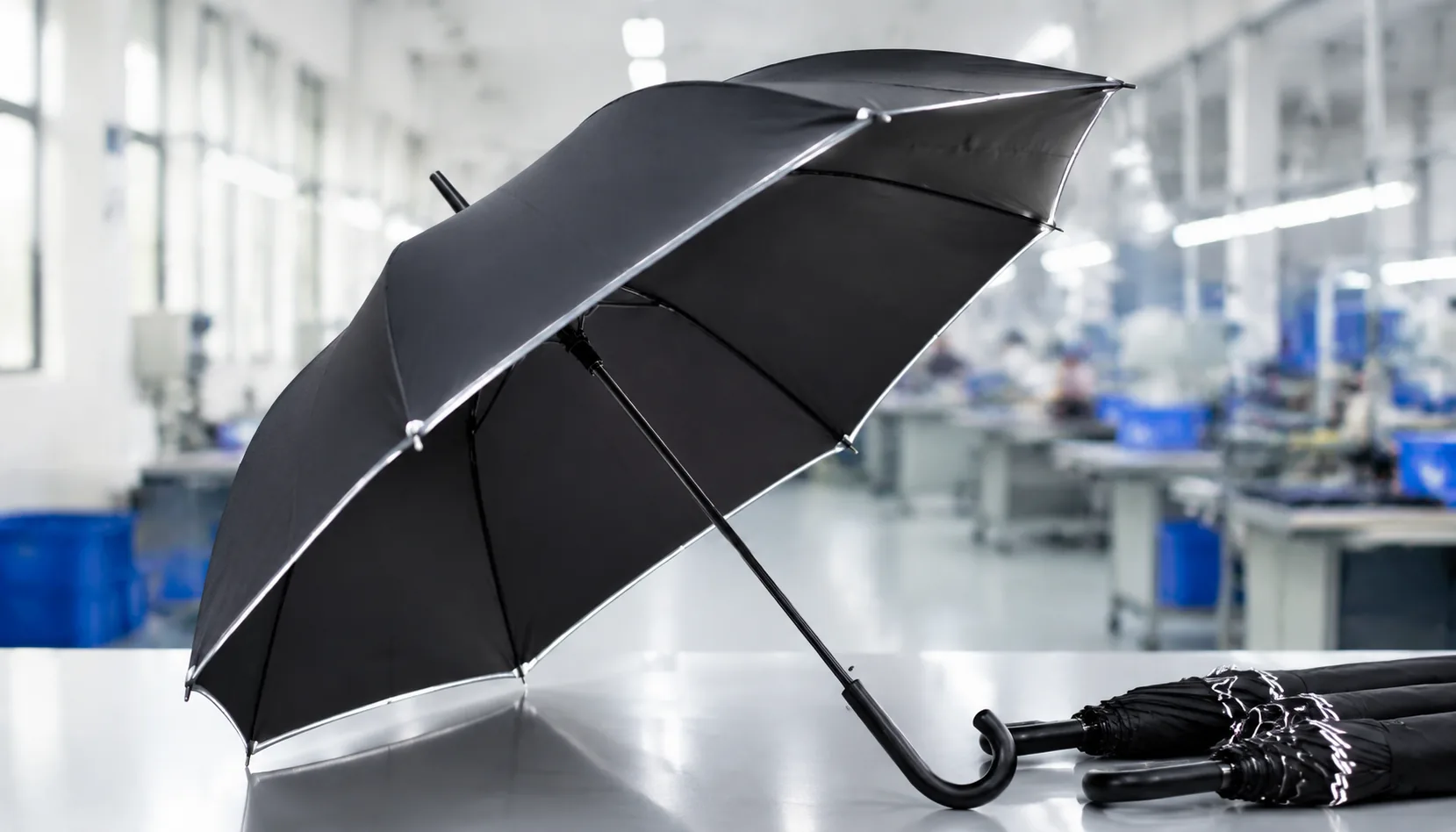
Reflective Trim Umbrellas: Safety Specs for OEM Buyers
Specify reflective umbrellas for commuter, campus, and event programs with trim placement, fabric, frame, MOQ, QC, and p...
Read More »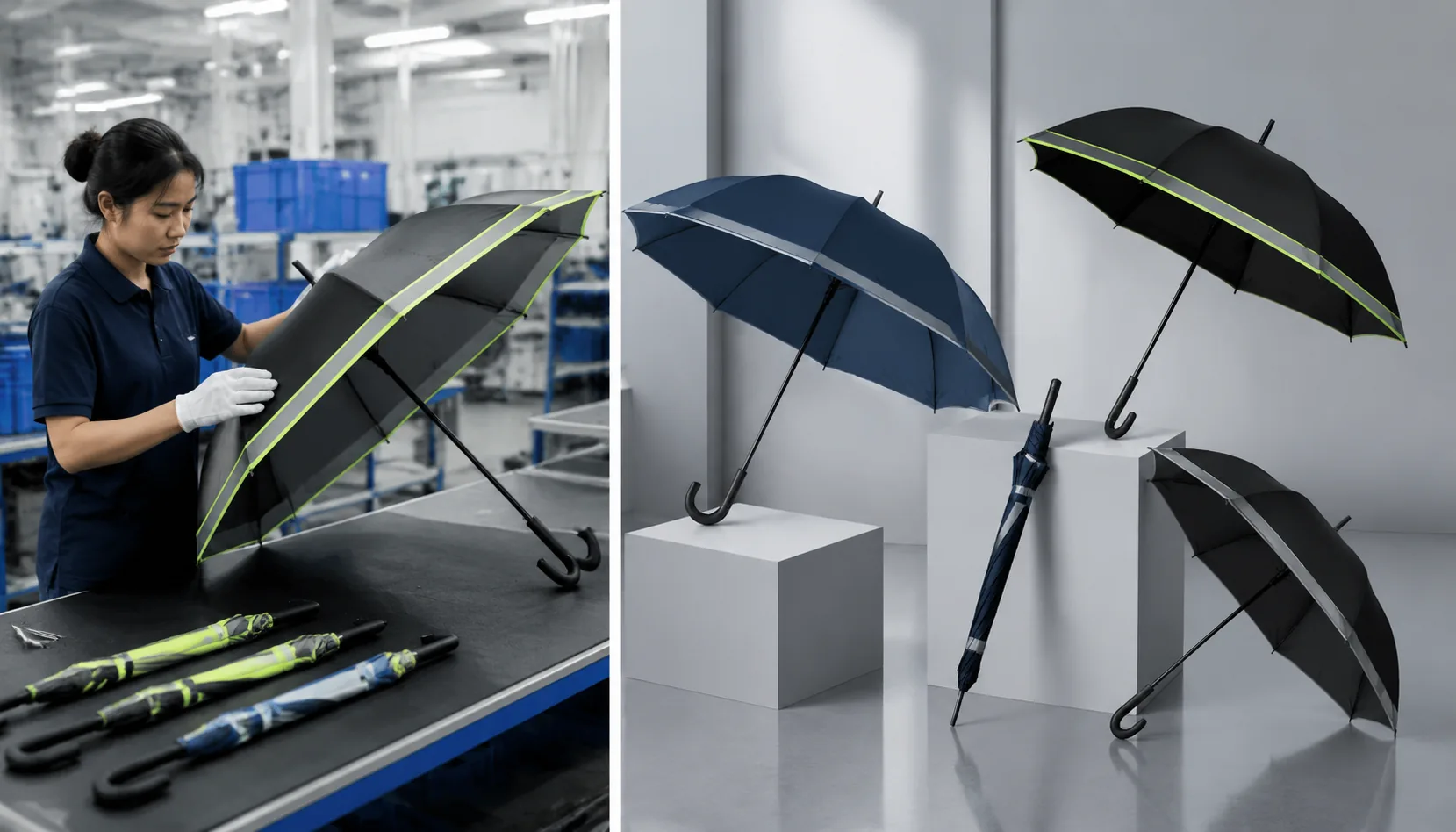
Reflective Commuter Umbrellas: OEM Safety Spec Guide
Specify reflective commuter umbrellas with 190T pongee, fiberglass ribs, safety trim, and QC points for retail or corpor...
Read More »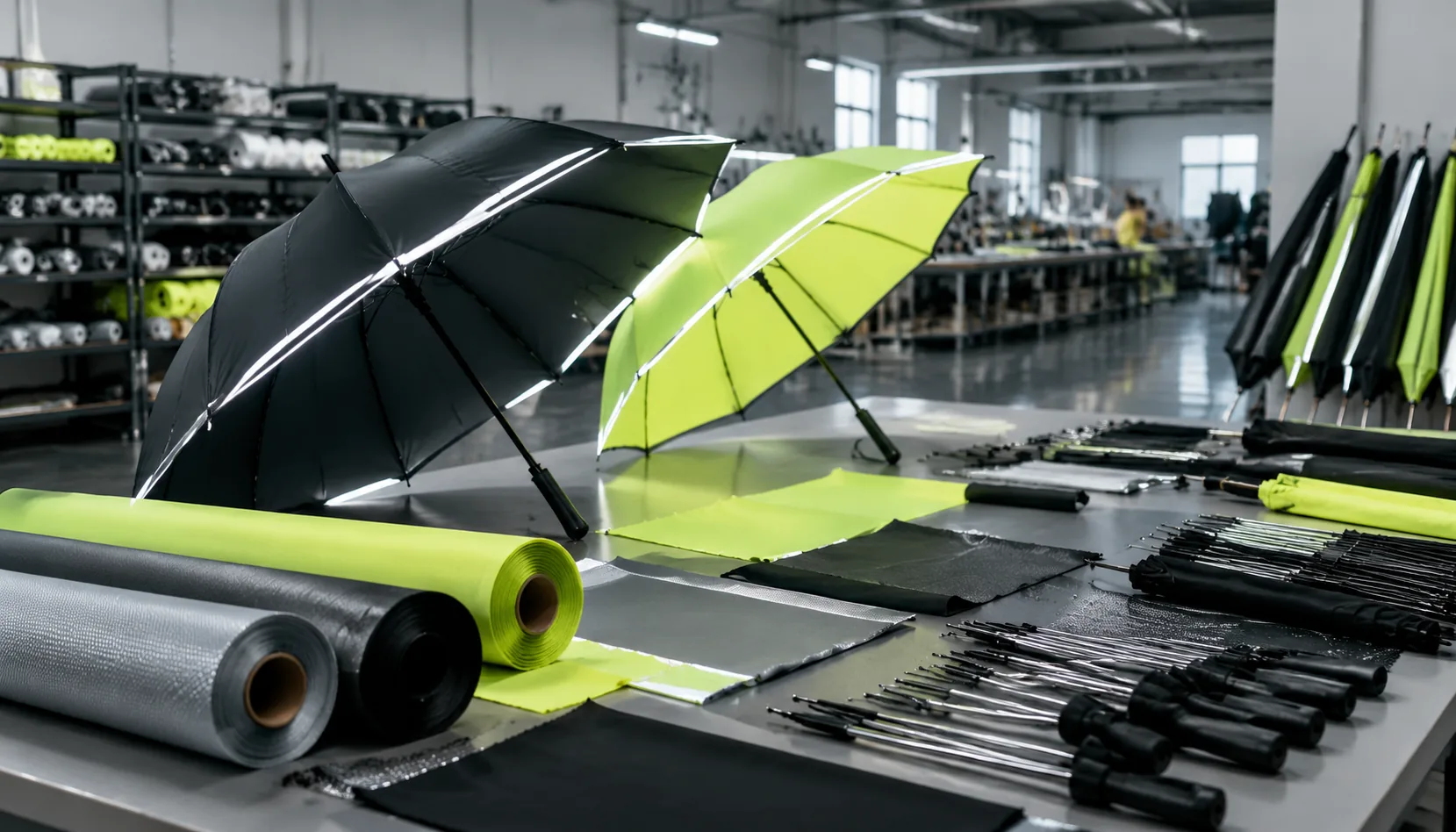
Reflective Safety Umbrellas: Buyer Specs for Night Use
Specify reflective safety umbrellas with trim placement, frame options, fabric weight, print limits, QC checks, MOQ, and...
Read More »