Repeat Logo Patterns for Umbrella Canopies Without Clutter
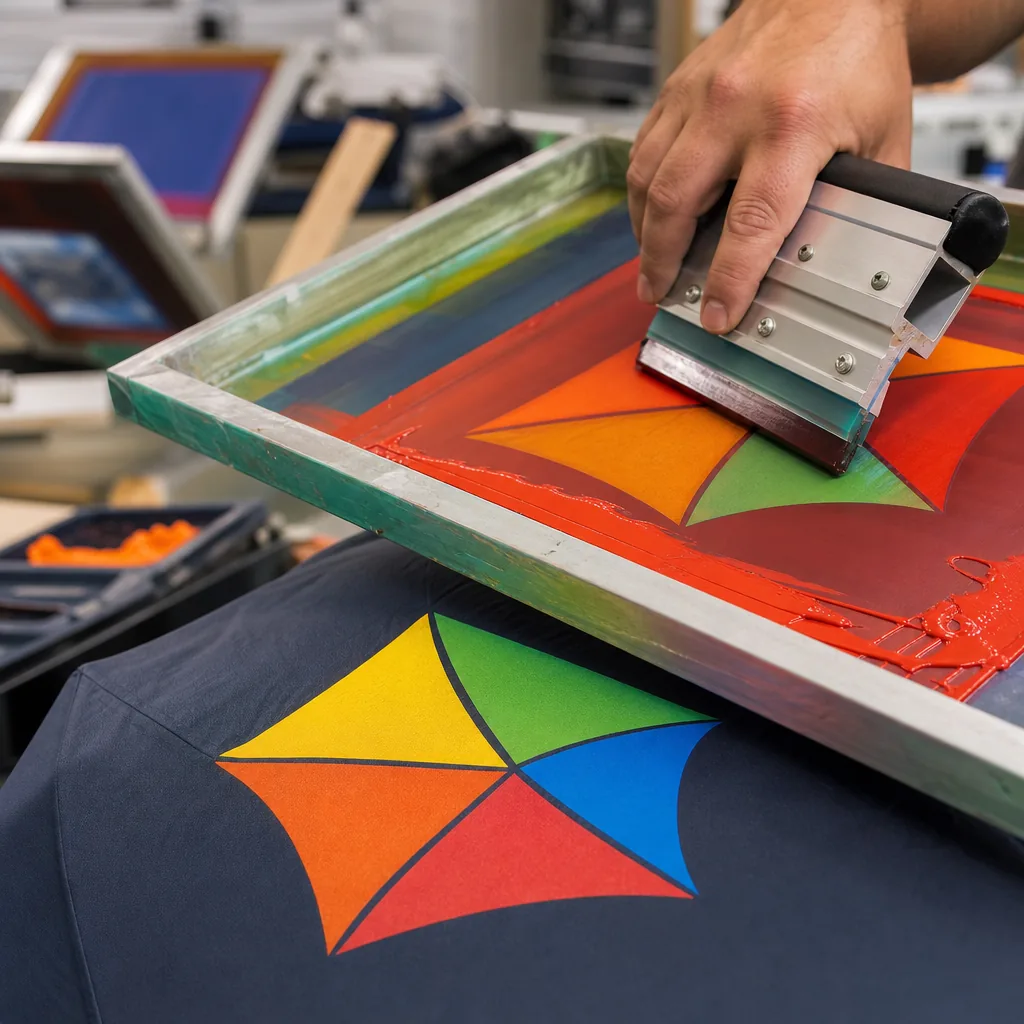
Designing a repeat logo umbrella canopy sounds simple until the artwork hits real panels, seams, and fold lines. A pattern that looks crisp on screen can turn crowded, broken, or unreadable once it is wrapped around an 8K or 16K umbrella, so spacing, repeat logic, and print method have to be planned from the factory floor up. At ZheBrella in Songxia, we build canopies for repeat logo umbrella canopy projects with that production reality in mind.
Set the Right Logo Scale and Spacing
A repeat logo umbrella canopy only works when the logo scale is small enough to stay readable and large enough to avoid turning into confetti on a curved surface. On a flat mockup, a 20 mm logo can look clean; on a 23" or 27" canopy with seams, panels, and panel tension, the same mark can smear into visual noise if the repeat is too tight. For patterned promotional umbrellas, I normally start by setting repeat logo umbrella canopy spacing from center-to-center rather than just logo width, because the eye reads the rhythm of the pattern before it reads any single mark.
Logo height should match the viewing distance and the channel. For retail or hospitality use, where guests see the umbrella at 1 to 3 meters, a 12 to 18 mm logo often survives better than a large emblem packed edge-to-edge; for event programs or outdoor branding viewed from farther away, the repeat can go slightly bigger, but the negative space still needs to breathe. The real control point is logo pattern spacing: if the repeat is too dense, the canopy turns busy; if it is too sparse, the branded canopy pattern looks accidental. For an umbrella step and repeat print, I prefer to test one low-density and one medium-density layout on a full-panel proof before approving production.
Curved canopy geometry changes the spacing again once the panels are sewn and stretched over the frame, so artwork that looks balanced in Illustrator can shift after cutting. A safe method is to keep the logo away from seam lines, leave enough negative space around each mark, and check the pattern from arm’s length and across a room, not just on a screen. In practice, a repeat logo umbrella canopy should be judged as a field of shapes first and a logo second; that is how you avoid clutter and still keep the umbrella clearly branded.
Design Around Panel Geometry and Ribs
A repeat logo umbrella canopy only looks clean when the artwork is built around panel geometry, not dropped onto a flat circle and hoped for the best. On an 8K frame, each panel is wider and you have fewer seams, so the logo pattern spacing can stay more forgiving; on a 16K frame, the panels are narrower, which means more seam interruptions, more chances for logo cropping, and a tighter umbrella step and repeat print setup. If you are designing patterned promotional umbrellas, I normally tell clients to place critical marks away from the gutter line and keep the repeat unit short enough that a seam does not split a letter or icon in half.
The rib count changes how the pattern reads when the canopy opens. Fiberglass ribs flex differently than steel ribs, so the fabric tension is not identical: fiberglass usually gives a softer, more even dome, while steel can hold a firmer shape but show sharper tension points near the panel edges. That matters on a branded canopy pattern because the same artwork can look slightly stretched or compressed depending on structure, especially at the outer third of the panel where the fabric is pulled hardest. If the design is dense, a small shift in repeat alignment is enough to make the logo look busy instead of intentional.
For production, the safe approach is to build the repeat on the actual panel template, not on a generic umbrella outline. I use the real seam allowance, the rib count, and the open-diameter curve to check where the mark lands at the tip, mid-panel, and hem, because the artwork that looks balanced on a 23" sample can drift once it is scaled to 8K or 16K construction. A repeat logo umbrella canopy should tolerate that movement without losing brand readability, which usually means cleaner repeats, stronger negative space, and a stricter limit on how much of the logo can touch a seam.
Choose a Print Method for Repeat Coverage
For a repeat logo umbrella canopy, screen printing is the cleanest option when the artwork is one or two solid colors and the repeat is tight enough to stay readable across every panel. On 190T pongee, the ink sits well enough for crisp edges and lower cost, but you have to control logo pattern spacing carefully or the repeat turns into visual noise once the canopy is assembled. On 210T pongee, the tighter weave gives better ink hold and less show-through, which matters when the background is light and the branded canopy pattern needs to look even from inside and outside the umbrella.
Digital printing makes more sense for patterned promotional umbrellas when the design has gradients, photographic tones, or mixed color blocks that would be expensive or sloppy in screens. It also handles umbrella step and repeat print layouts better when the repeat depends on fine shifts in line weight, shadow, or multiple brand elements. The tradeoff is ink penetration: if the coating and fabric finish are wrong, the print can sit on top of the yarns and crack faster at the panel seams, especially after repeated folding.
A double-canopy windproof style adds another layer of complexity because the outer shell, vent gap, and inner layer can each affect how the artwork reads in motion. If the repeat is crowded, seam alignment becomes harder and the pattern can break visually at the vents or around the spoke tips. In practice, I keep the repeat simple on windproof frames, use stronger contrast on 210T for cleaner registration, and reserve dense multi-color artwork for flatter single-canopy constructions where the print area is more predictable.
Balance Pattern Branding With Main Logo Areas
A repeat logo umbrella canopy works best when it is treated like a pattern system, not a wallpaper exercise. Leave one or two primary logo panels clean so the eye has a resting point; otherwise the logo loses punch as soon as the umbrella opens. On a 23" or 27" promotional frame, I usually keep the main panel at least 15–25% quieter than the surrounding fields, especially when the canopy uses a dense umbrella step and repeat print. High-contrast repetition can look sharp on screen mockups, but on a curved canopy the marks crowd each other fast, so logo pattern spacing has to be wider than most buyers expect.
For patterned promotional umbrellas, the border is doing more work than people think. A clean perimeter band of 12–20 mm around seams, vents, and panel edges keeps the branded canopy pattern from fighting stitching lines and panel joins. Dark logos on light pongee 190T read better than fine-line art on a busy ground, and if the repeat is multicolor, I would hold back on gradients because they blur once the fabric tension changes. The rule from the factory floor is simple: repeat the motif enough to create recognition, but not so tightly that adjacent marks merge into one noisy shape when the canopy is viewed from three meters away.
Strap, sleeve, and handle branding should reinforce the umbrella, not compete with it. A small woven label on the tie strap, a one-color sleeve mark, or a pad print on the handle can carry the brand name cleanly while the canopy handles the pattern work. That extra touch helps if the repeat logo umbrella canopy is being used at events where the umbrella is folded and carried as often as it is opened. Our standard practice is to coordinate those secondary placements with the same typeface weight and color family, so the set looks intentional even when the canopy itself stays partially reserved for a clean hero panel.
Approve Strike-Offs and Control Bulk Consistency
Do not approve a repeat logo umbrella canopy from a screen mockup alone; ask for a fabric strike-off first, then a pre-production sample before any bulk cutting starts. On all-over pattern jobs, the real failure points are repeat alignment, seam-to-seam continuity, and how the artwork lands once the canopy panels are stitched and tensioned around the frame. A clean strike-off lets you verify the repeat tile, trim allowance, and ink behavior on the actual cloth, whether it is pongee 190T, 210T, or a PVC/POE/EVA film. For patterned promotional umbrellas, this is where you catch problems that look fine on a monitor but turn ugly on a curved umbrella top.
Set logo pattern spacing with the sewing layout, not with a graphic designer’s eye. On an umbrella step and repeat print, the repeat has to survive panel distortion, center pole alignment, vent cuts if there is a double-canopy windproof build, and the natural pull of the ribs at the tips. I tell buyers to lock the branded canopy pattern after the strike-off is measured against the actual panel template, then sign the pre-production sample only after the print reads cleanly from 3 to 5 meters and the repeats do not collide at the seams. If you skip that step, the canopy may still be usable, but the branding will look random instead of intentional.
For bulk, inspect to AQL 2.5 with separate checks for registration, missing repeats, color drift, and panel-to-panel consistency, not just one general pass. A repeat logo umbrella canopy order should also be checked for canopy symmetry under open/close cycling, because a pattern that is centered on the table can still wander after stitching and heat setting. Expect MOQ and lead time to move up versus a plain solid-color umbrella: all-over pattern orders usually need extra plate setup, artwork approval, strike-off rounds, and a longer cutting schedule, so it is normal for the factory to quote more days before shipment and a higher minimum quantity than a standard stock canopy.
Frequently Asked Questions
Can a repeat logo pattern cross umbrella panel seams?
It can, but perfect seam-to-seam matching is difficult because panels are cut and sewn under tension. Most brands use a pattern that tolerates small breaks at seams instead of requiring exact continuation.
Is repeat logo printing more expensive than one-panel logo printing?
Usually yes, because it uses more ink, more artwork setup, and often requires tighter cutting and sewing control. Digital repeat patterns may also increase unit cost compared with a simple screen-printed logo.
How much spacing should be left between repeated logos on an umbrella canopy?
For most 8K and 16K umbrellas, a center-to-center spacing of about 3 to 6 inches works well, depending on logo size and panel width. The goal is to keep each mark readable after panel sewing and canopy tension, so the final layout should be checked on a panel template before production.
Can a repeat logo pattern be printed across umbrella seams without distortion?
Yes, but the artwork must be built with seam allowance and panel breakpoints in mind. For screen printing or heat transfer, most factories will request a vector file and a seam map so the design stays aligned when the canopy is cut and stitched.
What is the typical MOQ for custom patterned promotional umbrellas?
MOQ usually starts around 500 to 1,000 pieces per design, depending on umbrella type, print method, and number of colors. More complex repeat patterns may require a higher MOQ if they use multiple screens or custom panel registration.
Looking to Launch Your Custom Umbrella Line?
ZheBrella is a Zhejiang-based OEM/ODM umbrella manufacturer with 17 years of export experience. Free design, low MOQ from 100 pieces, windproof construction, full-color print.
Get Free Quote Now »People Also Search For
Related Articles
Repeating Logo Patterns for Promotional Umbrella Canopies
Build repeating-logo umbrella canopies that stay legible, factory-feasible, and brand-safe across panel seams, rib count...
Read More »
Repeat Pattern Printing for Branded Umbrella Canopies
Plan repeat-pattern umbrellas with correct scale, panel sequencing, 190T/210T fabric choices, sampling steps, and QC che...
Read More »
Step-and-Repeat Logo Patterns for Promotional Umbrellas
Plan repeat-logo umbrella artwork with correct scale, panel breaks, 190T/210T fabric choices, proofs, MOQ, lead times, a...
Read More »