Repeating Logo Patterns for Promotional Umbrella Canopies
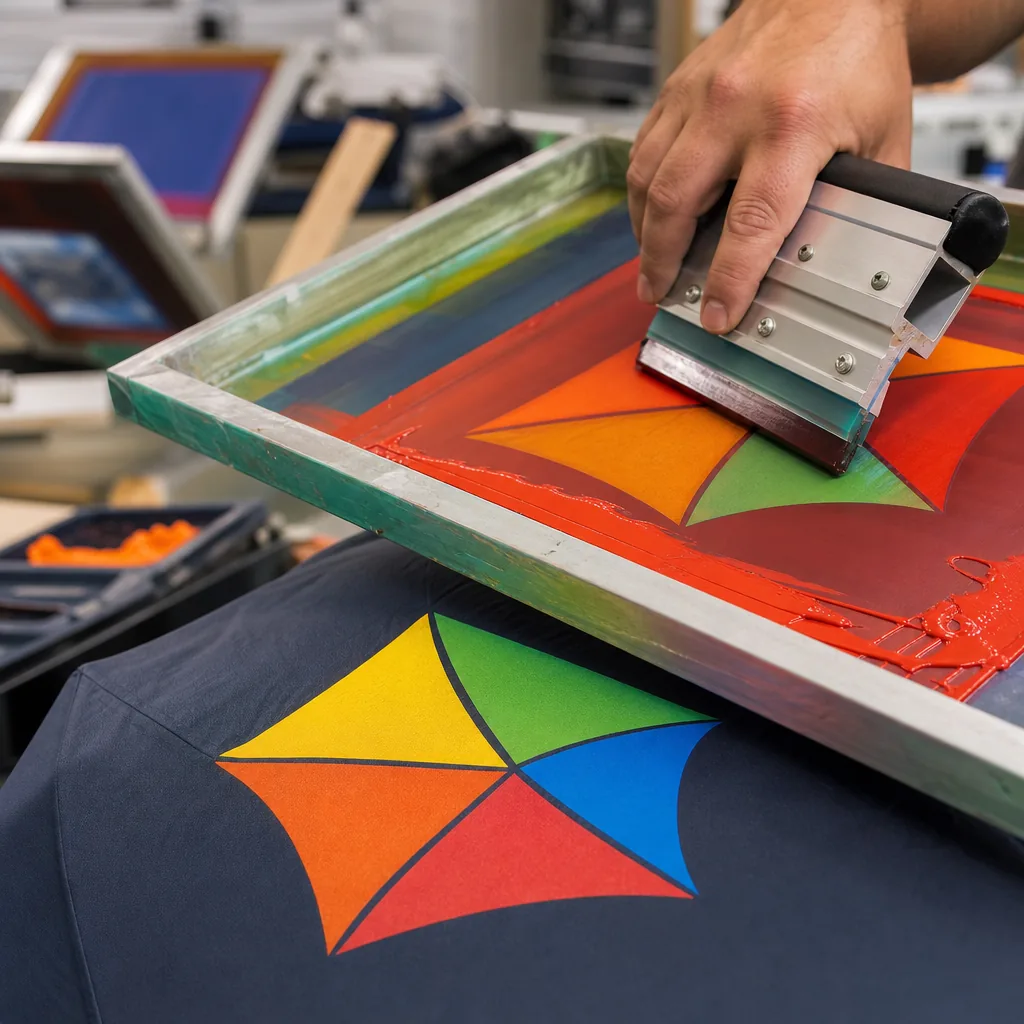
A repeating logo umbrella pattern looks simple on a screen, but on a canopy it has to survive seam shifts, panel distortion, and the way fabric changes once it is cut, tensioned, and stitched. At the factory level, the real challenge is keeping every repeat legible across rib counts, print methods, and budget limits without creating awkward breaks or mismatched logos when the umbrella opens.
Where Repeating Patterns Work Best in B2B Programs
A repeating logo umbrella pattern works best when the umbrella will be seen in motion or from 10 to 30 feet away. That makes it a strong fit for giveaways, trade show handouts, commuter programs, and sports crowds, where the canopy has to register fast before anyone reads a full message. On 21" and 23" foldable umbrellas, a step and repeat umbrella print on pongee 190T or 210T is easier to keep aligned than high-detail artwork because small panels and stitched seams break up fine lines. One- or two-color repeats also reduce the risk of blurry gradients, broken text, or mismatched joins after panel cutting and sewing. For high-volume patterned promotional umbrellas, that density is the point: the canopy reads as a field of branding, not a single logo that disappears when open.
Retail capsules and hospitality programs usually need a different layout. A logo repeat canopy with wider spacing can feel more premium on 27" and 30" stick umbrellas, especially with fiberglass ribs and a cleaner panel layout that gives the artwork room to breathe. Buyers in retail often want branded umbrella graphics that can sit beside apparel, luggage, or other paid merchandise, so a looser repeat, tone-on-tone print, or metallic ink can support a higher perceived value than a giveaway-style layout. Hotels, golf clubs, airports, and resorts use that approach when the umbrella must signal ownership without looking loud in lobbies, patios, or guest pickup areas. In practice, dense repeats support reach and fast recognition, while spaced repeats support margin, restraint, and a more premium shelf or guest experience.
Sports events are where this format pays off fastest because every open canopy becomes moving signage in stadium seating, marathons, tennis, and golf sponsorships. The repeating logo umbrella pattern stays readable even when panels fold at the seams, but only if the artwork is checked against the final panel count and print method before sampling. We separate short-life campaign umbrellas from retail or hospitality pieces because the same layout will not perform the same way in a 5,000-piece giveaway, a 500-piece club order, or a co-branded resort program. For B2B buyers, the key decision is how tightly to repeat the logo: tight for visibility and speed, spaced for premium positioning and resale value. That choice should match the umbrella size, panel structure, target use, and production budget.
How Panel Shape and Rib Count Affect Pattern Layout
The core challenge with a repeating logo umbrella pattern is geometry: the canopy is built from wedge-shaped panels, not a flat sheet. As the artwork moves from the center cap to the hem, circles flatten, verticals lean, and any grid picks up taper across each rib. That effect is strongest on 8K frames, where each panel is wider and the distortion across one wedge is more visible. On 16K frames, the narrower panels usually produce cleaner patterned promotional umbrellas because the change in angle is spread across more seams, but the repeat has to survive more panel joins. A step and repeat umbrella print that looks correct on a flat vector can still shift after sewing and tensioning if the panel taper is not built into the file.
Seam breaks must be planned into the repeat from the start, not patched in after artwork approval. An 8K canopy gives fewer joins to manage, so a large icon or bold wordmark can cross one or two seams and still read clearly. A 16K canopy can make the dome look smoother, but small text, thin rules, and diagonal bands are more likely to be cut by seam lines, so they usually need heavier strokes, wider spacing, or a simplified repeat. Straight borders and checker-style branded umbrella graphics are the hardest to keep aligned because every seam interrupts the pattern at a different angle from cap to edge. Size also matters: 21" and 23" umbrellas compress the artwork faster, while 27" and 30" golf umbrellas give more room, though the hem still pulls the logo repeat canopy outward.
In production, the art should be mapped to the actual panel shape before file approval, with the repeat built around seam lines rather than centered on a flat template. The safest method is to check each wedge panel separately and place the main mark in the visual center of the panel or across the seam in a controlled way. A full-size mockup under frame tension is still necessary, because the center cap compresses the upper artwork and the hem stretches the lower edge by several millimeters. That is why a repeating logo umbrella pattern has to be judged after opening, not just in CAD. The print may look balanced on screen, but if the rib count, seam breaks, and panel taper are not matched to the design, the repeat will drift once the canopy is sewn and tensioned.
Choosing Fabric, Print Method, and Construction
For a repeating logo umbrella pattern, 190T pongee is the safer default when the buyer needs sharp edges, stable saturation, and predictable cost. It works well with screen print and heat transfer, so a step and repeat umbrella print with small logos or tight spacing stays readable when the canopy is tensioned on the frame. 210T pongee has a denser weave and usually gives slightly better color depth on dark brand colors and fine linework in branded umbrella graphics, but it only performs as intended when the artwork, panel layout, and seam allowance are set correctly. Registration shifts come more from fabric tension and sewing tolerance than from the print method itself, so the key question is whether the design can tolerate panel-to-panel movement without looking off-center.
For simple repeats with a few large marks, buyers should stay on 190T pongee for entry-level patterned promotional umbrellas. That lowers unit cost, reduces rejection risk, and is easier to hold to AQL 2.5 on high-volume runs. Giveaways, stadium promos, and other budget programs are better suited to simpler repeats because a dense all-over logo repeat canopy makes seam alignment more visible at every panel break. Approve the artwork on the exact canopy size and rib count before cutting—whether the build is 8K, 10K, or 16K—because a repeat that looks correct on a flat file can drift once it is wrapped around the finished canopy. For buyers watching lead time, simplifying the repeat often saves more time than changing the print method.
Construction affects wind performance and style choices more than the print itself. A single-canopy umbrella gives the flattest print field and is easier for dense repeats, while a double-canopy windproof style adds a vented upper layer that can interrupt large motifs but improves gust resistance. Auto-open and auto-open-close mechanisms do not change the print process, but they do narrow the available build options because the shaft, runner, and fold stack determine whether the style is best suited to a 21-inch compact, 23-inch promo, or 27-inch golf umbrella. For cost, durability, and risk control, the right sequence is frame first, then fabric, then artwork simplification if vents or panel geometry make the repeating logo umbrella pattern too crowded for the selected construction.
Controlling Moire, Registration, and Brand Legibility
A repeating logo umbrella pattern must be designed for a stitched canopy, not a flat sheet. On 190T or 210T pongee, set the repeat unit to survive wedge cutting, seam allowance, and panel curvature before you send artwork to production. For most patterned promotional umbrellas, use heavier line weights, wider letter spacing, and simplified icons so the logo stays readable at 2 to 3 meters. Keep the repeat pitch matched to the panel width, and leave enough margin for the tip and top cap so the image does not get clipped at the edges. Hairline fonts, tight diagonal stripes, and micro-text are the first things to fail because they blur, break at seams, or misalign when the canopy is sewn around the ribs.
Moire is the other main risk when branded umbrella graphics use dense patterning, halftones, or high-frequency lines. Reduce background frequency, increase spacing between repeats, and avoid fine grids that fight the weave of pongee or alias under screen printing and heat transfer. Proof the design at actual size on a full opened umbrella, not just on a monitor, so you can verify seam placement, panel-to-panel registration, and how the step and repeat umbrella print lands near the vent, ferrule, and tips. The minimum repeat scale should be checked against the smallest readable text size and the longest uninterrupted line segment; if it shimmers in motion or loses definition in low light, the repeat is too tight.
Approve a strike-off before bulk production, then compare it with a full canopy sample so you can catch scale drift, color shift, and seam walk before the order runs. For production control, specify AQL 2.5 inspection on repeat consistency, including logo placement across all panels, registration at each seam, and batch-to-batch uniformity on the logo repeat canopy. This matters most on larger runs, where a few millimeters of drift can make the pattern look off-center and lower the value of the entire order. Good proofing reduces rework, protects lead time, and keeps the final umbrellas aligned with the approved sample instead of delivering a pattern that only looked correct in CAD.
Commercial Planning: MOQ, Lead Time, and Shipment Terms
A repeating logo umbrella pattern usually needs more front-end work than a centered spot logo because the artwork has to align across panel seams and still read correctly when the canopy opens. Before cutting, the factory should confirm repeat pitch, panel width, seam allowance, print method, and the exact frame size, since an 8K, 10K, or 16K structure changes the panel geometry. That matters on 21", 23", 27", and 30" canopies, where a shift of a few millimeters can move the logo off register. Buyers should expect a strike-off or digital pre-sample first, especially for 190T or 210T pongee, because coating, heat setting, and seam stitching can change the final placement. If the design uses edge-to-edge branding or a logo repeat canopy, build in time for one or two artwork corrections before production approval.
MOQ is usually higher for patterned promotional umbrellas than for a simple one-color print because setup costs are spread across more units and the factory may need separate screens, repeat files, or sublimation prep. A practical starting point is 500 to 1,000 pieces per colorway, with higher minimums for multi-pass printing, UV coating, or double-canopy construction. Sample lead time is typically 5 to 10 days after artwork approval; mass production usually runs 25 to 35 days after the sample is signed off, assuming frame, fabric, and handle specs are fixed. For buyers working to an AQL 2.5 inspection standard, any seam-match rework or print-registration failure can add days before shipment, so the order should be locked only after the sample matches the approved repeat.
FOB and DDP change the launch schedule in different ways. Under FOB, the factory finishes production, clears export, and hands the goods to the buyer’s forwarder, so the shipping timeline is controlled separately from manufacturing. Under DDP, the factory or seller manages duties, import clearance, and delivery to the final address, which can add 7 to 20 days depending on the destination and customs process. For international launches of a repeating logo umbrella pattern, keep development time separate from transit time: approve the artwork first, then confirm carton count, carton marks, and incoterms before mass production starts. That approach reduces risk for branded umbrella graphics, especially when the launch date depends on retail delivery or a fixed promotion window.
Frequently Asked Questions
Will a repeating logo pattern line up perfectly across every umbrella panel?
Not always, because umbrella panels are sewn individually and shaped as tapered wedges. Good factories can control registration closely, but buyers should expect minor seam variation and approve tolerances before production.
Is a repeating pattern suitable for windproof double-canopy umbrellas?
Yes, but the vents and layered canopy construction can interrupt the visual flow. The artwork should be adapted to the vent positions so the repeat still looks intentional when the umbrella is open.
How many logo repeats can fit on a standard 8-panel umbrella canopy?
It depends on canopy size and logo scale, but a typical 23- to 27-inch umbrella can often fit 8 to 24 repeats per canopy. The final count is usually set after panel width, seam allowance, and rib positions are confirmed in the artwork proof.
What artwork details do you need before setting up a repeating umbrella pattern?
A vector file such as AI, EPS, or PDF is preferred, along with Pantone color references and the exact logo size you want. For repeat layouts, the factory also needs canopy diameter, panel count, and whether the print must cross seams or stay inside each panel.
What is the usual MOQ and sample timeline for branded repeating-logo umbrellas?
For OEM/ODM production, MOQ is often 500 to 1,000 pieces per color or design, depending on the umbrella style and print method. Sampling usually takes about 5 to 10 days after artwork approval, while bulk production commonly takes 25 to 40 days.
Looking to Launch Your Custom Umbrella Line?
ZheBrella is a Zhejiang-based OEM/ODM umbrella manufacturer with 17 years of export experience. Free design, low MOQ from 100 pieces, windproof construction, full-color print.
Get Free Quote Now »People Also Search For
Related Articles
Repeat Logo Patterns for Umbrella Canopies Without Clutter
Build repeat-logo canopy artwork with clean spacing, seam planning, and print methods that keep patterns readable across...
Read More »
Repeat Pattern Printing for Branded Umbrella Canopies
Plan repeat-pattern umbrellas with correct scale, panel sequencing, 190T/210T fabric choices, sampling steps, and QC che...
Read More »
Step-and-Repeat Logo Patterns for Promotional Umbrellas
Plan repeat-logo umbrella artwork with correct scale, panel breaks, 190T/210T fabric choices, proofs, MOQ, lead times, a...
Read More »