Repeat Pattern Printing for Private-Label Umbrella Canopies
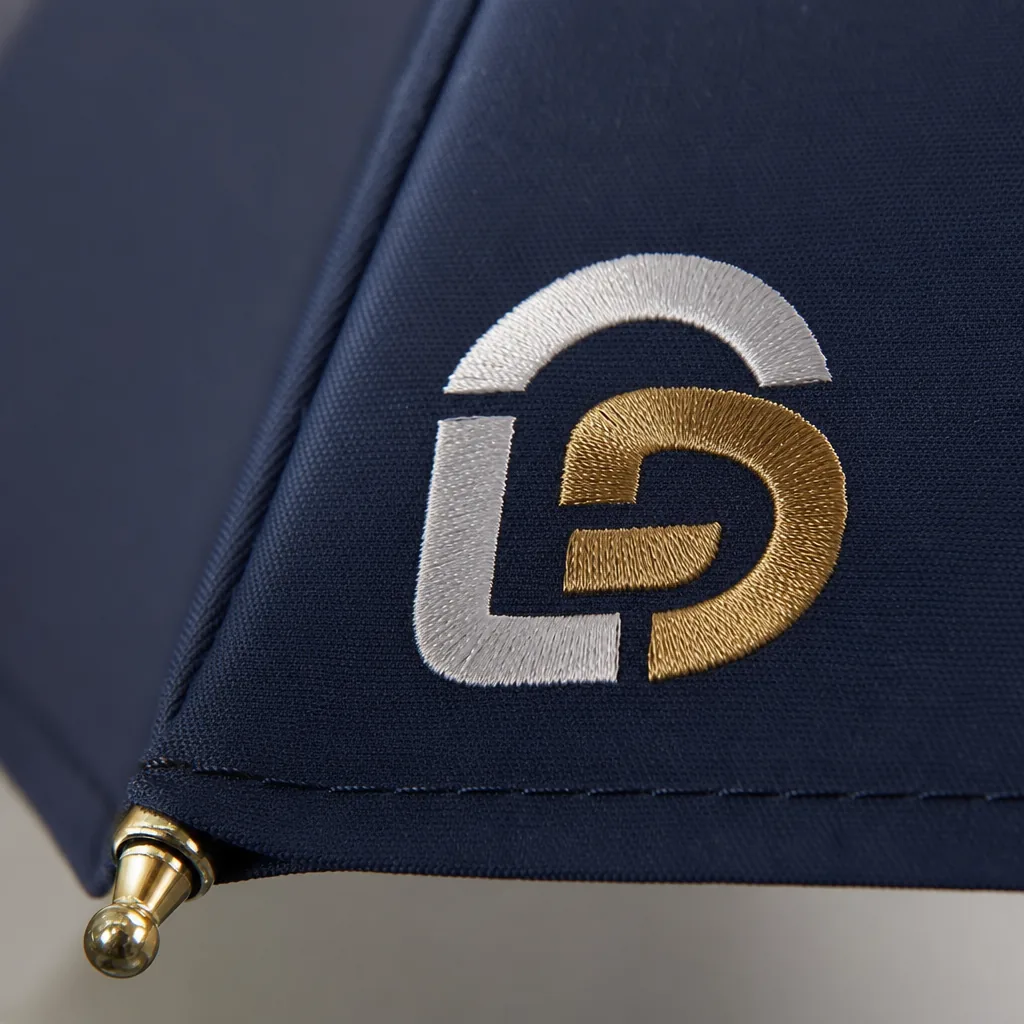
For private-label programs, repeat pattern umbrella printing has to look seamless across curved panels, match the canopy fabric, and hold its register from first sample to full production. On the factory floor, that means planning the artwork repeat, choosing the right 190T or 210T pongee, and locking color and panel alignment before mass run. Buyers who skip those steps often discover broken motifs, visible seams, and costly rework after approval.
When Repeat Patterns Work Better Than Single Logos
Repeat pattern umbrella printing makes more sense than a single center logo when the umbrella is part of the product identity, not just a giveaway. Retail fashion lines, museum stores, hotel boutiques, and lifestyle brands usually need the canopy to carry the same visual language as the packaging, hangtag, or store interior. A repeat motif does that better than one oversized mark because it reads as pattern first and branding second. That matters for private label umbrella patterns, where the buyer wants the umbrella to feel designed rather than stamped. On 190T pongee printing, a small-scale motif can hold detail cleanly, while a big logo can look clumsy once it wraps over curved panels and seam lines.
The frame count changes how the artwork behaves. An 8K umbrella creates eight separate print zones, so any all over umbrella print has to survive visible breaks at the ribs and tip-to-arc transitions. That is not a problem if the artwork repeat is planned correctly, but it does mean the motif must be engineered panel by panel, not dropped in as a flat fabric layout. With 16K frames, the smaller panels make the repeat feel more continuous because each zone is narrower and the viewer reads the surface as one wrapped field instead of eight obvious slices. For brands selling in fashion or museum channels, that difference is usually what separates a premium canopy from a generic promotional one.
The practical reason buyers choose a repeat pattern umbrella printing approach is control over brand recognition across sizes and product tiers. A 21" compact, a 23" city umbrella, and a 27" golf style can all share the same umbrella artwork repeat without forcing the logo to fight for attention on every SKU. On private label programs, that consistency is useful when the umbrella is sold beside scarves, totes, or home goods that already use the same motif. The design also scales better for seasonal refreshes: you can change the colorway, tighten the spacing, or shift the motif density without redoing the whole brand mark. In factory terms, that is easier to print, easier to inspect, and less risky for alignment than trying to chase one large centered logo across curved panels.
Artwork Repeat Rules Across Umbrella Panels
For repeat pattern umbrella printing, the tile has to be built around the umbrella geometry, not around a flat fabric mockup. An 8-panel or 10-panel canopy is not a continuous poster; every rib line, seam allowance, and edge binding will interrupt the image, and the top cap will cover the apex. The safest workflow is to place the repeat in a full-circle layout first, then mark panel breaks, seam turn-ins, and the top patch so the designer can see what gets lost. On 190T pongee printing, I usually reserve a dead zone of at least 8 to 12 mm along each panel edge for sewing and binding, and I keep critical typography or faces out of the fold line near the rib tip. That is the difference between a clean all over umbrella print and a canopy that looks broken when opened.
For private label umbrella patterns, the repeat should be checked at full open diameter before anyone approves a sample. A design that looks balanced on a 60 cm artboard can shift badly once it is stretched over 21-inch, 23-inch, or 27-inch panels, especially on larger 16K frames where the curvature is more obvious. I ask for a panel map showing seam positions, repeat direction, and the exact placement of the umbrella artwork repeat at the center, tip, and hem. If the artwork includes logos, faces, or text, they should sit in the middle of a panel field, not across a seam or under edge binding. That is the practical rule for private label umbrella patterns: test the pattern as a built object, not as a graphic file, and approve only after the open canopy looks intentional from every angle.
Fabric and Print Method Choices for Pattern Clarity
For repeat pattern umbrella printing, the fabric choice matters as much as the artwork repeat. 190T pongee is the common baseline because it lays flat, sews cleanly, and takes ink predictably; the weave is fine enough for sharp edges but still economical for promotional runs and private label umbrella patterns. 210T pongee is denser and usually gives better opacity and a smoother hand, so it hides frame shadows and reduces the chance of the canopy looking patchy when light hits it from behind. In practice, 210T is the safer choice for an all over umbrella print with small motifs, tight stripes, or dark grounds, because the extra thread density helps the ink sit more evenly and improves color stability after curing. On the floor, I see 190T used more often for standard 23" and 27" umbrellas, while 210T is preferred when the buyer wants cleaner presentation or a higher perceived value.
For 190T pongee printing, screen printing is still the best option when the pattern has strong spot colors, clear repeats, and moderate coverage. It gives the most controlled ink deposit, which matters on curved panels because the umbrella artwork repeat must line up panel to panel without blurry edges. Digital printing works better for complex gradients, photographic effects, or short runs where the repeat changes often and plate cost would be wasteful. Heat transfer is useful for small logos, detailed accents, or mixed decoration, but it is not my first choice for full-canopy pattern work because the film can slightly alter the fabric hand and breathability. If the goal is a clean repeat pattern umbrella printing result across 8K or 10K panels, screen printing on stable pongee usually gives the most consistent color registration and wash resistance.
Dense dark patterns need color testing before production, especially when the canopy has a light base or a strong contrast repeat. A black, navy, or deep red ground can show uneven saturation if the ink load is too low, and some pigments will look dull on 190T but acceptable on 210T because the tighter weave blocks more light. We always ask for strike-offs or lab dips when the design uses large filled areas, metallic accents, or fine micro-repeats, because show-through from the reverse side can change the visual balance and make the all over umbrella print look cheaper than the proof. For repeat pattern umbrella printing, the safest workflow is fabric swatch testing, then full-panel sampling, then a final color approval under both daylight and indoor light. That is the only practical way to avoid surprises in private label umbrella patterns when production moves from one dye lot to the next.
Sampling, MOQ, and Production Lead Time Planning
For repeat pattern umbrella printing, sampling must start with a strike-off fabric swatch, not a finished umbrella. The strike-off proves the artwork repeat, scale, color, and fabric behavior before we cut a single canopy panel. On 190T pongee printing, I usually ask buyers to approve a 50 x 50 cm swatch under D65 light, then compare it against Pantone TPX or TCX references because wet printing, heat transfer, and sublimation do not hit color the same way. Small geometric private label umbrella patterns are especially unforgiving; a 2 mm shift can show clearly once eight panels are sewn into a dome. After the swatch is signed off, the pre-production sample should use the real frame size, such as 21 inch compact, 23 inch straight, or 27 inch golf, because pattern scale changes visually with canopy diameter.
MOQ is higher for an all over umbrella print than for a single-logo panel print because fabric setup, plate or digital file calibration, and cutting waste are different. A single-logo order may run at 300 to 500 pieces if stock fabric and standard frames are used, but repeat-print canopies often make sense from 600 to 1,200 pieces per design, especially when the umbrella artwork repeat is printed on roll fabric before panel cutting. If the buyer wants separate colorways, each colorway should be treated as its own setup, not casually added into the same MOQ. Our standard practice at ZheBrella is to send approval photos of the strike-off, open-canopy PP sample, panel alignment at the tips, top notch area, sleeve print, handle, label, and carton mark before bulk production starts.
Lead time planning needs a wider buffer than ordinary promotional umbrellas. A normal single-logo screen print order can move from artwork approval to shipment in 25 to 35 days, but repeat pattern umbrella printing often needs 7 to 10 days for strike-off, 5 to 7 days for pre-production sampling, and 30 to 45 days for bulk if fabric printing and sewing are both in the queue. FOB Ningbo or Shanghai is faster to control because the buyer’s forwarder handles vessel booking after final inspection, usually AQL 2.5 for major defects. DDP delivery requires earlier packing data, HS code confirmation, duty calculation, and last-mile planning; for the U.S. or Europe, that can add 25 to 45 days by sea after factory completion. Buyers should approve samples quickly, because every lost day before bulk printing can push vessel schedules by a full week.
QC Checks for Pattern Alignment and Brand Consistency
Pattern alignment QC has to start before the umbrella is sewn, because most failures in repeat pattern umbrella printing are already locked in at panel cutting. For 8K and 10K umbrellas, we check that every triangular panel is cut with the same grain direction, the same top-to-bottom artwork orientation, and the same allowance at the seam edge, usually 6–8 mm depending on the sewing line. On 190T pongee printing, dye migration and fabric stretch can shift the umbrella artwork repeat slightly after heat setting, so inspectors should compare panels against the approved strike-off, not only the digital file. Panel-to-panel color consistency is checked under D65 light, especially for navy, black, red, and corporate PMS-like colors that show variation quickly across seams. For private label umbrella patterns, the buyer’s spec sheet should state whether a logo, stripe, or motif must match exactly at the seam or whether a mismatch of 3 mm, 5 mm, or 8 mm is acceptable.
After assembly, the open-canopy inspection is more important than the flat fabric inspection because the dome shape changes how the all over umbrella print reads to the customer. We open the umbrella fully, rotate it 360 degrees, and check whether the repeat orientation flows evenly from rib to rib, whether the pattern is centered at the top notch, and whether any high-visibility motif lands awkwardly on the closing strap, runner area, or ferrule. Seam placement must be judged on the open frame, not on a loose canopy, because rib tension can pull a panel by several millimeters. Print defects are classified under AQL 2.5 for normal visual inspection: ink spots, missing print, ghosting, double images, streaks, pinholes, heat-transfer scorch marks, and obvious color bands. Our standard practice at ZheBrella is to separate functional defects, such as loose stitching or cracked coating, from appearance defects, because a canopy can pass water resistance but still fail brand presentation.
Brand consistency checks should include the approved logo size, repeat scale, color reference, canopy fabric, coating, and the finished umbrella size, because a pattern approved on a 21-inch compact may look too large on a 30-inch golf umbrella. For repeat pattern umbrella printing, I recommend brands define three levels in the production file: critical areas with no visible mismatch, normal seam areas with a stated tolerance, and hidden areas where minor movement is acceptable. This avoids arguments during final inspection, especially on double-canopy vented windproof models where the lower canopy may not line up visually with the upper layer. Inspectors should pull samples from the beginning, middle, and end of sewing, not only from packed cartons, because sewing operators sometimes adjust seam bite during production. Final QC should photograph the open canopy from top view and side view, then compare it with the signed pre-production sample before releasing goods for FOB or DDP shipment.
Frequently Asked Questions
Can a repeat pattern line up perfectly across every umbrella seam?
Not perfectly in most bulk production, because each canopy is cut and sewn from separate panels. A practical spec should define an acceptable seam mismatch tolerance and avoid placing critical graphics directly across rib lines.
Is digital printing better for repeat-pattern umbrella designs?
Digital printing is often better for complex repeats, gradients, or many colors. Screen printing can be more cost-effective for simpler one- to three-color patterns at higher quantities.
How should a repeat pattern be prepared so it aligns across umbrella panels?
Build the artwork around the panel shape, not a flat rectangle. Most buyers submit an AI or PSD file with a marked repeat unit and 3-5 mm bleed so the factory can test alignment at the seam before bulk production.
When is 210T pongee a better choice than 190T for repeat-pattern canopies?
210T pongee is usually preferred when the design has dense coverage, darker solids, or more premium retail positioning because the fabric feels tighter and can show print definition more cleanly. 190T is often the more cost-efficient option for promotional programs and larger-volume orders.
What QC points matter most for private-label all-over umbrella printing before shipment?
Ask for seam-match checks, color comparison against the approved strike-off, and random opening inspection from finished cartons. For bulk orders, many importers request photo approval of 3-5 finished umbrellas per colorway plus AQL inspection before balance payment.
Looking to Launch Your Custom Umbrella Line?
ZheBrella is a Zhejiang-based OEM/ODM umbrella manufacturer with 17 years of export experience. Free design, low MOQ from 100 pieces, windproof construction, full-color print.
Get Free Quote Now »People Also Search For
Related Articles
All-Over Repeat Patterns for Private-Label Umbrellas
Build private-label umbrella patterns that repeat cleanly across panels with the right fabric, rib count, artwork scale,...
Read More »
All-Over Pattern Printing for Branded Umbrella Programs
Build repeat-pattern umbrella programs with print-ready artwork, panel planning, fabric choices, and QC steps that prote...
Read More »
Repeat Pattern Printing for Private-Label Umbrella Lines
Plan repeat pattern umbrella printing with clean panel matching, fabric choices, and inspection standards for scalable p...
Read More »