All-Over Repeat Patterns for Private-Label Umbrellas
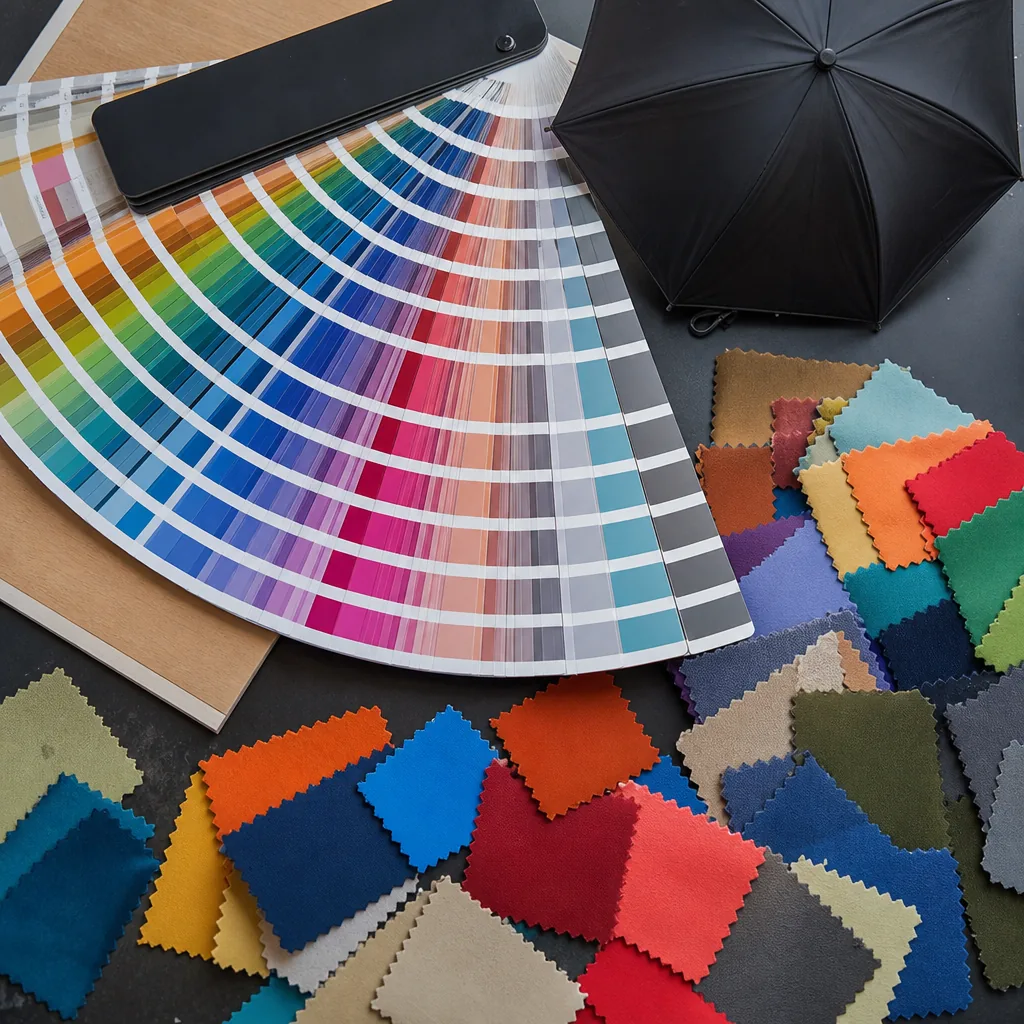
A private-label umbrella pattern can look perfect on a screen and still break at the seams once it is cut into panels, stretched over ribs, and viewed as a full canopy. On our Songxia factory floor, repeat pattern umbrella printing starts with checking fabric behavior, rib count, artwork scale, and panel orientation before a single bulk roll is approved. The goal is simple: a clean visual repeat that survives cutting, sewing, sampling, and final QC without obvious mismatches.
When Repeat Patterns Beat Single Logos
Repeat pattern umbrella printing is the better choice when the umbrella is part of the product, not just a walking billboard. Fashion retail uses it because a small-scale repeat reads like fabric design, especially on 21" and 23" folding umbrellas or slim 8K frames sold next to apparel and handbags. Resort merchandise leans on the same logic: a tonal palm repeat, stripe, or monogram feels more like a souvenir with design value than a cheap giveaway. For private label umbrellas, that difference matters. A clean all over umbrella print on 190T pongee or 210T pongee can push the product into a higher perceived tier than a single centered logo on plain black. The surface coverage also helps hide panel seams and makes the canopy look intentional from every angle, which matters in retail packaging and on rack displays.
For corporate lifestyle gifts, the repeat has to be restrained or it starts looking like ad inventory. Micro-patterns work best here: tiny logos, geometric icons, or a tone-on-tone branded umbrella pattern that only becomes obvious up close. That approach gives the client something they can hand to executives, not just field staff. With licensed brand programs, the repeat can carry character art, monograms, or heritage elements, but the scale needs control. A large motif across every panel can look strong for limited drops, yet it also exposes printing misalignment faster and raises the risk of visual fatigue. A good custom canopy print should still read cleanly when the umbrella is open in daylight and when it is folded and seen from a few feet away in a store or hotel lobby.
The real value shift is psychological. A single logo says utility; a repeat says product design. Buyers will pay more for private label umbrellas when the canopy feels like part of a collection, especially if the repeat ties back to apparel, luggage, or room textiles already in the assortment. Bigger motifs can work when the brand wants bold recognition, but they usually narrow the audience and make the umbrella feel promotional instead of retail-ready. Our standard practice is to judge the artwork by viewing distance: micro-patterns for understated premium use, medium repeats for mainstream fashion, and oversized repeats only when the brand wants obvious shelf impact. That is the practical difference in repeat pattern umbrella printing — it changes how the umbrella is priced, displayed, and remembered, not just how it looks on a mockup.
Designing Around Umbrella Panels and Rib Count
Panel geometry controls the artwork more than most buyers expect. An 8K umbrella has eight triangular canopy panels, so the design is cut into eight wedges and rejoined at the seams; a 16K umbrella doubles that to sixteen narrower wedges, which gives a smoother round shape but creates twice as many seam interruptions. For repeat pattern umbrella printing, I prefer to build the file as a true radial layout first, then check it as individual panel pieces with seam allowance included, usually 7–10 mm depending on fabric and sewing method. If the repeat is only designed as a flat rectangle, it often looks correct on the computer but drifts badly once the panels are stitched over steel or fiberglass ribs. On a 23 inch 8K promotional umbrella, each panel has enough visual space for medium motifs; on a 16K fashion umbrella, narrow panels can chop large flowers, logos, or mascots into awkward slices.
Motif scale should be chosen against the finished arc, not just the fabric roll width. For private label umbrellas using 190T or 210T pongee, a small geometric repeat of 20–40 mm usually survives cutting variation and seam take-up well. Larger motifs, around 80–150 mm, can work for an all over umbrella print, but they need breathing room away from rib lines and panel edges. I tell designers not to place faces, product icons, QR codes, wordmarks, or fine lettering directly over seam lines, because the stitching and rib pocket will distort them even with accurate sublimation or digital print registration. A branded umbrella pattern should tolerate 2–3 mm cutting movement and slight fabric stretch after tensioning. If the pattern only looks acceptable when every panel aligns perfectly, it is too fragile for mass production under normal AQL 2.5 inspection conditions.
The center cap area also needs deliberate design, because every panel narrows sharply toward the top notch. Details within the top 40–60 mm of a standard 21 inch or 23 inch canopy are partly hidden by the cap, washer, and fabric folds; on larger 27 inch and 30 inch golf umbrellas, the hidden zone can be even more noticeable because the canopy tension is stronger. Our standard practice at ZheBrella is to keep this area as background texture or low-importance repeat, then reserve the readable parts of the custom canopy print for the middle and lower third of each panel. For 16K umbrellas, I also recommend avoiding strong vertical stripes unless the artwork is engineered panel by panel, because tiny angle differences become obvious around the crown. For 8K constructions, pattern continuity is easier to read from a distance, but each seam break is more prominent, so organic repeats, scattered icons, and non-directional textures usually perform better than rigid grids.
Fabric, Color, and Print Method Choices
For private label umbrellas with a branded umbrella pattern, the fabric choice decides whether the pattern looks retail-grade or promotional-grade before the first rib is even assembled. 190T pongee is the common workhorse: light, cost-efficient, quick-drying, and suitable for 21" and 23" folding umbrellas where weight matters. It has a slightly softer, thinner hand feel, but lower opacity, so high-contrast artwork can look weaker when the canopy is stretched over steel or fiberglass ribs in bright daylight. 210T pongee is denser and smoother, with better drape on 23", 27", and 30" golf umbrellas. The tighter weave gives cleaner print edges and better color hold, especially for small logos, thin lines, and repeat pattern umbrella printing where misread details become obvious across eight panels.
Digital printing is the better choice for complex all over umbrella print work: watercolor textures, gradients, photographic motifs, camouflage, florals, geometric repeats, or artwork using more than three colors. On 190T or 210T pongee, sublimation or digital transfer can keep panel-to-panel artwork consistent if the cutting marker is planned correctly before sewing. The weak point is not the printer; it is registration across the canopy seams. A repeat that ignores the 8K or 10K panel structure will break awkwardly at every seam. Our standard practice at ZheBrella is to check the artwork at full canopy scale, not just as a flat square repeat, because a pattern that looks good on a monitor can become too dense once stretched over a domed umbrella frame.
Screen printing still has a place when the custom canopy print is a simple two- or three-color repeat, especially for corporate marks, stripes, dots, icons, or single-color brand monograms. It gives strong ink coverage and predictable color matching on pongee, and unit cost stays attractive on larger MOQ runs because the screen setup is spread across more pieces. The tradeoff is less flexibility: every color needs its own screen, fine gradients are not practical, and very tight repeats can suffer if fabric tension changes during printing. For dark canopies, screen printing often gives better opacity than digital, but for multi-color retail artwork on 210T pongee, digital usually produces sharper detail with fewer compromises.
Sampling, Registration, and Tolerance Control
For repeat pattern umbrella printing, I do not approve bulk fabric from a PDF mockup alone. Start with a strike-off on the actual canopy material, usually 190T or 210T pongee for retail private label umbrellas, or POE/PVC if the product is a clear dome style. The strike-off should show at least one full repeat plus overlap, not just a cropped logo area, because a 20 mm icon can look clean on screen and become noisy when stretched across eight curved panels. For sublimation, check red, navy, and black carefully; for screen or heat-transfer work, check line weight and ink hand feel. After the strike-off, make one complete umbrella sample in the intended size, such as 21 inch compact, 23 inch straight, or 27 inch golf, with the real frame, rib count, and sewing construction. That sample tells you what the flat artwork cannot: how the custom canopy print looks after panel cutting, hemming, tip sewing, and tensioning over steel or fiberglass ribs.
Panel registration must be discussed before sampling, not after the first complaint. An all over umbrella print is cut from triangular gores, then sewn into a curved canopy, so perfect seam matching is not a realistic promise unless the pattern is specifically engineered with wide safety zones. On standard 8K umbrellas, I normally treat plus or minus 3 mm seam deviation as good commercial production; 5 mm may still pass depending on pattern scale, fabric stretch, and whether the mismatch lands near the outer edge or near the crown. Fine stripes, checkerboards, and centered medallions are the most unforgiving designs. Scattered florals, small geometric repeats, and tone-on-tone branded umbrella pattern layouts hide cutting and sewing movement much better. Our standard practice at ZheBrella is to mark one master panel direction, control fabric grain during cutting, and use the same sewing guide for sampling and mass production so the approved sample is not a one-off factory trick.
Tolerance control should be written into the purchase order and QC checklist. For color, define the reference as Pantone Coated or an approved physical strike-off, then allow a practical Delta E range or visual tolerance under D65 light, especially when UV coating, Teflon water-repellent finish, or black backing changes the face color. For alignment, separate critical zones from noncritical zones: logo placement near the front panel may need plus or minus 2 mm, while repeat continuity across side seams may allow 3 to 5 mm. During production, inspect first-cut panels, a mid-line sewn canopy, and finished umbrellas under AQL 2.5 rather than waiting until cartons are packed. If the design requires seam-to-seam continuity, order an extra pre-production sample after grading the artwork to the exact panel template. That adds a few days, but it is cheaper than rejecting 2,000 umbrellas because the repeat scale looked right on flat fabric and wrong on the finished canopy.
Scaling Repeat Patterns Across a Product Line
The clean way to scale repeat pattern umbrella printing is to build one master repeat and then re-panel it for each frame geometry, not redraw the artwork for every SKU. A compact 21" 6K or 8K foldable needs a tighter repeat tile because the panels are narrow and the seam loss is high; a 30" golf model can carry a larger branded umbrella pattern without looking busy. For private label umbrellas, I usually keep one color system, one repeat scale family, and one seam rule so the all over umbrella print stays recognizable whether it is on a manual traveler or an auto-open-close stick umbrella. If the art has fine text, stop pretending it will read at panel edges; move the logo into a cleaner medallion zone and let the repeat handle the background. That gives you a custom canopy print that survives actual production, not just a mockup.
Frame choice changes how far you can push the artwork. Steel frames are cheaper and fine for compact programs, but fiberglass ribs hold shape better on larger 27" and 30" canopies and tolerate registration shifts a little better on a repeat pattern umbrella printing job. For a double-canopy windproof model, the outer layer can carry the main repeat while the vented inner layer stays lighter or uses a simplified mark; otherwise the airflow vents will break the pattern anyway. On UV umbrellas, I prefer 190T or 210T pongee with a silver or black coating and a simpler repeat so the surface does not fight the UPF 50+ function. If you are mixing auto-open, manual, and golf constructions under one branded umbrella pattern, lock the artwork to the panel count and seam allowance first, then approve one strike-off per frame type before bulk cutting.
MOQ planning should follow the print setup, not just the hardware count. One rotary screen or sublimation run can cover several sizes if the repeat tile is shared, so I would rather see 500 pcs per colorway across three models than 500 pcs of each model with three separate print jobs. That is how you keep private label umbrellas efficient while protecting margin on FOB or DDP programs. Standard practice at ZheBrella is to freeze the artwork spec sheet early: Pantone targets, repeat size, panel layout, swing tag, sleeve print, and carton marks all stay aligned across the line. If the buyer wants one brand system across compact, golf, and windproof SKUs, the factory should be building one library of approved repeat files, not reinventing the design every time a PO moves from FOB Ningbo to DDP warehouse delivery.
Frequently Asked Questions
Can a repeat pattern line up perfectly across every umbrella seam?
Minor variation is normal because panels are cut and sewn into a curved canopy. A factory can improve consistency with panel templates, controlled cutting, and approved tolerance standards.
Is digital printing better for branded umbrella patterns?
Digital printing is usually better for gradients, detailed motifs, and multi-color repeats. Screen printing can be more cost-effective for simple patterns with limited colors and larger quantities.
How does rib count affect a repeat pattern on an umbrella canopy?
Rib count changes both panel width and how often the artwork repeat is interrupted at seams. An 8-rib canopy is the most common for private-label programs, but if your pattern includes stripes, logos, or geometric motifs, the factory should re-scale the repeat separately for each frame size and rib configuration before sampling.
What artwork file setup helps reduce seam mismatch on an all-over umbrella print?
Use a vector repeat tile plus a full panel layout that shows seam lines, safe zones, and repeat direction. For production, buyers should confirm print tolerance at panel joins, typically within 3-5 mm, and approve a physical pre-production sample instead of relying only on flat digital mockups.
What QC points should importers check before approving bulk production of patterned umbrellas?
Check panel-to-panel continuity, color consistency under daylight, print registration near seams, and whether the pattern stays centered after canopy sewing. A common B2B workflow is lab dip or strike-off approval first, then one pre-production sample, then inline and final inspection against an approved master sample.
Looking to Launch Your Custom Umbrella Line?
ZheBrella is a Zhejiang-based OEM/ODM umbrella manufacturer with 17 years of export experience. Free design, low MOQ from 100 pieces, windproof construction, full-color print.
Get Free Quote Now »People Also Search For
Related Articles
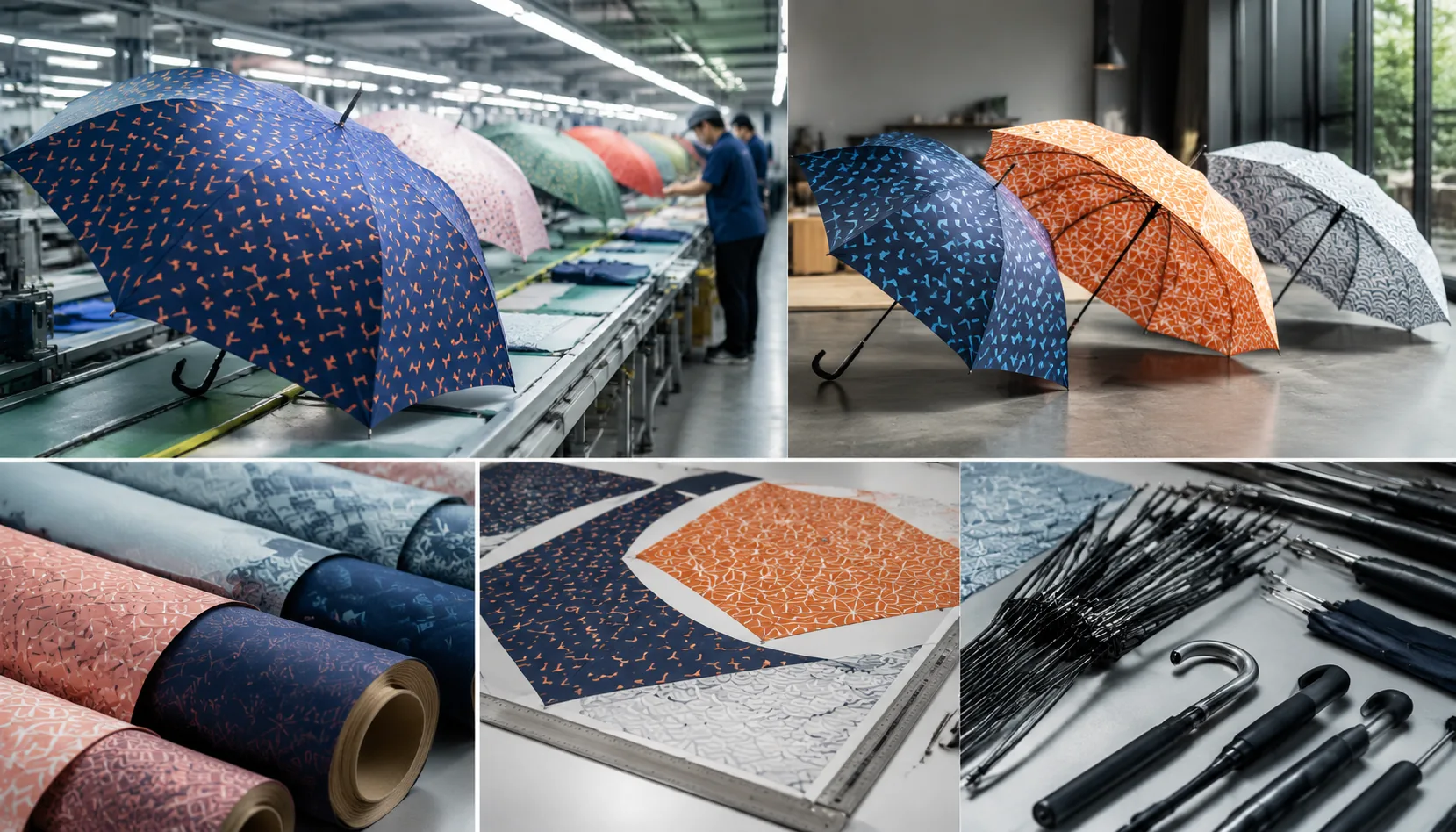
All-Over Pattern Printing for Branded Umbrella Programs
Build repeat-pattern umbrella programs with print-ready artwork, panel planning, fabric choices, and QC steps that prote...
Read More »
Repeat Pattern Printing for Private-Label Umbrella Canopies
Plan repeat-pattern umbrella artwork with clear panel repeats, 190T/210T pongee choices, sampling steps, MOQs, and QC ch...
Read More »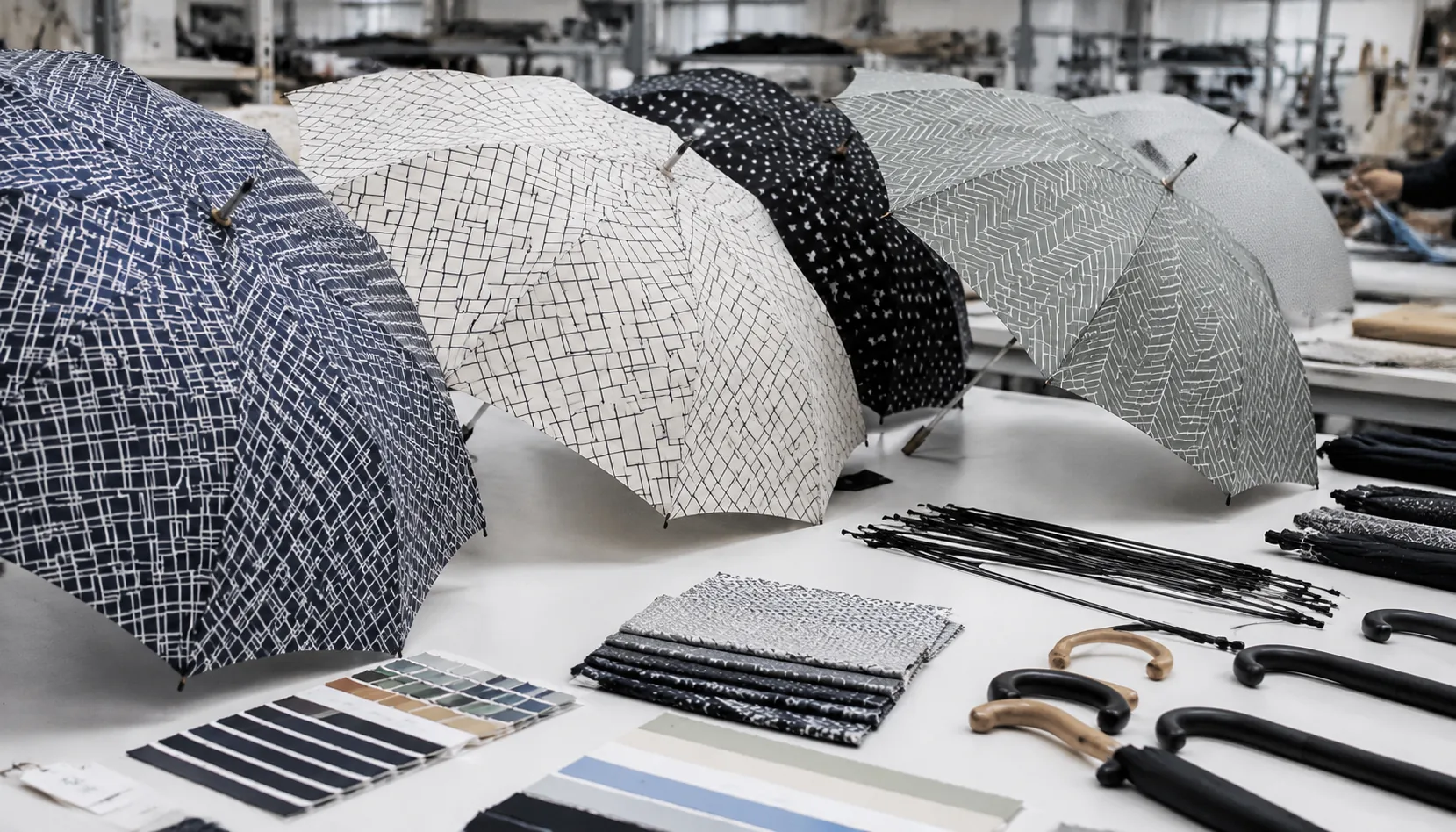
Repeat Pattern Umbrella Printing for Retail Collections
Plan repeat-pattern umbrella canopies for retail lines with panel layout, fabric choice, color control, sampling, MOQ, a...
Read More »