RPET Umbrellas vs Standard Pongee for Eco-Focused Orders
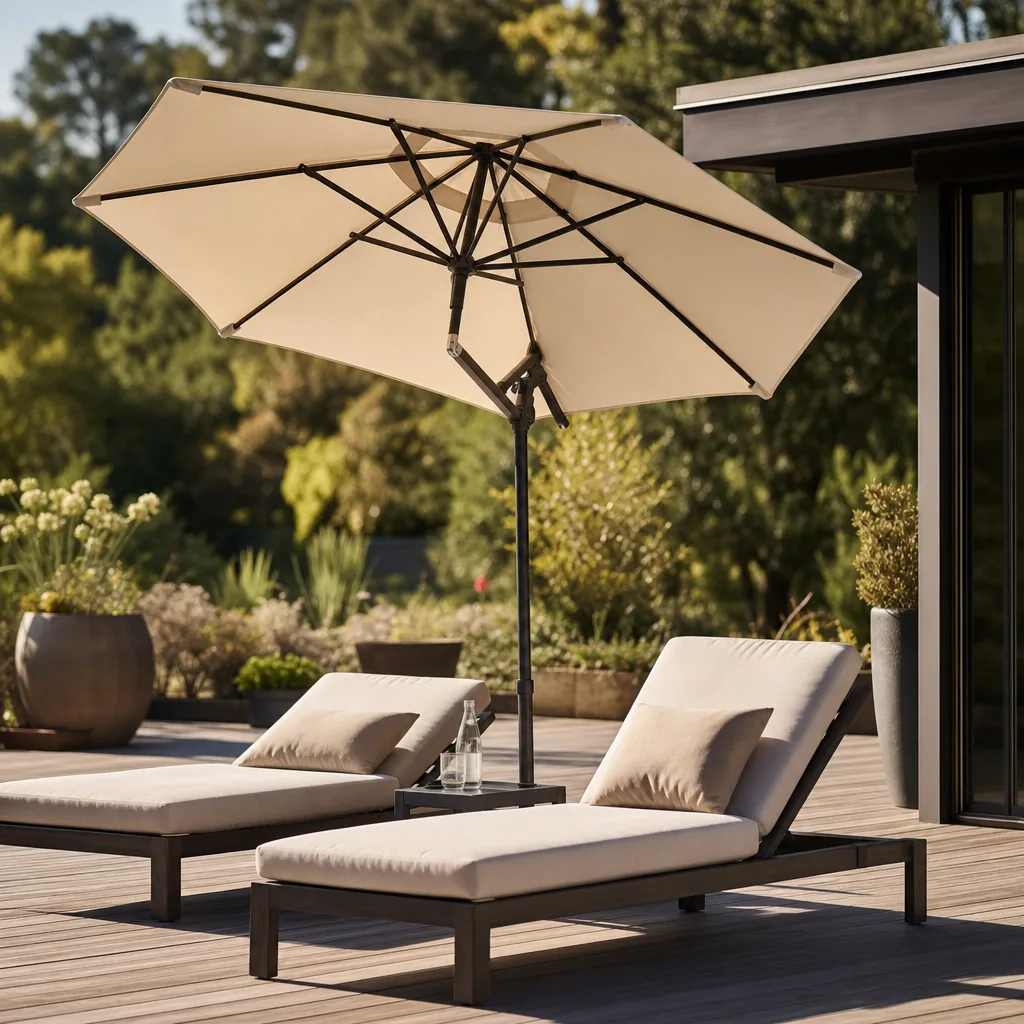
Eco-focused umbrella programs often stall when the fabric decision gets reduced to a label claim, while buyers still have to answer for print sharpness, canopy strength, MOQ, and audit-ready sourcing. On our Songxia production floor, RPET and standard pongee behave differently at coating, cutting, sewing, and logo printing, so a practical RPET umbrella fabric guide has to weigh sustainability messaging against real OEM performance and supply stability.
What RPET Means in Umbrella Production
In umbrella production, RPET usually means the canopy yarn is spun from recycled PET, most often post-consumer bottle feedstock, then woven into polyester fabric such as 190T or 210T pongee. For buyers using this RPET umbrella fabric guide, the main point is practical: the recycled claim changes the yarn source, not the umbrella architecture. You can build the same 21-inch compact, 23-inch straight, or 27-30-inch golf umbrella with manual, auto-open, or auto-open-close functions in either RPET or virgin polyester. A properly specified RPET canopy should handle much like a standard pongee umbrella; durability and appearance depend more on yarn denier, weave density, heat setting, and surface finishing than on recycled content alone. That is why blanket assumptions cause problems. Recycled fabric is not automatically weaker, and it is not automatically a premium material unless the mill spec, coating, and frame match the intended use.
Compared with a standard pongee umbrella, the buying checkpoints stay technical: tensile stability, shade-lot consistency, water repellency, and print clarity. A 190T RPET pongee works well for eco promotional umbrellas, event giveaways, and many retail programs, but it still needs the same controls as virgin fabric, including seam-slippage checks, canopy skew after heat setting, and coating adhesion when UPF 50+ or Teflon finishes are specified. Virgin polyester pongee is still easier to source in highly stable color lots and under compressed lead times, especially on larger FOB orders, although the gap has narrowed. For a clean comparison, review RPET and virgin canopies on the same frame spec, for example an 8K or 10K fiberglass-rib build, so the material difference is isolated from structure.
Most recycled umbrella canopy claims apply to the fabric only, not the full umbrella, which matters in sustainable umbrella sourcing. A supplier can accurately sell an RPET canopy while the shaft, ribs, runner, tips, handle, and sleeve cord remain standard steel or plastic components. Buyers should ask for documentation that states the recycled percentage, whether the canopy is 100% RPET yarn or a blend, and exactly which parts are covered by the claim. For retailer or compliance-sensitive programs, request transaction certificates or traceable mill paperwork and confirm that bulk production will match the approved sample. That reduces disputes over vague environmental wording and protects DDP shipments, where claim language, packing records, test references, and final AQL 2.5 inspection need to align before release.
Performance Differences in Daily Use
For daily use, the biggest difference is usually finish stability, not whether the umbrella sheds rain on day one. A recycled umbrella canopy made from RPET can perform close to a standard pongee umbrella if the mill applies and controls a durable water-repellent finish; without that top treatment, water beading usually drops off faster after repeated opening, folding, and surface abrasion. When new, both RPET and 190T or 210T pongee typically pass basic factory rain-shedding checks in light rain conditions. The gap tends to appear later, when recycled yarn lots vary or the finishing is inconsistent across production. That is why any practical RPET umbrella fabric guide should confirm three items together: the fabric spec, the recycled content, and the exact water-repellent finish. For buyers of eco promotional umbrellas, the recycled claim matters, but field performance depends on controlled finishing, not just yarn made from recycled chips.
Hand feel and print results are usually the first visible tradeoffs. Standard 190T pongee typically feels smoother and slightly crisper, while many RPET fabrics feel drier or less silky, especially at lower yarn grades. A 210T weave is denser than 190T, so on 23 inch and 27 inch frames it usually gives a fuller hand and better drape. Color saturation also tends to be stronger on virgin polyester: deep black, navy, and high-chroma Pantone reds are often richer and more uniform on standard pongee, particularly for heat-transfer or dye-sublimation printing. RPET can still print well, but buyers should expect tighter lab-dip approval and wider lot-to-lot shade tolerance. Durability is broader than canopy fabric alone. A well-sewn RPET canopy can outlast a poorly assembled 210T canopy, but service life is still driven more by the full build: fiberglass ribs versus thin steel, shaft wall strength, runner quality, panel tension, and mechanism cycle life. For sustainable umbrella sourcing, review canopy spec, frame construction, target wind performance, and AQL 2.5 inspection points as one package.
Certification, Claims, and Compliance Questions to Ask
Before procurement approves recycled claims, require documents that trace the claim to the exact canopy lot. In this RPET umbrella fabric guide, the baseline is mill-level recycled-content proof: a valid GRS or equivalent scope certificate, transaction certificates for the shipment, and packing lists or roll records that match the 190T or 210T canopy fabric issued to cutting. Ask the supplier to map chain of custody from recycled PET pellet or yarn through weaving, dyeing, and finishing; if that trail stops at a brochure or generic mill statement, the claim is weak for retail compliance review. Keep the wording precise. If only the canopy uses recycled yarn, describe it as a recycled umbrella canopy or recycled canopy fabric, not a fully recycled umbrella. That distinction matters for eco promotional umbrellas with hangtags, carton marks, or online product copy, because handles, tips, straps, and other plastic parts need their own recycled-content documentation before the finished umbrella can be marketed as fully recycled.
The next control point is batch consistency, because RPET can dye differently from a standard pongee umbrella even at the same 190T or 210T construction. Require a lab dip before bulk production and keep a sealed shade standard as the approval reference, especially for dark navy, saturated red, and fluorescent colors where variation is more visible. Confirm acceptable color tolerance, ask whether the order can run in one dye lot, and verify how many rolls will be cut into panels; if production is split across lots, panel-to-panel shade shift can show after sewing, particularly on 23-inch and 27-inch golf umbrellas with large print areas. Also check whether water-repellent or UV finishes change hand feel, shade depth, or print adhesion on the recycled base cloth before artwork signoff. For sustainable umbrella sourcing, write inspection terms into the PO: AQL 2.5 on finished goods, canopy shade matching, stitch density, panel alignment, print registration, open-close function, and frame verification so quoted fiberglass ribs are not replaced with lower-cost steel. Those checkpoints keep the eco claim defensible and the quality standard measurable whether the order ships FOB or DDP.
MOQ, Lead Time, and Cost Planning for RPET Programs
The biggest planning mistake in sustainable umbrella sourcing is assuming RPET can be bought like stock pongee. A standard pongee umbrella in 190T or 210T black, navy, or red is often available from mill stock, so practical MOQ can stay around 500 to 1,000 pieces when the frame is also a stock 21", 23", or 27" spec. A recycled umbrella canopy usually starts earlier in the supply chain, at the PET-flake-to-filament stage, so the minimum is often set by yarn lot, dye lot, or weaving run rather than finished-fabric inventory. In real buying terms, a custom-color RPET program more often lands at 1,200 to 3,000 pieces. Color choice is tighter too: RPET shade cards are typically smaller than standard stock books, and Pantone matching is less forgiving because recycled input can shift by batch, especially on bright white, pale colors, and fluorescent shades. Any RPET umbrella fabric guide should treat MOQ and color flexibility as raw-material constraints first, not umbrella assembly constraints.
Lead time follows the same rule. If RPET cloth is already woven and dyed, production may run only a few days slower than a standard pongee umbrella. If spinning, dyeing, or weaving must be booked, total lead time can stretch to 35 to 50 days, versus roughly 25 to 35 days for many stock-pongee programs after sample approval. That gap matters for Earth Day, spring campaigns, back-to-school, and Q4 gifting: lock the fabric direction earlier, and approve samples made from the actual RPET cloth before bulk cutting, especially when print contrast, UPF 50+, or Teflon water repellency is part of the spec. Price needs the same discipline. FOB can increase because of recycled-yarn premiums, short mill runs, and extra dye-matching waste; DDP can move further if carton density drops or recycled-material paperwork adds handling. For eco promotional umbrellas, the usable quote is not just the lowest unit price. It should state MOQ by color, sample lead time in days, bulk lead time after approval, AQL 2.5, and whether the offer is FOB Ningbo or DDP with documentation included.
Best-Fit Use Cases for RPET and Standard Pongee
For retailer private label, tenders, and any SKU where the sustainability claim appears on the hangtag, PDP, or bid file, RPET is usually the better specification. A 190T or 210T recycled umbrella canopy gives the buyer a claim that is easier to explain in audits and consumer marketing than a standard pongee umbrella, especially when the program already includes FSC paper tags, reduced polybags, or carton-level traceability. In this RPET umbrella fabric guide, the practical test is whether the brand will actively use the recycled claim and accept the material premium in landed cost. If yes, avoid pairing RPET with a low-grade frame. The strongest retail spec is typically a 23-inch or 27-inch auto-open build with fiberglass ribs; for higher durability targets, a vented double-canopy version can reach about 50 mph in internal wind checks. That matters because return risk and perceived quality usually depend more on frame performance than on fabric alone.
CSR promotions, conference gifts, university campaigns, nonprofit fundraising, and anniversary programs also fit RPET when the sustainability choice will be visible and defensible. A 21-inch or 23-inch auto-open with 8K fiberglass ribs is the safest middle spec for eco promotional umbrellas: lighter than heavier steel builds, less prone to denting, and large enough for screen print or heat-transfer logos. MOQ is typically 500 to 1,000 pieces per color, with 35 to 45 days ex-factory depending on fabric color availability and print method. For event gifting, choose RPET when the umbrella is meant to be kept and the branding is restrained enough to support perceived value. For mass giveaways, rain backup stock, municipal events, and other price-sensitive campaigns, move to a 190T standard pongee build for budget efficiency. A manual-open or basic auto-open 21-inch or 23-inch 8K frame in mixed steel and fiberglass usually gives the best cost-performance balance under FOB terms. In sustainable umbrella sourcing, the rule is simple: pay for RPET only when the claim helps win the order or supports the brand story.
Frequently Asked Questions
Can an RPET umbrella still use 190T or 210T fabric specifications?
Yes. RPET describes the recycled polyester source, while 190T or 210T refers to fabric density and construction. Buyers should confirm both the recycled content claim and the actual fabric spec on the quotation.
Do RPET umbrellas require higher MOQs than standard pongee orders?
Often they do, especially if the program needs custom-dyed fabric or a certified recycled-content supply chain. Exact MOQ depends on color, print method, and whether the factory can source matching stock material quickly.
What proof should a buyer ask for when sourcing RPET umbrella canopies?
Ask for a valid GRS or equivalent recycled-content certificate tied to the fabric mill, plus a transaction certificate for the specific order if available. For larger OEM programs, buyers often also request fabric composition test reports and packing-level traceability by PO or lot number.
Does RPET canopy fabric change the minimum order quantity for custom umbrellas?
Usually yes. Standard pongee programs may start around 500-1,000 pieces per color, while RPET fabric orders often begin closer to 1,000-3,000 pieces depending on stock availability, panel color, and print method.
Which printing method works better on RPET umbrellas for retail-quality logos?
Screen printing is still common for simple spot-color artwork, but heat transfer or digital methods are often preferred for gradients and tighter color control on RPET canopies. Buyers should approve a pre-production strike-off because recycled yarn surfaces can affect ink holdout and final color tone.
Looking to Launch Your Custom Umbrella Line?
ZheBrella is a Zhejiang-based OEM/ODM umbrella manufacturer with 17 years of export experience. Free design, low MOQ from 100 pieces, windproof construction, full-color print.
Get Free Quote Now »People Also Search For
Related Articles
RPET Umbrellas: Sourcing Guide for Sustainable Programs
Learn how to source RPET umbrellas with credible fabric claims, suitable frames, print options, MOQ planning, and inspec...
Read More »RPET Umbrellas vs Standard Pongee for Sustainable Sourcing
Compare RPET umbrella fabric with standard pongee on cost, appearance, printability, durability, and MOQ so buyers can s...
Read More »RPET Umbrellas for Custom Programs: What Buyers Should Spec
Source RPET umbrellas with clear specs on recycled canopy fabric, frame options, testing, MOQ, and lead times to avoid v...
Read More »