Storm-Ready Umbrellas for Campus and Facility Programs
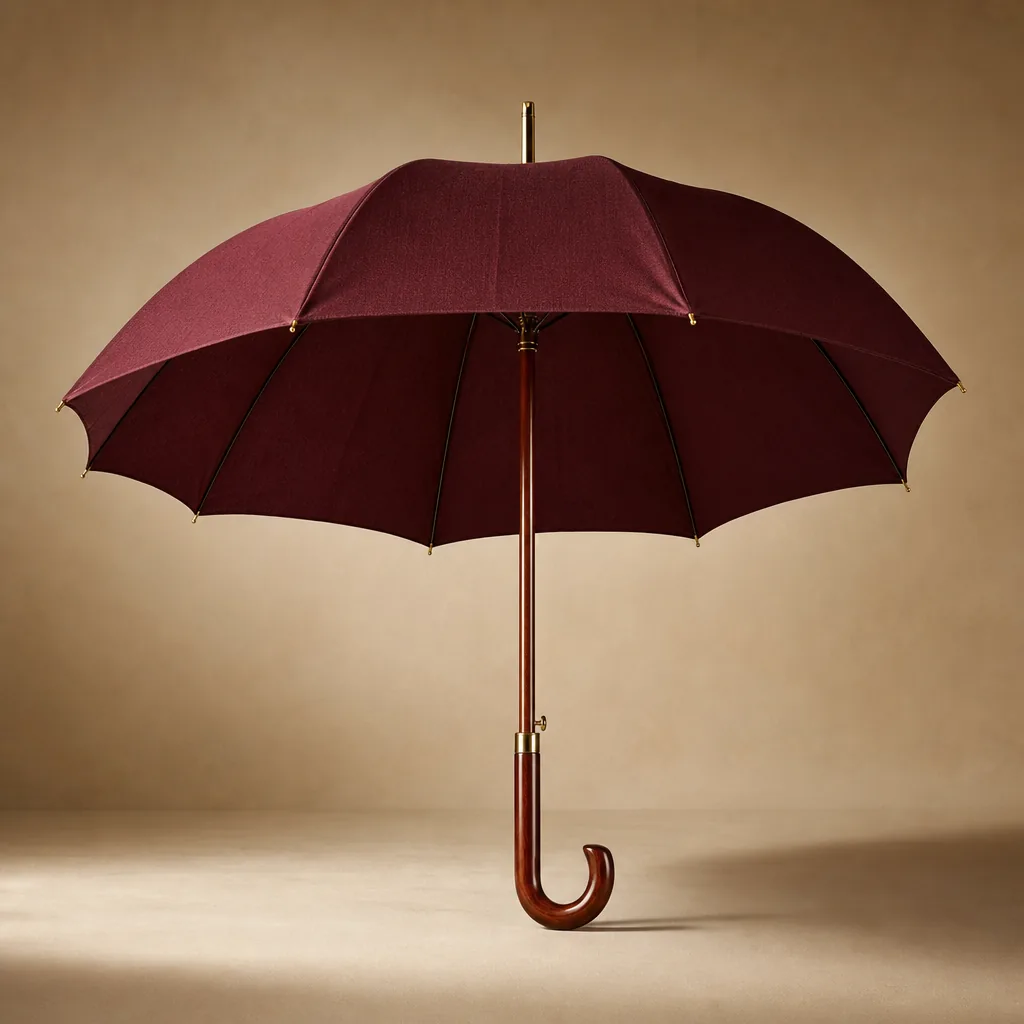
For campus, hospital, and facility buyers, umbrella failures usually show up at the worst time: bent ribs at entrances, inconsistent logos across reorders, and boxes that arrive too late for the next weather event. When we build storm ready branded umbrellas on the factory floor in Songxia, the real work is balancing windproof frame design, fabric tension, print durability, carton packing, and repeatable QC so every reorder matches the approved sample.
Match Umbrella Specs to High-Traffic Use
High-traffic programs need umbrellas built like shared equipment, not like one-day promo gifts. In a campus umbrella program, hospital entrance rack, airport shuttle counter, or business park concierge desk, the same unit may be opened 5–10 times per rainy day by people who do not treat it gently. I recommend 23" or 27" stick umbrellas for loaner racks because they are harder to lose than compact folders, easier to dry, and simpler for maintenance staff to inspect. For repeated distribution or resale, a 21" auto-open compact can work, but only if the shaft, runner, and rib joints are upgraded; the cheapest 3-fold steel frame with thin 170T polyester will start failing at the tips and stretchers after a few storms.
For storm ready branded umbrellas, the baseline should be fiberglass ribs or a hybrid frame with fiberglass outer ribs and a metal shaft, not all-lightweight steel. An 8K frame is acceptable for normal campus walking paths, while 10K or 16K makes sense for hospitals, airports, waterfront facilities, and open business parks where gusts hit harder between buildings. Canopy fabric should be 190T or 210T pongee with a water-repellent coating; it dries faster and handles screen printing better than low-grade polyester. If your windproof umbrella specs claim double-canopy venting, confirm the vent overlap is sewn cleanly and not just cut for appearance. A real vented model should survive 50+ mph wind-tunnel testing without permanent rib deformation.
Facility umbrella sourcing should also account for inventory control, cleaning, and replacement rate. Black, navy, and dark gray hides dirt better than white or yellow, but bright panels improve visibility at crosswalks and shuttle zones. For bulk rain umbrellas used in lending stations, add a molded J-handle or EVA straight handle that can take drops on tile floors; cheap rubberized coatings get sticky after storage in humid janitor closets. Manual-open stick umbrellas usually outlast auto-open mechanisms in loaner fleets, but auto-open is useful for retail sales and VIP distribution. For branded programs, place the logo on two opposite panels, keep ink coverage moderate to avoid stiff canopy folds, and set inspection at AQL 2.5 for stitching, frame function, and print alignment before FOB or DDP shipment.
Select Frames Built for Wind and Reuse
For campus and facility programs, the frame is where cheap umbrellas fail first, not the logo panel. Steel ribs are acceptable for low-cost bulk rain umbrellas when the use case is light rain, short walks, and controlled return points, but they bend permanently after a hard inversion. Fiberglass ribs cost more, yet they flex and recover, which matters when umbrellas are shared across dorms, hospitals, factories, or stadium entrances. For storm ready branded umbrellas, I normally steer buyers toward fiberglass or hybrid frames: fiberglass ribs with a steel shaft for cost control, or full fiberglass shaft and ribs when corrosion resistance and wind recovery are priorities. A 23 inch 8K frame is the common sweet spot for walking coverage and storage, while 27 inch and 30 inch golf-style frames need stronger stretchers and better runner fit because the canopy creates much higher torque in gusts.
Rib count is not automatically strength, but it changes how load spreads across the canopy. An 8K frame is lighter, easier to open, and usually enough for a campus umbrella program if the ribs are fiberglass and the tips are properly locked into reinforced pockets. A 16K frame gives a rounder canopy profile and better fabric support, but it adds weight and more hinge points; if the rivets, notches, or plastic runners are low grade, 16 ribs only create 16 places to break. Reinforced tips matter more than many buyers expect. We specify thicker end caps, bar-tacked tip pockets, and clean rib alignment so the canopy does not tear at the seam during inversion. For windproof umbrella specs, ask for actual construction details: rib material, stretcher gauge, shaft diameter, rivet type, and whether the frame survives repeated 40 to 50+ mph wind-tunnel cycling, not just one staged promotional video.
Double-canopy vented structures are the right choice when umbrellas will sit at building entrances, security desks, shuttle stops, and athletic facilities where gusts hit from different angles. The upper vent lets pressure escape instead of forcing the frame inside out, but the vent overlap must be deep enough to prevent rain blowback; on 190T or 210T pongee, we usually want stable stitching, balanced panel tension, and a clean top cap seal. Auto-open is convenient for entrances because users often have a bag, badge, or coffee in one hand, so facility umbrella sourcing teams should test spring force and runner lock durability before ordering 500 or 5,000 units. Manual-open frames still have a place: they are simpler, easier to repair, and better for controlled loaner programs where staff can replace tips, caps, or ribs. Our standard practice at ZheBrella is to match mechanism choice to abuse level, not just user convenience.
Choose Fabric for Rain, Sun, and Visibility
Fabric choice is where a campus umbrella program either feels controlled or becomes a mixed box of giveaways. For most storm ready branded umbrellas, 190T pongee is the practical baseline: tight enough to shed rain well, smooth enough for clean screen printing or heat-transfer logos, and more durable than cheap polyester that wrinkles after one wet season. We usually pair 190T pongee with fiberglass ribs on 23" or 27" auto-open models for student services, visitor centers, parking teams, and loaner stations. If the umbrella is customer-facing or sold through a bookstore, 210T pongee gives a denser hand feel and better drape without jumping into luxury pricing. It also takes darker PMS colors more evenly, which matters when navy, black, maroon, or forest green must match campus identity across bulk rain umbrellas.
Visibility should be specified before artwork approval, not added after the first sample. Reflective trims on the canopy edge, sleeve, or one alternate panel are useful for security patrols, event staff, hospital facilities, and shuttle teams working before sunrise or after evening games. A 10 mm or 15 mm reflective binding is usually enough; wider tape starts to dominate the design and can stiffen the canopy fold. For facility umbrella sourcing, I prefer reflective accents on 8K or 10K frames rather than full reflective panels, because panels can complicate logo placement and increase sewing variation. If the umbrella is used by outdoor staff in sun as well as rain, request a UPF 50+ coating on the inner canopy surface. Silver or black UV backing performs better than untreated pongee, but it changes fabric hand feel and can slightly reduce breathability during hot-weather use.
Color selection is a production decision as much as a branding decision. Bright yellow, orange, royal blue, and red work well for wayfinding because they are visible from a distance at entrances, parking lots, and athletic fields. Black and navy look premium but disappear at night unless reflective trim is included. For multi-building programs, one main canopy color with a secondary handle tag or panel color keeps brand consistency while still identifying departments, routes, or loaner locations. Good windproof umbrella specs should also account for colorfastness: dark pongee should be checked for crocking after wet rub, and coated UPF fabrics should be tested after folding so the backing does not crease through the logo area. For storm ready branded umbrellas, ask for a pre-production sample under the exact fabric, coating, trim, and print method before approving MOQ production.
Plan Inventory, MOQ, and Reorder Timing
Inventory planning for storm ready branded umbrellas should start with the way umbrellas are actually built, not with a spreadsheet color wish list. If a campus umbrella program wants navy for security, red for athletics, and black for facilities, the cleanest approach is to keep the same frame, handle, canopy fabric, and print position, then split canopy colors inside one production run. Many factories will allow color splits within MOQ if the material is common 190T or 210T pongee and the logo screen or heat-transfer setup stays unchanged; custom-dyed fabric, Pantone-matched handles, or separate logo plates usually push each variant toward its own MOQ. For practical facility umbrella sourcing, I like 23" auto-open stick umbrellas for walkways and reception desks, 27" or 30" golf umbrellas for parking teams, and compact 21" auto-open-close models only when storage space is tight.
Safety stock matters because rain demand is not linear. A school may issue 300 bulk rain umbrellas during orientation week, then another 200 during one stormy football weekend, while a hospital or corporate campus loses stock gradually through visitor use. For programs with 1,000 to 5,000 units annually, I recommend holding 15% to 25% buffer inventory after the first deployment and setting a reorder trigger when stock drops below 45 days of expected use. Windproof umbrella specs should be standardized before the first PO: fiberglass ribs beat steel ribs for flex recovery, 8K is acceptable for standard stick umbrellas, 10K or 16K is better for premium golf styles, and a double-canopy vented design is the right choice if the umbrella must survive 50+ mph wind-tunnel testing. Changing specs mid-program creates mismatched replacements and complicates inspection under AQL 2.5.
Lead time should be counted after sample approval, not after the first email inquiry. For storm ready branded umbrellas, normal bulk production is 30 to 45 days after the signed pre-production sample, print artwork, packing method, and shipping marks are confirmed. Add 5 to 10 days if the order includes multiple logos, Teflon water-repellent coating, UV UPF 50+ coating, or mixed POE/PVC/EVA clear canopy styles. FOB Ningbo or Shanghai works best for consolidated importers who already combine cartons from several suppliers and control ocean freight. DDP is better for buyers who need landed-cost simplicity, especially universities, facility managers, and promotional distributors without their own customs broker. Our standard practice at ZheBrella is to lock the reorder bill of materials, carton dimensions, HS code, and inspection checklist from the first shipment so repeat orders move faster and quote comparisons stay honest.
Inspect for Durability Before Deployment
Durability inspection has to happen before the umbrellas reach security desks, residence halls, maintenance carts, or event storage, because failures usually show up in the first 20 cycles, not the first rainstorm. For storm ready branded umbrellas, I would not release bulk rain umbrellas on carton count alone. Start with open-close function: every sample should lock fully at the runner, release without catching, and close without bending the stretcher joint. Check rib alignment by opening the frame on a flat table; 8K and 10K steel frames should sit evenly, while fiberglass ribs should flex back without a white stress mark near the tip. Canopy tension matters too. A loose 190T pongee canopy flaps early in wind, but an over-tight canopy pulls stitching at the rib tips. On 23 inch and 27 inch campus models, I like to see clean panel symmetry, no twisted ribs, and no runner wobble after repeated operation.
For a campus umbrella program or facility umbrella sourcing project, use AQL 2.5 as the baseline for visual and workmanship defects, then add a separate function test for mechanisms. Auto-open and auto-open-close umbrellas need more abuse than manual straight umbrellas because the spring, shaft, button, and runner carry the complaint risk. Our standard practice at ZheBrella is to cycle sampled auto-open units at least 20 times before final packing, with extra attention to delayed launch, weak rebound, button sticking, and sudden shaft slip. For windproof umbrella specs, inspect the double-canopy vent if used: the upper layer should lift under airflow but not expose raw seams or misaligned vents. If the buyer claims 50+ mph wind-tunnel resistance, the inspection report should reference the tested construction: fiberglass ribs, reinforced stretchers, vented canopy, and shaft diameter, not just the marketing phrase “windproof.”
Water repellency, branding, handle fit, and export packing are where many facility orders lose consistency. Spray-test the canopy after printing and curing; Teflon-coated 190T or 210T pongee should bead water, while PVC, POE, and EVA clear canopies should show no cloudy stress cracks around the seams. Logo placement should be measured from the panel seam, not judged by eye, especially on heat-transfer and screen-printed school marks where a 5 mm drift is visible in group use. Handles should be pulled and twisted by hand: EVA foam, plastic crook, rubberized grip, or wooden handle must not rotate on the shaft. Finally, inspect carton condition before deployment. Wet cartons, crushed corners, weak inner polybags, and mixed color labels create headaches for campus receiving teams. For storm ready branded umbrellas shipped FOB or DDP, carton marks, SKU labels, and master carton strength are part of the product, not paperwork.
Frequently Asked Questions
What umbrella size works best for facility loaner programs?
A straight umbrella around 23-25 inches balances coverage, durability, and storage space. Golf umbrellas offer more coverage but require larger racks and higher freight budgets.
Can one order include different department logos?
Yes, but each logo version may require separate setup, film, or print alignment checks. Buyers should confirm MOQ per design and allow extra approval time for multiple artworks.
What windproof specs should a campus or hospital umbrella program require?
For institutional use, buyers usually ask for fiberglass or reinforced metal ribs, a vented canopy, and a tested open-close cycle of at least 3,000 uses. A 24- or 27-inch canopy is common for everyday carry, while wind resistance claims should be backed by lab or in-house test results.
How low can the MOQ be for a branded umbrella reorder?
Many OEM programs start around 500 to 1,000 pieces per color or logo version, depending on the canopy fabric and printing method. Reorders can sometimes be lower if the same frame and canopy materials are already in stock.
What inspection controls matter most for facility umbrella sourcing?
Check canopy alignment, stitching, print placement, tip and ferrule security, and open-close function on every batch. B2B buyers often use AQL sampling, with tighter checks on handle finish and frame tension for uniforms, gift, or frontline staff programs.
Looking to Launch Your Custom Umbrella Line?
ZheBrella is a Zhejiang-based OEM/ODM umbrella manufacturer with 17 years of export experience. Free design, low MOQ from 100 pieces, windproof construction, full-color print.
Get Free Quote Now »People Also Search For
Related Articles
Reflective Safety Umbrellas for Commuter and Campus Programs
Plan safer branded umbrellas with reflective trim, canopy color, rib specs, and printing choices that balance visibility...
Read More »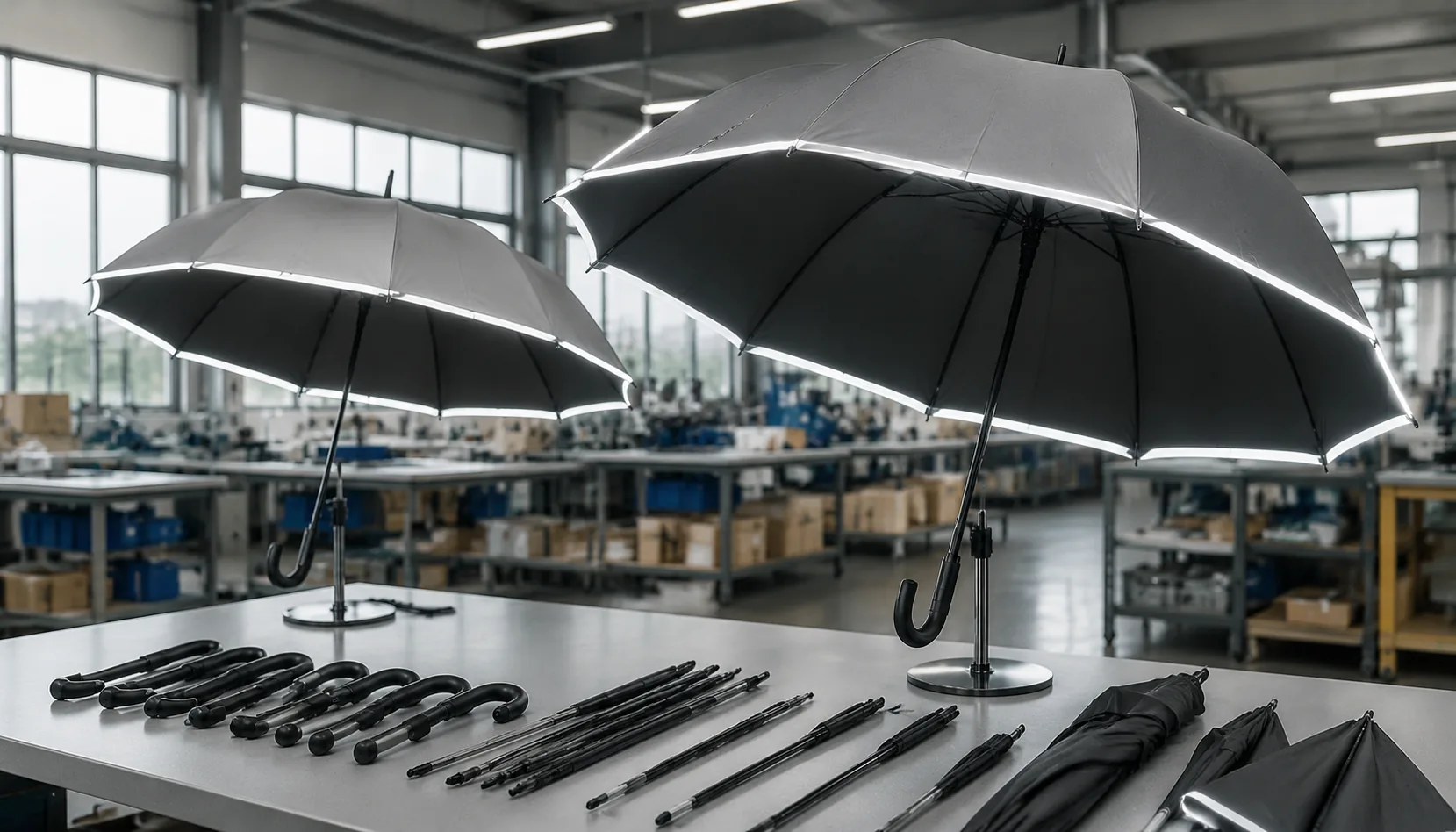
Reflective Safety Umbrellas for Corporate and Campus Programs
Specify reflective safety umbrellas with strip placement, canopy fabric, rib materials, print methods, and inspection ch...
Read More »
Storm Umbrella Specs for Insurance and Utility Programs
Specify storm-ready branded umbrellas for utility, insurance, and roadside programs with windproof frames, AQL 2.5 check...
Read More »