Reflective Safety Umbrellas for Campus and Commuter Programs
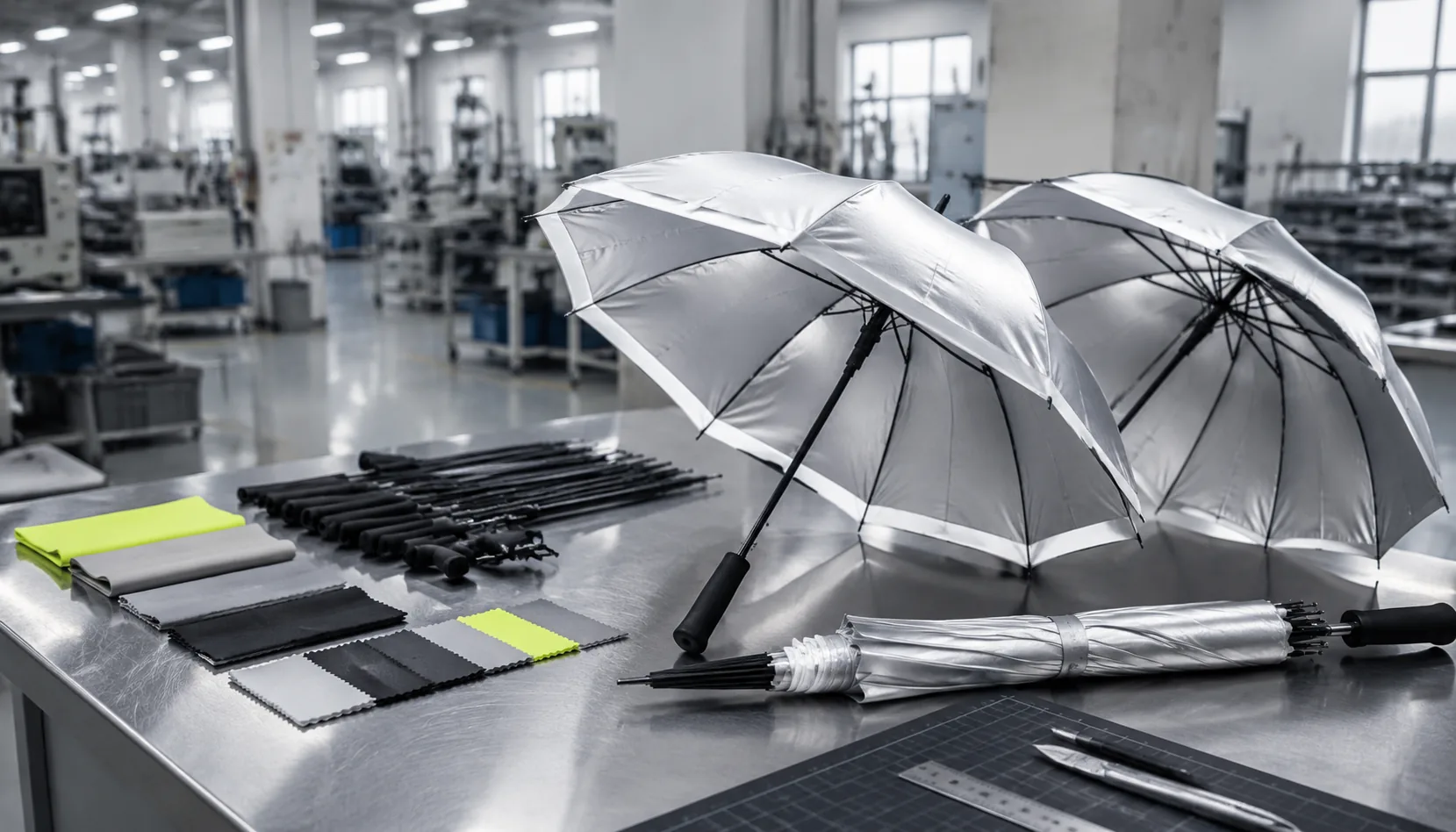
For campus procurement teams and commuter program buyers, the hard part is not choosing a bright umbrella; it is specifying one that stays visible, opens reliably, and survives daily handling in rain and wind. On our Songxia production floor, reflective safety umbrellas are built around 360° reflective trim alignment, fiberglass rib consistency, auto-open frame testing, 210T pongee cutting, and branding that supports safety without weakening the canopy or slowing delivery.
Where Reflective Umbrellas Fit in B2B Programs
Reflective safety umbrellas make the most sense where people walk predictable routes in bad light: campus paths between dorms and libraries, transit exits, hospital parking lots, factory gates, and corporate shuttle stops. For universities and school districts, they work as school safety umbrellas because the user is often crossing internal roads during rain, fog, or winter afternoons. For transit authorities and commuter campaigns, reflective trim umbrellas give a moving visibility cue at shoulder height, which is easier for drivers to notice than a dark 21" folding umbrella buried under a backpack. I would not position these as novelty gifts; the value is repeat daily use over a rainy season, with branding that stays visible because the umbrella is actually carried.
Durability matters more than an unusual shape or gimmick mechanism. A commuter umbrella supplier should steer buyers toward 190T or 210T pongee with a water-repellent coating, fiberglass ribs for wind recovery, and a frame matched to the use case: 21" auto-open-close for bags, 23" auto-open for campus desks, or 27" stick umbrellas for security teams and facility staff. Reflective tape should be sewn into panel seams or perimeter trim, not only heat-pressed as a decorative strip that can crack after folding. For windy sites, an 8K fiberglass frame is the minimum I like; double-canopy vented construction is better if the program expects open streets, bridges, or coastal campuses.
Branded safety umbrellas also need sober logo planning. A large white logo on every panel can fight with reflective trim, while one or two clean screen-printed panels usually keeps the safety function clear and the brand readable. Security teams may need black or navy canopies with reflective edging; wellness kits may accept brighter yellow, orange, or royal blue. Our standard practice at ZheBrella is to confirm reflective material width, placement, logo size, and frame spec before sampling, then inspect production under AQL 2.5 for canopy alignment, rib function, tape stitching, and open-close reliability. For B2B programs, the best umbrella is the one staff, students, or commuters keep using after the launch week ends.
Reflective Materials and Placement Options
Reflective placement matters more than the total square inches of silver material. On campus and commuter routes, drivers usually see the umbrella from the side first, not from directly above, so I prefer reflective piping around the lower canopy edge plus vertical panel strips on at least four alternating panels. Edge tape gives the cleanest 360° canopy visibility, but it must be stitched evenly so it does not twist after repeated folding. For school safety umbrellas, a 23" or 27" canopy with reflective trim at the perimeter is often enough; for night-shift commuters, event parking staff, or rail-station programs, add 10–15 mm reflective strips running from tip to crown on 8K or 10K frames. Keep reflective zones away from rib tips that scrape during closing, because abrasion there shows up fast in AQL 2.5 inspection.
Reflective logos are useful, but they should not replace functional trim. A small heat-transfer reflective logo on one or two panels looks sharp for branded safety umbrellas, yet it only works when the umbrella faces the viewer. If the buyer wants both branding and visibility, put the logo on the front walking panel and reserve the perimeter for reflective edge tape or piping. Screen printing over reflective film is usually a bad idea because ink lowers reflectivity and can crack when the canopy folds; better options are separate reflective transfers, reflective PU film, or printed pongee panels with reflective tape sewn beside the artwork. On 190T or 210T pongee, test adhesion after wet folding, dry folding, and 24-hour compression in the sleeve. PVC, POE, and EVA clear canopies need different heat settings, or the film can wrinkle.
Durability after folding is the point most catalog samples hide. Reflective piping should be captured inside the seam allowance, not just topstitched on the surface, and panel strips need rounded ends so they do not peel when the user rolls the canopy tight. Our standard practice at ZheBrella is to run open-close cycling before shipment, then check reflective tape lift, seam puckering, and blocked visibility from straps, sleeves, hangtags, or large printed logos. A commuter umbrella supplier should also confirm whether the reflective material remains visible when the canopy is wet, because glossy water beads can reduce contrast under headlights. For reflective safety umbrellas used in campuses, hospitals, and transit programs, keep the closure strap narrow and position it between reflective panels, not across them. If you specify windproof double-canopy construction, make sure vent overlaps do not cover the reflective strips from side view.
Frame Specs for Wind, Weight, and Daily Carry
For campus and commuter programs, the frame choice should start with abuse level, not catalog photos. An 8K frame is the practical baseline for most 21" compact and 23" straight umbrellas: eight ribs keep weight down, fold cleanly, and cost less when you are buying 1,000–10,000 pieces for orientation kits or transit giveaways. A 16K frame spreads load across twice as many rib points, so the canopy holds a rounder profile and feels more stable in gusts, but it adds weight, more sewing points, and more inspection risk if the rib tips are not aligned. For reflective safety umbrellas, I usually specify 8K fiberglass ribs for compact commuter models and reserve 16K for 27" or 30" straight umbrellas where coverage and wind resistance matter more than bag weight.
Fiberglass ribs are the better choice when the umbrella may invert near bus stops, parking lots, or exposed campus walkways. Steel ribs are cheaper and stiff, but once bent they stay bent; fiberglass flexes back and helps an 8K or 10K frame survive repeated gusts. A steel center shaft is strong but heavy, while an aluminum shaft cuts weight noticeably on daily-carry models, especially 21" and 23" auto-open umbrellas. Double-canopy vented construction is worth the extra sewing if the buyer expects coastal wind or open-campus use: the upper canopy lets pressure escape, and a good build can survive 50+ mph wind-tunnel testing when paired with fiberglass ribs, reinforced tips, and proper runner clearance.
A compact auto-open model is usually better than a straight umbrella for commuter distribution because people actually carry it. A 21" or 23" three-fold with 190T or 210T pongee, reflective trim, and a rubberized handle fits backpacks, lockers, messenger bags, and car doors; that matters more than prestige when rain starts at 5:30 p.m. outside a train station. Straight umbrellas still make sense for security teams, crossing guards, and branded safety umbrellas used at events, where a 27" canopy gives better visibility and coverage. As a commuter umbrella supplier, our standard practice at ZheBrella is to test opening force, rib recovery, and reflective tape adhesion before AQL 2.5 final inspection, because school safety umbrellas fail fastest at the frame joints, not the logo print.
Canopy Fabric, Coatings, and Weather Performance
For campus and commuter programs, I would not spec reflective safety umbrellas with thin promotional polyester unless the order is purely decorative. A 190T pongee canopy is the practical baseline for school safety umbrellas because it balances hand feel, print clarity, and cost; 210T pongee is tighter, smoother, and better for retail-grade branded safety umbrellas where the buyer expects lower noise, cleaner panel tension, and stronger color depth. Both fabrics should receive a water-repellent DWR finish, but the coating weight and curing matter more than the sales label. In our production checks, a properly finished canopy should bead water after a 20-minute spray test and shake mostly dry within 2–3 minutes, which is important for commuters stepping into buses, classrooms, and office lobbies.
Quick-dry performance depends on panel cutting accuracy as much as coating. If the 8 panels are stretched unevenly on a 23" or 27" frame, water pools near the tips and the DWR looks worse than it really is. For commuter umbrella supplier programs, I normally recommend 190T pongee for 21" folding auto-open-close models and 210T pongee for 23" straight auto-open or 27" golf-style umbrellas with fiberglass ribs. Optional UPF 50+ coating is useful for universities, security teams, and outdoor event staff, especially when the canopy color is light; darker navy, black, and charcoal already perform better in UV blocking, but a tested UPF coating gives procurement a measurable specification instead of a guess.
Reflective trim umbrellas need extra QC around stitching because reflective tape is less forgiving than normal binding. The tape should sit flat on the canopy edge or panel seam without puckering, skipped stitches, or needle damage through the reflective layer. I like to see 8–10 stitches per inch, even tension, and a clean bartack at stress points near tips and closures. During AQL 2.5 inspection, we pull-check the tape, open and close the umbrella 20 cycles, and inspect seam leakage after spray testing. This is where many low-cost branded safety umbrellas fail: the reflective strip looks bright in a sample photo, but poor sewing creates curled edges, water channels, or peeling after a few weeks of wet commuting.
Quality Control, MOQ, and Delivery Planning
For reflective safety umbrellas, QC has to treat the reflective tape or printed reflective ink as a functional safety component, not decoration. Our standard AQL 2.5 inspection checks reflective adhesion after dry rub, wet rub, and cross-hatch tape pull, especially on curved canopy seams where poor bonding shows first. On reflective trim umbrellas, inspectors also measure trim width consistency, edge lifting, stitch bite, and alignment around each panel; a 3 mm drift looks sloppy when a student group walks under parking-lot lights. For frames, we load-test ribs and stretchers by size: 21" compact auto-open-close models need smooth shaft return, while 23" and 27" stick umbrellas get rib deflection checks, tip pull tests, and open-close cycling of 300 to 500 operations before shipment approval. Fiberglass ribs are preferred for commuter and campus programs because they recover better than steel after gusts, but steel shafts still make sense when budget is tight and wind rating is not the lead requirement.
Print placement is another inspection point buyers often underestimate. School safety umbrellas usually carry crests, bus-route identifiers, sponsor logos, or QR codes, and those marks must stay readable after panel sewing. For screen print or heat transfer, we set tolerances before production: usually within 5 mm from approved artwork position on a 23" canopy, tighter for single-panel logos and looser for wraparound reflective layouts. Branded safety umbrellas with 190T or 210T pongee should also be checked for coating compatibility, because heavy Teflon water-repellent finishes can reduce ink adhesion if corona or primer treatment is skipped. For POE or PVC clear umbrellas, print cure and blocking tests matter more than fabric bleed. A practical pre-shipment report should include photos of reflective brightness under flash, frame opening video, logo ruler shots, and carton drop-check results, not just a pass/fail sheet.
MOQ depends on construction and how customized the reflective work is. A commuter umbrella supplier can usually run 500 pieces per color for standard 23" manual or auto-open models with stock reflective edging, while custom panel layouts, UPF 50+ coatings, EVA handles, or 10K/16K windproof frames often push MOQ to 1,000 to 3,000 pieces. Pre-production samples normally take 7 to 10 days after artwork and material confirmation; bulk production is commonly 25 to 40 days after sample approval, longer before back-to-school season. For delivery, FOB Ningbo or Shanghai works when the buyer controls consolidation, but DDP is cleaner for multi-location campus rollouts where cartons must ship directly to schools, transport hubs, or regional warehouses. For split DDP shipments, lock carton marks, SKU labels, and packing ratios before production, because relabeling 80 cartons after final inspection is slow, messy, and avoidable.
Frequently Asked Questions
Can reflective trim be combined with a printed brand logo?
Yes, but the logo should usually stay on canopy panels or sleeve areas while reflective piping or tape remains clear. Overprinting reflective material can reduce visibility and create adhesion problems.
Are reflective umbrellas usually compact or straight umbrellas?
Both are possible. Compact auto-open umbrellas suit commuter giveaways, while straight 23–27 inch umbrellas offer more visible surface area for campus patrols, security teams, and event staff.
What reflective specifications should we request for a campus safety umbrella?
Ask for 360° reflective trim around the canopy edge, reflective piping or panels at key seams, and a dark or high-contrast canopy color. For commuter use, pair the reflective trim with an auto-open frame, fiberglass ribs, and 210T pongee fabric.
Can reflective safety umbrellas be branded without reducing visibility?
Yes. Place the school or transit logo on one or two panels while keeping the reflective edge unobstructed. For better nighttime visibility, avoid printing over reflective trim and use light ink on navy, black, or safety-color canopies.
What is a typical MOQ and lead time for branded reflective umbrellas?
For OEM orders, a typical MOQ is 500–1,000 pieces per design, depending on frame size, trim material, and print method. Sampling usually takes 7–10 days, with bulk production around 30–45 days after artwork and sample approval.
Looking to Launch Your Custom Umbrella Line?
ZheBrella is a Zhejiang-based OEM/ODM umbrella manufacturer with 17 years of export experience. Free design, low MOQ from 100 pieces, windproof construction, full-color print.
Get Free Quote Now »People Also Search For
Related Articles
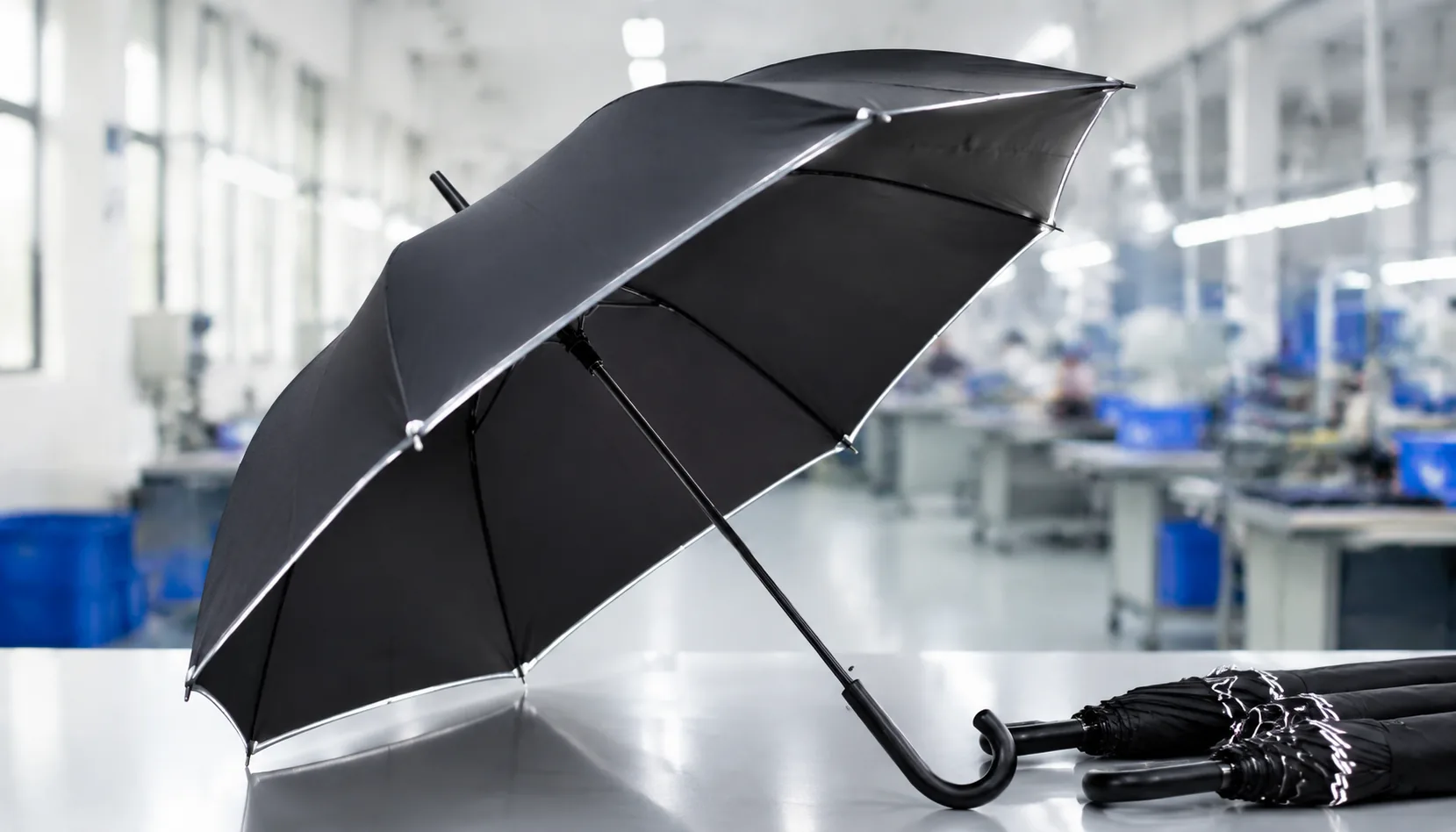
Reflective Trim Umbrellas: Safety Specs for OEM Buyers
Specify reflective umbrellas for commuter, campus, and event programs with trim placement, fabric, frame, MOQ, QC, and p...
Read More »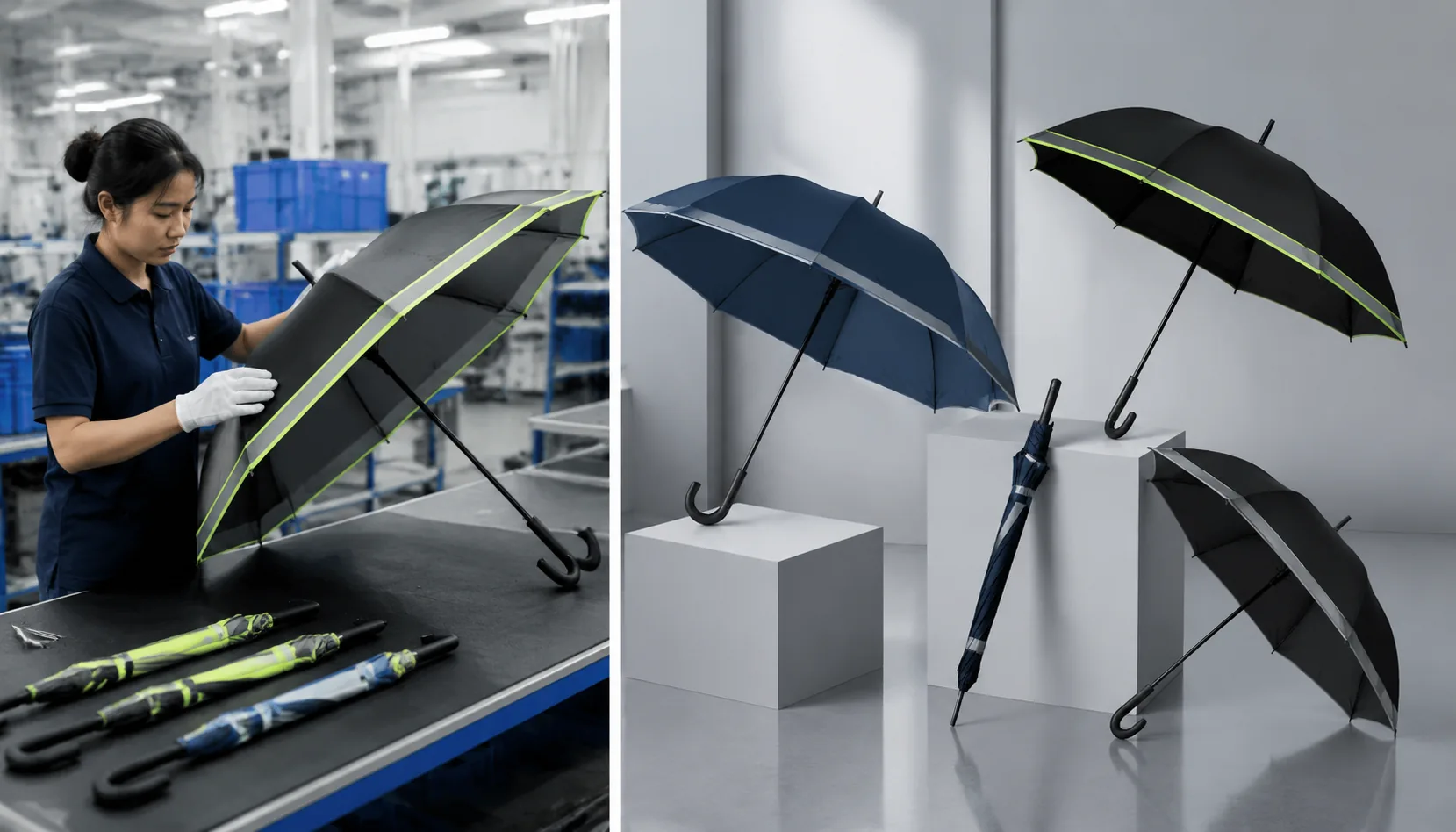
Reflective Commuter Umbrellas: OEM Safety Spec Guide
Specify reflective commuter umbrellas with 190T pongee, fiberglass ribs, safety trim, and QC points for retail or corpor...
Read More »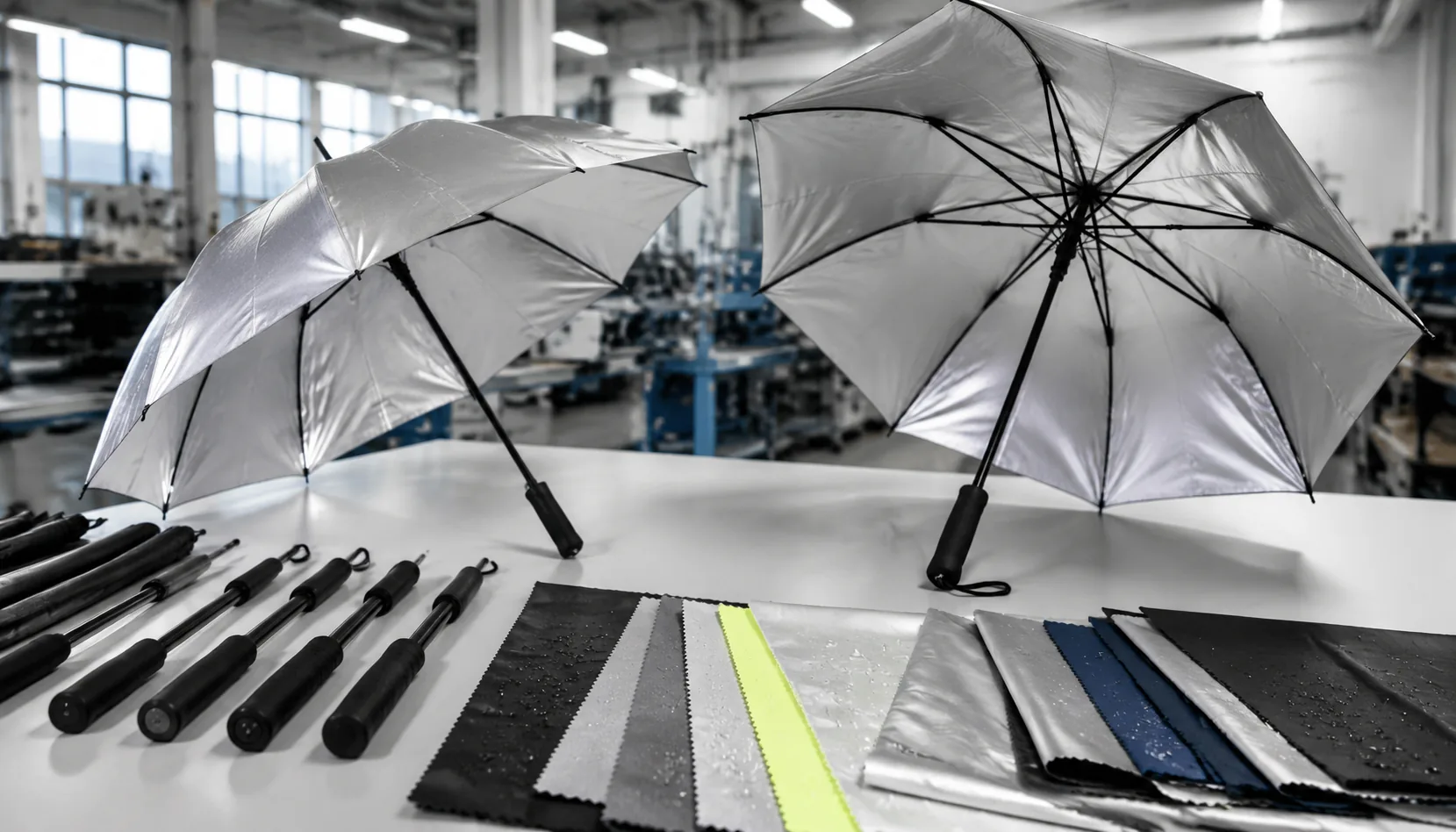
Reflective Safety Umbrellas for Commuter and Campus Buyers
Source reflective umbrellas with visibility trim, durable ribs, pongee fabric, windproof options, printing, MOQ, lead ti...
Read More »