Reflective Safety Umbrellas for Commuter and Campus Programs
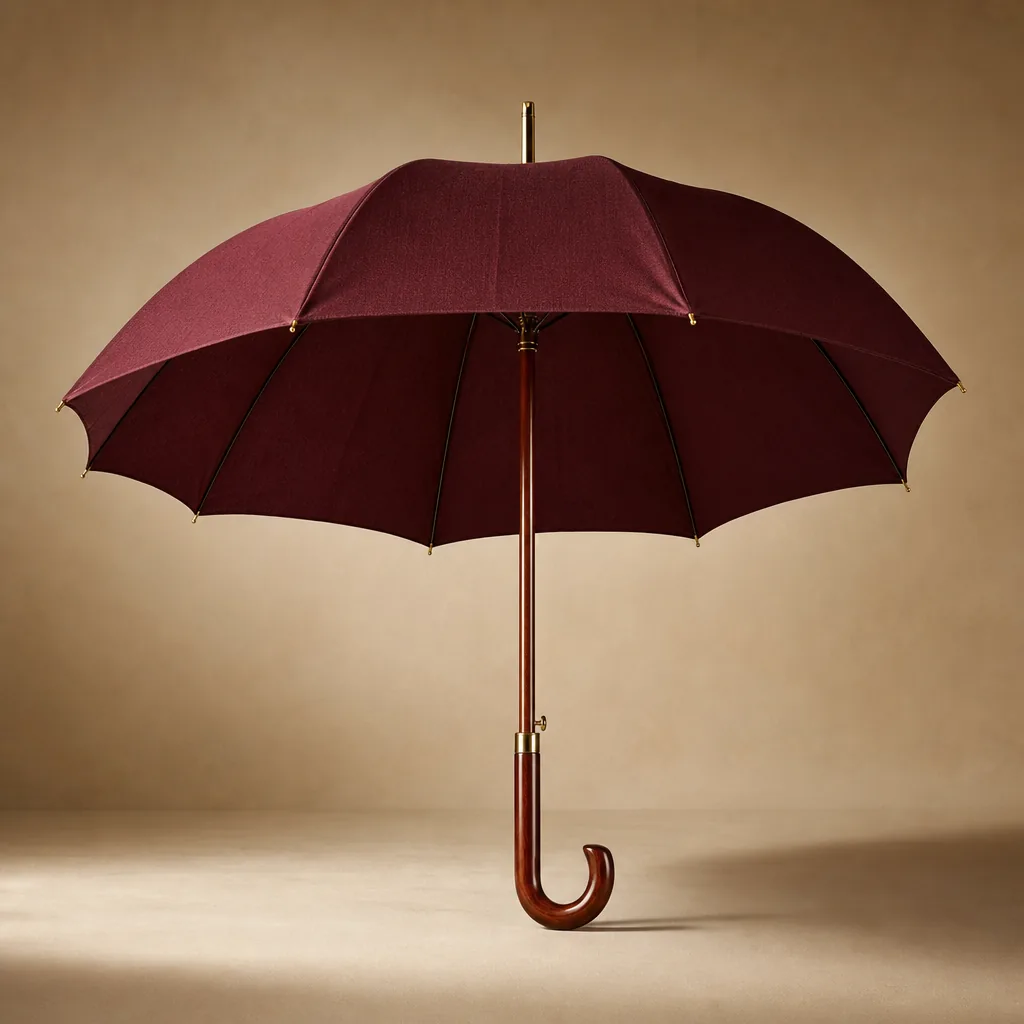
Buying reflective safety umbrellas bulk for commuter and campus programs is less about picking a bright canopy and more about balancing night visibility, wind performance, print durability, and unit cost at the same time. On the factory floor, those tradeoffs show up in reflective trim width, rib gauge, fabric coating, and logo placement long before a sample reaches approval. The right spec keeps students and commuters visible without creating a product that is too heavy, weak, or expensive to scale.
Where Reflective Umbrellas Fit in B2B Programs
Reflective umbrellas make the most sense when the buyer is trying to change behavior in low-light rain, not just hand out another logo item. Universities use them for campus safety giveaways during freshman orientation, late-night shuttle programs, and residence-life campaigns, especially on campuses where students walk across parking lots or between poorly lit buildings. Transit agencies and city road-safety teams order reflective trim umbrellas for “be seen” campaigns around bus stops, rail stations, and pedestrian crossings. For corporate commuting kits, the best fit is a 23" or 27" custom rain umbrella with reflective piping on the canopy edge, a reflective sleeve, and a one-color or two-color logo that does not fight the safety material. Typical quantities start around 500–1,000 pieces for department-level programs, 3,000–5,000 pieces for city or university rollouts, and 10,000+ pieces when tied to seasonal transit advertising or insurance-sponsored road-safety promotions.
The mistake I see buyers make is treating visibility as a decoration decision after the sample is already built. Reflective tape, reflective print, and reflective piping all behave differently in sewing, folding, and AQL inspection. Tape can crack if placed across tight fold lines; piping is more durable but needs accurate seam allowance; reflective ink looks clean on branded commuter umbrellas but must be tested after wet rubbing and repeated opening. If you want reflective safety umbrellas bulk packed for a campaign, specify the visibility layout before sampling: canopy size, rib count, fabric color, reflective width, logo position, and whether the sleeve also needs reflective treatment. On a 190T or 210T pongee canopy, silver reflective trim on the outer panels gives better side visibility than a small reflective logo near the top. For school and transit use, I usually recommend fiberglass ribs over all-steel frames because commuters are rough on umbrellas in wind and crowded doorways.
Seasonal timing matters because these programs often hit the same factory window as retail rainwear, spring campus events, and Q4 corporate gifting. For a standard manual or auto-open 23" model, buyers should allow about 7–10 days for artwork and sample approval, 25–35 days for production after deposit, and another 25–35 days for ocean freight to the U.S. if shipping FOB Ningbo or Shanghai. DDP air can work for 500–1,000 pieces when an event date is fixed, but it gets expensive fast on 27" or 30" golf umbrellas because carton volume is high. Our standard practice at ZheBrella is to confirm reflective material placement, logo method, carton packing, and AQL 2.5 criteria before the first pre-production sample, not after. That prevents the common problem where a campus buyer approves a nice-looking umbrella, then later discovers the reflective trim is hidden when the umbrella is folded or blocked by the printed logo.
Reflective Materials and Placement Options
Reflective piping on the canopy edge is usually the best first choice because it gives a clean 360-degree outline when headlights hit the umbrella from the side. On a 23" or 27" commuter umbrella, we normally use 10–15 mm reflective binding sewn into the lower hem; wider tape reflects better but starts to look bulky and can interfere with smooth closing if the sewing tension is wrong. For reflective safety umbrellas bulk orders, I prefer edge piping over random panel decoration when the program is for train stations, parking lots, campus walkways, or security staff, because drivers notice shape and movement before they read a logo. The trade-off is sewing difficulty: reflective binding is stiffer than normal polyester tape, so the operator must control puckering around curved edges, especially on 8K frames with high canopy tension. It adds labor time and a few cents to material cost, but it protects most of the central print area for school names, sponsor marks, or retail branding.
Panel strips are more visible from the front and rear, but they consume valuable print space and complicate canopy cutting. A vertical reflective strip running from the tip toward the runner works well on 190T or 210T pongee panels, especially on darker navy, black, forest green, or maroon umbrellas where contrast is strong. For branded commuter umbrellas, we often recommend two or four opposite panels with reflective strips rather than all eight panels; this keeps the umbrella readable at night without turning it into a construction-site product. Heat-applied reflective film gives a smooth look and lighter weight, but it must be tested for flex cracking after repeated open-close cycles. Sewn reflective tape is tougher in rain and abrasion, yet every added stitch line creates more seam bulk and another place where water can slow down drying. On double-canopy vented windproof designs, reflective strips should stay on the outer canopy only, away from vent overlap zones where fabric movement is constant.
Reflective logos and sleeve accents are useful when the buyer wants safety value without sacrificing the main artwork. A reflective school crest, shuttle-route icon, or company mark can be screen printed or heat transferred, but fine text below 6–8 mm height loses impact at night; bold shapes perform better than small lettering. For campus safety giveaways, the sleeve is often overlooked, yet a reflective sleeve band helps visibility when the umbrella is carried closed along roads or between dorms. The limitation is size: sleeves are narrow, so reflective accents work best as stripes, short slogans, or repeat marks, not detailed graphics. Our standard practice at ZheBrella is to confirm reflective placement with a pre-production sample, then check adhesion, sewing alignment, and color contrast during AQL 2.5 inspection. For reflective trim umbrellas and other custom rain umbrellas, the lowest unit cost comes from one reflective feature; combining piping, panel strips, logo, and sleeve accents improves visibility but increases labor, rejects, and lead time.
Recommended Frame and Canopy Specifications
For commuter programs, I usually steer buyers toward an 8K or 10K frame before jumping to 16K. An 8K umbrella with good fiberglass ribs and a steel shaft will outperform a cheap 16K build that only looks strong on a spec sheet. Fiberglass ribs flex in gusts and return to shape, while full steel ribs are cheaper but more likely to deform after inversion, especially around subway exits and open campus walkways. A 16K frame does add canopy tension and a premium feel, but it also adds weight and cost; for daily carry, that tradeoff matters. For reflective safety umbrellas bulk orders, the practical sweet spot is often a 23-inch straight umbrella for staff/security use and a 21-inch or 23-inch folding umbrella for students or commuters who need to pack it in a bag.
Canopy fabric should be 190T pongee at minimum, with 210T pongee preferred when the umbrella will carry reflective trim, a printed logo, or repeated wet-dry cycles. Pongee handles water-repellent coating better than low-grade polyester, dries faster, and gives a cleaner surface for screen printing or heat-transfer branding. For reflective trim umbrellas, we normally specify 1 to 2 cm reflective tape along the canopy edge or selected panels rather than covering too much seam area, because heavy tape can pull the fabric and distort the panel shape during sewing. A standard water-repellent coating is enough for most branded commuter umbrellas; Teflon coating is worth considering when the program targets higher-end retail, transit authorities, or long-term employee issue rather than one-season campus safety giveaways.
Format depends on how the umbrella will actually be used, not just the unit price. Straight umbrellas are stronger, easier to open with gloves, and better for escort staff, parking attendants, and campus patrol teams; 23-inch and 27-inch sizes give better shoulder coverage and make the reflective band more visible to drivers. Folding custom rain umbrellas are better for students, office commuters, and transit riders, but the frame must be specified carefully: fiberglass ribs, reinforced stretchers, and a reliable auto-open or auto-open-close mechanism reduce returns. One-hand operation is not a luxury when someone is carrying a laptop bag, ID card, phone, or groceries. Our standard practice at ZheBrella is to test auto-open samples through repeated cycling before mass production, because weak springs and loose runners are the first failures buyers notice after distribution.
Branding Methods That Work With Reflective Details
When reflective tape or piping is already on the umbrella, the safest branding method is usually simple screen printing on the open fabric area, not crowding the reflective zone. On 190T or 210T pongee, a one- or two-color screen print holds well if the artwork stays at least 15–20 mm away from seams, rib lines, and the reflective trim. For reflective trim umbrellas, I prefer placing the main logo on two opposite panels rather than all eight panels, because registration shifts slightly when the canopy is stretched over 8K or 10K frames. A 120–180 mm wide logo is practical on a 23 inch commuter umbrella; larger marks often distort near the panel curve. For reflective safety umbrellas bulk orders, approve the print on a fully assembled sample, not a flat fabric swatch, because the rib tension changes how the logo reads under real viewing angles.
Heat transfer works better than screen printing for gradients, small text, and multi-color sponsor logos, especially on campus safety giveaways where a university seal, police department mark, or transit partner logo must stay sharp. The tradeoff is hand feel and placement risk: transfer film can bridge the weave nicely, but it should not cross stitched seams, vent overlaps, or double-canopy windproof layers. On dark navy, black, or forest green canopies, Pantone matching has limits because the base fabric affects perceived color, and reflective tape nearby makes whites and light grays look different under headlights. Our standard practice at ZheBrella is to quote Pantone as “closest achievable on production fabric” unless the buyer pays for lab dips and pre-production strike-offs. For branded commuter umbrellas, I would avoid thin metallic inks beside reflective trim; they compete visually and are harder to inspect under AQL 2.5.
Panel-color blocking is often the cleanest way to combine visibility and branding without overprinting the umbrella. For example, use alternating black and safety yellow panels, then keep silver reflective piping on the outer seams and place a single dark logo on the yellow panel. This avoids the common mistake of putting a small white logo on a black canopy next to reflective tape, where the reflective element wins and the brand disappears. With custom rain umbrellas, color blocking also reduces print cost at higher MOQ because the impact comes from cut-and-sew fabric planning rather than more screens or transfers. The production file must mark rib positions clearly, especially on 16K fashion frames or 30 inch golf umbrellas where extra ribs create more interruption points. For reflective safety umbrellas bulk programs, the best artwork is bold, centered inside one panel, and tested both in daylight and under car headlights at 20–30 meters.
MOQ, Sampling, Inspection, and Delivery Planning
MOQ for reflective safety umbrellas bulk should be set by the reflective component, not only by canopy fabric. For a simple 23" auto-open umbrella with 190T or 210T pongee, one-color logo, and reflective binding on the outer edge, a practical MOQ is usually 500–1,000 pieces per color. If the design uses segmented reflective tape on all 8K ribs, printed reflective logo panels, or custom reflective webbing on the sleeve, expect 1,000–2,000 pieces because material loss and setup time rise quickly. For branded commuter umbrellas with fiberglass ribs, a vented double canopy, or 27" golf size construction, 1,000 pieces is a healthier starting point because frame procurement and packing volume become the cost drivers. PVC, POE, and EVA clear umbrellas can run lower in theory, but reflective tape adhesion on slick plastic needs extra testing, so I prefer not to quote tiny trial lots unless the buyer accepts a higher unit price.
Sampling normally takes 7–10 days for stock frames with standard reflective trim umbrellas, and 12–18 days if the reflective layout, handle color, sleeve, or heat-transfer logo must be custom matched. A proper pre-production sample should be opened and closed at least 30 cycles, sprayed for water repellency, and checked under low light at 15–30 meters to confirm the reflective line is visible from the side as well as the front. Bulk production lead time is usually 25–35 days after sample approval for 500–3,000 pieces, and 40–50 days when the order includes multiple colorways, 16K reinforced frames, UPF 50+ coating, or carton-specific distribution for campus safety giveaways. Our standard practice at ZheBrella is to freeze artwork, reflective tape width, and carton marks before fabric cutting; changing those after cutting creates shade variation and rework.
Inspection should follow AQL 2.5 for major defects, with a tighter internal check on safety-related items. On custom rain umbrellas with reflective trim, inspectors should pull-test reflective adhesion, check skipped stitches around the binding, verify that tape joints are not peeling at rib tips, and confirm the runner locks securely on manual, auto-open, or auto-open-close mechanisms. We also inspect canopy water repellency using a spray test, frame alignment after shaking, tip attachment, sleeve printing, barcode labels, and carton strength for export handling. FOB Ningbo or Shanghai is straightforward if the buyer controls freight, but DDP planning needs carton dimensions early because umbrellas are bulky, especially 27" and 30" sizes. For reflective safety umbrellas bulk shipping to U.S. schools, transit plus customs and final delivery can add 25–40 days by sea, so procurement teams should approve samples at least 70–90 days before the commuter program launch.
Frequently Asked Questions
Can reflective umbrellas still use full-color logos?
Yes, but the logo should be positioned away from reflective seams or tape. For dark 190T or 210T pongee canopies, screen printing or heat transfer usually gives better contrast than woven labels.
Do reflective safety umbrellas require a higher MOQ?
Often yes, because reflective tape or piping may require special material purchasing and extra sewing steps. A factory may support lower MOQ if the buyer uses standard tape width and existing canopy colors.
What reflective trim width works best for commuter or campus umbrellas?
For programs focused on visibility, 1-2 cm reflective piping or edge trim is the most common choice because it adds noticeable nighttime visibility without heavily increasing unit cost. Wider reflective panels improve visibility further but usually require higher MOQs and more material setup.
Which umbrella size is most practical for campus safety giveaways?
A 23-24 inch straight umbrella or a 21-22 inch foldable model usually fits campus use best. Straight umbrellas offer better logo visibility and durability, while foldables are easier for students and commuters to carry in backpacks and tote bags.
How do reflective features affect production time for custom umbrellas?
Adding reflective trim or piping typically adds about 3-7 days compared with a standard custom umbrella order, depending on material availability and whether a new trim color needs sourcing. For most OEM orders, practical lead times are around 25-45 days after sample approval.
Looking to Launch Your Custom Umbrella Line?
ZheBrella is a Zhejiang-based OEM/ODM umbrella manufacturer with 17 years of export experience. Free design, low MOQ from 100 pieces, windproof construction, full-color print.
Get Free Quote Now »People Also Search For
Related Articles
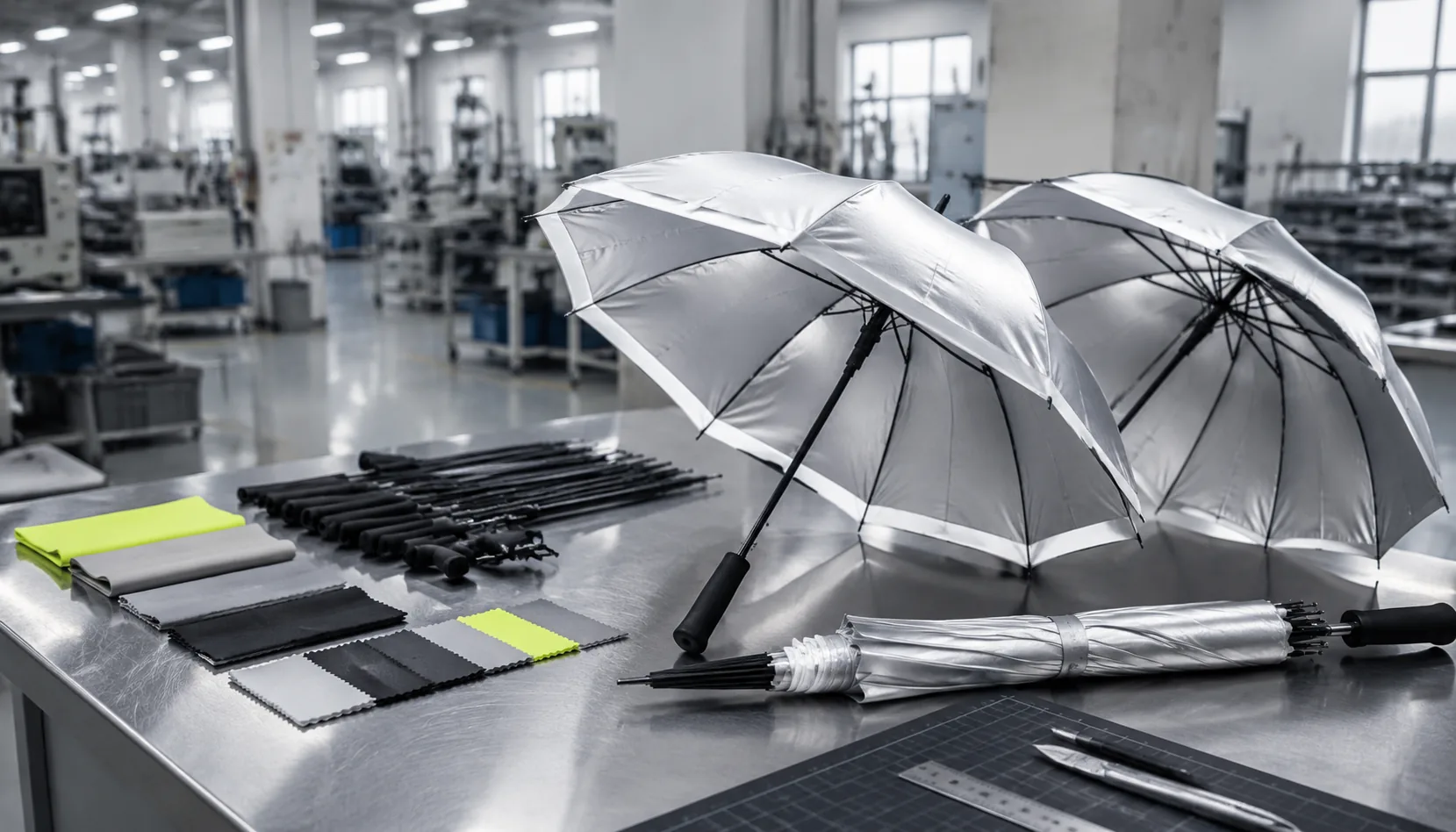
Reflective Safety Umbrellas for Campus and Commuter Programs
Specify reflective umbrellas with 360° trim, fiberglass ribs, auto-open frames, 210T pongee, and safety-focused branding...
Read More »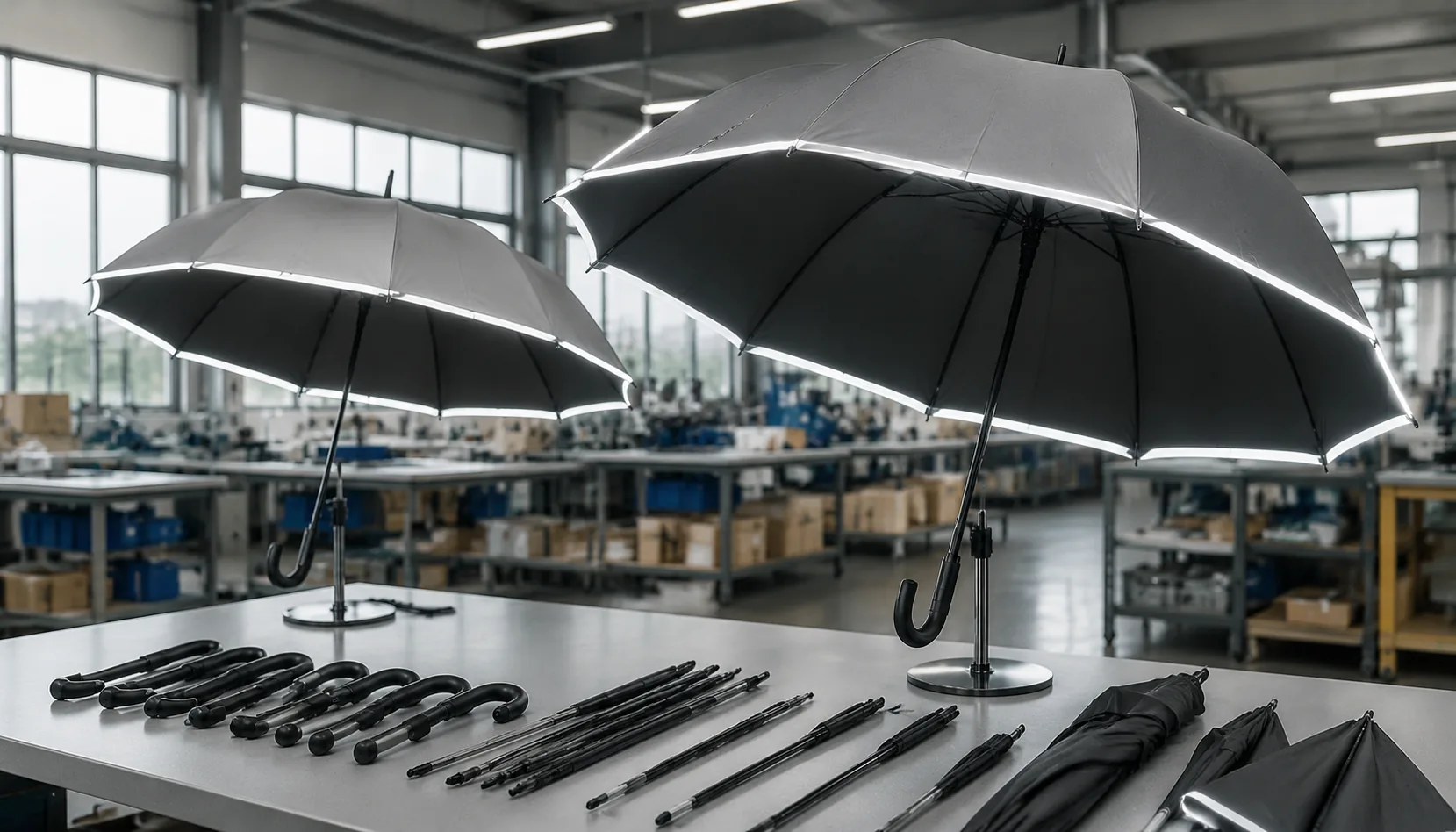
Reflective Safety Umbrellas for Corporate and Campus Programs
Specify reflective safety umbrellas with strip placement, canopy fabric, rib materials, print methods, and inspection ch...
Read More »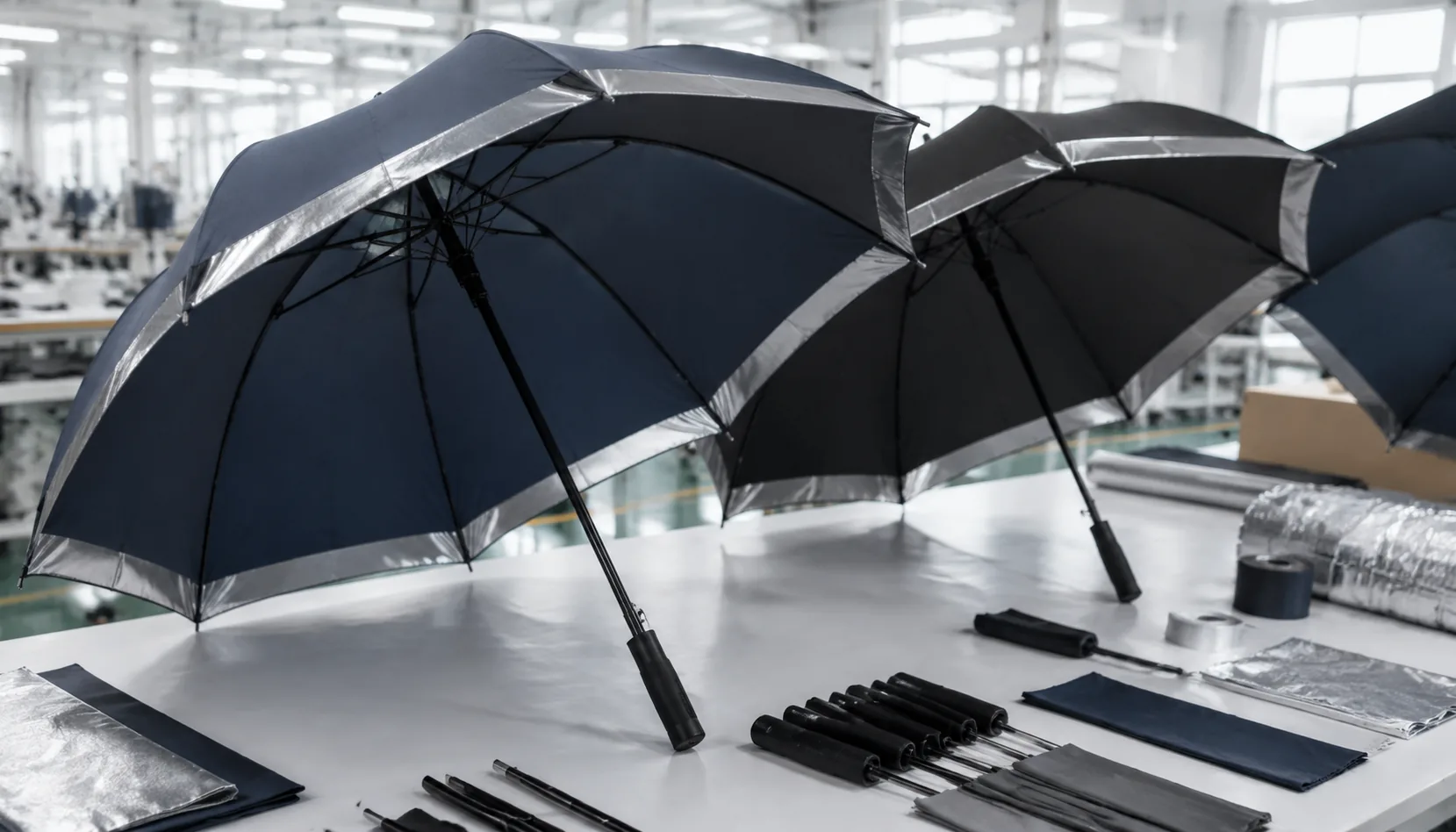
Reflective Safety Umbrellas for Corporate and Event Programs
Specify reflective umbrellas for safety campaigns with the right fabric, rib strength, print areas, visibility details, ...
Read More »