Umbrella Branding Methods That Hold Up in Retail Use
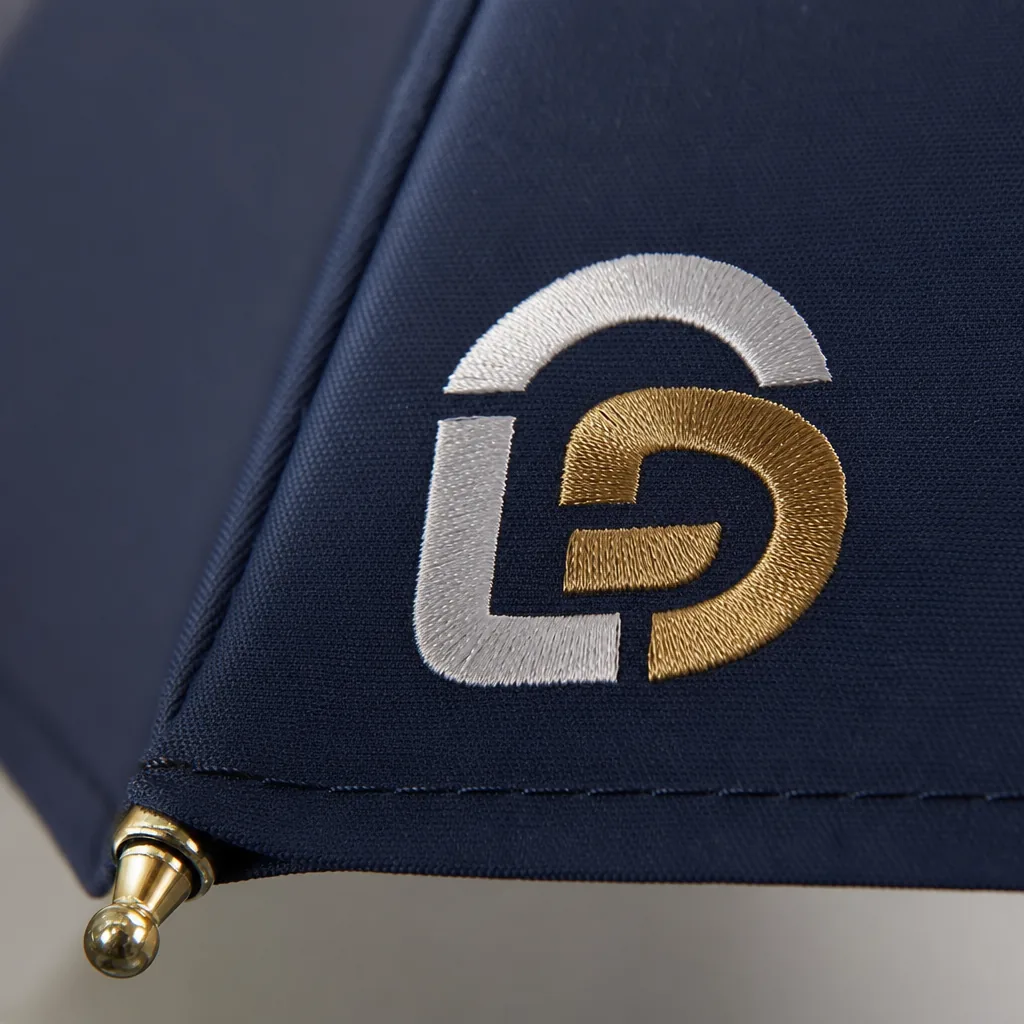
Retail umbrellas get handled, folded, opened, and carried every day, so branding has to survive more than a photo shoot. The right umbrella branding methods depend on fabric coating, seam stress, abrasion from packing and display, and where the logo sits on the canopy, strap, or sleeve. From the factory floor, the difference between a mark that stays crisp and one that wears off is usually in material choice, ink curing, and placement discipline.
Logo Placement Surfaces on an Umbrella
Canopy panels are the main real estate for umbrella branding methods, and the choice of panel matters more than most buyers expect. A full panel print on 190T or 210T pongee gives the cleanest logo read for retail shelves, while edge panels are better when you want a narrower, more restrained mark that does not fight the canopy color. For high-visibility promotional use, the center panel on a 23" or 27" umbrella gives the biggest imprint area and the strongest distance visibility; for subtle retail branding, a small repeat mark on one or two panels is usually enough. On our production floor, the print method has to match the fabric and the intended wash of color, because screen print umbrellas hold solid spot colors differently than transfer print umbrellas, especially on darker or water-repellent surfaces.
Sleeves and straps are where brands usually overreach or underuse the space. A printed sleeve gives you retail packaging branding that customers see before they ever open the umbrella, which is useful for gift sets, boutique displays, and premium resale channels; the strap is better for a small woven label, short wordmark, or website address when the buyer wants the umbrella itself to stay clean. Handles and ferrules are narrower surfaces, so they work best for understated marks, laser branding on wood or molded plastic, or a small tone-on-tone logo that does not wear off quickly. If custom umbrella logo durability is the priority, I would rather move the brand to the sleeve or a protected panel than force a large print onto a high-flex area that gets rubbed every time the umbrella is opened and closed.
Ferrule, handle base, and sleeve all support different retail use cases, and that is where the practical side of umbrella branding methods shows up. Ferrule marking is usually the most limited, but it can carry a tiny logo or SKU code for premium retail sets, while the handle is better for brand recall because it stays visible in a bag or on a hook. For promotional giveaways, larger canopy graphics win because the logo has to read from across a room; for retail brands, controlled placement on one panel, the sleeve, or the strap looks more expensive and usually survives handling better. My rule is simple: use the canopy when you need distance visibility, and use the accessory parts when you need the umbrella to look like a retail product instead of a walking billboard.
Print Methods and Durability Tradeoffs
Screen print is still the lowest-cost option when you need volume, but it has the most obvious durability ceiling on umbrella branding methods. On 190T pongee, a properly cured plastisol or water-based ink can survive normal retail handling, but the print edge is only as sharp as the mesh and stencil registration, so fine type and thin strokes tend to soften. On 210T pongee, the tighter weave gives a cleaner surface and less ink sink, which helps custom umbrella logo durability, yet the same heavier hand-feel can make thick deposits look slightly raised and more visible when the canopy folds. It is a practical choice for simple 1-2 color logos, especially when MOQ is high and setup cost matters more than photographic detail.
Heat transfer sits in the middle: higher setup cost than screen print umbrellas for small runs, but better edge sharpness and easier gradients, small text, and multi-color artwork. The adhesive film bonds well to 210T pongee because the tighter weave gives more consistent pressure contact; on 190T, the slightly looser structure can show tiny bite marks or haloing if heat and dwell time are too aggressive. Wash resistance is usually better than a cheap direct print, but you still have to manage folding wear at the panel seams and rib tips, because repeated creasing is what lifts the edge first. For retail packaging branding, transfer print umbrellas are often the safer choice when the buyer wants a cleaner shelf look without paying for full-wrap sublimation.
Sublimation wrap gives the best image quality and the softest hand, but it only makes sense on light-colored polyester canopies and it is the most process-sensitive of the three. Because the dye actually migrates into the fabric surface, edge sharpness is excellent and wash resistance is strong; the weak point is not the print film, it is the substrate, so dark fabric, PVC, or POE do not work the same way. On 210T pongee, the denser weave usually holds saturated color more evenly and gives a more retail-ready finish, while 190T can look slightly more matte and less uniform on large coverage areas. If the artwork needs full-panel graphics, sublimation wrap beats the other umbrella branding methods, but for a simple logo with low setup cost, screen or transfer is usually the more rational buy.
Color Matching and Artwork Constraints
Pantone matching is the first thing I look at when a buyer wants umbrella branding methods that survive real retail handling, because color drift shows up faster on a curved canopy than on a flat T-shirt. On pongee 190T and 210T, we can usually hold a solid spot color close to the approved swatch, but the result still depends on ink system, fabric white point, and cure temperature. Screen print umbrellas are the most predictable for sharp logos and block colors; transfer print umbrellas give more flexibility on short runs, but the adhesive layer can slightly mute very bright tones. If a brand cares about custom umbrella logo durability, it should approve the artwork on the exact canopy base color, not just on a PDF monitor proof.
Minimum line thickness matters because umbrella panels are narrow, sewn, and constantly flexing. As a practical floor, fine positive lines below about 0.3 mm start to disappear on curved seams, and small reversed text needs even more margin; that is especially true on 21" and 23" travel umbrellas where the print area is limited. Seam breaks are not a design flaw, they are a construction reality: panel artwork should be planned so key letters, faces, or logo marks do not get split across stitching lines unless the brand accepts a broken look. For retail packaging branding, I always tell buyers to keep the carton and hangtag graphics consistent with the canopy art, because mismatched Pantone shades between the package and the umbrella look sloppy on shelf.
Brands should avoid gradients, thin serif text, and full-coverage graphics when the umbrella will be sold in chain retail or used for giveaways that get opened and closed daily. Gradients often band on textile print, and on dark canopies they can flatten into a muddy edge once the fabric bends in wind. Thin text is especially risky on auto-open-close models, where repeated shaft movement and panel tension expose weak edges first. Full-coverage graphics can work on large 27" or 30" umbrellas, but only if the layout respects seam placement and the print method; otherwise the artwork looks busy, registration is hard to hold, and custom umbrella logo durability drops after a few months of abrasion in bags and car trunks.
Factory Controls That Protect Brand Quality
The only umbrella branding methods that survive real retail handling are the ones locked down before bulk sewing starts. We do not treat sample approval as paperwork; it is the control point for logo position, color density, and panel-to-panel consistency. Our standard practice is to approve the canopy fabric, print location, and placement tolerance first, then run pre-production strike-offs on the same material and ink system so the buyer can see how the mark behaves on a curved panel. That matters more on screen print umbrellas and transfer print umbrellas, because both can look fine on a flat proof and still drift once the fabric is stitched and tensioned.
Custom umbrella logo durability depends on the frame holding the canopy in a stable shape. If rib alignment is off even a few millimeters, the logo will warp near the seams; if canopy tension is uneven, the print can wrinkle after the first open-and-close cycle. We check panel cutting, sewing accuracy, and center-to-panel registration before mass output, because those three points decide whether the logo stays readable on 21-inch compact styles and larger 23-inch or 27-inch retail umbrellas. A logo that is technically printed but visually distorted is a rejection, not an acceptable variation.
In-line inspection at AQL 2.5 is where weak branding work gets caught before it becomes chargebacks. We check print adhesion, edge sharpness, seam skipping, and panel symmetry during production, not after packing, because retail packaging branding cannot rescue a bad canopy. If the logo shifts, smears, or lands too close to a rib pocket, the problem usually traces back to missed tension control or a sewing drift of one panel width. Buyers comparing umbrella branding methods should insist on this kind of process control, because the print method matters less than whether the factory can hold registration and repeat it across the lot.
Choosing Branding for Channel and Budget
For giveaways, the cheapest umbrella branding methods are usually one-color screen print umbrellas on a simple polyester or pongee canopy, because the setup is fast and the print area is predictable. If the buyer only needs a logo on 500 to 1,000 pieces, that route usually beats transfer print umbrellas on unit cost, but it is not the best choice when the art has fine gradients or small text. For corporate gifts, I usually push buyers toward slightly better fabric, a cleaner 21" or 23" auto-open frame, and a print position that stays visible when the umbrella is closed, because the product is handled less roughly but still has to look presentable in an office or event bag. The key point is that custom umbrella logo durability depends as much on ink system and curing as on the umbrella itself; a weak screen on slick pongee will fail faster than a well-prepped transfer on the same canopy.
Retail-ready SKUs are a different business. Once the umbrella has to sit on a shelf with hangtags, barcode labels, and printed cartons, retail packaging branding starts to matter as much as the logo on the canopy, because the box is part of the sale. That pushes MOQs higher: a plain giveaway order may work at 500 pieces, but retail packaging usually needs 1,000 to 3,000 pieces to justify carton printing, insertion cards, and color-controlled packing. In practice, transfer print umbrellas make more sense when the retailer wants sharper graphics, while screen print umbrellas still win when the design is bold and the SKU count is tight. The landed-cost mistake I see most often is ignoring packaging weight and volume; a sleeve, insert card, and master carton can change freight enough to erase the savings from a cheaper print method.
For forecasting branded landed cost, FOB is cleaner when the buyer already has freight control, a stable forwarder, and enough experience to price import duty, local handling, and delivery separately. DDP is easier when the shipment mixes branded umbrellas, retail cartons, and multiple drop locations, because the supplier bundles ocean or air freight, customs clearance, and last-mile delivery into one number. ZheBrella’s standard practice is to quote both when the order has retail packaging branding, since the gap between FOB and DDP can be surprisingly large once cartons get denser or the destination has higher clearance fees. If the project is a seasonal retail program, I would forecast on DDP for the first run, then switch to FOB only after the packout, carton count, and actual freight cube are proven in production.
Frequently Asked Questions
Which logo method lasts longest on custom umbrellas?
Screen print often gives strong durability on simple logos, while sublimation is better for full-panel graphics on the right fabric. The best choice depends on use frequency, exposure, and artwork complexity.
Can a brand print across umbrella seams?
Yes, but seams interrupt artwork and can distort fine detail. For best results, keep critical text and logos away from stitch lines or use a layout designed around the panel pattern.
Which umbrella logo area usually wears out first in retail handling?
Canopy edge panels and printed sleeves usually show wear first because they rub against cartons, shelf surfaces, and shoppers' hands. If the product will be handled frequently before sale, buyers often choose a larger logo on the main canopy panel and keep sleeve artwork to simple one-color branding.
When should a buyer choose transfer printing instead of screen printing for umbrella orders?
Transfer printing is usually the better option when the artwork has gradients, fine lines, or multiple colors that would be inefficient to separate for screen printing. For many OEM orders, it is also practical on mixed-color assortments where visual accuracy matters more than the lowest unit print cost.
What packaging details help protect umbrella branding during retail distribution?
Individually bagged umbrellas, tighter master carton dividers, and logo placement away from fold friction points reduce scuffing during transit. For retail programs, buyers commonly request hangtags, barcode stickers, and 5-layer export cartons to keep both canopy prints and packaging graphics presentable through delivery and store stocking.
Looking to Launch Your Custom Umbrella Line?
ZheBrella is a Zhejiang-based OEM/ODM umbrella manufacturer with 17 years of export experience. Free design, low MOQ from 100 pieces, windproof construction, full-color print.
Get Free Quote Now »People Also Search For
Related Articles
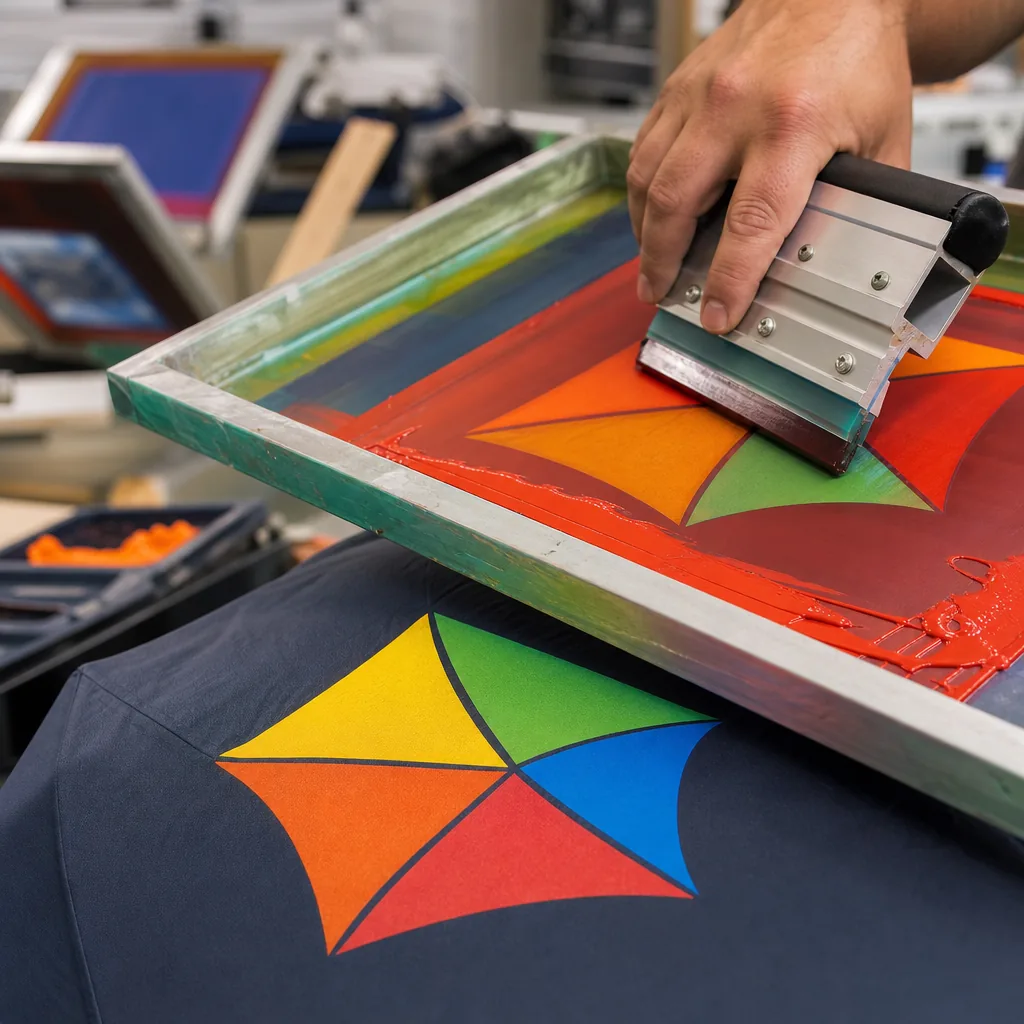
Screen Print, Digital Print, or Heat Transfer for Umbrella Branding
Compare umbrella logo printing methods by cost, MOQ, color range, and fabric compatibility so buyers can choose the righ...
Read More »
Custom Umbrella Branding Areas Beyond the Canopy Print
Explore high-value umbrella branding zones, from handles and sleeves to tags and packaging, with practical guidance for ...
Read More »Screen Printing, Digital Printing, or Transfer for Umbrella Logos
Compare logo print methods for umbrellas by MOQ, color count, durability, and lead time so buyers choose the right brand...
Read More »