Umbrella Canopy Cutting Tolerances for OEM Production
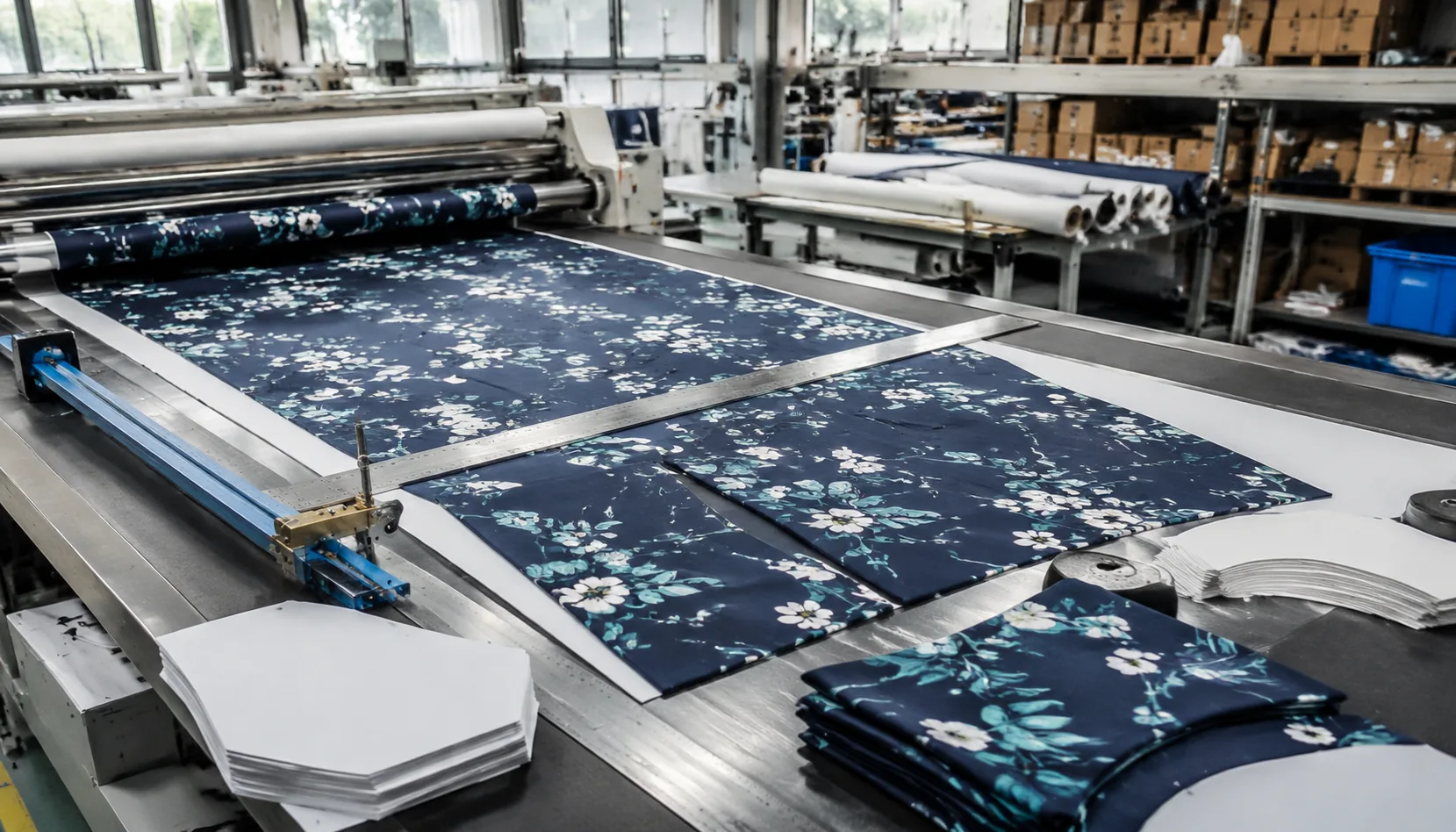
When an OEM umbrella order looks fine on the sample table but starts twisting, puckering, or pulling short in bulk sewing, the issue often began at the cutting bed. A practical umbrella canopy cutting tolerance has to account for pongee stretch, panel grain direction, knife heat, stack height, and the sewing allowance your operators actually hold at speed. On our Songxia factory floor, controlling those details is what keeps 190T and 210T canopies fitting cleanly frame after frame.
How Canopy Cutting Affects Final Umbrella Fit
Over-tension is just as damaging as loose fabric. If panels are cut too small, the canopy may look clean on the inspection table but punish the frame during repeated open-close testing. Steel ribs can take some abuse but may deform at the tip pocket; fiberglass ribs spring back better but will expose bad pattern balance by lifting one seam higher than the others. On auto-open and auto-open-close models, tight canopies also slow runner travel and increase failure risk at the notch, runner, and stretchers. Our standard practice at ZheBrella is to approve cutting only after checking the pattern against the actual 8K, 10K, or 16K rib arc, then confirming finished samples through 20 to 30 open-close cycles before bulk cutting. A realistic umbrella canopy cutting tolerance keeps sewing predictable, reduces rework, and makes AQL 2.5 final inspection much less painful.
Fabric Roll Preparation and Shrinkage Control
Shrinkage control starts before a marker touches the table, because 190T/210T pongee and common polyester behave differently after being wound tight, coated, shipped, and stored. For OEM umbrella production, I want fabric rolls opened and relaxed at least 12 to 24 hours in the cutting room, longer in winter or after sea freight when humidity swings are obvious. Do not pull fabric straight from a compressed roll onto the spreading table and call the umbrella canopy cutting tolerance stable; that is how panels grow or twist after sewing. A practical check is to cut a 50 cm x 50 cm sample from each lot, steam or condition it according to the buyer’s requirement, then measure warp and weft shrinkage. For normal pongee canopy manufacturing, 1% to 2% movement may be workable if the cutting marker and umbrella sewing allowance are adjusted, but uneven shrinkage across panels will show up as puckered seams and off-center tips.
Every roll should be inspected before umbrella panel cutting, not after the first 2,000 panels are already bundled. Check roll width, usable edge loss, coating defects, oil marks, pinholes, weaving bars, shade variation, and fabric tension marks. Color lots must be separated by roll label and physical shade, especially for navy, black, red, and PMS-matched promotional umbrellas where one canopy may use 8 triangular panels from different rolls if the cutting room is careless. Our standard practice at ZheBrella is to tag each spread with material code, color lot, roll number, operator, date, and panel size, then keep first-piece panels for comparison during sewing. This is boring paperwork, but it prevents a 23 inch auto-open umbrella from having four panels that look slightly warmer under daylight and four that look cooler under LED inspection.
Coated UPF 50+ and DWR fabrics need strict face-side orientation because the performance layer is not always visually obvious after spreading. Some silver UV, black-out, Teflon-style water-repellent, and PU-coated pongee fabrics have different friction, gloss, and water-shedding behavior on each side. If one panel is flipped during cutting or bundling, the umbrella may pass a quick size check but fail rain beading, UV claim consistency, or retail appearance. Mark the face side on every roll end, use one-way spreading for directional coatings, and avoid face-to-face mixing unless the fabric supplier confirms it is reversible. The umbrella canopy cutting tolerance should include this process discipline, not just a drawing note saying plus or minus 1 mm. For premium OEM programs, I prefer a pre-cut trial of 16 to 32 panels, sewn into a sample canopy, then checked for seam balance, rib-tip alignment, and finished arc before bulk cutting begins.
Die Cutting vs CNC Cutting for Bulk Orders
The practical decision is not “which technology is newer,” but how fixed the pattern is and how much risk the buyer accepts before bulk production. If the umbrella sewing allowance is only 7 to 10 mm and the finished canopy must sit cleanly on fiberglass ribs without pulling at the tips, a wandering cut of even 2 mm can show up as twisting, uneven scallops, or poor rib pocket alignment after sewing. Our standard practice at ZheBrella is to use CNC for first samples, size grading, and small ODM batches, then move confirmed patterns to die cutting once the purchase order reaches a sensible MOQ, usually around 1,000 to 3,000 pieces per color or style. For repeat retail or promotional programs, die cutting gives better cost control and fewer surprises during AQL 2.5 inspection. For fragmented event orders with multiple prints and sizes, CNC keeps development flexible and avoids tooling that may never be reused.
Sewing Allowances, Notches, and Panel Matching
Seam allowance is where umbrella panel cutting becomes either stable or expensive. For most 190T/210T pongee canopy manufacturing, I set the umbrella sewing allowance at 8–10 mm on straight seams and keep tolerance within ±1 mm; cheaper rain umbrellas with PVC or POE may accept 10–12 mm because the material creeps less under the presser foot, but sublimated pongee needs tighter control. If the cutter gives one panel 7 mm and the next 11 mm, the sewing operator can still close the seam, but the finished arc changes and the rib tips will not land evenly. In OEM umbrella production, that shows up as one corner pulling tight while the opposite corner sags, especially on 8K and 10K frames. A practical shop-floor check is to stack eight cut panels, align the center top and hem edge, then measure diagonal drift at the rib-tip point; more than 2 mm spread usually becomes visible after binding tape is sewn.
Center notches should be small, consistent, and useful, not decorative scratches made after cutting. We normally mark a 2–3 mm notch at the crown side of each panel, plus a secondary reference notch near the rib-tip curve when the canopy has a border print or alternating colors. The umbrella canopy cutting tolerance must include notch position, because a perfect panel with a misplaced notch still guides the sewing operator into a bad seam. For logo work, I check print-to-seam distance before bulk cutting: on a 23 inch straight umbrella, a chest-position logo usually needs 25–35 mm clearance from the nearest seam after sewing, while a full-panel heat-transfer design needs at least 8–10 mm bleed beyond the stitch line. If a client sends artwork too close to the seam, the finished logo may look tilted even when the frame is square.
Panel numbering prevents shade mismatch, which is a real issue with dyed pongee rolls, UV UPF 50+ coated fabric, and digitally printed panels cured in different batches. Our standard practice at ZheBrella is to number panels by roll, lay direction, and cutting layer, then keep each canopy set bundled through sewing, inspection, and final frame assembly. This matters most on solid navy, black, burgundy, and corporate PMS colors, where a half-grade shade change between adjacent panels is obvious under warehouse lighting. During in-line inspection, the operator should confirm panel sequence, logo orientation, notch alignment, and rib-tip symmetry before the cap is fixed. For AQL 2.5 final inspection, I measure at least three positions: crown-to-tip length, seam-to-logo distance, and left/right rib-tip extension. If the umbrella canopy cutting tolerance is controlled but panel matching is ignored, the buyer still receives canopies that look patched together instead of OEM-consistent.
Inline Checks Before Frame Assembly
The last useful place to catch canopy cutting errors is before the canopy is tied onto fiberglass or steel ribs; after that, every correction becomes slow and ugly. For OEM umbrella production, our inline QC table checks panel size against the approved pattern card, usually with a ±1.5 mm working tolerance on each cut panel for 190T/210T pongee and tighter control on printed border designs. Seam width is measured after joining, not guessed from the operator’s fold: a typical umbrella sewing allowance is 6–8 mm, but it must be consistent around all 8K, 10K, or 16K panels or the canopy will twist when stretched on the frame. This is where umbrella canopy cutting tolerance becomes visible in real production, because one oversized panel can pull the top notch off center while one undersized panel creates tension wrinkles near the rib tip. For vented double-canopy windproof styles, both upper and lower layers are checked separately before the vent overlap is sewn closed.
Apex hole position is treated as a functional dimension, not a cosmetic detail. On a 23-inch straight umbrella or 21-inch folding umbrella, the center hole must align with the runner shaft and top cap without forcing the fabric; we normally allow about ±2 mm from the true center, then reject panels that create a leaning ferrule or uneven crown. Umbrella panel cutting also has to respect fabric face direction: Teflon-coated, UV UPF 50+, or other water-repellent finishes must face outward, and the dull/back side cannot be mixed into one canopy just because the color looks close under factory lighting. Before frame assembly, inspectors flip random sewn canopies under a light box and spray-check suspect lots, especially in pongee canopy manufacturing where face/back differences can be subtle. Final shipment may follow AQL 2.5, but critical logo placement, registered heat-transfer marks, and sublimated panel orientation are checked 100% when the buyer’s artwork requires it; ZheBrella’s standard practice is to isolate those canopies before rib mounting so rework does not damage the frame.
Frequently Asked Questions
What cutting tolerance should buyers specify for umbrella canopy panels?
For most OEM rain umbrellas, +/-1-2 mm per panel edge is practical, but oversized golf umbrellas may need a separate tolerance table. The approved pre-production sample should define the final panel pattern.
Does 210T pongee require different cutting control than 190T pongee?
Yes. 210T pongee is denser and can show tension imbalance more clearly after sewing, so fabric relaxation, grain direction, and consistent seam allowance are especially important.
What cutting tolerance is typical for 190T and 210T pongee umbrella panels?
For bulk OEM production, many factories target about ±2 mm to ±3 mm per panel edge, then verify the assembled canopy diameter after sewing. The tighter the panel count and rib structure, the more important it is to control cumulative error across all panels.
How much sewing allowance should be left on umbrella canopy panels?
A common sewing allowance is 6 mm to 10 mm, depending on fabric thickness, seam type, and whether the canopy uses top-stitching or edge folding. Wider allowances help absorb minor cutting variation, but too much allowance can change the finished canopy shape.
Why does fabric grain direction matter in umbrella canopy cutting?
Pongee can stretch differently on the warp and weft, so grain misalignment can cause panel twist, uneven tension, or a loose finished canopy. Most OEM factories control grain within a few degrees and cut all panels in a consistent direction to keep the umbrella opening clean.
Looking to Launch Your Custom Umbrella Line?
ZheBrella is a Zhejiang-based OEM/ODM umbrella manufacturer with 17 years of export experience. Free design, low MOQ from 100 pieces, windproof construction, full-color print.
Get Free Quote Now »People Also Search For
Related Articles
Canopy Panel Cutting Tolerances for Custom Umbrellas
Learn how panel cutting tolerances, fabric direction, and batch control improve canopy fit, seam alignment, and print pl...
Read More »
Umbrella Panel Cutting Tolerances for OEM Canopy Fit
Learn how CAD markers, die cutting, and 190T/210T pongee tolerances control canopy tension, seam alignment, and rework i...
Read More »
Umbrella Canopy Cutting Tolerances for Clean Panel Alignment
Learn how die cutting, fabric relaxation, notch control, and panel matching keep 190T/210T pongee canopies symmetrical b...
Read More »