Umbrella Canopy Cutting Tolerances for Clean Panel Alignment
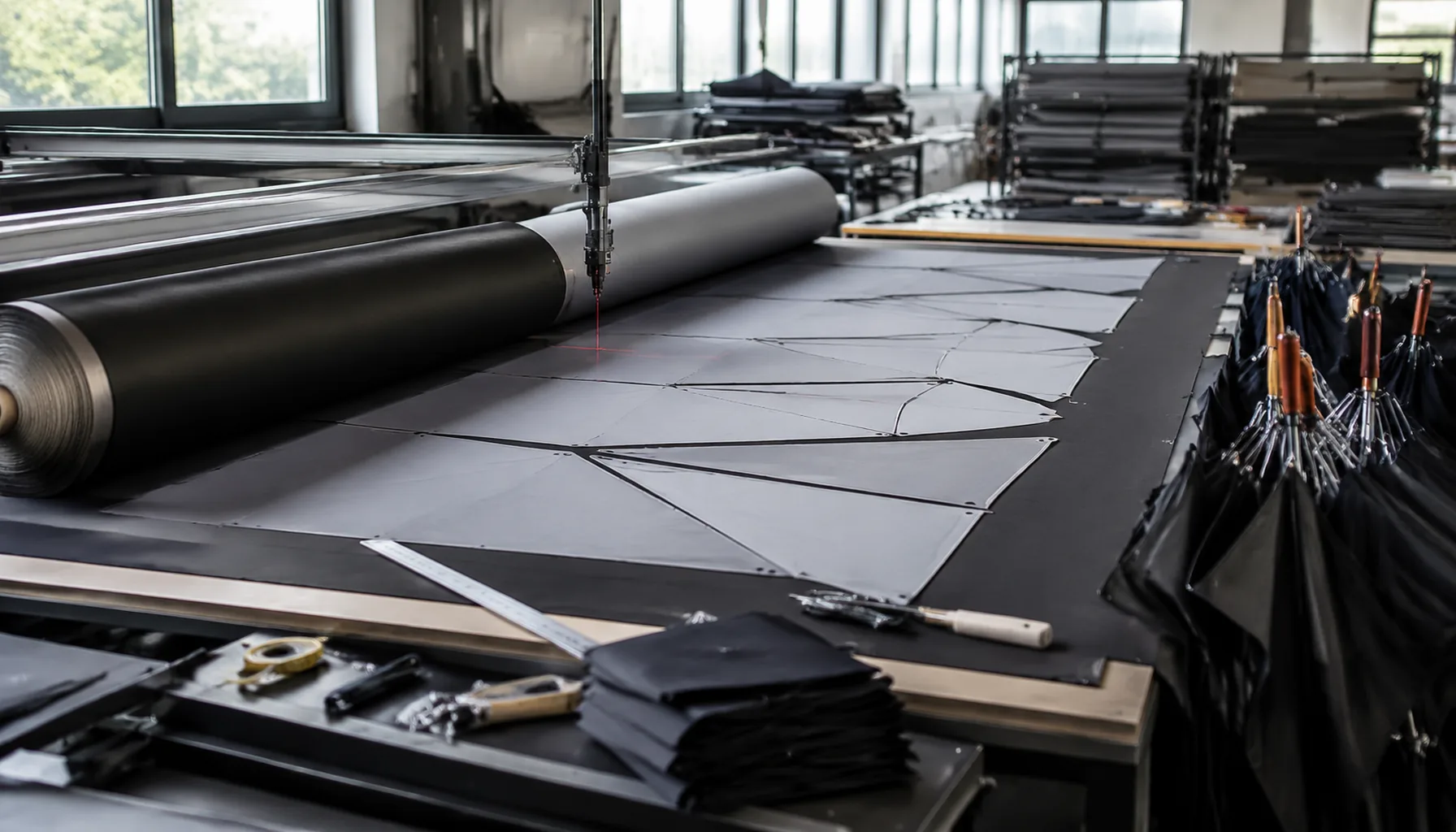
Clean panel alignment is decided before a sewing operator touches the canopy; it starts with how the fabric is relaxed, layered, marked, and cut. On our Songxia cutting floor, umbrella canopy cutting tolerances are controlled around die pressure, notch depth, ply height, and 190T/210T pongee movement so each panel set opens symmetrically and passes PP approval without forced matching at assembly.
Why Cutting Accuracy Comes Before Sewing Quality
Cutting accuracy decides canopy symmetry before a sewing operator touches the fabric. On an 8K or 10K umbrella, each triangular panel must match the approved pattern in panel length, outer arc, seam allowance, and notch position; a 2 mm error at the rib tip can become a visible 8–12 mm mismatch around the canopy perimeter after all panels are joined. In umbrella panel cutting, the most critical dimensions are the center-to-edge length, the curved hem arc, the rib-pocket notch, and the top cap hole location. For 190T or 210T pongee canopy manufacturing, our standard tolerance is usually ±1.5 mm on straight panel length and ±1 mm on notches for retail-grade OEM umbrella production, tighter when the design has border printing or a centered logo across multiple panels.
Buyers often blame sewing when the real problem started at the cutting table. If one panel’s arc is flatter than the next, the canopy creates uneven valleys between ribs, especially on 23-inch and 27-inch stick umbrellas where the surface area exposes small geometry errors. If the top notch or cap hole is off by even 2–3 mm, the crown pulls sideways and the top cap looks off-center after final assembly. Twisted logos are another cutting-related defect: even with good screen printing or sublimation registration, a panel cut slightly rotated from the fabric grain or print axis will make the logo lean once stitched. On dark 210T pongee this may pass casual inspection, but on white promotional umbrellas with big event logos it is immediately visible in buyer photos.
Clean sewing can only preserve accurate parts; it cannot correct bad geometry. During umbrella PP sample approval, I always check whether the sewn canopy sits naturally on the frame before judging stitch tension, because puckering can come from panels fighting each other rather than from poor thread control. For mass production, umbrella canopy cutting tolerances should be locked from the approved sample pattern, not adjusted casually by cutting-room staff trying to save fabric yield. In practical AQL 2.5 inspection, we look for consistent rib alignment, equal drip points, smooth hem circumference, and centered top caps after mounting on steel or fiberglass frames. If those items are wrong, reworking the sewing line will waste time; the pattern, cutting die, fabric spreading tension, or notch punching process needs correction first.
Fabric Behavior: 190T vs 210T Pongee and Coated Cloth
The first mistake buyers make is treating 190T and 210T pongee as the same cloth with different hand feel. On the cutting table they behave differently. 190T pongee is looser and more forgiving, so it relaxes faster after unwinding, but it also shifts more under a straight knife if the stack is too high. 210T pongee has a tighter weave and cleaner edge, which helps umbrella panel cutting accuracy, but roll tension from dyeing and finishing can hold hidden stretch for several hours. In our factory practice, we normally let pongee rolls relax at least 12 hours before bulk cutting, especially for 23 inch and 27 inch canopies where a 2 mm error per panel becomes visible at the crown seam. For clean alignment, umbrella canopy cutting tolerances should be checked after relaxation, not only against the marker paper when the fabric is still tight from the roll.
Plain polyester, RPET pongee, and recycled polyester blends add another layer of control because yarn memory is less predictable from lot to lot. RPET fabric can cut cleanly, but I want pre-production shrinkage and skew data before approving a bulk marker, particularly for OEM umbrella production with logo panels that must meet at rib tips. AQL 2.5 inspection will catch obvious twisted canopies, but it is too late if the cutting room has already produced 20,000 panels with directional skew. Coated cloth behaves even less forgivingly. Teflon, PU, black glue, silver coating, and UPF 50+ layers can create a face-side drag difference, so coating direction must stay consistent from roll spreading through sewing. If half the panels are cut face-up and half face-down, the canopy may still measure within spec flat on the table but pull unevenly after stitching and rib attachment.
For pongee canopy manufacturing, the practical tolerance is not just the die or template size; it is the whole handling chain. Roll tension, humidity, stack height, blade sharpness, notch depth, and operator pulling force all change the final panel. A dull knife can heat-seal coated polyester slightly and shrink the edge; excessive clamping can stretch 190T along the bias; careless bundling can distort long panels before sewing. On a normal 8K umbrella, I prefer panel length and arc checks at cutting, sewing, and finished canopy stages, with special attention to crown matching and tips. During umbrella PP sample approval, we lock the approved fabric lot, cutting direction, panel tolerance, seam allowance, and finished canopy diameter together. If a buyer approves only the printed artwork and ignores cloth behavior, bulk production may show wavy seams, off-center logos, or rib-end mismatch even when the pattern file was technically correct.
Cutting Methods: Hand Knife, Die, and CNC Tables
CNC cutting tables are the right choice for large retail programs, complicated all-over prints, sublimation panels, reflective trims, or mixed SKUs where tolerance and traceability matter more than the lowest cutting cost. A vacuum table with digital nesting can hold panel variation tighter across thousands of pieces, and it avoids the cumulative mismatch that shows up on double-canopy vented windproof umbrellas or 16K fashion models. Our standard practice at ZheBrella is to use CNC or die cutting for repeat retail orders where seam alignment, logo registration, and AQL 2.5 inspection results must stay consistent lot after lot. Hand cutting can still pass, but only with stricter bundle labeling, operator self-checks, and QC measurement of panel width, arc, notch position, and grain direction before sewing starts. For serious umbrella canopy cutting tolerances, the cutting room has to be treated as a quality-control station, not just a fabric-prep area.
Panel Matching for Printed and Solid Canopies
Clean panel matching starts before printing, with grain direction and shade lot control. In umbrella panel cutting, we align every triangular panel along the fabric grain so 190T or 210T pongee stretches the same way after sewing and wet testing. If one panel is cut off-grain, the canopy may look acceptable on the table but twist after the frame opens, especially on 16K umbrellas where small errors repeat 16 times around the crown. For solid canopies, shade lots matter more than many buyers expect: two rolls of navy 210T pongee from the same dye recipe can still show a visible ring if mixed randomly. Our standard practice at ZheBrella is to cut one canopy set from the same roll whenever possible, then mark bundles by color lot, rib count, and size. For 8K umbrellas, a 1.5–2.0 mm panel edge variance is usually manageable; for 16K, I prefer holding closer to 1.0–1.5 mm because the narrower panels expose misalignment faster.
Printed canopies need tighter control because pattern registration and logo positioning are judged by eye, not calipers. For repeat graphics, stripes, borders, or full-panel sublimation, umbrella canopy cutting tolerances must account for fabric shrinkage after heat transfer, usually 1–3% depending on pongee weight, ink load, and press temperature. A logo centered 20 mm above the lower hem on a 23" auto-open umbrella can move visually if the cutting die, sewing allowance, or rib-tip pocket is inconsistent. On OEM umbrella production orders, we lock the artwork only after umbrella PP sample approval, then compare bulk cutting against that approved sample rather than against the PDF alone. For 8K promotional umbrellas, panel-to-panel logo drift within 2 mm is normally acceptable; for retail 16K fashion umbrellas with continuous artwork, I push the cutting room to stay within 1 mm at the printed reference point and reject panels where the pattern breaks at the seam.
Double-canopy windproof umbrellas add another layer of tolerance work because the upper vent canopy and lower main canopy are not the same pattern. The upper canopy usually has shorter panel depth, different seam allowance, and intentional vent overlap, so checking only the finished outside appearance is too late. During pongee canopy manufacturing, we measure upper and lower panels separately, then test them together on the same 8K, 10K, or 16K frame to confirm the vent opens evenly and does not expose uneven gaps. If the lower canopy is oversized by even 2–3 mm per panel, the top cap can pull off-center; if the upper canopy is too tight, the wind vent becomes cosmetic instead of functional. For windproof umbrellas rated around 50+ mph in tunnel testing, panel symmetry affects performance as much as fiberglass ribs or a double-canopy design. AQL 2.5 inspection should include seam matching, logo height, shade consistency, and vent overlap, not just broken stitches or loose tips.
QC Records Buyers Should Request
Buyers should ask for the cutting inspection sheet before bulk sewing starts, not after the umbrellas are packed. For clean panel alignment, the sheet should show fabric roll number, color lot, marker number, cutting die or template code, panel quantity, and measured tolerance at the critical points: top notch, hem edge, rib seam line, and tip allowance. In umbrella panel cutting, a 2–3 mm drift can already create a twisted canopy on a 23" auto-open frame, and the problem becomes more visible on 8K and 10K panels with logo placement near the rib seams. For pongee canopy manufacturing, I like to see at least 5 panels checked per bundle and every new fabric roll rechecked, especially with 190T/210T pongee that has been Teflon-coated or UV-coated to UPF 50+, because coated fabric can slip differently under the cutting press. The record should also note whether panels were cut by hydraulic die, straight knife, or laser, because each process leaves different tolerance risks.
First-piece approval is the buyer’s strongest control point in OEM umbrella production. The factory should cut one full canopy set, sew it onto the approved frame, and compare it against the umbrella PP sample approval standard before releasing bulk cutting. That first-piece report should include photos from top view, inside view, rib seam view, and closed-roll view, because poor cutting often hides when the umbrella is open but appears immediately when the canopy is folded around the shaft. Our standard practice at ZheBrella is to attach bundle labels to each cut stack showing PO number, style, size, color, panel position, cutter, date, and quantity; without those labels, mixed left/right panels or mixed color lots are almost impossible to trace once sewing begins. Buyers should also require signed approval from cutting QC, sewing supervisor, and final QC so responsibility does not disappear between departments.
Final inspection should still include AQL 2.5 appearance checks, but do not rely on final AQL to catch umbrella canopy cutting tolerances that should have been controlled earlier. Inspectors should open the umbrella, check panel symmetry, logo centering, rib seam straightness, tip position, peak puckering, hem wave, and closed-roll neatness under normal light, then record defects as major if the canopy pulls off-center or the printed logo shifts across seams. Cutting rework is expensive because rejected panels cannot always be recut from the same dye lot; for custom 210T pongee or POE/PVC/EVA canopies, waiting for replacement fabric can add 3–10 days. If rework happens after umbrella PP sample approval, the buyer should ask whether the PP sample must be updated, because even a corrected cutting template can change logo position or canopy tension. Those days also push FOB vessel booking and DDP delivery schedules, especially before rainy-season orders when frame assembly and packing lines are already booked.
Frequently Asked Questions
What canopy cutting tolerance is realistic for OEM umbrellas?
Many factories control standard panels within a few millimeters, but the exact tolerance depends on umbrella size, fabric stretch, and cutting method. Printed panels and UPF-coated fabrics usually need tighter first-piece approval.
Does canopy cutting affect windproof performance?
Yes. If panels are uneven, canopy tension becomes unbalanced and can stress fiberglass ribs or double-canopy vents. Good cutting consistency helps the frame open smoothly and distribute wind load evenly.
What cutting tolerance is typically acceptable for pongee umbrella panels before sewing?
For 190T/210T pongee, many OEM factories control panel cutting within about ±1 mm to ±2 mm, depending on canopy size and fabric behavior. Tighter control is usually required for printed panels, color-block designs, or canopies with visible seam matching.
Why does fabric relaxation matter before cutting umbrella canopy panels?
Pongee fabric can shrink, skew, or rebound after being unrolled and layered. Allowing relaxation before die cutting helps reduce panel size variation and improves canopy symmetry during sewing and final PP sample approval.
Should importers check canopy alignment during PP sample approval?
Yes. Buyers should review seam alignment, panel matching, notch position, logo placement, and canopy tension on the PP sample before bulk production. Any tolerance limits should be confirmed in the approved sample and QC checklist.
Looking to Launch Your Custom Umbrella Line?
ZheBrella is a Zhejiang-based OEM/ODM umbrella manufacturer with 17 years of export experience. Free design, low MOQ from 100 pieces, windproof construction, full-color print.
Get Free Quote Now »People Also Search For
Related Articles
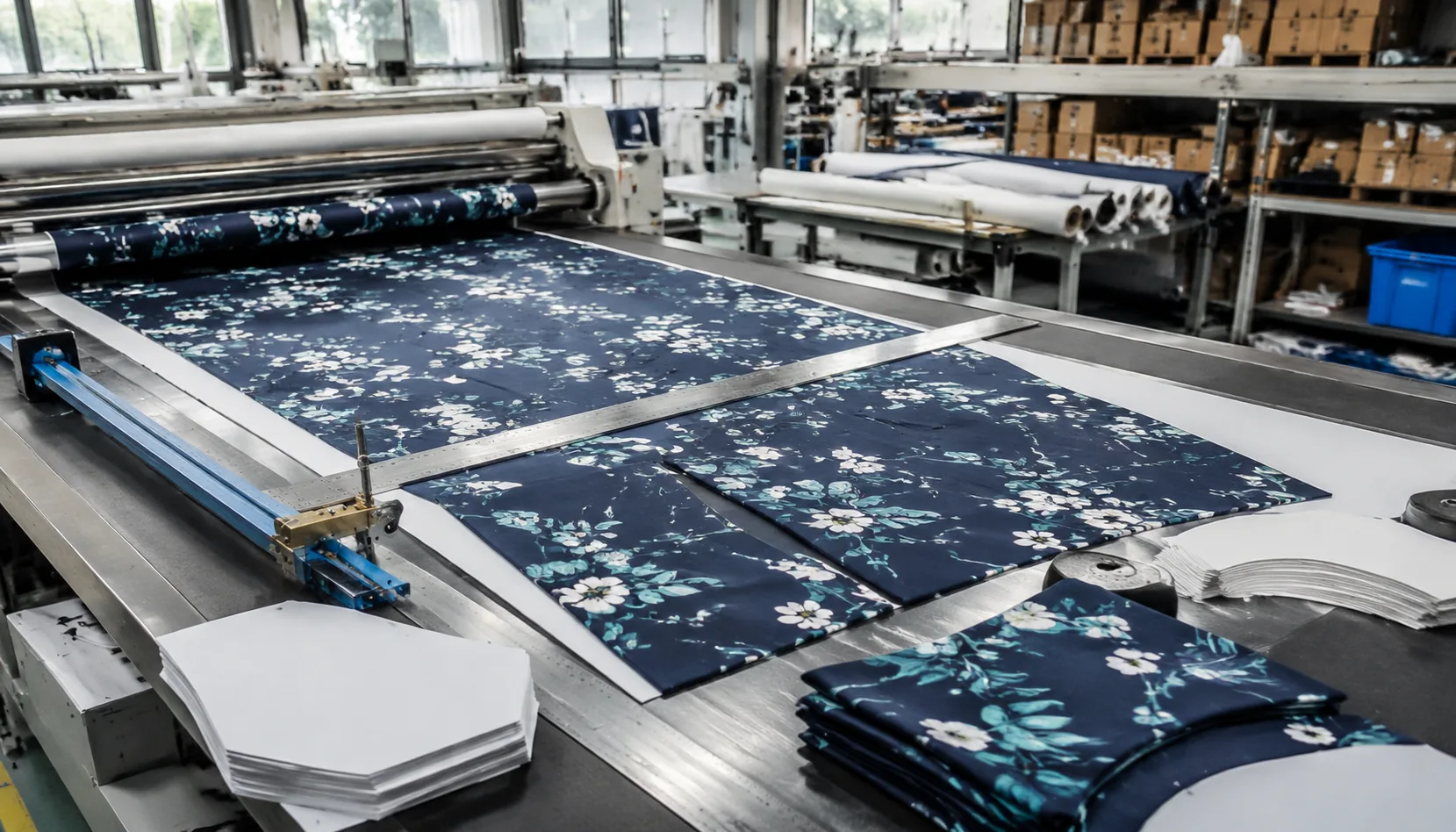
Umbrella Canopy Cutting Tolerances for OEM Production
Learn canopy cutting tolerances, panel grain control, and sewing allowances that keep 190T/210T pongee umbrellas fitting...
Read More »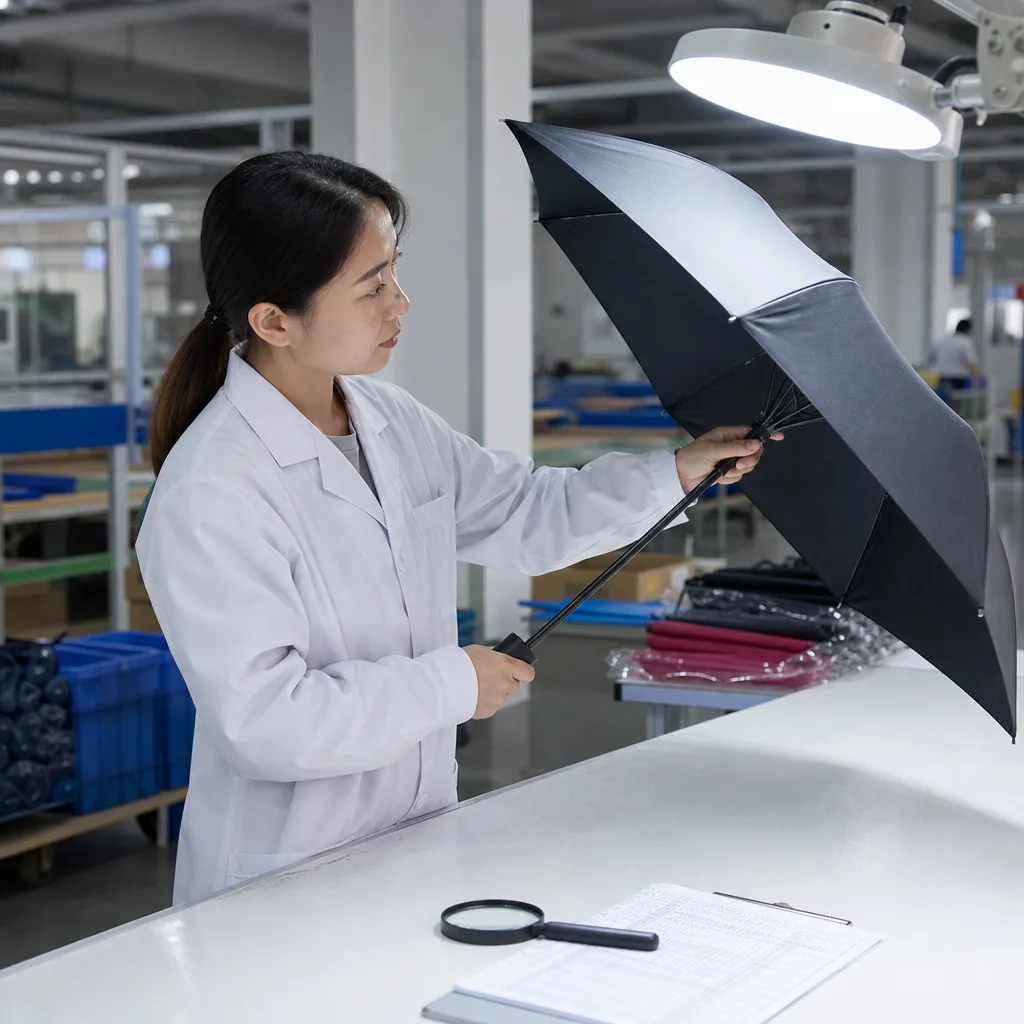
Umbrella Canopy Cutting Process for Accurate Bulk Orders
Understand how fabric spreading, panel cutting, and shade control keep 190T and 210T pongee canopies accurate across bul...
Read More »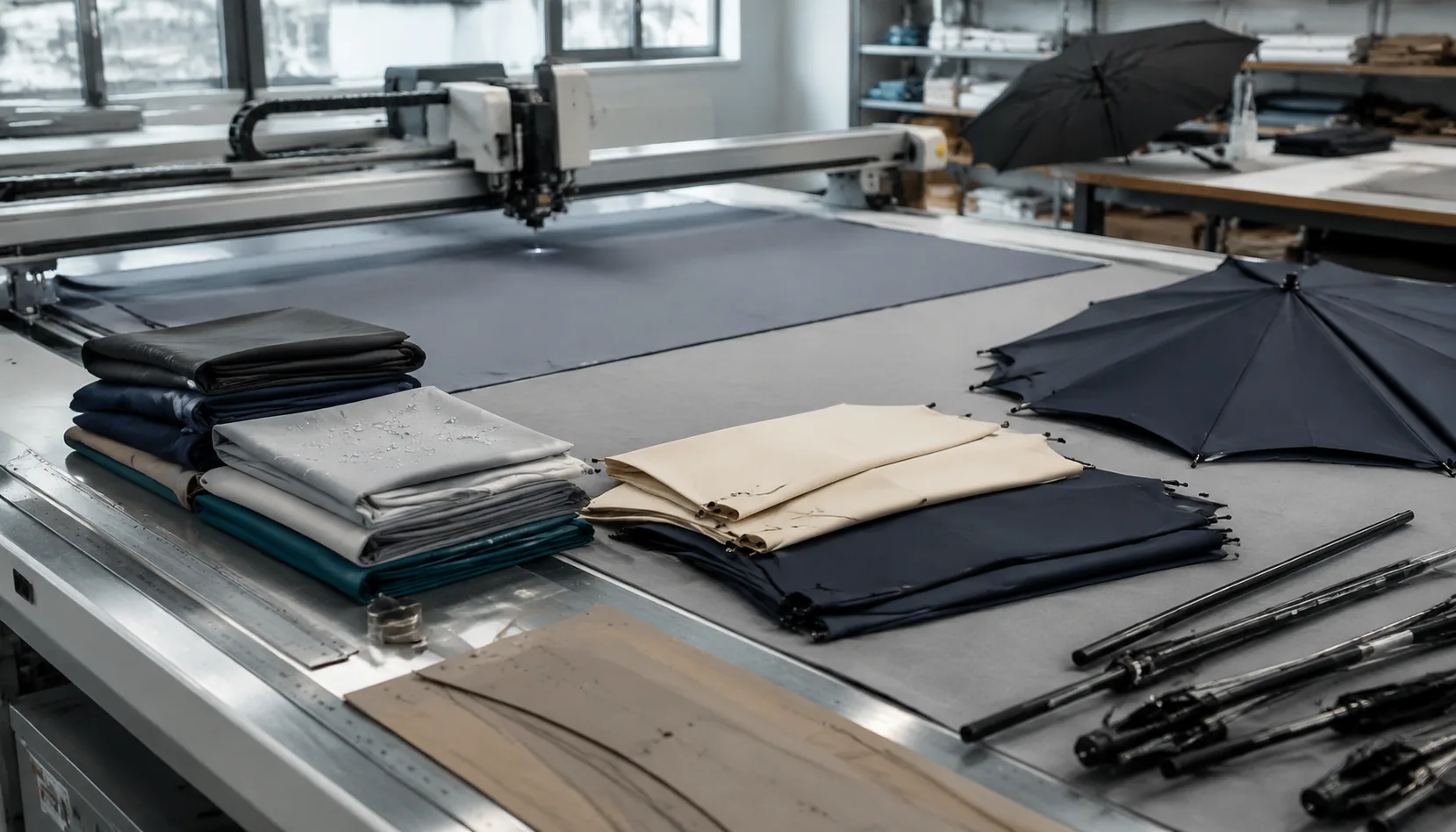
Canopy Panel Cutting Tolerances for Custom Umbrellas
Learn how panel cutting tolerances, fabric direction, and batch control improve canopy fit, seam alignment, and print pl...
Read More »