Umbrella Final Assembly Line Setup for Consistent Bulk Quality
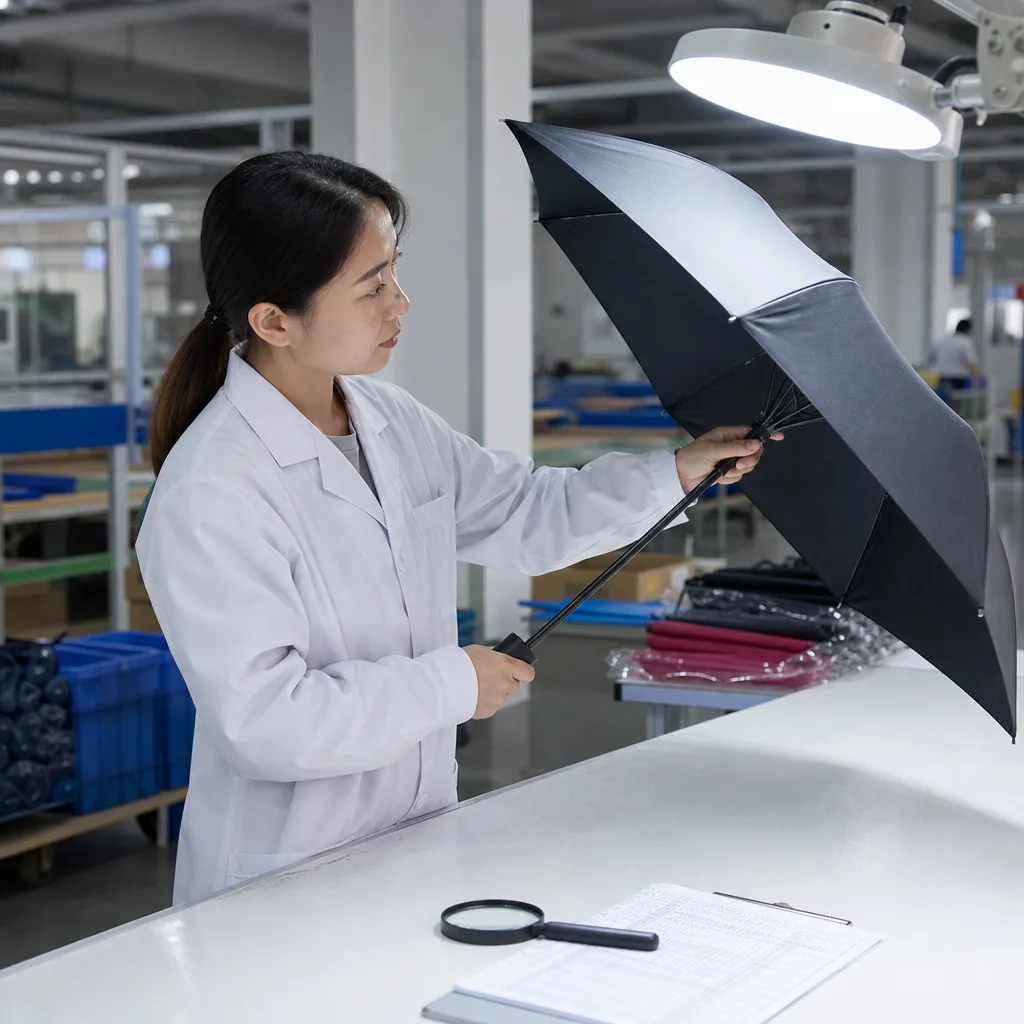
Bulk umbrella quality often breaks down at the last 20 meters of production, where small station delays, loose frame checks, uneven canopy tension, and rushed packing turn into AQL defects. On our Songxia factory floor, a well-planned umbrella final assembly line is not just about speed; it is about controlling handoffs, inspection points, and work balance so every carton matches the buyer’s approved sample.
What Happens in Final Assembly
Final assembly is the first place where a good material list either becomes a reliable umbrella or turns into visible defects. On a typical umbrella final assembly line, we start with frame preparation: checking shaft straightness, runner movement, spring lock action, rib spacing, and whether 8K, 10K, or 16K ribs sit evenly before the canopy is attached. Steel ribs need tighter rust and rivet checks; fiberglass ribs need attention at the joints because a cracked connector may pass sewing but fail during the first opening. For OEM umbrella manufacturing, this station also confirms the correct frame size—21 inch folding, 23 inch straight, 27 inch golf, or 30 inch oversize—because a canopy cut for one arc will wrinkle badly on the wrong frame.
Canopy mounting is where fabric accuracy becomes buyer-visible performance. A 190T or 210T pongee canopy may look fine on the sewing table, but on the frame we can see panel tension, seam symmetry, logo position, and whether the top notch aligns with the shaft. The workers then fix tips, secure the top cap, install the handle, and verify the open-close mechanism—manual, auto-open, or auto-open-close. In custom umbrella production, small details matter: a heat-transfer logo that sits 8 mm off center, a PVC or EVA clear canopy with stress whitening near the tips, or a UPF 50+ coated panel sewn inside out will all be caught here, not during fabric inspection.
The last stations are opening test, cleaning, labeling, and packing, but they should not be treated as simple finishing work. We open each umbrella to check canopy tension, rib response, runner lock, handle torque, and tip security; for windproof models, double-canopy venting and fiberglass rib recovery are checked against the buyer’s rating, often 50+ mph for promotional golf umbrellas. Good umbrella line balancing keeps these tests from becoming rushed when packing is overloaded. Our standard practice at ZheBrella is to combine in-line checks with final AQL 2.5 sampling, because bulk umbrella quality control must catch both repeated process defects and random handling damage before cartons are sealed for FOB or DDP shipment.
Balancing Labor Across Umbrella Types
Double-canopy windproof umbrellas are the slowest common category because they combine frame tension, vent alignment, and extra sewing tolerance. A 16K fiberglass frame with 210T pongee feels premium, but it takes more hands-on time than a simple 8K steel-frame model: more ribs to tie, more tips to secure, more chances for panel misalignment, and more force needed to seat the canopy cleanly without puckering. Fiberglass ribs also flex during assembly, so inexperienced workers overtighten thread or distort the vent layer. For custom umbrella production with logos, heat-transfer marks or screen prints must also face correctly after the canopy is mounted, which means the assembly team cannot treat panels as interchangeable. The practical setup is to assign experienced workers to 16K, vented, UPF 50+, or Teflon-coated models, while newer workers handle simpler manual steel-frame umbrellas until their defect rate stays below the internal limit for several shifts.
Critical Controls During Canopy Mounting
Canopy mounting is where a good frame can turn into a crooked umbrella, so we treat centering as a measured control, not an operator’s guess. On a 23 inch 8K straight umbrella or a 21 inch 8K auto-open folding umbrella, the runner is opened fully and the canopy crown must sit on the shaft centerline before any tips are locked. If one panel pulls 5-8 mm harder than the opposite panel, the finished canopy will spiral, and that shows immediately when the umbrella rotates under inspection light. In an umbrella final assembly line, we use seam-to-rib matching marks at the crown and at every tip, especially on 10K and 16K frames where small accumulated errors make the edge look wavy. For bulk umbrella quality control, inspectors check that each seam sits directly above the rib, not halfway between ribs, because off-seam mounting increases fabric stress during wind loading and causes premature tearing near the tip pockets.
Tip tension needs to be firm enough to remove wrinkles but not so tight that 190T or 210T pongee stretches white at the stitch line. Fiberglass ribs allow slightly more flex than steel ribs, so the same canopy pattern can feel different during mounting; this is why umbrella line balancing must separate steel-frame and fiberglass-frame orders when volumes are high. On double-canopy vented windproof models rated for 50+ mph, the lower canopy is tensioned first, then the vent layer is aligned so air can escape evenly without lifting one printed panel higher than the next. The top cap must seat flat against the crown washer with no trapped fabric, and we reject caps that rock, expose thread, or leave a visible gap after the screw or rivet is fixed. Our standard practice at ZheBrella is to confirm cap fit after three open-close cycles, because some defects only appear once the fabric relaxes.
Printed and coated canopies need slower handling than plain dyed fabric. For OEM umbrella manufacturing, logo orientation is usually specified relative to the handle, sleeve label, or front viewing panel, so the operator must mount the first panel consistently before locking the remaining tips. Heat-transfer and screen-printed logos are checked under angled light for scratches, ink cracking, and skew; sublimation panels are checked against seam position because artwork can look correct flat but rotate 3-5 degrees after tensioning. UPF 50+ coated canopies, including silver-coated pongee and black glue fabric, must not be dragged over the rib ends or assembly table, since micro-scratches reduce appearance quality and can fail retail inspection even when waterproofing still passes. In custom umbrella production, we add a mid-line audit before final tie wrap and sleeve packing: open diameter, seam alignment, logo direction, top cap tightness, and tip pocket stress are checked under AQL 2.5 sampling before cartons move to FOB or DDP shipment staging.
Defect Tracking Before Final AQL Inspection
Defect tracking has to start on the umbrella final assembly line, not at the AQL 2.5 table. By the time cartons reach final inspection, the money has already been spent on labor, polybags, master cartons, and often inner box printing. We use a simple defect sheet or tablet entry at each checkpoint: poor opening or closing, loose handle bonding, uneven panel tension, dirty 190T or 210T pongee fabric, broken tips, bent ribs, missing tie wrap, wrong logo position, and carton damage. For auto-open and auto-open-close umbrellas, the opening test should be logged separately because spring force, runner travel, and shaft locking failures usually come from different causes. For stick umbrellas, loose J handles and crooked ferrules are more common. Recording only “failed inspection” is useless; the defect must be tied to the assembly station where it can actually be corrected.
A good bulk umbrella quality control system tracks defect rate by station, operator, model, and lot number. In OEM umbrella manufacturing, one 23-inch 8K steel-frame promotional umbrella and one 30-inch 10K fiberglass golf umbrella do not fail in the same way, so the report should separate SKU, canopy fabric, rib count, frame material, and mechanism type. If Station 6 is fitting tips and broken or loose tips rise above 1.5% in two hours, the line leader should stop and check tip hole size, adhesive curing time, and operator method before another 2,000 pieces move forward. If dirty fabric appears mostly after sewing, the issue may be table cleaning or oil from the machine head; if it appears after final packing, the issue is usually handling gloves, floor contact, or carton dust.
Umbrella line balancing is also part of defect prevention. When the handle-fixing station is overloaded, operators rush the glue application or torque setting, and loose handles show up 24 hours later during final opening tests. In custom umbrella production with printed panels, uneven panels should be traced back to cutting accuracy, notch alignment, and sewing allowance, not blamed only on the assembler. Our standard practice at ZheBrella is to review hourly defect summaries before final AQL 2.5 sampling, then quarantine any station batch with repeated functional defects instead of mixing it into finished goods. Carton damage should be recorded by packing team, carton supplier lot, and pallet position, because crushed export cartons create DDP claims even when the umbrellas inside pass. The goal is not to make a beautiful report; it is to catch a rising defect curve before the buyer’s inspector finds it.
Production Planning for Export Orders
Lead time is decided before the first worker touches the umbrella final assembly line. For an export order, I first check daily line capacity against the real bottleneck: not always frame assembly, often canopy matching, tip sewing, or final sleeve insertion when logos must face the same direction. A normal 23" 8K auto-open promotional umbrella may run 2,500–3,500 pcs per line per day after rhythm is stable, but a 30" 16K golf umbrella with fiberglass ribs, EVA handle, vented double canopy, and individual hangtag can drop below 1,200 pcs. That is why umbrella line balancing matters in custom umbrella production; adding workers without fixing the slow station only creates WIP piles and mixed-carton risk. For seasonal orders, buyers should not treat a quoted 35-day lead time as one block. Fabric arrival, printing approval, PP sample sign-off, bulk assembly, AQL 2.5 inspection, and vessel or truck booking each need their own calendar slot.
Approved PP samples are the control point for bulk umbrella quality control, not a courtesy photo. The PP sample must lock the 190T or 210T pongee color, logo size and placement, rib material, shaft finish, opening force, handle texture, sleeve, hangtag, barcode, inner box, and master carton markings. In OEM umbrella manufacturing, a late change from manual open to auto-open-close, or from steel ribs to fiberglass ribs, can reset tooling, component purchasing, and drop-test validation. Printing also changes the schedule: screen printing is faster for 1–2 spot colors, heat transfer needs film and pressure testing, and sublimation on full panels requires cutting after print alignment is confirmed. Our standard practice at ZheBrella is to freeze the PP sample before bulk cutting; if buyers approve only artwork but not packaging, the assembly line can finish umbrellas that still cannot ship because carton labels, polybag warnings, or retail insert cards are missing.
Packaging specs and carton pack-out affect both factory lead time and freight cost, especially when MOQ is tight. A 24 pcs/carton pack-out may be efficient for compact 21" umbrellas, while 12 pcs/carton is more realistic for 27" or 30" golf models to avoid carton bulging and handle scratches. If the buyer requests Amazon-style carton limits, mixed SKUs, FNSKU labels, or DDP delivery to multiple warehouses, packing time can exceed final assembly time. FOB is cleaner when the buyer controls forwarder booking and can consolidate with other goods; DDP is useful when the buyer wants landed cost certainty, but it needs earlier carton dimensions, HS code confirmation, and destination compliance checks. During peak season before spring promotions or hurricane retail programs, I advise confirming MOQ, PP sample, and pack-out at least 45–60 days before the required ship date. The umbrella final assembly line can be balanced; customs clearance and missed vessel cutoffs cannot be fixed with overtime.
Frequently Asked Questions
How many opening tests should be done on the final assembly line?
Every umbrella should receive at least one functional open-close check before packing. Higher-risk styles such as auto-open, auto-open-close, or windproof double-canopy models should also have sampled cycle testing.
Why can the same umbrella design have different lead times at different factories?
Lead time depends on line capacity, worker training, frame complexity, fabric readiness, and packaging requirements. A 16K fiberglass golf umbrella with custom cartons will usually take longer than an 8K steel compact umbrella.
What inspections should happen at the final umbrella assembly stage?
At final assembly, buyers should require frame alignment checks, opening and closing function tests, canopy tension inspection, tip and ferrule fit checks, and a final visual review for stains, wrinkles, or loose stitching. For export orders, many factories also use AQL sampling at this stage to catch defects before packing.
How many operators are typically needed for a balanced umbrella final assembly line?
For a mid-size bulk order, a balanced line often uses 4 to 8 operators depending on umbrella type, such as folding, golf, or straight umbrellas. The exact number depends on station cycle time, with the slowest process usually setting the line speed.
What packing controls help reduce claims in bulk umbrella shipments?
Common controls include confirming sleeve placement, carton quantity counts, carton drop testing, barcode or label verification, and compression checks for folding umbrellas. Buyers usually specify carton pack-out, inner polybag requirements, and master carton limits to reduce transit damage and counting errors.
Looking to Launch Your Custom Umbrella Line?
ZheBrella is a Zhejiang-based OEM/ODM umbrella manufacturer with 17 years of export experience. Free design, low MOQ from 100 pieces, windproof construction, full-color print.
Get Free Quote Now »People Also Search For
Related Articles
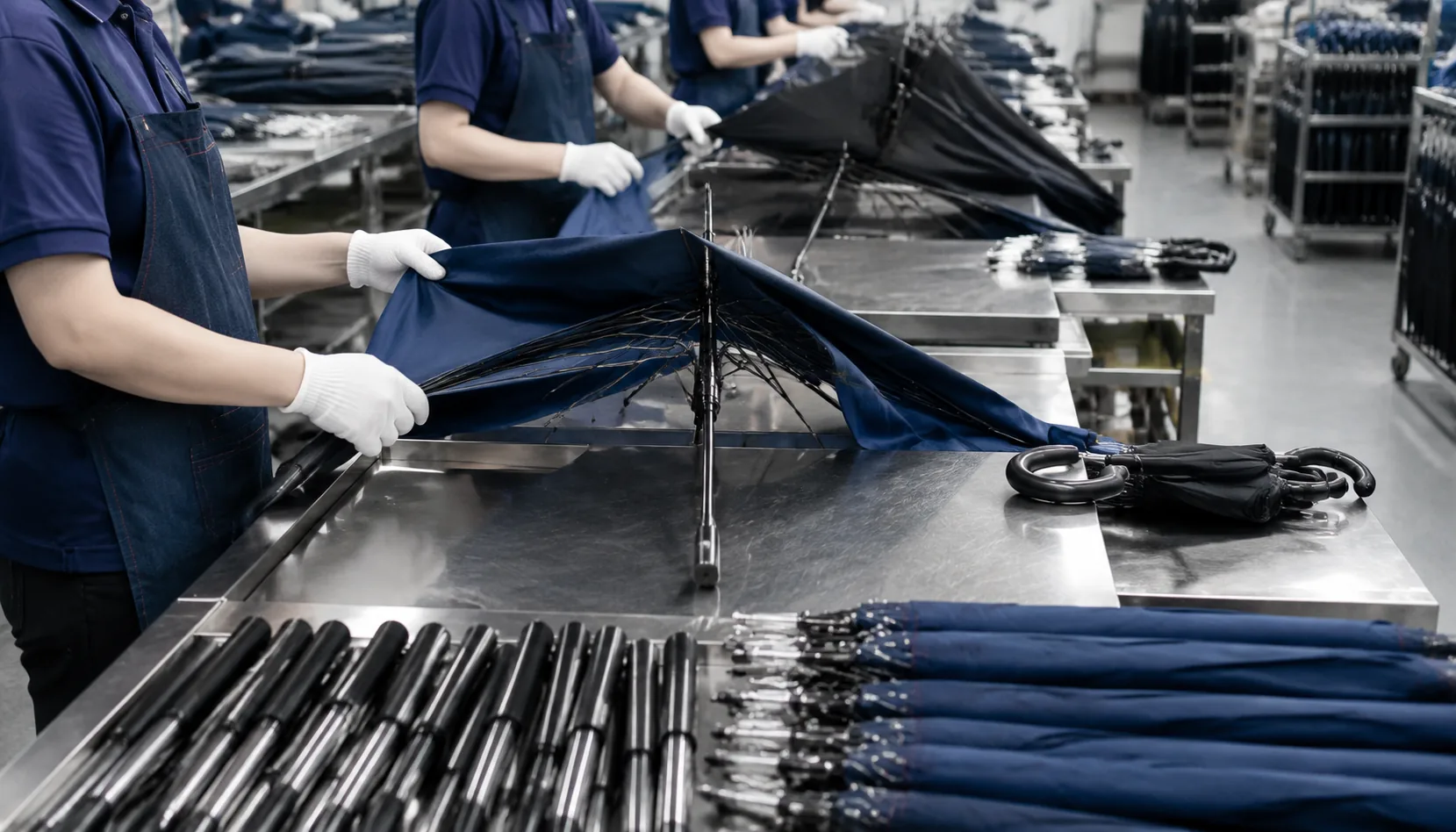
Umbrella Final Assembly Line Setup for Consistent Quality
Plan a reliable umbrella final assembly line with station controls for canopy mounting, opening tests, labeling, packing...
Read More »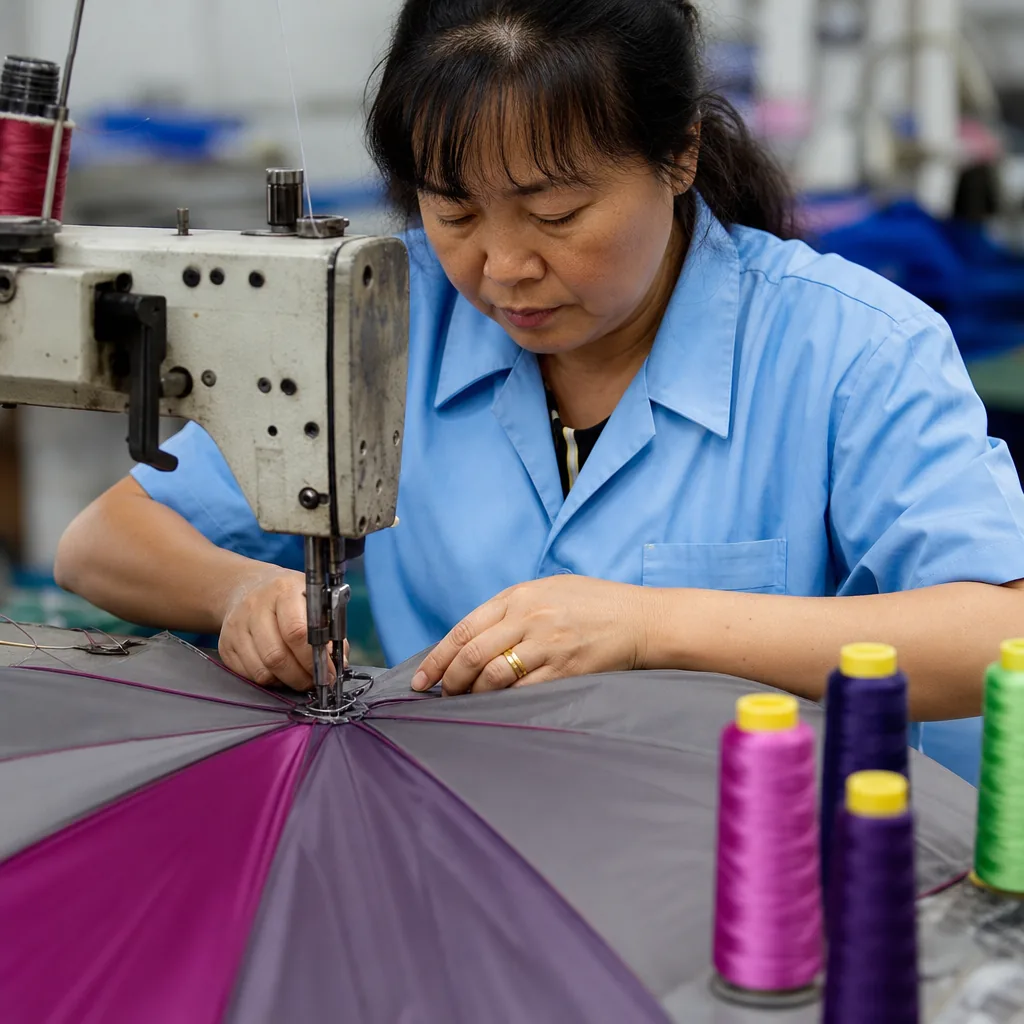
Umbrella Final Assembly Line Setup for Consistent OEM Quality
Design an umbrella assembly line with workstations, jigs, torque checks, and inline QC to improve consistency across MOQ...
Read More »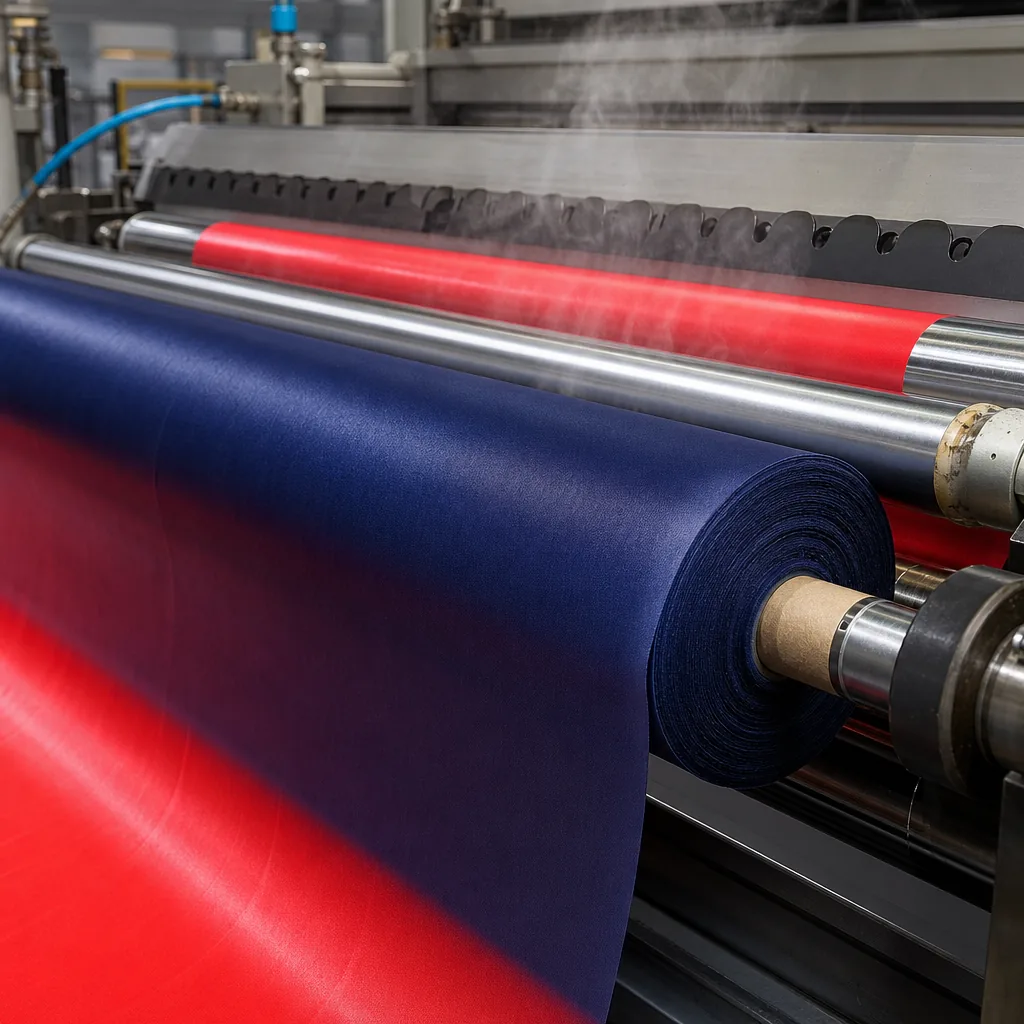
Umbrella Assembly Line Process for Consistent OEM Quality
See how umbrella factories control frame fit, canopy tension, and packing accuracy with in-line checks that reduce defec...
Read More »