Umbrella Pilot Runs: Validating Mass Production Before Scale
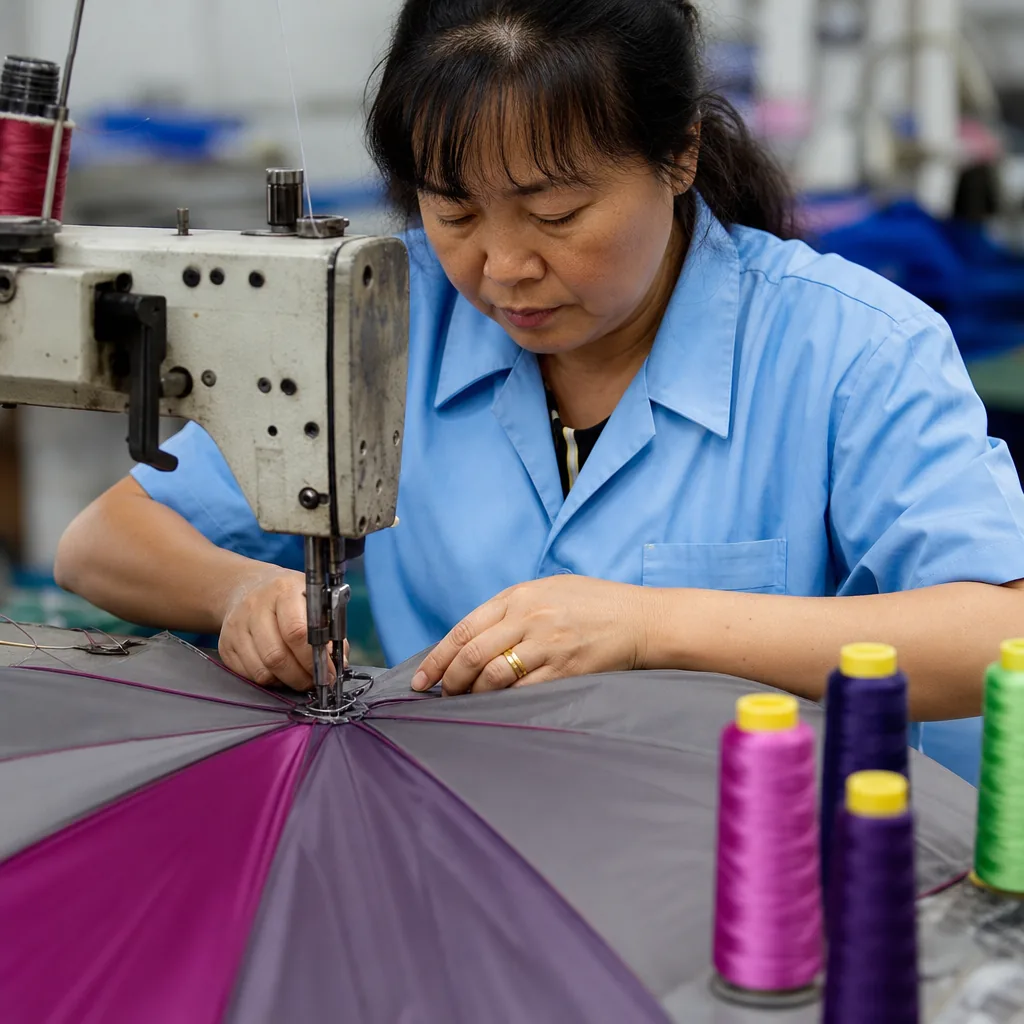
For umbrella buyers, the biggest risk is not a failed sample but a bulk order that behaves differently once real operators, real molds, fabric tension, sewing allowances, frame assembly, and pack-out speed all collide. An umbrella pilot run gives us a controlled way to prove the specification on the production floor before full-volume commitment. In our Shangyu factory, this is where small issues like rib alignment, canopy twist, runner smoothness, printing position, and carton loading become visible while they are still cheap to correct.
What a Pilot Run Covers and Why It Saves Cost
An umbrella pilot run is a controlled pre-mass-production batch, not a showroom sample exercise. It uses the approved bulk material lot, production tooling, assigned operators, sewing guides, printing screens, packing method, and QC checkpoints to test the real manufacturing route before the factory commits full fabric and frame inventory. A practical batch is usually 50–300 pieces: a standard 23-inch 8K 190T or 210T pongee auto-open model may need only one line trial, while a 30-inch double-canopy golf umbrella with fiberglass ribs, EVA handle, heat-transfer logos, and custom export cartons needs more pieces to reveal line-speed and handling issues. The run validates materials, assembly, decoration, and packing against measurable points: opening force, runner lock, rib alignment, canopy tension, stitch density, seam leakage, color match, logo position, polybag label, inner-box fit, and master-carton compression.
The cost benefit comes from catching umbrella manufacturing defects while the order is still small. Reworking 100 trial units is cheaper than sorting, repairing, or airfreighting 5,000–50,000 rejected pieces after bulk production. Typical pilot findings include a 210T pongee canopy cut 3 mm short, causing tight tips and broken stitches; screen-print ink cracking on Teflon-coated fabric; an auto-open-close spring that makes the shaft hard to operate; or a retail barcode placed where a distribution-center scanner cannot read it. QC should mirror bulk inspection, commonly AQL 2.5 for major defects and AQL 4.0 for minor defects, but add station-level process notes. Track defects by cutting, sewing, riveting, printing, assembly, and packing—not just pass or fail. That data tells engineering whether to adjust jigs, needle size, thread tension, drying temperature, riveting pressure, or carton sequence before production approval.
Pilot production umbrella checks are most valuable for new OEM umbrella launch programs, ODM modifications, and retailer orders tied to a promotion date, shelf reset, or event window. Small specification changes can shift cost, yield, and lead time: steel-to-fiberglass ribs affect flexibility; 190T-to-210T pongee changes cutting and seam behavior; UPF 50+ or Teflon coatings affect ink adhesion; manual-to-auto-open changes spring and runner testing; screen print-to-sublimation changes approval steps. Treat pilot approval as the final gate for pre mass production validation. For export orders, lock approval 7–14 days before mass cutting, with signed reference samples, approved packaging photos, and a final BOM. A two-day pilot review is cheaper than missing a vessel cutoff or switching to DDP airfreight after production slips. Once bulk cutting starts, every open spec becomes material waste, rework, or delivery risk.
Which Specs Must Be Frozen Before the Pilot
Freeze the structural BOM before an umbrella pilot run reaches sewing or assembly. Production approval should name the frame type, finished size, rib count, shaft, runner, tips, handle, and opening system, with the frame drawing, approved sample, and BOM revision tied to the same document control record. A 23-inch straight umbrella with 8K steel ribs does not validate the same durability risks as a 27-inch golf umbrella with 16K fiberglass ribs and a double-canopy vent. Manual, auto-open, and auto-open-close frames also require separate checks for spring force, runner clearance, lock-up strength, and cycle function. If purchasing is still choosing between steel components for lower unit cost and fiberglass components for wind resistance, the trial only proves a temporary design, not the final production risk.
Canopy and decoration approvals must be complete before pilot production umbrella work starts. Confirm the canopy material and color standard, including pongee 190T or 210T, or POE, PVC, or EVA for transparent models. Lock any Teflon water-repellent or UPF 50+ coating requirement, seam construction, panel count, binding, and Velcro or snap closure. Final print files should include Pantone, CMYK, or sublimation data, logo size, panel placement, and the print template used on the approved sample. Screen print, heat transfer, and full-panel sublimation each create different tolerance and adhesion risks, so changing artwork or decoration method after the trial weakens pre mass production validation and makes umbrella manufacturing defects harder to trace.
Labels and export cartons are part of production approval, not a late packing decision. Approve hang tags, woven labels, care labels, polybags, inner boxes, export carton dimensions, gross weight limit, barcode position, case pack, and shipping marks before the pilot. ZheBrella applies the same carton drop-test method and AQL 2.5 checklist from pilot to bulk, but the data only protects the OEM umbrella launch when packaging specs stay fixed. Changing the carton, label, or case pack after the pilot can hide real risks: crushed tips, bent ribs, scuffed handles, failed barcode scans, and warehouse rejection. The rule is simple: if a spec affects cost, durability, compliance, lead time, or shipment acceptance, freeze it before the pilot or do not treat the results as mass-production evidence.
Tests to Run on Pilot Units Before Mass Production
Start the umbrella pilot run with function tests before cosmetic review: a centered logo does not offset a runner that sticks after 30 cycles. Cycle every pilot unit open and closed at least 30 times across manual, auto-open, and auto-open-close versions. Quarantine any unit with slow spring return, shaft wobble, notch misalignment, loose tips, rivet play, or inconsistent latch engagement. On compact models, the auto-open button must fire on the first press, and the closing force must be practical for a retail user, not only trained line staff. For 23", 27", and 30" stick or golf umbrellas, check frame balance, rib symmetry, and whether 8K, 10K, or 16K ribs sit evenly under canopy load. Fiberglass ribs should flex back without whitening or splintering; steel ribs should have no burrs around rivets or weak stretcher joints.
Use canopy inspection to confirm that pilot production umbrella quality still matches the approved sample after cutting, sewing, and printing move into batch work. Open each unit fully and check tension from top cap to tips: loose 190T or 210T pongee wrinkles near seams, while over-tight panels distort the rib arc and make closing harder. Inspect seams under normal light and backlight for skipped stitches, thread floats, uneven seam allowance, and puckering. Measure logo placement instead of judging by eye: verify distance from panel edge, centering across seams, PMS color, cure strength, and bleeding risk for screen print, heat transfer, or sublimation. Basic water shedding belongs in pre mass production validation; spray or shower-test the canopy for 3 to 5 minutes and record wet-out, seam leakage, dripping through the top cap, or pooling at panel joins.
Add targeted checks when the OEM umbrella launch includes claims or features beyond a standard canopy. For UPF 50+ programs, send pilot fabric or finished panels for UV transmittance testing and confirm the coating is on the specified side, especially on silver-coated or dark-underlayer fabrics. For double-canopy windproof designs, verify even overlap between upper and lower canopies, open vent paths, clean vent stitching, and no excessive flutter during a 30 to 50 mph wind-tunnel or controlled fan test. If retail or gift packaging is part of the program, inspect barcode scanability, insert orientation, hangtag attachment, carton drop resistance, and moisture protection. Release production approval only after photos, defect counts, corrective actions, and pass/fail limits are logged against the agreed AQL 2.5 standard.
How Buyers Review Pilot Findings and Approve Corrections
Review an umbrella pilot run report as a defect register tied to production approval, not as a photo dump. Each line item should record defect type, quantity, severity, exact location, sample number, inspector, test method, suspected process owner, root cause, corrective action, and closure status. Split the log by frame, canopy, print/logo, and packing. Frame defects include bent 8K steel ribs, loose rivets, weak runner springs, and auto-open misfires; canopy defects include skipped stitches, seam puckering, misaligned panels, color migration, pinholes in 190T pongee, and peeling heat-transfer logos. Keep UPC, warning-label, insert-card, and carton-mark errors in a separate packing tab because these can stop a retail shipment even when function tests pass. Every defect photo needs a ruler or fixed reference point and a link to the tested sample. For pre mass production validation, cite the trigger test: 24-hour water soak, 50+ mph wind-tunnel cycling, 200-cycle open-close testing, or incoming material inspection.
Force the factory to identify a controllable cause, not a general complaint. “Bad sewing” does not support corrective action; uneven seam allowance from an untrained operator, wrong needle size, loose binding-machine tension, or panel cutting outside tolerance does. If a 23-inch auto-open model shows canopy twist, check notch-to-tip distance, runner travel, rib symmetry, and whether panels were cut off grain. For logo failures, compare approved artwork against screen mesh, ink viscosity, curing temperature, dwell time, and fabric coating, especially on Teflon-treated or UPF 50+ canopy material. When a correction changes appearance, hand feel, mechanism force, packing layout, or retail presentation, meeting notes are not enough. Require a revised sample, updated trim card, marked photos, and the new work instruction before production approval. Many pilot production umbrella reviews fail here: they record the defect but never prove the sewing, tooling, material, or inspection step has actually changed.
Set approval thresholds before the OEM umbrella launch, then apply them without negotiation. Approve mass production only when minor umbrella manufacturing defects stay within the agreed AQL 2.5 limit, such as a loose thread under 3 mm or slightly uneven sleeve stitching that does not affect function or brand presentation. Approve with changes when the fix needs no new tooling or material substitution: update the work instruction, retrain the sewing line, replace the trim card, and inspect the first 50 to 100 bulk pieces before releasing the balance. Hold mass production when defects affect safety, function, leakage, appearance, or repeatability, including cracked plastic handles, weak fiberglass ribs, leaking top caps, wrong 210T pongee color, unstable auto-open-close mechanisms, or logo adhesion failure. The umbrella pilot run closes only after the buyer receives the corrected sample, revised control plan, and evidence that the fix can repeat at 5,000 or 50,000 pieces.
How Pilot Runs Affect Lead Time, Freight Terms, and Risk
A pilot run adds a controlled front-end delay, typically 5–10 working days before bulk cutting, but it often prevents 15–30 days of remake, rework, or missed shipment after scale-up. The value is highest on an OEM umbrella launch using auto-open-close shafts, fiberglass ribs, double-canopy vents, UPF 50+ coating, or multi-panel printing, where one approved golden sample cannot prove line repeatability. A 50–200 piece pilot production umbrella order checks the real production setup: canopy panel tolerance after cutting, rib and stretcher alignment, runner smoothness, print position drift, Velcro location, carton fit, and packing speed. This is not another sales sample. It freezes the BOM, workmanship standard, and inspection points before the main PO consumes 190T or 210T pongee, frames, tips, caps, cartons, and booked sewing capacity.
Build the schedule around three gates: sample approval, pilot review, and production approval. A realistic sequence is 7–12 days for revised pre-production samples, 5–10 days for the umbrella pilot run, 2–3 days for AQL-style internal inspection and buyer comments, then 25–45 days for mass production depending on MOQ, peak season, and material availability. Approval of a 23-inch 8K pongee sample confirms appearance, not opening force, water repellency, wind behavior, print registration, or carton drop strength. Umbrella manufacturing defects become expensive after bulk sewing because printed panels, canopies, tips, caps, straps, and labels are already assembled. During pre mass production validation, the same defect can usually be fixed with a jig adjustment, revised sewing allowance, spring change, or tighter incoming inspection before output scales.
Freight terms turn pilot results into a delivery-risk decision. Under FOB Ningbo or Shanghai, the buyer usually controls the vessel booking, so ZheBrella should only issue a cargo-ready date after production approval; a failed final inspection can mean rolled bookings, missed sailings, and warehouse charges. Under DDP, the supplier manages more logistics, but the cost risk moves into air freight upgrades, truck rescheduling, and destination customs timing. ZheBrella ties bulk shipment commitments to pilot success: function testing, visual inspection, packing confirmation, and buyer signoff must pass before we lock the final ex-factory window. This discipline matters most for retail promotions, event umbrellas, and seasonal rain programs, where a one-week delivery slip can cost more than a short upfront validation step.
Frequently Asked Questions
How large should an umbrella pilot run be?
It depends on complexity, but buyers often use a small batch large enough to cover every process step, print position, and packing method. The goal is process validation, not inventory building.
Should a pilot run use final bulk materials or substitute materials?
It should use final bulk-intent materials whenever possible. Using substitute fabric, ribs, or packaging can hide issues that only appear with the actual pongee, frame, or carton specification.
How many umbrellas should be included in a pilot run before mass production?
For OEM umbrella orders, a pilot run is often 50 to 300 units depending on complexity, fabric printing, frame type, and packaging requirements. This quantity is usually enough to test assembly consistency, printing accuracy, opening performance, and carton pack-out.
What defects should buyers look for during an umbrella pilot run?
Buyers should check fabric tension, panel alignment, rib strength, runner movement, handle attachment, printing position, color matching, water resistance, and carton labeling. Any repeated defect should be corrected before production approval is issued.
Does a pilot run delay the OEM umbrella launch schedule?
A pilot run typically adds 3 to 7 days, but it can prevent larger delays caused by rework after mass production. For new frames, custom handles, or complex logo printing, buyers should include pilot production in the launch timeline.
Looking to Launch Your Custom Umbrella Line?
ZheBrella is a Zhejiang-based OEM/ODM umbrella manufacturer with 17 years of export experience. Free design, low MOQ from 100 pieces, windproof construction, full-color print.
Get Free Quote Now »People Also Search For
Related Articles
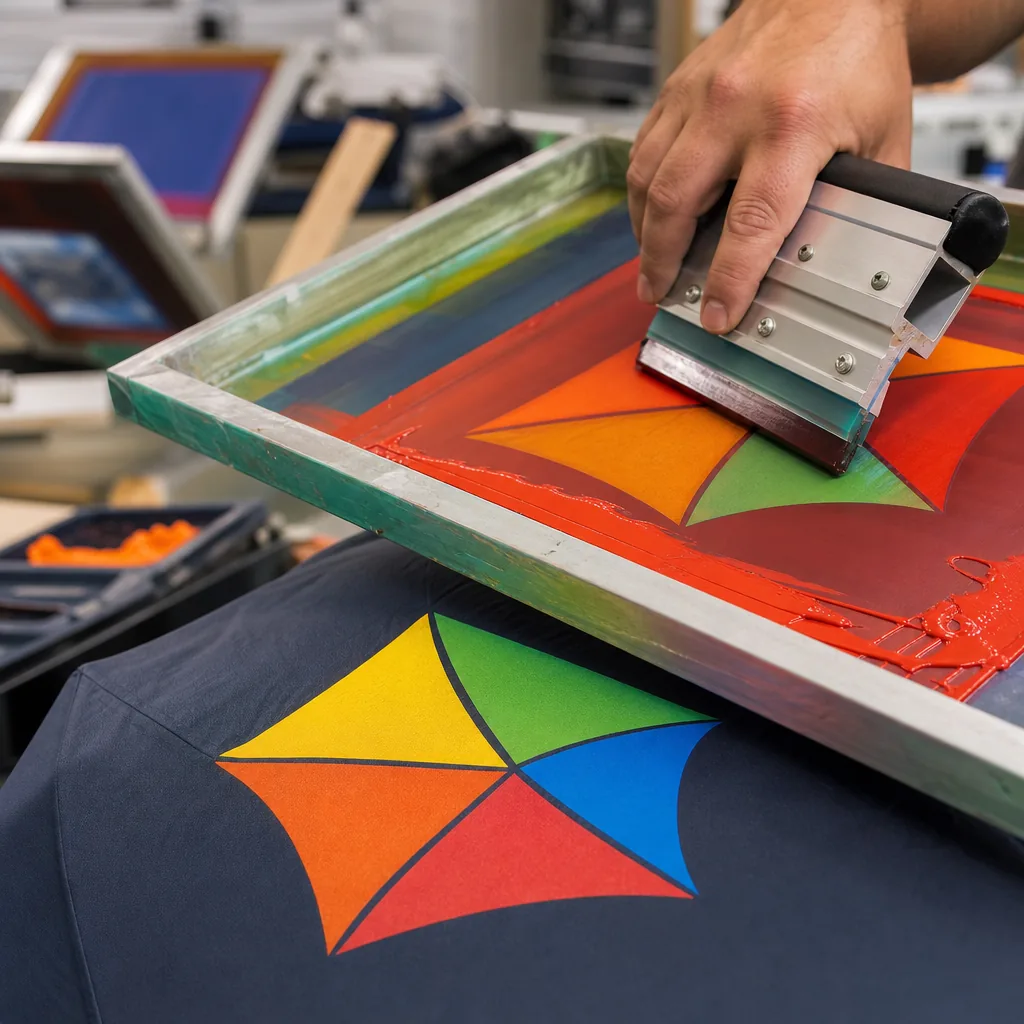
Umbrella Factory PPAP: How to Approve Parts Before Mass Run
Learn how umbrella PPAP-style approvals reduce defects by locking materials, dimensions, and golden samples before bulk ...
Read More »Umbrella Factory PFMEA: Preventing Defects Before Bulk Production
Use PFMEA in umbrella manufacturing to identify high-risk failure points early, improve process control, and cut defect ...
Read More »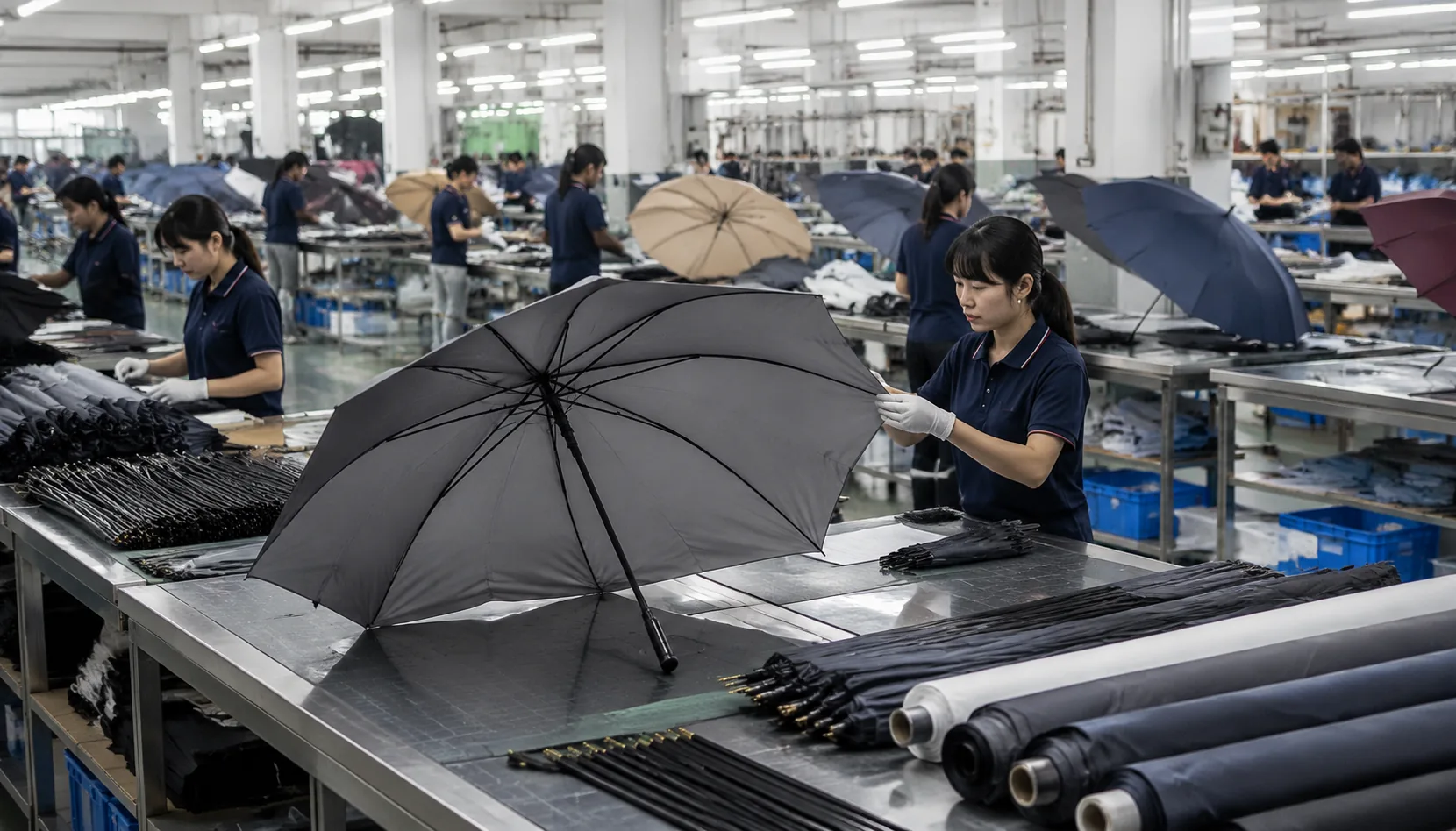
Umbrella Assembly Line QC Checks Before Final AQL Inspection
Use in-process QC checkpoints for frames, fabric, sewing, mechanisms, and packing to catch umbrella defects before final...
Read More »