Umbrella Retail Belly Bands for Clean Private-Label Branding
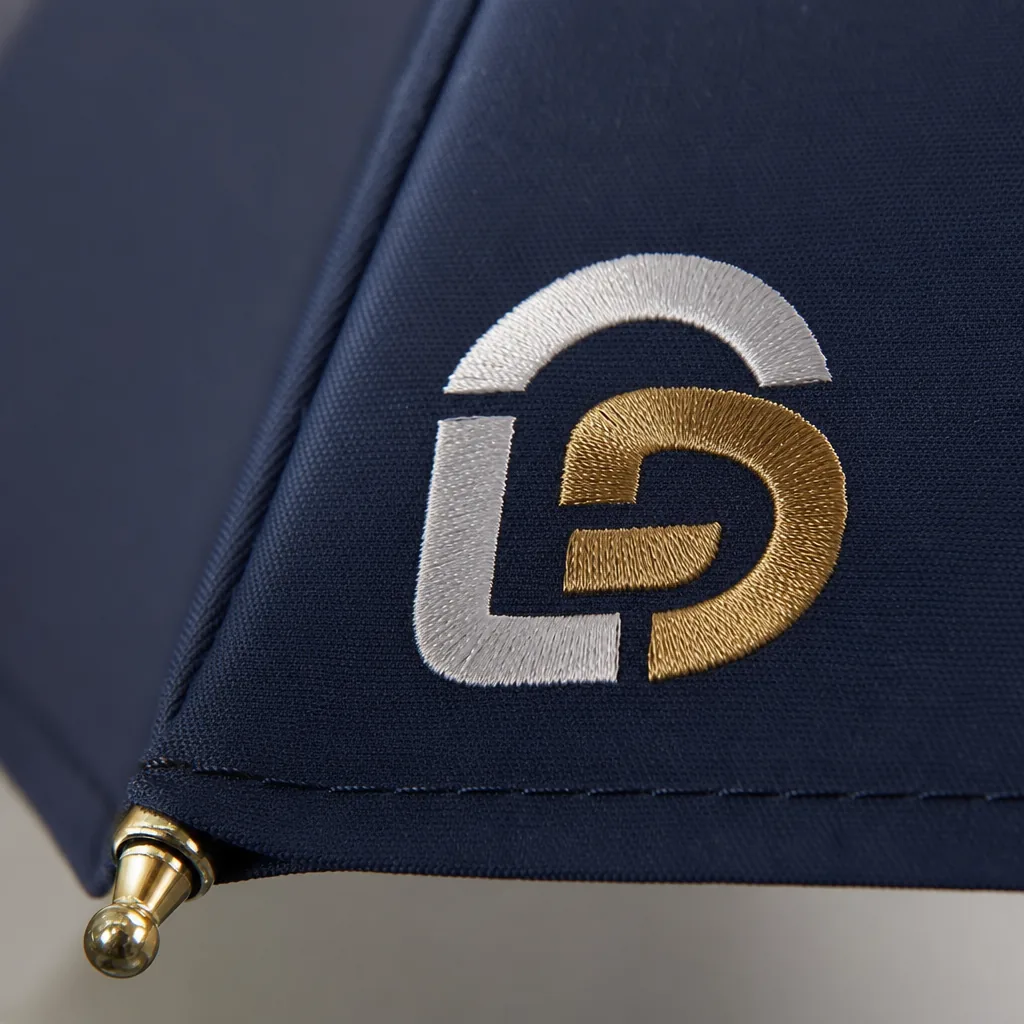
When a retailer needs cleaner private-label presentation on folded umbrellas but cannot justify a full custom carton run, umbrella belly bands are usually the fastest fix on the packing line. In Songxia production, we use them to hold fabric neatly, carry size or campaign copy, and avoid the cost, lead time, and MOQs that come with fully printed boxes.
Where Belly Bands Fit in Umbrella Branding Strategy
For folded umbrellas, umbrella belly bands are the simplest way to add retail branding without changing the factory’s standard pack-out. The band wraps the closed canopy and can carry a logo, color system, UPC or barcode, size, and a short selling message while the umbrella still ships in the usual polybag and export carton. That matters on mixed orders, short runs, and seasonal tests: if a buyer is trialing 3 to 5 prints in one collection, or a promotional reseller is using the same 21-inch or 23-inch auto-open umbrella for multiple end clients, only the outer wrap changes. There is no new tuck-box dieline, molded insert, or separate carton configuration to manage. MOQ still depends on the print method and material stock, but compared with custom boxes or PET window cartons, the workflow is simpler, material cost is lower, and packing errors are less likely.
They also match how most folded umbrella presentation works in promotional resale and seasonal retail: bins, clip strips, checkout tables, and online product photos, not premium unboxing. Branded retail bands give enough face area for campaign art, a QR code, UPC, compliance text, and feature callouts such as 190T pongee, fiberglass ribs, 10K construction, or auto-open-close. Because the band is applied after strap closure and final wipe-down, it does not disrupt canopy sewing, handle assembly, or AQL 2.5 inspection. Against full boxes, private label umbrella packaging with a band uses less cube, less hand labor, and fewer carton SKUs, which helps on FOB shipments and replenishment programs around 3,000 to 5,000 units per color. Against a basic polybag label, umbrella pack branding looks more deliberate and gives enough space to explain features like UPF 50+ coating or a vented double canopy. Full boxes are still the better choice when the set needs gift inserts, a premium handle finish, tamper resistance, or rigid shelf display.
Design Elements That Improve Shelf Recognition
Shelf recognition starts with hierarchy, not decoration. On umbrella belly bands, put the brand mark in the top third and size it to stay readable from 3 to 5 feet, whether the unit is side-loaded on a peg or standing in a basket. Place the product name directly under the logo in a plain, high-contrast font; that reads faster than a thin descriptor line and reduces scan time at shelf. If your range includes a 21 inch compact auto-open, a 23 inch stick, and a 27 inch golf model, keep the layout fixed across SKUs and change only the color coding by function or collection. A stable system lowers artwork errors and helps buyers group products fast: charcoal for wind-focused models, blue for UV styles, bright accents for fashion prints. For folded umbrella presentation, leave one clean panel around the handle and closure strap so shoppers can see and touch the product instead of handling printed wrap from multiple angles.
Claims on private label umbrella packaging need to match the actual frame and canopy spec. Use “auto-open” only for a single-spring runner system, and “auto open/close” only on telescopic frames with both deploy and retraction buttons verified through cycle testing. “Double-canopy windproof” should mean a true vented upper-and-lower canopy, typically on 23 inch, 27 inch, or 30 inch frames, not a layered-looking shell. If the shaft is steel and only the ribs are fiberglass, say “steel shaft with fiberglass ribs,” not simply “fiberglass ribs.” For UPF 50+, tie the claim to the fabric and test basis, such as black-coated pongee 190T or 210T, silver UV coating, or certified fabric lots. On the back panel, reserve a flat barcode area at least 38 x 25 mm with quiet space so a wrapped 3-fold unit still scans cleanly. Keep quick callouts to four or fewer: canopy size, manual or auto mechanism, rib count such as 8K or 10K, and canopy material like pongee, POE, or EVA. Leave space for country of origin, item number, and distributor address; missing compliance data often triggers costly rework against 25 to 35 day lead times.
Matching the Band to the Umbrella Construction
Match umbrella belly bands to the actual frame spec; do not use packaging to imply a higher bill of materials than the product delivers. For a 21-inch or 23-inch compact with a black electroplated steel shaft, steel ribs, and a manual runner, keep the band functional: clear logo placement, SKU or color coding, and a plain materials callout. Reserve heavier paper stock, soft-touch lamination, or spot UV for umbrellas that visibly support a premium position, such as auto-open-close frames with fiberglass ribs, aluminum-fiberglass hybrid shafts, or vented double canopies built for roughly 45-50+ mph gusts. Frame geometry matters too. A 10K or 16K construction gives a denser closed profile and cleaner pleat line at retail, so a more technical folded umbrella presentation reads as credible. If private label umbrella packaging signals premium engineering that the frame, shaft, and runner do not support, buyers notice fast through higher return rates, retail objections, and weaker trust in the brand claim.
Use rib count, canopy fabric, and umbrella size to set both the look and the format of branded retail bands. An 8K umbrella, especially in 27-inch or 30-inch straight-stick construction, usually sells on coverage and utility, so the band should prioritize canopy size, open diameter, and wind structure over decorative finishes. A 16K frame presents a tighter fold and cleaner silhouette, which can justify a narrower wrap, metallic ink, or selective finishing without overstating the product. Fit is not cosmetic: an oversized generic band can crush a 16K fold, create crease memory, and hurt first-open appearance. Fabric tier should follow the same logic. Basic 190T pongee fits promotional programs and simpler umbrella pack branding, while 210T pongee, Teflon water-repellent finishes, UPF 50+ coatings, or higher-definition heat-transfer prints support concise spec callouts and a more elevated finish. For clear POE or EVA bubble umbrellas, minimal band coverage usually works best because the canopy is the visual feature. Final packing checks under AQL 2.5 should verify every umbrella belly band against the correct frame and fabric SKU.
Production Setup, Assembly, and QC Checkpoints
At scale, the main failure point for umbrella belly bands is dimensional drift during live packing, not artwork approval. A flat proof can look correct and still fail when a line folds 2,000 to 5,000 umbrellas per shift across multiple frame builds. For 21-inch and 23-inch compact models, keep band length at ±1.0 mm and width at ±0.5 mm, then verify fit on folded umbrellas pulled from the first packed lot, not only on engineering samples. That check needs to be SKU-specific. Folded circumference changes with canopy and frame construction: a 190T pongee canopy on an 8K auto-open frame packs slimmer than a 210T double-canopy vented style with fiberglass ribs, even at the same closed length. In private label umbrella packaging, set each band from measured folded circumference, strap position, and handle type by SKU. Straight handles, crook handles, and auto-open-close push-button shafts shift where the band sits and whether the folded umbrella presentation stays centered and retail-clean, so do not standardize one band size across similar-looking models without a live fit test.
Consistency also depends on adhesive choice and pack-out sequence. Permanent hot-melt works for high-volume machine application, but too much glue can telegraph through coated art paper and create a raised seam. Removable pressure-sensitive adhesive is easier for hand application and rework, but hold can drop on dusty OPP sleeves or in rooms above roughly 70% RH. Control starts before die cutting: hold print registration to ±0.5 mm on logos, barcodes, and legal copy. At line startup, run a wrap test every 30 to 50 pieces and confirm the seam lands on the back panel of the folded umbrella, not across the front branding. For mixed-SKU orders, use physical segregation rather than visual sorting: dedicated lanes for 21-inch manual, 23-inch auto-open, and 27-inch golf styles, each with the correct branded retail bands, a signed reference sample, and a scan sheet. Final inspection under AQL 2.5 should sample random units for band fit, rotation, seam cleanliness, barcode-to-SKU match, readable lot coding, and slippage after transit simulation, then release only after polybagging, inner-carton loading, and master-carton closeout are verified.
MOQ, Sampling, and Shipment Planning
MOQ pressure usually starts with printing, not with the umbrella order. A factory may accept 1,000 units per color for a 21" or 23" folding umbrella, but umbrella belly bands often need 3,000-5,000 pieces per artwork for offset printing to be cost-effective. That becomes a problem when one launch splits into four language versions and three SKU claim sets: each artwork can fall to a few hundred pieces, pushing up unit cost or forcing a move to digital print. The cleanest fix is to keep one dieline and one finished band size across the range, then change only the artwork panel. That approach lowers setup waste, keeps folded umbrella presentation consistent, and reduces packing mistakes when the line is handling 8K compact, 10K mini, and 16K fashion umbrellas. If band circumference changes by model, packing labor rises because operators must sort and match multiple sizes, which adds avoidable risk on mixed-SKU private label umbrella packaging programs.
Use a three-step approval process and build it into the shipment plan. First, approve the flat PDF or AI file with bleed, barcode position, language sequence, and seam overlap so the logo is not broken at the join. Second, check a wrapped dummy on the actual folded umbrella, because fit changes once the band goes around a 190T pongee canopy, closure strap, hangtag, and polybag. Third, sign off a pre-production sample made with the final substrate and print method, especially if branded retail bands use matte lamination, spot UV, or kraft stock. If the umbrella supplier also sources and applies the bands, FOB planning is simpler: one vendor can manage incoming print inspection, carton marks, packing, and final AQL 2.5 release before booking. Expect roughly 5-10 extra days for artwork approval and printing, plus 2-3 days if a pre-production sample needs courier review. Under DDP, shipping umbrella belly bands with the umbrellas reduces customs, labeling mismatch, and receiving risk. If bands ship separately, budget for extra warehouse handling, more carton cube, and possible rework if the umbrellas land before the paper goods. For seasonal launches, packing about 2% spare bands is usually cheaper than missing a vessel because one language version arrives late.
Frequently Asked Questions
Are belly bands suitable for straight umbrellas and golf umbrellas?
They are most common on compact umbrellas because the folded shape holds the band securely. For straight or golf umbrellas, bands can work, but buyers often prefer header cards, hang solutions, or boxed presentation instead.
Can one belly band design cover multiple umbrella colors?
Yes, if the assortment is simple and the barcode or color ID is handled with a sticker or variable print area. For larger retail assortments, separate versions usually reduce picking errors during pack-out.
What information can be printed on an umbrella belly band without making the band too crowded?
Most buyers keep it to 5-7 core items: logo, model name, canopy size, color, barcode, country of origin, and a short campaign line. A common band height is 45-60 mm, which gives enough space for front branding and a back panel with SKU and compliance text.
Is a belly band suitable for assortments where one umbrella frame is sold in multiple colors or prints?
Yes. Many importers use one shared band design and swap only the barcode sticker or color code by variant. This reduces print complexity and works well for mixed cartons or seasonal pattern updates.
How does belly band packaging compare with full custom boxes in MOQ and lead time?
Belly bands usually require a much lower commitment than full retail boxes because they use less material and simpler die lines. In many OEM programs, bands can be approved and produced in about 7-15 days after artwork sign-off, while custom box programs often take longer due to structural sampling and higher MOQ thresholds.
Looking to Launch Your Custom Umbrella Line?
ZheBrella is a Zhejiang-based OEM/ODM umbrella manufacturer with 17 years of export experience. Free design, low MOQ from 100 pieces, windproof construction, full-color print.
Get Free Quote Now »People Also Search For
Related Articles
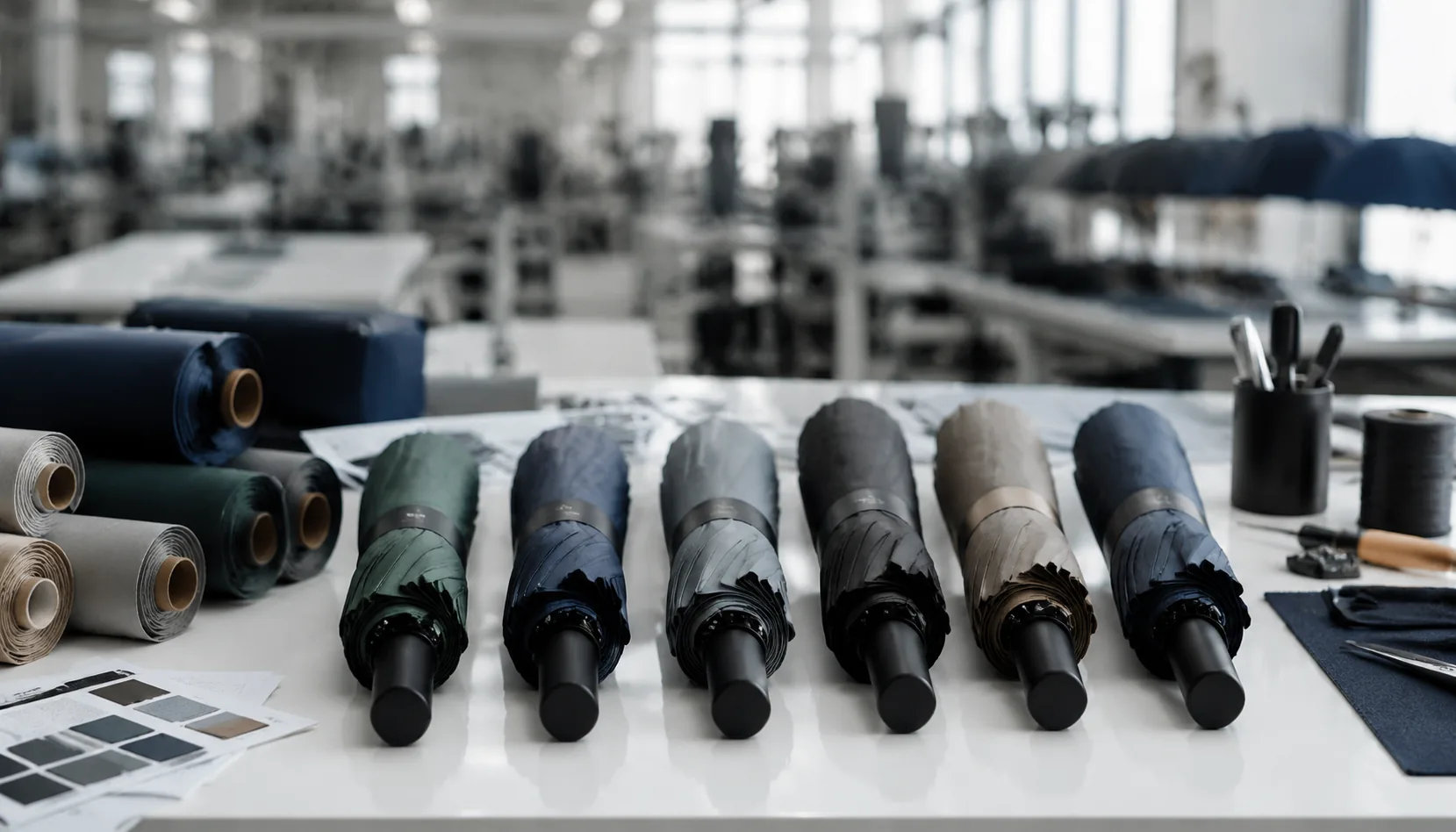
Branded Umbrella Belly Bands for Retail Gift Presentation
Plan branded belly bands with logo, SKU, and gift messaging while keeping canopy quality visible, with material, sizing,...
Read More »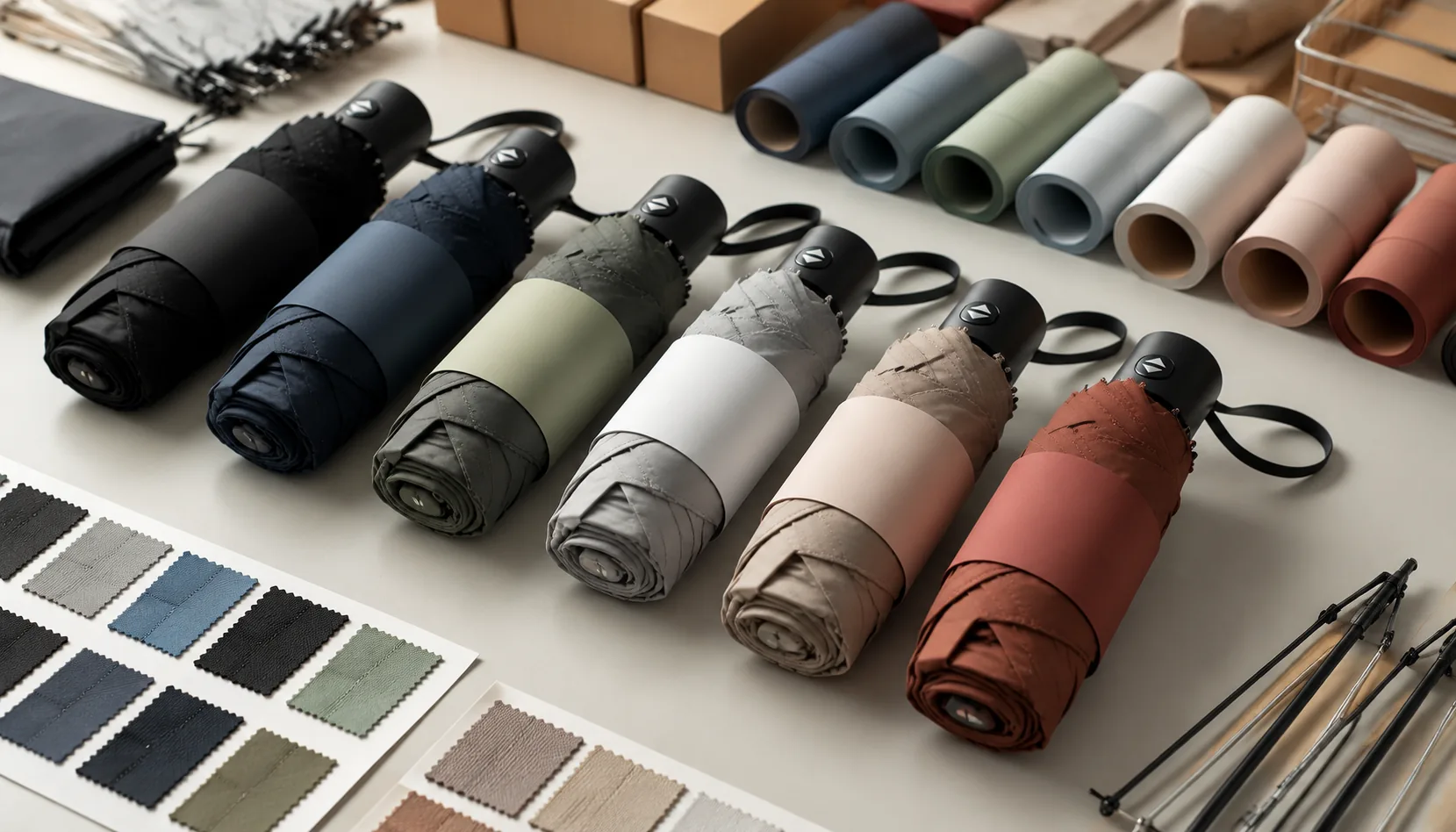
Branded Belly Bands for Compact Umbrella Retail Packs
Use belly bands to add brand impact, barcode space, and product cues to compact umbrella packs without raising MOQ or sl...
Read More »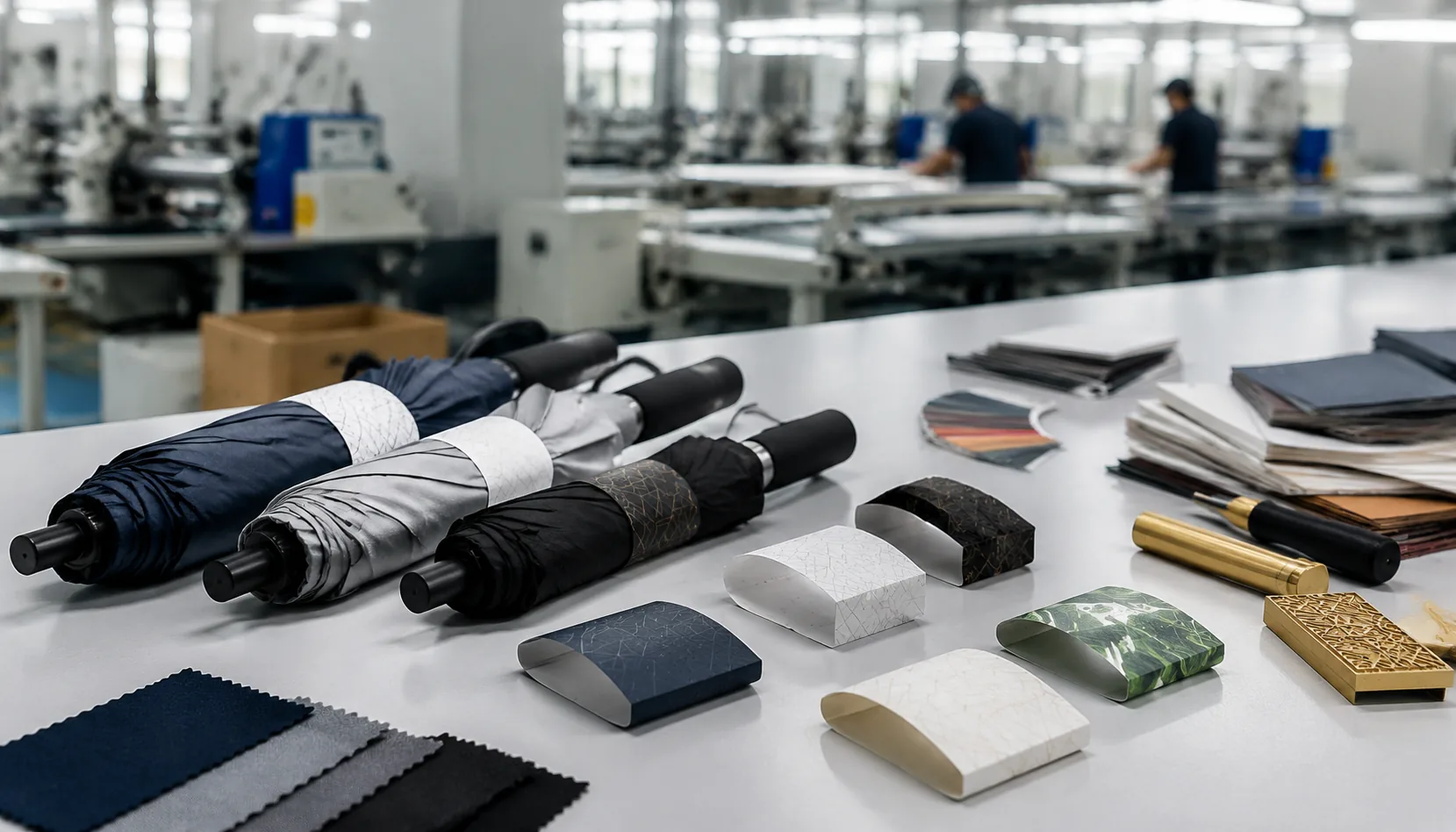
Branded Umbrella Belly Bands and Wrap Cards for Retail
Use belly bands and wrap cards to add brand story, barcodes, and specs without a full box, while keeping umbrella retail...
Read More »