Umbrella Sample Approval: PP Samples, Lab Dips, and Seals
A delayed sign-off on a canopy color, shaft finish, runner fit, or carton mark can push an umbrella order into rework before bulk production even starts. On our Songxia factory floor, we treat the umbrella sample approval process as the control point for locking lab dips, PP samples, sealing samples, mechanisms, materials, and packaging before cutting fabric at scale and preparing for AQL 2.5 inspection.
Separate Prototype, Sales Sample, and PP Sample
A prototype proves the idea; it does not prove the factory can repeat it. In umbrella development, the first handmade prototype is often built with available parts: a similar 23" shaft, substitute steel ribs instead of fiberglass, a close-enough 190T pongee, or a temporary EVA handle pulled from stock. That is acceptable for checking size, shape, opening feel, and rough artwork placement, but it is not a basis for mass production. A sales sample sits one step higher: it should look close enough for a buyer presentation, catalog photo, or distributor meeting, but it may still use non-final print chemistry, temporary packaging, or a canopy stitched by a sample-room sewer rather than the production line. Treat these early samples as decision tools, not as an umbrella production sign off.
The PP sample is different because it must be made from production-ready materials and the same process that will be used on the bulk order. A proper pre production umbrella sample should have the confirmed frame, whether 8K steel, 10K fiberglass, or 16K windproof construction; the approved canopy fabric, such as 190T or 210T pongee with Teflon or UPF 50+ coating; the final print method, whether screen printing, heat transfer, or sublimation; and the exact handle, runner, tips, sleeve, hangtag, inner carton, and export carton. If the order includes auto-open or auto-open-close hardware, the PP sample must use the same spring, button, and safety runner as bulk production. In the umbrella sample approval process, the PP sample is the first sample that should be judged like a shipment unit.
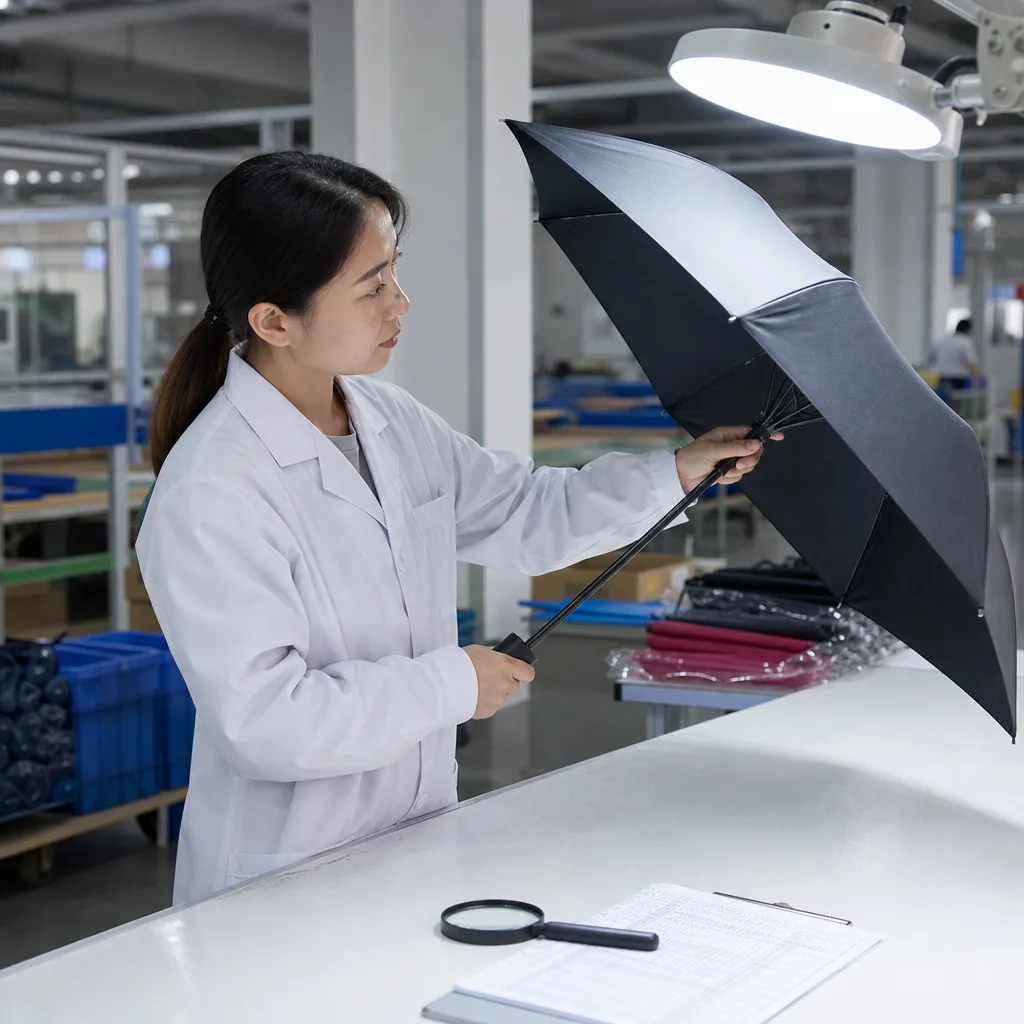
Buyers should be strict about separating visual approval from production approval. Color, for example, should come through umbrella lab dip approval or strike-off approval before the PP sample is sealed, because a canopy that is half a shade off under D65 light can become a full claim when 5,000 pieces arrive. Once the PP sample passes, keep at least two sealed references: one with the buyer or agent and one at the factory QC desk. These are often called golden sample umbrellas, and they control AQL 2.5 inspection decisions on canopy tension, print position tolerance, handle finish, sleeve stitching, barcode placement, and carton marks. Without a sealed PP sample, disputes become opinion against opinion; with one, inspectors can measure the bulk goods against a physical standard.
Approve Fabric, Color, and Coating Before Cutting
The umbrella sample approval process should start with fabric and color, not with stitching. Before we cut a single panel, we run lab dips against the approved Pantone or customer master standard under a D65 light box and confirm whether the shade is stable on the chosen base cloth. A pre production umbrella sample is only useful if the fabric lot, dye recipe, and finishing line are all tied to the same reference; otherwise the golden sample umbrellas become decoration instead of control points. For pongee, the first decision is usually 190T versus 210T, because the hand feel, opacity, and coating uptake are not the same. A 190T cloth may look acceptable in a flat swatch, but once it is tensioned on an 8K or 10K frame, color depth and pinhole visibility can change. Our standard practice is to seal the approved lot number before panel cutting, because once the cutting table starts, you cannot recover a shade mismatch cheaply.
Coating approval matters just as much as color. If the brief calls for a DWR or Teflon-like water-repellent finish, we check spray performance on the actual bulk fabric lot, not just on a lab hand sample, because coating pickup can drift by mill batch and curing temperature. When UPF 50+ is required, the black coating or laminated backing has to be verified before production sign off, especially on light outer colors where insufficient opacity will fail UV claims. That is why the umbrella lab dip approval step should include coating appearance, gloss, and any whitening or chalking after flexing. The umbrella production sign off should only happen after bulk fabric inspection confirms shade tolerance, coating consistency, and no striping across the roll width. Once the fabric passes, then panel cutting can begin with real confidence, not wishful thinking, which is the difference between a controlled run and a warehouse full of rejects.
Check Frame, Mechanism, and Construction Details
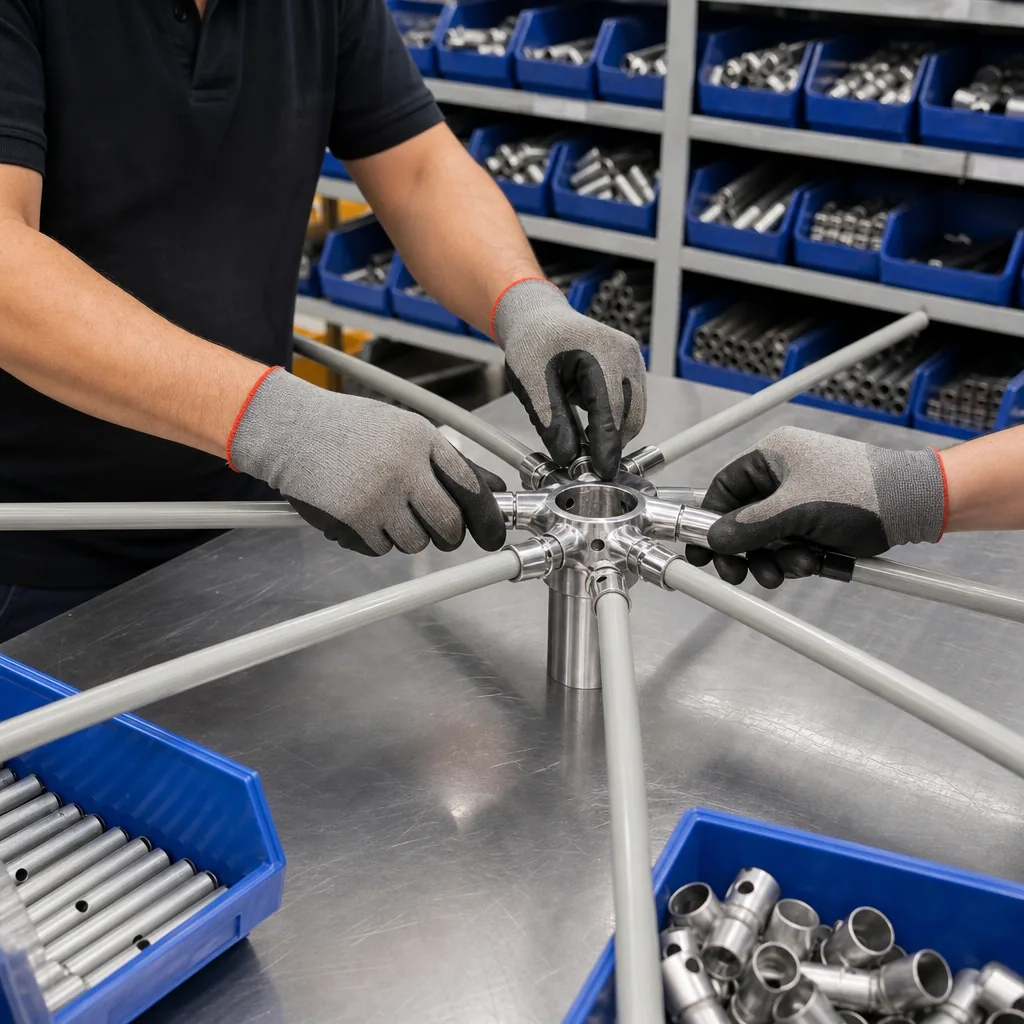
Frame approval starts with counting and measuring, not just opening the umbrella and saying it looks strong. For an 8K, 10K, or 16K frame, confirm the actual rib count, rib length, stretcher length, rib profile, and symmetry against the tech pack and the pre production umbrella sample. An 8K 23" straight umbrella may be acceptable for basic retail, while 10K or 16K is often chosen for golf, premium gift, or wind-resistant models, but extra ribs add weight and sewing complexity. Fiberglass ribs should be checked for consistent diameter, smooth resin finish, no white stress marks, and proper flexibility after reverse bending. Steel ribs should be checked for plating quality, rust protection, burrs at rivet holes, and whether the gauge matches the approved sample. In the umbrella sample approval process, a supplier should not switch from fiberglass to painted steel, or from solid fiberglass to mixed fiberglass-steel stretchers, without written confirmation because it changes both cost and field performance.
The shaft, runner, tips, ferrule, and handle decide whether the umbrella feels cheap or reliable in the user’s hand. Check whether the shaft is black painted steel, chrome steel, aluminum, fiberglass, or wood, and confirm wall thickness and straightness; a thin steel shaft may pass a photo review but bend during carton drop or wind testing. The runner must slide cleanly without scratching the shaft, jamming on the notch, or pinching fingers. For manual umbrellas, the spring catch should lock firmly with no half-open position. For auto-open models, the button force, spring power, and locking sound should be consistent across at least 5 to 10 samples. For auto-open-close folding umbrellas, test the full sequence: button opens canopy, button releases canopy, and shaft compresses back safely without excessive force. Tips and ferrule need tight fitting, no sharp edges, and correct color matching to the ribs or artwork specification.
A proper umbrella production sign off should include open-close cycle checks before the frame is sealed as the reference for mass production. For promotional orders, I usually want at least 50 manual open-close cycles and 30 auto-open or auto-open-close cycles on approval samples; for retail or outdoor models, 100 cycles is a better minimum before trusting the design. During cycling, watch for loose rivets, bent stretchers, runner cracks, broken springs, detached tips, handle wobble, and canopy tension pulling unevenly at the rib ends. Golden sample umbrellas should also be checked after the cycle test, not only before it, because weak plating, poor riveting, and undersized plastic runners often fail after repeated movement. If umbrella lab dip approval covers canopy color only, do not let it substitute for mechanical approval. At ZheBrella, our standard practice is to mark the approved frame sample separately from the fabric seal so inspectors can compare construction during AQL 2.5 final inspection.
Lock Printing and Packaging With a Signed Seal
The fastest way to create a printing dispute is to approve artwork by email only. A signed seal sample removes that ambiguity because it fixes the physical logo size, ink color, panel position, print direction, sleeve artwork, hangtag string position, retail barcode label, and carton marks in one object everyone can touch. For a 23" 8K straight umbrella, for example, the difference between a 90 mm chest-style logo and a 110 mm logo may look small on PDF, but it changes the visual balance on a 190T pongee panel after sewing tension pulls the fabric. During the umbrella sample approval process, I want the buyer to sign across the canopy edge or attach a dated approval tag so production cannot quietly “interpret” the artwork later. This is especially important for promotional orders where Pantone ink, sponsor logos, and event dates leave no room for rework.
A proper pre production umbrella sample should include the complete packaging set, not just the canopy print. The sleeve needs the same fabric or PVC/POE material planned for bulk, with confirmed logo placement and drawstring or snap specification. Hangtags must show paper weight, finish, hole position, safety wording, importer address, and barcode size; retail barcode labels should be scanned before approval, not after cartons are packed. Outer carton marks also need to be frozen: item number, color, quantity, gross/net weight, carton size, country of origin, and any FBA or retailer routing labels. Our standard practice at ZheBrella is to compare the sealed sample against the first 50 to 100 pieces off the line before allowing mass printing to continue, because a wrong sleeve or carton mark is cheaper to catch at piece 30 than after 300 cartons are palletized.
Keep two identical signed golden sample umbrellas: one sealed at the factory QC room and one with the buyer or sourcing office. The factory copy is used for line inspection, AQL 2.5 final inspection, and packing verification; the buyer copy is the reference if a distributor, retailer, or freight forwarder challenges the shipment later. Do not rely on photos alone, because screen-print ink thickness, heat-transfer edge sharpness, fabric hand feel, and label adhesion are hard to judge on a phone image. If umbrella lab dip approval has already fixed the canopy color, the signed golden sample should carry that approved fabric color into the final umbrella production sign off. After that point, any change to logo size, barcode format, hangtag wording, or carton mark should trigger a revised seal sample, not a casual WeChat confirmation.
Connect Sample Approval to Bulk QC
The approved pre production umbrella sample is not a souvenir for the buyer’s shelf; it becomes the control document for bulk production. In a proper umbrella sample approval process, the PP sample, signed artwork, approved fabric swatch, and umbrella lab dip approval are packed together and copied to cutting, printing, sewing, frame assembly, and final QC. For color, we usually control canopy shade within Delta E 1.0–1.5 for solid-dyed 190T/210T pongee, while POE/PVC/EVA panels need visual approval under D65 light because transparent materials shift depending on backing color. Print position should be checked from fixed reference points: center logo within ±3 mm on a single panel, repeat print within ±5 mm across seams, and heat-transfer skew under 2 degrees. Canopy diameter should normally stay within ±10 mm for 21–23 inch folding umbrellas and ±15 mm for 27–30 inch golf umbrellas after tensioning on the frame.
Inline QC should compare the first 20–50 pieces from bulk against the PP seal before the line is allowed to run at speed. This is where many factories lose control: the lab dip is correct, but the bulk roll has shade banding; the screen print is approved, but the jig moves after 300 panels; the 8K or 10K frame matches the sample, but the runner spring feels weaker after a supplier substitution. Golden sample umbrellas must be physically available on the line, not buried in the merchandiser’s cabinet. Inspectors should check rib count, shaft finish, handle material, tip alignment, strap length, sleeve size, label position, and opening force against the sealed sample. Minor cosmetic defects such as small thread ends under 5 mm, faint handle flow marks, or tiny coating specks may be tolerated if they do not affect appearance at normal viewing distance, but broken stitches, exposed frame rust, crooked logos, and panel puckering should be stopped immediately.
Final inspection under AQL 2.5 should use the same approved standard, not a new opinion from the inspector at shipment time. For umbrella production sign off, the carton pull should verify not only workmanship but also functional performance: manual, auto-open, or auto-open-close operation over repeated cycles; secure cap and tip riveting; canopy tension; packed length; barcode and master carton marks; and any claimed coating such as Teflon water repellency or UPF 50+. At ZheBrella, our standard practice is to attach the signed PP sample photos, lab dip number, Pantone reference, print tolerance sheet, and defect classification list to the QC file before bulk cutting starts. That makes arguments at final inspection shorter and more objective. If a buyer approves a navy canopy with a slight red cast, then AQL inspection must judge bulk against that approved shade, not against a fresh Pantone book under office lighting.
Frequently Asked Questions
Is a photo approval enough before mass production?
Photo approval is useful for quick comments, but it should not replace a physical PP sample for new designs. Fabric hand feel, spring strength, print registration, and packaging quality are hard to judge accurately from photos.
How long does umbrella sample approval usually take?
A standard logo umbrella sample often takes 5 to 10 days after artwork confirmation. Custom frames, molded handles, UPF coatings, or multiple lab dip rounds can extend approval by 2 to 4 weeks.
How many sealed samples should a buyer keep after umbrella approval?
A practical setup is 3 sealed samples: one kept by the buyer, one held by the factory, and one reserved for QC or the third-party inspector. All three should match approved canopy color, logo placement, mechanism, and packaging details.
When should lab dips be approved before the PP sample is made?
Lab dips should usually be signed off before cutting bulk canopy fabric and before the final PP sample is assembled. In most programs, this means approving color 5-10 days earlier so the factory can lock dyeing and avoid shade variation in bulk.
What changes should trigger a new umbrella sample instead of a simple email approval?
Any change to canopy fabric, Pantone target, frame structure, opening mechanism, handle mold, print size, or retail packaging should trigger a new sample. Even small updates like strap closure type or carton markings can affect packing count, drop testing, or inspection criteria.
Looking to Launch Your Custom Umbrella Line?
ZheBrella is a Zhejiang-based OEM/ODM umbrella manufacturer with 17 years of export experience. Free design, low MOQ from 100 pieces, windproof construction, full-color print.
Get Free Quote Now »People Also Search For
Related Articles
How Umbrella Samples Are Approved Before Mass Production
Learn how prototype, pre-production, and golden samples reduce color, fit, and mechanism errors before bulk umbrella pro...
Read More »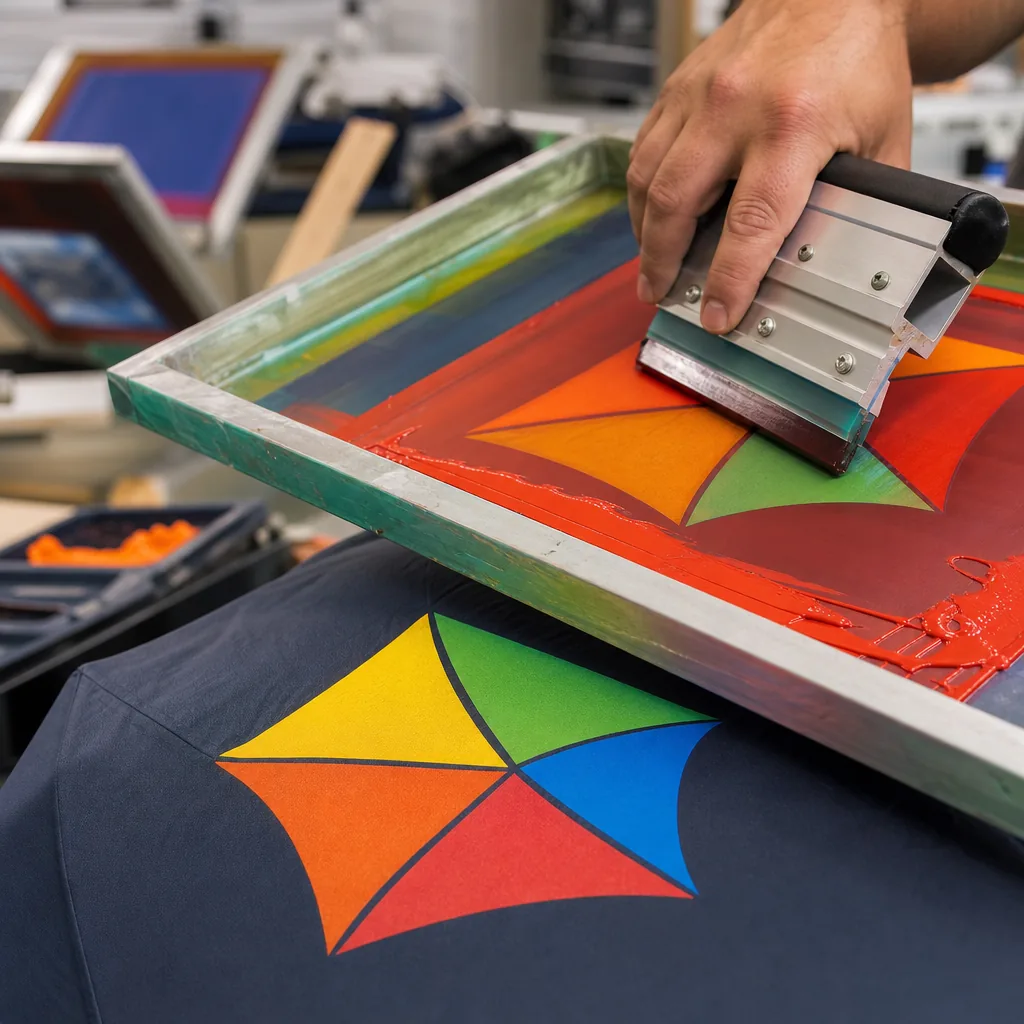
Umbrella Factory PPAP: How to Approve Parts Before Mass Run
Learn how umbrella PPAP-style approvals reduce defects by locking materials, dimensions, and golden samples before bulk ...
Read More »Umbrella Sample Approval Process for OEM Brand Orders
Learn how to approve umbrella samples faster with clear checkpoints for materials, print color, mechanism feel, and pre-...
Read More »