UV Sun Umbrella Buyer Guide for Resorts and Outdoor Use
For resorts and outdoor programs, a sun umbrella that looks good in a sample room can fail quickly under salt air, wind gusts, and daily staff handling. A practical UV sun umbrella buyer guide has to start with the details we check on the factory floor: fabric UPF rating, coating consistency, rib thickness, runner strength, stitching density, and packing that survives export. Getting these specs right early prevents fading, frame returns, and shipment disputes after the season has already started.
Separate Sun-Use Programs From Rain-Only Programs
Separate sun-use programs from rain-only buys before you approve size, fabric, or artwork. A standard 23 inch auto-open rain umbrella with 190T pongee is designed for short showers, water runoff, and quick storage. Resort sun umbrellas and outdoor promotional umbrellas stay open for hours on pool decks, beach paths, patios, golf outings, and outdoor check-in areas, so the risk shifts from simple leakage to UV degradation, heat buildup, canopy fading, and guest comfort. A practical UV sun umbrella buyer guide should define daily exposure hours, user posture, and target service life first: one event, one summer, or multiple resort seasons. Those answers drive the canopy material, UPF claim support, frame strength, size, print method, inspection level, and landed cost.
Specify the canopy construction before judging the logo. UPF 50+ umbrella sourcing should rely on fabric test reports, not a silver-looking underside or a supplier’s verbal claim. 210T pongee with black UV coating, solution-dyed polyester, and laminated POE, PVC, or EVA panels each perform differently on heat retention, hand feel, translucency, coating adhesion, and print durability. Light exterior colors usually reduce surface heat, while the underside must still control glare and UV transmission for guests sitting or standing under the umbrella for long periods. Sublimation works for full-panel graphics, but resort logos in direct sun need colorfast ink systems and pre-production fading checks. At ZheBrella, UV claims are matched to fabric reports, then coating adhesion, pinholes, and peeling are checked during production before shipment.
Match comfort and stability to the exposure site, not to a rain-only baseline. A compact steel 8K frame may be enough for city showers, but open resort decks and event fields often need fiberglass ribs, 10K or 16K structures, or a double canopy umbrella where wind moves off water or across open ground. Vented canopies reduce lift, and 50+ mph wind-tunnel performance depends on the shaft, runner, rib count, and rib material being specified as one system. For handheld shade, 27 inch and 30 inch golf umbrellas give practical guest coverage; 21 inch and 23 inch models fit transit kits, retail giveaways, and lower-cost event distribution. Manual open is usually tougher for staff-issued resort stock, while auto-open or auto-open-close suits convenience-led promotions. Lock MOQ, AQL 2.5 inspection, FOB or DDP terms, and the 25-45 day production lead time before artwork approval.
Choose Canopy Fabric and UV Protection Specs
Specify canopy fabric by weave density, coating plan, and frame load, not by color alone. Pongee 190T is the practical baseline for 21-inch and 23-inch folding resort sun umbrellas because it gives a smooth print face, packs tightly, and takes silver UV coating, black glue coating, Teflon water repellency, and heat-transfer logos without becoming board-stiff. Pongee 210T is tighter and looks cleaner when backlit, which matters on 27-inch and 30-inch golf, pool, and beach umbrellas where thin fabric looks cheap under noon sun. The tradeoff is higher fabric cost, more finished weight, and more stress on the runner, rib tips, seams, and panel stitching when the canopy is wet or loaded by wind. If you move to 210T, match it with fiberglass ribs or a stronger 8K/10K steel frame instead of treating the fabric upgrade as a standalone spec.
For UPF 50+ umbrella sourcing, require the tested rating after coating, printing, and sewing, not a generic UV claim from the fabric roll. A useful UV sun umbrella buyer guide should ask suppliers for UPF 50+ tested to AS/NZS 4399 or an equivalent lab method, with UVA and UVB blocking data separated when available. For coated pongee, black glue improves opacity and reduces light leakage; silver coating creates a reflective look but can show scratches or fold marks if cartons are compressed. Finished-canopy testing reduces risk because needle holes, seam allowance, logo printing, and panel tension can lower real coverage versus roll data. At ZheBrella, coated panels are checked before assembly and again after sewing, so weak coating areas are caught before final AQL 2.5 inspection.
Color affects heat, opacity, and how guests judge shade quality. Dark navy, black, forest green, and burgundy look more opaque because they pass less visible light, so buyers often perceive them as stronger UPF 50+ resort sun umbrellas. The cost is surface heat: dark single-canopy umbrellas absorb more heat on beach, patio, and poolside setups. White, ivory, sky blue, and pale yellow support resort branding and reflect more heat, but they need a reliable inner UV coating or they can glare and look translucent at noon. For outdoor promotional umbrellas, a light exterior with a dark inner coating often balances logo visibility, shade comfort, and UV performance. On a double canopy umbrella, the vented top improves wind behavior, while the second fabric layer adds opacity without making the exterior look visually heavy.
Build the Frame for Wind and Corrosion Resistance
For resort sun umbrellas exposed to salt air, pool chemicals, and daily gusts, specify fiberglass ribs before paying for decorative upgrades. Fiberglass flexes under wind load and returns closer to shape; painted steel ribs are cheaper but can bend permanently and start rusting at rivets, springs, rib tips, runner joints, and scraped coating edges. Steel is still practical for low-cost 21" or 23" outdoor promotional umbrellas built for short campaigns, where FOB cost matters more than multi-season service life. For beachside and poolside programs, pair fiberglass ribs with a powder-coated steel or aluminum shaft, use stainless hardware where feasible, and choose a runner that drains instead of trapping water. Rust resistance affects more than appearance: orange staining on 190T or 210T pongee can fail visual inspection under AQL 2.5 even if the frame still opens. A practical UV sun umbrella buyer guide should treat corrosion control as a claim-risk item tied to durability, compliance review, and replacement cost.
Match rib count to canopy diameter, wind exposure, and price point. An 8K frame is the default for compact and mid-size manual or auto-open umbrellas because it keeps weight, carton volume, and unit cost under control. For 27" and 30" canopies used on exposed pool decks, terraces, golf areas, and premium retail programs, 10K or 16K fiberglass spreads wind load across more rib pockets and reduces edge flutter. The cost is higher material use, longer assembly time, bulkier packing, and tighter sewing tolerance; on a 16K layout, minor rib-pocket drift becomes visible once the canopy is tensioned. For UPF 50+ umbrella sourcing, 210T pongee with UV coating on an 8K or 10K fiberglass frame is often the best resort balance. Move to 16K only when larger size, repeated gust exposure, or retail positioning justifies the added cost and inspection control.
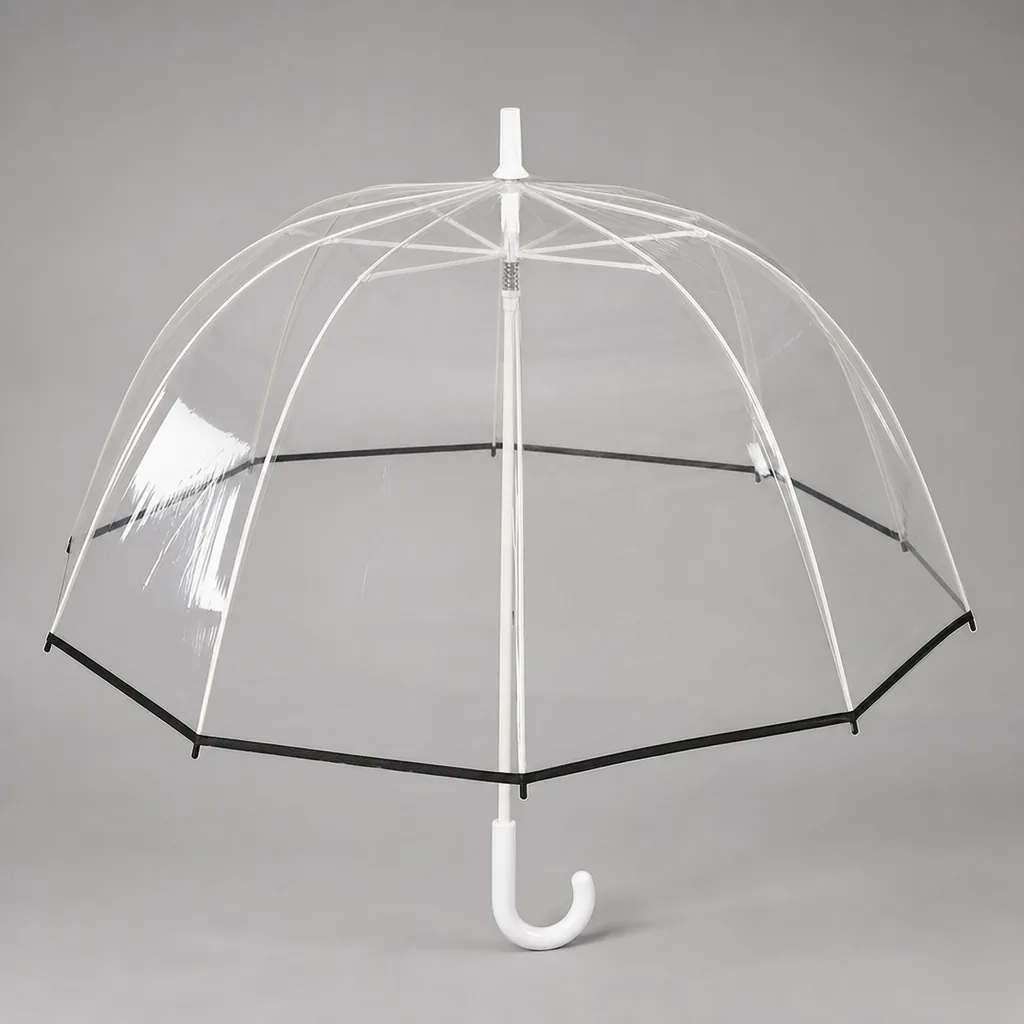
A double canopy umbrella improves wind resistance only when the vent is engineered to release pressure. The upper canopy must let gusts escape instead of turning the umbrella into a sail; combined with fiberglass ribs and a stable shaft, stronger windproof builds can target 50+ mph wind-tunnel performance. Vent overlap is the production risk: too narrow allows rain entry, while too tight blocks airflow and transfers stress to the ribs, runner, or shaft. For resort sun umbrellas around pools, beach bars, and outdoor dining, specify double-canopy construction where wind is a recurring operating condition, not as a cosmetic feature. Put rib material, 8K/10K/16K layout, canopy fabric, UPF 50+ or coating requirement, wind-test target, and AQL 2.5 criteria directly in the PO. That makes cost, durability, lead-time impact, and claim exposure measurable before mass production.
Pick Opening Style and User-Friendly Details
Select the opening style by control point and replacement risk. For guest self-use, rental stations, and housekeeping carts, manual-open resort sun umbrellas are usually the safer buy because they have fewer springs and locks to fail after sand, sunscreen, and salt air enter the shaft. A 23" or 27" manual frame with a smooth runner, reinforced notch, fiberglass ribs, and a 190T or 210T pongee canopy will outlast many low-cost auto-open frames under daily pool and beach handling. Auto-open makes more sense for branded resale, where shoppers notice the feature immediately, especially on 21" compact and 23" straight umbrellas. Auto-open-close should stay mainly in travel retail unless the spring, button, and lock pass repeated open-close cycle testing. A practical UV sun umbrella buyer guide should treat opening style as a cost, complaint-rate, and safety decision, not a catalog preference.
Approve all user-contact details before releasing artwork. Glossy plastic hook handles become slippery with wet or sunscreen-covered hands; matte EVA, rubberized ABS, bamboo, or molded PP with finger shaping gives staff and guests better grip during repeated use. For outdoor promotional umbrellas, check that the button does not pinch the palm, the runner locks cleanly, and rib tips, caps, ferrules, and exposed rivets have no sharp edges. Straight handles pack efficiently in rental bins and retail cartons; crook handles suit room racks, concierge stands, and display hooks. Tie straps must close coated 190T or 210T canopies without hard creasing, which can shorten the life of silver, black-out, Teflon-treated, or UPF 50+ panels. Carry sleeves are part of UPF 50+ umbrella sourcing because they reduce abrasion in carts, storage rooms, and guest luggage.
Test for resort handling, not showroom operation. Staff may open and close the same umbrella 20 to 50 times per day, so weak runner springs, sharp rib ends, loose caps, and unstable lock buttons quickly turn into guest complaints or injury risk. On a double canopy umbrella, the vent layer must sit flat and close without catching; a twisted vent frustrates users and damages stitching. Fiberglass ribs suit pools and beaches because they flex in gusts and resist rust better than painted steel, while steel shafts can still work on 27" and 30" golf-style umbrellas when stiffness matters more than weight. ZheBrella checks open-close cycling, visual defects, button force, lock stability, and AQL 2.5 inspection before shipment. For resale, add a clear hangtag instruction; for rental stations, train staff to close from the runner instead of pulling coated fabric panels.
Confirm QC, MOQ, and Shipping for Seasonal Deadlines
Freeze QC standards before the pre-production sample is approved; once bulk sewing starts, rework can consume the same calendar window buyers need for freight booking. For resort sun umbrellas and outdoor promotional umbrellas, put AQL 2.5 major-defect limits directly on the PO and inspection checklist. Inspect UV-coated 190T or 210T pongee against the approved UPF 50+ report, then check for coating streaks under backlight, shade variation between panels, and uneven hand feel. Separate frame checks from fabric checks: verify paint adhesion, rib-tip burrs, rust on steel shafts, loose rivets on fiberglass or steel ribs, and clean runner movement. Each inspected unit should complete at least 20 open-close cycles, covering manual, auto-open, and auto-open-close mechanisms where applicable, with no canopy twist, lock slip, or runner jam. For a double canopy umbrella, add seam pull checks at the vent, top notch, runner, and panel joins to confirm stitching does not pucker or tear after repeated handling.
Set MOQ by the frame platform, not by logo count. A standard 23-inch 8K stick umbrella in steel or fiberglass can often start at 500 to 1,000 pieces per color, but 27-inch and 30-inch golf umbrellas, 10K windproof frames, 16K premium rib sets, wood handles, POE/PVC/EVA clear canopies, and custom color-matched parts usually require higher commitments. For UPF 50+ umbrella sourcing, fabric booking can drive the schedule as much as assembly capacity. Stock black-coated 190T or 210T pongee is typically faster to reserve; custom sublimation, Pantone-dyed canopy cloth, or combined Teflon plus UV treatment can add lead time before cutting even starts. ZheBrella separates artwork approval, frame confirmation, and fabric booking so buyers can see whether print files, components, or cloth availability is controlling the delivery date.
For summer programs, count backward from the resort opening, retail shelf date, or event date and hold time for inspection failure, because umbrellas are bulky and slow to rework. A realistic schedule is 3 to 7 days for samples using existing parts, 10 to 15 days for custom printed samples, 25 to 35 days for bulk production after deposit and approvals, and 3 to 7 days for final inspection, carton marking, and export booking. FOB Ningbo or Shanghai suits experienced importers with a forwarder who can protect vessel space and manage customs timing. DDP is cleaner for distributors sending mixed resort programs to multiple U.S. or EU addresses because customs clearance, duties, and last-mile delivery remain with the supplier. The practical rule in this UV sun umbrella buyer guide is simple: use FOB when freight control lowers cost and schedule risk; use DDP when delivery execution would distract your team from the launch.
Frequently Asked Questions
Are 16K ribs better for sun umbrellas used at resorts?
Not automatically. A 16K look can feel more premium, but many resort buyers still choose 8K when they prioritize simpler construction, easier replacement, and stronger value at volume.
Can a UPF 50+ umbrella also be used for rain programs?
Yes, if the canopy fabric and frame are built for both conditions. Buyers should confirm the water-repellent finish, seam quality, and frame material so the umbrella performs beyond sun protection alone.
What UPF rating should resorts specify for sun umbrellas used around pools or beach areas?
For resort and outdoor guest use, UPF 50+ fabric is the standard specification because it blocks over 98% of UV radiation. Buyers should confirm the test method and request fabric test reports before bulk production.
What frame materials are recommended for outdoor promotional sun umbrellas?
Fiberglass ribs are preferred for wind flex and corrosion resistance, while powder-coated steel or aluminum shafts are common depending on the target price. For coastal resorts, aluminum and fiberglass combinations usually perform better against humidity and salt air.
What MOQ and lead time should importers expect for custom printed UV sun umbrellas?
Typical MOQ for custom logo sun umbrellas is around 500 to 1,000 pieces per design, depending on size, fabric, and print method. Standard production lead time is usually 30 to 45 days after sample approval and deposit.
Looking to Launch Your Custom Umbrella Line?
ZheBrella is a Zhejiang-based OEM/ODM umbrella manufacturer with 17 years of export experience. Free design, low MOQ from 100 pieces, windproof construction, full-color print.
Get Free Quote Now »People Also Search For
Related Articles
Buyer Guide to Sun and Rain Umbrella Specs for Dual Use
Specify one umbrella for sun and rain with the right fabric, frame, coating, and testing so retail and promo programs me...
Read More »Single-Canopy vs Double-Canopy Umbrellas for Buyer Programs
Learn when single- or double-canopy umbrellas make sense by budget, wind performance, fabric use, printing needs, and im...
Read More »Choosing a Sun Umbrella for Outdoor Retail and Events
Learn how to specify UV protection, canopy fabric, and wind-resistant construction when sourcing sun umbrellas for retai...
Read More »