Variable Data Printing for Event Umbrella Campaigns
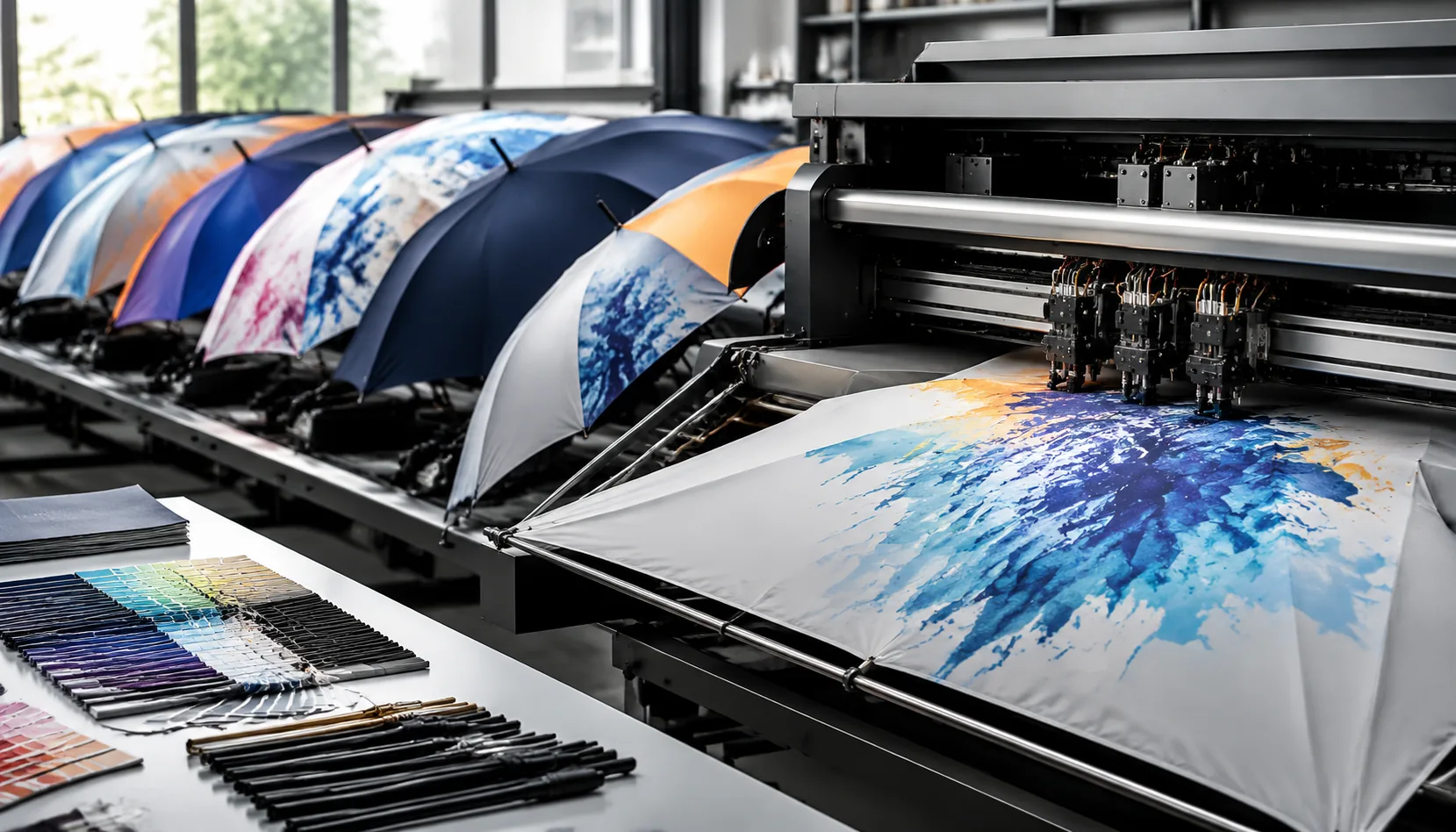
Event buyers often want every umbrella to carry a different QR code, serial number, venue name, or sponsor logo, but the production risk is not in the artwork file—it is in keeping print order, scan contrast, drying time, and packing lists aligned on the line. For variable data umbrella printing, we check panel fabric, ink spread, jig registration, and code readability before bulk output, because one mismatched carton can create more trouble than a late shipment.
What Variable Data Means on Umbrellas
Variable data means the umbrella artwork is not identical from piece to piece. On custom event umbrellas, that can be unique QR codes for registration or coupon tracking, serial numbers for VIP gifts, attendee names, city/location marks, sponsor tiers, booth numbers, or different language versions for the same campaign. A 23-inch auto-open umbrella might use the same navy 190T pongee canopy and fiberglass 8K frame across the order, but panel 3 could carry 500 different event umbrella QR codes while panel 5 keeps the same master logo. For numbered promotional umbrellas, we usually reserve a clean print area of at least 80 x 80 mm for QR readability and avoid seams, heavy canopy curvature, and dark-on-dark artwork that scanners hate.
Digital umbrella printing is usually the better route when the design changes many times in one order. Screen printing is fast and economical for one logo repeated 5,000 times, but every new name, QR code, or serial range means new film, new screens, new setup, and higher risk of mixing panels on the sewing line. With digital umbrella printing, the data file drives the variation directly, so 300 umbrellas can carry 300 different codes without rebuilding the print station each time. The tradeoff is that digital output needs tighter file control: vector logos, high-resolution QR codes, consistent quiet zones, and a locked numbering spreadsheet checked before printing.
For variable data umbrella printing, the factory workflow matters as much as the printer. We print the canopy panels before sewing, then bundle panels by sequence so the cutting, stitching, and final assembly teams do not break the numbering order. Our standard practice at ZheBrella is to run a pre-production proof with 5 to 10 live QR scans under indoor light and daylight, then check finished goods under AQL 2.5 for print position, code legibility, color consistency, and sequence accuracy. Buyers should also decide early whether data links are static or trackable, because changing a QR destination after production is easy only if the campaign uses redirect management instead of fixed encoded URLs.
Best Umbrella Styles for Variable Campaigns
Folding umbrellas are the practical choice when the campaign depends on high handout volume, low freight cost, and easy carry after the event. A 21" or 23" 3-fold auto-open-close umbrella with 190T or 210T pongee gives enough panel area for names, seat sections, team assignments, or event umbrella QR codes without turning the item into a bulky retail product. For variable data umbrella printing, I prefer digital umbrella printing or heat transfer on pre-cut panels before sewing; it keeps barcodes and serial numbers sharper than trying to print over a finished curved canopy. The limitation is the print zone: 8K steel ribs create eight triangular panels with seam interruptions, and the folding joints can leave pressure marks if the ink film is too thick. Keep QR codes at least 35–45 mm away from ribs and hems, and avoid placing unique numbers across panel seams. Auto-open-close mechanisms also need clearance near the runner, so the inner crown area is a poor place for scannable data.
Golf umbrellas suit outdoor festivals, races, campus events, and sponsor activations where visibility matters more than packing size. A 27" or 30" straight umbrella with 8K fiberglass ribs gives larger clean panels for numbered promotional umbrellas, sponsor logos, and attendee-specific graphics; a 16K frame looks premium but divides the canopy into narrower wedges, which reduces the usable width for large QR codes or long alphanumeric IDs. If wind exposure is real, choose a double-canopy vented windproof build with fiberglass shaft and ribs instead of a cheap steel frame. We normally rate event golf umbrellas by both frame flex and canopy recovery; a good double-canopy unit should survive 50+ mph gust testing without ribs inverting permanently. The vent layer adds a seam line and overlap, so keep variable artwork on the lower main panels, not the upper vent flap. Manual open is sturdier for heavy golf frames, but auto-open is acceptable if the spring is matched to canopy weight and passes open-close cycle testing.
Clear bubble umbrellas are strongest for photo-heavy campaigns, press lines, weddings, and fashion events because the shape frames the face while keeping rain off shoulders. The usual 23" or 25" dome uses POE, EVA, or PVC rather than pongee, so the printing method changes: screen printing works for simple marks, while UV digital or transfer labels are better for unique names and scannable codes. Clear canopies show ink from both sides, which is useful for custom event umbrellas in photos, but every smudge, registration error, and trapped dust particle is more visible than on dark fabric. Bubble frames are commonly 8K steel or fiberglass; 16K is uncommon because extra ribs clutter the transparent look and create too many visual lines through the dome. Print zones should sit on the lower front or side panels, away from the curved crown where distortion makes QR scans unreliable. Auto-open bubble umbrellas feel convenient at arrivals, but the mechanism must be tested carefully because stiffer POE and PVC can resist opening more than woven pongee.
QR Code and Small Text Print Requirements
For event umbrella QR codes, the first rule is size before artwork. On a 190T or 210T pongee canopy, I do not approve production unless the printed QR is at least 35 x 35 mm for close-range hand scanning, and 45–60 mm if people will scan while walking past a booth or outdoor queue. POE clear panels need the same code size, but the background must be controlled because the scene behind the umbrella can reduce contrast. Keep a quiet zone equal to at least 4 QR modules on all sides; in factory terms, that usually means 3–5 mm of clean white or light solid color around a small campaign code. Black on white scans best. Dark navy on gray, metallic ink, low-opacity white, or busy full-panel graphics create rejects even when the file looks sharp on screen.
Variable data umbrella printing is less forgiving than normal logo work because every code, name, or serial number may be different. For numbered promotional umbrellas, we usually keep small text at 6 pt minimum for simple sans-serif fonts, but 7–8 pt is safer on woven pongee because ink gain and fabric texture soften edges. Digital umbrella printing can hold cleaner micro-detail than screen printing, especially for short-run custom event umbrellas with unique QR codes, but the RIP file still needs high-resolution vector or 600 dpi raster input. Heat-transfer labels can produce excellent code edges, yet the transfer film must be tested for flexibility so it does not crack near fold lines after opening and closing 200–300 cycles.
Never place a QR code across a seam, rib tip, ferrule area, or any panel zone that folds sharply when the umbrella is closed. A perfect code on the cutting table can become unreadable once the canopy is stretched over 8K or 10K ribs because the printed square turns slightly trapezoid on the curved surface. UPF 50+ coatings, especially heavy silver or black-out layers, also need caution; some coatings reduce ink adhesion or create glare under event lighting. Our standard practice at ZheBrella is to print pre-production samples, mount them on the actual 21", 23", or 27" frame, then scan each code with both iPhone and Android cameras at 0.5 m, 1 m, and angled positions before bulk cutting. That test is mandatory for variable data umbrella printing, not optional.
Managing Artwork Files and Production Batches
Clean data matters more than clever artwork when variable data umbrella printing is involved. For event umbrella QR codes, seat numbers, staff IDs, sponsor names, or city-specific messages, we ask buyers to lock one master CSV before prepress: column headers should match the print zones, such as panel_1_qr, panel_2_name, handle_tag_number, carton_group, and sequence_no. Do not send five Excel versions through email with comments like “use the latest one”; that is how duplicate QR codes and skipped numbers happen. For numbered promotional umbrellas, the safest setup is one row per umbrella, one unique serial, and one output PDF proof per SKU group. QR codes should be supplied as vector EPS/SVG or generated from verified URLs at 300 dpi equivalent, then scanned from a printed paper proof before we touch fabric. Long URLs should be shortened only after the destination page is final, because reprinting 1,000 canopies over a changed landing page is an expensive mistake.
Artwork proofs should be named like batchA_0001-0250_black_23inch.pdf, not final-final-v3.pdf. Our standard practice at ZheBrella is to prepare a numbered proof sheet showing 10 to 20 representative records, then one physical approval sample for color, logo size, QR scan distance, and placement across the canopy curve. A 190T or 210T pongee panel stretches slightly during sewing, so artwork that looks centered on a flat AI file can move 3–5 mm after hemming and rib attachment. Batch labels should appear on inner polybags, master cartons, and the production traveler: PO number, design range, frame type, rib count, canopy color, print method, and carton sequence. For custom event umbrellas split by venue or sponsor, we also separate cut panels by bundle tags before sewing, because mixing panels at rib assembly is harder to catch than a print defect during AQL 2.5 inspection.
MOQ and unit cost depend heavily on print method. Digital umbrella printing is practical for mixed designs, variable names, photo backgrounds, and short runs; we can often start around 100–300 pieces per design family if the umbrella body is standard 21 inch, 23 inch, or 27 inch with stock 190T pongee. Screen print is cheaper for 1-color or 2-color repeat logos at volume, but each color and each design needs a screen, so mixed batches of 50 pieces per sponsor usually lose the cost advantage. A 1,000-piece order with one logo may price well by screen print, while the same 1,000 pieces split into 100 unique QR-code designs usually belongs in digital transfer or sublimation. Mixed designs also slow packing and QC: workers must match CSV ranges to cartons, scan random QR codes, verify numbered sequences, and keep overrun replacements in the right batch. Buyers should budget extra lead time, usually 3–5 days more than a plain logo job, for proofing, data checking, and controlled packing.
Quality Control, Packing, and Delivery Planning
For variable data umbrella printing, the inspection plan has to treat the printed data as a functional component, not decoration. Our standard practice at ZheBrella is AQL 2.5 for major defects, with a separate data audit before final packing: QR code sequence, duplicate-code screening, scan success, sponsor logo position, and color consistency against the approved proof. On custom event umbrellas, we normally sample across the full run, not just the top cartons, because digital umbrella printing files can fail in the middle if the RIP queue, barcode database, or heat-transfer batch changes. For event umbrella QR codes, we test scans under indoor LED light and outdoor shade using both iOS and Android phones, then record failed or slow-loading links for reprint before assembly. Numbered promotional umbrellas also need human-readable digits checked against the carton list, because a clean print is still a defect if umbrella No. 1842 is packed where No. 1482 should be.
Logo position tolerance should be agreed before production, especially on 23-inch and 27-inch panels where the rib seam can make a centered mark look visually off by 5–8 mm. For screen print, we control ink viscosity and mesh tension; for heat transfer, we check edge lift after opening and closing the umbrella 20 times; for sublimation on 190T or 210T pongee, we verify that black QR modules stay sharp after fabric shrinkage. Color consistency is judged against a signed pre-production sample, with Pantone variance handled more strictly for sponsor marks than for background graphics. Variable data umbrella printing usually adds 2–4 days for database cleaning, proof generation, and QR validation before the normal umbrella lead time starts. A realistic schedule is 3–5 days for digital proofing, 7–10 days for sampling if a physical strike-off is required, and 18–30 days for bulk production depending on frame type, canopy material, and order volume.
Packing planning prevents the most expensive event-day failures. If umbrellas are distributed by gate, venue, sponsor booth, VIP lounge, or hotel drop, cartons should be sorted that way at the factory, not reworked in a warehouse two days before the event. We print carton marks with venue name, sponsor code, QR range, quantity, gross weight, and carton number, then match those details to the packing list and commercial invoice. FOB Ningbo or Shanghai works when the buyer controls freight and customs; DDP is better for event planners who need umbrellas delivered directly to a convention center, stadium, or agency warehouse with duties and last-mile delivery included. For DDP schedules, allow extra buffer: 5–7 days for export booking and customs documents, 25–35 days by sea to the U.S. or Europe, or 5–9 days by air when the event date is fixed and missing the delivery window is not an option.
Frequently Asked Questions
Can QR codes on umbrella canopies scan reliably?
Yes, if the code is large enough, high contrast, and kept away from seams and deep curves. Buyers should approve a printed scan test before bulk production.
Is variable data printing suitable for small event orders?
It can be, especially with digital printing, but MOQ and setup costs still depend on umbrella style, fabric, and artwork count. For very small runs, using fewer data versions helps control cost and lead time.
What is the minimum order quantity for umbrellas with unique QR codes or serial numbers?
For variable data printing, MOQ is usually 500–1,000 pieces depending on the umbrella model and print method. Orders with fully unique QR codes may require a digital print setup file and barcode/QR data in CSV format.
How do you make sure printed QR codes scan correctly on umbrella fabric?
QR codes should be tested at final print size, usually at least 25–30 mm wide with strong contrast and a quiet zone. Pre-production samples are recommended, and scan testing should be included in the inspection checklist.
Can one event umbrella order include different sponsor names, venues, or numbered batches?
Yes, the order can be split into sponsor or venue variants as long as artwork is clearly mapped by quantity. A typical lead time is 25–40 days after artwork approval, with extra time needed for multiple data sets or sample confirmation.
Looking to Launch Your Custom Umbrella Line?
ZheBrella is a Zhejiang-based OEM/ODM umbrella manufacturer with 17 years of export experience. Free design, low MOQ from 100 pieces, windproof construction, full-color print.
Get Free Quote Now »People Also Search For
Related Articles
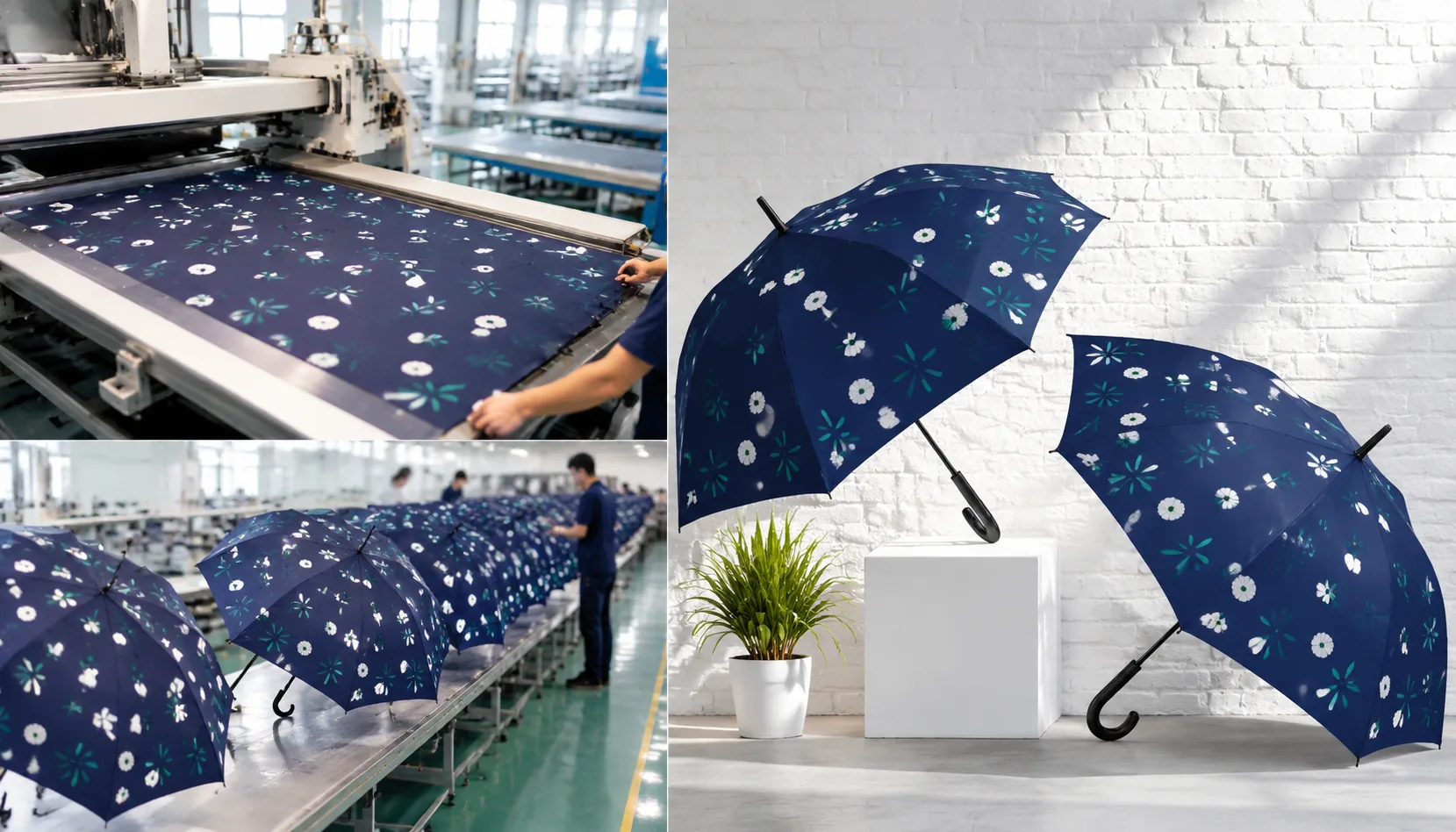
Step-and-Repeat Umbrella Printing for Sponsor Campaigns
Plan sponsor-ready step-and-repeat umbrella prints with logo spacing, panel seams, 190T/210T fabric choices, MOQ, sample...
Read More »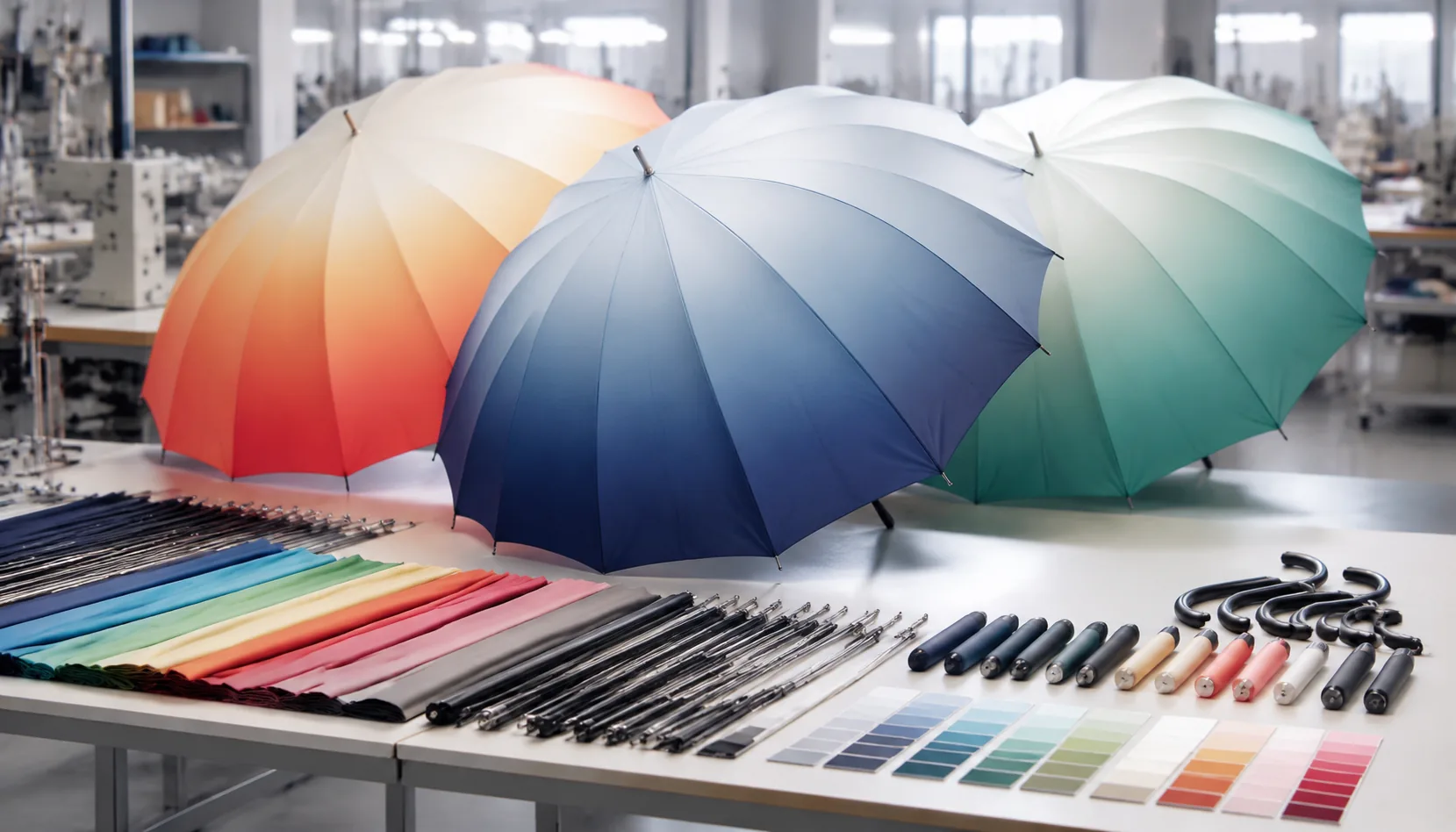
Gradient Umbrella Printing for Retail and Event Campaigns
Plan gradient and photo umbrella prints with realistic color control, fabric selection, panel alignment, sampling steps,...
Read More »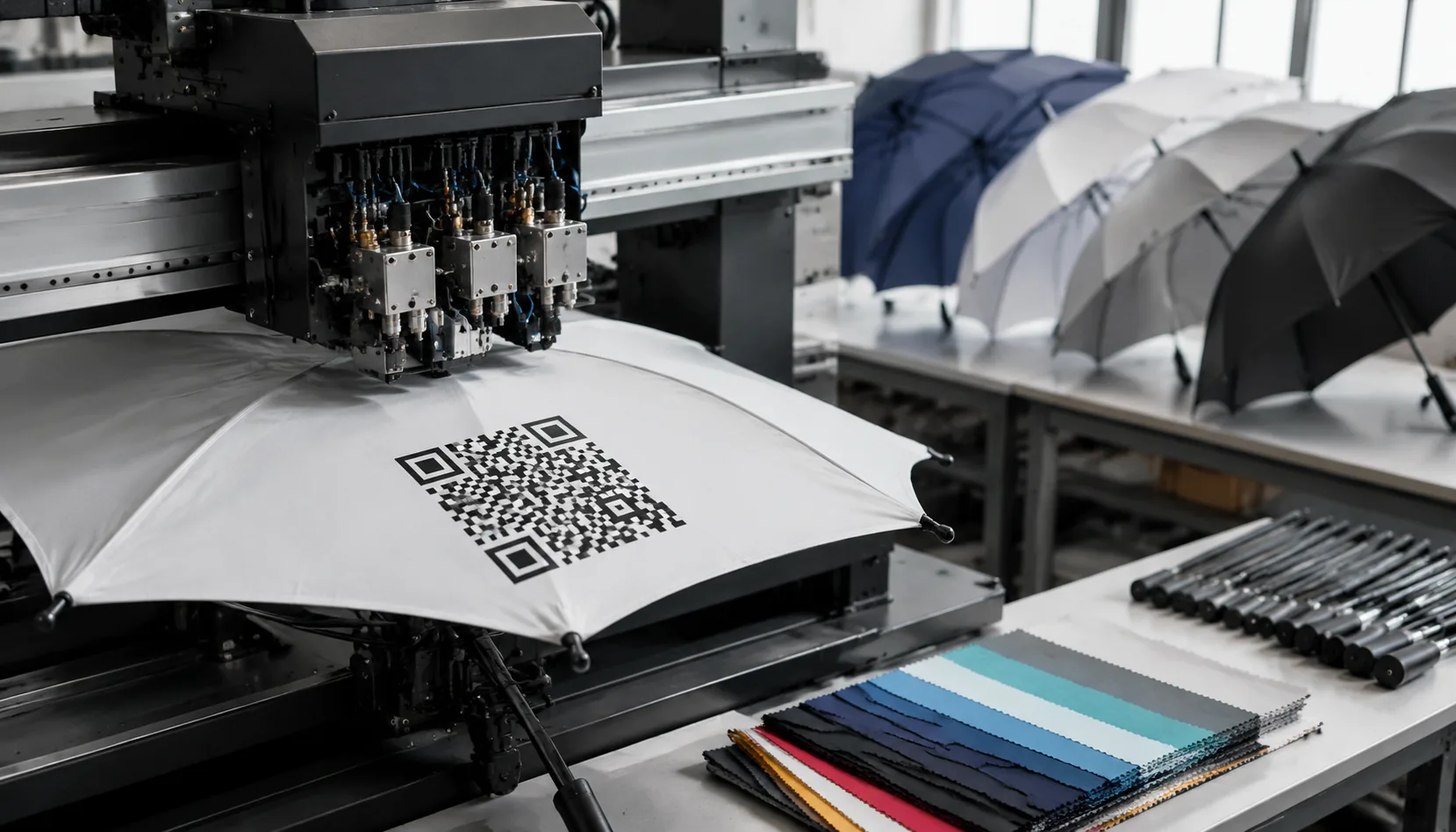
QR Code Printing on Promotional Umbrellas for Campaigns
Plan scannable QR code umbrella printing with the right panel size, contrast, fabric, testing, MOQ, and delivery terms f...
Read More »