Branded Umbrella Belly Bands for Gift and Retail Packs
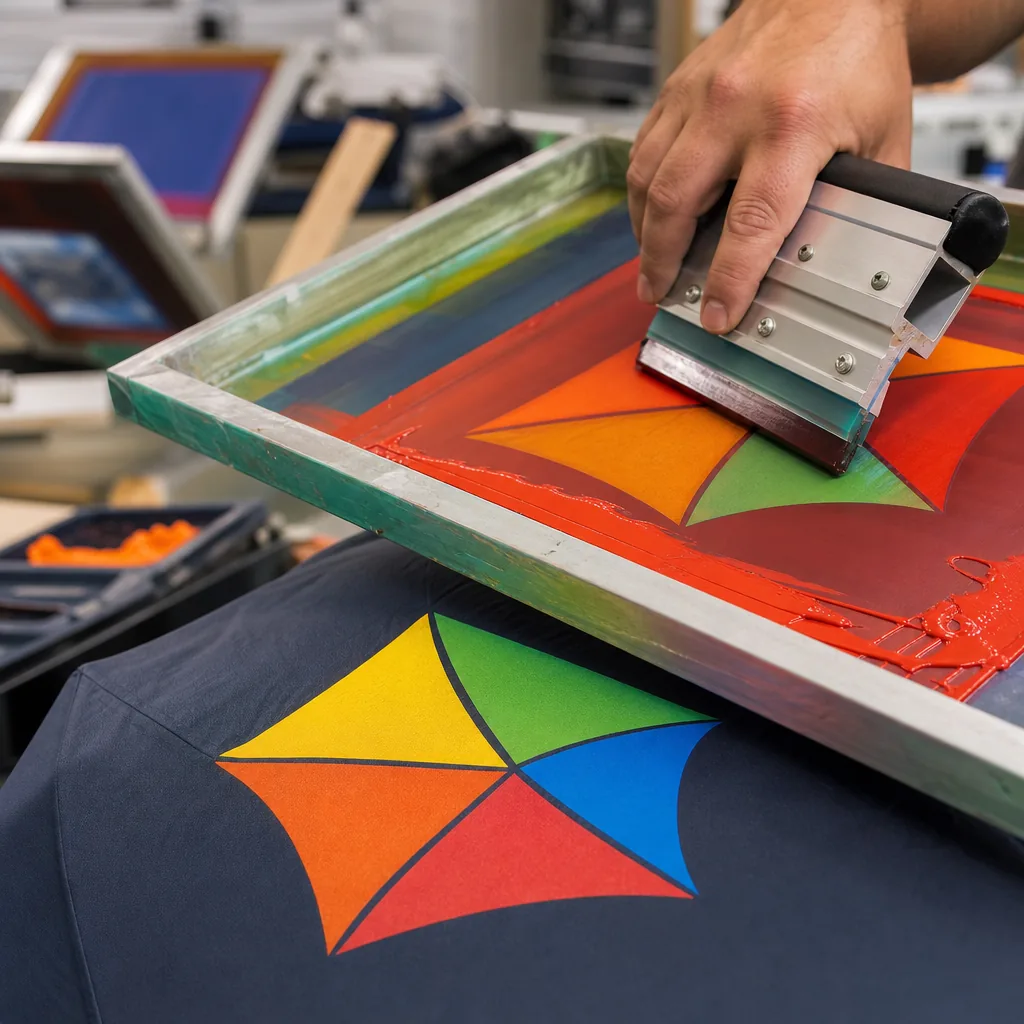
A gift umbrella can be well made, but if the pack looks generic on the shelf or in a corporate handout, the brand value is lost before the canopy is opened. On our Songxia production floor, branded umbrella belly bands are a practical way to add logo presence without slowing packing lines or redesigning the carton. The key is matching band size, paper weight, print method, and bundling process to the umbrella diameter, order quantity, and retail or gift-pack requirements.
Why Belly Bands Work for Umbrella Branding
Branded umbrella belly bands work because they add a visible branding surface at the exact moment the buyer or recipient first handles the umbrella, without forcing a change to the sleeve, fabric case, or retail box. In production, that matters. A sleeve pattern is tied to umbrella size and handle style—21" compact, 23" straight, 27" golf, or 30" storm models all pack differently—while a paper belly band can be adjusted with a simple length change. For procurement teams, this keeps the base umbrella standardized: 190T or 210T pongee canopy, manual or auto-open frame, fiberglass or steel ribs, and the same carton configuration. The band carries the logo, campaign name, barcode, QR code, care icons, or sustainability message, while the umbrella itself remains usable for multiple programs. It is a low-risk layer of retail umbrella branding because it can be approved late in the timeline, often after canopy printing and sewing have already started.
For corporate gifts, a belly band makes the pack look intentional instead of like a loose umbrella pulled from stock. A navy 23" auto-open umbrella with a tone-on-tone canopy logo can be finished with a kraft band printed in one color for a bank, insurance company, or trade show sponsor. Hotels use the same idea for lobby amenities: the umbrella may stay unprinted for theft control or re-use, while the band carries the property name, room charge notice, or rainy-day guest message. Event giveaways benefit even more because custom umbrella bands can separate VIP, staff, sponsor, and general attendee packs without changing the umbrella SKU. If 5,000 pieces are split across four sponsors, the factory can run the same 8K frame and canopy, then apply four band artworks at final packing. That avoids small-batch sewing interruptions, which are usually where delivery schedules get hurt.
Good umbrella packaging design also solves practical retail problems. A band can lock the folded umbrella tightly, cover the tie strap area, and create a clean front panel for price stickers or EAN/UPC labels, especially when the umbrella is sold in a bundle with a rain poncho, tote bag, or travel pouch. For retailers, the band helps standardize shelf appearance across mixed colors, so black, red, and blue umbrellas still read as one collection. For gift packs, it can bridge a plain sleeve and an outer carton, giving the recipient a branded first impression before they see the canopy print. Our standard practice at ZheBrella is to specify paper weight, band width, glue or tab closure, and carton packing method during pre-production, because a band that looks fine on a flat proof can tear, slide, or wrinkle if it is not tested on the finished umbrella diameter.
Band Size, Paper Stock, and Closure Choices
Band sizing should start from the folded circumference, not from the umbrella’s nominal size. For a 21" or 23" folding umbrella, most custom umbrella bands finish at 45–60 mm wide and 220–280 mm long, depending on whether the canopy is 190T pongee, 210T pongee, or thicker recycled PET fabric. Compact auto-open-close models need more tolerance because the shaft, ribs, and wrist strap create a lumpy pack; I usually add 8–12 mm to the measured wrap length before artwork approval. Stick umbrellas in 23" or 27" sizes commonly use 55–75 mm wide bands with 300–380 mm wrap length. Golf umbrellas, especially 30" double-canopy vented styles with 8K or 10K fiberglass ribs, often need 80–100 mm width and 420–520 mm length. If the band is too narrow, it twists on the canopy. If it is too tight, warehouse staff will crush the fabric during packing.
Paper stock affects both appearance and packing speed. For ordinary umbrella gift packaging, 250–300 gsm coated art card is the practical baseline: stiff enough to sit flat, but still easy to wrap around 500–2,000 pieces per shift. Premium retail umbrella branding often uses 350 gsm C1S or C2S board, especially when the umbrella is sold in department stores or airport retail. Brown kraft at 250–320 gsm works well for eco-positioned lines, but buyers should remember kraft absorbs ink and makes Pantone colors look duller unless white ink is printed underneath. Matte lamination hides scuffing better than gloss during carton handling, while spot UV is useful for highlighting a logo, rain-drop pattern, or UPF 50+ claim. Foil stamping looks good on black, navy, and kraft bands, but it needs a clean flat zone; don’t place foil over fold lines or near the closure tab.
Closure choice is where many branded umbrella belly bands fail in real packing. Adhesive closures are fastest: a 10–15 mm double-sided tape strip or removable glue dot lets workers seal the band quickly after final AQL 2.5 inspection. The downside is that tape can pull fibers from kraft stock, and aggressive glue may mark light-colored POE, PVC, or EVA canopies if the band shifts in transit. Tuck-lock closures look neater for retail shelves and avoid exposed adhesive, but they require accurate die-cutting and at least 0.3–0.5 mm clearance in the slot. Our standard practice at ZheBrella is to test 20 packed umbrellas from bulk fabric, not just blank samples, before confirming the die line. For FOB orders, I prefer adhesive bands for promotional volume. For DDP retail programs with barcode labels, hang tags, and shelf-ready cartons, tuck-lock bands usually give cleaner umbrella packaging design.
Coordinating Bands With Umbrella Specs
The band should be designed after the umbrella spec is frozen, not before, because canopy color, handle finish, sleeve material, and fabric label all change the visual balance. A black 23" auto-open with a matte EVA handle can carry a kraft or matte-black band with one-color print; the same layout looks cheap on a navy 210T pongee golf umbrella with a wood-grain straight handle. For 190T pongee, which is common on promotional 21" and 23" models, I keep band artwork simpler because the umbrella itself is usually price-sensitive and often packed with a thin matching sleeve. For 210T pongee, especially on 27" and 30" retail golf umbrellas, the band can justify heavier paper, spot UV, or a small spec table showing rib count, frame material, and coating.
Good umbrella packaging design also respects how the umbrella folds. Compact auto-open-close models with 8K steel-and-fiberglass ribs usually need a narrow belly band positioned around the sleeve, not directly around the canopy, because the folded diameter is uneven near the runner. Straight umbrellas with J handles can take wider branded umbrella belly bands around the closed canopy, but the artwork must avoid the rib peaks where paper creases during carton compression. If the sleeve has a printed logo, the band should not repeat the same mark at the same scale; use the band for barcode, model name, fabric callouts like 190T pongee or 210T pongee, and retail umbrella branding messages that the sleeve cannot carry cleanly.
UPF 50+ umbrellas and double-canopy vented windproof models need thicker packaging because the product is physically bulkier and the selling claim must survive handling. A silver-coated or black-coated UPF canopy often feels stiffer after folding, so a 300–350 gsm belly band is safer than 250 gsm, especially for 23" auto-open and 27" golf sizes. Double-canopy windproof umbrellas with 8K or 10K fiberglass ribs create more spring pressure in the fold; thin custom umbrella bands tear at the glue seam during repacking after AQL inspection. For umbrella gift packaging, I prefer a reinforced band with 15–20 mm overlap, hot-melt glue or double-sided tape, and enough flat area for windproof claims such as tested to 50+ mph without crowding the logo.
Print Approval, MOQ, and Quality Checks
Print approval for branded umbrella belly bands starts with a correct dieline, not with a pretty PDF. The band must match the folded umbrella diameter, handle projection, strap position, and any sleeve or hangtag already in the pack. For a 21" compact umbrella, the finished band is often 45–60 mm wide, while a 23" or 27" stick umbrella may need a longer wrap and a stronger glue overlap to avoid popping open in cartons. We require artwork with bleed, fold lines, glue area, and barcode quiet zones clearly marked. Pantone checks matter because coated paper, kraft paper, and laminated art card all shift color differently; a brand blue approved on 190T pongee fabric may look too dark on matte paper. Barcode placement is checked before sampling, especially for retail umbrella branding, because curved placement near the overlap can fail scanner tests at warehouse receiving.
Sample approval should include both the flat printed band and the band fitted on a real production umbrella. I have seen clean-looking custom umbrella bands become unusable because the logo lands under the tie strap, the UPC faces inward, or the band crushes the canopy ribs during packing. For umbrella gift packaging, the buyer should approve paper weight, lamination, spot UV if used, glue strength, and carton packing method, not just color. A typical approval flow is digital proof, printed color proof, pre-production sample, then mass production sign-off. If the umbrella also has a printed canopy, we compare Pantone targets across both components, but we do not promise a perfect match between sublimated pongee and offset-printed card. Our standard practice at ZheBrella is to photograph the fitted sample from front, back, barcode side, and carton stack position before bulk release.
Adding branded umbrella belly bands usually does not change the umbrella MOQ, but it can change the practical order quantity if the print supplier has a paper or setup minimum. For offset printing, 1,000–3,000 pieces is common; for digital short-run bands, 300–500 pieces may be possible but the unit cost is higher and color consistency is weaker. Quality checks fall under the same AQL 2.5 final inspection used for the umbrella order, with added points for band color, registration, die-cut accuracy, barcode readability, glue adhesion, scuffing, spelling, and correct SKU separation. Inspectors should also pull samples after carton compression because bands that look fine on the table can wrinkle or slide during sea freight. Good umbrella packaging design must survive handling from the sewing line to FOB Ningbo or Shanghai, then through DDP distribution if the goods are going directly to retail or event delivery.
Packing, Shipping, and Retail Readiness
Belly bands look simple, but they change the packing plan more than buyers expect. A naked 23" straight umbrella with a sleeve may fit 60 pieces per master carton, while the same umbrella with a rigid art-paper band, hang tag, and retail barcode often drops to 48 or 50 pieces because the band creates a hard edge that cannot be compressed. For 30" golf umbrellas, especially 8K or 10K fiberglass frames with EVA or rubberized handles, carton count can fall from 24 to 20 pieces if the band must stay perfectly centered for shelf display. That affects FOB cost only slightly, but DDP freight can move noticeably because chargeable volume increases. Our standard practice at ZheBrella is to confirm carton dimensions after a packed drop test, not from a sample on a desk. For retail umbrella branding, the carton count, gross weight, and CBM should be locked before the final PI, otherwise freight quotes become unreliable.
For shelf presentation, branded umbrella belly bands should be designed around how the umbrella is actually folded after inspection. A 190T pongee canopy with Teflon coating rolls tighter than a POE dome or PVC clear umbrella, so the same 45 mm band width will sit differently on each model. If the band covers too much canopy, store staff cannot check color or pattern quickly; if it is too narrow, it twists during handling and looks cheap. For umbrella gift packaging, I prefer 300–350 gsm coated art paper with matte lamination for premium packs, or 250 gsm kraft paper for eco-positioned lines. Leave a small tolerance in the glue area because umbrella diameters vary between manual, auto-open, and auto-open-close structures. Custom umbrella bands also need EAN/UPC placement tested with scanners before mass production, especially when metallic ink or dark background art is used.
Lead time should include both printing and packing trials, not just umbrella production. A normal umbrella may need 25–35 days after sample approval, but adding belly bands, color boxes, or coordinated umbrella packaging design can add 5–10 days because artwork approval, die-cutting, lamination, and barcode verification run on a separate schedule. To prevent scuffing during export packing, do not let coated bands rub directly against metal tips, plastic ferrules, or rough woven sleeves. Use individual OPP bags for retail-ready units, align all handles in one direction, and add a kraft-paper layer between rows inside the inner carton. For matte black, silver foil, or full-bleed dark bands, request a rub test and pack a few cartons for a 24-hour compression check before shipment. Good branded umbrella belly bands should arrive flat, clean, and centered; if they are scratched before the product reaches the shelf, the branding budget was wasted.
Frequently Asked Questions
Can belly bands be added to an existing umbrella sleeve design?
Yes. A belly band can wrap around a fabric sleeve, PVC pouch, or gift box as long as the final pack thickness is measured before dieline approval.
Do belly bands increase umbrella production lead time?
Usually by 3-7 days after artwork approval, depending on paper finish and quantity. Foil stamping, embossing, or spot UV may require extra sampling time.
What measurements should I send to get an accurate belly band quote?
Send the folded umbrella length, the packed diameter or circumference at the wrap point, the preferred band width, and whether the band sits over a strap or near the handle flare. Most factories also need 8-12 mm overlap for gluing or tape, and a physical sample usually shortens approval time.
Can one belly band design cover multiple umbrella colorways?
Usually yes, as long as the folded diameter stays within about plus or minus 3 mm and the handle shape does not change the wrap position. Many buyers run one master print design and separate SKUs with a barcode label or color dot to avoid extra print plates and split MOQs.
What MOQ and lead time are typical if the factory prints and applies the bands?
A common starting MOQ is 1,000-3,000 pieces per design for offset-printed paper bands. After artwork approval, printing normally takes 7-10 days, and factory application during packing adds about 1-3 days; foil stamping, lamination, or spot UV can add another 3-5 days.
Looking to Launch Your Custom Umbrella Line?
ZheBrella is a Zhejiang-based OEM/ODM umbrella manufacturer with 17 years of export experience. Free design, low MOQ from 100 pieces, windproof construction, full-color print.
Get Free Quote Now »People Also Search For
Related Articles

Branded Umbrella Belly Bands for Gift and Retail Sets
Use belly bands to add logo impact, barcode space, and gift-ready presentation without changing umbrella structure or ra...
Read More »
Branded Belly Bands for Compact Umbrella Retail Packs
Use belly bands to add brand impact, barcode space, and product cues to compact umbrella packs without raising MOQ or sl...
Read More »
Branded Umbrella Belly Bands for Retail and Gift Orders
Plan belly bands for branded umbrellas with sizing, paper stocks, print zones, barcode space, and factory checks for ret...
Read More »