Color-Changing Umbrellas: Custom Printing for Brands
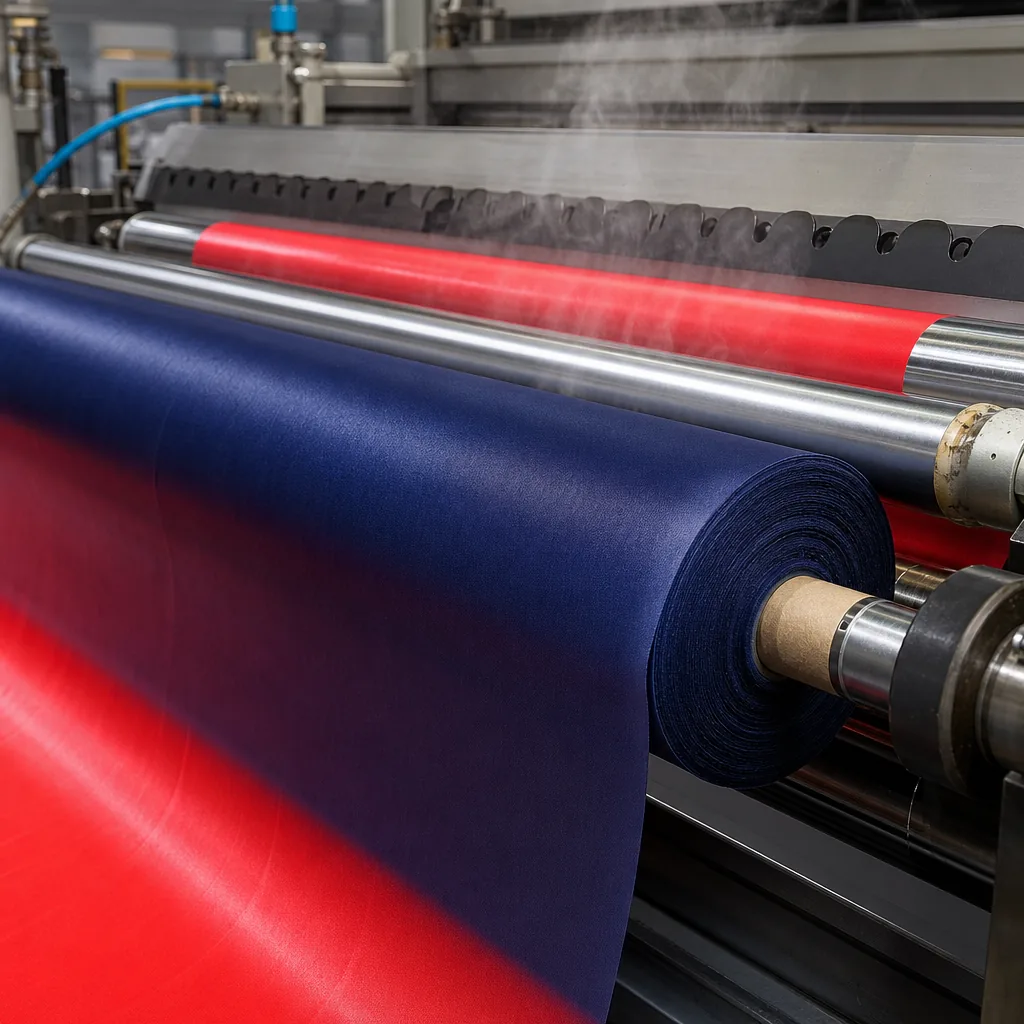
For brand buyers, the challenge with color-changing umbrellas is not the effect itself but controlling how reliably it appears after printing, drying, coating, packing, and repeated wet use. As a color changing umbrella manufacturer, we check photochromic and hydrochromic inks against fabric color, panel tension, curing temperature, artwork line weight, and rub resistance before a sample is approved. Small misses on the production floor can turn a clever promotional idea into uneven panels, weak activation, or care-label claims the goods cannot support.
How Color-Changing Umbrella Effects Work
A color-changing umbrella manufacturer usually starts by separating three very different print systems. Standard screen printing uses conventional pigment inks that stay visible all the time, whether the canopy is dry or wet. Heat-transfer printing puts a pre-printed film onto the fabric with pressure and temperature, which is useful for sharp logos and small runs but does not create a color shift by itself. Rain-activated umbrella print uses hydrophilic or transparent-looking inks that become darker or reveal hidden artwork when the canopy absorbs water. UV reactive umbrellas rely on photochromic inks that change under sunlight and then return toward the original state indoors. In practice, these effects are applied on 190T or 210T pongee panels, not on the whole umbrella, because the chemistry is expensive and the visual result is stronger when it is reserved for logos, mascots, or message areas. That is the normal approach in custom umbrella printing for brands.
The reason most promotional umbrella OEM projects keep the effect to selected artwork areas is control. A full-canopy rain-activated print can look muddy when dry, and a full UV-reactive pattern can lose contrast if every panel changes at once. On a factory floor, we usually print the base branding with standard screen or heat-transfer methods, then add a separate effect layer only where the client wants the surprise element. That lets the logo stay readable in the dry state and become more dramatic in rain or sunlight. A good color changing umbrella manufacturer will also test registration, washfastness, and ink flexibility after repeated opening and closing, because the coated canopy flexes every time the ribs move. For buyers, the real decision is not just the effect itself but whether the artwork is designed for that effect from the start; retrofitting a normal logo into UV reactive umbrellas usually gives weak contrast and a poor reveal.
Best Umbrella Styles and Fabrics for Reactive Prints
For most reactive artwork, smooth 190T or 210T pongee is the safest fabric choice because it gives the print a clean surface without the plastic feel of POE, PVC, or EVA. A rain activated umbrella print depends on the coating sitting evenly on the canopy, then turning visible when water changes the optical layer. If the fabric has heavy texture, loose weave, or uneven waterproof finishing, the graphic can look patchy after the first production wash test. I prefer 190T pongee for price-sensitive compact promotional umbrellas and 210T pongee for retail or museum shop programs where the hand feel matters. Polyester pongee also handles panel cutting and sewing well on 21 inch, 23 inch, and 27 inch frames, so the artwork does not distort badly across the ribs. As a color changing umbrella manufacturer, we usually reject rough oxford cloth for fine-line reactive graphics unless the buyer accepts a more rustic, lower-resolution effect.
Coating compatibility matters more than many buyers expect. Reactive inks and water-sensitive coatings must be matched with the base waterproof treatment, especially if the canopy also needs Teflon, UV coating, or UPF 50+ performance. Some strong repellency finishes make water bead too aggressively, so the rain effect appears slowly or unevenly; other coatings can reduce adhesion and cause the hidden print to fade after repeated open-close cycles. For UV reactive umbrellas, the chemistry is different: the print changes under sunlight, so we check both indoor color stability and outdoor activation speed. On a premium 23 inch auto-open or 27 inch golf umbrella, I would specify 210T pongee with a tested coating stack, fiberglass ribs, and AQL 2.5 inspection for print registration, color activation, and rub resistance. For low-cost promotional umbrella OEM orders, buyers should still approve a wet-test sample before mass production, not just a dry showroom sample.
The best formats are designs where the color change feels intentional, not like a gimmick added at the end. Compact 21 inch auto-open-close umbrellas work well for corporate giveaways because the canopy has enough printable area but still fits courier-friendly cartons for FOB or DDP shipment. Kids’ umbrellas can use simple rain-reveal animals, stars, maps, or safety icons on 19 inch or 21 inch frames, but I avoid tiny text because panel seams and rib tension can break the visual line. Museum shops and city tourism programs often perform better with architectural outlines, constellations, botanical drawings, or hidden messages that appear in rain; these justify better 210T fabric and tighter custom umbrella printing control. For premium event giveaways, a 23 inch straight umbrella or 27 inch double-canopy vented model gives the strongest perceived value, especially with fiberglass ribs and wind-tunnel targets around 50 mph. MOQ normally starts higher than standard screen printing because reactive coating setup and testing take extra time.
Artwork Rules Buyers Should Know Before Sampling
Artwork for a rain activated umbrella print should be built larger and cleaner than artwork for a flat tote bag or T-shirt. On a 23" or 27" canopy, I do not like text under 8–10 pt after scaling, and reversed-out text needs even more weight because water beads distort the edge. Fine hairlines under 0.3 mm often disappear once the panel is sewn under tension. Keep logos at least 15–20 mm away from seam lines and 25 mm away from panel tips, because cutting, hemming, and rib attachment create normal movement. Even with good jigs, umbrella panel alignment is not a digital press job; plus/minus 2–3 mm tolerance around seams is realistic for bulk production.
Reactive ink placement matters as much as the design file. Keep specialty ink away from heavy fold lines, especially near the 8K or 10K rib valleys where the canopy is compressed every time the umbrella is closed. Thick reactive layers can crack, polish, or leave ghost marks after repeated folding, particularly on 190T pongee with water-repellent coating. For UV reactive umbrellas, avoid putting the effect only on a deep edge curve or under a dense dark base color, because the activation may look uneven outdoors. A practical sample should be opened, dried, wetted with spray, exposed to midday UV, then folded and reopened several times before approval.
Pantone matching is less exact when specialty inks are involved, and buyers should accept that before sampling with a color changing umbrella manufacturer. Standard custom umbrella printing can usually hold a reasonable Pantone target on white or light 210T pongee, but photochromic and hydrochromic inks shift depending on coating, fabric color, ink thickness, humidity, and sunlight strength. Our standard practice at ZheBrella is to approve three states: dry indoor color, wet activated color, and UV-exposed color, using physical swatches rather than only PDF proofs. For promotional umbrella OEM orders, this avoids disputes later when a logo that matched Pantone 186C in the office looks darker after rain or cooler under clouded daylight.
Durability Testing and AQL Inspection Points
A color changing umbrella manufacturer has to prove the ink system works before it ever reaches packaging, because a rain activated umbrella print can look perfect on a flat canopy and fail once the fabric bends on the frame. We start with rub testing on fully cured panels: dry cloth, then damp cloth, then a harsher crease-and-rub check along the panel edges and near the tip pockets where folding pressure is highest. After that, the canopy is activated with water spray or immersion to confirm even color shift across every panel, not just the center field. For UV reactive umbrellas, we also check whether the printed areas respond uniformly under simulated sunlight and whether the activation is repeatable after drying. If the pigment layer smears, transfers, or loses contrast after one cycle, the lot is not suitable for custom umbrella printing or promotional umbrella OEM work.
Drying performance matters because many buyers only test the first activation and ignore what happens 10 minutes later. We look for fast return to the base color, no tide marks, no blotching, and no sticky residue that can trap dust during storage. A proper UV exposure check should verify that the printed effect does not fade unevenly after repeated light exposure, especially on 190T or 210T pongee where the weave can show weak ink coverage if the laydown is thin. We also do adhesion review after folding: open the canopy, crease it along normal pack lines, then inspect the printed face for cracking, edge lift, or powdering at the ribs and stitches. In practice, that is where weak curing shows up first, and it is the main difference between a saleable program and a return case.
For AQL 2.5 inspection, the critical points are print position, uneven activation, canopy stains, rib alignment, and mechanism function. Print position is checked against the panel seam and centerline, because a shifted graphic is obvious on a color shifting design and cannot be hidden by the rain effect. Uneven activation means one panel turns fast while another stays flat or patchy, which usually traces back to ink loading or heat curing inconsistency. We also reject oil marks, water spots, sewing dust, and any stain that distorts the visual change on white or light-colored canopies. Rib alignment has to be checked open and closed, since a twisted frame can rub the print on folding. The mechanism test is simple: manual, auto-open, or auto-open-close must complete repeated cycles without sticking, skipping, or partial lockup before the lot passes release.
MOQ, Lead Time, and Buyer Cost Considerations
The first cost mistake buyers make is comparing a rain activated umbrella print to a normal one-color logo on 190T pongee. Color-change work uses specialty hydrochromic or photochromic ink, and the chemistry is less forgiving than standard screen ink. We usually need separate screen setup, tighter curing control, and a white or light base area if the artwork must appear clean when activated. That pushes MOQ higher because ink waste and machine setup are real costs, not spreadsheet padding. For a basic 23-inch auto-open straight umbrella with 8K steel ribs, a standard logo job may start around 500–1,000 pieces. For color-changing artwork, practical MOQ is often 1,000–3,000 pieces, especially if the print is large, multi-panel, or requires exact Pantone matching after wet activation. As a color changing umbrella manufacturer, I would rather quote a realistic MOQ than approve a 300-piece order that cannot hold consistent print density across production.
Sampling takes longer because the print has to be judged in two states, dry and activated. A normal custom umbrella printing sample can often be finished in 5–7 days after artwork confirmation. For UV reactive umbrellas or rain-activated designs, allow 10–15 days because we need lab dips, ink drawdowns, panel test printing, drying/curing checks, and exposure testing under water or UV light. Pre-production samples should use the same canopy fabric, coating, rib frame, and ink system as bulk goods; changing from 190T pongee to 210T pongee, POE, or EVA after approval can shift color behavior. Our standard practice at ZheBrella is to photograph the sample dry, wet, and after recovery so the buyer can approve activation speed, contrast, and residue before bulk printing starts. Skipping this step may save one week, but it often creates chargebacks when the final umbrella looks different in real rain.
For lead-time planning, buyers should separate production time from logistics time. After sample approval, bulk cutting, panel printing, curing, sewing, frame assembly, and packing usually take 25–40 days depending on quantity, rib count, and mechanism. A 21-inch manual compact order is faster than a 30-inch golf umbrella with fiberglass ribs, double-canopy venting, and full-panel artwork. Final inspection should be booked before shipment using AQL 2.5, with extra checks for print activation, adhesion, canopy leakage, rib alignment, auto-open or auto-open-close function, and carton drop condition. FOB Ningbo or Shanghai is usually the cleanest cost structure for experienced importers. DDP is convenient for promotional umbrella OEM buyers shipping to multiple warehouses, but it hides freight volatility, duty, and delivery surcharges. For seasonal campaigns, I advise locking artwork 60–75 days before the event for air shipment, and 90–120 days if ocean freight is required.
Frequently Asked Questions
Do color-changing umbrella prints last as long as standard logos?
They can perform well when matched with the right fabric and coating, but they need specific durability checks. Buyers should approve a sample after wet testing, rub testing, and repeated folding.
Can color-changing ink be combined with a regular brand logo?
Yes. Many brands use a standard logo print plus a hidden rain-activated pattern or UV-reactive graphic. The factory should test both inks together to avoid color bleed, adhesion issues, or inconsistent finish.
What artwork limitations apply to rain-activated and UV-reactive umbrella prints?
Reactive inks work best on simple vector shapes, solid fills, and line widths above about 0.5 mm. Fine gradients, tiny text, and tight registration across multiple panels are less reliable because the visual effect depends on moisture or UV exposure, not just standard ink density.
What MOQ and sampling process are typical for custom color-changing umbrellas?
For OEM production, MOQ is commonly 500-1,000 pieces per design, depending on canopy size, frame type, and whether new screens or custom materials are required. Pre-production usually starts with a digital mockup, then a physical strike-off or sample in 7-15 days before bulk approval.
How are color-changing umbrella orders inspected before shipment?
Factories typically use an AQL inspection such as 2.5 for major defects and 4.0 for minor defects, while also checking opening/closing function, print placement, color response, and water resistance. For reactive prints, buyers should define a test method in advance, such as visible pattern change after water spray or UV exposure within a set time window.
Looking to Launch Your Custom Umbrella Line?
ZheBrella is a Zhejiang-based OEM/ODM umbrella manufacturer with 17 years of export experience. Free design, low MOQ from 100 pieces, windproof construction, full-color print.
Get Free Quote Now »People Also Search For
Related Articles
Luxury Stick Umbrellas: Premium Specs for Retail Brands
Build premium stick umbrellas with durable frames, 210T pongee, refined wooden handles, tighter QC, and packaging suited...
Read More »
Colorfast Umbrella Printing Standards for Outdoor Promotions
Avoid fading and dye transfer on printed umbrellas by specifying fabric, ink, curing, rub tests, UV exposure checks, and...
Read More »
Rain-Reveal Umbrella Printing for Event Brand Campaigns
Plan rain-reveal umbrella printing with hydrochromic inks, fabric choices, sampling steps, MOQ, and QC checks for event ...
Read More »