Custom Reflective Umbrellas for Night Safety Programs
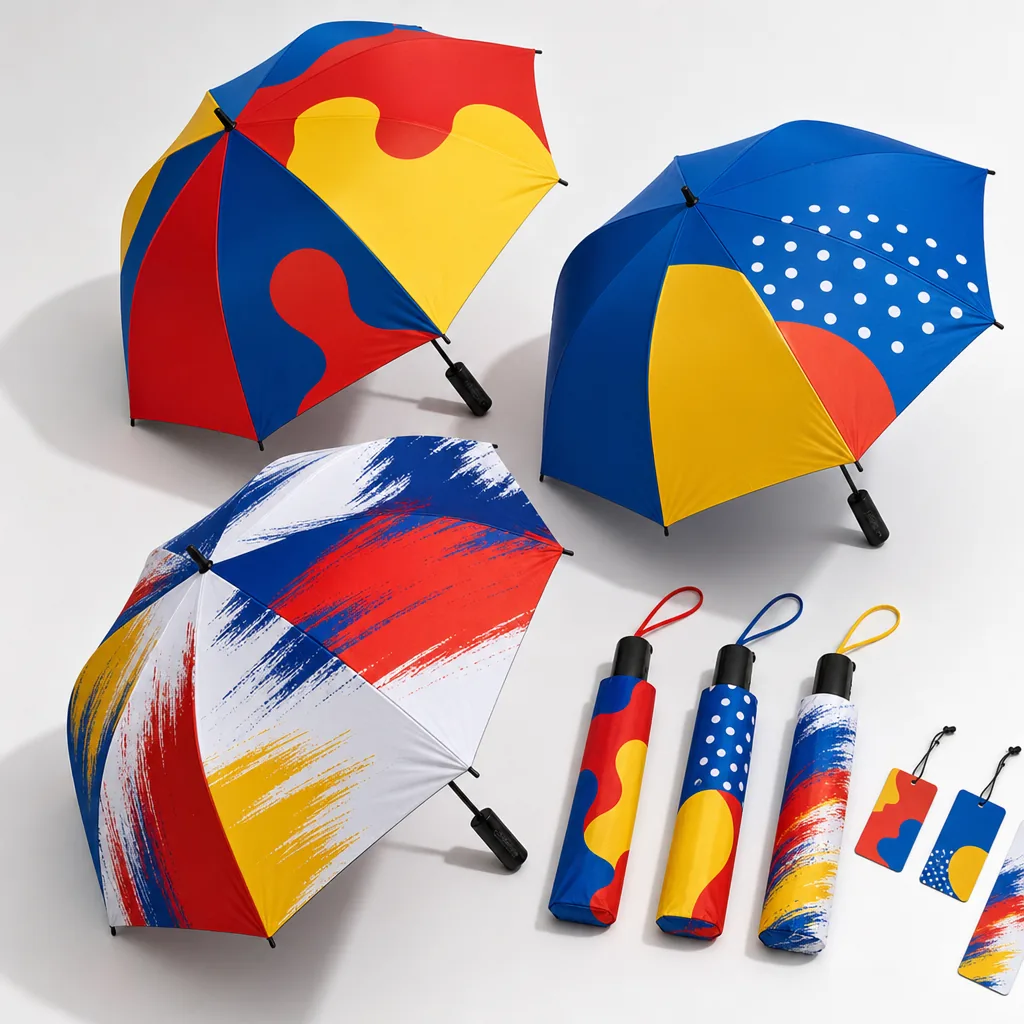
Night safety programs often fail on small specifications: reflective tape that is too narrow, fabric that hides contrast, or ribs that flex badly after a few wet commutes. When we build custom reflective umbrellas on the factory floor in Shangyu, we balance tape placement, canopy color, frame strength, and AQL inspection so the finished product is visible, durable, and repeatable across bulk orders for schools, events, and municipal campaigns.
Where Reflective Umbrellas Fit in B2B Programs
Custom reflective umbrellas work best when the program has a real after-dark exposure problem, not just a desire for another logo item. Schools use them for crossing guards, parent pickup lines, and rainy winter dismissal when visibility drops before 5 p.m. Construction and utility firms often give them to supervisors, site visitors, and employees walking between parking lots and job trailers, where a normal black 23" umbrella disappears under sodium lights. Road-safety campaigns use reflective piping or full reflective panels because the umbrella sits high in a driver’s sightline, unlike a tote bag. For night runs, charity walks, and outdoor concerts, the umbrella becomes part of the safety plan as well as the sponsor inventory. Hotels and transit agencies usually choose shared-use models for doormen, shuttle queues, rail-station exits, and valet desks, where repeated exposure matters more than individual ownership.
Buyers should define the visibility requirement before choosing fabric or frame. A thin silver reflective edge on 190T pongee is suitable for hotel guest umbrellas and retail giveaways, but it is not the same as a high visibility umbrella with wide reflective tape on multiple canopy panels. If the umbrella will be used near traffic, I normally recommend 23" or 27" auto-open stick umbrellas with fiberglass ribs, 8K or 10K frames, and reflective segments placed on the outer canopy radius so headlights catch them from the side. For night event umbrellas, weight and carry comfort matter more, so a 21" auto-open-close folding model with reflective border trim may be the better choice. A reflective umbrella manufacturer should also confirm whether the reflective material survives flexing, wet folding, and repeated abrasion against the sleeve.
Weather protection and branding priority need to be ranked early because they compete for space and budget. If rain performance is first, choose 190T or 210T pongee with waterproof coating, a vented double canopy for wind, and fiberglass ribs rated around 50+ mph in a controlled wind-tunnel test. If sun and rain are both part of the campaign, add black UV coating or UPF 50+ treatment, but understand that some coatings reduce print clarity on dark panels. If branding is first, screen printing is economical for one- or two-color logos, while heat transfer handles small sponsor marks and gradients better; sublimation works only when the canopy fabric and artwork plan are built for it. For safety promotional umbrellas, our standard practice at ZheBrella is to prototype the reflective placement and logo at actual size before mass production, then inspect stitching, opening force, print position, and canopy defects under AQL 2.5.
Reflective Materials, Placement, and Print Compatibility
Reflective performance starts with placement, not just material choice. On custom reflective umbrellas, the most reliable options are 1 cm to 2.5 cm reflective tape, reflective edge piping, and vertical panel strips running from the tip toward the skirt. A 1 cm strip gives a clean retail look but is easy to lose visually in rain glare; for municipal safety programs, school crossings, parking teams, and night event umbrellas, I prefer 2 cm or 2.5 cm tape on alternating panels or around the canopy edge. Edge piping catches headlights from more angles because it follows the umbrella’s full circumference, while panel strips create larger recognition blocks when the user is walking. For golf umbrellas in 27 inch or 30 inch sizes, wider tape is less likely to look oversized than it does on a 21 inch compact model.
The base canopy fabric matters because reflective components add stiffness and heat sensitivity. Most safety promotional umbrellas use 190T or 210T pongee because it folds better than polyester taffeta and accepts waterproof coatings consistently. On 190T pongee, heavy reflective tape can pucker if the stitch tension is too high or if the tape is placed too close to a seam allowance; on 210T pongee, the denser weave handles heat transfer logos and reflective patches with less distortion. PVC, POE, and EVA transparent canopies can also carry reflective piping, but large heat-applied reflective areas may haze or leave pressure marks. Our standard practice at ZheBrella is to test reflective placement after the canopy is sewn on the frame, not only on flat fabric, because rib tension changes how tape sits across 8K or 10K panels.
Logo printing must be planned around reflective zones, not added after the artwork is approved. Screen print works well on 190T and 210T pongee for solid-color logos, but reflective tape has a coated surface that standard ink will not bond to reliably, so the logo area should stay on fabric panels or use a dedicated reflective ink. Heat transfer gives sharper small text and gradients, especially for event sponsors, but the press temperature, dwell time, and pressure need adjustment so waterproof coating, Teflon finish, or UV UPF 50+ treatment is not damaged. Reflective ink is useful for high visibility umbrellas when the buyer wants the logo itself to return light, but it is usually less bright than certified reflective tape and needs abrasion testing. A serious reflective umbrella manufacturer should confirm fold cracking, wet rub, adhesion, and nighttime visibility before bulk production.
Frame Specs That Matter for Outdoor Safety Use
For custom reflective umbrellas used in night safety programs, the frame choice matters more than the print. Steel ribs are cheaper and stiffer at first touch, but they rust faster after repeated wet-dry cycles and they tend to deform at the ferrule and stretcher joints when abused on buses, sidewalks, or event gates. Fiberglass ribs cost more, but they flex back after gusts, carry salt and rain better, and are the safer choice for high visibility umbrellas that will live in commuter bags and volunteer kits. For this kind of use, I usually recommend 23" or 27" canopies with fiberglass main ribs and fiberglass tips, especially if the buyer wants the umbrella to survive daily opening and closing instead of just looking good in photos.
Rib count changes the feel of the umbrella as much as the material. An 8K build is simpler, lighter, and fine for low-stress promotional giveaways, but a 16K frame gives a rounder canopy profile and better load distribution when wind pushes against reflective panels and print layers. On a straight-shaft umbrella, that extra rib count makes the canopy sit cleaner and handle repeated auto-open cycles better; on a folding model, 8K or 10K is more common because pack size matters more than rigidity. For safety promotional umbrellas, I would rather specify a compact 23" auto-open folding model for city distribution, or a straight-handle 27" auto-open version for marshals and crossing teams who need a sturdier reach and faster deployment in rain or traffic.
If the umbrella will be used at commuter stations, night runs, campus crossings, or outdoor event checkpoints, double-canopy windproof construction is the right call. The vent lets air escape instead of loading the top panel like a sail, which is why a reflective umbrella manufacturer should treat venting as a structural feature, not a decoration. ZheBrella’s standard practice for these programs is a fiberglass frame with a vented double canopy, auto-open mechanism, and 190T or 210T pongee, because that combination holds up better than a basic steel single-canopy build when people snap the umbrella open in a crowd. For higher exposure use, I would not spec a heavy folding frame with weak steel stretchers; it saves money up front and fails when wind, wet hands, and repeated use hit at the same time.
Bulk Ordering, MOQ, and Compliance Checks
MOQ for custom reflective umbrellas is driven less by the umbrella itself and more by the reflective material and color control. For a standard 23" auto-open stick umbrella with 190T or 210T pongee canopy, a practical starting MOQ is usually 500 pieces per design if the body fabric is a stock color like black, navy, royal blue, or safety yellow. Compact 21" auto-open-close models often start closer to 1,000 pieces because the frame and sleeve both need coordinated production. If the buyer wants a PMS-dyed canopy, custom reflective piping, or segmented reflective tape on every panel, the MOQ can rise to 1,500–3,000 pieces because reflective tape suppliers require minimum roll quantities and color-matched binding creates extra sewing setup.
Reflective trim should be specified before pricing, not added casually after sampling. A 5 mm reflective piping along the canopy edge is cheaper and cleaner than wide tape sewn across multiple panels, but it gives less visible surface area from side angles. For safety promotional umbrellas used by campuses, transit agencies, utility crews, or night runs, I normally recommend reflective edge binding plus one or two printed reflective logos, rather than reflective tape on all 8K panels. Night event umbrellas also need packaging decisions early: individual polybags are standard, but retail cartons, barcode labels, and event kit packing can add 3–7 days. At ZheBrella, we usually separate the approval sample into three checks: frame function, reflective brightness, and logo position, because one perfect-looking sample can still fail in bulk if tape tension or sewing allowance changes.
Compliance inspection should be written into the purchase order, not left as a vague promise. Under AQL 2.5, key checks for custom reflective umbrellas include reflective tape adhesion after rubbing and flexing, logo registration within an agreed tolerance such as ±2 mm, rib strength under repeated opening, runner lock function, and water repellency on the canopy surface. We test fabric beading after spray exposure, especially on Teflon-coated or PU-coated 190T pongee, because heat-transfer logos can weaken repellency if temperature is not controlled. For high visibility umbrellas, inspectors should also check reflective continuity around the canopy edge, skipped stitches, cracked reflective film, bent steel ribs, loose fiberglass tips, and handle pull strength. A normal bulk lead time is 25–35 days after deposit and artwork approval for stock materials, while custom reflective tape or dyed fabric can push production to 40–50 days before FOB or DDP shipment.
Packaging and Delivery for Campaign Rollouts
Packaging should be planned as part of the safety program, not treated as a last-minute carton choice. For custom reflective umbrellas, I normally recommend an individual sleeve in the same fabric family as the canopy: 190T pongee for standard promotional models, 210T pongee for heavier 23" or 27" units, and POE/PVC sleeves only when the buyer wants clear visibility of the reflective print before handout. If the umbrella has reflective tape, silver ink, or a heat-transfer safety logo, the sleeve must not rub against that area too tightly; we add a small polybag or tissue separator for darker canopies where scuffing is visible. Instruction cards are useful for night safety programs because many recipients do not know how to dry and store an umbrella correctly. A simple card should cover auto-open or auto-open-close operation, pinch-point warning, drying before sleeving, and a note that reflective performance depends on vehicle headlight angle and distance.
Carton labeling is where many campaign rollouts fail. Safety promotional umbrellas often ship to multiple schools, transit offices, charity branches, or race-event sites, and one mixed pallet with vague labels will create sorting labor at the worst time. Each master carton should show style number, canopy size, rib count such as 8K fiberglass or 10K steel/fiberglass hybrid, color, logo version, quantity, gross weight, and destination code. For mixed-location distribution, our standard practice at ZheBrella is to pack by final site whenever the order file is clean: for example, 12 cartons for School A, 8 for School B, and 20 for the city warehouse, each with matching carton marks and packing list lines. If night event umbrellas include different sponsor logos, carton labels should identify the exact artwork name, not just “black umbrella,” because black 23" auto-open units can look identical until opened.
FOB Ningbo or Shanghai is suitable when a distributor is consolidating high visibility umbrellas with other promotional goods, especially if they already run weekly containers or LCL shipments from Zhejiang. FOB gives the buyer control over freight, insurance, customs broker, and final routing, and it usually makes sense for repeat programs with flexible handout dates. DDP is better when the consignee is a school district, nonprofit, event planner, or municipal safety office that does not want to manage import paperwork or unexpected duty and delivery charges. For fixed-deadline campaigns, I prefer DDP with a locked delivery window and a carton-level distribution list approved before mass packing. Typical production after sample approval is 20–35 days for printed reflective umbrellas, plus 5–10 days by air or 25–40 days by sea depending on destination. A reflective umbrella manufacturer should confirm routing before production, not after cartons are sealed.
Frequently Asked Questions
Can reflective tape be added to both folding and straight umbrellas?
Yes. Folding umbrellas usually use reflective edge piping or short panel strips, while straight umbrellas can support wider tape layouts because the canopy is larger and flatter when open.
Does reflective trim affect umbrella waterproofing?
It can if stitching is poorly controlled. A factory should check seam tension, tape bonding, and water-repellent performance during AQL inspection, especially on 190T or 210T pongee canopies.
What reflective tape width works best for umbrellas used in school crossing or community night safety programs?
For most safety programs, 1-2 inch reflective tape gives the best balance of visibility and canopy appearance. A 360-degree band near the canopy edge is the most common layout because it stays visible when the umbrella is open in traffic or crowd settings.
Which umbrella frame construction is more suitable for repeated outdoor event use: fiberglass ribs or standard metal ribs?
Fiberglass ribs are usually preferred for night event and safety-program orders because they flex better in gusts and reduce rib breakage during repeated use. For bulk procurement, buyers often pair fiberglass ribs with a straight shaft model in the 23-27 inch range for durability and easier logo placement.
What quality checks should importers request before shipment on reflective umbrella orders?
Ask for AQL inspection covering opening and closing function, reflective tape placement consistency, stitching, logo print accuracy, and carton drop condition. A common pre-shipment benchmark is AQL 2.5 for major defects and 4.0 for minor defects, especially on orders for schools, municipalities, or public events.
Looking to Launch Your Custom Umbrella Line?
ZheBrella is a Zhejiang-based OEM/ODM umbrella manufacturer with 17 years of export experience. Free design, low MOQ from 100 pieces, windproof construction, full-color print.
Get Free Quote Now »People Also Search For
Related Articles
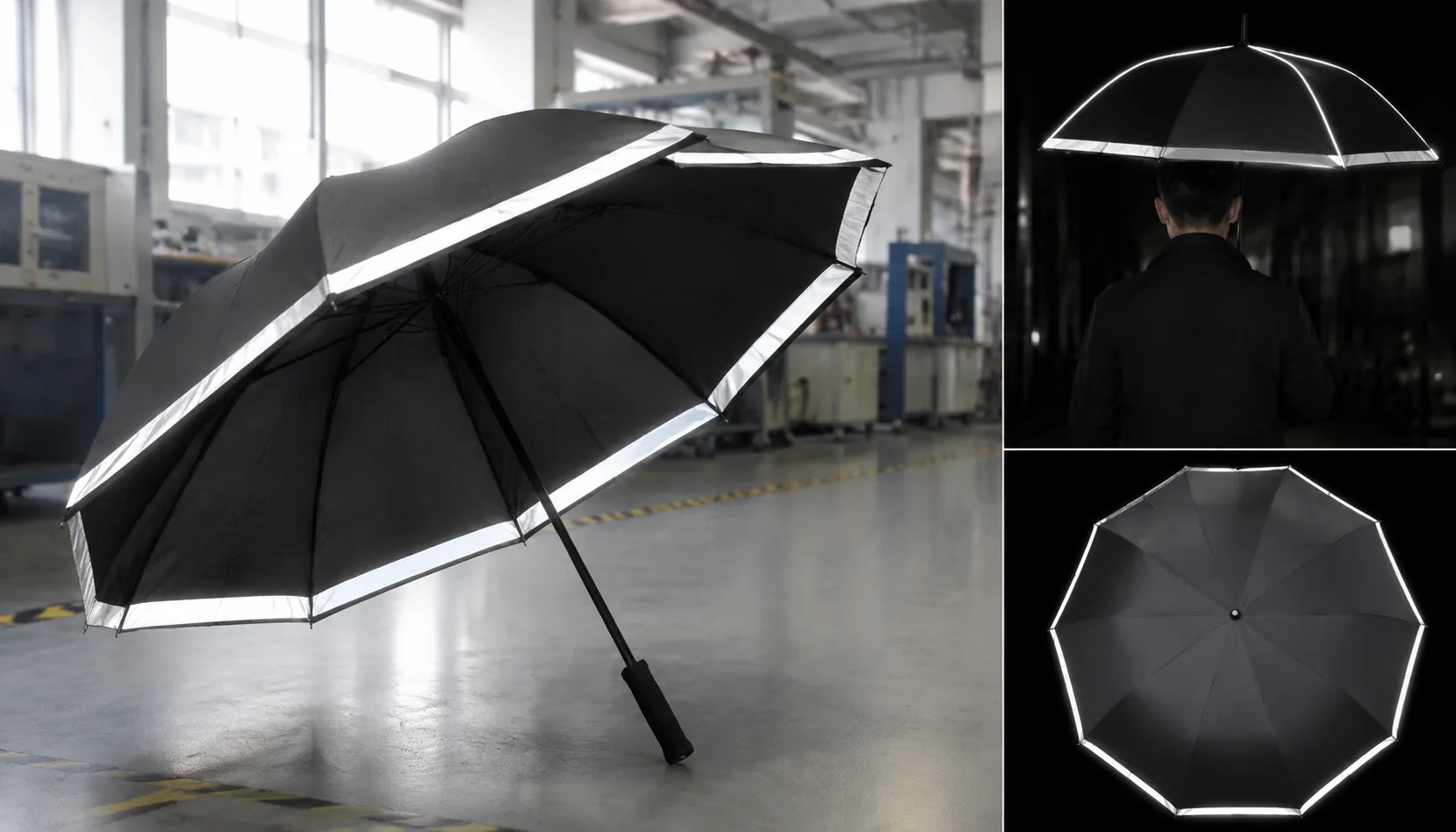
Reflective Safety Umbrellas: Specs for Night Visibility
Learn how to specify reflective safety umbrellas with visible trim, durable frames, compliant printing, MOQ planning, an...
Read More »
Reflective Safety Umbrellas for Commuter and Worksite Use
Specify reflective umbrellas for commuters, campuses, and worksites with trim placement, fabric choices, windproof frame...
Read More »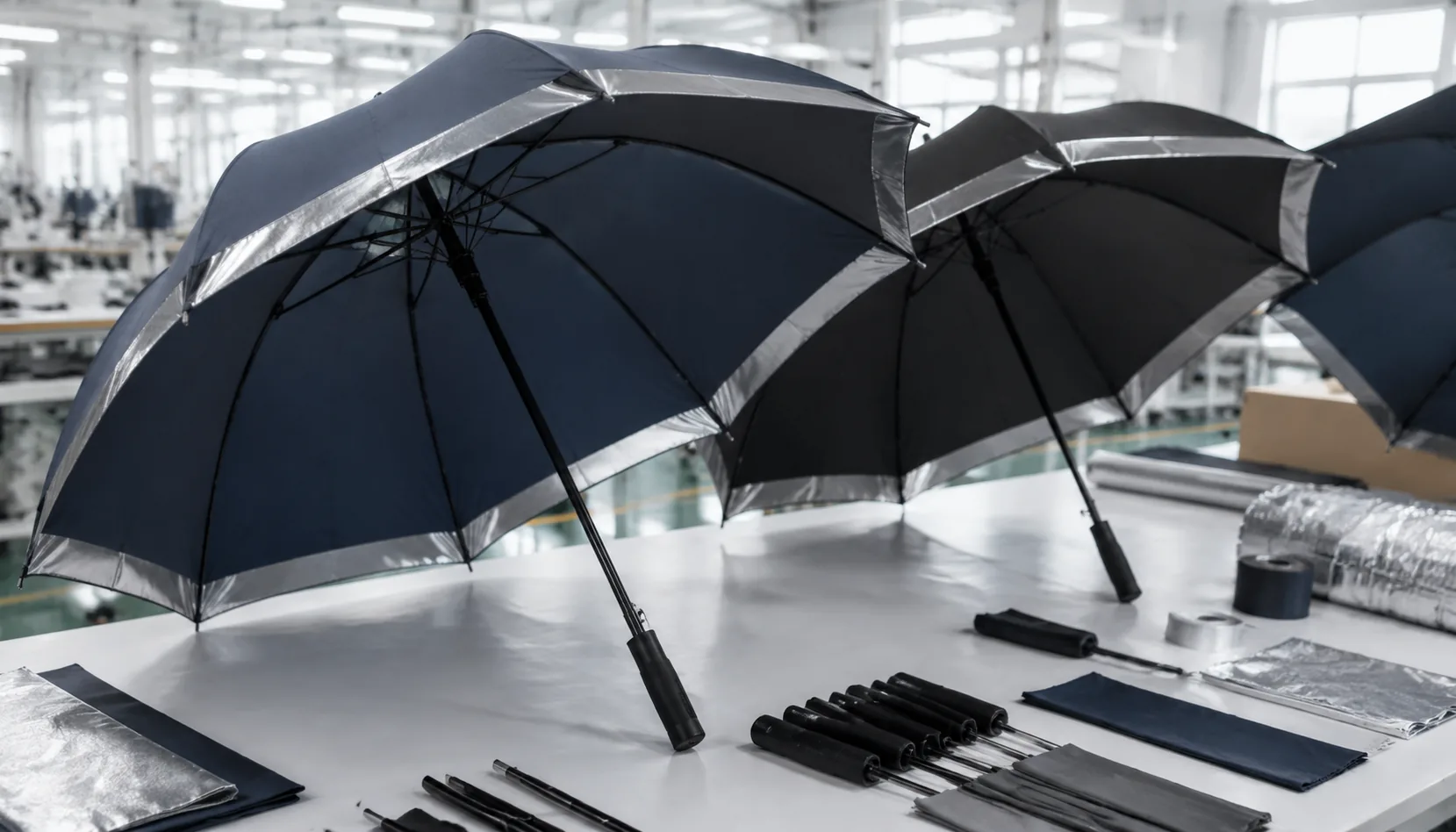
Reflective Safety Umbrellas for Corporate and Event Programs
Specify reflective umbrellas for safety campaigns with the right fabric, rib strength, print areas, visibility details, ...
Read More »