Debossed, Engraved, and Molded Umbrella Logo Details Compared
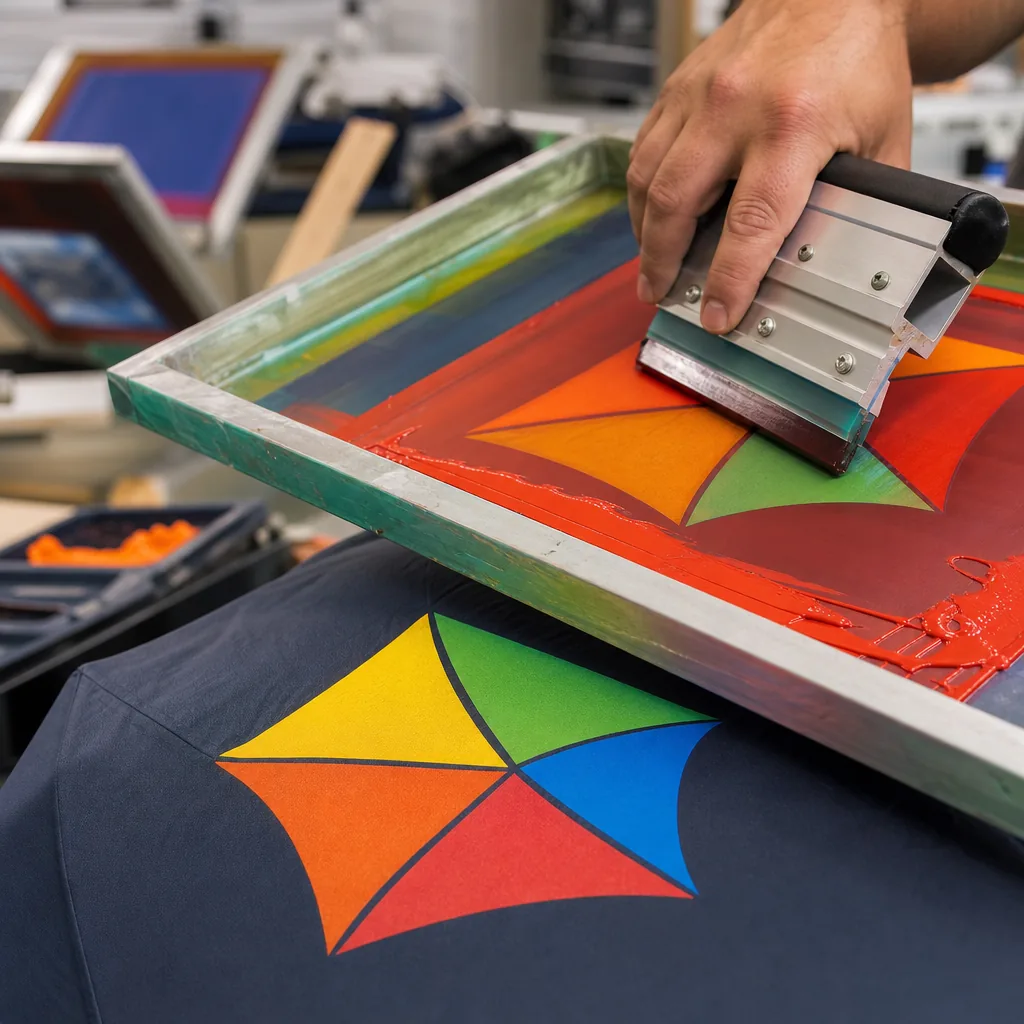
When buyers compare logo execution on umbrella handles, ferrules, tips, or push buttons, the real risk is choosing a process that looks sharp in sampling but slows tooling, misses MOQ targets, or wears poorly in production. On our Songxia factory floor, debossed umbrella logo details, engraved marks, and molded branding each behave differently once you factor in mold steel, material flow, surface finish, and approval tolerances.
Where Non-Printed Logo Details Work Best on Umbrellas
Non-printed branding works best on umbrella parts the user touches every time they open, close, carry, or store the product. The strongest placements are handle caps, straight wood crooks, ABS or PP end caps, PU wrist straps, metal strap snaps, sleeve zipper pulls, and small badge elements near the ferrule or runner. For an engraved umbrella handle logo, use substrates that hold a sharp edge under repeated handling: maple, bamboo, rubberized ABS, zinc alloy, and stainless steel. Debossing is better for PU patches, faux leather wraps, and silicone tabs, where 1-2 mm depth creates visible and tactile contrast without relying on ink adhesion. Molded logo umbrella parts are most effective where the logo can be built into the component itself, such as handle medallions, branded tip protectors, and injection-molded zipper pullers. For durable debossed umbrella logo details, prioritize parts with enough wall thickness and frequent hand contact rather than low-visibility decorative trim.
Buyers choose these details for premium branding programs because they add durability and perceived value without overcrowding the canopy. A 190T or 210T pongee canopy already supports screen print, heat transfer, or sublimation, but once an 8-panel umbrella carries a 1-color logo or full-panel artwork, extra canopy graphics raise registration risk and can make the product look busy. Debossed umbrella logo details, engraved caps, and molded badges wear better under daily abrasion, avoid the cracking seen with surface-applied emblems, and remove color-shift issues on black, navy, or coated fabrics. The process still has limits: debossing needs enough material thickness to retain depth, engraving performs best on wood or solid metal instead of plated parts with soft edge definition, and molded parts usually require tooling cost plus MOQ, so they fit programs of about 1,000-3,000 pieces. For executive gifts, hotel umbrellas, golf umbrellas, and private-label retail, one canopy logo plus one tactile trim detail is usually the most efficient OEM umbrella customization mix.
Debossing vs Engraving vs Molded Logos
Production method decides whether debossed umbrella logo details stay crisp after thousands of handoffs or soften after a season of use. Debossing presses artwork below the surface with a machined brass or steel die, so it fits compressible materials better than rigid trims. Use it on PU or rubber-coated handle wraps, EVA grip panels, faux-leather wrist straps, and some ABS or PP components only when wall thickness is sufficient to avoid sink marks or distortion. For reliable production, keep artwork bold, avoid thin serifs, and target roughly 0.3-0.5 mm depth; shallower impressions tend to disappear under texture, while fine lines can close up during pressing. The visual effect is subtle and tactile rather than glossy, which works well for premium gifting programs that want branding felt in the hand instead of seen from a distance. Under wet handling, debossing usually lasts longer than pad printing because there is no surface ink to rub off, although very soft compounds can still lose edge sharpness after heavy daily use.
Engraving suits harder substrates and delivers the sharpest small-area detail. It removes material instead of compressing it, so an engraved umbrella handle logo reads cleanly on maple or beech crook handles, aluminum ferrules, zinc-alloy nameplates, stainless steel button trims, runner caps, and tip collars. Laser engraving on wood creates a darker burned mark with natural grain variation; fiber laser engraving on metal produces a permanent, high-definition mark that stays legible on narrow branding zones. Molded logo umbrella parts are different again: the logo is formed directly in injection- or compression-molded components such as PP top caps, ABS end caps, TPR finger grips, and PVC zipper pulls used as branded umbrella accessories. Raised or recessed molded marks need proper draft angle, venting, and enough flat area, or the tool can flash and edges will wash out. In OEM umbrella customization, molding carries the highest tooling cost and typically a higher MOQ, but unit economics improve on larger runs and durability is strongest under rain, opening cycles, and repeated use because no ink or applied badge can peel.
Tooling, MOQ, and Unit Cost Implications
Custom tooling makes financial sense only when the same logo treatment will be reused across repeat POs. For short runs, keep branding on standard components such as a PU strap patch, woven label, or printed canopy, where setup cost stays low and MOQ stays closer to the umbrella factory’s base minimum. By contrast, debossed umbrella logo details on a handle cap, tip, runner badge, or zipper pull need dedicated tooling before bulk production. A simple engraved umbrella handle logo usually uses a CNC- or laser-etched steel insert at about $120 to $300, which can still pencil out on a 500 to 1,000 piece order. Molded logo umbrella parts cost more because each part needs its own mold: ABS handle medallions, PVC badges, or TPR pullers typically require $400 to $1,500 in tooling per part, depending on cavity count, undercuts, and surface texture. As a buying rule, engraving is usually the better fit for test programs and smaller branded umbrella accessories, while custom molding starts to look efficient at 3,000 to 5,000 umbrellas and becomes much easier to amortize above 10,000 units.
MOQ climbs on custom hardware because the umbrella factory must match its assembly plan to upstream trim suppliers. Your line may accept 600 umbrellas, but the injection molder making branded umbrella accessories may require 3,000 to 5,000 pieces per color, and zinc-alloy badge suppliers often push minimums higher when plating is involved. That mismatch, not umbrella sewing capacity, usually sets the real commercial floor for OEM umbrella customization. It also raises risk: deep debossed rubber surfaces can mask minor variation, while engraved metal badges expose scratches, plating defects, and logo offset, so scrap allowance should be built into the order and checked at AQL 2.5 final inspection. Lead time follows the same pattern. A standard printed umbrella can often ship 25 to 35 days after sample approval, but combined trim sourcing commonly adds 7 to 15 days, plus 10 to 18 days for a new mold, then extra approval time for texture, plating, or color chips. If one custom part misses schedule, handle fitting, strap sewing, and final packing all move with it, so custom hardware is best reserved for repeat annual programs, retail launches, or premium gifting—not one-off event orders.
Compatibility With Different Umbrella Builds
Choose the branding method around the frame architecture first, not the artwork. Straight stick umbrellas give the widest safe area for debossed umbrella logo details because 23 inch and 27 inch builds have a longer shaft, fewer moving joints, and more stable handle geometry. Crook handles, straight EVA grips, ferrule caps, and woven closure straps usually accept debossing, engraving, or a molded insert with less risk of assembly interference. Folding umbrellas are tighter. On a 21 inch or 23 inch 3-fold auto-open-close model, the handle also houses the spring pack, release button, and lock channel, so an engraved umbrella handle logo has to stay clear of the button window, wrist-strap anchor, and internal travel path. If badge thickness, logo depth, or mold parting lines encroach on those zones, reject rates rise and actuation can feel rough or unsafe. That is why folding builds typically require shallower branding, tighter dimensional control, and earlier drawing review than straight-stick programs.
Price tier also determines which branded umbrella accessories are practical. Entry-level promotional umbrellas with steel ribs, standard plastic handles, and 190T pongee usually suit shallow debossing, pad print, or a simple insert badge because tooling must stay cost-efficient at MOQ 500 to 1,000 pieces. Mid-range builds in 190T or 210T pongee, often upgraded to fiberglass ribs and better ABS or rubberized handles, can carry cleaner engraving, zinc-alloy medallions, and molded logo umbrella parts with sharper definition. Premium OEM umbrella customization can add custom pullers, tip cups, and nameplate end caps, but every new mold feature adds tooling risk, more sample approvals, and usually pushes lead time from about 20 to 30 days to 35 to 45 days. Heavy-duty double-canopy windproof frames need the most conservative placement. On 27 inch or 30 inch vented umbrellas rated above 50 mph, especially with thicker fiberglass ribs versus thinner steel builds, branding should stay on non-load surfaces such as grip shells, end caps, or strap buckles. Avoid deep logos near runner travel, thin collars, or pinch zones; verify wall thickness, handle sections, opening-cycle safety, and final inspection to AQL 2.5 before approval.
Approval, QC, and Shipping Details for Custom Components
Do not release mass-production pricing until the 3D sample is approved. For debossed umbrella logo details, a flat 2D proof cannot show how logo depth, edge radius, and draft angle will read after pressing or molding into ABS, PP, PU leather, or a wood handle cap. The approval pack should include the 3D rendering, Pantone or texture reference, and at least one physical pre-production sample installed on the actual part: handle, tip, strap button, or other branded umbrella accessories. That lets the buyer check orientation, scale, sightline, and hand feel in real use instead of approving an isolated trim piece. For an engraved umbrella handle logo, require written sign-off on depth tolerance in millimeters, not comments like “make it visible.” A depth range of 0.15-0.30 mm is typically readable on zinc alloy; EVA and softer plastics usually need a wider or deeper profile so the mark does not wash out after repeated handling. Lock those points before tooling release to limit rework, protect lead time, and keep OEM umbrella customization quotes comparable across suppliers.
Approve finish against the production surface, not a raw sample. Molded logo umbrella parts that look crisp before finishing can lose edge definition after plating, spray coating, rubber paint, or soft-touch oil, especially when the recess is shallow. The approval standard should set pass/fail points for gloss, color match, edge clarity, and assembly alignment against adjacent parts, because minor shrinkage or parting-line shift can leave a badge visibly off-center on the finished umbrella even if the single component is dimensionally acceptable. Under AQL 2.5, inspection should check logo depth consistency, burrs on engraved or molded edges, adhesion by tape test for paint or plating, and assembly fit on the live line so the part does not spin, gap, or crack during handle insertion. FOB and DDP quotes should break out tooling charges, inner trim packaging, and replacement-risk exposure separately. A custom trim piece may cost only a few cents, but if it fails after assembly, the replacement claim can include labor, export packing, and destination delivery already incurred.
Frequently Asked Questions
Which logo detail method is usually most durable for frequent-use umbrellas?
Molded-in logos and engraved metal details are generally more durable than surface-applied effects because the branding is built into the component. The best choice still depends on the substrate and whether the umbrella is used in wet, high-abrasion conditions.
Is custom tooling worth it for a mid-volume umbrella program?
It can be, especially for retail or corporate identity programs that reorder the same model. Buyers usually justify tooling when the logo detail will be reused across multiple POs instead of a single short-run campaign.
Which logo method usually has the lowest approval risk for a new umbrella program?
Engraved logos on straight or hook handles usually have the lowest approval risk because the artwork is cut directly from a vector file and does not depend on flexible material shrinkage. For first orders, buyers often approve an engraved sample in 7-10 days, while molded logo parts may need an extra round of size and surface checks.
When does a molded logo part make more sense than adding a debossed mark to an existing component?
A molded logo part makes more sense when you need the logo integrated into the shape itself, such as pullers, tip ends, badge inserts, or custom handle caps. This usually requires a new mold or mold insert, with MOQ commonly starting around 1,000-3,000 pieces depending on the part size and material.
What artwork files and approval points should buyers prepare before opening tooling?
Buyers should provide an AI, EPS, or high-resolution PDF file with exact logo size, depth preference, placement, and finish requirement such as matte, gloss, or plated effect. Before tooling release, confirm pantone reference if color is involved, logo orientation, cavity layout, and whether the approval is based on a 2D drawing, molded sample, or pre-production sample.
Looking to Launch Your Custom Umbrella Line?
ZheBrella is a Zhejiang-based OEM/ODM umbrella manufacturer with 17 years of export experience. Free design, low MOQ from 100 pieces, windproof construction, full-color print.
Get Free Quote Now »People Also Search For
Related Articles
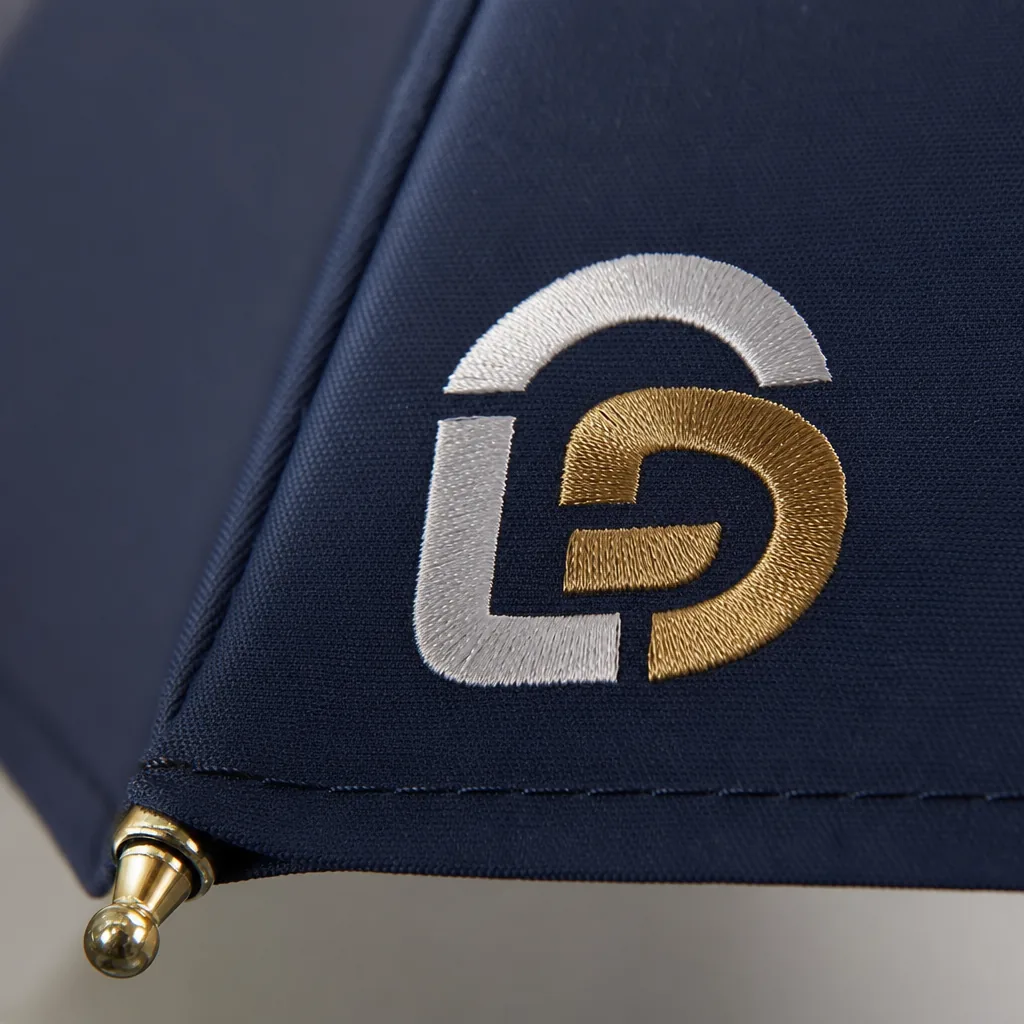
Debossed, Molded, and Metal Logos on Umbrella Components
Choose debossed, molded, or metal logo details for umbrella handles and hardware. Compare appearance, tooling, MOQ, and ...
Read More »
Debossed, Molded, or Printed Umbrella Handles for Brand IDs
Compare debossed, molded, and printed handle branding for umbrellas, with MOQ, tooling, lead time, and durability tradeo...
Read More »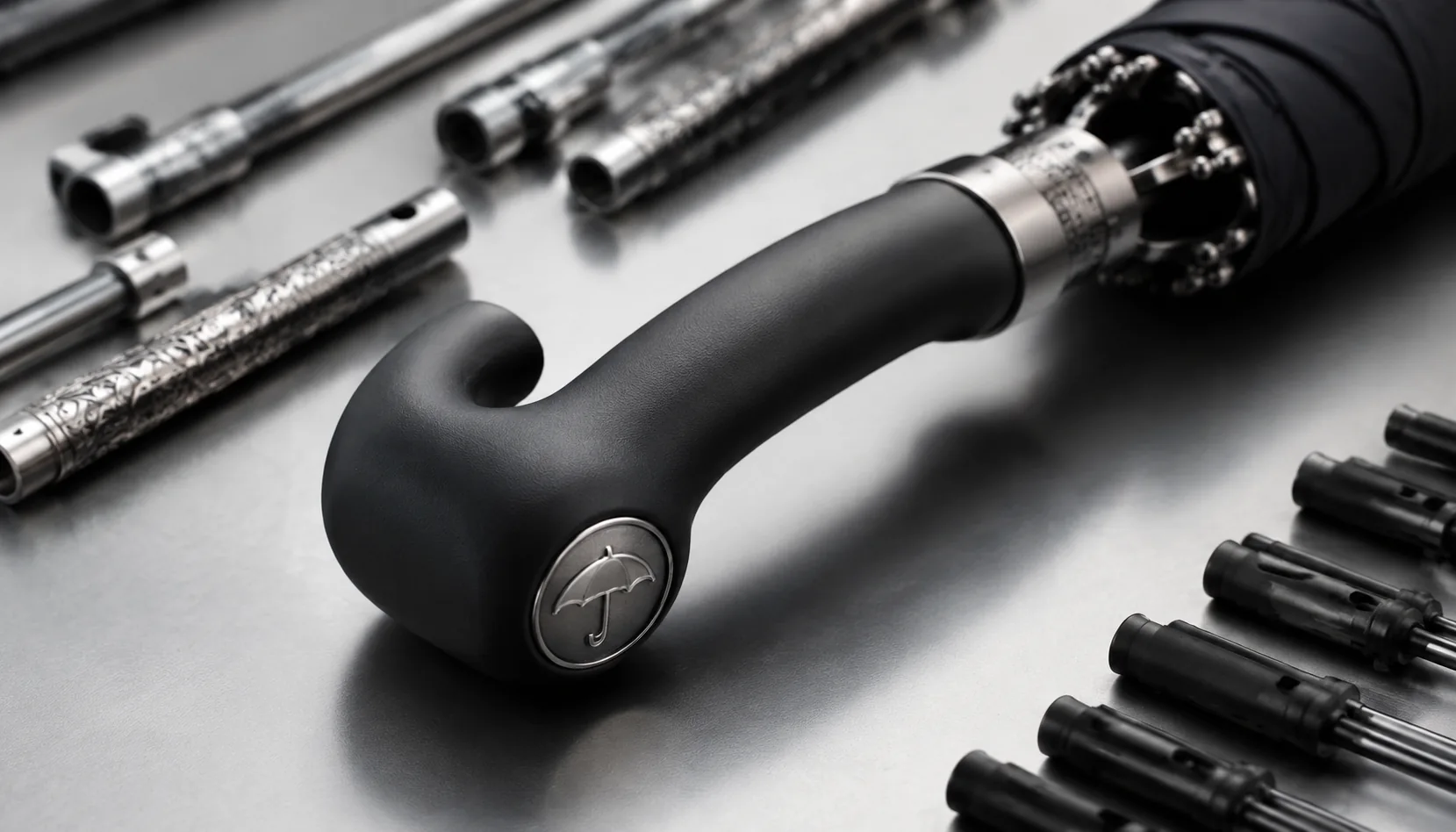
Debossed, Engraved, and Molded Branding on Umbrella Parts
Evaluate debossed, engraved, and molded logo options on umbrella parts with tooling, MOQ, durability, and lead-time fact...
Read More »