Gradient and Repeat Pattern Printing for Umbrella Lines
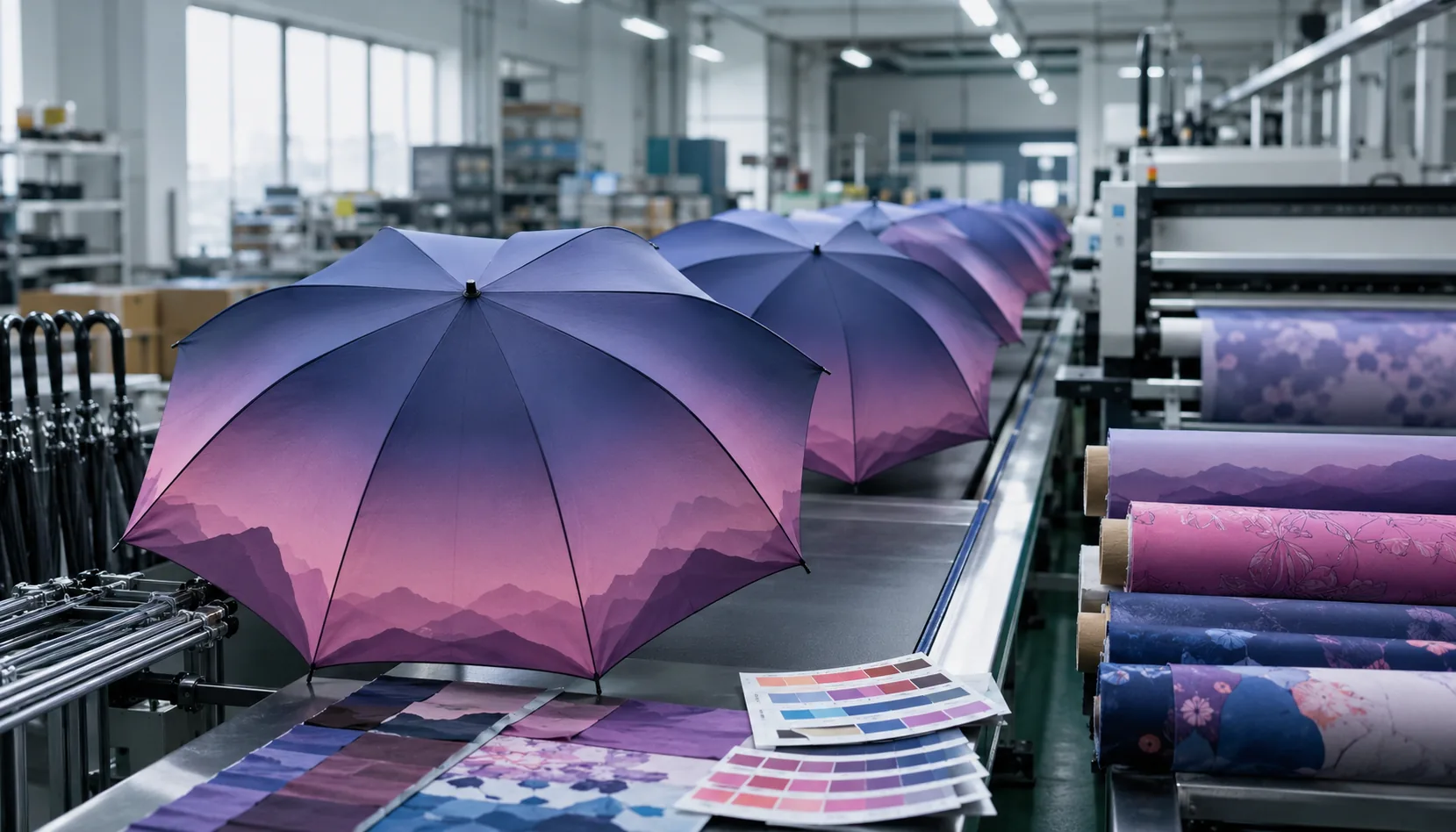
For buyers building retail umbrella ranges, the hard part is not approving a gradient or repeat on a screen—it is keeping that artwork aligned, color-stable, and panel-matched after cutting, sewing, fabric changes, size adjustments, and repeat orders. On our Songxia factory floor, pattern printed umbrellas are controlled from fabric tension and print direction through panel nesting, seam allowance, and batch color records, because small production shortcuts show up fast on the finished canopy.
When Patterns Beat Single-Logo Branding
All-over artwork earns shelf space in a way a single chest-size logo on one canopy panel usually does not. For retail umbrella collections, gradients, monograms, seasonal florals, city maps, animal prints, and geometric repeats create a family look across 21" folding, 23" stick, and 27" golf umbrellas without making every SKU identical. A buyer can run the same custom canopy patterns in different colorways: navy-to-silver gradient for men’s travel, cream monogram for women’s boutique, and a brighter seasonal motif for spring displays. That gives the line visual memory on a rack, especially when the canopy is closed and only the sleeve, binding, and handle tag are visible.
Pattern printed umbrellas also let the factory control perceived value through construction choices, not artwork alone. On 190T pongee, screen printing works well for bold repeats with 1–4 spot colors, while heat-transfer or sublimation is better for gradient umbrella printing, photo-style motifs, and tight monograms that must cross panel seams cleanly. On 8K or 10K frames, we normally align repeat direction panel by panel before sewing, because a diagonal stripe that jumps at every seam looks cheap even if the fabric is good. For premium retail, I prefer 210T pongee with Teflon coating, fiberglass ribs, and a matched sleeve print so the design feels intentional from first touch.
Simple logo placement still has its place: giveaways, bank promotions, insurance events, and trade-show gifts usually need fast recognition, low MOQ, and stable cost. A one-position logo on one or two panels is easier to approve, easier to inspect under AQL 2.5, and faster to ship FOB or DDP when the deadline is fixed. But for pattern printed umbrellas sold at retail, umbrella print sampling should include strike-offs for color, seam matching, sleeve layout, and closed-canopy appearance, not just an open-canopy mockup. The goal is different: corporate umbrellas advertise a sponsor, while patterned retail umbrellas build a product line customers can recognize and come back to buy again.
Designing Around Panel Geometry
Panel geometry decides whether artwork looks intentional or broken once the umbrella is sewn. On an 8K frame, the canopy has eight larger triangular panels, so a gradient has more visual space to transition from ferrule to edge, but every seam still cuts the artwork like a hard boundary. On a 16K frame, each panel is narrower; that looks premium for solid colors and fine repeats, but wide logos, watercolor gradients, and diagonal stripes can become choppy unless the artwork is rebuilt panel by panel. For pattern printed umbrellas, I tell buyers not to approve only a flat circle mockup. Ask for a panel layout showing the actual cut shape, rib positions, top cap area, and edge binding line, especially on 23 inch and 27 inch retail umbrella collections where the viewing distance is close enough for alignment errors to show.
Seam allowance is where many good custom canopy patterns fail. A typical umbrella panel needs about 8-12 mm allowance on both long sides for sewing, plus trimming tolerance after overlock or lockstitch joining. If the designer places a stripe, logo edge, or sharp color break too close to that allowance, the sewing operator has no room to correct fabric creep. Pongee 190T/210T behaves better than slick POE or PVC, but even pongee can shift 2-4 mm after cutting, handling, and seam tension. Gradient umbrella printing should therefore avoid critical color transitions exactly on seam lines; put the smoothest part of the gradient across the middle of each panel and let seams fall in darker, busier, or lower-contrast areas.
Repeats are the safest way to hide small alignment shifts, but only if the repeat scale is approved before bulk cutting. Dense florals, terrazzo, small geometric dots, and broken-line patterns forgive 3 mm seam movement far better than plaid, chevrons, or continuous horizon graphics. For umbrella print sampling, our standard practice at ZheBrella is to request panel-by-panel AI/PDF files at 1:1 scale, with bleed, seam allowance, grain direction, and numbered panels marked clearly. The buyer should sign off the approved repeat size in millimeters, not just a JPG preview, because a 15% scale change can turn a subtle luxury print into a noisy promotional canopy. For production, keep one master file for 8K and a separate rebuilt file for 16K; do not let the factory “auto-fit” one design across both frames unless you are willing to accept different visual rhythm.
Print Method and Fabric Selection
For gradient umbrella printing, I would choose digital printing on cut panels or roll fabric before sewing, not screen printing. Gradients, watercolor effects, photo-style artwork, and complex repeats need variable ink density; a screen can only push one solid color per mesh pass, so smooth fades often turn into visible bands. Digital also handles tight custom canopy patterns better when the repeat crosses the 8 panel seams, because we can print registration marks and control panel orientation during cutting. For pattern printed umbrellas with large all-over artwork, the buyer should approve a strike-off first, then one fully sewn sample, because color shift after stitching and waterproof finishing is real. On retail umbrella collections, I normally ask for Pantone targets plus a tolerance range, since dark navy, burgundy, and forest green often print deeper on pongee than they appear on a backlit monitor.
Screen printing still wins for flat repeat patterns with 1 to 4 solid colors, especially dots, stripes, simple logos, checker repeats, and geometric borders. The ink layer is stronger, unit cost drops once the screen charge is absorbed, and production speed is good for MOQ runs above 500 to 1,000 pieces per design. It is also easier to keep a crisp white logo on dark 190T or 210T pongee by using an underbase layer. The limitation is color count and registration: a 6 color repeat across 8K or 10K umbrellas can look clean in CAD but becomes expensive and slower on the line. If the pattern must wrap continuously across adjacent panels, digital printing is usually safer; if each panel carries the same independent repeat, screen printing is often the more economical choice.
Fabric selection changes the final result as much as the print machine. 190T pongee is common for promotional and mid-range umbrellas because it folds easily, accepts coating well, and keeps price under control. 210T pongee has a tighter weave and smoother hand feel, so edges look sharper and gradients look less grainy, especially on 23 inch and 27 inch canopies where the printed area is large. After printing, the waterproof finish must be tested again; heavy ink coverage can reduce water beading if the coating process is weak. Heat transfer is useful for small logos, metallic effects, and short-run personalization, but I do not recommend it for large patterned areas because the film can stiffen the canopy, create a plastic hand feel, and crack along fold lines after repeated opening and closing. Good umbrella print sampling should include rubbing, folding, spray, and colorfastness checks before bulk cutting.
Color Control Across a Product Range
Color control for pattern printed umbrellas has to start before artwork separation, not after bulk panels are sewn. For a multi-SKU retail umbrella collection, I tell buyers to lock four things in writing: Pantone TCX or TPX references, the exact fabric lot, an approved strike-off, and a measurable tolerance limit. Pongee 190T and 210T do not absorb disperse ink the same way, and a navy gradient on high-density 210T can look cleaner but darker than the same file printed on a softer 190T lot. If the program includes 21-inch folding, 23-inch stick, and 27-inch golf umbrellas, do not approve color from only one size; canopy curvature changes how light hits the panels. For gradient umbrella printing, we usually need a printed panel mock-up, not just an A4 lab dip, because the fade length across 8K or 10K panels affects visual balance once ribs are assembled.
Navy, red, beige, and pastel gradients cause the most arguments in inspection rooms. Navy can shift purple under LED light if the black component is pushed too hard; red can look orange in daylight but deep crimson under warm indoor lighting; beige often turns gray on coated pongee, especially with Teflon water-repellent finishing; and pastel gradients lose contrast after heat pressing or sublimation if the file is built too close to the fabric base color. Buyers should approve strike-offs under D65 daylight, TL84 store lighting, and warm 3000K lighting, then state which light source controls final acceptance. For custom canopy patterns, I prefer a Delta E target for solid brand colors and a visual tolerance board for gradients, because a fade from 10% to 60% ink coverage cannot be judged like a flat logo color.
For retail umbrella collections with several handle colors, trims, sleeves, and canopy prints, keep one master color control sheet per SKU and one range sheet showing all SKUs together. The mistake I see is approving each pattern separately; then the navy on the compact model is acceptable by itself but clashes with the navy border on the golf umbrella. Umbrella print sampling should include the bulk fabric roll number, print method, coating status, ink recipe, and signed sample date, then that sample should stay sealed until pre-production and AQL 2.5 inspection. Our standard practice at ZheBrella is to keep one approved strike-off in the print room and one in QC, so operators and inspectors are judging against the same reference. For pattern printed umbrellas, put tolerance language in the PO: acceptable shade band, unacceptable hue shift, repeat alignment limit, and whether slight panel-to-panel variation is allowed on gradient edges.
Bulk Production, QC, and Reorders
MOQ planning for pattern printed umbrellas should be built by colorway, not just by total order quantity. A 3,000-piece program split into six gradients is really six production setups, with separate fabric loading, print registration, cutting control, and sewing line checks. For 190T or 210T pongee, our practical floor is usually 500–1,000 pieces per colorway for screen or heat-transfer work; sublimation can handle more complex custom canopy patterns, but it still needs stable yardage consumption and panel nesting. Retail umbrella collections often look simple on a range board, but a 21" compact auto-open-close, a 23" stick umbrella, and a 30" golf umbrella do not share the same panel scale. If the repeat is not resized correctly, the same artwork will look crowded on 8K compact ribs and too empty on a 16K golf frame.
Bulk timing should be counted after signed umbrella print sampling, not after artwork receipt. For gradient umbrella printing, I want one approved physical sample under daylight and one under warehouse LED light because banding, edge fade, and color cast show differently on coated pongee. Normal production is 30–45 days after sample approval, assuming fabric, ribs, shafts, handles, tips, and cartons are locked. Rush orders are risky when the artwork crosses panel seams, because cutting must follow print direction before sewing; one careless stack rotation can make alternating panels run upside down. At ZheBrella, our standard practice is to keep a sealed approval sample on the cutting table and another in final inspection, so QC is comparing against the same target rather than a phone photo or PDF proof.
AQL 2.5 inspection for pattern printed umbrellas needs print-specific checkpoints in addition to normal frame testing. Inspectors should check repeat direction, left-right panel mismatch, gradient continuity across seams, oil stains, ink smudges, loose threads, tip alignment, runner lock, manual or auto-open function, and closing force on auto-open-close models. For mixed retail assortments, carton planning matters as much as the umbrella itself: FOB Ningbo or Shanghai is cleaner when the buyer consolidates with other goods, while DDP is better when assortments ship directly to multiple retail DCs and duties, inland freight, and labeling need one landed-cost number. Reorders should keep the same Pantone references, fabric lot notes, and print curve files, because a second run six months later can drift if the mill changes coating, especially on Teflon-treated or UPF 50+ canopies.
Frequently Asked Questions
Are gradients more expensive than repeat patterns on umbrellas?
Usually yes, because gradients often require digital printing, more sampling, and tighter color review. Simple two-color repeats can often be screen printed at a lower setup and unit cost.
Can one pattern be used across compact, stick, and golf umbrellas?
Yes, but it should be adapted to each panel size and rib count. A repeat that looks balanced on an 8K compact umbrella may need rescaling for a 16K golf umbrella.
How do you keep a repeat pattern aligned across multiple umbrella panels?
We map the artwork to the panel template before sampling, then verify seam positions, panel rotation, and center alignment. For multi-panel canopies, the artwork should be approved on a physical pre-production sample before bulk order release.
Can a gradient umbrella print stay consistent across different sizes?
Yes, but the artwork needs size-specific scaling so the fade starts and ends in the right visual zones. In production, we usually lock the gradient placement by canopy diameter and panel count to avoid shifts between compact, golf, and stick umbrella sizes.
What is the usual MOQ for custom printed umbrella collections?
For retail collection work, MOQ is often 500-1,000 pieces per colorway or print version, depending on fabric, frame, and printing method. Complex repeat or gradient artwork may require a higher sampling and approval step before mass production.
Looking to Launch Your Custom Umbrella Line?
ZheBrella is a Zhejiang-based OEM/ODM umbrella manufacturer with 17 years of export experience. Free design, low MOQ from 100 pieces, windproof construction, full-color print.
Get Free Quote Now »People Also Search For
Related Articles
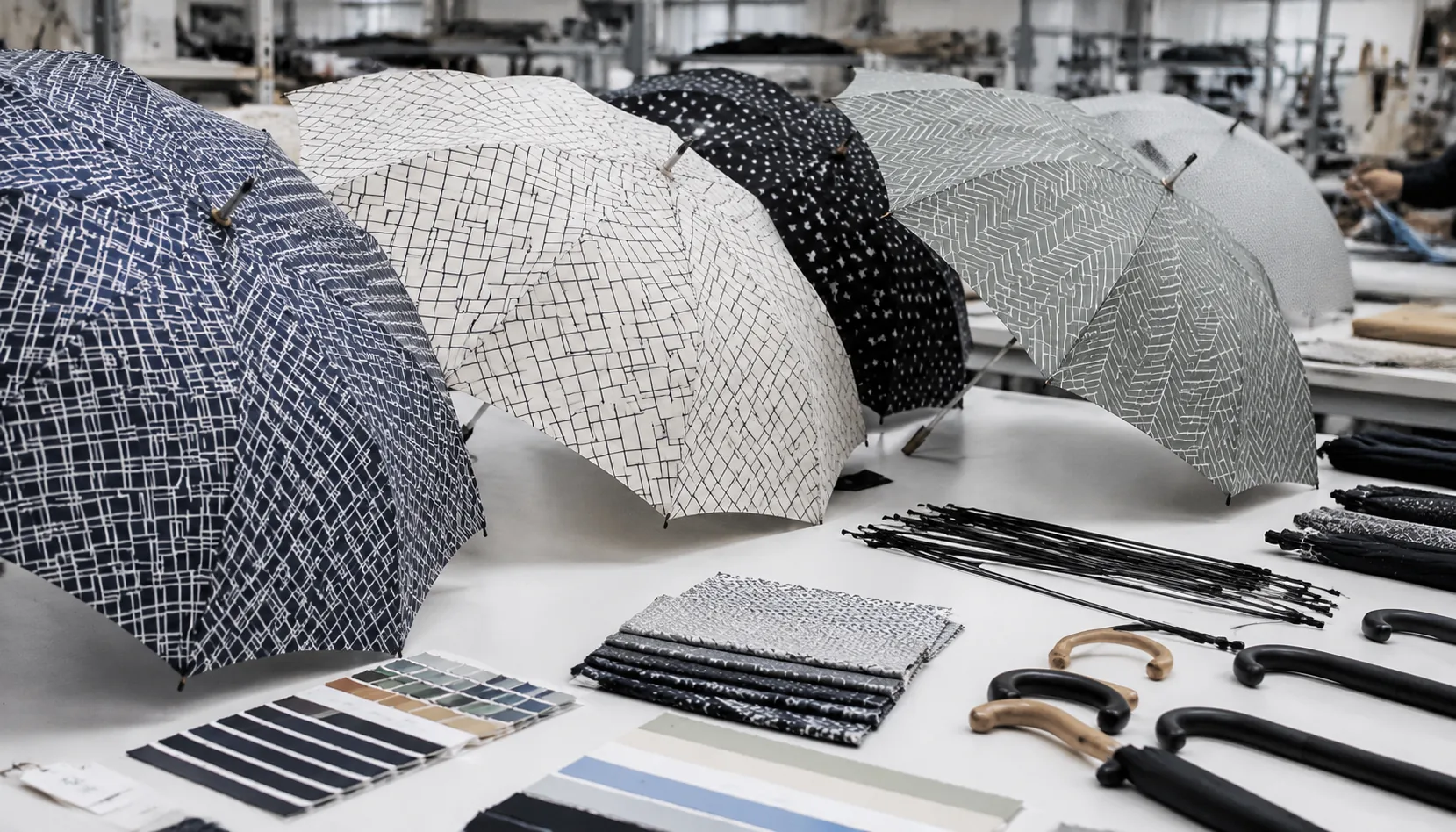
Repeat Pattern Umbrella Printing for Retail Collections
Plan repeat-pattern umbrella canopies for retail lines with panel layout, fabric choice, color control, sampling, MOQ, a...
Read More »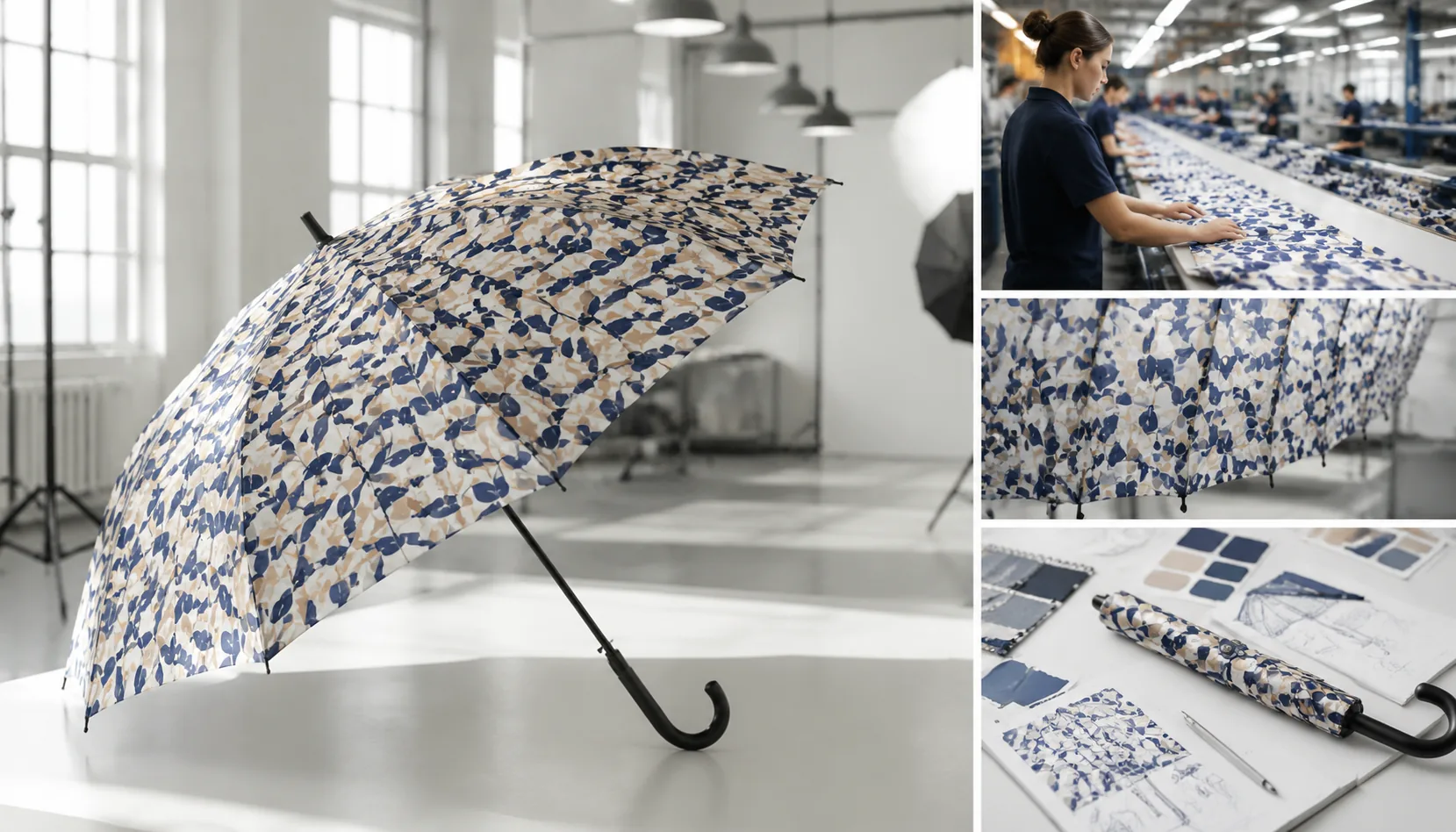
Repeat Pattern Umbrella Printing for Branded Collections
Plan repeat logo, monogram, or pattern umbrellas with clear rules for panel layout, fabric choice, sampling, MOQ, and pr...
Read More »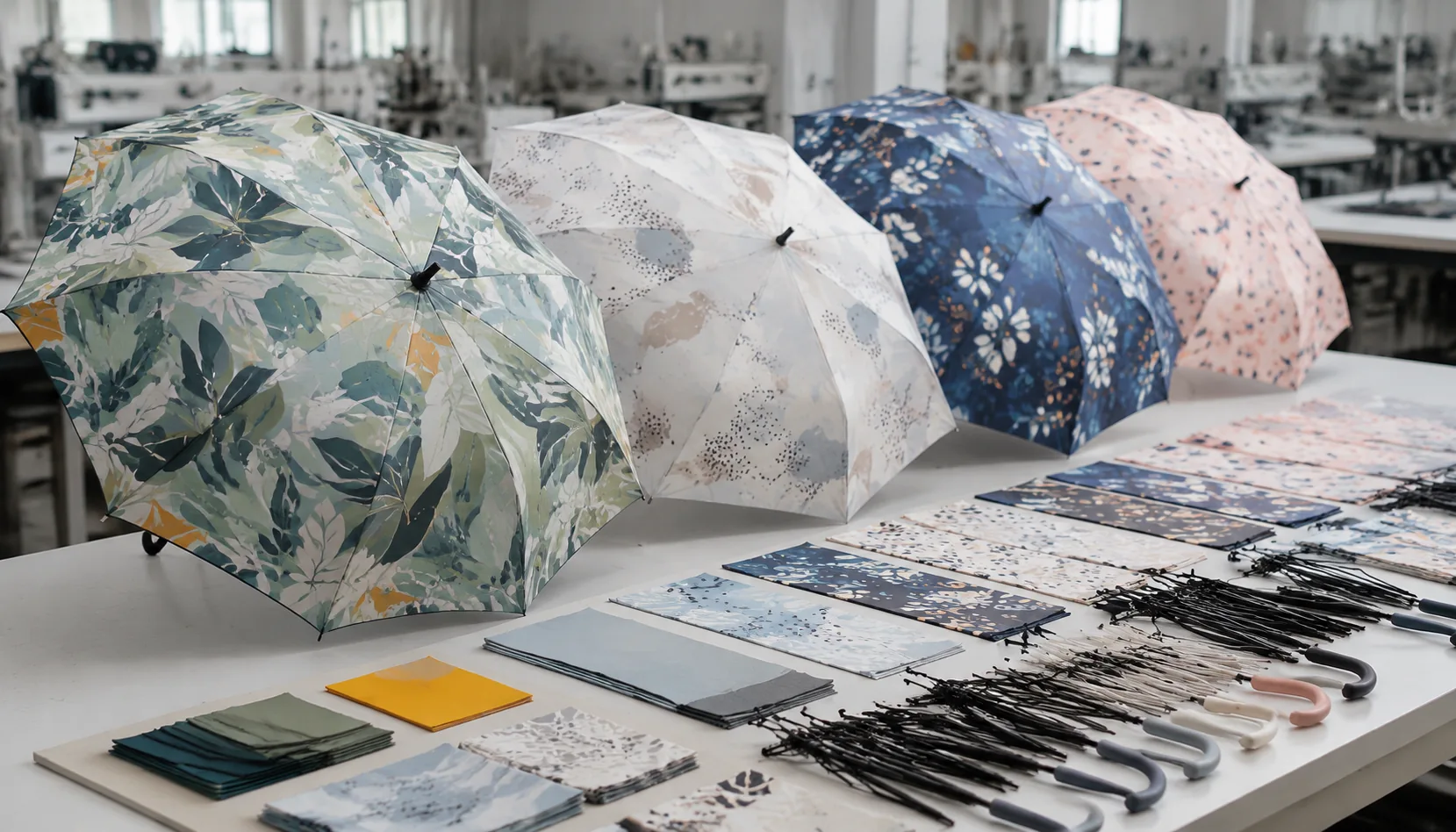
All-Over Pattern Printing for Retail Umbrella Collections
Build retail umbrella patterns with clean repeats, controlled panel alignment, and fabric choices that keep logos sharp ...
Read More »