Gradient Umbrella Canopy Printing for Branded Campaigns
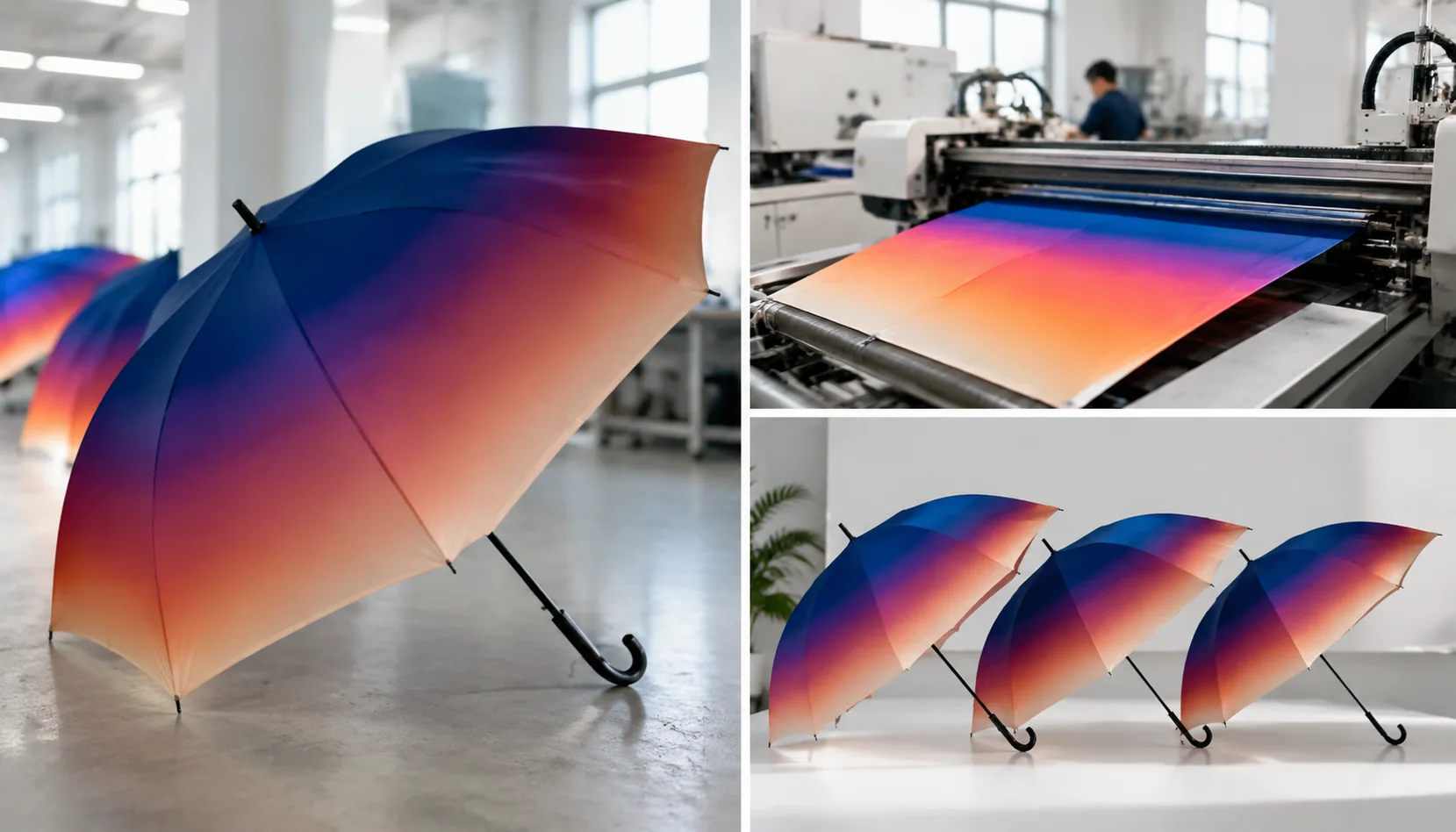
For campaign buyers, gradient umbrellas look simple on a mockup but can shift fast on real fabric when ink density, panel cutting, and seam alignment are not controlled. In our Songxia workshop, gradient umbrella printing starts with artwork built for canopy panels, fabric selected for color hold, and proofing checked under production lighting before bulk cutting. That discipline reduces approval surprises and keeps branded runs consistent from first sample to final carton.
When Gradient Canopies Make Sense
Gradient canopies make sense when the umbrella is part of the visual identity of a campaign, not just a rain tool with a logo slapped on one panel. Product launches are a strong fit because a color fade can mirror packaging, app screens, beverage flavors, cosmetic shades, or automotive paint themes better than a flat PMS block. For sports events, gradient canopy umbrellas work well in fan zones, VIP seating, golf tournaments, and marathon sponsor kits where the umbrella needs to read from 20 to 50 meters away. On a 23" or 27" canopy, a blue-to-white or red-to-black fade across 8K panels gives more movement than eight repeated logos. This is where gradient umbrella printing earns its cost: it creates a branded object people actually hold up, photograph, and reuse.
Travel retail and fashion promotions are also good use cases because buyers respond to color mood before they read copy. Airport shops, hotel gift programs, resort activations, and duty-free beauty counters often use branded campaign umbrellas as seasonal merchandise, especially on 190T or 210T pongee with a matte finish. Fashion brands can push further with custom printed umbrella panels: one panel may carry a soft gradient, another a monogram shadow, and the border can stay clean for a woven label or small heat-transfer mark. Digital umbrella printing is the usual route for smooth fades, photographic tones, and multi-color artwork, while screen printing is better for solid logos and sharp one- or two-color graphics. Our standard practice at ZheBrella is to check gradient banding on a strike-off before bulk cutting, because a beautiful file can look dirty if the RIP setting or fabric absorption is wrong.
Gradients are weak when the message depends on small text, dense sponsor grids, QR codes, or legal copy. Fine lettering below about 8 to 10 mm high can break across seams, ribs, and panel curves, especially on darker fade areas. If the buyer needs event dates, multiple partner logos, or redemption instructions, I prefer a solid-color panel layout with one or two controlled print zones. A gradient should do the emotional work: speed, luxury, sunset, ocean, team energy, or product flavor. Keep the logo simple, leave breathing room near the crown and tips, and avoid placing critical artwork across stitch lines. For procurement, the cleanest spec is usually 8K or 10K pongee canopy, auto-open or manual frame depending on budget, one approved digital strike-off, then AQL 2.5 inspection before FOB or DDP shipment. That prevents a visual campaign from turning into a rework discussion after production is already sewn.
Print Method and Artwork Requirements
Digital umbrella printing is usually the safer choice for smooth color transitions because the print head can build thousands of tone steps across each panel without the hard edges you get from separated screens. For gradient umbrella printing, we normally ask for vector artwork plus linked raster files at 150–300 dpi at full print size, depending on whether the canopy is a 21" compact, 23" standard stick, or 27" golf umbrella. A 190T or 210T pongee canopy accepts gradients well when the fabric is properly pre-treated, but the artwork must account for ink gain and the slight dulling that happens after water-repellent finishing. Sublimation works best on white polyester panels; heat-transfer film can look heavier and may crack at fold lines if the gradient covers a large area.
Screen printing still has a place when the fade is simple: two or three tones, a short transition, or a brand background that does not need photographic smoothness. I would not recommend screen printing for sky fades, metallic-looking blends, or subtle radial gradients across custom printed umbrella panels because each extra tone means another screen, another registration risk, and higher setup cost. For promotional runs above 1,000 pieces, screen printing can be economical if the artwork is disciplined: spot colors, limited halftones, and no critical transition crossing a stitched seam. For branded campaign umbrellas where color consistency matters more than artistic softness, we match Pantone references under D65 light and run a pre-production panel before cutting bulk fabric.
Panel templates are where many gradient canopy umbrellas go wrong. An umbrella is not a flat poster; an 8K canopy has eight triangular panels, while 10K or 16K frames split the visual field differently, and the ribs interrupt the image at every seam. Our standard practice at ZheBrella is to build artwork on the exact cutting die template with 10–15 mm bleed outside the panel edge, 7–10 mm seam allowance, and a marked centerline from top notch to hem. Keep logos at least 25 mm away from stitched seams and avoid placing critical color changes directly over rib lines, especially on double-canopy vented windproof models. Good gradient umbrella printing depends less on the printer brand and more on template control, panel numbering, and sewing operators keeping rib alignment within 2–3 mm during assembly.
Fabric and Frame Choices for Color Impact
For gradient umbrella printing, 210T pongee gives the cleanest color transition because the weave is tighter and the surface has less texture for ink to break on. On digital umbrella printing jobs, especially light-to-dark fades or brand gradients with a Pantone target, 210T holds saturation better after heat setting and water-repellent finishing. It also feels denser in the hand, which matters for retail branded campaign umbrellas where the buyer will compare it against plain stock umbrellas. The tradeoff is cost: 210T usually adds a few percent to fabric cost versus 190T, and on a 23" or 27" canopy that difference becomes visible at 3,000–10,000 pcs. 190T pongee is still a practical choice for promotional runs because it prints smoothly enough for simple two-color gradients, has good water shedding with Teflon coating, and keeps FOB pricing sharper. I avoid 190T only when the artwork has pale pastel fades, skin-tone photography, or large flat color blocks that expose weave variation.
Panel count changes the artwork more than many designers expect. An 8K umbrella has eight wider custom printed umbrella panels, so each panel gives more uninterrupted space for a logo, radial fade, skyline, or event graphic. It is easier to align a gradient across the seams because there are fewer cut edges and fewer sewing operations that can shift by 2–3 mm. For gradient canopy umbrellas, 8K is often the safer choice when the campaign needs strong visual impact from 3–5 meters away. A 16K canopy looks more rounded and premium, but every color transition is split into narrower wedges. That means tighter panel matching, more marker control during cutting, and more approval checks at pre-production. Our standard practice at ZheBrella is to review a full sewn sample, not just a printed fabric swatch, before approving 16K gradient work because the seam line can visually darken the transition.
Frame selection also affects perceived color because canopy tension changes how the fabric reflects light. A steel shaft with steel ribs is economical and stable for 21" and 23" promotional umbrellas, but heavier frames can pull the canopy flatter, making print defects easier to see under showroom lighting. Fiberglass ribs, especially on 8K or 10K windproof frames, flex more evenly and reduce stress marks near the rib tips after repeated opening. For premium branded campaign umbrellas, I prefer fiberglass ribs with a 210T pongee canopy, auto-open or auto-open-close mechanism, and a double-canopy vent if the product needs a wind rating around 50+ mph. A 16K fiberglass frame can look excellent, but the print file must include seam allowance, panel numbering, and a tolerance map before mass production. If the buyer skips that step, AQL 2.5 inspection will catch misalignment, but it is much cheaper to prevent it at artwork approval.
Color Proofing and Production Tolerance
Color proofing for gradient umbrella printing should start with anchor colors, not the full fade. A gradient that runs from Pantone 286 C to Pantone 2995 C, for example, needs both ends approved first because the middle tones are generated from those reference points. For polyester pongee 190T/210T, we normally request lab dips for solid anchor shades, then produce a digital strike-off on the actual canopy fabric with the same coating stack planned for bulk production. Paper proofs are useful for layout approval, but they lie about saturation, especially on dark navy, orange, and fluorescent-looking campaign colors. For branded campaign umbrellas, I advise buyers to approve under D65 light and also check under warm indoor light, because event photos are rarely taken in laboratory conditions. Our standard practice at ZheBrella is to keep a signed Pantone reference, fabric swatch, and printed strike-off together with the production order so cutting, sewing, and final AQL 2.5 inspection compare against the same target.
Acceptable shade variation must be defined before bulk fabric is cut, because custom printed umbrella panels are assembled from separate triangular gores, not printed as one circular image. On 8K and 10K frames, a small color drift between panels is more visible near the crown where seams meet; on 16K umbrellas, the narrower panels make gradient alignment more demanding. For digital umbrella printing, a Delta E tolerance around 2.0–3.0 is realistic for anchor colors on white pongee, while 3.0–4.0 may be more practical when the fabric has Teflon treatment, UV black coating, or a silver UPF 50+ layer. The production team should check the gradient direction after panel cutting, because one reversed gore can ruin the visual flow even if the color itself is correct. I also recommend approving a sewn pre-production sample, not only flat panels, since seam folding removes 3–5 mm of printed area and can change how the fade appears around the umbrella ribs.
UV coating and double-canopy construction can change the final color more than buyers expect. A UPF 50+ black glue layer behind 190T pongee makes light gradients look deeper and slightly cooler, while silver UV backing can brighten pale blues and greens but reduce the softness of pastel transitions. For gradient canopy umbrellas with vented double-canopy windproof designs, the upper and lower canopies should be proofed separately because airflow gaps, overlap shadows, and different fabric tension affect how the gradient is seen when the umbrella is open. On 23-inch and 27-inch auto-open models, the vent layer usually sits flatter than on compact 21-inch auto-open-close umbrellas, where tighter folding can create pressure marks if ink curing is rushed. Bulk inspection should include dry rub, wet rub, coating adhesion, water repellency, and a light-transmission check for UV coverage. If the campaign requires photo consistency across 500, 2,000, or 10,000 pieces, lock the ink profile, fabric lot, coating recipe, and panel nesting method before mass production begins.
MOQ, Lead Time, and Inspection Plan
Inspection for gradient umbrella printing needs both appearance control and mechanical testing, otherwise the campaign can fail in the field even when the canopy looks good. Our standard practice at ZheBrella is AQL 2.5 for major defects, with checks for color banding, white pinholes, dirty transfer marks, panel misalignment over 5 mm, skipped stitches, loose tips, and sleeve color mismatch. For manual umbrellas, inspectors cycle open-close at least 10 times per sampled unit; for auto-open and auto-open-close models, the button, spring, runner lock, shaft return, and safety stop need separate checks because print-heavy canopies can add drag. Windproof double-canopy styles also get rib-flex and vent alignment checks, especially on fiberglass ribs. Before shipment, carton drop, barcode, polybag warning, moisture level, and shipping marks should match the FOB/DDP plan so the goods do not sit at port over avoidable documentation errors.
Frequently Asked Questions
Can a gradient print continue across all umbrella panels?
Yes, but each panel must be mapped in the artwork file with bleed and seam allowance. A full assembled sample is important because flat panel proofs do not show rib breaks accurately.
Is gradient printing suitable for low-MOQ promotional orders?
It can be, but digital printing usually costs more per unit than one-color screen printing. Buyers should confirm MOQ, sample fee, and lead time before presenting the concept to clients.
What artwork format works best for gradient umbrella canopy printing?
Vector files such as AI, EPS, or PDF are preferred for logos, while gradients should be supplied in high-resolution CMYK artwork at actual print scale. For digital printing, a 300 dpi file with clear panel layout and bleed reduces proofing delays.
Can each umbrella panel have a continuous gradient across the canopy?
Yes, but the artwork must be separated by panel with alignment marks because each canopy panel is cut and printed before sewing. A slight tolerance of 2–5 mm at panel seams is common in bulk production.
What is the typical MOQ and lead time for branded gradient umbrellas?
For OEM gradient canopy umbrellas, MOQ is usually 500–1,000 pieces depending on fabric, frame, and printing method. Sampling often takes 7–10 days after artwork approval, with bulk production around 25–40 days.
Looking to Launch Your Custom Umbrella Line?
ZheBrella is a Zhejiang-based OEM/ODM umbrella manufacturer with 17 years of export experience. Free design, low MOQ from 100 pieces, windproof construction, full-color print.
Get Free Quote Now »People Also Search For
Related Articles
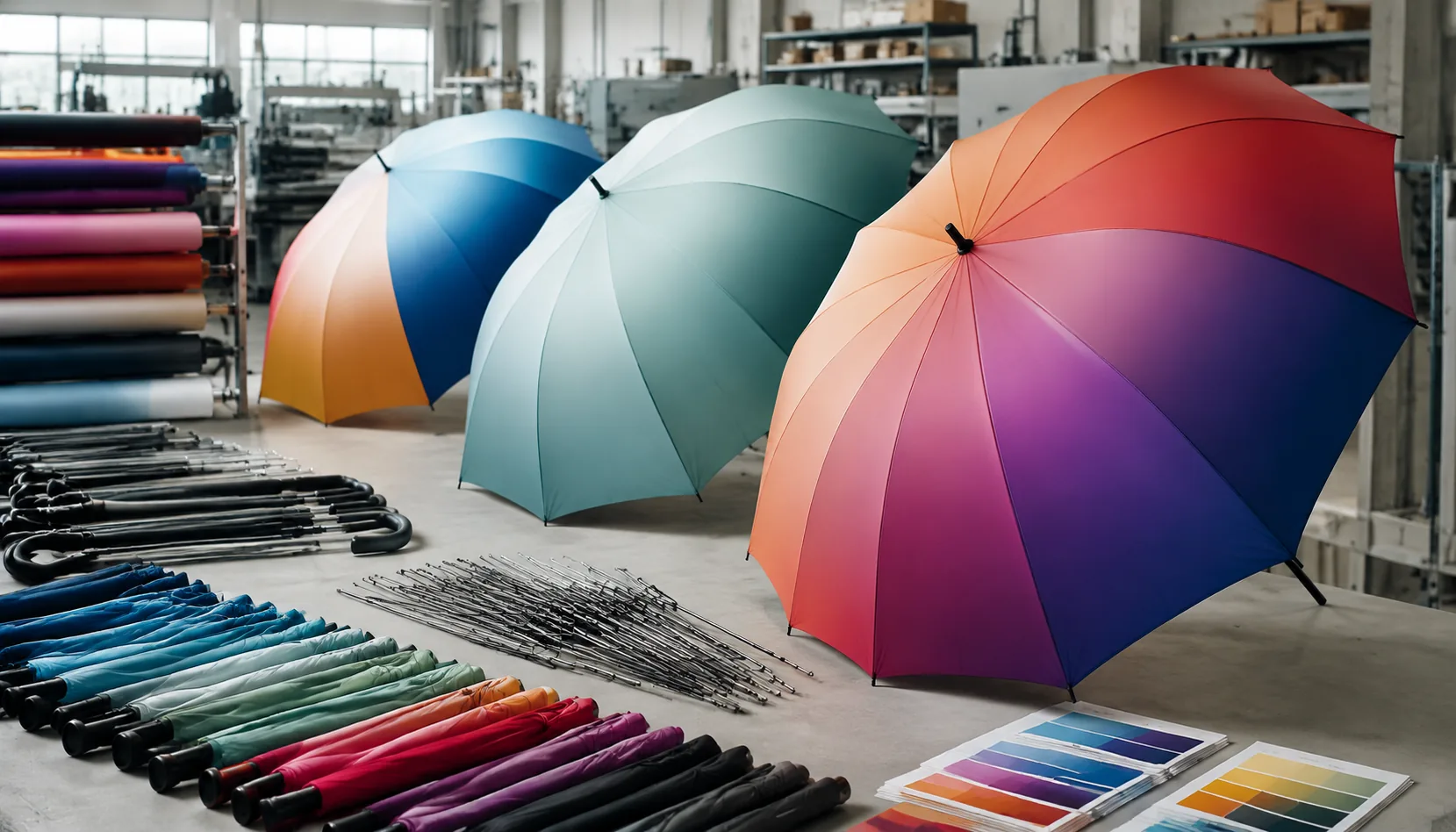
Gradient Umbrella Printing for Branded Color Campaigns
Learn how to specify gradient umbrella prints with realistic color transitions, fabric choices, sampling steps, and prod...
Read More »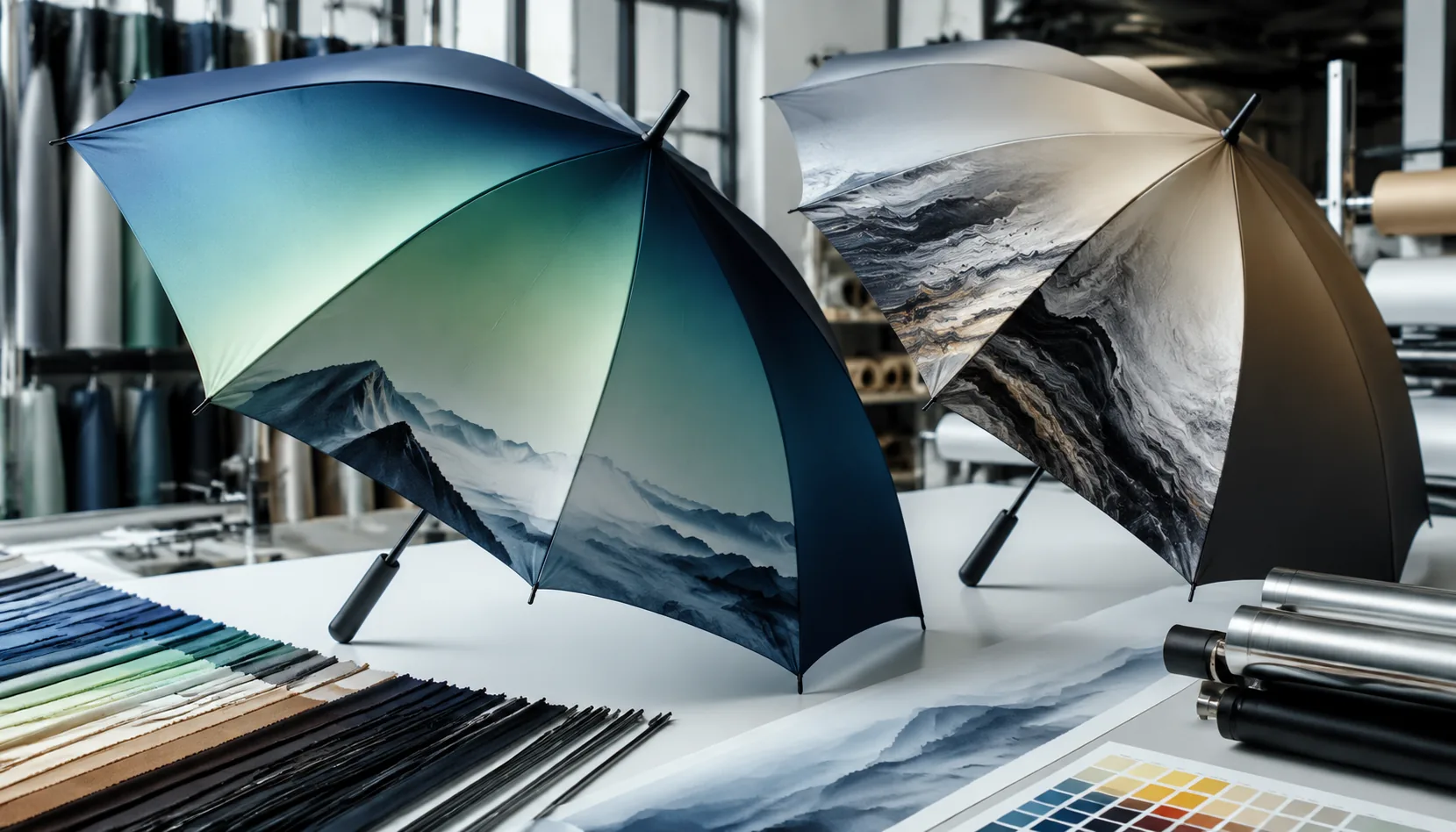
Gradient and Photographic Umbrella Prints for Brand Campaigns
Plan photo, gradient, and all-over digital umbrella prints with file specs, 190T/210T fabric choices, panel seams, lead ...
Read More »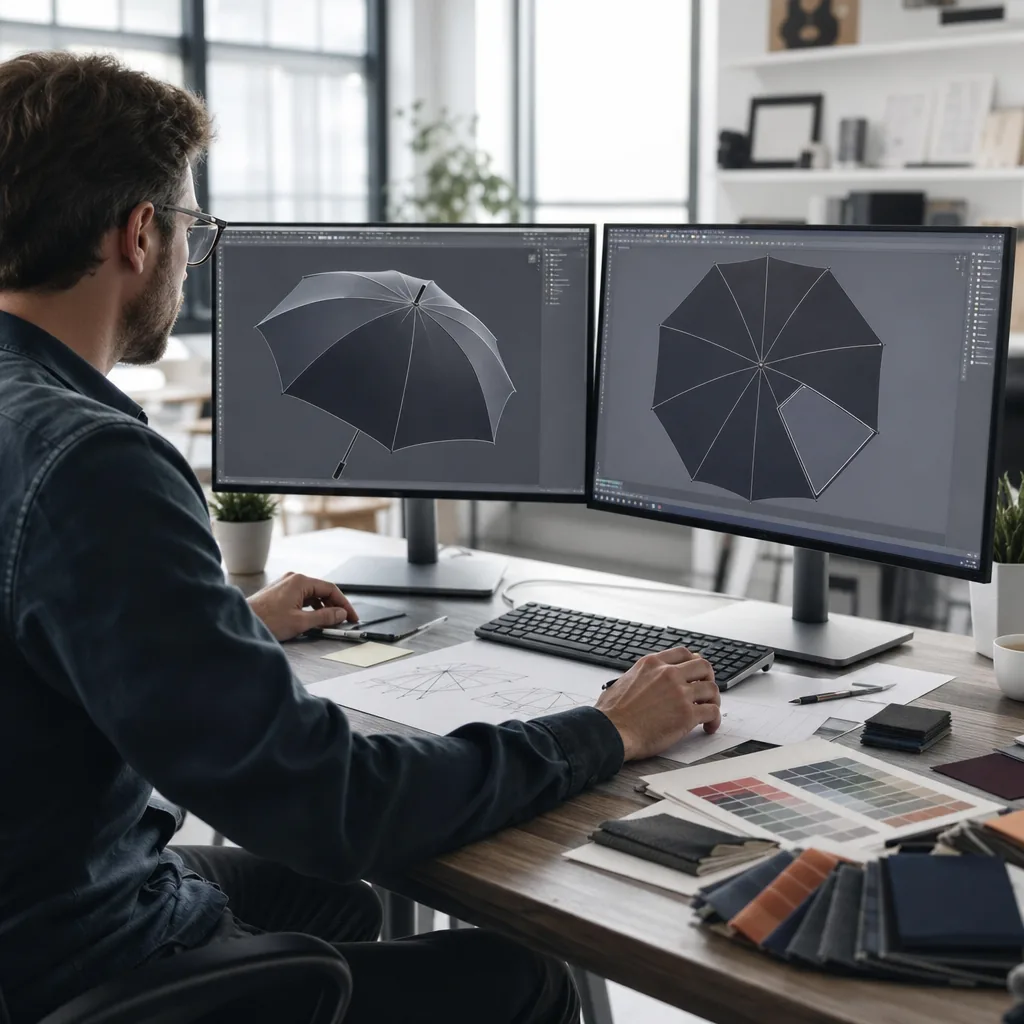
Gradient and Photo-Print Umbrellas for Brand Campaigns
Specify gradient and photo-print umbrellas with realistic color control, fabric choices, sample approvals, and productio...
Read More »