Injection-Molded Umbrella Parts: Tooling, Shrinkage, QC

OEM buyers often think umbrella plastics are simple until molded tips, runners, caps, and handles start drifting on fit, gloss, or color from one production lot to the next. At our Songxia factory in Shangyu, we see the usual failure points on the tool room floor: shrinkage not matched to resin, gate and runner balance off, or cosmetic standards that don’t survive real assembly and rain testing.
Which Umbrella Parts Are Injection Molded
The parts that get injection molded first are the ones that take load, move, or need repeatable geometry: runners, notches, tips, end caps, ferrules, handle cores, push buttons, and sleeve toggles. In umbrella plastic tooling, those are usually made in ABS, POM, PP, or nylon depending on whether the part needs stiffness, snap-fit resilience, or low-friction motion. Runners and notches matter most for opening and locking behavior, while tips, end caps, and ferrules control how the frame terminates and how the canopy is retained at each rib end. Handle cores and push buttons are more about user feel and assembly tolerance, but they still have to survive repeated impact and squeeze cycles.
I separate injection molded umbrella parts into two buckets: functional hardware and cosmetic interfaces. Functional parts include the runner, notch set, push button, and ferrule because they directly determine whether the umbrella opens smoothly, locks cleanly, and survives wind load without slipping. Cosmetic or semi-cosmetic parts include handle shells, end caps, and sleeve toggles, which affect appearance and grip but can still cause returns if the fit is sloppy, the gate marks are ugly, or the color drifts. With umbrella runner molding, a 0.1 to 0.2 mm change in wall thickness can show up as drag, wobble, or brittle fracture after cold-weather testing.
For buyers comparing custom umbrella mold cost, the real driver is not just cavity count but how many of these parts need tight tolerance, polished surfaces, and steel-safe future revisions. A simple tip or end cap mold is cheap compared with a runner or push-button tool that needs consistent spring action and dimensional control across long production runs. On OEM umbrella component QC, we check gate vestige, sink, flash, short shot, color consistency, and assembled fit under AQL 2.5, because a part can look fine in a tray and still fail once it is pressed onto the frame.
Resin Selection for Strength, Feel, and Cost
For injection molded umbrella parts, resin choice is not a cosmetic decision; it determines whether the handle, runner, tip, or release button survives daily flexing and repeated shock loads from an auto-open spring. PP is the cheapest and easiest to mold, but it is soft, creeps under load, and gets sloppy in tight tolerances unless the geometry is generous. ABS gives a better hand feel and cleaner surface finish, so it is common in visible shells and handle covers, but straight ABS will start to lose impact strength after long UV exposure unless you add stabilizer or keep it under a printed/painted layer. POM is the workhorse for sliding and latching parts because it keeps low friction and holds dimensions well, which matters in umbrella runner molding where the spring path and detent need to stay consistent from tool to tool.
Nylon is stronger and tougher than PP or ABS, and in a properly designed umbrella plastic tooling program it is often the right answer for stressed brackets, ribs-end connectors, and load-bearing internal clips. The problem is moisture uptake: nylon can move in humidity, so if you are holding a tight fit around a metal shaft or a snap latch, the shrinkage and conditioning state must be controlled in production. In cold weather, PP and some ABS grades can become brittle and crack when dropped, while nylon keeps better impact resistance. For auto-open mechanisms, I avoid overly rigid, glass-filled parts unless the wall thickness, gate position, and flow length are already proven, because the stored spring energy will find weak knit lines fast.
TPR overmold is usually the best way to improve grip without making the whole part expensive or hard to mold. A hard ABS or POM core with a TPR outer layer gives better wet-hand traction, a warmer feel in winter, and less slip during repeated opening cycles, which is why it shows up often in premium handles and push-button covers. From a factory standpoint, this also changes custom umbrella mold cost: two-shot tooling, side actions, and tighter process control raise the price fast, but they reduce downstream rejects when the customer wants both color contrast and soft-touch feel. Our standard practice for OEM umbrella component QC is to check resin lot consistency, shrinkage against the master gauge, latch force, and cold-drop behavior before greenlighting mass production, because a part that looks fine at room temperature can fail once it sees UV, rain, and low temperatures in the field.
Tooling Design, Shrinkage, and Critical Dimensions
Gate position is not a cosmetic decision on injection molded umbrella parts; it controls weld lines, fill balance, and whether a cap or slider ends up oval after cooling. On umbrella plastic tooling, I want the gate kept away from the shaft bore, rib hook, and spring seat so the flow front does not freeze a critical fit surface. Parting lines need to be placed where flash can be trimmed without weakening the wall, and ejector pins should land on hidden flats, not on visible domes or sealing faces. If the part needs to snap onto a steel shaft or sit against a fiberglass rib tip, the texture also matters because a heavy grain can steal real dimension and change the way the part releases from the mold.
Shrinkage allowance has to be set from the actual resin, wall thickness, and gate layout, not from a brochure number copied into the quote. For umbrella runner molding, a 0.2 mm error on a small collar can turn into a loose fit or a cracked press-fit after cooling, so the drawing must show 2D dimensions, 3D data, tolerance callouts, and the mating stack-up with the shaft, rib, and spring. That is also where custom umbrella mold cost starts to make sense: better steel, tighter machining, and a controlled hot runner or cold runner design reduce rework later. Our standard practice is to ask for both 2D and 3D files before steel is cut, because without them you are guessing at critical dimensions.
T1 sample review is the first real proof that the tool matches the drawing, and it should be treated as a dimensional audit, not a look-and-see approval. Measure the bore, wall thickness, snap feature, ejector witness, and any flexing tab under the same conditions used in production, then compare them to the drawing and the mating metal parts. OEM umbrella component QC should also check for sink at thick sections, gate blush, flash at the parting line, and any shrinkage drift after 24 hours, because some resin movement shows up after the first inspection. If the T1 sample already misses the shaft or spring interface, fixing it after plating, printing, or assembly is far more expensive than reworking the cavity now.
Molding Defects That Affect Umbrella Assembly
Flash is the one defect that looks harmless on a bench and turns into trouble in assembly. A thin ridge at the gate or parting line on injection molded umbrella parts can interfere with rib tips, ferrule fit, and push-button travel, especially on small runner blocks and end caps. Sink marks usually show up around thicker walls, bosses, or screw posts; that is where the plastic cools unevenly and pulls inward. On umbrella plastic tooling, I watch those areas closely because a part that looks acceptable visually can still crack at the handle neck, bind in the runner channel, or fail a cycle test after a few hundred open-close actions.
Short shots and weak weld lines are the defects that tell you the mold is not filling or venting correctly. In umbrella runner molding, a short shot can leave a tip seat half-formed or a locking tooth missing, which makes the assembly feel loose from day one. Weld lines are weaker than the surrounding plastic, so if they run through a stressed section like a rib connector or sliding collar, you get early fractures instead of a clean functional failure. Out-of-round holes are just as annoying in production because they throw off pin fit and rivet alignment; once that happens, the assembler starts forcing parts, and that is how you end up with cracked handles and inconsistent lock-up.
Warpage and color streaks are often blamed on the resin, but in practice they usually come from poor cooling balance, bad drying, or a tool that was never tuned for the real cycle time. Warped housings twist the runner path, so the umbrella feels sticky even when every individual component passes a visual check. Color streaks may not affect strength, but they are a warning sign that mixing, regrind control, or residence time is off. For OEM umbrella component QC, I treat these as process-control defects, not cosmetic issues: if the parts do not hold dimension, the final umbrella will fail fit checks, develop loose tips, or miss endurance targets no matter how low the custom umbrella mold cost was on paper.
Cost, MOQ, and QC Planning for Custom Molds
The first thing buyers miss is that custom umbrella mold cost is not just steel and machining; it is cavity count, hot-runner layout, steel grade, polishing standard, and how many revisions you expect before first-off samples settle down. For injection molded umbrella parts, a 1-cavity handle mold and a 4- or 8-cavity runner mold sit in very different cost bands, and the difference flows straight into MOQ and unit price because you amortize tooling over the total order volume. If you want a low MOQ, you usually pay with a higher piece price; if you want a lower piece price, you need enough annual volume to spread the tooling over more cartons. Resin color matching adds another layer: a simple black PP part is straightforward, but a brand-specific Pantone match in ABS or PA with UV additive can require compound tweaks, longer trials, and tighter incoming resin control.
Umbrella plastic tooling should be judged by stability, not by the first sample that comes out shiny. The runner gate balance, venting, and shrinkage allowance matter more than most buyers realize, especially on umbrella runner molding where a small dimensional drift can stop the frame from locking cleanly. Our standard practice is to lock the drawing dimensions, approve the master sample, then check incoming components for critical dimensions, flash, sink, short-shot marks, and color delta before anything goes to assembly. For OEM umbrella component QC, I recommend a simple but strict checklist: pin-hole alignment, rib-slot fit, button travel, surface defects, and dimensional sampling from each cavity so one bad cavity does not contaminate the whole lot.
Before shipping, final AQL 2.5 inspection is the right floor, not the ceiling. Use it on assembled components and finished umbrellas, then release only after the lot clears functional opening/closing tests, joint retention, and cosmetic checks under normal warehouse lighting, because FOB and DDP both become expensive if you discover fit problems after export booking. For injection molded umbrella parts, I would also require lot traceability by mold cavity, resin batch, and color masterbatch so a rejection can be isolated instead of scrapping the full production run. If the order is for a retail program or repeated replenishment, build the amortization into the quote from the start: tooling recovery, expected yield loss, and QC labor should be visible line by line, otherwise the unit price will look good on paper and fail in execution.
Frequently Asked Questions
When does a custom umbrella order need new plastic tooling?
New tooling is usually needed for a unique handle shape, branded runner, custom cap, or nonstandard shaft fit. If only color or logo changes, existing molds may be used with lower MOQ and shorter lead time.
How long should buyers allow for molded umbrella component approval?
For new tooling, buyers should allow time for mold design, T1 samples, fit testing, and possible adjustment. A realistic approval buffer is often several weeks before the normal umbrella bulk production lead time starts.
What shrinkage allowance should be built into umbrella injection molds?
Most umbrella plastic parts need a shrinkage allowance based on the resin grade, typically around 0.5% to 2.0%. ABS and PP often behave differently, so the final mold dimension should be confirmed with sample shots and actual measured part shrinkage before mass production.
How do you inspect molded umbrella runners and tips for OEM orders?
For OEM umbrella component QC, common checks include dimensional fit, flash, sink marks, gate trim, surface scratches, and color consistency. Buyers usually request sample approval first, then in-process checks every 1 to 2 hours during mass molding.
What affects custom umbrella mold cost the most?
The biggest cost drivers are cavity count, part size, steel grade, surface finish, and whether the part needs sliders or inserts. Simple single-cavity umbrella tips cost much less than multi-cavity runners or handles with complex locking features.
Looking to Launch Your Custom Umbrella Line?
ZheBrella is a Zhejiang-based OEM/ODM umbrella manufacturer with 17 years of export experience. Free design, low MOQ from 100 pieces, windproof construction, full-color print.
Get Free Quote Now »People Also Search For
Related Articles
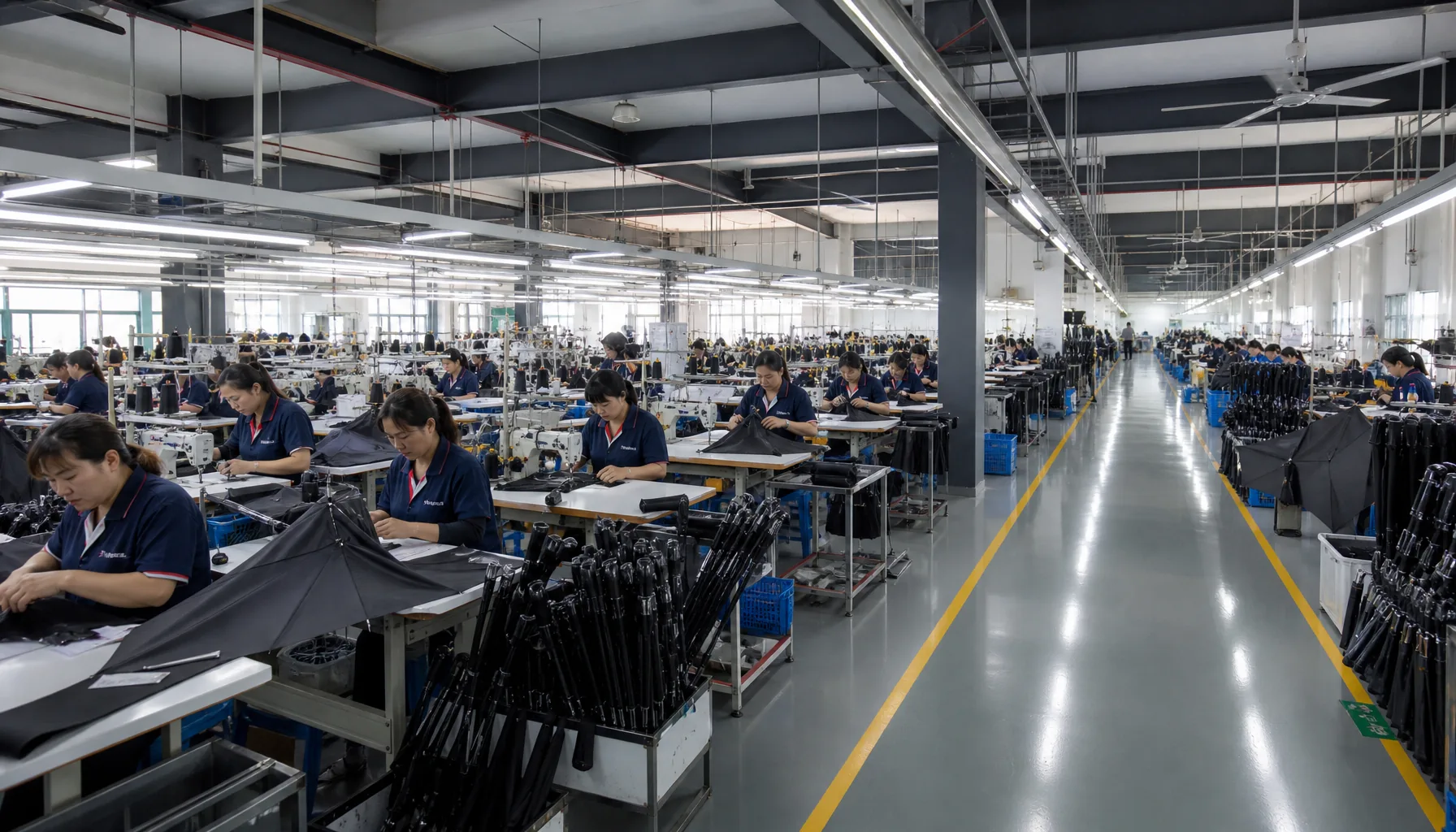
Injection-Molded Umbrella Parts: Runners, Tips, and Caps
Understand how injection-molded runners, tips, caps, and buttons are specified, tooled, and checked to reduce defects in...
Read More »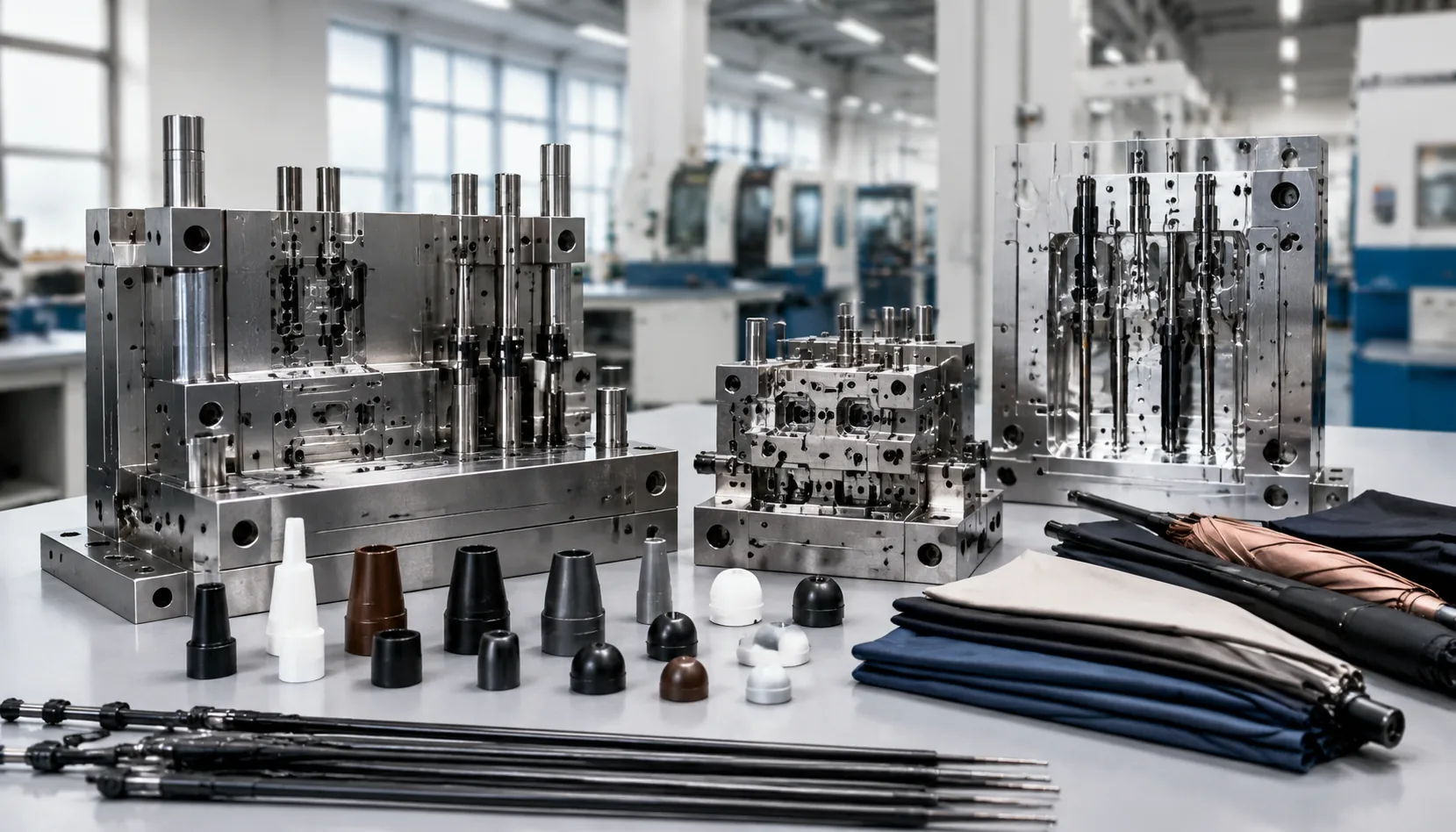
Umbrella Mold Tooling for Custom Tips, Runners, and Caps
Plan custom umbrella plastic parts with tooling costs, resin choices, color matching, MOQ, sample timing, and QC checks ...
Read More »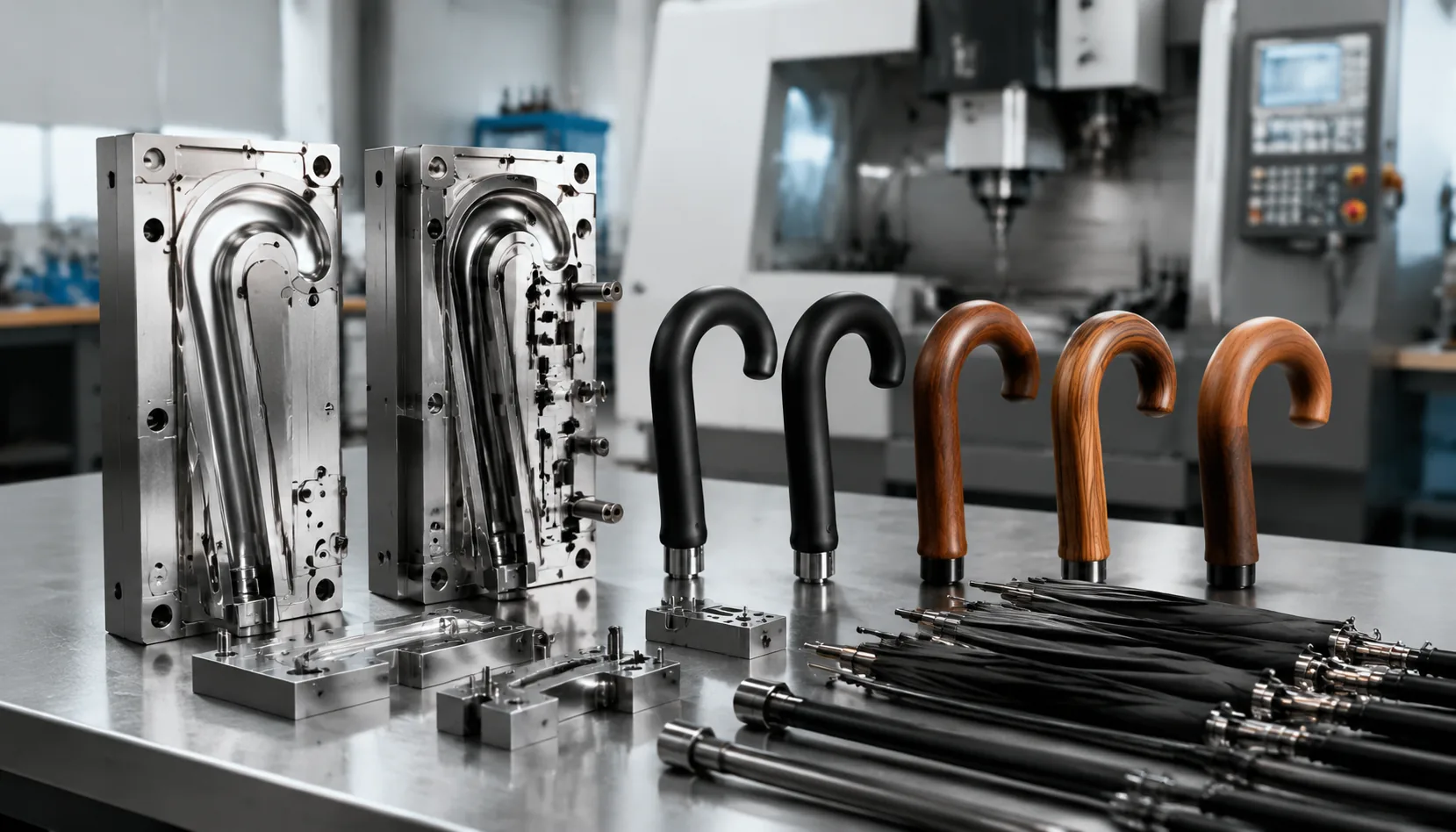
Custom Umbrella Handle Tooling and Mold Cost Guide
Understand custom umbrella handle tooling, mold fees, materials, MOQ, sampling steps, and quality checks before approvin...
Read More »