Inside-Print Registration for Custom Umbrellas with Patterned Canopies
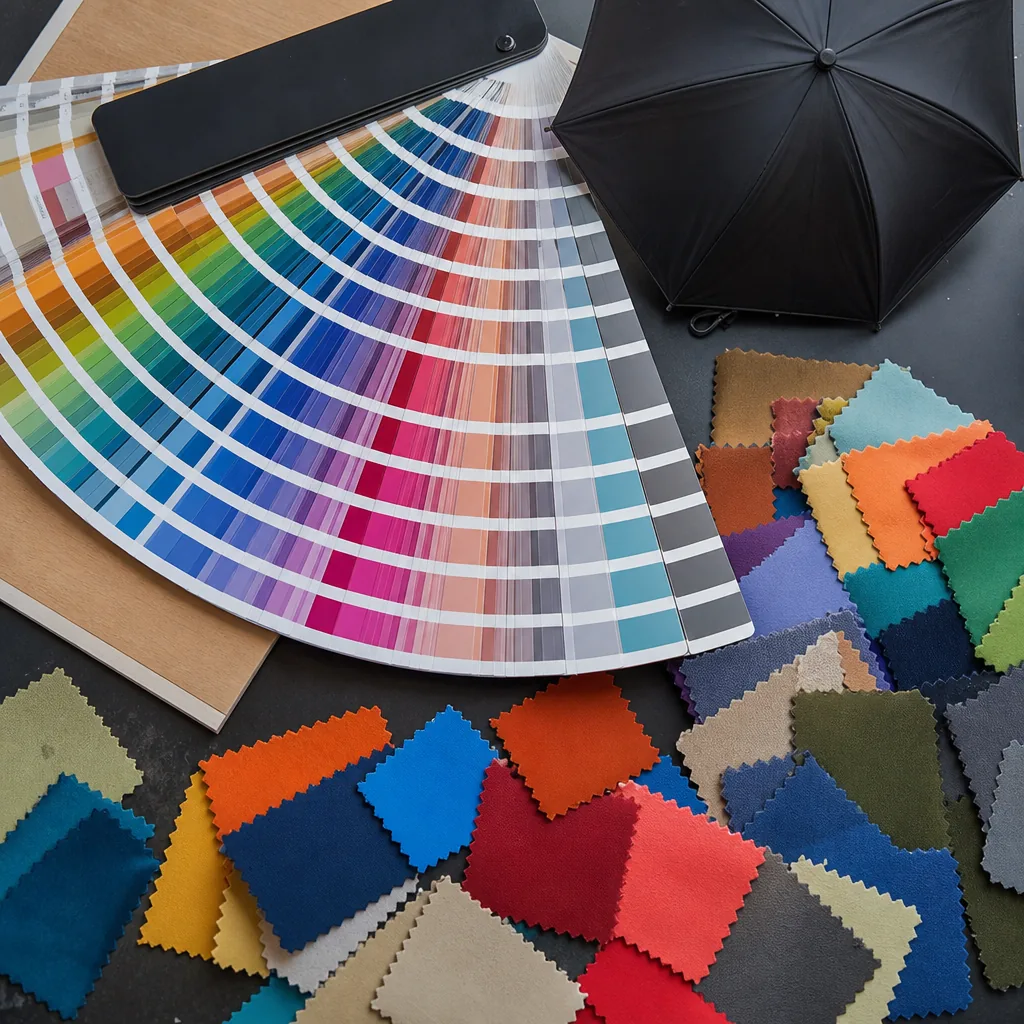
When a canopy already carries a repeat pattern, logo placement becomes a manufacturing problem, not a design afterthought. On the factory floor, inside print registration umbrellas demand tight control of panel cut, seam allowance, fabric stretch, and print-to-stitch alignment so the branding lands cleanly on every panel and still looks sharp after sewing, finishing, and opening.
Why patterned canopies are harder to brand
Striped, checked, gradient, and allover-repeat canopies are harder to brand because the fabric already has a visual rhythm before the logo ever lands on it. On inside print registration umbrellas, the artwork has to fight the pattern for attention, and that means a mark that looks clean on a white dome can disappear the moment it sits over a dense repeat or a moving color fade. The problem is not just aesthetics; it is visibility. If the logo color is too close to the background or the layout is too large, the brand loses contrast and the umbrella reads as decoration instead of a product with a clear identity.
The seam layout makes the job even less forgiving. Umbrella panel alignment matters because each panel is cut, sewn, and slightly tensioned differently, so a centered logo on flat artwork can drift once it wraps over the ribs. That is where print registration tolerance becomes a real production issue, not a graphic-design talking point. If a stripe crosses a seam or a badge lands on a check pattern, small misalignment is obvious to the eye, especially on branded rain umbrellas where customers expect the logo to stay straight across the crown. ZheBrella treats this as a layout problem first: the pattern and the mark have to be planned together, not layered as an afterthought.
The safest approach is usually to reserve calmer zones, simplify the artwork, and size the logo to survive the busiest parts of the canopy. Patterned canopy branding works best when the repeat is acknowledged in the placement rather than ignored, because a logo placed on a high-contrast segment can look crooked even when it is technically within spec. That is why inside print registration umbrellas need a pre-production check against the actual panel template, not a flat mockup. A design that looks fine on screen can become unreadable once it hits curved fabric, stitched seams, and the visual noise of the canopy repeat.
Registration rules for panel-to-panel alignment
For `inside print registration umbrellas`, the real fight is not the logo itself; it is how the artwork behaves when the canopy is cut into 8K or 16K panels and then pulled over curved ribs. On an 8K layout, I treat ±1.5 mm per panel as a practical print registration tolerance for a clean inside print, assuming the pattern is cut from stable pongee 190T or 210T and the sewing line is consistent. On 16K, the panels are narrower and the cumulative error shows faster, so the tolerance has to be tighter at the panel-to-panel level, typically around ±1.0 mm, or the finished mark starts to wander when the umbrella opens. Seam position matters because every seam is a visual break and a mechanical stress point; if the logo is placed too close to the joint, the eye catches the mismatch immediately and the fabric tension can make one side look stretched compared with the other.
When artwork crosses a panel joint, you are no longer printing a flat graphic; you are compensating for a wrapped, moving surface. If the graphic line lands exactly on the seam with no allowance, the stitching can swallow part of the stroke, especially on branded rain umbrellas with deep panels or a double-canopy build where the inner layer shifts slightly during assembly. The safer approach is to keep critical text, faces, and fine borders at least 8 to 12 mm away from seams, then build in distortion compensation so the art looks straight after sewing and tensioning. For patterned canopy branding, we usually convert the artwork into a panel map first, then check how each segment lands against the cut template; that prevents the common failure where a repeated motif looks centered in CAD but drifts after heat setting and final stitching.
If you want the print to survive production without ugly surprises, the artwork should be approved on a full panel layout, not as a single centered logo floating in space. I prefer to lock the seam placement first, then place the art around the seam rather than the other way around, because seam location changes less than decoration once the canopy pattern is finalized. This is the part most buyers underestimate: umbrella panel alignment is a sewing problem as much as a printing problem, and once the ribs are installed, you cannot hide a crooked repeat or a stretched curve. For any design that crosses multiple panels, the safest rule is to test one sewn sample, open it under tension, and verify that the inside print registration umbrellas still read correctly from a normal viewing distance before approving bulk production.
Artwork setup for accurate repeat placement
Inside print registration umbrellas live or die on the artwork file, not the sewing line. For patterned canopy branding, I want vector artwork with a proper panel map, not a loose JPEG dropped into an email and guessed at on the cutting table. Each panel needs its own repeat reference, because umbrella panel alignment changes once the fabric is cut on grain, stitched, and pulled over a frame; a design that looks perfect flat can drift when it meets curved seams and tension. On branded rain umbrellas, the buyer should state the exact canopy size, number of panels, and whether the repeat is intended to sit centered on one panel or flow across multiple panels.
The file also needs bleed allowances and safe zones that respect seam loss, tape overlap, and the distortion near vent openings. A practical print registration tolerance is usually tight enough that a small shift is visible, so I ask buyers to define how much misalignment is acceptable before production starts. If the design has borders, text, or repeated icons, keep them away from the seam line and the peak area; those zones move more than people expect once the canopy is sewn and tensioned. This is especially important on 8K and 10K frames where panel shape varies slightly from one rib bay to the next.
Buyers should specify logo size, rotation, and orientation relative to the ribs and vents, not just “place it on the panel.” If the logo must read upright from the main walking direction, say which panel is front-facing and whether the artwork should track with the rib line or sit square to the panel edge. That level of instruction avoids guesswork during layout and keeps the final result consistent across batches. For inside print registration umbrellas, a clean artwork brief is cheaper than reprinting a canopy after the first sample comes back off-center.
Print methods that hold detail on busy backgrounds
For inside print registration umbrellas, screen print is still the most reliable choice when the logo is small and the canopy already has a busy pattern. A well-set screen with the right mesh and squeegee pressure gives the highest ink opacity, so the mark sits on top of florals, stripes, or camouflage instead of disappearing into them. The catch is that screen print has to be built around umbrella panel alignment and the natural stretch of sewn panels; if the artwork crosses a seam, your print registration tolerance has to be tight or the logo will look crooked even when the press setup was correct.
Digital print is better for complex artwork, gradients, and low-MOQ patterned canopy branding, but it is not automatically sharper on umbrellas. On pongee 190T, the weave is a little more open and the texture can break up fine edges, especially with light colors on dark patterns; 210T usually gives a smoother face and better color punch because the yarn density is tighter and the surface reads cleaner. That said, digital ink sits more on the surface than it penetrates, so on slick polyester you may see slightly softer edges after folding and flexing compared with a well-cured screen print on branded rain umbrellas.
Transfer is the fallback when the logo is too detailed for direct printing or when the placement has to avoid panel distortion near ribs and seams. Heat-transfer films can produce crisp edges and strong white underbases, but on textured canopy cloth they need a flat, well-pressed area or the adhesive will bridge the weave and show tiny gaps at the contour. In practice, the best result comes from matching the method to the fabric: screen print for opaque, durable logos; digital for artwork flexibility; transfer for short runs and difficult placements where the panel shape makes inside print registration umbrellas harder to control.
Sampling, inspection, and production sign-off
For inside print registration umbrellas, the pre-production sample is where we catch most failures before they become expensive scrap. We check the pattern against the actual panel geometry, not just a flat artwork proof, because umbrella panel alignment changes once the cloth is cut, tensioned, and stitched to the ribs. On patterned canopy branding, I look for repeat accuracy across adjacent panels, edge-to-edge symmetry at the seams, and enough color contrast that the image still reads cleanly under a dark or translucent canopy. If the design is busy, the sample also has to show that the repeats do not drift panel by panel as the canopy opens; a design that looks fine on screen can become a mess on a real 8K or 10K frame.
Our practical print registration tolerance depends on the artwork, but for branded rain umbrellas we usually treat a small, consistent shift as acceptable only if it stays within about 2-3 mm at the seam and does not break the motif or text. Any random offset, especially one panel high and the next panel low, fails because it signals unstable cutting, platen setup, or sewing tension. We inspect the sample under open and closed conditions, because a canopy can look aligned when slack and then reveal a bigger drift when the fabric is under load. The approval record should note the exact panel count, repeat direction, ink colors, and placement reference points so the factory is not guessing later.
After sample approval, we lock the pattern placement with a sealed reference set: signed sample, digital artwork with panel map, and a production master showing seam marks, centerlines, and distance from the canopy hem or tip. That becomes the standard for reorder consistency, so the next batch matches the same inside print registration umbrellas setup instead of relying on memory or a fresh operator judgment. ZheBrella’s standard practice is to tie this master to the PO and keep it with the cutting and sewing instructions, then inspect the first dozen pieces in production before releasing the run. Final acceptance still follows AQL 2.5, but the real control is freezing the approved placement before bulk cutting starts; once the cloth is cut wrong, no amount of post-sewing inspection will recover the registration.
Frequently Asked Questions
How much logo shift is normal on a patterned umbrella canopy?
A small shift is common because the canopy is sewn from multiple panels and tension changes after opening. Buyers should define an acceptable tolerance in the approval sample, especially when the logo crosses seams.
Is a simple logo always better on patterned canopies?
Usually yes, especially if the background is high-contrast or dense. A simpler mark with stronger contrast is easier to read and reduces the risk of visual conflict with the pattern.
What registration tolerance should I allow for inside-printed patterned umbrellas?
For standard production, plan on about ±2–3 mm per panel. If the logo must look very sharp for retail packaging, many buyers ask for a signed strike-off and a tighter target of around ±1.5 mm before bulk approval.
How should artwork be set up for a repeat-pattern canopy?
Build the design as a full canopy repeat instead of a single-panel graphic, and include the exact panel width, seam allowance, and center mark. Vector artwork or 300 dpi raster files are usually preferred so the repeat stays accurate after cutting and sewing.
Can a logo cross umbrella seams on a patterned canopy?
Yes, but it needs tighter registration control and may shift slightly once the canopy is tensioned. For the cleanest result, keep critical text, fine lines, and logo edges away from the seam line whenever possible.
Looking to Launch Your Custom Umbrella Line?
ZheBrella is a Zhejiang-based OEM/ODM umbrella manufacturer with 17 years of export experience. Free design, low MOQ from 100 pieces, windproof construction, full-color print.
Get Free Quote Now »People Also Search For
Related Articles
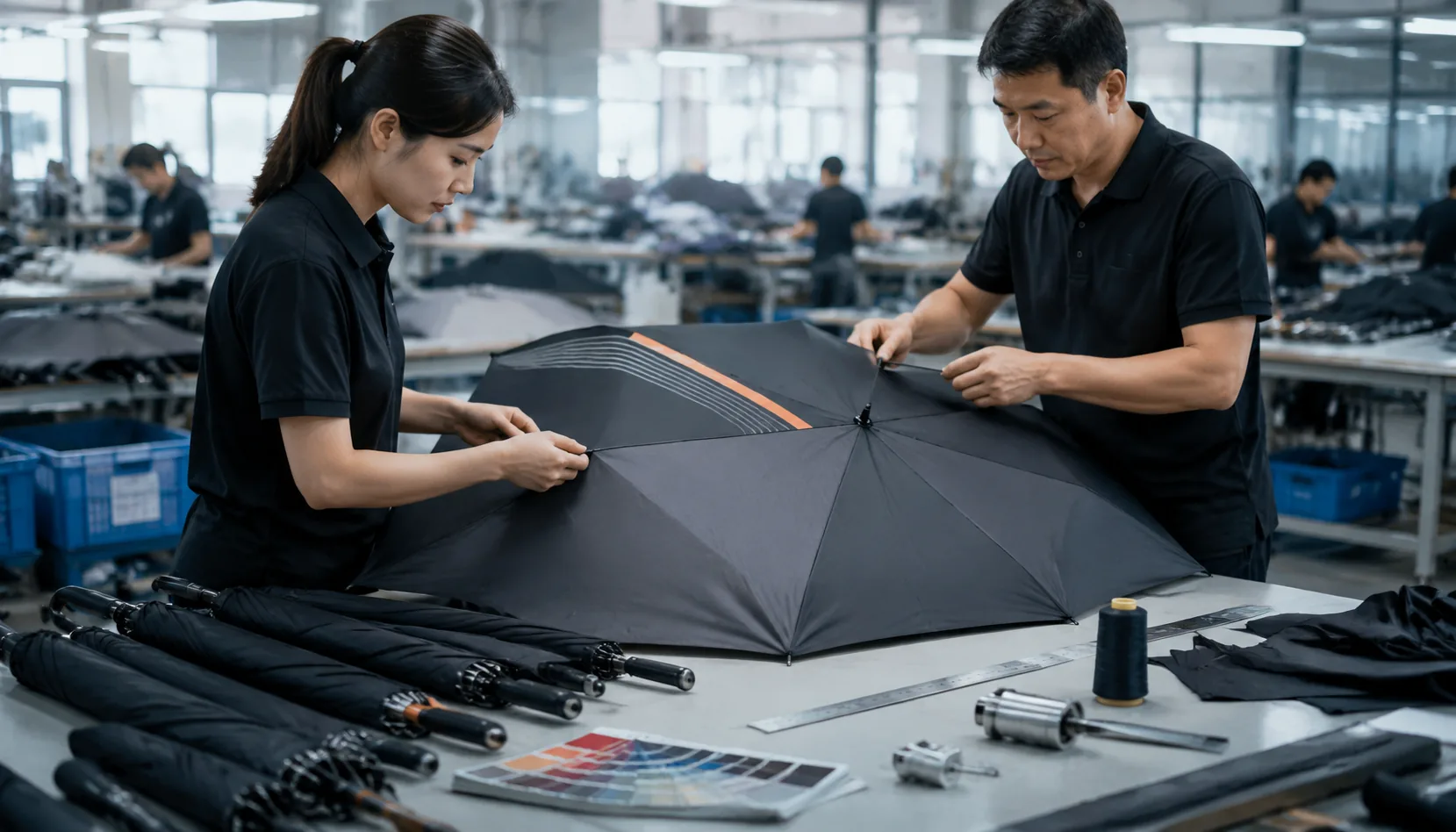
Umbrella Print Registration Tolerance for Clean Branding Results
Set practical print registration tolerances for umbrellas, including panel alignment, bleed, and QC checkpoints that hel...
Read More »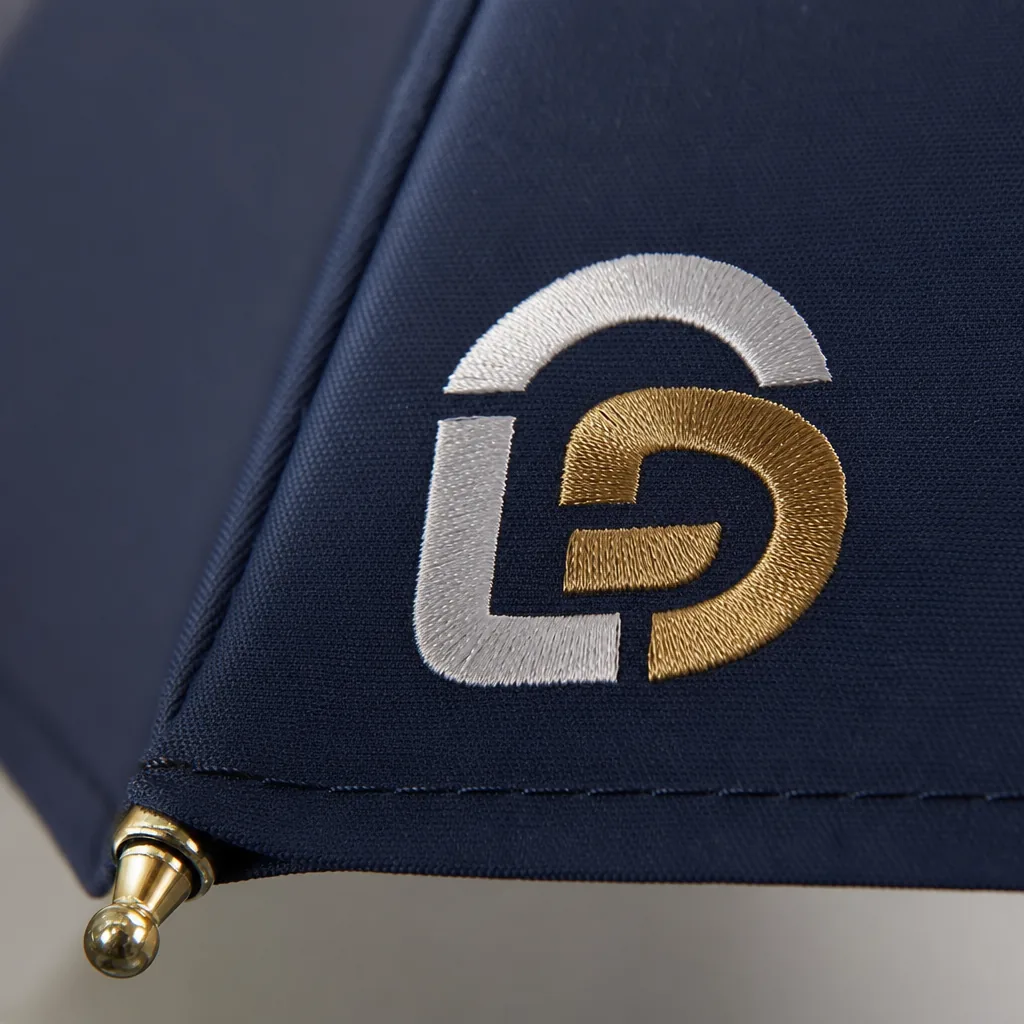
Refined Logo Placement Specs for Branded Umbrella Canopies
Plan logo placement on umbrellas with clear specs for panel size, safe zones, seam breaks, and repeat-order consistency ...
Read More »Umbrella Logo Placement Strategies for Different Brand Goals
Learn how logo placement changes visibility, resale value, and repeat use on branded umbrellas, with print-area and pane...
Read More »