Licensed Character Umbrella Printing for Retail Brands
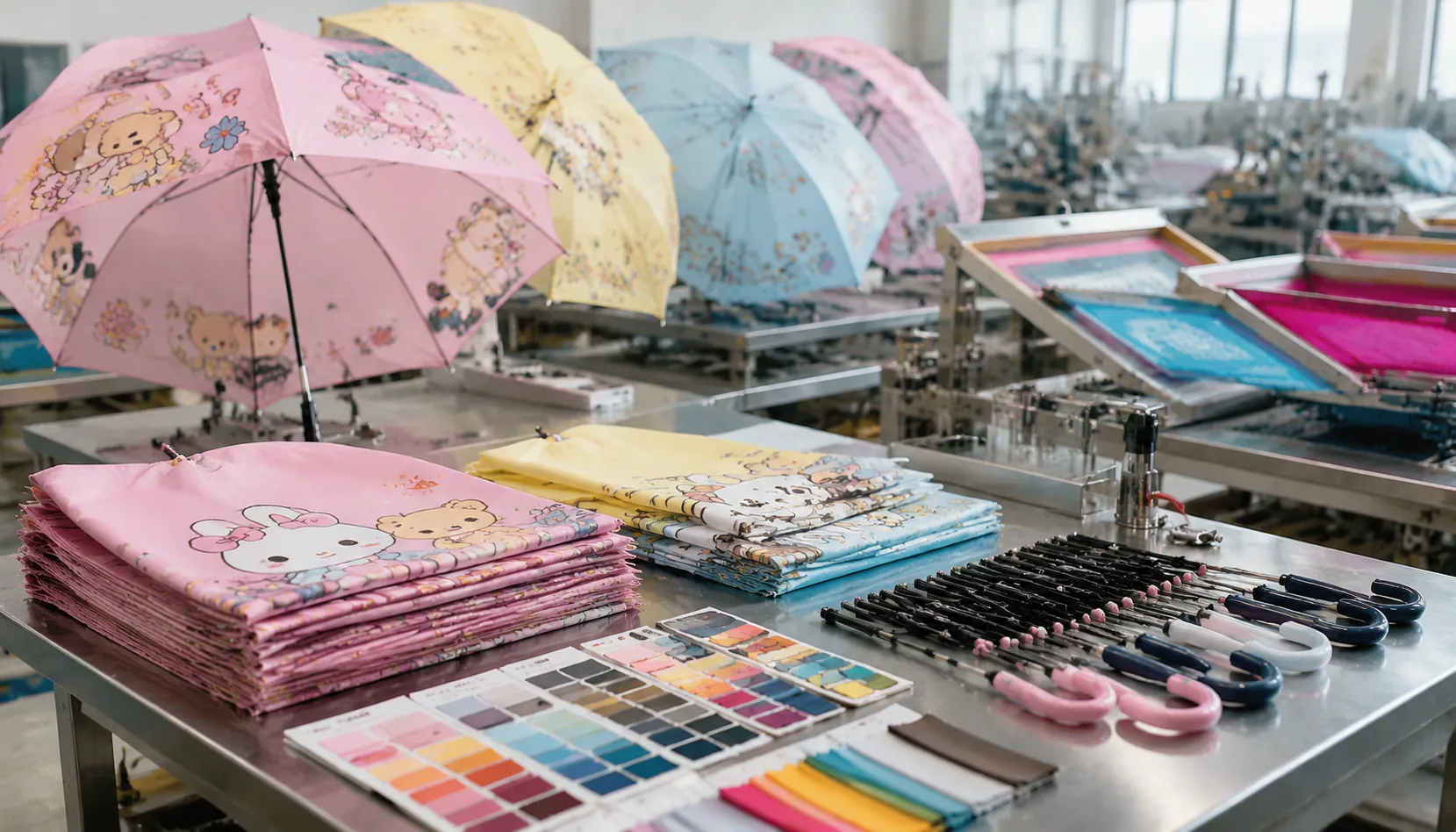
Retail buyers know that licensed character umbrellas fail fast when artwork shifts, colors miss approval, or a child-safety detail is caught after packing. On our Songxia factory floor, we control print films, fabric lots, tip and runner safety, sample signoff, and inline checks before bulk production moves too far. That discipline turns licensed artwork into retail-ready umbrellas that protect the brand, the licensor, and the delivery date.
Define the Licensed Artwork Requirements
The first production risk in licensed character umbrellas is not the frame or fabric; it is artwork discipline. Before we cut a sample canopy, the buyer should provide the brand style guide, approved character poses, proportion rules, logo lockups, clear-space requirements, and legal mark placement. Some licensors require the copyright line on every panel; others allow it on the closure strap, hangtag, or sewn label. We also need to know if the same design will ship to the U.S., EU, Japan, or the Middle East, because territory approvals can change language, safety marks, importer details, and even which character expressions are allowed. For retail branded umbrellas, I prefer locking this before quotation, since a 21 inch kids umbrella and a 23 inch fashion umbrella have very different printable panel geometry.
Approved vector files reduce sampling cycles because they remove guesswork from character umbrella printing. AI, EPS, or layered PDF files keep outlines sharp when we scale artwork across 8K or 10K panel layouts, while low-resolution PNGs often distort eyes, hands, thin outlines, and small legal text. Color references matter just as much: Pantone coated/uncoated codes, CMYK values, or a physical color swatch help us match on 190T or 210T pongee, POE, PVC, or EVA instead of chasing color by screen photo. On sublimation, colors sit differently than on screen print or heat transfer; red and skin tones are the ones I see rejected most often. A clean vector package with color standards can save two to three sample rounds, which is usually 10 to 20 days in the development calendar.
Umbrella artwork approval should be treated like a controlled document process, not an email chain full of screenshots. Our standard practice at ZheBrella is to create a panel-by-panel mockup showing character position, logo size, seam allowance, strap orientation, top cap area, and any inside-canopy printing before making the first physical sample. The licensor should approve both the flat artwork and the assembled umbrella photo, because a perfect flat layout can still look wrong once the canopy curves over fiberglass or steel ribs. For ODM umbrella factory projects, I also recommend naming every file with license, territory, version, and date, then freezing the approved file before bulk printing. That prevents costly disputes during AQL 2.5 inspection when 5,000 pieces are already sewn and packed for FOB or DDP shipment.
Choose the Umbrella Format Around the Character
Character visibility should decide the umbrella format before you talk about price, because the same artwork behaves very differently on a 21" kids umbrella, a 23" clear POE bubble, a 3-fold compact, or a 30" golf umbrella. For kids licensed character umbrellas, I usually push 21" or 23" straight umbrellas with rounded tips, pinch-proof runners, and fiberglass ribs instead of bare steel ribs; the frame flexes better and reduces injury risk when children wrestle with the canopy. Manual open is safer for younger age groups, while auto-open should be limited to older children or adult retail SKUs because the spring force can surprise small hands. A classic 8K layout gives eight large triangular print zones, which is good for one hero character plus logo repeats. If the artwork needs a full cast of small characters, 10K can help, but too many seams will cut through faces unless the designer plans around rib positions.
Clear POE bubble umbrellas are strong for character umbrella printing when the brand wants the customer’s face visible under the canopy, which matters for theme parks, toy promotions, and fashion retail displays. A 23" or 24" dome in 0.15–0.20 mm POE gives a clean window effect, but the print must sit low enough on the skirt or be repeated around the rim, because a large chest-high character on transparent material can look distorted after heat forming. PVC is cheaper but heavier and less cold-resistant; EVA feels softer but is less common for high-volume retail branded umbrellas. For bubble shapes, I prefer white ink backing under CMYK screen print or UV digital print so colors do not disappear against store lighting. Our standard practice at ZheBrella is to request umbrella artwork approval on a curved mockup, not just a flat panel file, because a perfect 2D Mickey-style pose can look bent once assembled.
Compact folding umbrellas sell well in gift sets and adult lifestyle ranges, but they are the least forgiving format for licensed character umbrellas because the 21"–23" canopy is broken by folds, ribs, and panel creases. Auto-open-close mechanisms add retail value, yet they require stronger shaft and runner tolerances, so I would not combine them with very cheap steel-only ribs if the brand expects repeat daily use. A 190T or 210T pongee canopy with heat-transfer panels works for sharp character detail, while full sublimation is better when the art runs edge to edge. Golf umbrellas do the opposite: a 27", 30", or 32" canopy gives huge visibility for mascots, sports characters, or co-branded campaigns, especially with 16K ribs that create a rounder silhouette. The tradeoff is layout discipline; 16 panels mean more seam interruptions, so place faces on alternating panels and use secondary patterns on the rest.
Select Print Methods for Detail and Durability
For licensed character umbrellas, print method selection should start with the artwork risk, not the unit price. Faces, eyes, hair lines, and mascot outlines usually expose every production shortcut, especially on curved 23" or 27" panels where the seam allowance can shift the image by 2–3 mm. Digital printing is the safest choice for gradients, watercolor backgrounds, shadow effects, and multi-color character art because it avoids screen registration issues and can hold soft transitions on 190T or 210T pongee. The tradeoff is ink control: the fabric must be pretreated correctly, and dark canopies may need a white base layer or the face color will look muddy after coating.
Heat transfer works well when the brand owner needs sharp outlines, small badges, or legal text that must stay readable after folding, but the film and adhesive must match the canopy. On 190T pongee, a good transfer can hold fine copyright lines and trademark symbols better than basic screen printing, especially below 6 pt text. On POE transparent umbrellas, adhesion is the first concern because the slick surface can reject ordinary ink systems; we normally test transfer temperature, dwell time, and peel strength before quoting bulk production. PVC and EVA behave differently again, so approving artwork on paper is not enough—umbrella artwork approval should include a printed panel sample.
Screen printing is still the most economical method for bold retail branded umbrellas with flat colors, large logos, simple cartoon silhouettes, or repeated icons across 8K and 16K canopies. It is less ideal for soft facial gradients or tiny legal copy, but it gives strong opacity and low cost when the artwork is separated cleanly. For character umbrella printing, I like to run rub testing after full curing: dry rub, wet rub, and fold-line abrasion, because failures often appear where ribs press against the canopy during packing. A serious ODM umbrella factory should check ink adhesion after 24 hours, not just immediately off the print table, before releasing licensed character umbrellas for AQL 2.5 final inspection.
Build the Approval Sample Workflow
Once the strike-off is approved, build the pre-production sample using the real frame, handle, tips, runner, sleeve, carton mark, barcode sticker, and retail packaging. This is where an ODM umbrella factory should catch mechanical issues: auto-open spring strength, auto-open-close reset force, fiberglass versus steel rib balance, 8K/10K/16K rib alignment, canopy tension, and whether a double-canopy vent exposes printed artwork in an awkward way. Sampling from artwork review to PP sample usually runs 7-15 days, depending on print complexity and accessory sourcing. The signed gold sample must then be frozen as the inspection standard for AQL 2.5 checks, including color tolerance, print registration, seam position, loose threads, water repellency, and opening/closing function. Bulk production should not start until the buyer, licensor, and factory all confirm the same sealed sample. After that approval, normal bulk lead time is 30-45 days, with the longer end for large MOQ programs, multi-SKU assortments, or licensed character umbrellas requiring individual carton and hangtag verification.
Control Compliance, Packing, and Shipment
Compliance control for licensed character umbrellas should start before bulk packing, not after cartons are sealed. For retail programs, our standard practice at ZheBrella is AQL 2.5 final inspection with separate checkpoints for canopy printing, frame safety, and packaging accuracy. Inspectors should open samples across multiple cartons, cycle the manual, auto-open, or auto-open-close mechanism, and check rib tips, ferrules, end caps, runners, and shaft edges for burrs or sharp points. On kids’ 21" and 23" umbrellas, sharp-point checks matter more than cosmetic defects because one exposed steel wire or poorly capped rib can stop a shipment at retailer DC receiving. Fiberglass ribs reduce rust and snapping risk, but steel 8K frames still need plating and tip security checks after assembly.
Character umbrella printing also needs controlled color review because licensors notice small differences in skin tone, logo red, or mascot outlines. Artwork should be approved by the brand or licensor before mass production, then matched against a signed PPS sample under consistent light, not judged from a phone photo on the sewing floor. For 190T/210T pongee, POE, PVC, or EVA canopies, the inspection should cover print placement, panel-to-panel registration, ink adhesion, heat-transfer edge lift, sublimation bleed, and coating issues such as Teflon water repellency or UPF 50+ treatment. Color consistency should be checked by production lot, especially when retail branded umbrellas combine multiple canopy colors with character faces, badges, and licensed logos.
Packing is where many good umbrellas become chargebacks. Each retail unit needs the correct hangtag, warning label, barcode label, SKU sticker, polybag language, and any required umbrella artwork approval reference if the buyer’s compliance system asks for it. Master cartons should show retail carton marks exactly as the PO states: item number, character name, color, quantity, carton dimensions, gross/net weight, country of origin, and destination marks. For export, FOB Ningbo or FOB Shanghai works well for buyers controlling their own freight, while DDP is better for promotional distributors and smaller retail programs that need landed-cost clarity before selling. A competent ODM umbrella factory should quote both options with carton CBM, estimated lead time, and document requirements so customs, warehouse receiving, and retailer compliance do not become last-minute surprises.
Frequently Asked Questions
What files should a buyer provide for licensed character umbrella printing?
Provide vector artwork, approved character guides, Pantone references, logo usage rules, and any required copyright or trademark line. A factory should not redraw licensed art without written approval.
Can one licensed character design be used on several umbrella sizes?
Yes, but each size needs its own panel template. A compact 8K umbrella and a 16K golf umbrella distort artwork differently at seams and rib positions.
What files are needed for licensed character umbrella printing?
Vector AI or PDF artwork is preferred, with Pantone references, logo placement, print dimensions, and any licensor brand guidelines. For character programs, factories usually prepare a digital mockup first, then a physical approval sample before bulk production.
Can a factory help with licensor approval samples?
Yes. A factory can produce pre-production samples showing canopy print quality, frame color, handle design, labels, and retail packaging. Typical sample lead time is 7–15 days after final artwork and material details are confirmed.
What quality controls matter for retail character umbrellas?
Key controls include color matching, print registration, fabric safety, frame strength, sharp-edge checks, barcode labeling, and carton drop testing. For kids umbrellas, buyers may also request EN71, CPSIA, or REACH-compliant materials depending on the destination market.
Looking to Launch Your Custom Umbrella Line?
ZheBrella is a Zhejiang-based OEM/ODM umbrella manufacturer with 17 years of export experience. Free design, low MOQ from 100 pieces, windproof construction, full-color print.
Get Free Quote Now »People Also Search For
Related Articles
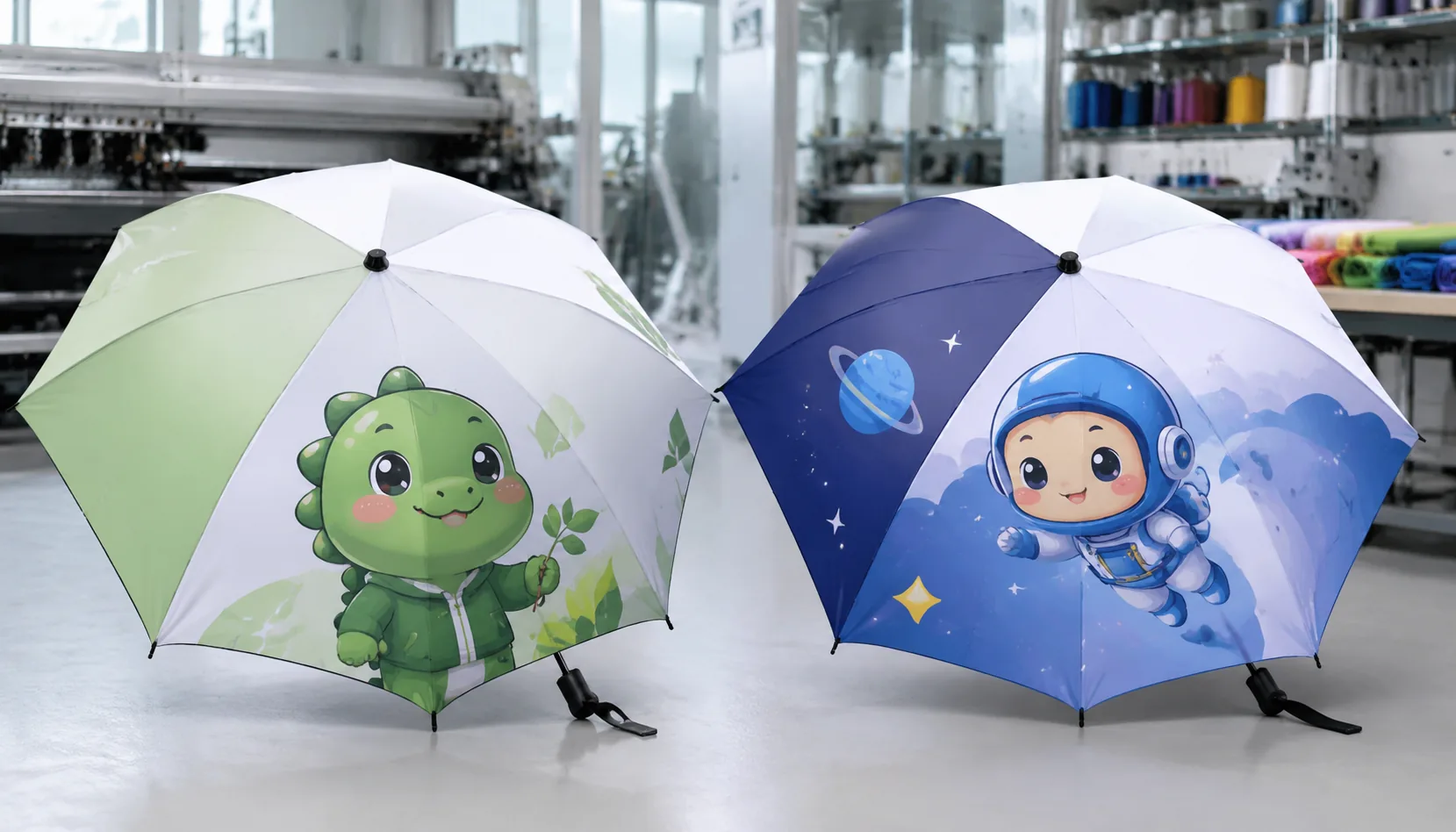
Mascot and Character Printing on Branded Umbrella Panels
Build mascot or character umbrellas with better artwork control, panel placement, fabric selection, sampling, and licens...
Read More »
Gradient Logo Printing on Umbrellas for Retail Brand Lines
Plan gradient logo umbrellas with print method guidance, fabric choices, color tolerances, sampling steps, and lead time...
Read More »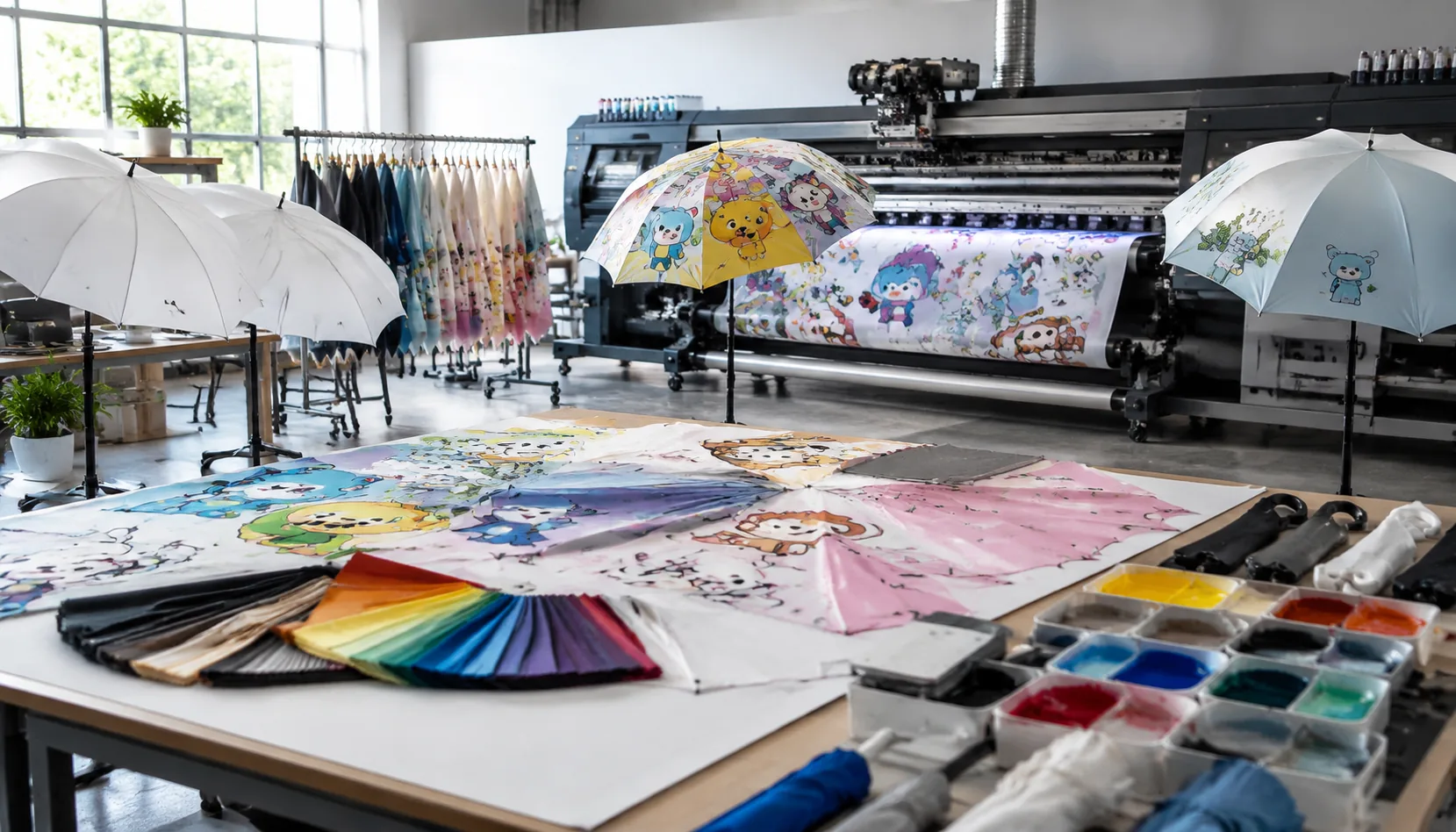
Character and Mascot Printing on Branded Umbrella Canopies
Plan mascot umbrella printing with clear artwork rules, fabric and rib choices, approval samples, and inspection checks ...
Read More »