Logo Durability Specs for Branded Umbrellas: Rub, UV, and Wash
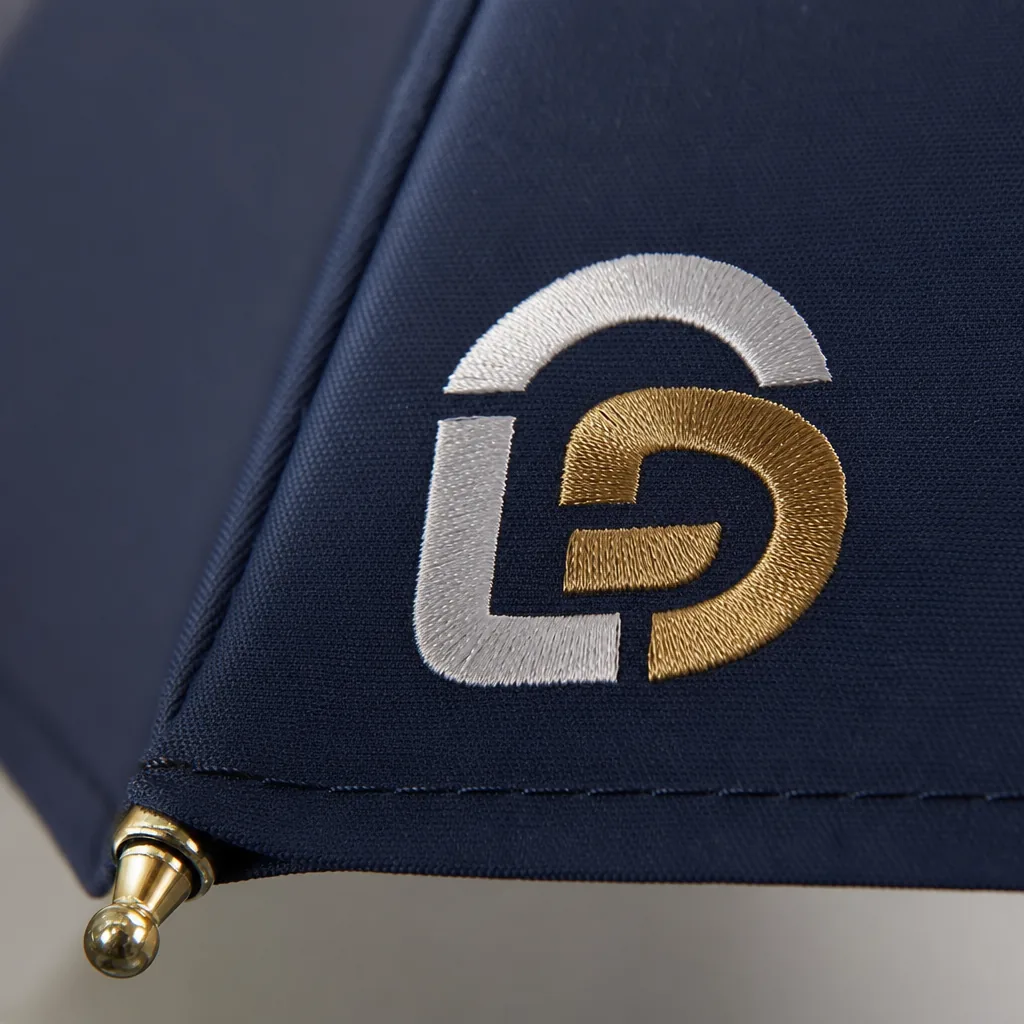
Branded umbrellas fail fast when a logo looks sharp on day one but cracks, fades, or transfers after a few folds, wet commutes, and weeks on a retail rack. For buyers setting print specs, umbrella logo durability testing has to match real use: repeated rubbing on seams, UV exposure in storage and transit, and wash or wipe cleanup after rain and dirt. On the factory floor, the goal is not just visual approval but a finish that stays legible through production, packing, and customer handling.
Which durability tests matter most for umbrella branding
The logo usually fails before the umbrella frame does, so umbrella logo durability testing should focus on the abuse points buyers actually create: hand rubbing, wet abrasion, fold-line stress, and sunlight. A dry rub test for umbrellas checks whether a screen-printed or heat-transfer logo smears when the canopy is handled during opening, closing, and packing; I like to see at least 50 cycles with a white cotton cloth and no obvious color transfer. Wet abrasion is stricter because rainwater softens poor ink binders and cheap transfer glue. For promotional umbrellas using 190T pongee, PVC, or POE panels, we test both dry and wet rub on dark and light logo colors, especially white ink on navy or black fabric where staining is easy to see. Fold-line cracking is another real-world failure: if a logo crosses a rib fold on a 21-inch or 23-inch compact umbrella, low-grade plastisol or thick heat transfer can split after 100 to 200 open-close cycles.
UV fading matters most on golf umbrellas, patio giveaways, outdoor-event umbrellas, and retail programs sold in sunny markets. A UV resistant umbrella print is not just a bright ink; it needs the right pigment, curing temperature, and fabric compatibility. Sublimation on white polyester can hold color well, but it is not suitable for dark pongee unless the design is planned around the base color. Screen printing with UV-stable ink performs better on 190T/210T pongee when properly cured, while heat-transfer logos vary widely depending on film grade. For outdoor-event orders, I would specify 24 to 48 hours in a UV aging chamber or a controlled sunlight exposure comparison against an approved production sample. On UPF 50+ coated canopies, ink adhesion should be checked after coating because some Teflon or water-repellent finishes reduce bonding if the print process is not adjusted.
A practical test list should match the product tier. For low-cost promotional umbrellas, require dry rub, wet rub, basic tape adhesion, and 100 open-close cycles across the printed panels. For retail umbrellas, add fold-line cracking checks, water spray after printing, and a wash test logo ink procedure using a damp cloth with mild detergent to simulate consumer cleaning, not machine washing. For outdoor-event and golf umbrellas, add UV exposure, rain soak, and color comparison using a retained pre-production sample. During AQL 2.5 inspection, logos should be checked for position tolerance, pinholes, ink buildup, edge lifting, color mismatch, and cracking at seams or rib contact points. Our standard practice at ZheBrella is to inspect printed canopies before final frame assembly when possible, because catching ink failure after 8K or 16K rib assembly wastes both labor and components.
How fabric and frame choice change logo life
Logo life starts with the canopy cloth, not the ink. On 190T pongee, the yarn count is lower and the surface has slightly more texture, so screen ink can bite well if the fabric is properly heat-set and the waterproof coating is not over-applied. It is common on 23" and 27" promotional umbrellas because it balances cost, weight, and print acceptance. 210T pongee is denser and smoother; it gives sharper edges for small text, QR codes, and Pantone-critical retail logos, but the ink film sits on a tighter surface and needs better curing control. If the buyer asks for Teflon coating or UPF 50+ UV coating, we always test print adhesion again because repellency chemistry can reduce ink anchoring. Good umbrella logo durability testing should compare the exact fabric lot, coating, ink system, and drying temperature, not just approve a logo from a clean lab swatch.
Frame material changes how the printed canopy is stressed in real use. Steel ribs are stiff and economical, but when wind loads hit a 8K or 10K frame, the force tends to concentrate near rib tips, panel seams, and the crown area. Fiberglass ribs flex and recover more gradually, which is why better windproof umbrellas often use fiberglass ribs or a fiberglass-and-steel hybrid; the canopy bends instead of sharply creasing. That matters for large heat-transfer logos across two panels, because repeated hard folding along the same line can crack thick transfer film faster than screen print or sublimation. A rub test for umbrellas should include dry and wet rubbing over printed fold lines, not only flat center-panel areas. For UV resistant umbrella print validation, dark navy, red, and black logos deserve extra attention because fading differences show clearly after outdoor exposure.
Opening system also affects logo wear. Manual umbrellas usually open with slower, more controlled canopy tension, while auto-open and auto-open-close mechanisms snap the runner upward and pull the fabric tight in a fraction of a second. After 500 to 1,000 open-close cycles, weak ink curing often shows as tiny edge lift near seams or white stress marks on transfer logos. Double-canopy vented windproof designs add another variable: the upper and lower canopy layers move against each other when gusts pass through, especially on 30" golf umbrellas rated for 50+ mph wind. If the logo sits near the vent overlap, it may see extra abrasion and flexing. Our standard practice at ZheBrella is to combine a wash test logo ink check, folding-cycle test, and AQL 2.5 inspection before shipment, because a logo that passes flat-panel approval can still fail after real frame movement.
What to request for UPF 50+ and outdoor use
For UPF 50+ umbrellas, do not treat the UV coating and the logo print as separate topics. A 190T or 210T pongee canopy can pass UPF 50+ because of black backing, silver coating, or UV absorber in the fabric finish, while the printed logo still fades badly after two weeks on a beach cart. I would ask the supplier to state the canopy construction, coating side, print method, and ink chemistry on the same spec sheet. For outdoor use, solvent screen print, PU-based heat transfer, or sublimation on white polyester each behaves differently under sun and rain. A proper UV resistant umbrella print should be checked after accelerated UV exposure, not only after a simple wash test logo ink check. For promotional umbrellas used at golf events, resorts, and outdoor retail displays, request a minimum color-change rating, such as Grade 4 or better on the gray scale after 24 to 48 hours of UVA exposure, or an agreed equivalent in the lab your buyer accepts.
The weak points are usually the logo edge and the ink-to-coating bond. On silver-coated UPF 50+ canopies, heat-transfer logos can look sharp on day one but show edge lift after folding pressure, rain, and heat cycling. On black-coated pongee, screen ink may need a primer or adjusted curing temperature, otherwise adhesion fails before the fabric fails. For umbrella logo durability testing, ask for adhesion results after rain simulation or full wetting, then drying at room temperature, followed by a tape pull on the logo edge. I like to see no visible edge curling over 1 mm, no flaking at rib contact lines, and no ink transfer when the wet panels are folded face-to-face for several hours. A rub test for umbrellas should include both dry and wet crocking, because a logo that survives dry handling may still smear when a customer closes a wet 23-inch auto-open umbrella and straps it tightly.
Your purchase order should define pass/fail language, not just say “logo must be durable.” Specify color fade tolerance, adhesion rating, wet rub grade, and whether the test applies before or after canopy folding. For larger orders, tie this to AQL 2.5 inspection so the inspector checks production umbrellas, not only a perfect pre-production sample. Our standard practice at ZheBrella is to keep printed fabric panels from the approved sample, bulk production start, and final inspection, then compare shade and edge quality under the same light box. For outdoor UPF 50+ orders, I would request photos after UV exposure, close-up images of logo edges after rain testing, and a short test report showing fabric type, coating, print method, curing conditions, and test duration. This is especially important on 27-inch and 30-inch golf umbrellas, where large logos cross fold lines and ribs; those mechanical stress points often reveal adhesion problems before the lab numbers do.
Where logos fail first on real umbrellas
The first logo failures usually show up where the fabric is forced to move, not where the print chemistry is weakest. On a 190T or 210T pongee canopy, the fold lines are the highest-risk zones because every closing cycle creases the same narrow strips of fabric against the ribs. If a screen-printed logo crosses those lines, the ink film stretches, compresses, and rubs against neighboring panels during packing. After 200 to 500 open-close cycles, weak ink will hairline crack along the fold before it fades in sunlight. This is why umbrella logo durability testing should include both dry rub and repeated folding, not just a flat-panel adhesion check on leftover fabric. A logo that looks perfect on a cutting table can chip quickly once the umbrella is tied down, sleeved, and carton-packed under pressure.
Panel seams and the canopy center are the next trouble spots. At seams, needle holes, thread buildup, and overlapping seam allowance create uneven print pressure, especially on heat-transfer logos and thick plastisol screen ink. The print may bridge over the seam ridge, then split when the canopy is tensioned on an 8K or 10K frame. The canopy center has a different problem: fabric is pulled hard around the top cap and runner geometry, so ink near the crown sees constant radial stress. On double-canopy vented windproof umbrellas, the vent edge adds more abrasion because the upper and lower layers move against each other in gusts. A practical rub test for umbrellas should target these actual contact zones, not only the clean middle of a panel where almost any ink system looks acceptable.
Small logos often fail faster than larger ones when they are placed across bend points because the stress is concentrated into a shorter printed area. A 35 mm heat-transfer mark sitting on a fold line can crack more visibly than a 180 mm arc logo spread across the panel, even if both use the same ink and curing settings. Tie strap locations are also risky: the strap presses, rubs, and traps moisture against the print, so a wash test logo ink check is useful for umbrellas sold to golf events, resorts, and delivery programs where canopies are frequently wet-packed. For UV resistant umbrella print, we also watch dark navy, red, and black inks near vents because sun exposure and airflow accelerate fading at the moving edges. Our standard practice at ZheBrella is to flag these zones during AQL 2.5 inspection, with extra visual checks after rub, fold, and water exposure tests.
How to write durability requirements into the PO
Write the print requirement in the PO as a measurable acceptance standard, not a vague promise. For umbrella logo durability testing, state the exact decoration method, ink type, canopy fabric, and pass/fail limits: for example, screen print on 190T pongee must survive a rub test for umbrellas of 50 dry rubs and 20 wet rubs with no visible cracking, no peeling, and no color transfer beyond an agreed gray-scale rating. If you need a UV resistant umbrella print, define the exposure condition, such as 24 to 48 hours of accelerated UV or equivalent sun test, and set the failure point as noticeable fading, chalking, or delamination. The PO should also name the sample size and test position, because prints on panels, tips, and near seams behave differently. Do not leave “good quality” in the text; that creates arguments later.
Replacement terms belong in the same document, not in an email thread after the shipment is finished. State that any failure in umbrella logo durability testing during pre-production, in-line, or final inspection triggers free reprint or free replacement of the affected units, plus correction of the root cause before mass production continues. If the buyer wants a wash test logo ink requirement, define the number of wash cycles, water temperature, detergent type, drying method, and the acceptable result, usually no cracking, lifting, or major shade shift after the specified cycles. For AQL 2.5 inspection, specify where the check happens: first article approval, mid-production checkpoint, and final random inspection before packing. On the final lot, describe the defect classification so the factory knows whether a failed logo is a major defect or minor defect under AQL 2.5, and who pays for rework, sorting, or scrap.
Before you release the PO, lock the commercial terms that can change the whole production schedule. Confirm MOQ, production lead time in days, and shipping terms such as FOB Ningbo or Shanghai, or DDP to the destination warehouse, because these affect carton labels, documents, and margin. Our standard practice is to freeze artwork, color references, print method, and test language before raw materials are cut, since changing the logo after panels are sewn usually means lost time and extra cost. If the buyer needs a firm delivery date, the PO should tie approval of the gold sample to the start of bulk, then define when the AQL 2.5 inspection report must be shared and whether shipment can move on copy documents or only after original release. That level of detail is what keeps umbrella logo durability testing from becoming a dispute after the containers are already booked.
Frequently Asked Questions
Will a darker canopy make the logo more durable?
Not by itself. Durability depends more on ink system, curing, and fabric choice than on canopy color, although darker fabrics can change how fading is perceived over time.
Are auto-open umbrellas harder on printed logos?
They can be. Repeated opening puts more stress near seams and the canopy center, so the print method should be tested on the exact frame and fabric before mass production.
What rub-test target should I put on a branded umbrella PO?
For most B2B orders, specify at least 50 dry rubs and 20 wet rubs with no obvious color transfer and no legible-logo damage. For premium retail programs, buyers often raise this to 100 dry rubs on the printed canopy area.
How should UV durability be defined for umbrellas sold in sunny markets?
Ask for a lightfastness target such as Blue Wool 4-5 minimum after agreed exposure time, or require no major visible fading versus the approved master sample after simulated UV testing. This is especially important for dark canopies with white logos and for Australia, the Middle East, and southern U.S. distribution.
Can logo durability be checked during AQL 2.5 inspection, or does it need separate lab testing?
AQL 2.5 final inspection can verify appearance, print position, and quick field checks like tape adhesion or limited rub testing on sampled units, but it is not a substitute for formal durability validation. Most importers approve pre-production print samples first, then use final inspection to confirm bulk consistency against that standard.
Looking to Launch Your Custom Umbrella Line?
ZheBrella is a Zhejiang-based OEM/ODM umbrella manufacturer with 17 years of export experience. Free design, low MOQ from 100 pieces, windproof construction, full-color print.
Get Free Quote Now »People Also Search For
Related Articles
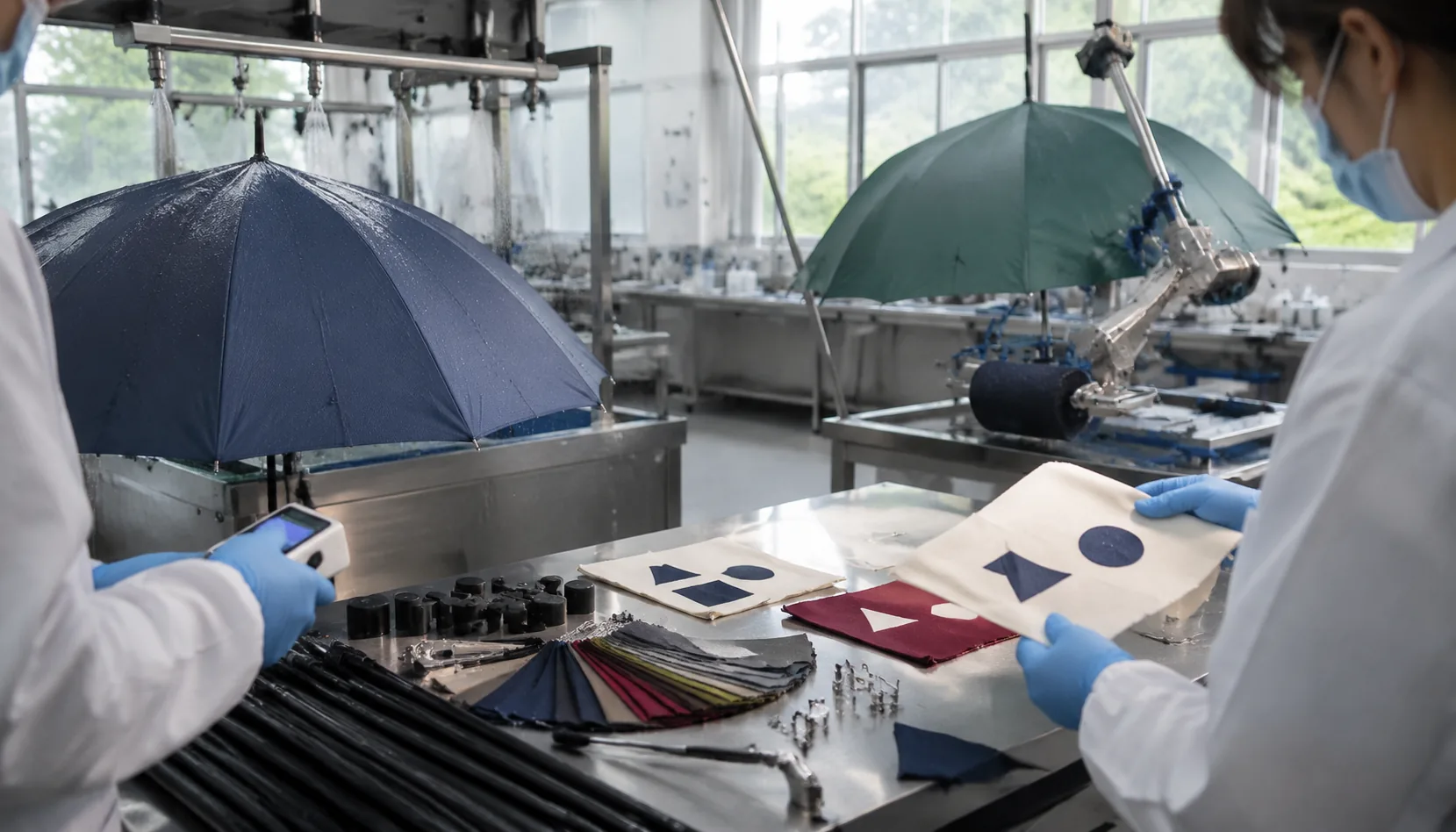
Logo Durability Testing for Branded Umbrella Programs
Plan branded umbrella orders with logo durability checks, AQL 2.5 inspection points, fabric tests, and approval steps be...
Read More »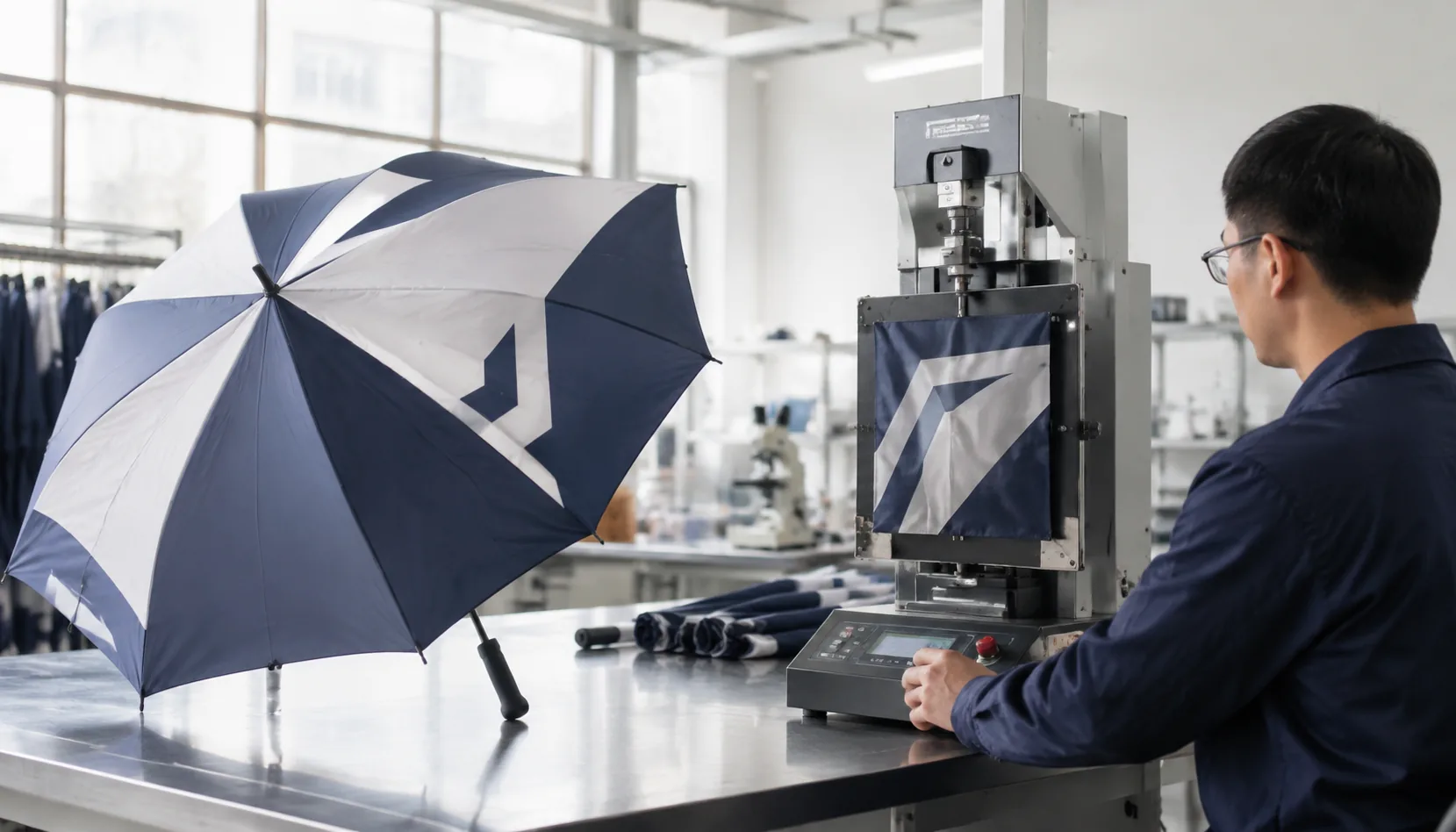
Print Durability Testing for Branded Umbrella Programs
Compare rub, adhesion, rain, UV, and folding tests for umbrella prints, with practical specs for 190T/210T pongee and AQ...
Read More »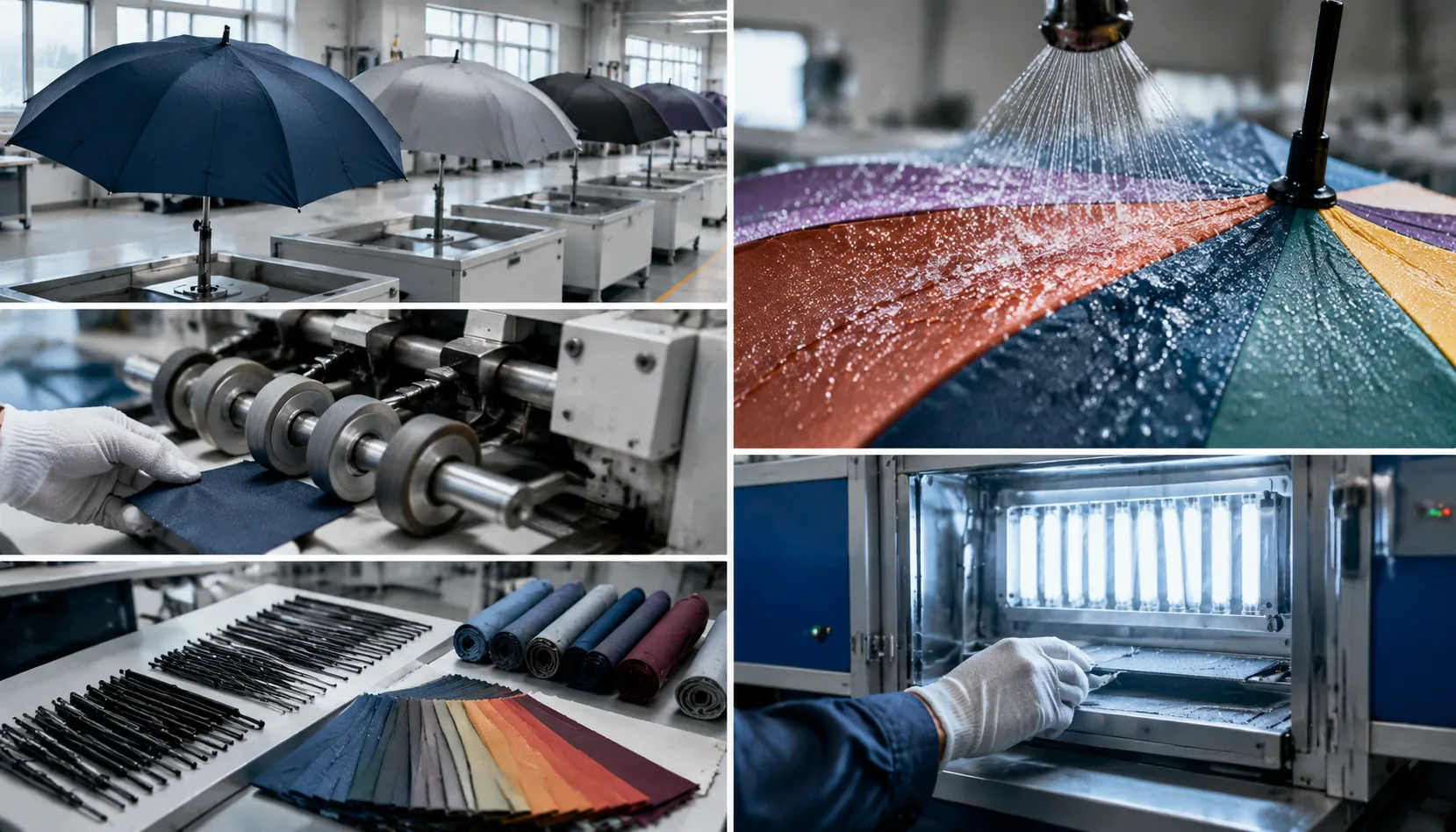
Print Durability Testing for Branded Umbrella Logos
Build a practical logo durability test plan covering adhesion, rub, folding, water exposure, AQL checks, and sample appr...
Read More »