190T vs 210T Pongee: Which Umbrella Fabric?
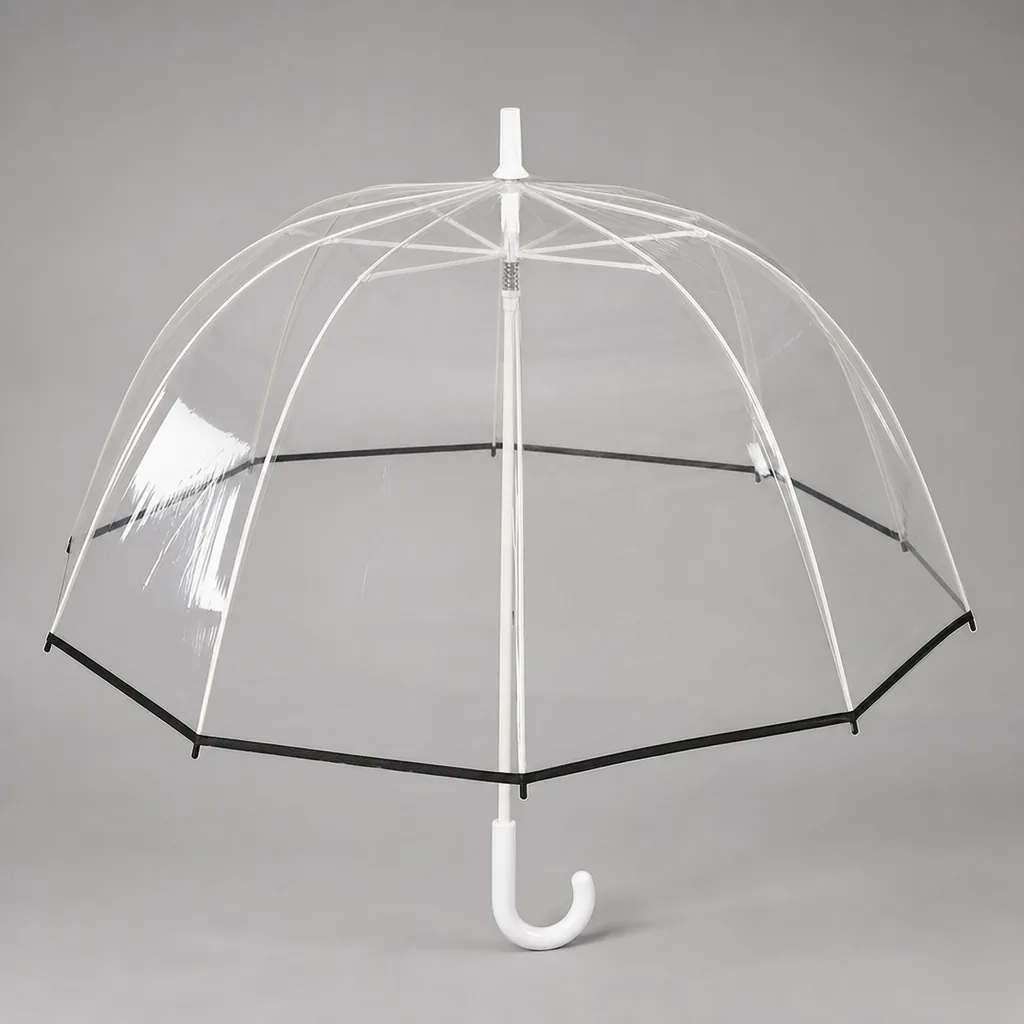
Use 190T pongee for lightweight, lower-cost promotional and compact umbrellas. Choose 210T when a denser hand, cleaner printing, and a more premium canopy justify the added fabric cost. Rain resistance still depends on coating quality, and UPF 50+ must be verified on the finished color and coating rather than inferred from 190T or 210T alone.
What 190T and 210T Mean in Real Production
190T and 210T are not marketing labels; they are the fabric density measured by thread count, and that changes how a canopy behaves on the cutting table and in the field. In pongee umbrella fabric, 190T pongee is lighter, a little softer in hand, and easier to fold into a compact umbrella because it has less body. 210T pongee is denser, feels slightly firmer, and gives the canopy more structure, which buyers usually read as higher quality even before they touch the frame. On print work, the tighter weave of 210T gives better edge definition for logos and patterns, especially on darker colors, because the yarn gaps are smaller and the surface is more stable under heat-transfer or screen printing. ZheBrella typically treats 190T as the practical baseline for price-sensitive promotions and moves to 210T when the buyer wants a more premium hand feel without changing the frame spec.
Water performance also shifts with thread count, but buyers should separate weave density from the actual canopy coating. A well-coated 190T can outperform a poorly finished 210T in short rain exposure, while a properly applied canopy coating on 210T usually gives better water holdout because the denser base fabric presents a more uniform surface for PU, silver, or black coatings. In production, 210T tends to resist pinholing and seam stress a little better, so the canopy keeps its shape after repeated opening and drying cycles. That matters on larger umbrellas like 23-inch or 27-inch models, where a looser fabric can flutter and look tired faster. If the brief includes an UPF 50+ umbrella, the denser weave also helps block light before the coating does its work, which is useful for golf and outdoor retail programs.
The cost difference comes from material, yield, and what the fabric lets you promise to the buyer. 210T pongee usually costs more because it uses more yarn per square inch, has tighter weaving requirements, and creates a canopy that looks fuller with less sag between ribs. That added body matters on auto-open and auto-open-close umbrellas, where a thin fabric can look cheap after the first few cycles. For a rain umbrella, the higher thread count does not magically make it waterproof; the coating, seam sealing, and cut accuracy still decide the real result. But for procurement teams comparing samples, 210T often wins on perceived quality because it hangs cleaner, prints sharper, and feels less flimsy in the hand. If the target is a premium retail item or a corporate gift, pongee umbrella fabric in 210T is usually the safer spec; if the target is volume and cost control, 190T is the more efficient choice.
Rain Performance, Drying Time, and Surface Finish
For rain use, the base fabric matters less than how the coating is applied. A good pongee umbrella fabric in 190T or 210T will shed water cleanly if the PU layer is even and the weave is tight, but the real difference shows up at the seams and fold lines. PU coatings give the best balance of waterproofing and dry-down because they do not trap as much heat as metallic finishes, so the canopy releases moisture faster after a shower. If the coating is too heavy, you get stiff panels that hold creases and fatigue faster around the stretcher tips and tip pockets. Water should bead and roll off the surface instead of soaking into the yarn bundle; when it sheets or leaves dark wet patches, the finish is too thin or the fabric has been over-pressed during lamination.
Silver and black coatings behave differently, and buyers often confuse appearance with performance. Silver-coated pongee umbrella fabric reflects UV better and is the usual starting point for an UPF 50+ umbrella, but it can slow drying because the metallized face tends to hold a slightly cooler, wetter film on the surface. Black coatings absorb heat faster, which can help the canopy dry in airflow, but they are less forgiving on odor if the coating chemistry is weak or the curing is incomplete. A strong canopy coating should not smell sharp after unpacking, and it should survive repeated wet-dry cycles without whitening at the folds. In practice, a 210T base with a controlled silver or black finish usually handles rain and sun better than a thin 190T with an overloaded topcoat.
Seam leakage is usually a construction problem, not a fabric problem. Needle holes along the panel joins will wick water unless the thread tension, stitch length, and seam tape or seam seal are set correctly. On automatic open and auto-open-close umbrellas, the fabric also has to tolerate a sudden snap load when the runner drives the canopy open; if the finish is too brittle, the first failure point is often the corner reinforcement or the stitch line near the top cap. Folding stress is the other hidden issue: every collapse puts the coated face against itself, so a sticky or over-soft finish can block, while an overly hard finish cracks and flakes. For production, I would rather see a stable 190T pongee with a clean PU build than a glossy but brittle coating that looks good on day one and fails after a few dozen cycles.
UV Protection and Summer Program Requirements
Specify UPF 50+ when the umbrella is expected to do real sun duty, not just occasional shade. A plain 190T pongee umbrella fabric can block light rain well, but UV performance depends on more than thread count. To get a credible UPF 50+ umbrella, we usually need a denser 210T pongee base, a darker pigment package, and a canopy coating that actually carries the UV blocker instead of relying on print color alone. Silver, black, or charcoal PU backing can help, but the coating has to be applied evenly or the protection drops at seam lines and crown points. On the factory floor, I treat this as a material system, not a single spec: fabric density, dye chemistry, coating weight, and color all have to align if the buyer wants repeatable results in summer markets.
For rain-first programs, I would not overspend on sun features unless the buyer needs one umbrella to do both jobs. A 190T pongee canopy with standard water-repellent coating is usually enough for commuter rain use, especially on 21" and 23" folding models where low weight matters. If the brief shifts toward long outdoor exposure, a 210T pongee build gives more fabric body, better coating retention, and a cleaner hand feel after repeated opening and closing. The tradeoff is cost and slightly less packability. ZheBrella’s standard practice is to separate these builds early in sampling, because the wrong coating package can look fine in a lab photo but fail after heat aging, flexing, and edge abrasion. For buyers in retail or promotional programs, the choice should be driven by use case, not by assuming thicker fabric automatically means better UV performance.
Heat reduction is where many summer umbrellas are underspecified. A dark lining, especially black or deep charcoal, absorbs stray light and cuts the washed-out glare that makes cheap light-colored canopies feel hotter underneath. For a true sun-first build, a double-canopy vented structure is worth the added sewing time because it reduces trapped air and makes the shade feel less stagnant in still weather. That said, double-canopy is not mandatory for every UPF 50+ umbrella; on smaller travel umbrellas it can add bulk without enough user benefit. The better solution is to match the structure to the market: darker inner lining and stronger canopy coating for golf or beach use, simpler 190T pongee with water repellency for rain-heavy promotions, and a 210T pongee shell when the program needs both UV resistance and better long-term shape retention.
Print Compatibility and Color Control
Flat logos, bold line art, and text-heavy marks print best on pongee umbrella fabric because the surface is tight enough to hold detail without the fuzzy edge you get on cheaper polyester. For panel layouts, I prefer a centered logo on one or two opposite panels when the artwork needs to read from a distance; full-wrap repeat graphics are possible, but the seam interruptions matter more than the file looks on screen. On a standard 21" or 23" canopy, registration across panel joins is usually safe only when the artwork tolerates a 2 to 4 mm shift. Fine gradients, hairline type, and thin outlines are where approvals get painful, especially on 190T pongee, which shows weave texture earlier than 210T pongee.
Print method changes the approval standard. Silk screen is the cleanest option for spot colors and Pantone matching, but it needs simplified artwork and proper ink build so the logo does not crack at the fold points. Heat transfer handles smaller type and multi-color graphics better, yet it can look heavy if the transfer film is oversized or the canopy coating affects adhesion. Sublimation works best on white or light canopies and gives the most consistent photographic detail, but it is not the right choice for dark bodies or any setup that depends on exact brand color under an opaque canopy coating. If the order includes an UPF 50+ umbrella spec, check that the print does not interfere with the UV layer or create visible pinholes at high-coverage areas.
Repeat orders fail when people assume the fabric and ink will behave exactly like the last run. Dye lot changes, weaving tension, and coating thickness all move the final color, so a 190T or 210T roll can land slightly warmer, cooler, or darker even when the supplier name is unchanged. The right control point is not the PDF proof; it is a physical strike-off on the same batch of pongee umbrella fabric, under the same print method, with the same approval lighting and tolerance standard. For stable reorders, lock the artwork position, panel count, ink system, and acceptable delta-E range before production. Without that discipline, the canopy may pass functionally but still fail brand approval because one run reads cleaner than the next.
Inspection Standards and Buying Terms
For pongee umbrella fabric, the first inspection is basic but non-negotiable: verify the GSM or denier against the approved spec, check that the weave is even, and make sure the coating is laid down without pinholes, streaks, or soft spots. On a 190T pongee, you will usually see a lighter hand feel and a thinner coating build; on 210T pongee, the cloth is denser and gives you a better margin on tear resistance and water holdout. We also check panel-to-panel color consistency under standard light, because a lot of “fabric problems” are really dye lot problems. If the buyer wants a canopy coating for rain plus a UV layer, the coating has to be checked separately, not just as a general gloss test. In practice, ZheBrella holds AQL 2.5 on incoming cloth and in-process canopy checks, because that is where fabric defects are cheapest to catch.
Seam strength is the next real failure point. A canopy can pass visual inspection and still split at the edge tape, rib pocket, or tip reinforcement if the stitch density is too low or the thread tension is off. We test seam pull at the side seam, vent seam on double-canopy builds, and the stress points around the runner contact areas, especially on larger 23-inch and 27-inch umbrellas. Color fastness matters more than most buyers expect: rainy-day rub, sweat, and UV exposure can all shift the shade if the dyeing or post-finish wash is weak. For an UPF 50+ umbrella, the coating and the base fabric have to work together; if the UV layer is uneven, the lab result may pass once and drift on the next lot. That is why buyers should ask for both lab data and actual cutting-room inspection photos, not just a certificate.
Commercial terms move with the spec. MOQ usually rises when you step from 190T pongee to 210T pongee, because the fabric cost is higher and the mill order size is less flexible; adding a UV coating also raises the minimum because of extra processing and rejection risk during sampling. Sampling lead time is typically short for a plain rain canopy, but a new canopy coating or an UPF 50+ umbrella build adds days for lab dips, coating approval, and re-test if the first sample fails color fastness or hand-feel targets. FOB pricing will usually climb in a clean, predictable way with 210T and UV finish, while DDP pricing moves more because coating weight, carton volume, and destination customs classification can all change landed cost. The practical move is to lock the fabric spec, coating standard, and AQL 2.5 target before asking for a quote, otherwise every revision turns into a new price.
Frequently Asked Questions
Does 210T pongee always perform better than 190T?
Not always. 210T usually feels denser and can improve body and print appearance, but a well-made 190T canopy with proper coating can still meet normal rain use. The right pick depends on target durability, budget, and whether UV performance is required.
Can pongee umbrellas be specified for UPF 50+?
Yes, but the fabric, coating, and color system must be chosen together. Darker pigments, reflective coatings, and a tightly woven canopy are typically part of a UPF 50+ specification, and the claim should be validated during sampling.
For a custom folding umbrella, should I choose 190T or 210T pongee?
190T is usually the lower-cost option and works well for standard rain umbrellas. 210T has a tighter weave, which usually gives better print clarity and a more premium hand feel, so it is often chosen for retail programs or UV-focused models.
Does a UPF 50+ claim depend more on the fabric or the coating?
It depends on both. The base pongee helps with light blockage, but the UV coating or silver-black backing is usually what pushes the umbrella to UPF 50+; buyers should request lab test reports instead of relying on thread count alone.
Will a heavier canopy coating affect logo printing?
Yes, a thicker coating can slightly soften the surface and reduce fine-detail print sharpness, especially on darker backings. If you need crisp branding, ask for a strike-off first and confirm the coating level before mass production; sampling is often 7-10 days and finished umbrella MOQs commonly start around 500-1,000 pieces per design.
Looking to Launch Your Custom Umbrella Line?
ZheBrella is a Zhejiang-based OEM/ODM umbrella manufacturer with 17 years of export experience. Free design, low MOQ from 100 pieces, windproof construction, full-color print.
Get Free Quote Now »People Also Search For
Related Articles
Choosing Canopy Fabric for Custom Umbrellas: Weight, Feel, and Finish
Learn how canopy fabric weight, weave, and coating affect print quality, water resistance, UV protection, and landed cos...
Read More »Choosing Umbrella Canopy Coatings for Rain and UV Sales
Compare canopy coatings for rain and UV products, including water repellency, UPF 50+, hand feel, and order specs buyers...
Read More »
UPF 50+ Umbrella Fabric and Frame Guide for Sun Protection
Specify fabrics, coatings, canopy coverage, and frames that deliver UPF 50+ performance for retail and promotional sun u...
Read More »