Private-Label Umbrellas for Retail Chains: Spec, Pack, and Ship
Retail chains don’t lose margin because umbrellas are complicated; they lose it because specs drift, packaging gets misread, and shipments arrive with avoidable defects or labeling issues. In our Songxia factory, we see the same failure points every season: frame strength not matched to the selling channel, artwork that survives on screen but not on carton, and compliance details left until the last sample. A workable private label umbrellas program starts by tightening those details at the factory floor, before volume turns small mistakes into costly returns.
Retail requirements that affect umbrella specs
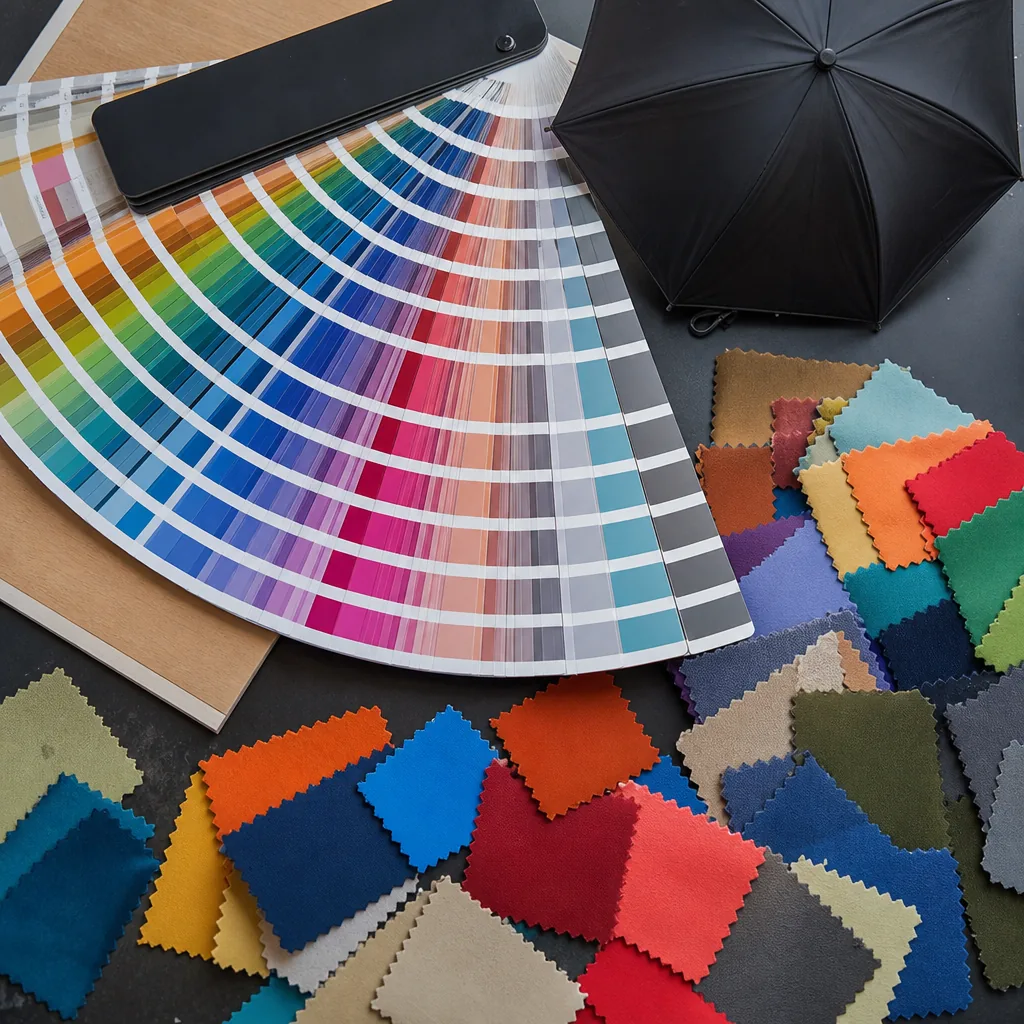
Retail chains care about color consistency more than most umbrella buyers admit. If the canopy is supposed to be Pantone-matched black, navy, or a seasonal promotional color, the factory has to lock the yarn-dyed pongee, coating lot, and printing shade before mass cutting; otherwise the first shipment and the repeat order will look like two different products. For private label umbrellas, I insist on a signed master sample, a measured color tolerance, and a reapproval step when the customer changes fabric mills or moves from 190T to 210T pongee, because that is where color drift shows up first. This matters even more on custom retail umbrellas with UV coatings or two-tone trims, since coating thickness and heat-setting can shift the final shade.
Barcode placement and hangtag rules are usually more restrictive than the umbrella itself. In retail chain umbrella sourcing, the barcode has to scan cleanly from the consumer-facing side, the hangtag must stay clear of the opening mechanism, and the retail-ready pack has to survive warehouse handling without tearing or twisting the swing tag cord. Branded umbrella packaging also has to follow store-set dimensions, recycled-content claims, and warning copy rules, especially for auto-open-close models and children’s or golf-sized umbrellas. If the program is going through umbrella retail compliance, I always check the carton artwork, country-of-origin statement, SKU format, and inner-pack quantity before production starts, because those mistakes are expensive to fix after labels are printed.
Stable repeat orders are the real test of an OEM umbrella supply program. Retailers do not want a one-off factory sample; they want a spec that can be repeated across seasons with the same frame, same panel count, same handle finish, and the same carton pack, even when the order volume changes. That means the spec has to be written for repeatability: 21-inch compact, 23-inch stick, or 27-inch golf; 8K or 10K fiberglass ribs; manual, auto-open, or auto-open-close; and a carton count that matches their DC receiving rules. If the first PO is 5,000 units and the reorder is 20,000, the umbrella factory has to hold the same BOM and packaging structure, because custom retail umbrellas only work when the buyer can reorder without requalifying the whole item.
Choosing the right build for shelf appeal
Straight umbrellas sell best when the chain wants a cleaner shelf block and fewer moving parts to fail on the sales floor. For private label umbrellas, I usually steer buyers toward a 23" or 27" straight frame with 190T pongee for mass-market programs and 210T pongee when the retailer wants a tighter hand feel, better ink sharpness, and less pinholing under strong light. Fiberglass ribs matter more than most merchandisers realize: they keep the canopy from looking twisted after a few open-close cycles and they cut returns on displays where customers handle samples repeatedly. Manual and auto-open versions are safer than auto-open-close for higher-traffic stores because the mechanism is simpler and the carton damage rate is lower.
Compact styles are the right answer when the planogram is driven by basket add-ons, travel, or price-point laddering. In retail chain umbrella sourcing, a 21" or 23" folding unit with steel shaft and fiberglass ribs is usually the best compromise between pack size and durability; go too light and the canopy prints poorly, go too heavy and it stops being an impulse item. Premium custom retail umbrellas can still use 210T pongee in a compact format, but the real upgrade is a reinforced joint set and a tighter folding pattern so the bag, sleeve, and carton stay consistent. If the retailer cares about branded umbrella packaging, build the pack around hanging display, barcodes, and clear color naming, because the product has to sell itself before anyone opens it.
Golf styles belong in premium retail, club channels, and weather-focused assortments where size is part of the value story. A 30" canopy with a double-canopy vented windproof structure and fiberglass frame is the practical choice when the buyer wants fewer bent shafts and better performance in gusts; this is where OEM umbrella supply can justify a higher ticket without inventing features that do not matter. For umbrella retail compliance, I would still insist on clear warning copy, fiber content labeling, carton strength checks, and AQL 2.5 inspection on print placement and opening action. ZheBrella’s standard practice is to match the build to the store tier: straight for presentation, compact for convenience, golf for premium weather performance, with 190T or 210T pongee chosen only after the packaging, margin, and reorder math are settled.
Packaging systems for private-label programs
Packaging is not an afterthought in private label umbrellas; it decides how the product sells on shelf and how much air you pay to move. For retail chain umbrella sourcing, the usual options are a basic poly sleeve, a printed paper sleeve, a belly band around the canopy, or a full printed box. Sleeves are cheap and fast, but they do little for shelf blocking. Printed boxes and sturdy belly bands give better color control, UPC placement, and brand recognition, which matters when the buying team wants the umbrellas to sit cleanly beside other private label umbrellas instead of looking like loose commodity stock.
Display-ready cartons make more sense when the program is going straight to stores or club-style replenishment. We build them so the outer shipper doubles as the shelf tray, with tear-away faces, clear carton labels, and stable stacking dimensions. That helps branded umbrella packaging stay upright under pallet compression and makes receiving faster because store staff do not have to repack loose units. The tradeoff is carton size: tighter unit packing improves freight efficiency, but over-compressing can crush boxes, crease sleeves, and create damage claims.
The numbers matter because packaging changes both carton counts and landed cost. A compact 10K or 8K folding umbrella in a sleeve may fit 60 to 100 pieces per master carton, while a boxed presentation usually cuts that count sharply and increases cubic volume. In OEM umbrella supply, I push buyers to choose packaging only after locking the retail planogram, because umbrella retail compliance can require barcode visibility, country-of-origin marks, fiber-content statements, and warning copy on the pack. ZheBrella’s standard practice is to sample the exact ship-ready carton before mass production, so the buyer can confirm shelf fit, freight loading, and artwork placement before the first bulk run of custom retail umbrellas goes into production.
Quality control and compliance expectations
For private label umbrellas, the cleanest retail program starts with a pre-production sample that matches the final spec sheet exactly: frame gauge, rib count, canopy cloth, print placement, handle finish, and carton marks. In retail chain umbrella sourcing, I insist on approving one sealed golden sample before mass cutting, because a lot of problems show up early—logo drift on a 23-inch panel, wrong shaft plating, or a handle that feels fine on paper but fails in hand. For custom retail umbrellas, the sample is not a formality; it is the reference used by production, QA, and the buyer’s merchandising team when disputes come up later.
During production, online inspection matters more than people think. We check incoming fiberglass and steel rib lots, canopy color consistency, stitching density, open-close force, and print registration while the order is still in process, not after everything is packed. Our standard practice is to hold final random inspection at AQL 2.5, which is what most buyers expect for OEM umbrella supply: carton count verification, visual defects, function tests, size checks, and packaging review on the finished goods. If the shipment is branded, we also confirm branded umbrella packaging against the approved artwork so retail-ready cases do not arrive with the wrong UPC, color name, or inner pack configuration.
Retail buyers usually ask for compliance documents before release: a commercial invoice, packing list, test reports for REACH or CPSIA when required, phthalate or azo dye declarations for coated materials, and country-of-origin marking support. For umbrella retail compliance, they may also request a factory audit summary, material composition statement, and if the market is the EU or UK, evidence that inks, coatings, and plastic parts meet the relevant chemical limits. The practical point is simple: if the buyer wants private label umbrellas shipped into a chain store system, the paperwork has to match the carton label, the PO description, and the sample approval file exactly, or the receiving team will reject it at the dock.
Shipping setup for multi-store rollout
For private label umbrellas, the first mistake retail buyers make is treating MOQ as a single number instead of a launch tool. A decent factory will quote different floors by size and mechanism: 21" compact auto-open can sit in a lower MOQ than 30" golf-size double-canopy windproof units with fiberglass ribs and UV coating. For retail chain umbrella sourcing, I usually want the order split by colorway and carton count before we talk price, because that drives cutting waste, print setup, and packing efficiency. If you need branded umbrella packaging with inserts, barcodes, and retail-ready hang tags, add that to the spec early; changing it after lab dip approval burns a week fast.
Production lead time is not just sewing time. For OEM umbrella supply, budget roughly 30-45 days for standard pongee 190T or 210T builds, and longer if you are asking for custom canopy printing, Teflon finish, UPF 50+ coating, or molded handle tooling. FOB works when your freight team can handle consolidation and booking out of Ningbo or Shanghai; DDP makes sense when the rollout is tight, but it only works if you lock carton dimensions, HS code, and destination duties up front. Umbrella retail compliance matters here too: carton labeling, fiber content, warning text, and AQL 2.5 inspection should be fixed before mass production, not after the first shipment is already moving.
For a multi-store rollout, I prefer staged replenishment instead of one oversized drop. Ship the opening allocation to cover the first 4-6 weeks, then hold the balance as a replenishment reserve tied to sell-through by region, because umbrella demand spikes with weather and back-to-school timing, not just planogram dates. That approach keeps private label umbrellas in stock without overcommitting cash to slow-moving sizes or colors. In practice, I would reserve 20-30% of volume for a second wave, packed in master cartons by store cluster so the next release can move by pallet, not by messy case picking.
Frequently Asked Questions
What is the best umbrella type for a retail private-label launch?
For broad shelf appeal, many chains start with a compact auto-open model or a premium golf umbrella. The best choice depends on target price, shelf space, and whether the program is gift-driven or everyday retail.
Can a factory handle both branding and retail packaging?
Yes. A vertically integrated OEM/ODM factory can usually manage canopy printing, label application, and retail-ready packaging in one production flow. That reduces coordination errors and shortens the path to shipment.
What retail packaging specs should be locked before umbrella production starts?
Confirm the consumer unit format first: individual polybag or paper sleeve, hang tag size, barcode placement, warning labels, and master carton count. For chain retail programs, buyers usually freeze artwork and pack-out details before sample approval because carton dimensions and drop-test performance affect freight booking and DC handling.
How can a buyer reduce SKU mix-up risk on a multi-store umbrella program?
Use a packing matrix by color, style, and store code, then require carton-level barcode labels and pre-shipment carton photos. For mixed programs, many importers ask the factory to run 100% scan verification on item labels and outer cartons before container loading.
What is a practical MOQ and lead time for private-label umbrellas with custom retail packaging?
A common starting MOQ is 1,000-3,000 pieces per style, depending on frame type, fabric color count, and packaging complexity. Typical production is 35-50 days after sample approval, while new molded handles, custom display cartons, or multiple compliance tests can extend the schedule by 7-15 days.
Looking to Launch Your Custom Umbrella Line?
ZheBrella is a Zhejiang-based OEM/ODM umbrella manufacturer with 17 years of export experience. Free design, low MOQ from 100 pieces, windproof construction, full-color print.
Get Free Quote Now »People Also Search For
Related Articles
Umbrella Retail Belly Bands for Clean Private-Label Branding
Use belly bands to add private-label branding, sizing, and campaign messaging to folded umbrellas without committing to ...
Read More »Umbrella Packaging Inserts That Elevate Brand Storytelling
Plan insert cards, care leaflets, and brand messages that improve perceived value, reduce claims, and fit OEM umbrella p...
Read More »
Branded Umbrella Hangtags That Improve Retail and Compliance
Plan umbrella hangtags that support retail sell-through, brand storytelling, barcode needs, and compliance details witho...
Read More »