Reflective and High-Visibility Umbrella Branding for Night Events
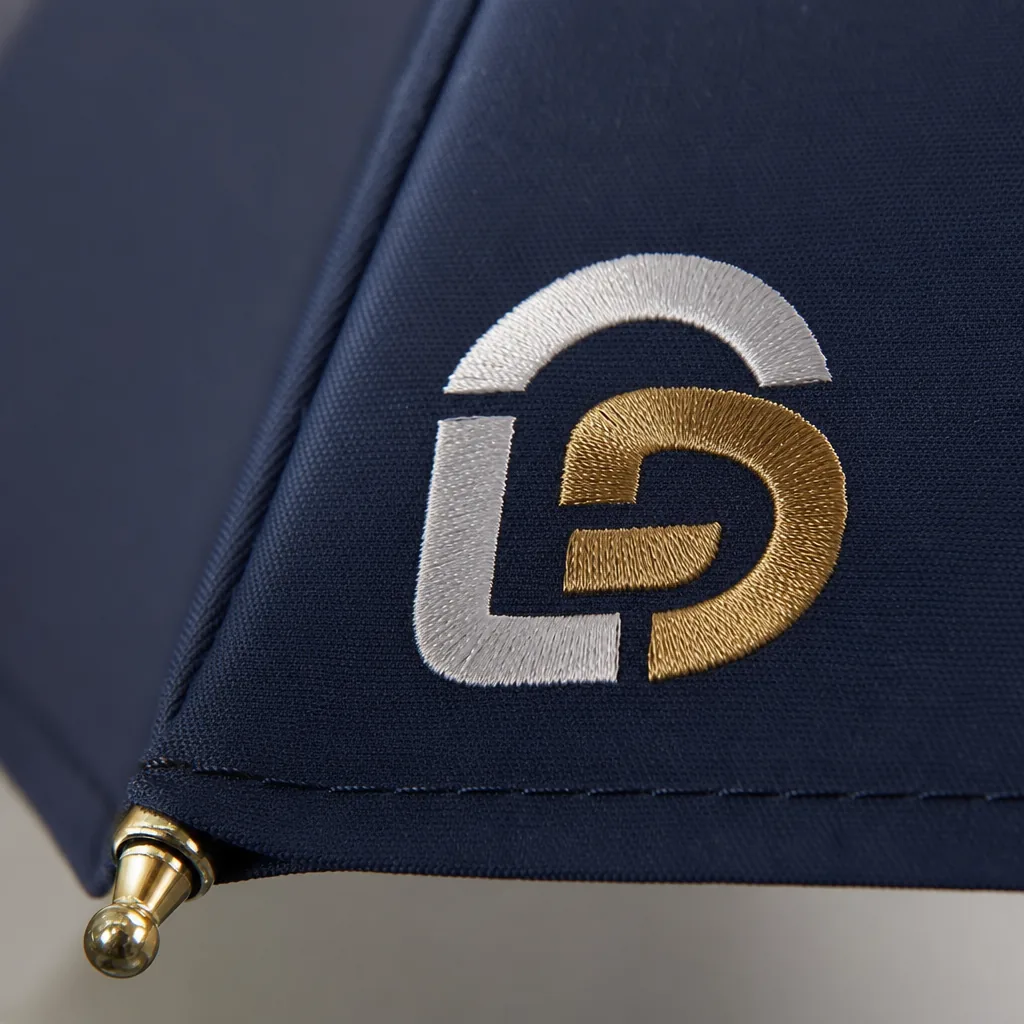
When event umbrellas need to carry a logo after dark, the real challenge is not just visibility but how the mark survives seam lines, curved panels, and repeated folding on the factory line. In Songxia, we see buyers balance reflective umbrella logo printing with high-visibility inks by asking the same practical questions we do at inspection: where the logo will sit, how it performs under low light, and whether the application method can hold up through production and field use.
Reflective Branding Uses and Event Scenarios
Reflective umbrella logo printing makes the most sense at night-heavy events where the umbrella is not just a giveaway but a moving sign. I use it for outdoor promotions after sunset, transit-linked campaigns at stations and shuttle queues, and safety-focused activations where people are walking in traffic-heavy areas. A small reflective mark on the crown, runner panel, or edge tape usually works better than trying to cover the whole canopy, because it catches headlights and phone flash without turning the umbrella into a stiff, expensive billboard.
For event umbrellas, the tradeoff is simple: standard screen printing gives stronger daytime color and lower cost, while reflective branding is weaker in daylight but far more useful once light hits it at an angle. High-visibility branding also pairs well with fluorescent ink, especially when the client wants daytime pop plus a safety cue after dark. In production, I would not push full reflective coverage unless the brief specifically needs it; a compact logo, icon, or border strip is usually enough for custom canopy decoration and keeps the hand feel and print cost under control.
The best use cases are crowd-control openings, night marathons, airport or rail promotions, and branded weather shelters at concerts or street festivals. In those settings, reflective umbrella logo printing is less about decoration and more about being seen fast from 10 to 30 meters away when car lights, stage lighting, or security torches sweep across the canopy. That is where a small reflective hit outperforms a full-print graphic: it is easier to register, cheaper to place consistently, and less likely to crack or distort on curved panels.
Print Methods That Hold Up on Moving Canopies
Reflective umbrella logo printing works best when the goal is visibility first and decoration second. On pongee 190T or 210T, reflective film gives the strongest return at night because it throws light back hard, but it is less forgiving on tight curves and panel joins than a simple screen print. Heat transfer is the middle ground: it handles fine text and crisp logos well, bonds cleanly to woven canopy cloth, and avoids the heavy hand feel you get from thick plastisol, but you still need to size the artwork for the canopy panel shape instead of forcing a flat layout onto a moving dome.
For event umbrellas, I usually separate high-visibility branding into two buckets: reflective film for traffic-facing edges and fluorescent ink for daytime recognition. Fluorescent ink is useful on promotional pieces because it stays readable under stage lighting and camera flash, but it fades faster under UV and abrasion than a properly applied transfer or reflective laminate. ZheBrella’s standard practice is to test wash, flex, and rub resistance on the actual canopy fabric, because a print that looks fine on a flat sample can crack once the ribs start cycling and the cloth stretches at the panel seams.
Auto-open umbrellas need extra placement clearance near seams, tips, and stitch lines because the canopy snaps open with more force than manual styles. If the artwork sits too close to a seam or tip pocket, the print edge gets stressed every time the frame loads and unloads, and that is where reflective umbrella logo printing starts to peel or fracture first. For custom canopy decoration, I keep critical graphics away from the apex, leave a buffer around vent cuts and tips, and confirm the final placement on the actual 8K, 10K, or 16K panel pattern before production so the branding stays centered when the umbrella is in motion.
Color Contrast, Backlighting, and Brand Legibility
For night events, the logo only works if the contrast is doing real labor. Dark canopies with white or lime artwork stay readable under streetlights, while reflective silver panels kick back light from phone flashes, vehicle headlights, and venue lighting in a way plain ink cannot. That is the practical value of reflective umbrella logo printing: it gives you a mark that still resolves at a distance when the umbrella is moving through a crowd, instead of disappearing into a flat dark surface. On black, navy, or forest green fabric, white artwork is the safest baseline; lime or yellow-green adds stronger high-visibility branding, but it has to be controlled so it does not wash out under bright floodlights.
Fluorescent ink helps most when the event has mixed lighting and the umbrella is seen from several angles, not just front-on. On event umbrellas, we usually test the artwork against both daylight and LED spill because a color that looks loud at noon can go dull at night if the canopy fabric absorbs too much light. Reflective silver works best as an accent, not a full graphic, because small text and edge lines read cleanly while large filled areas can look patchy when the umbrella bends. For custom canopy decoration, I would rather spec a simple two-color layout with strong outlines than force a complicated full-wrap graphic that loses legibility once the canopy is wet, folded, or partially shadowed.
Double-canopy windproof models change the optics more than buyers expect. The vented top breaks up direct glare, so the logo is not hit by a single hard reflection line, and that makes high-visibility branding more stable in motion. On a single-canopy dome, light can flare across the panel and hide thin strokes; on a double-canopy structure, the upper vent softens that effect and helps the mark stay readable from the side. For reflective umbrella logo printing, the best result is usually a dark outer canopy, a bright logo zone on the outward-facing panel, and fluorescent ink reserved for borders or secondary text, which keeps the branding legible without turning the umbrella into a busy billboard.
MOQ, Sampling, and Approval Criteria for Brand Buyers
For decorated event umbrellas, the MOQ is usually driven by print method and frame mix, not just the artwork. For reflective umbrella logo printing on standard 23" or 27" event umbrellas, I would treat 300-500 pieces per colorway as the practical floor for screen print or heat-transfer work, while 500-1,000 pieces is more realistic if you want mixed sizes, custom canopy decoration, or fluorescent ink matched to a brand PMS. If the order uses 8K and 16K rib frames in the same program, keep the decoration area consistent and specify whether the logo must stay inside the same panel geometry; otherwise the unit cost and reject rate both climb fast.
Sampling should be handled as a production sample, not a showroom mockup. A first sample normally takes 5-7 days after artwork confirmation; if the canopy needs a special reflective film, multiple ink layers, or proofing on both pongee 190T and POE materials, allow 7-10 days. For approval, check reflectivity under low light, edge crispness around fine strokes, logo size against the live panel width, and whether the print lands in the same position on multiple umbrellas. On event umbrellas, a sample that looks fine on one frame but shifts on the next is not approved.
Repeatability matters more than a single perfect sample. Ask for at least two approval units from each rib count, because 8K can tolerate slightly larger panel distortion while 16K usually exposes alignment errors faster near the seams and tips. The real test is whether high-visibility branding stays legible when the canopy opens hard, closes wet, and gets flexed at the ribs; if the reflective path breaks at the stitch line, the artwork is too close to the edge. Our standard practice is to approve only after the buyer signs off on panel placement, color under daylight, and night reflectivity on the same reference piece that will be used for mass production.
Shipping and Order Terms for Promotional Runs
FOB and DDP are the two buying models that matter most on promotional runs, and the difference is not theoretical. Under FOB Ningbo or Shanghai, the buyer controls the freight forwarder, customs clearance, and last-mile delivery cost; that usually makes sense for seasoned importers with consolidated shipments. DDP is cleaner for smaller campaigns or first-time buyers because landed cost is quoted up front, but it only works well when the carton count, declared value, and destination rules are known early. For event umbrellas, I usually tell buyers to match the decoration method to the commercial risk: reflective umbrella logo printing for night visibility, fluorescent ink for brighter daytime recognition, or simpler one-color screens when the budget is tight and the order is large.
Typical production lead times run 15 to 25 days after sample approval for standard canopy sizes like 23" and 27", with printed nylon or pongee orders toward the shorter end and complex custom canopy decoration on multi-panel art toward the longer end. Rush work is possible, but once you add color matching, special coatings, or mixed handle components, the schedule gets fragile fast. The practical rule is simple: small-volume event umbrellas with detailed high-visibility branding need more setup time per unit, while repeat orders with existing artwork can move faster because the print files and panel layout are already locked.
AQL 2.5 is the inspection level we use for mainstream export lots, and it matters because print alignment defects and surface flaws show up quickly on umbrellas under event lighting. Inspectors check panel registration, logo skew, ink pinholes, overspray, scuff marks, and coating blemishes against the approved gold sample, then sample the lot to the 2.5 acceptance limit. Buyers can use that standard to balance cost and risk: low-volume premium orders should spend more on reflective umbrella logo printing and tighter alignment control, while high-volume giveaways can use lower-cost decoration and still stay within acceptable cosmetic tolerance if the deadline is aggressive.
Frequently Asked Questions
Are reflective umbrella logos suitable for retail branding or only events?
They work best for events, transport, and safety-led promotions, but they can also support retail lines when the brand wants a night-visible accent. They are usually not the best choice for complex multi-color artwork.
What is the most common limitation with reflective printing on umbrellas?
Fine detail can be less crisp than standard ink, especially on small logos or textured fabric. Buyers should approve a physical sample and check visibility in both direct light and low-light conditions.
Can reflective printing cover the entire umbrella canopy?
Full-canopy reflective printing is usually not recommended because reflective inks and films can affect folding, hand feel, and production consistency. Most buyers use reflective logos, edge bands, or panel accents sized around 10–30 cm per print position.
What is the difference between fluorescent ink and reflective printing on umbrellas?
Fluorescent ink improves daytime and low-light visibility by using bright neon colors, while reflective printing bounces light back when hit by headlights or flash. For night events, many brands combine fluorescent canopy colors with reflective logos or strips.
What MOQ and lead time should buyers expect for high-visibility event umbrellas?
For custom high-visibility umbrellas, typical MOQ starts around 500–1,000 pieces depending on frame, fabric, and print method. Production usually takes 25–40 days after artwork approval and sample confirmation.
Looking to Launch Your Custom Umbrella Line?
ZheBrella is a Zhejiang-based OEM/ODM umbrella manufacturer with 17 years of export experience. Free design, low MOQ from 100 pieces, windproof construction, full-color print.
Get Free Quote Now »People Also Search For
Related Articles
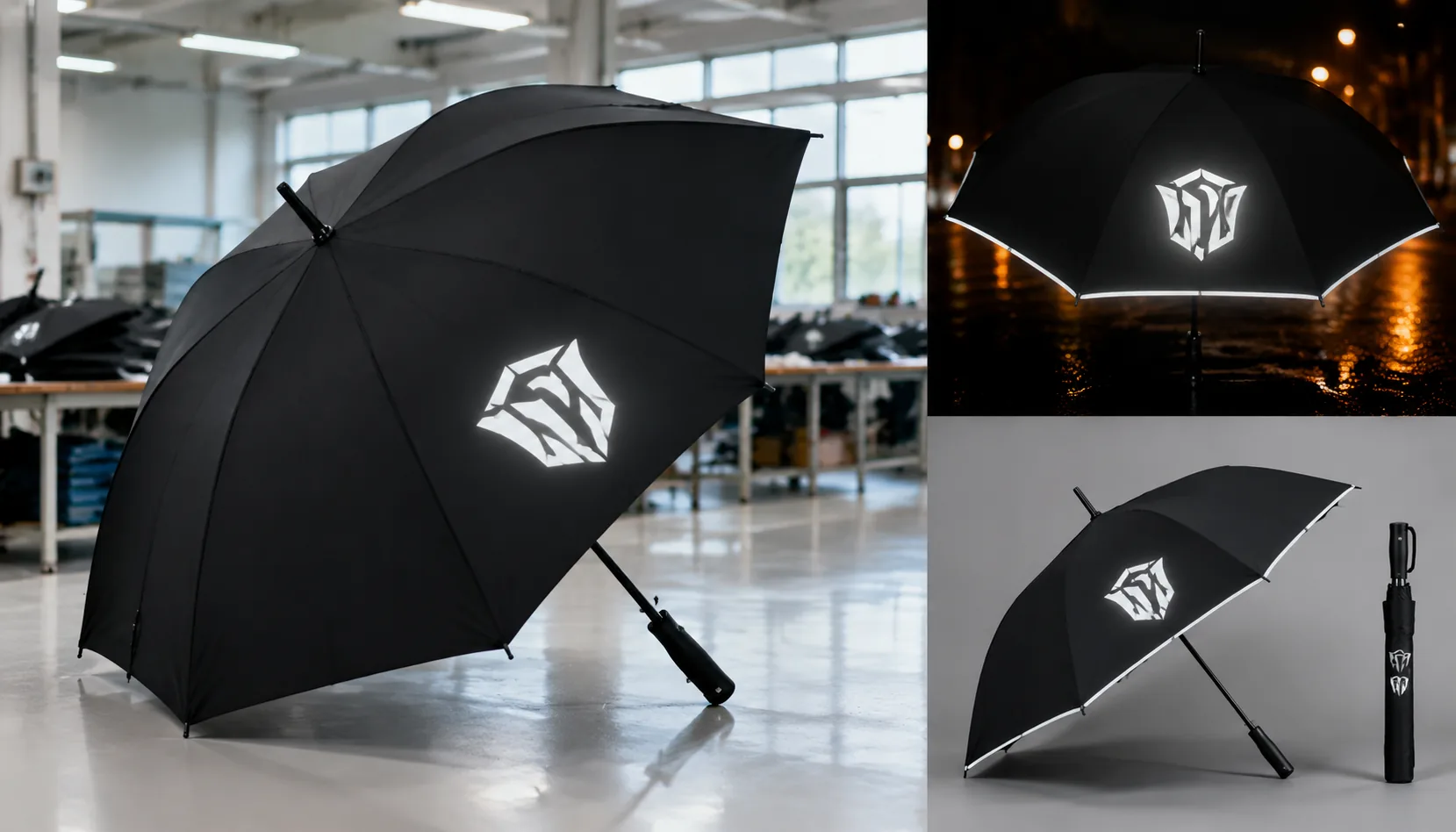
Reflective Umbrella Logos for Night Events and Safety Brands
Use reflective umbrella logos for night events, campuses, and safety brands while balancing visibility, durability, fram...
Read More »
Inside-Canopy Printing for High-Visibility Event Umbrellas
Create event umbrellas with inside-canopy branding that stays visible in crowds, photos, and video while protecting prin...
Read More »
Reflective Umbrella Logos for Safety Brand Campaigns
Specify reflective logo films, panel locations, and AQL checks for promotional umbrellas used in night events, campuses,...
Read More »