Reflective Safety Umbrellas for Corporate Night Campaigns
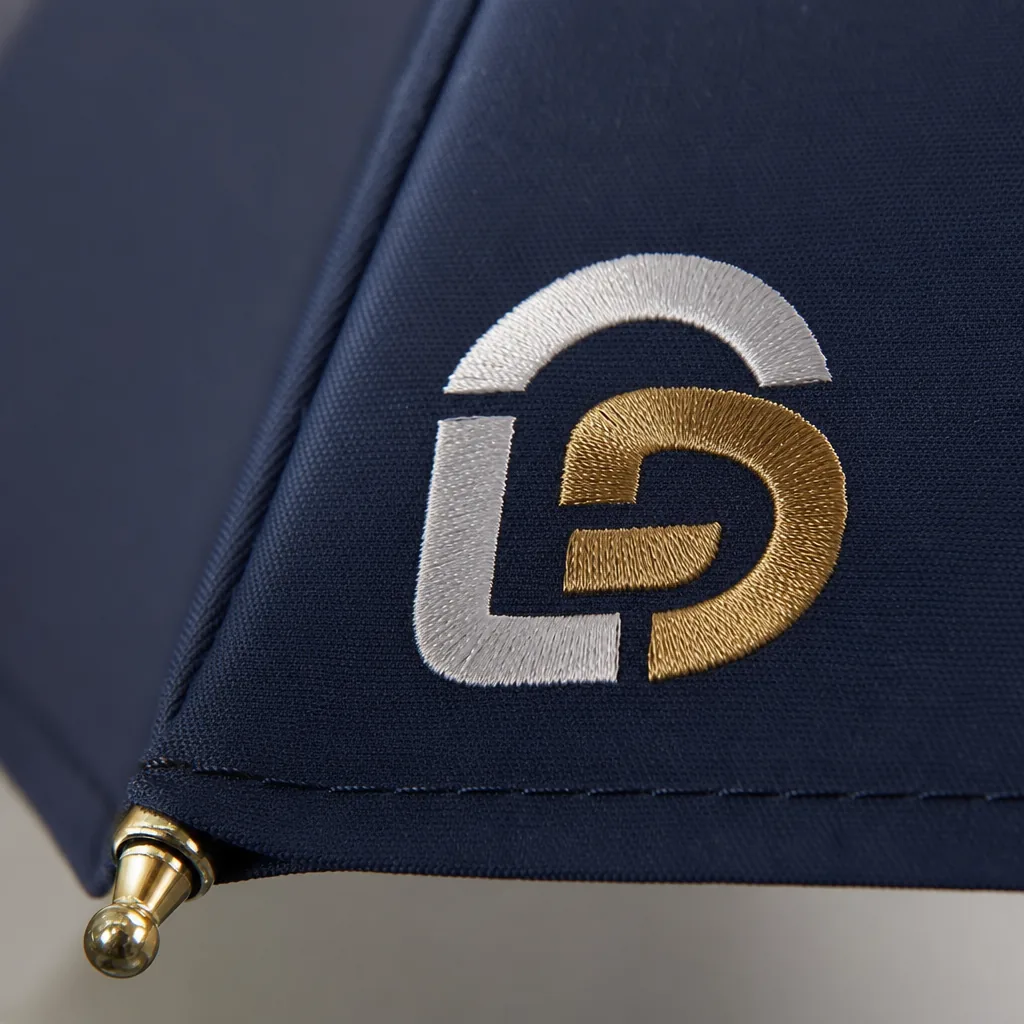
For night commuter and worker campaigns, the risk is not just low visibility; it is ordering umbrellas that look good in a mockup but fail on reflective placement, rib strength, or logo durability after a few rainy shifts. On our Songxia production floor, reflective safety umbrellas are specified around canopy panel layout, reflective tape bonding, frame load, and print testing before packing. That is what keeps branding visible and the giveaway usable when the weather turns.
Define the Visibility Use Case First
The first mistake I see in RFQs is treating all reflective safety umbrellas as the same product. A commuter giveaway usually works best as a 21" or 23" auto-open-close folding umbrella with 190T or 210T pongee, a compact EVA sleeve, and reflective piping on the canopy edge so it is visible when the user crosses a parking lot or subway exit. A construction or utility campaign is different: buyers should look at 27" or 30" golf umbrellas, fiberglass ribs, 8K or 10K frames, a straight EVA handle that can be gripped with gloves, and wider reflective tape panels that show from the side, not only from the top. If the umbrella is too small for a hardhat worker or too bulky for a commuter bag, the logo impression rate drops fast.
School and road-safety programs need even tighter definition because the user is often not the buyer. For students, I prefer manual or auto-open 23" stick umbrellas with rounded tips, fiberglass ribs instead of sharp steel, and high-contrast POE or pongee canopies with reflective strips placed at child eye level. Packaging should be individual polybags or classroom cartons of 25–50 pieces, not premium gift boxes. For road-safety campaigns, branded reflective umbrellas often need a larger printable logo area, UPF 50+ coating for daytime patrol use, and double-canopy vented windproof construction if volunteers stand near intersections. A 50+ mph wind-tunnel rating is more relevant there than luxury handle material.
Define the visibility distance before asking for price. Narrow reflective piping may satisfy a low-cost night safety promotional products campaign, but corporate safety umbrellas for roadside crews need 2–5 cm reflective tape, sometimes in segmented arcs so the canopy still folds cleanly. Silver reflective transfer, sewn reflective tape, and reflective ink do not behave the same after rain testing and repeated folding; sewn tape is heavier but more reliable for true safety use. A logo safety umbrella supplier should also ask whether the product ships FOB Ningbo/Shanghai or DDP to multiple event sites, because packaging format changes freight cost: compact folders reduce carton volume, while 30" golf umbrellas usually run lower pieces per carton and need stronger export cartons to pass AQL 2.5 inspection without handle or rib damage.
Select Reflective Materials and Print Placement
Reflective piping is the lowest-risk way to build visibility into reflective safety umbrellas because it follows the umbrella geometry: canopy edge, rib seams, and sometimes the closing strap. On a dark 190T or 210T pongee canopy, 10 mm to 15 mm gray reflective tape gives a clean outline when hit by headlights, especially on 23" and 27" straight umbrellas used by parking teams, campus security, and night-event staff. The tradeoff is viewing angle. Piping flashes strongly from the side or front when the umbrella is open, but it does not create a large reflective target. I recommend it for branded reflective umbrellas where the buyer still wants a conservative corporate look in daylight. Stitching matters: reflective tape is stiffer than pongee, so the sewing operator must control tension or the edge will curl after rain testing. For auto-open frames, keep reflective material clear of the runner path and tips, otherwise the umbrella may pass showroom inspection but fail after 200 open-close cycles.
Reflective panels create the biggest nighttime signal, but they also change the product’s look, weight, and folding behavior. A full triangular reflective panel on one or two canopy gores can be very effective for night safety promotional products, because drivers see a broad surface rather than a thin line. The downside is bulk: reflective fabric or laminated silver material does not fold as softly as 190T pongee, and on compact 21" auto-open-close umbrellas it can make the sleeve fit tight. For corporate safety umbrellas, I usually limit panels to alternating gores or a lower canopy band, then pair them with fiberglass ribs if wind resistance is part of the brief. Steel 8K frames keep cost down, but fiberglass ribs handle gust flex better and reduce the chance of a distorted reflective panel after wind-tunnel testing around 40 to 50 mph. Dark navy, black, and charcoal canopies give the strongest contrast; royal blue and red look brighter in daylight but weaker under headlights.
Silver reflective logo printing sits between decoration and safety, and buyers often overestimate how much visibility it provides. A 120 mm to 180 mm reflective logo on one panel looks sharp for a corporate campaign, but it is not a substitute for perimeter piping or reflective panels if the goal is pedestrian recognition from 30 to 50 meters. Placement should be on the lower outer canopy, not near the crown, because the crown points upward and is rarely in a driver’s light beam. For a logo safety umbrella supplier order, our standard practice at ZheBrella is to test reflective ink adhesion on coated pongee before bulk printing, especially if the fabric has Teflon water-repellent or UV UPF 50+ finishing. Heat-transfer reflective logos give cleaner edges than screen printing on small text, but large transfers can feel rubbery and may crack if folded across rib lines. For AQL 2.5 inspection, check logo alignment, reflectivity under a flashlight, and peeling after wet rub testing.
Engineer the Frame for Daily Outdoor Use
For night campaigns, the frame matters as much as the reflective print because the umbrella will be used in traffic wind, subway exits, parking lots, and wet office commutes. I recommend fiberglass ribs over painted steel for most reflective safety umbrellas because fiberglass bends and recovers instead of taking a permanent set after one bad gust. A steel 8K frame can look strong on a quote sheet, but once one rib kinks, the canopy tension goes uneven and the reflective piping no longer sits clean around the edge. For a 23" or 27" corporate safety umbrella, fiberglass ribs with a steel shaft give a good balance: lower breakage than full steel, better cost control than full fiberglass, and enough stiffness for daily outdoor use.
Use 8K ribs for standard branded reflective umbrellas where the buyer needs volume, reasonable FOB pricing, and stable AQL 2.5 inspection results across a few thousand pieces. An 8K layout is easier to assemble consistently, keeps the canopy panels larger for logo placement, and works well with 190T or 210T pongee plus reflective tape on the tips or perimeter. For premium night safety promotional products, I would move to 16K ribs, especially on 27" golf-style models or double-canopy vented windproof umbrellas. The extra ribs improve canopy shape under load and make the gift feel more substantial, though buyers should expect higher labor time, more sewing points, and a longer sampling review.
Auto-open is worth specifying when the campaign targets commuters, security staff, logistics teams, campus employees, or event volunteers who may be carrying a phone, badge, flashlight, or bag in the other hand. A good auto-open mechanism should release cleanly without a violent snap, pass repeated open-close cycling, and keep the runner locked without wobble. For reflective safety umbrellas, our standard practice at ZheBrella is to check rib alignment, spring force, runner burrs, and canopy tension before approving mass production, because a loose frame makes even the best reflective strip look cheap. If you are comparing a logo safety umbrella supplier, ask for rib material, rib count, shaft diameter, wind-test target such as 50+ mph, MOQ, lead time in days, and whether replacement parts are available after delivery.
Balance Branding With Compliance Needs
Branding fails when the logo fights the reflective tape. On reflective safety umbrellas, I keep the logo area clean and let the reflective zones do their job: usually 10–15 mm reflective piping on panel seams, a 25–50 mm arc band near the canopy edge, or alternate reflective panels on a 23" or 27" golf umbrella. A big white logo printed over silver reflective fabric often looks acceptable in daylight but loses contrast under headlights, so we normally place the logo on 190T or 210T pongee panels and reserve EN 20471-style reflective material for borders, tips, or selected wedges. For branded reflective umbrellas, ask for a dieline that shows logo size, seam allowance, reflective width, and rib positions before approving artwork.
The construction has to support both visibility and durability. A 23" auto-open corporate safety umbrella with 8K fiberglass ribs can carry reflective edging without much weight penalty, while a 30" event umbrella may need 10K or 16K ribs to stop the canopy from twisting in 35–50 mph gust testing. Screen printing is still the safest choice for solid corporate marks on pongee, especially one- or two-color logos, while heat transfer works for gradients but must be tested for adhesion near coated reflective trims. If buyers want night safety promotional products for commuters, I prefer reflective edge bands plus a high-contrast logo panel instead of covering the whole canopy with reflective film, which can become stiff and noisy after folding cycles.
Request test reports before deposit when the umbrella will be used in regulated programs, public tenders, school campaigns, utility crews, or insurance-sponsored safety kits. For reflective fabric, ask for reflectivity data in cd/lux/m², wash or rub resistance if applicable, and the material supplier’s report rather than only a finished-product photo. If the canopy claims UPF 50+, require a UV test report for the actual coated fabric color, because black, navy, and yellow do not always test the same after PA, silver, or Teflon coating. For chemical compliance, EU buyers usually ask for REACH/SVHC, azo-free dye confirmation, and sometimes PAHs on plastic handles; U.S. buyers may need Prop 65 review. A serious logo safety umbrella supplier should tie these documents to fabric batch, PO number, and pre-shipment AQL 2.5 inspection records.
Control Quality Across Bulk Production
AQL 2.5 inspection for reflective safety umbrellas has to treat the reflective strip as a safety component, not decoration. On bulk lots we pull cartons by ANSI/ASQ Z1.4 sampling, then check reflective adhesion with cross-hatch tape testing after 24 hours of curing, plus a wet rub check because some low-cost silver films lift after rain exposure. The reflective band should sit straight within about 2 mm tolerance around each canopy panel; if the band waves across seams, it looks cheap under headlights and often indicates poor heat-press temperature control. For branded reflective umbrellas, we also bend printed panels over a 23-inch arc to catch logo cracking before packing. This is where screen ink, heat-transfer film, and reflective PU tape behave differently, especially on 190T pongee with Teflon coating or recycled 210T fabric.
Frame inspection is just as important as the reflective material. Every sampled umbrella should open cleanly without runner sticking, loose springs, or handle wobble; auto-open and auto-open-close mechanisms need repeated cycling, usually 20 to 30 operations on inspection samples, because failures often show up after the first few snaps. Rib symmetry is checked by standing the umbrella open on a flat table: 8K steel frames should not twist, and fiberglass ribs should flex evenly without one panel sagging. For corporate safety umbrellas used at night events, I prefer fiberglass ribs on 23-inch or 27-inch models because they recover better in gusts and reduce customer returns after real street use. A double-canopy vented design adds cost, but it is a better choice when buyers want wind resistance around 45 to 50 mph rather than a one-time photo giveaway.
Carton labeling sounds boring until a campaign misses an event date. A proper final inspection verifies item code, PO number, color, size, quantity per carton, gross/net weight, carton dimensions, country of origin, barcode placement, and any retail warning label before goods leave the factory. For night safety promotional products, mixed logo versions must be separated by carton mark and packing list line, not just inner polybag stickers. Custom reflective materials usually add time: standard silver reflective tape may keep production at 25 to 35 days after artwork approval, while custom color reflective film, full-panel reflective printing, or lab-tested EN ISO 20471-style material can push lead time to 40 to 55 days. Our standard practice at ZheBrella is to approve a pre-production sample before cutting bulk fabric, because a logo safety umbrella supplier cannot fix reflective adhesion problems after 5,000 canopies are already sewn.
Frequently Asked Questions
Is reflective piping or a reflective logo better for visibility?
Reflective piping gives 360-degree edge visibility, while a reflective logo improves brand recall from one or two viewing angles. Many safety campaigns combine both.
Can reflective umbrellas still use full-color logo printing?
Yes, but full-color logos are usually screen printed or heat transferred separately from reflective zones. The factory should confirm spacing so the reflective material is not covered or weakened.
What reflective areas can be added to a corporate safety umbrella?
Common options include reflective piping along the canopy edge, reflective panels, reflective logo prints, or reflective tape on selected ribs. For night commuter campaigns, edge piping plus a front-facing logo usually provides the best balance of visibility and branding.
Which print methods work best on reflective safety umbrellas?
Silkscreen printing is commonly used for standard logos, while heat transfer is better for complex artwork or smaller reflective details. For large reflective logos, buyers should request adhesion and rub testing before bulk production.
What MOQ and lead time should importers expect for branded reflective umbrellas?
Typical OEM MOQ is about 500–1,000 pieces depending on frame, fabric, and reflective material. Sampling usually takes 5–10 days, with bulk production around 25–40 days after artwork and pre-production sample approval.
Looking to Launch Your Custom Umbrella Line?
ZheBrella is a Zhejiang-based OEM/ODM umbrella manufacturer with 17 years of export experience. Free design, low MOQ from 100 pieces, windproof construction, full-color print.
Get Free Quote Now »People Also Search For
Related Articles
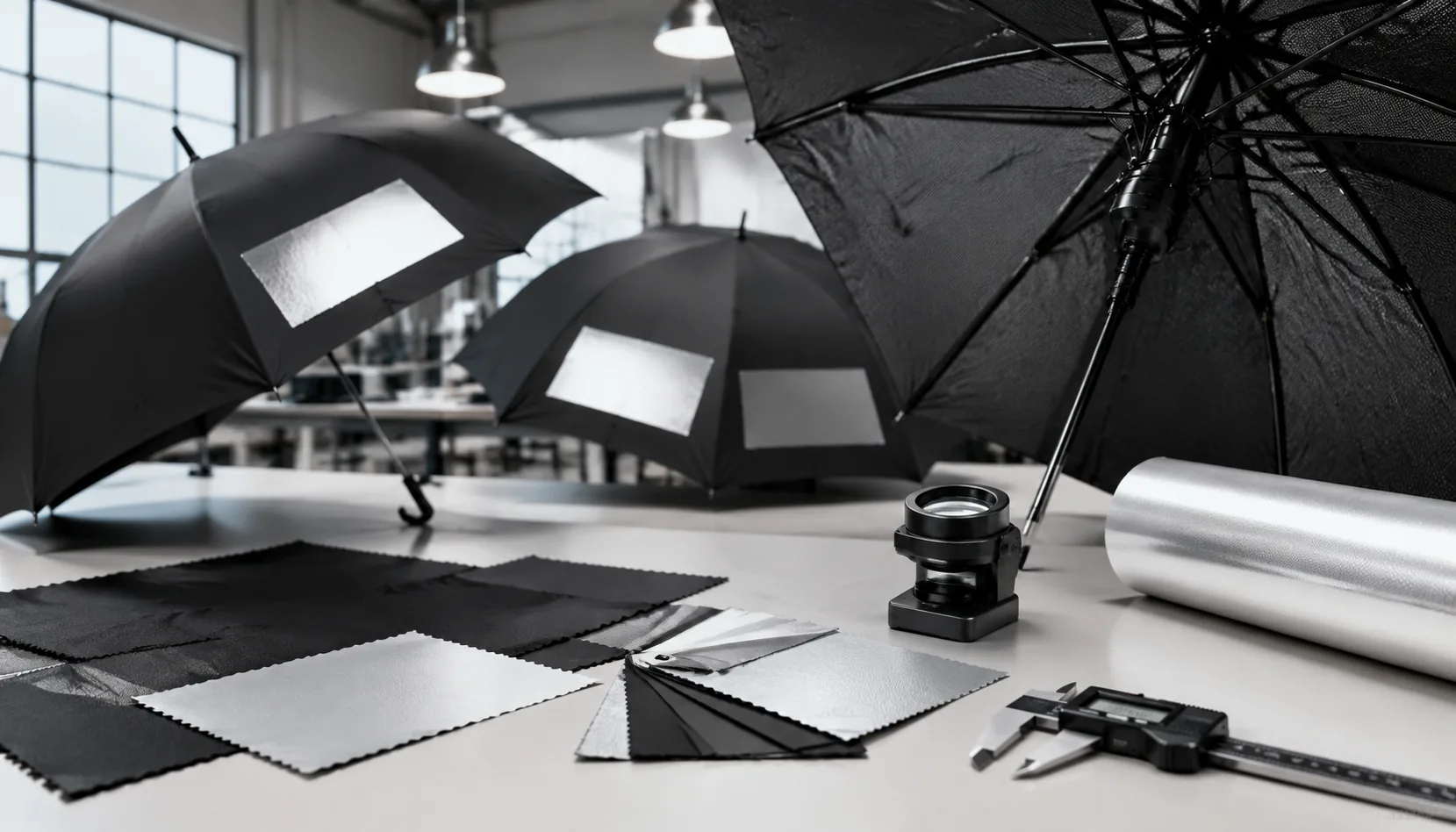
Reflective Umbrella Logos for Safety Brand Campaigns
Specify reflective logo films, panel locations, and AQL checks for promotional umbrellas used in night events, campuses,...
Read More »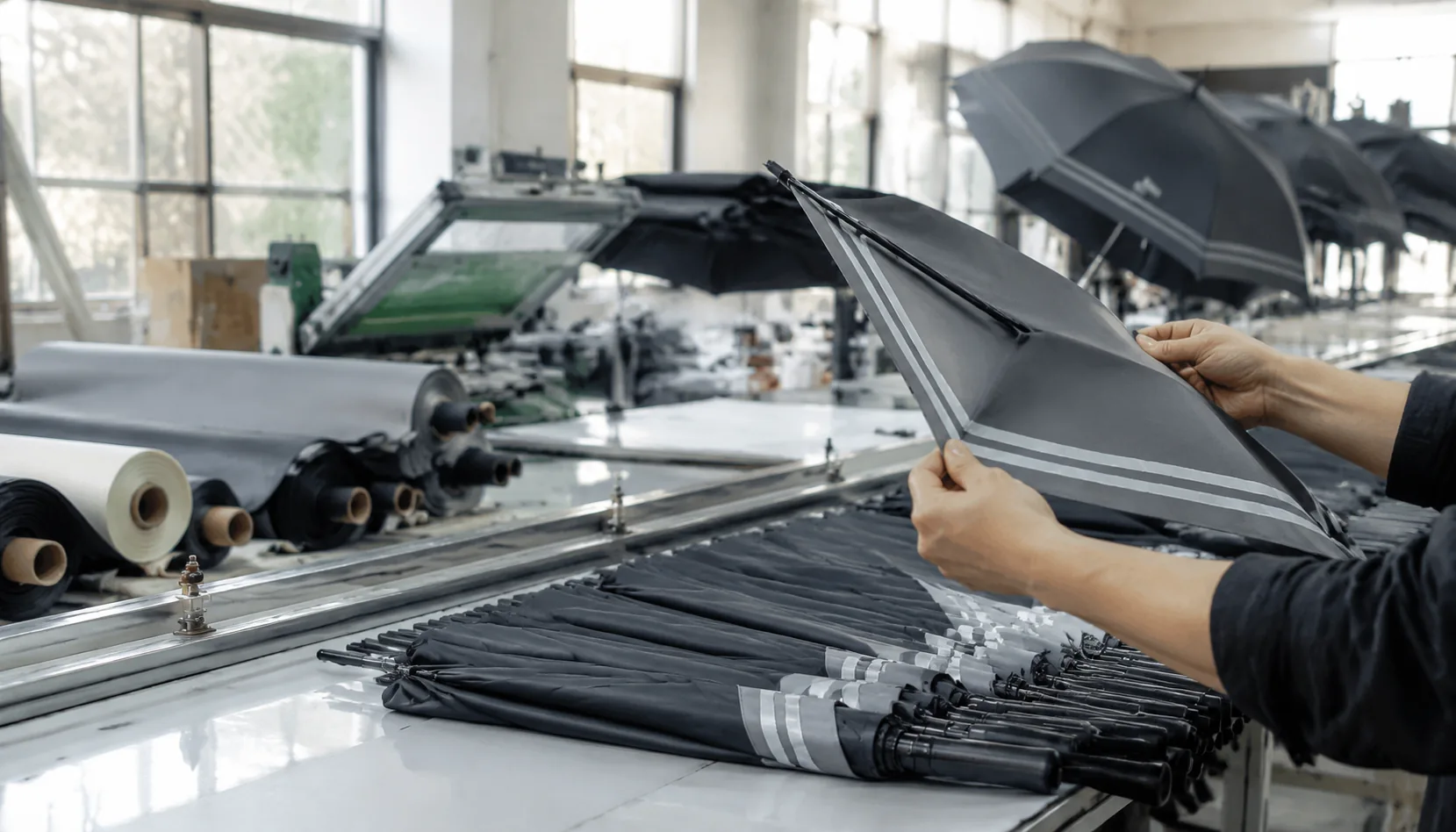
Reflective Logo Printing for Branded Umbrella Safety Campaigns
Plan reflective logo umbrellas with the right fabric, ink, rib structure, testing, MOQ, and lead time for safety campaig...
Read More »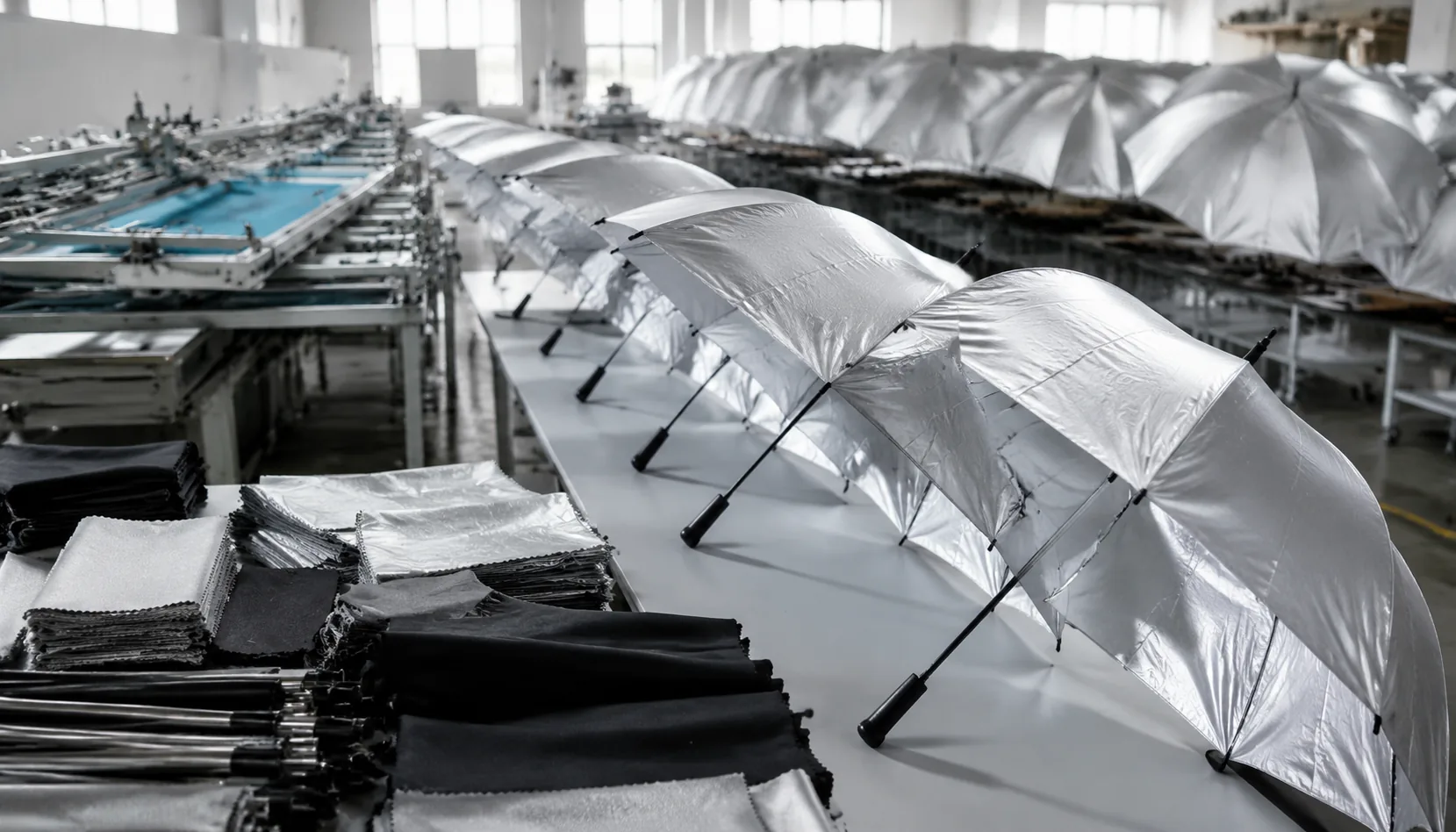
Reflective Umbrella Printing for Nighttime Brand Visibility
Plan reflective logos or trims that improve night visibility, with fabric, ink, MOQ, testing, and lead-time notes for B2...
Read More »