Reflective Safety Umbrellas for Utilities and Campuses
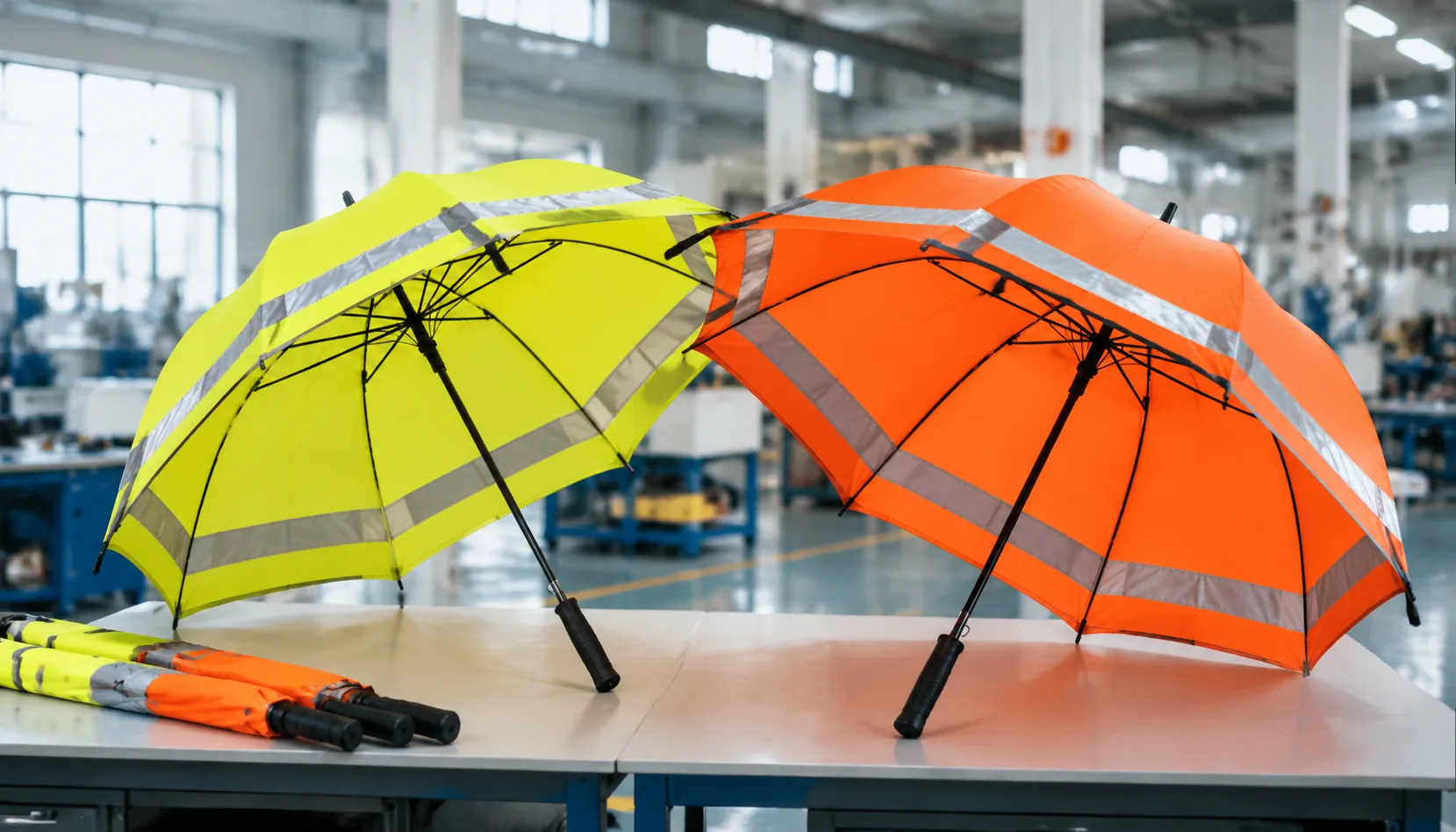
For utilities, campuses, and night-event teams, an umbrella is not just rain cover—it is a visibility item that must survive repeated handouts, patrol shifts, and wet storage. When we build reflective safety umbrellas on the factory floor in Songxia, the problems usually show up in the details: frame strength, fabric coating, reflective trim adhesion, logo placement, and inspection standards before cartons leave the line.
Define the Use Case and Visibility Requirement
The visibility requirement changes by job, and buyers should not treat every night-rain scenario the same. Utility crews working near service trucks, open manholes, substations, or roadside cabinets need umbrellas that make the worker’s outline visible from multiple angles, especially when the canopy is tilted into wind. For that use, I prefer fluorescent yellow or orange 190T/210T pongee with 360-degree reflective piping around the canopy edge plus vertical reflective panel strips on at least four alternating panels. Campus escorts and residential-life patrols usually walk slower routes through sidewalks, parking lots, and dorm entrances, so the umbrella must identify the person as authorized as much as it improves visibility. That is where high visibility umbrellas with a bold school color, reflective edge trim, and a clean logo panel work better than a fully industrial look.
Parking teams, stadium ushers, valet crews, and night-event staff need a different balance: fast recognition in crowds, rain coverage while standing still, and branding that remains readable under streetlights. A 23 inch auto-open stick umbrella is practical for campus safety umbrellas because it opens with one hand while the other holds a radio, flashlight, or guest list. For parking lots and utility yards, a 27 inch or 30 inch golf umbrella gives better coverage over a reflective vest, clipboard, and handheld scanner, but it must use fiberglass ribs or a fiberglass shaft if wind exposure is real. Steel ribs are cheaper, but after repeated gusts above 35 mph they deform and the canopy angle starts hiding the reflective zones. For double-canopy vented windproof builds, we normally target survival above 50 mph in controlled wind testing, not because every storm reaches that speed, but because gusts around buildings are unpredictable.
Reflective safety umbrellas should supplement PPE, not replace it. ANSI-rated vests, hard hats, rain suits, and task lighting still do the primary safety work for utility worker umbrellas used around traffic, energized equipment, or construction areas. The umbrella adds overhead rain protection, a larger visual footprint, and a branded safety rain gear surface for departments that need public identification. Reflective piping is best for outlining the moving shape; reflective panel strips are better for long-distance recognition; bright canopy colors give daytime contrast when reflective tape does little. For procurement, I would define the use case before asking for artwork: walking patrol, fixed post, roadside maintenance, crowd control, or shuttle-stop assistance. That decision drives canopy color, rib strength, open mechanism, logo position, and whether the umbrella should be manual, auto-open, or auto-open-close.
Choose a Frame That Handles Outdoor Work
For outdoor crews, I would not start with the canopy color; I would start with the rib material. Fiberglass ribs are the better choice for reflective safety umbrellas because they flex under gust load instead of taking a permanent bend like low-grade steel ribs. On a 23" or 27" umbrella used by utility inspectors, traffic marshals, or night maintenance teams, fiberglass also avoids the red rust marks that can bleed onto 190T or 210T pongee after repeated wet storage. Steel still has a place, but I prefer it in the shaft, not the ribs. A steel center shaft gives the umbrella vertical rigidity when the user is walking between substations, parking lots, or campus buildings, and it keeps the runner action cleaner on manual and auto-open models. Aluminum shafts save weight, but for utility worker umbrellas that may be leaned against trucks, carts, or barricades, steel is more forgiving in daily abuse.
Rib count should follow canopy size and exposure, not just a buyer’s price target. For standard high visibility umbrellas in the 21" to 23" range, an 8K frame is usually enough if the ribs are full fiberglass and the shaft wall thickness is controlled. Once the canopy moves to 27" or 30", especially for supervisors, gate teams, or campus safety umbrellas covering radios and clipboards, 16K construction spreads wind pressure more evenly and reduces canopy flutter. I am cautious with cheap 10K frames because they often look stronger on a spec sheet but use thinner ribs or weak stretchers to hit cost. A proper 16K frame adds real material and assembly labor, so it should be reserved for larger canopies, exposed walkways, and orders where failure in the field would damage the program more than a small unit-price increase.
For exposed sites such as power yards, stadium approaches, bus loops, and open campus quads, specify a double-canopy vented windproof design rather than relying only on stronger ribs. The vent lets pressure escape through the upper canopy layer, which helps the frame survive 50+ mph gust testing when paired with fiberglass ribs, reinforced tips, and a secure runner lock. This matters for branded safety rain gear because reflective tape, silkscreen logos, and heat-transfer markings add surface details that must stay aligned after repeated opening and closing. Our standard practice at ZheBrella is to test the frame and canopy together, not separately, because a good shaft with poor sewing will still invert or tear at the seam. For bulk procurement, I would also lock an AQL 2.5 inspection plan around rib symmetry, runner engagement, tip attachment, and canopy tension before approving FOB or DDP shipment.
Select Canopy Fabric and Reflective Trim
For reflective safety umbrellas, I would start with 190T pongee for standard promotional and campus use, and move to 210T pongee when the buyer expects daily field exposure, repeated wet packing, or heavier branding coverage. Both fabrics should use a water-repellent finish, but the hand feel is different: 190T is lighter and folds cleaner on 21" and 23" models, while 210T gives better tear resistance on 27" and 30" golf umbrellas used by utility crews. Fluorescent yellow, lime green, safety orange, and bright royal blue are the most practical canopy colors because they keep visibility high before the reflective tape even catches headlights. If the umbrella is part of branded safety rain gear, confirm the logo ink system early; screen printing works well on pongee, but dense white underbase layers can stiffen panels if the artwork is oversized.
Reflective tape should not be treated like decoration; placement decides whether high visibility umbrellas are actually seen from a moving vehicle. Our standard practice at ZheBrella is to run 10–15 mm reflective tape around the lower canopy edge and add vertical strips along alternating seams on 8K or 10K frames, so visibility is maintained from side angles as well as the front. For utility worker umbrellas, I prefer segmented reflective panels near the tips rather than one heavy continuous band on very flexible fiberglass ribs, because the tape has less chance to wrinkle when the canopy flexes in gusts. On campus safety umbrellas, a clean perimeter band often looks more professional and gives security staff a recognizable silhouette during nighttime crossings, parking-lot patrols, and event traffic control.
Edge binding is where cheap safety umbrellas usually fail first. The binding should be polyester, colorfast, and stitched with consistent tension so it does not pucker after wet-dry cycles; for 210T pongee, I normally specify a slightly wider bound edge because the thicker canopy puts more stress on the hem during opening and closing. Reflective safety umbrellas can also add UPF 50+ coating for daytime work, especially for facilities teams, admissions staff, outdoor event crews, and meter readers who stand in open sun between rain showers. UPF coating should be confirmed before printing because it can change fabric surface energy and affect ink adhesion. For inspection, include tape alignment, skipped stitches, edge fraying, and coating marks in the AQL 2.5 checklist rather than leaving them as vague cosmetic issues.
Balance Branding With Safety Function
Branding on safety umbrellas should start with a no-print map, not a logo mockup. On high visibility umbrellas, we normally reserve the reflective zones first: 3M-style silver tape along lower canopy edges, reflective piping on panel seams, or segmented reflective strips on alternating panels. A school crest, utility logo, or contractor mark can sit on non-reflective alternating panels at 120–180 mm wide for a 23" umbrella, larger on 27" or 30" golf umbrellas, but it should never bridge across reflective tape because the ink edge cracks and the visibility drops. For utility worker umbrellas used near traffic or substations, I prefer a repeated one-color logo on every other panel instead of one oversized center print. It keeps the umbrella readable from multiple angles while leaving the reflective geometry intact.
Sleeves and handles are underrated branding positions because they do not compete with safety function. A woven label or heat-transfer logo on the sleeve works well for campus safety umbrellas issued to security teams, event marshals, or parking staff; the sleeve is visible during storage, check-in, and distribution, while the canopy remains optimized for rain visibility. Handles can take pad printing, laser marking on metal caps, or molded color matching, but avoid tiny white logos on black EVA foam because they scuff quickly after 500–800 open-close cycles. For branded safety rain gear programs, I recommend matching the umbrella logo position with ponchos, jackets, or bag covers so procurement gets a consistent kit without turning the umbrella canopy into a billboard.
Screen print is still the most durable choice for simple high-contrast logos on 190T or 210T pongee, especially white ink on fluorescent yellow, black on safety orange, or navy on lime. Heat transfer is better for gradients, campus seals, sponsor stacks, and small text, but the transfer film must be tested on coated fabric; heavy PU, Teflon, or UV UPF 50+ coatings can reduce adhesion if the press temperature and dwell time are wrong. For reflective safety umbrellas, we run a pre-production sample under both wet rub and fold-line checks because a logo that looks sharp flat can distort near ribs after assembly. My rule is simple: reflective zones carry the safety job, print zones carry the buyer’s identity, and the two should be engineered together before cutting fabric.
Inspect Function, Trim Adhesion, and Packaging
Inspection has to start like a safety product, not a gift umbrella. For reflective safety umbrellas, specify AQL 2.5 for major defects and tighter internal checks on the reflective parts because one missed strip can defeat the purpose at night. I would call out 100% function testing on auto-open or auto-open-close units: button release, shaft lock, runner travel, spring return, and safe closing force. On manual 23" or 27" models, inspectors should still check runner smoothness and notch engagement. Rib alignment matters more than buyers think; an 8K fiberglass frame with one twisted rib will pull the canopy off-center and wrinkle the reflective tape. For utility worker umbrellas, we typically reject frames with uneven tip spacing over 8–10 mm, loose rivets, bent stretchers, or canopy tension that causes the umbrella to lean when opened.
Reflective tape adhesion should be tested after sewing and again after water exposure, not only when the tape roll arrives. The practical factory check is a cross-hatch or peel test on sample panels, plus visual inspection for lifting edges around curved canopy seams. Heat-transfer reflective trim needs controlled press temperature, dwell time, and pressure; sewn reflective tape needs clean topstitching without skipped stitches or puckering. Seam strength is just as important: a 190T or 210T pongee canopy with reflective bands can tear at needle holes if stitch density is too high or the thread is weak. The article should mention water repellency checks, such as spray testing after Teflon coating or equivalent DWR treatment, because campus safety umbrellas and high visibility umbrellas are often stored in carts, vehicles, or guard stations and then expected to perform immediately during a storm.
Packaging should be written as part of deployment control, not just shipping protection. For branded safety rain gear going to multiple campuses, substations, parking teams, or facilities departments, each carton should carry a clear label with item code, canopy color, logo version, reflective layout, size, quantity, gross weight, destination site, and PO number. Inner polybags should identify manual, auto-open, or auto-open-close mechanism to prevent mixed distribution. If the order uses 16K windproof frames, vented double canopies, or UPF 50+ coating, those specs should be on the carton mark or packing list so receiving teams can verify without opening every box. Our standard practice at ZheBrella is to photograph carton marks, open-carton packing, and final pallet condition before FOB or DDP shipment, especially when one purchase order is split across five or more delivery addresses.
Frequently Asked Questions
Are reflective umbrellas certified PPE?
Usually no. They improve visibility but should be positioned as branded rain gear unless tested and certified to a specific PPE or high-visibility standard.
What is a practical MOQ for reflective safety umbrellas?
MOQ depends on reflective trim, canopy color, and frame choice. Stock bright-color canopies with added logos are usually easier than fully custom reflective panel layouts.
What reflective details should we specify for utility or campus umbrellas?
Most B2B orders use reflective piping around the canopy edge, reflective panels on 2–4 ribs, or heat-transfer reflective logo marks. For stronger nighttime visibility, specify 360-degree reflective trim at least 10–15 mm wide.
Can reflective safety umbrellas be matched to ANSI high-visibility colors?
Umbrella fabric can be produced in fluorescent yellow-green, orange, or lime tones, but finished umbrellas are not automatically ANSI 107 certified. If certification is required, confirm fabric test reports, reflective tape performance, and labeling requirements before sampling.
What is a typical MOQ and lead time for branded reflective safety umbrellas?
A practical MOQ is usually 500–1,000 pieces per design depending on frame, fabric color, and reflective trim. Sampling typically takes 7–12 days, with bulk production around 30–45 days after sample approval and deposit.
Looking to Launch Your Custom Umbrella Line?
ZheBrella is a Zhejiang-based OEM/ODM umbrella manufacturer with 17 years of export experience. Free design, low MOQ from 100 pieces, windproof construction, full-color print.
Get Free Quote Now »People Also Search For
Related Articles
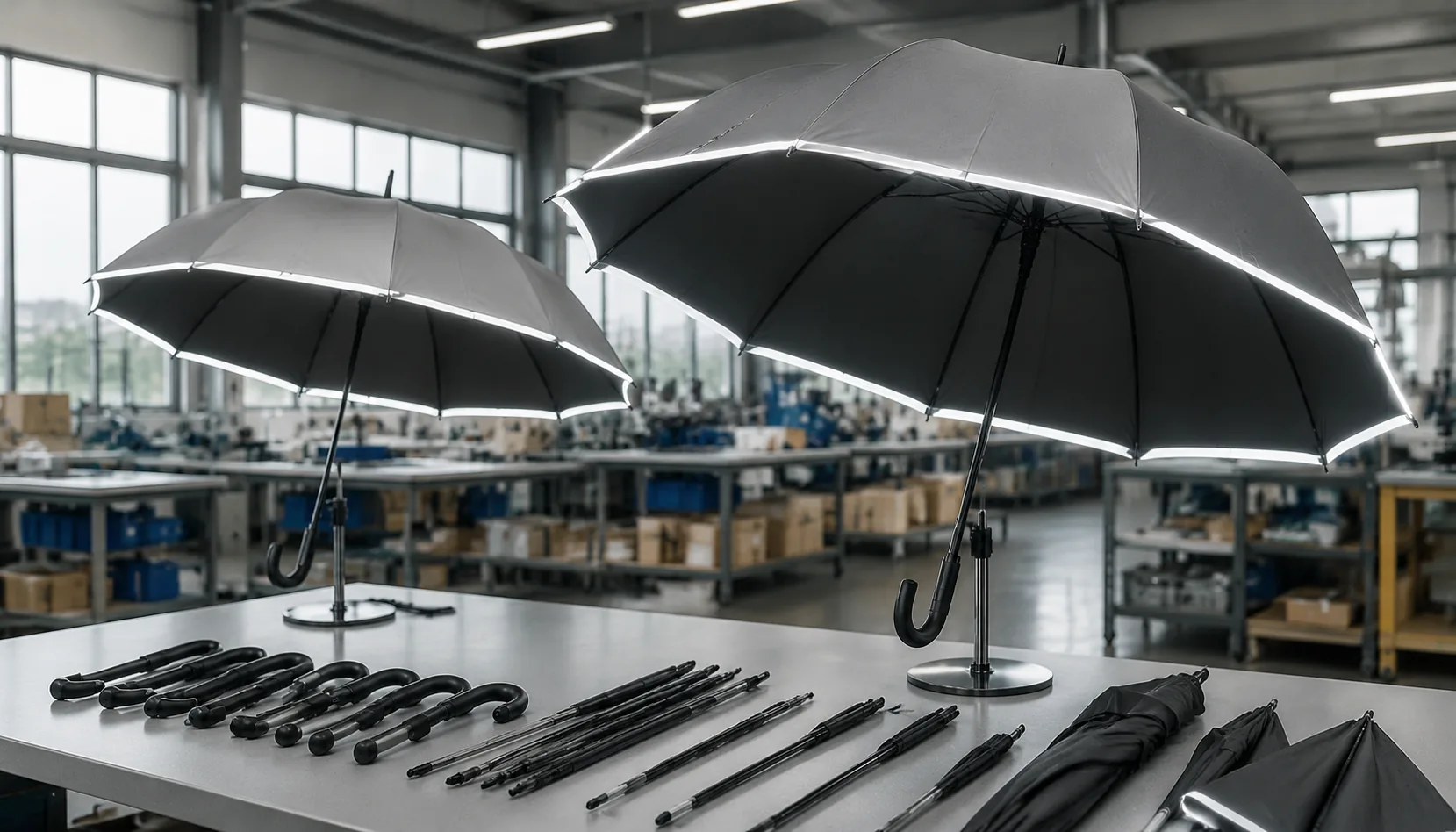
Reflective Safety Umbrellas for Corporate and Campus Programs
Specify reflective safety umbrellas with strip placement, canopy fabric, rib materials, print methods, and inspection ch...
Read More »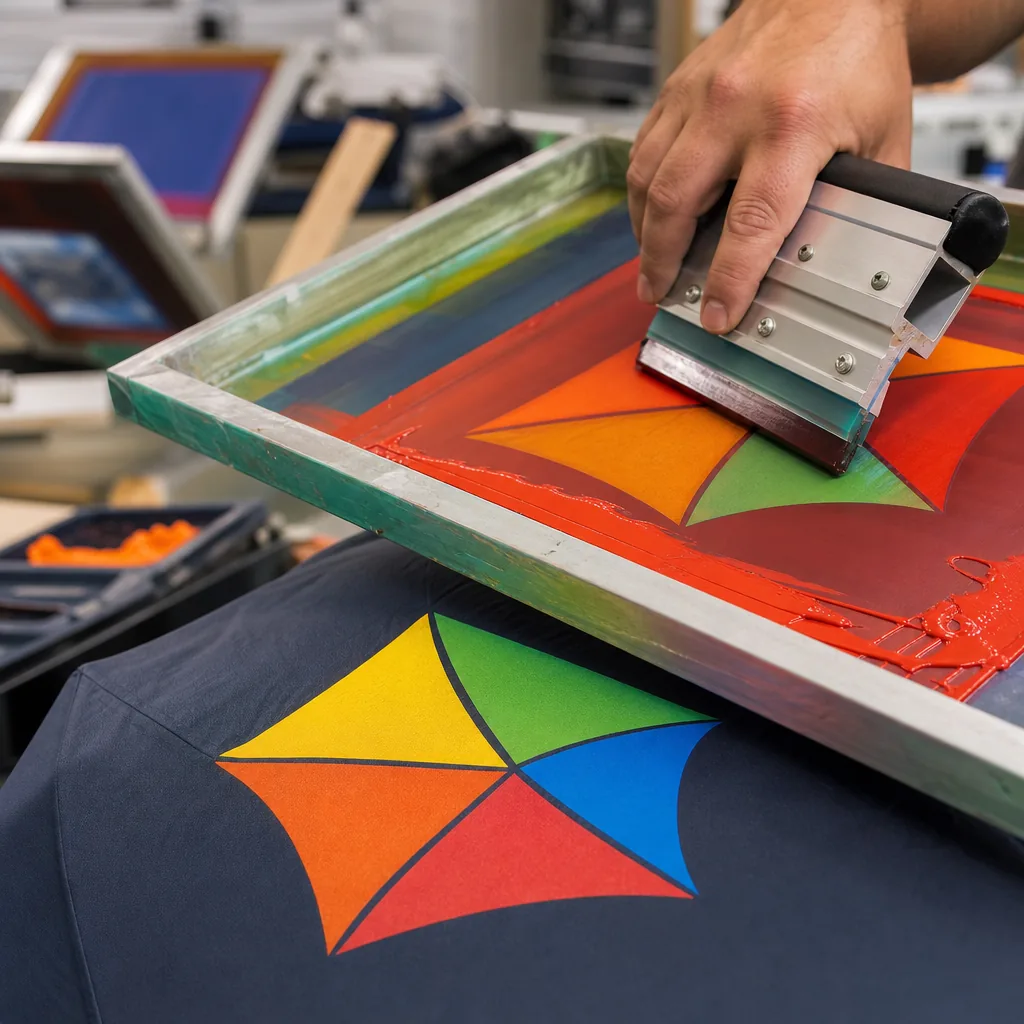
Reflective Umbrellas for Safety Programs: Materials and QA
Source reflective safety umbrellas with the right tape, prints, windproof frames, and AQL checks for utilities, campuses...
Read More »
Reflective Safety Umbrellas for Promo Buyer Spec Guide
Specify reflective safety umbrellas with 190T/210T pongee, fiberglass ribs, reflective piping, QC checks, MOQ, and shipp...
Read More »