Repeat Pattern Printing on Umbrellas for Brand Campaigns
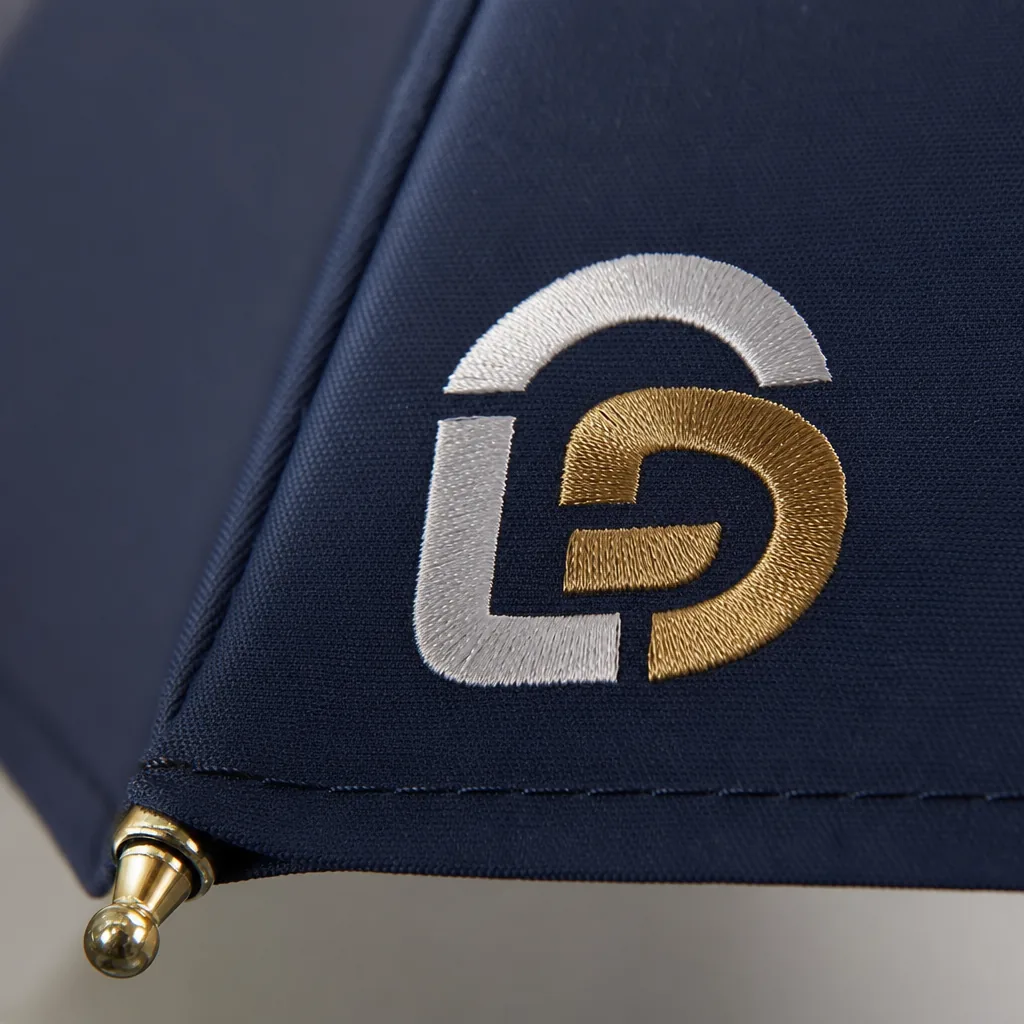
For brand campaigns, the risk is not just whether the logo looks good on a screen, but whether the pattern still lines up after cutting, sewing, stretching, and final frame assembly. On our Songxia production floor, repeat pattern umbrella printing usually succeeds or fails at the artwork repeat, panel break planning, fabric shrinkage control, and first-piece inspection before bulk output starts.
Why Repeat Patterns Work for Branded Campaigns
Repeat patterns work because they turn the whole canopy into brand memory, not just a logo placement. A single 8-inch logo on one panel disappears when the umbrella is moving through a street or event crowd; a monogram, mascot head, product icon, slogan fragment, or seasonal graphic repeated across all 8K panels stays visible from every angle. For repeat pattern umbrella printing, we usually plan the artwork around the panel shape first, then decide whether the repeat should flow across seams or reset panel by panel. On 190T or 210T pongee, a tight icon repeat prints cleaner than oversized fine-line artwork, especially with screen or heat-transfer printing. For fashion retail, an all over umbrella print can feel like a capsule accessory rather than a giveaway item, which is why buyers often pair it with matching tote bags, raincoats, or window-display graphics.
The strongest branded pattern umbrellas are not always the loudest ones. Hotels use small crest repeats, tone-on-tone coordinates, or room-key motifs because guests carry them in public without feeling like a walking billboard. Event planners use mascots, arrows, dates, sponsor icons, or short slogans so the canopy photographs well from above and in crowd shots. Licensing programs can build a full custom canopy pattern from character silhouettes, sports team symbols, or seasonal artwork, but the repeat scale must respect seam loss, rib positions, and the cap at the top. On a 23-inch umbrella, anything important placed within about 10–12 mm of the seam can be swallowed by sewing tolerance, so we mark safe zones before strike-off sampling.
From the factory floor, I prefer repeat artwork when the campaign needs recognition over many months, not a one-day logo hit. A promotional umbrella design with scattered icons works across manual, auto-open, and auto-open-close frames, and it scales well from 21-inch folding umbrellas to 27-inch golf umbrellas. Double-canopy vented windproof models need extra care because the top and lower canopy layers must not fight visually, especially when using UPF 50+ coating or darker backing. ZheBrella’s standard practice is to confirm repeat direction, panel numbering, color tolerance, and one opened-umbrella photo before mass cutting. That avoids the common mistake where the digital mockup looks continuous, but the finished canopy shows rotated icons, broken slogans, or an accidental visual stripe at every rib line.
Setting Up Artwork for Panel-Based Production
For panel-based production, the artwork is not printed as one flat circle; it is separated into 8K, 10K, or 16K triangular gores that later meet at stitched seams over the ribs. On a standard 23" straight umbrella, each 8K panel has a wide outer edge and narrow top point, so a stripe, logo chain, or geometric repeat will visually change direction unless the file is built to the actual panel template. For repeat pattern umbrella printing, I prefer starting from the frame spec first: rib count, arc diameter, finished canopy diameter, seam allowance, and whether the canopy is single-layer 190T pongee, 210T pongee, POE, PVC, or EVA. A pattern that looks balanced on a square artboard can become crowded near the top cap and broken near the ferrule if the panel taper is ignored. For 16K branded pattern umbrellas, the narrower panels make repeats look more refined, but they also double the number of seam interruptions, so small motifs usually perform better than large hero icons.
Seam-safe spacing is where many promotional umbrella design files fail. Every panel normally needs 8-12 mm sewing allowance on both long sides, plus 10-15 mm bleed at the lower hem depending on cutting method and fabric stretch. I recommend keeping important icons, QR codes, slogans, mascots, and product shapes at least 25-35 mm away from rib lines, especially on auto-open and auto-open-close frames where canopy tension is higher. If a repeat must cross a seam, use low-contrast background elements there, not faces, letters, or fine outlines. On dark 190T pongee with screen printing, registration tolerance between panels is usually around 1-2 mm in careful production; with heat transfer or sublimation, color continuity is better, but the sewing operation still creates a physical break. Our standard practice at ZheBrella is to mark rib lines, seam allowance, top cap hole, tie strap position, and panel grain direction on the proof before sampling, because those details decide whether the pattern feels intentional after assembly.
Vector artwork is the safest base for a custom canopy pattern because it scales cleanly across 21", 23", 27", and 30" umbrellas without fuzzy edges or unexpected line weight changes. For an all over umbrella print, set the repeat scale after viewing it on the real canopy diameter, not just at 100% on a monitor; 15-40 mm motifs usually read well for retail and corporate gifts, while 60-100 mm motifs create a bolder campaign look but need more careful placement away from seams. Supply AI, PDF, or EPS files with outlined fonts, embedded Pantone references, and a separate layer for the repeat tile. For sublimation on white pongee, RGB artwork can look bright on screen, but production should be checked with printed CMYK swatches because red, orange, and deep navy often shift. Before bulk cutting, I want one strike-off panel and one assembled pre-production sample inspected under AQL 2.5 logic, including seam alignment, print density, coating impact, and whether the repeat still looks balanced when the umbrella is open under tension.
Selecting Fabric and Print Method
Digital printing is the right choice when the repeat has gradients, tight registration, photo elements, or more than three brand colors. For repeat pattern umbrella printing, I usually steer buyers toward 190T or 210T pongee because the weave is tight enough to hold detail without looking muddy after water-repellent finishing. A 190T pongee canopy is lighter and cost-efficient for 21" and 23" promotional umbrellas, while 210T pongee feels denser, drapes better on 27" and 30" golf umbrellas, and gives cleaner color on large panels. Digital printing also handles an all over umbrella print better than screen printing because every panel can carry the same motif without paying for separate screens per color. The weak point is color control across repeat orders: a Pantone target still needs strike-off approval, and dark grounds may require extra ink density or a white-base process depending on the artwork.
Screen printing still wins for simple branded pattern umbrellas with one- or two-color motifs, especially logos, dots, stripes, icons, and geometric repeats. It lays down a stronger ink film than digital, so solid white, navy, red, or black marks look sharper on darker pongee. The practical limit is registration and setup: every color needs a screen, and every canopy panel must be aligned before sewing, so a six-color custom canopy pattern quickly becomes slower and more expensive than buyers expect. For campaign quantities above 1,000 pieces, though, screen printing can be very economical if the repeat is bold and not too small. Our standard practice at ZheBrella is to test print before bulk cutting, then inspect panel-to-panel alignment during sewing, because a pattern that looks straight on flat fabric can drift once fitted over 8K or 10K ribs.
Heat transfer is useful for smaller repeated accents, sleeve graphics, border motifs, or a promotional umbrella design where the main canopy stays solid and the brand pattern appears in selected zones. It is not my first choice for full repeat pattern umbrella printing because transfer films can feel heavier, and large transferred areas may affect folding, especially on compact auto-open-close umbrellas. On coated canopies, the print method must be chosen before the coating spec is locked. UPF 50+ umbrellas often use black glue, silver coating, or UV-treated pongee; these surfaces can improve sun protection but reduce ink adhesion if handled in the wrong order. For retail or outdoor event work, I prefer printing first, then applying compatible water-repellent or Teflon finishing, followed by rub, tape, and wet crocking checks. AQL 2.5 inspection should include color consistency, repeat placement, coating scratches, and seam distortion, not just open-close function.
Frame and Construction Choices That Support the Design
Frame choice decides whether a patterned umbrella feels like a cheap giveaway or a retail-grade brand item. For repeat pattern umbrella printing, I usually push buyers toward fiberglass ribs when the design has tight geometry, small logos, or continuous diagonal repeats, because fiberglass flexes under wind load without permanently bending the canopy out of shape. Steel ribs cost less and give a crisp dome on 21" and 23" straight umbrellas, but once a rib takes a set after inversion, the print alignment along the panel seams looks sloppy. An 8K frame is enough for most promotional umbrella design, while 10K or 16K gives better fabric support on larger canopies and reduces sag between ribs. That matters with an all over umbrella print because uneven tension can distort circles, grids, monograms, and checker patterns. For perceived value, a fiberglass shaft and ribs with a 190T or 210T pongee canopy reads much better than a thin steel frame with loose polyester.
Double-canopy windproof construction is worth considering when the pattern will be photographed outdoors or used at events where failure is visible. A vented double canopy lets air escape between the upper and lower layers, so the umbrella can survive gusts around 50+ mph in our internal wind-tunnel checks depending on size, rib material, and runner design. The tradeoff is sewing complexity: the upper vent layer must be cut and registered carefully, or the custom canopy pattern can look broken at the overlap. For branded pattern umbrellas, we normally keep the main repeat on the lower visible canopy and use either a simplified repeat or solid color on the vent layer. That avoids visual clutter while still giving the buyer a stronger windproof story. It also raises the finished positioning: a vented 8K or 10K fiberglass frame feels closer to retail outdoor gear than a basic rain giveaway, especially with Teflon coating, UV UPF 50+ treatment, and color-matched tips.
Opening mechanism affects both user experience and how premium the campaign feels in hand. Manual-open umbrellas are reliable and cost-efficient, but they require two-hand operation and suit lower-MOQ event orders where budget matters more than surprise. Auto-open is the sweet spot for most brand campaigns because the canopy snaps open cleanly, showing the repeat instantly; auto-open-close is better for compact 21" folding models but adds weight, spring load, and more inspection points under AQL 2.5. When the artwork is the hero, a golf umbrella often gives the best visual space: 27" or 30" panels show larger repeats with fewer cramped seam interruptions, making repeat pattern umbrella printing easier to read from 10 to 20 feet away. Our standard practice at ZheBrella is to review the frame spec together with the artwork before sampling, because the same repeat can look premium on a 30" fiberglass golf umbrella and crowded on a small folding steel frame.
Approval, MOQ, and Bulk Inspection Checklist
Approval has to start with a strike-off, not a pretty mockup. For repeat pattern umbrella printing, we first print a 60 x 60 cm fabric panel on the exact canopy material, usually 190T or 210T pongee for retail and promotional work, or POE/PVC/EVA if the buyer needs transparent panels. The buyer should check Pantone match under D65 light, repeat scale, logo spacing, edge bleed, and whether the motif still reads after cutting into 8 triangular gores. A pattern that looks balanced on flat fabric can become awkward when sewn around a 23" or 27" canopy, especially if a logo lands half on one seam and half on another. After strike-off approval, the pre-production sample should be built on the final frame: steel shaft with fiberglass ribs for windproof models, 8K/10K/16K rib count as ordered, manual, auto-open, or auto-open-close mechanism, and final coating such as Teflon water repellent or UPF 50+ UV treatment.
MOQ planning depends more on printing method and fabric purchasing than buyers usually expect. Screen printing an all over umbrella print may start around 500 to 1,000 pieces per design because screens, color separation, and alignment setup are fixed costs. Digital heat-transfer or sublimation can support lower MOQs, often 100 to 300 pieces, but unit cost rises and color control must be watched more carefully across rolls. For branded pattern umbrellas, I prefer locking the repeat file, Pantone references, canopy size, handle color, sleeve art, and carton mark before deposit, because late changes create real waste at the cutting table. Normal lead time is 7 to 10 days for strike-off, 10 to 15 days for a pre-production sample after artwork approval, and 25 to 40 days for bulk production depending on order size, printing queue, and whether FOB Ningbo/Shanghai or DDP delivery is required.
Bulk inspection should be written around AQL 2.5 for major defects and tighter internal checks for print defects, because repeat mistakes are visible from three meters away. Inspectors should open umbrellas fully and check repeat consistency from panel to panel, color drift between early and late production lots, registration at seams, ghosting, ink migration, pinholes, fabric stains, skipped stitches, loose tips, cracked handles, bent ribs, and smooth open-close function. For promotional umbrella design orders, carton labeling matters as much as the canopy: item number, PO number, colorway, quantity, gross/net weight, carton size, destination mark, and barcode must match the packing list. Our standard practice at ZheBrella is to pull samples from finished cartons, not just the sewing line, because sleeve printing, hangtags, polybags, and export cartons are where many custom canopy pattern orders fail final buyer inspection.
Frequently Asked Questions
Can repeat patterns align perfectly from one umbrella panel to the next?
Perfect alignment is difficult because each canopy panel is cut and sewn separately. The best approach is to design a forgiving repeat with safe spacing around seams.
What MOQ should buyers expect for repeat pattern umbrella printing?
MOQ depends on print method, fabric color, and frame type. Digital repeat prints can often start lower than custom-dyed fabric programs, while screen-printed repeats may require higher quantities to offset setup costs.
Can a repeat pattern line up perfectly across all umbrella panels?
Exact alignment across every seam is difficult because umbrella panels are cut and sewn individually with slight fabric and sewing tolerances. For best results, keep critical logos at least 10–15 mm away from panel edges and use a repeat pattern that can tolerate small breaks at the seams.
What print method is best for all-over umbrella patterns?
Digital printing is usually best for multi-color, gradient, or photo-style repeats, while screen printing is more cost-effective for simple 1–4 color patterns at higher quantities. For polyester pongee canopy fabric, both methods are common, but the factory should confirm color fastness and water-repellent treatment compatibility.
What MOQ should buyers expect for custom repeat-pattern umbrellas?
Typical MOQ is around 500–1,000 pieces for custom canopy printing, depending on fabric, frame style, and print method. Sampling usually takes 7–10 days after artwork approval, with bulk production often around 30–45 days after sample confirmation.
Looking to Launch Your Custom Umbrella Line?
ZheBrella is a Zhejiang-based OEM/ODM umbrella manufacturer with 17 years of export experience. Free design, low MOQ from 100 pieces, windproof construction, full-color print.
Get Free Quote Now »People Also Search For
Related Articles
Repeat Pattern Umbrella Printing for Branded Collections
Plan repeat logo, monogram, or pattern umbrellas with clear rules for panel layout, fabric choice, sampling, MOQ, and pr...
Read More »
Repeat Logo Pattern Printing for Branded Umbrella Lines
Plan repeat logo umbrella prints with panel layout, fabric choice, sampling, and QC controls for retail, promo, and priv...
Read More »
All-Over Pattern Printing for Branded Umbrella Programs
Build repeat-pattern umbrella programs with print-ready artwork, panel planning, fabric choices, and QC steps that prote...
Read More »