Selecting a Wind-Resistant Umbrella for Coastal Markets
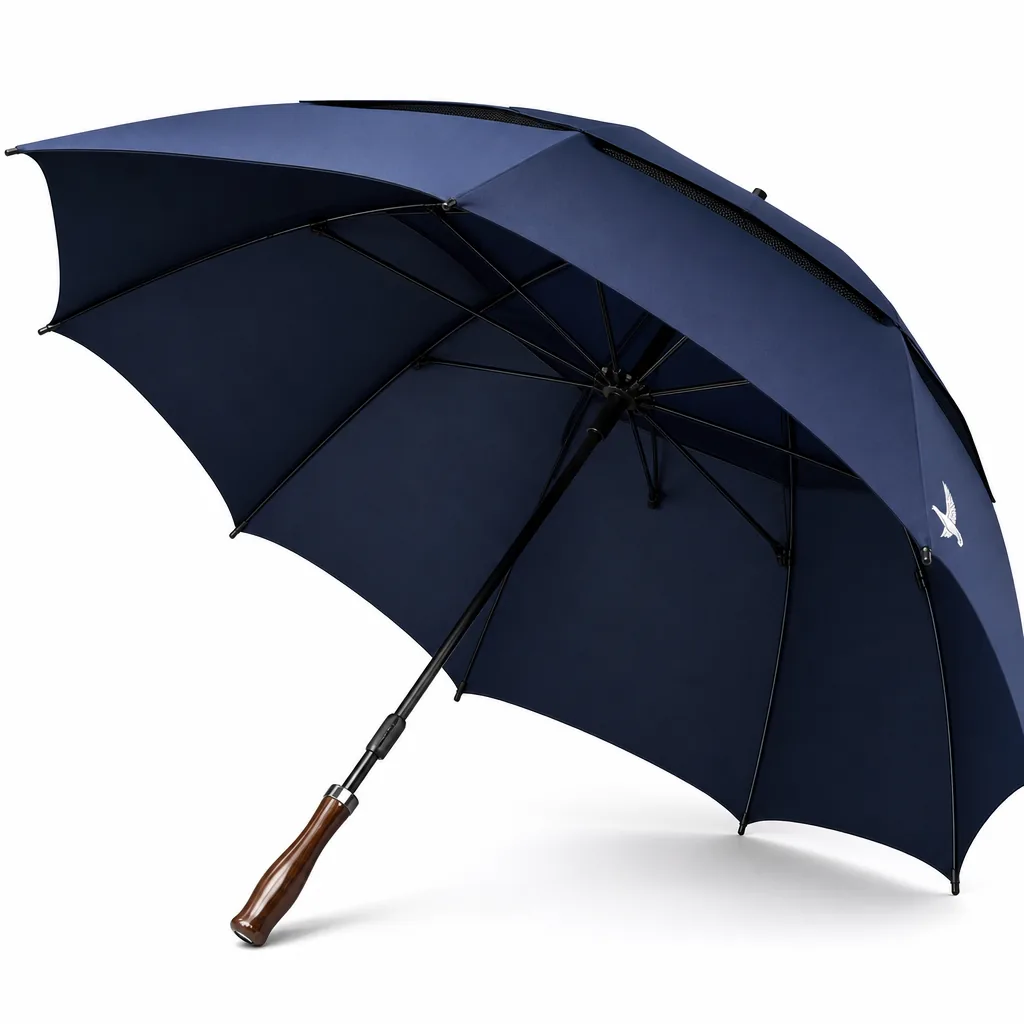
Coastal buyers know the failure pattern: a canopy turns inside out in the first strong gust, a joint loosens after a few uses, and a low-cost sample looks fine until salt air and repeated flexing expose the weak points. The right wind-resistant umbrella buyer guide starts with the hardware that actually survives shop-floor abuse and real weather—rib count, venting, shaft material, and how the frame is balanced against cost.
Why wind performance fails in common umbrella builds
Most wind failures start at the frame, not the fabric. In a real wind-resistant umbrella buyer guide, the first thing I check is whether the ribs are low-grade steel or fiberglass and whether the joint geometry has any margin for flex. Cheap steel ribs take a set, then snap at the ferrule or tip when a gust loads one side of the canopy; weak stretch points around the spoke pockets and canopy corners make it worse because the stress concentrates there instead of spreading across the frame. That is why a cover can look fine in calm handling but fail fast once it sees repeated side gusts.
Runner jam is the second common failure, and it is usually a tolerance problem. If the shaft plating is rough, the spring is weak, or the runner track is stamped badly, the mechanism binds right when the user tries to close after a wind event. With a double canopy umbrella, the vent helps relieve pressure, but it does not save a sloppy build; the umbrella still needs clean lock engagement and enough clearance for the runner to travel under load. In coastal umbrella sourcing, I treat the open/close mechanism as a wind durability part, not just a convenience feature.
Seam tear and canopy inversion usually happen together when the fabric is cut with poor panel balance or stitched with short seam allowances. A proper umbrella wind test shows that gust pressure first pulls at the seam lines, then flips the canopy if the venting and rib count are not matched to the size. That is where 8K 16K ribs matter: more support points reduce span movement, which lowers inversion risk on larger canopies. If the buyer is comparing samples, I look for even panel tension, reinforced stretch points, and a frame that survives repeated reversals without permanent distortion.
Compare vented and double-canopy structures
A vented canopy is the simplest way to cut lift without overbuilding the frame. A single-vent top lets high-pressure air escape near the crown, so the umbrella does not behave like a sail when gusts hit the underside. For a wind-resistant umbrella buyer guide, this is the first thing I look at: good vent geometry matters more than a fancy handle. In coastal umbrella sourcing, a well-cut vented golf umbrella with 8K 16K ribs and fiberglass support can handle steady coastal breeze far better than a cheap solid canopy with the same diameter, because the air has a path out instead of forcing the whole dome upward.
A double canopy umbrella uses two separate fabric layers with a gap between them, which gives wind an even cleaner exit path than a simple vent. The lower layer catches rain, the upper layer relieves pressure, and the result is less inversion under gust load. This design is usually the best fit for golf and outdoor event use where the umbrella stays open for long periods and sees repeated side wind. In umbrella wind test work, I pay attention to how the layers are stitched at the vent edge and whether the ribs are balanced; a sloppy double-canopy frame can still fold if the runner, stretcher, and tips are undersized. For buyers comparing vented vs. double-canopy options, the latter usually gives the best mix of wind relief and user comfort when the canopy size is 58 to 68 inches.
Full double-layer designs are a different animal: they use two complete fabric skins or a more enclosed construction, so airflow is controlled but weight and drying time go up. That extra material can help in harsh coastal conditions, but it is usually overkill for a daily commute umbrella because it packs larger and costs more to sew and inspect. For commute use, I usually steer buyers toward a compact vented frame with fiberglass ribs and auto-open-close mechanics; for event use, a larger double-canopy frame is safer because it keeps its shape longer under continuous wind. If the goal is a practical wind-resistant umbrella buyer guide, the rule is simple: vented for light-to-moderate daily exposure, double-canopy for stronger and longer exposure, and full double-layer only when wind performance matters more than size, weight, or lead time.
Match rib count and frame material to wind load
For a coastal program, start with the frame, not the canopy. In a real wind-resistant umbrella buyer guide, 8K and 16K are not just marketing labels: 8K usually gives you a lighter 21" to 23" walking umbrella with enough structure for city gusts, while 16K holds the arc better when the canopy is larger or the user is fighting crosswind off the water. More ribs improve shape retention and reduce panel flutter, which matters on a double canopy umbrella where the vent has to stay open without the crown collapsing. The tradeoff is simple on the factory floor: more ribs mean more ferrules, more labor, more points to inspect, and higher unit cost.
Fiberglass ribs are the default answer for coastal umbrella sourcing because they bend and recover instead of staying permanently deformed. Steel is stiffer and cheaper at the entry level, but once you put it in salt air and real gusts, corrosion and fatigue show up fast unless the coating and wall thickness are specified properly. Hybrid frames, usually fiberglass main ribs with steel shaft sections or reinforced hubs, are the practical middle ground when the buyer wants lower weight than all-steel but better stiffness than an ultra-light frame. In an umbrella wind test, that difference shows up in how long the canopy keeps its geometry before inversion or spoke twist.
If the target is beachfront retail or hotel use, I usually push 8K fiberglass for compact formats and 16K hybrid for larger stick umbrellas, especially when the canopy is 23" to 30" and the customer expects repeated exposure to side wind. A higher rib count can hold panel tension better, but once you go too far without upgrading the shaft, joints, and runner, the extra ribs just add dead weight and make opening feel sluggish. That is why the spec sheet should balance rib count, shaft diameter, and opening mechanism together instead of treating them as separate choices; otherwise you end up paying for structure the user can feel but not really trust.
Specify canopy cloth and stitching for durability
For a coastal market, start with pongee 190T if you want a balanced price point, and move to 210T when the buyer expects better hand feel, tighter weave stability, and less fabric distortion after repeated wet-dry cycles. In a proper wind-resistant umbrella buyer guide, cloth choice is not just about water repellency; it affects how much the canopy flutters, how fast the seams fatigue, and whether the edge starts to fray after a few strong gusts. A double canopy umbrella paired with 8K 16K ribs is common in coastal umbrella sourcing because the vented structure reduces uplift, but that frame only works if the cloth can stay anchored without tearing at the perimeter.
Reinforced tips matter more than most importers think. If the canopy corners are left with simple single-layer hemming, the first failure usually shows up at the rib tips, where impact, wind loading, and repeated opening all concentrate stress. We normally specify bar-tacked or boxed reinforcement at the tip pockets, plus extra fabric patching at the corners and runner points, because those spots take the highest load during an umbrella wind test. On a factory floor, I look for clean tip insertion, even seam alignment, and no puckering; sloppy assembly there becomes a field return in one season, especially in salt-air markets.
Stitching density should be high enough to hold without perforating the cloth into a weak line. For 190T and 210T pongee, tight but controlled stitch spacing, usually with consistent seam allowance and locked stress points at the spoke contact zones, gives better long-term performance than simply adding more thread everywhere. The better approach is targeted reinforcement: extra rows at the canopy hem, doubled stitching at the vent edges, and bartacks where the ribs pull against the fabric. That is the practical difference between a canopy that survives repeated coastal use and one that starts splitting at the seams after a few storms.
Ask for verification, pricing, and lead-time targets
In a wind-resistant umbrella buyer guide for coastal programs, the first thing I ask for is a real wind sample evaluation, not a glossy claim sheet. Request the exact canopy build, rib spec, and frame material: fiberglass stays and ribs behave very differently from steel when the gusts start hitting sideways, and an 8K 16K ribs construction is only useful if the tip joints, stretchers, and runner are matched to it. For a double canopy umbrella, ask how the vent is cut, stitched, and reinforced at the crown, because a bad vent seam will unzip before the frame fails. If the supplier says the umbrella passes an umbrella wind test, get the test method, sample size, speed, and failure definition in writing; “survives 50+ mph” means nothing unless you know whether that was a lab tunnel, a hand-held fan rig, or a destructive field test.
On procurement, coastal umbrella sourcing should always start with MOQ, tooling status, and a straight FOB or DDP quotation. I want buyers to compare like-for-like by asking for the same size, same fabric, same coating, and same mechanism, because an auto-open-close model with 190T pongee and UV coating will not cost the same as a manual PVC promo umbrella, and hidden differences wreck your landed-cost math. Ask for AQL 2.5 inspection at shipment, with the defect categories spelled out for canopy holes, print misregistration, crooked tips, loose ribs, and opening-force issues; if the factory cannot describe its inspection points, they are not really controlling the line.
The tradeoff is simple: premium windproof claims are worth paying for only when the use case justifies them. For resort retail, marina gift shops, and commuter programs in exposed cities, a higher unit price can still win if the product cuts breakage, returns, and replacement freight; for price-sensitive promotions, you often do better with a lighter frame and a realistic performance claim than an overbuilt spec that blows the landed cost past market tolerance. Set the production lead time in days, not vague promises, and confirm whether packaging, printing, and carton labeling are included in that timeline. That is the only way to keep a wind-resistant umbrella buyer guide tied to actual purchasing decisions instead of marketing language.
Frequently Asked Questions
Is a double-canopy umbrella always better in strong wind?
Not always. Double-canopy construction improves venting and can reduce inversion, but it adds fabric, sewing complexity, and cost. For some markets, a well-built vented single canopy with fiberglass ribs is the better value.
Should coastal buyers choose fiberglass over steel?
Usually yes, if the goal is flexibility under gusts and lower breakage risk. Steel can still work in budget programs, but buyers should be careful about rust protection and whether the frame is too rigid for frequent wind loading.
For coastal retail, when should a buyer choose 8K ribs instead of 16K ribs?
Use 8K when you need better wind flexibility at a lower landed cost and the umbrella already has a vented canopy plus fiberglass ribs. Choose 16K mainly for visual merchandising or premium positioning, because the added ribs increase weight and component cost without always improving real wind performance.
What frame materials hold up better in salty, humid coastal markets?
Fiberglass ribs with an aluminum or coated steel shaft are the most common balance of corrosion resistance, durability, and price. For beach-town programs, buyers should also specify rust-resistant springs, plated runners, and canopy fabric with water-repellent coating to reduce failure from salt exposure.
What wind-test target is practical for a wholesale coastal umbrella program?
For most mid-range coastal assortments, buyers typically target stable performance in the 30-40 mph range, depending on size and canopy design. Ask suppliers for the exact test setup, pass criteria, and whether the sample was tested open static, in gust simulation, or after repeated open-close cycles.
Looking to Launch Your Custom Umbrella Line?
ZheBrella is a Zhejiang-based OEM/ODM umbrella manufacturer with 17 years of export experience. Free design, low MOQ from 100 pieces, windproof construction, full-color print.
Get Free Quote Now »People Also Search For
Related Articles
Double-Canopy Windproof Umbrella Builds for Retail Buyers
Learn how double-canopy vents, rib choice, and frame layout improve wind resistance, and what specs retailers should req...
Read More »
UV Sun Umbrella Buyer Guide for Resorts and Outdoor Use
Learn how to specify sun umbrellas for resorts, outdoor events, and branded programs with the right UV fabric, frame str...
Read More »Double-Canopy Windproof Umbrellas: Buyer Selection Guide
Compare double-canopy builds, vent vents, rib materials, and MOQ so buyers can source windproof umbrellas that match ret...
Read More »