Umbrella Frame Riveting Process for Strong OEM Builds
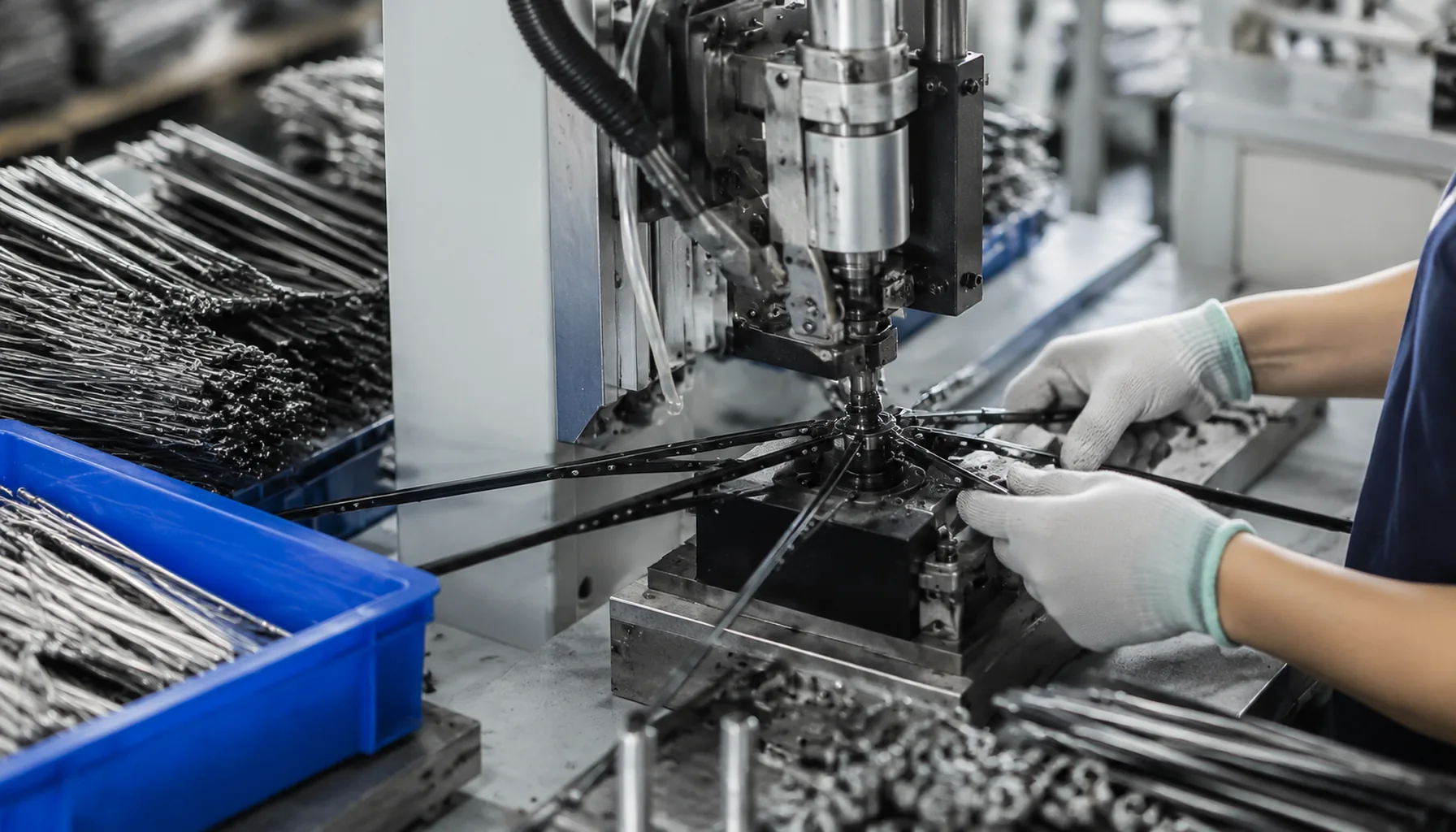
A weak frame usually shows up too late for buyers: loose ribs, rough runner travel, or returns after the first windy season. On our Songxia production floor, the umbrella frame riveting process is where strength is built in, with controlled rib alignment, clean rivet setting, runner assembly checks, and in-line pull tests before any canopy is mounted. Getting this step right protects OEM lead times, carton quality, and your customer’s confidence.
Where Rivets Matter in an Umbrella Frame
Rivets matter most where the frame changes direction under load: the rib-to-stretcher joint, stretcher-to-runner joint, rib-to-notch joint at the top, and the small tip connection near the canopy edge. In a standard 23" straight umbrella with 8K steel ribs, that usually means 16 major moving rivets plus top notch and runner connections; on 10K or 16K OEM umbrella frames, the count rises fast, and so does the chance of uneven action if the riveting station is not controlled. The umbrella frame riveting process is not just about fastening two parts together. It sets the hinge clearance that decides whether the umbrella opens cleanly or feels gritty, loose, or crooked after 200 cycles.
The stretcher joints take the worst punishment because they transfer hand force from the runner into the ribs every time the umbrella opens. If the rivet is over-pressed, the joint binds, the auto-open spring has to work harder, and the canopy may not fully tension on 190T or 210T pongee panels. If it is under-pressed, the stretcher wobbles, the rib angle changes under gusts, and rib joint durability drops sharply in wind. On fiberglass ribs we allow a little more flex travel than on electroplated steel ribs, but the rivet head still needs a clean mushroom shape with no cracking, burrs, or off-center punch marks.
Loose riveting shows up before a lab test catches it: the runner rattles, the notch does not seat evenly, tips sit at different canopy heights, and the umbrella feels weak when shaken open. In umbrella frame assembly, our standard practice at ZheBrella is to check hinge movement by hand, then pull samples into cycle testing and wind checks, because a frame can pass visual inspection and still fail in a 50+ mph gust if the joints have side play. For umbrella production quality, AQL 2.5 inspection should include rivet head diameter, free hinge rotation, runner alignment, and tip symmetry, not only canopy sewing and print placement.
Material Choices: Steel, Fiberglass, and Hybrid Frames
Material choice changes the riveting setup more than buyers usually expect. Steel ribs and stretchers tolerate a tighter rivet upset because the hole edge has good bearing strength, but the danger is burrs: a punched 0.1–0.2 mm burr around a rib hole can scrape the canopy, create uneven rotation, or crack the paint after 500 open-close cycles. In our umbrella frame riveting process, low-carbon steel ribs are normally hole-punched before electrophoretic coating or black zinc plating, then spot-checked with a go/no-go pin so the rivet shank does not bind. For 8K and 10K promotional frames, we commonly use semi-tubular iron or brass-plated rivets with controlled flare height; for 16K rain umbrellas, the rivet diameter and head profile need more attention because every extra joint multiplies friction. If the frame is painted after assembly, the rivet barrel must still rotate freely, so masking or post-coating breakaway checks are not optional.
Fiberglass ribs behave differently because the material is strong in bending but less forgiving at drilled or punched holes. A steel rivet upset too aggressively can crush the fiberglass wall, especially on thin 2.8–3.5 mm rib profiles used in compact 21 inch and 23 inch umbrellas. That is why washer use matters: a small stainless or nylon washer spreads load at the runner-side and tip-side joints, reducing oval holes and improving rib joint durability after wind flexing. Fiberglass also throws abrasive dust when drilled, so tooling must stay sharp and extraction should be used; a fuzzy hole edge will not cleanly seat the rivet head. For higher-grade OEM umbrella frames, we prefer pre-formed holes from the pultrusion supplier or CNC drilling with chamfer control, followed by manual rotation checks at each joint. Fiberglass does not rust, but the rivet, spring, and runner hardware still need nickel plating, stainless steel, or Dacromet-style finishes if the umbrella will be sold in coastal or golf markets.
Hybrid frames give the best wind performance when the riveting is engineered around different material stiffness, not just copied from an all-steel bill of materials. A common construction is steel shaft and stretchers with fiberglass ribs, or steel inner ribs with fiberglass outer sections for double-canopy vented windproof umbrellas rated around 50+ mph in tunnel testing. At the transition joint, the rivet stack often includes a washer or bushing because steel edges can saw into fiberglass during repeated inversion recovery. The umbrella frame assembly team must control rivet compression by station, not by feel; one over-flared rivet can make the canopy pull off-center even if the 190T or 210T pongee sewing is correct. For umbrella production quality, we inspect joint rotation, rivet head cracks, plating coverage, and red-rust resistance under AQL 2.5 before packing. Buyers comparing FOB quotes should ask whether corrosion-resistant finishes are applied before or after riveting, because that one detail often separates a frame that survives one rainy season from one that comes back as a warranty claim.
Setting Rivet Pressure Without Crushing Joints
Rivet pressure is not set by guesswork; it is set by joint behavior after the frame has been cycled, not just by how the rivet head looks under the press. In the umbrella frame riveting process, the pneumatic machine usually runs in a controlled window around 0.45–0.65 MPa for common 23" and 27" steel-shaft frames, but the exact pressure depends on rivet diameter, rib material, washer stack, and whether the joint is steel-to-steel, steel-to-fiberglass, or aluminum-to-fiberglass. Too little pressure leaves side play at the stretcher joint, which becomes a clicking sound after 50–100 open-close cycles. Too much pressure flattens the rivet head and pinches the rib fork, so the frame opens stiffly and the canopy tension pulls unevenly. For OEM umbrella frames, I want a joint that rotates freely under finger pressure but has no visible lateral shake when the rib is lifted and released.
8K frames are easier to stabilize because there are fewer rib and stretcher intersections, but they still expose bad riveting when the canopy is 210T pongee with a tight sewing allowance. A crushed joint on one rib can pull the panel seam off-center by 3–5 mm, especially on auto-open models where spring force snaps the frame out fast. On 16K frames, the problem multiplies: twice the rib count means more rivets, more accumulated tolerance, and more chances for one over-pressed joint to disturb the whole umbrella frame assembly. For 16K golf or fashion umbrellas, we normally separate pressure settings by joint type: lower pressure for fiberglass rib tips and higher pressure for main steel stretcher pivots. That keeps rib joint durability consistent without making the umbrella feel loose after a wind test or carton compression during FOB shipment.
Good factories verify pressure with both in-line checks and destructive checks, not only operator experience. Our standard practice at ZheBrella is to sample every production batch under AQL 2.5, cycle selected frames 300–500 times, and inspect rivet heads for ovaling, cracking, and washer bite marks before canopy attachment. If a double-canopy vented windproof model is rated for 50+ mph, the riveted joints must absorb twisting without locking up, because fiberglass ribs flex while steel stretchers resist. This is where umbrella production quality is won or lost: a frame can look straight on the assembly table but fail in use if the riveting pressure has squeezed the knuckle too tight. For promotional runs with tight MOQs and 25–35 day lead times, locking the pressure setting during the first-article sample prevents the worst outcome—10,000 umbrellas that open cleanly on day one but develop sloppy rib movement after the event season.
In-Line Strength and Motion Checks
The fastest way to catch weak riveting is to test motion before the frame leaves the umbrella frame assembly line, not after the canopy is sewn on. In our umbrella frame riveting process, every operator checks smooth open-close action by hand, then the line QC pulls samples for 20 to 50 full cycles depending on order size and mechanism type. A manual 23" steel 8K frame should open without rib chatter, crown tilt, or runner scraping on the shaft. For auto-open and auto-open-close models, we check trigger response, spring rebound, and whether the runner reaches full lock without needing a second push. If the button feels heavy or the runner stops 3 to 5 mm short of the lock hole, the problem is usually rivet pressure, burrs around the rib joint, or a misaligned stretcher—not the handle.
Rib pull testing is where weak OEM umbrella frames usually reveal themselves. For standard promotional builds, we apply a controlled pull at the rib-stretcher joint and main rib tip area, looking for rivet rotation, hole elongation, or cap separation. Steel ribs can tolerate tighter riveting pressure, but fiberglass ribs need cleaner hole punching and flatter rivet heads because crushed glass fiber will fail later in wind. For 8K and 10K frames, we compare opposite ribs to catch uneven press settings; on 16K golf umbrellas, we also check symmetry because one tight joint can distort the canopy arc. Runner lock engagement is checked with the frame fully opened and lightly shaken: the runner must stay seated, the notch must not slip, and the spring catch should release cleanly without shaving metal or plastic.
Sampling under AQL 2.5 keeps these checks disciplined instead of depending on a foreman’s mood. For export orders, our standard practice at ZheBrella is to separate critical, major, and minor defects: a loose rivet at a load-bearing rib joint is major, a failed auto-open trigger is major or critical depending on buyer spec, and cosmetic rivet head scratches are usually minor if they do not cut the canopy. The umbrella frame riveting process should be documented by batch, machine, operator, and inspection result, especially for repeat OEM programs using the same 190T pongee or POE canopy with different logos. Good umbrella production quality is not just a final AQL report; it is catching rib joint durability problems while frames are still bare, adjustable, and cheap to rework. Once fabric, tips, tie wrap, and packaging are added, every missed rivet costs real time.
Procurement Specs That Reduce Frame Failures
The fastest way to reduce frame failures is to specify the frame before you discuss price. For OEM umbrella frames, write down whether the shaft and ribs are black electroplated steel, zinc-plated steel, aluminum, fiberglass, or mixed construction. A 23 inch straight umbrella with 8K steel ribs behaves very differently from a 27 inch golf umbrella with 10K fiberglass ribs and a double-canopy vented cover. If the umbrella frame riveting process is not matched to the material, you will see loose joints, cracked rib tips, or stiff opening after only a few cycles. I tell buyers to call out rib count, rib thickness, stretcher thickness, runner material, and joint type on the purchase order, not just on the sample tag. For promotional orders, 8K is usually enough; for retail windproof builds, 10K or 16K with fiberglass ribs is safer, especially if the canopy is 210T pongee with Teflon or UPF 50+ coating, which adds load in wind.
Rivet finish matters more than many buyers realize. Nickel-plated, black-coated, brass-color, and stainless rivets all age differently, especially in coastal markets or outdoor event use. If the umbrellas are going to Florida, the Gulf states, Southeast Asia, or marine resorts, ask for a salt-spray target such as 24, 48, or 72 hours, and make sure the test includes rivets, springs, shaft, and exposed rib joints, not only the handle hardware. Rib joint durability should be defined with cycle testing: 500 open-close cycles for basic giveaways, 1,000 cycles for normal retail, and 2,000+ cycles for premium auto-open or auto-open-close models. For wind claims, do not accept vague wording like “wind resistant.” Use a test target such as surviving 50+ mph in a wind tunnel without permanent rib deformation, broken rivets, or canopy inversion damage beyond recovery.
Approval samples should lock the actual umbrella frame assembly, not just the canopy color and logo print. Our standard practice at ZheBrella is to keep a sealed pre-production sample with the approved rivet finish, rib count, runner tension, spring force, canopy fabric, and packing method, then inspect bulk production against AQL 2.5 for critical frame defects. Buyers should also define FOB or DDP packing requirements early: inner polybag thickness, carton size, units per carton, corner protection for long 30 inch golf umbrellas, and whether cartons must pass drop testing for courier delivery. Poor packing can bend shafts and loosen rivets before the goods reach the warehouse, so logistics is part of umbrella production quality. The umbrella frame riveting process should be checked again during inline inspection, not only final inspection, because once 10,000 pcs are sewn and packed, replacing weak rivets becomes slow, messy, and expensive.
Frequently Asked Questions
Are fiberglass ribs riveted the same way as steel ribs?
Not exactly. Fiberglass ribs need controlled pressure and often different hole preparation to avoid splitting or crushing, while steel ribs require burr and rust-control checks.
What frame tests should buyers request before mass production?
Ask for PP sample opening-cycle tests, runner lock checks, rib joint pull checks, and visual inspection for loose or over-tight rivets. For bulk lots, apply AQL 2.5 with critical defects defined separately.
What riveting checks should buyers request before canopy mounting?
Ask for in-line checks on rivet tightness, rib alignment, runner movement, and pull resistance at the rib joint. For OEM orders, factories commonly inspect samples per production lot and rework loose or over-compressed rivets before fabric assembly.
Can different frame materials require different riveting settings?
Yes. Steel ribs, aluminum ribs, and fiberglass components require different rivet pressure and tooling because over-riveting can restrict movement while under-riveting causes joint wobble. Buyers should confirm that the factory sets riveting pressure by frame type and umbrella size.
How does frame riveting affect bulk umbrella lead time?
Riveting is usually completed before canopy sewing and final assembly, so delays often occur if custom frame hardware or special rib materials are not ready. For OEM umbrella production, normal bulk lead time is often 30-45 days after sample approval, depending on order quantity and material availability.
Looking to Launch Your Custom Umbrella Line?
ZheBrella is a Zhejiang-based OEM/ODM umbrella manufacturer with 17 years of export experience. Free design, low MOQ from 100 pieces, windproof construction, full-color print.
Get Free Quote Now »People Also Search For
Related Articles
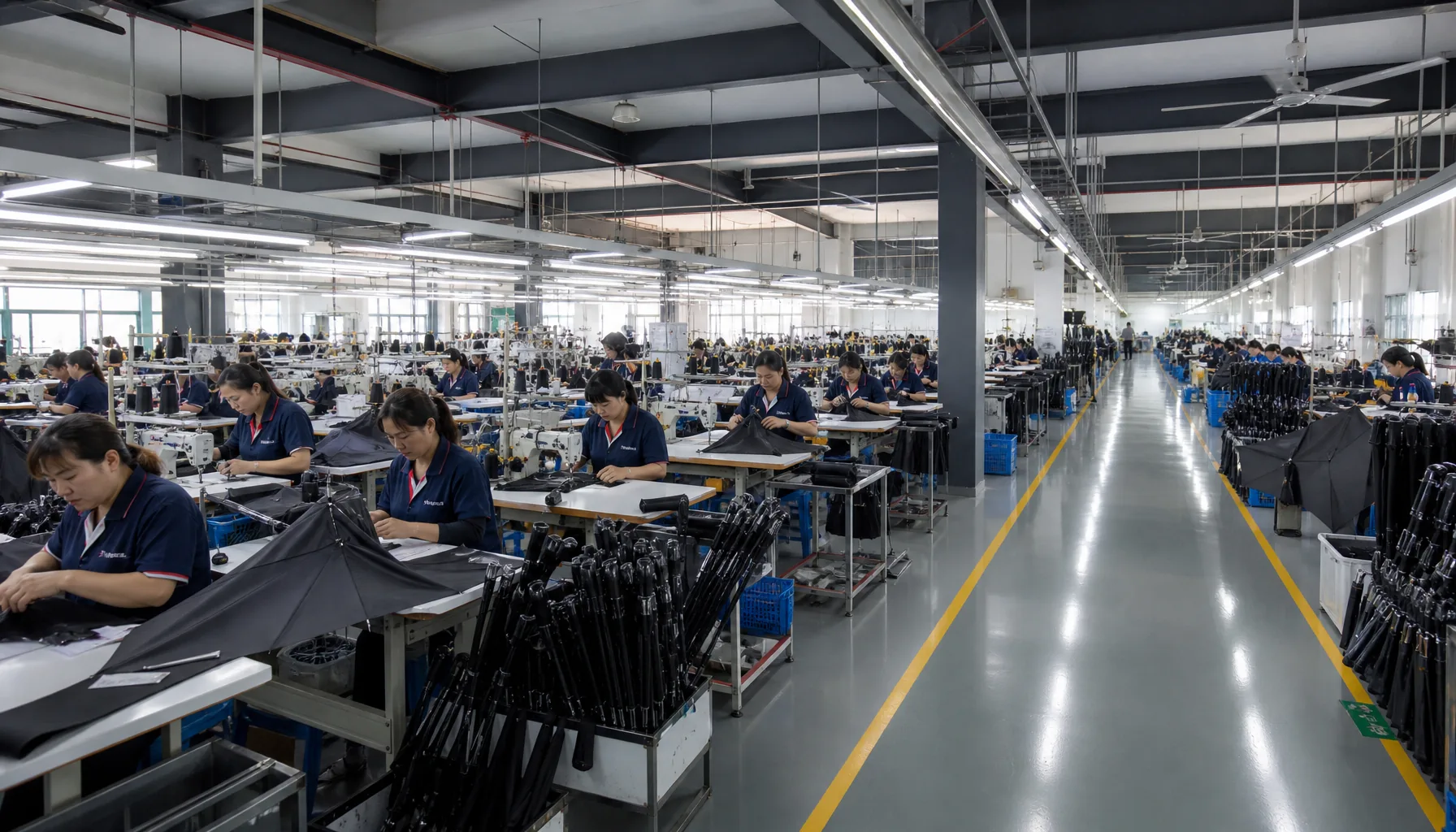
Umbrella Frame Riveting Process Controls for OEM Durability
See how rivet diameter, setting force, washer fit, and in-line pull tests prevent loose ribs, noisy frames, and AQL 2.5 ...
Read More »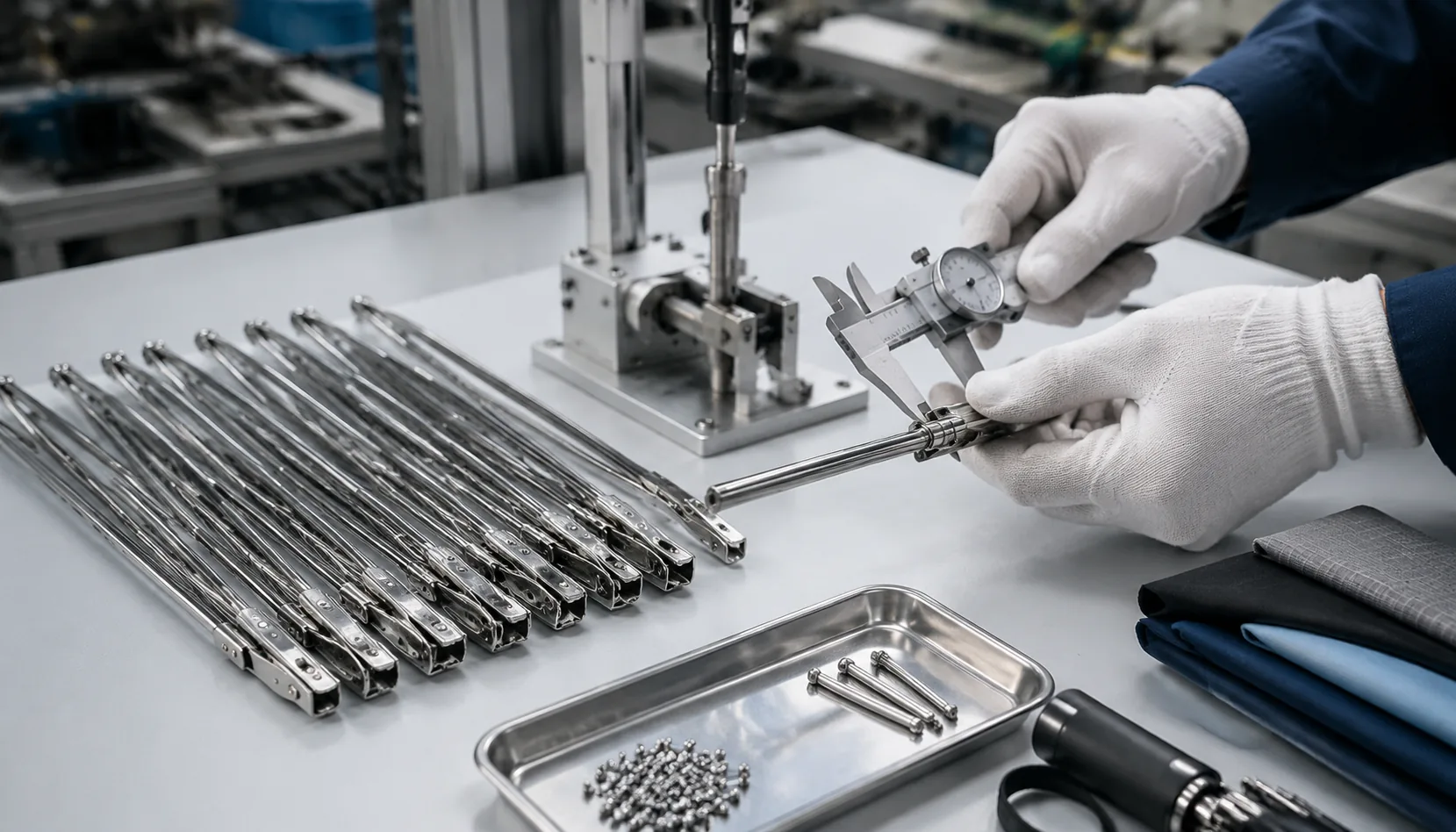
Umbrella Frame Riveting Quality: Tolerances and Pull Tests
Specify rivet fit, pull strength, and in-process checks to reduce loose ribs, canopy sag, and field failures in OEM umbr...
Read More »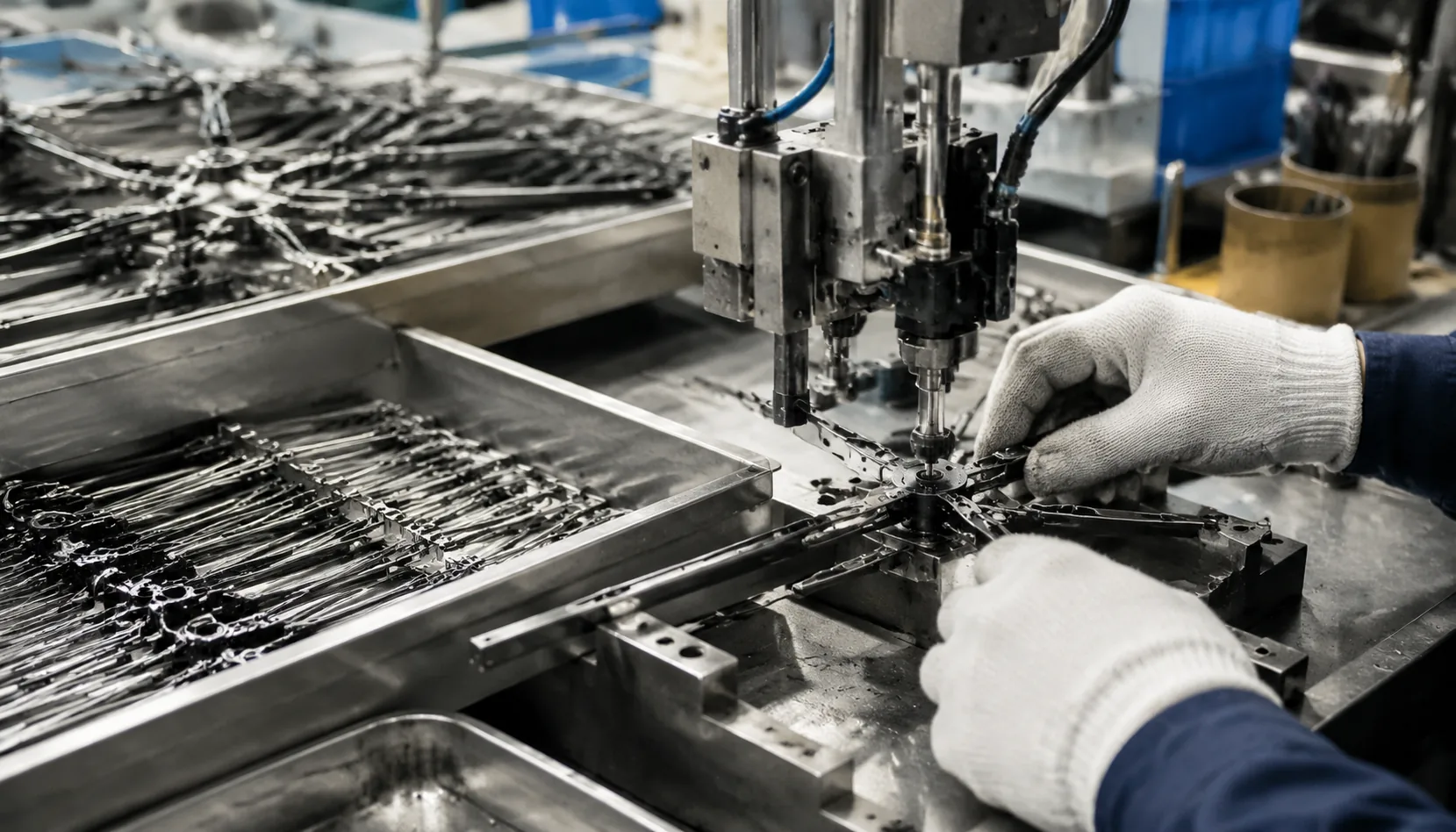
Umbrella Frame Riveting Process Control for Bulk Orders
See how rivet size, hole alignment, and pull-force checks improve umbrella frame durability across fiberglass, steel, 8K...
Read More »