Umbrella Frame Riveting Quality: Preventing Loose Joints
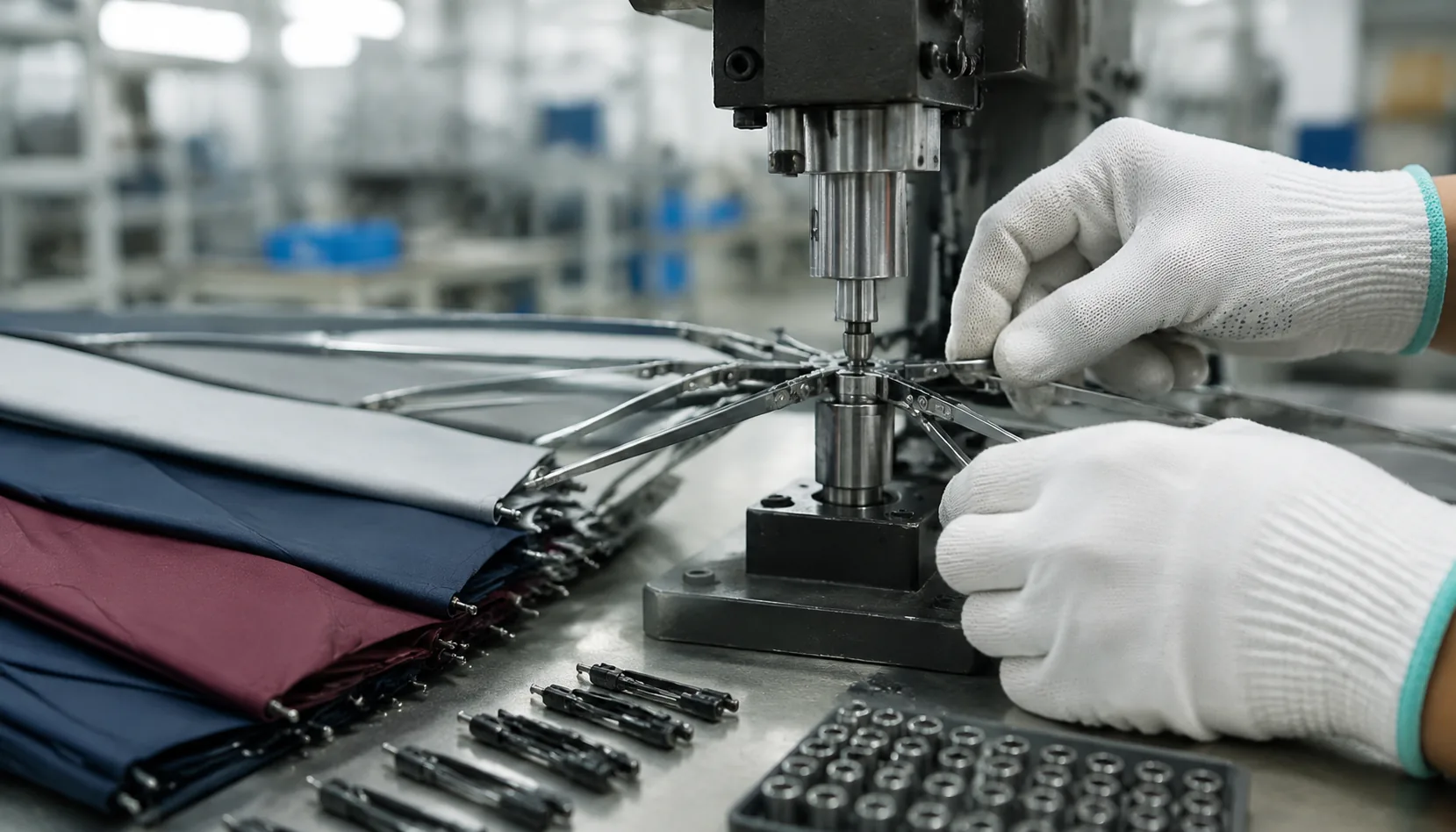
Loose rib joints usually start with small choices buyers never see on a quote sheet: rivet alloy, hole clearance, setting pressure, and how often the line checks pull resistance. In our Songxia workshop, umbrella frame riveting quality is controlled before final assembly, because one weak pivot can turn a full OEM batch into returns after wind testing or retail use. Clear tolerances and in-line inspections keep frames tight without slowing bulk production.
Why Riveting Quality Drives Frame Durability
Rivets are the small parts that decide whether a frame feels tight after 500 openings or starts rattling in the first shipment. In umbrella frame assembly, each rivet ties movement points together: rib to stretcher, stretcher to runner, rib tip linkage, top notch, and sometimes auxiliary braces on windproof models. The rivet shank must fill the hole, and the peened head must lock the parts without crushing them. If peening is light, the joint develops side play; if it is over-peened, the rib eye deforms and the frame binds during opening. Good umbrella frame riveting quality is not about making the joint immovable. It is about controlled rotation with no axial looseness, no cracked plating, and no sharp burrs that cut 190T or 210T pongee during cycling.
Poor riveting shows up first as wobble, clicking noise, uneven canopy tension, and slow return on manual or auto-open frames. On steel ribs, loose rivets usually enlarge the punched hole because the harder rivet works like a file during wind loading. On fiberglass ribs, the bigger risk is stress concentration around the connector, especially when a 23-inch or 27-inch frame is pushed past 40–50 mph gusts. A proper rivet joint inspection should check head diameter, head height, hole alignment, rotation smoothness, and pull-out resistance, not just whether the rivet is present. In OEM umbrella manufacturing, we typically sample moving joints under AQL 2.5, then add 100% checks at high-risk stations when a new frame tool, new rivet batch, or new rib material is introduced.
8K umbrella frames are easier to control because there are fewer moving joints and more space around each stretcher connection, but one bad rivet is still very visible: the canopy panel nearby loses tension and the umbrella opens asymmetrically. A 16K frame spreads load more evenly and looks more premium, yet it doubles many inspection points and increases the chance of one loose stretcher causing noise or uneven closing. The production mistake I see most often is using the same riveting pressure across 8K, 10K, and 16K designs without adjusting for rib gauge, washer use, or joint stack thickness. For reliable umbrella frame riveting quality, the line needs first-piece approval, hourly destructive checks, and operators trained to reject oval holes, tilted rivet heads, and joints that rotate with a gritty feel.
Rivet Materials, Diameters, and Hole Tolerances
Rivet choice starts with the frame material and the umbrella’s duty cycle, not with the cheapest fastener in the bin. Low-carbon steel rivets are still common on 8K umbrella frames for promotional and mid-range rain umbrellas because they set quickly, hold shear well, and match painted or zinc-plated steel ribs. Brass rivets are softer and cleaner for plated fashion frames where corrosion staining would be visible, but they can loosen faster if the hole is already sloppy. Stainless rivets cost more and require tighter press control, yet they are worth specifying for coastal retail programs, golf umbrellas, and OEM umbrella manufacturing where salt-spray performance matters. In our standard umbrella frame assembly, most rib and stretcher joints use rivets in the 1.6 mm to 2.5 mm range, with heavier 27 inch and 30 inch frames sometimes moving to 2.8 mm or 3.0 mm at high-load pivot points.
Hole tolerance is where umbrella frame riveting quality is usually won or lost. An oversized punched hole gives the rivet room to rock before the canopy is even sewn on; after 500 to 1,000 open-close cycles, that small clearance becomes visible play, rattling stretchers, and uneven canopy tension. For a 2.0 mm rivet, we normally want the hole only slightly larger than the shank, often around 2.05 mm to 2.12 mm depending on coating thickness and whether the rib is steel, aluminum, or a composite insert. Go too tight and the press forces the rivet through by deforming the rib wall, leaving an oval hole that looks acceptable at final assembly but fails during rivet joint inspection after cycling. Punch wear is a hidden problem: a dull punch creates burrs, tapered holes, and micro-cracks, so we check hole gauges during line setup, not only after finished-frame sampling.
Fiberglass and steel rib assemblies need different riveting pressure because they fail in different ways. Steel ribs can tolerate a firmer set, but over-pressing flattens the tube or U-channel and locks the joint so tightly that the umbrella opens with a jerky feel. Fiberglass ribs will not show the same metal deformation; instead, too much pressure crushes fibers around the hole, creating white stress marks or delayed splitting near the rivet head. For fiberglass stretcher joints, we use lower press pressure, wider rivet heads or washers where the design allows, and more frequent pull-and-rotation checks during production. Good umbrella frame riveting quality means the joint rotates freely without side shake: no cracked rib wall, no mushroomed head cutting into the part, and no gap large enough to catch a fingernail. On AQL 2.5 final inspection, loose or binding rivets are not cosmetic defects; they directly affect wind resistance, canopy symmetry, and return rates.
In-Line Peening and Joint Movement Checks
Peening pressure is where umbrella frame riveting quality is won or lost, so I would specify the pneumatic riveter settings instead of saying “tighten firmly.” For 8K umbrella frames using 1.8–2.2 mm semi-tubular steel rivets, our line normally runs 0.45–0.55 MPa air pressure with a flat anvil and a nose tool matched to the rivet head diameter. Thin U-channel ribs need less force than stretcher-to-runner joints; if the operator uses one setting for every station, you will see crushed rib ears near the notch or half-formed tails that loosen after 200–300 open-close cycles. In OEM umbrella manufacturing, I prefer a first-piece setup approval after every rivet size change, then a 5-piece confirmation before mass assembly resumes. Record the riveter number, pressure gauge reading, and operator ID on the umbrella frame assembly sheet, because loose joints often trace back to one worn punch or an air regulator drifting during the shift.
Visual inspection should happen immediately after peening, before the frame is buried under fabric and top caps. A good rivet head sits centered, with a rolled tail that fills the hole without splitting; a bad one shows crescent cracks, mushrooming to one side, black stress lines around plated steel, or a sharp burr that can cut 190T pongee during canopy mounting. For rivet joint inspection, the QC should check both the outside head and the inside flare, not just glance at the shiny side facing up in the fixture. On black electrophoresis or powder-coated frames, cracked heads are harder to see, so use an angled LED light and rotate the rib cluster. Our standard practice at ZheBrella is to reject any joint with visible radial cracking, exposed rust-prone bare metal larger than 1 mm, or rib-ear deformation that changes the rib spacing by more than 1.5 mm.
Manual swing testing catches problems that gauges miss, especially on runner joints, stretcher links, and tips of 8K umbrella frames where movement must be tight but not sticky. The inspector should swing each rib and stretcher through its natural arc by hand: no grinding, no frozen pivot, no side play that clicks when shaken, and no rebound caused by over-peening. Before canopy mounting, sample at the assembly station every 30 minutes or every 200 frames, whichever comes first, with at least 5 frames pulled across different operators; for new tooling, new material lots, or rush orders, increase to 10 frames per hour until two stable hours pass. This is not a final AQL 2.5 substitute—it is process control. If one loose joint appears in the sample, hold the station output since the last good check, inspect 100%, and verify the pneumatic riveter, punch wear, rivet length, and hole alignment before releasing frames downstream.
Cycle Testing for Riveted Frame Assemblies
Cycle testing catches weak riveting faster than a visual check because the frame is forced to work under real geometry, not flat on an inspection table. For manual 8K umbrella frames, our standard check is 30 full open-close cycles during inline inspection and 100 cycles on pre-shipment random samples under AQL 2.5. The runner must travel smoothly from handle to top notch without grinding, hanging, or twisting the stretchers sideways. After cycling, the inspector holds the shaft vertical, shakes the canopy lightly, and checks every rib-to-stretcher and stretcher-to-runner rivet for clicking movement. A good rivet joint has rotation where designed, but no axial wobble, no ovalized hole, and no exposed burr cutting into the 190T or 210T pongee canopy. This is where umbrella frame riveting quality becomes measurable instead of subjective.
Auto-open umbrellas need a tougher cycle check because the spring release puts a shock load into the runner, stretchers, and rib tips. For promotional OEM umbrella manufacturing, I recommend at least 50 auto-open cycles per test unit, followed by manual closing each time to confirm the frame returns without stretcher misalignment. The button should release cleanly, the runner should lock fully under the top notch, and all ribs should reach the same crown height. If one panel sits lower, the cause is often a tight rivet on one stretcher or a loose rivet that lets the rib lag under load. During rivet joint inspection, we use a finger push at each joint and compare movement left-to-right; on 8K umbrella frames, one bad joint usually shows as a crooked canopy edge before it becomes a customer complaint.
Double-canopy vented windproof umbrellas deserve extra attention because the frame load is not the same as a standard straight umbrella. The vented canopy reduces inversion, but it also transfers gust force through more fabric layers, binding tape, and reinforced rib ends, especially on 23 inch and 27 inch golf-style models with fiberglass ribs. I prefer cycle testing these units after a basic wind simulation or at least after repeated fast opening, because loose joints often appear only after the upper canopy starts pulling against the lower canopy. Inspectors should look for rivet heads lifting, stretchers walking off center, runner slots widening, and rib assemblies that no longer sit evenly in the closed position. For serious umbrella frame assembly control, record failures by joint position, not just by umbrella, because repeated looseness at the same rivet point usually means the riveting die pressure, rivet length, or hole punching tolerance needs correction.
Buyer Specs to Add to OEM Tech Packs
The tech pack should lock the rivet before it talks about color, because loose joints usually start with vague metal specs. For standard 8K umbrella frames, I would specify nickel-plated steel rivets for budget steel ribs, brass or stainless rivets for coastal retail programs, and aluminum only where weight matters more than abrasion life. Call out rivet diameter and head style by frame drawing, not just “standard rivet.” For most 21" and 23" straight umbrellas, we hold functional joint side-play at 0.20–0.50 mm after riveting; anything above 0.70 mm needs engineering approval because it will show up as rib chatter during opening. On fiberglass rib assemblies, the hole tolerance matters more because the material does not deform like steel. In OEM umbrella manufacturing, a clean spec for umbrella frame riveting quality should also require no cracked rib ends, no tilted rivet heads, no burrs cutting the 190T or 210T pongee canopy, and no binding when the runner is cycled 20 times.
Inspection language should be written so the factory QC team and the buyer’s third-party inspector classify the same defect the same way. I recommend AQL 2.5 for major defects on finished goods, with rivet joint inspection included in both inline frame checks and final random inspection. Critical defects include sharp rivet burrs, missing rivets, cracked notch or runner connections, and joints that separate under a light pull test. Major defects include excessive looseness, visibly off-center rivets, restricted rib movement, or any joint causing uneven canopy tension. Minor defects can include slight cosmetic plating marks if function is unaffected. For 8K umbrella frames, inspectors should open and close the sample at least 10 cycles, check rib symmetry on a flat table, and shake the open umbrella to listen for abnormal metal rattle. This is where umbrella frame riveting quality becomes measurable instead of subjective.
Add sample approval photos to the tech pack: close-up images of acceptable rivet head flattening, maximum allowed side clearance with a feeler gauge, unacceptable burr examples, and approved joint appearance after powder coating or electroplating. Good photos prevent arguments during production because the line leader can compare the first 50 frames against the signed standard before sewing begins. These requirements do affect commercial terms. If you demand stainless rivets, tighter clearance sorting, and 100% inline joint checks, MOQ may rise from 500–1,000 pcs to 1,500–3,000 pcs per color or model because the frame supplier needs a dedicated setup. Lead time can add 3–7 days for custom rivet sourcing, trial riveting, and pre-production sample approval. The cost is still lower than rework: once canopies are sewn onto loose frames, replacing rivets risks fabric stains, bent ribs, and missed FOB or DDP ship dates.
Frequently Asked Questions
Should buyers specify stainless rivets for every umbrella frame?
Not always. Stainless rivets help coastal, resort, and long-life programs, but plated steel may be suitable for indoor promotional use if corrosion testing and AQL 2.5 checks are defined.
Can loose frame joints be fixed after mass production?
Minor looseness can sometimes be re-peened, but it is labor-intensive and inconsistent. It is better to catch riveting pressure and hole tolerance issues during in-line assembly.
What rivet material is best for high-volume umbrella frame production?
For bulk OEM orders, stainless steel or corrosion-resistant plated steel rivets are commonly used because they hold up better in humidity and repeated opening cycles. The final choice depends on rib material, target cost, and whether the umbrella is for rain or wind-resistant use.
What joint tolerance should be checked to prevent loose ribs?
Most factories check rivet hole alignment, rivet head seating, and side play at the joint before final assembly. A practical control is to keep visible gap or wobble to a minimum and reject joints that fail pull or cycle checks during inline inspection.
How many pull checks are usually done on a bulk order?
Factories typically sample by production lot rather than testing every frame, with more frequent checks at startup, after tool changes, and during each shift. For OEM orders, buyers often request AQL-based sampling plus functional opening/closing cycle tests on a defined percentage of frames.
Looking to Launch Your Custom Umbrella Line?
ZheBrella is a Zhejiang-based OEM/ODM umbrella manufacturer with 17 years of export experience. Free design, low MOQ from 100 pieces, windproof construction, full-color print.
Get Free Quote Now »People Also Search For
Related Articles
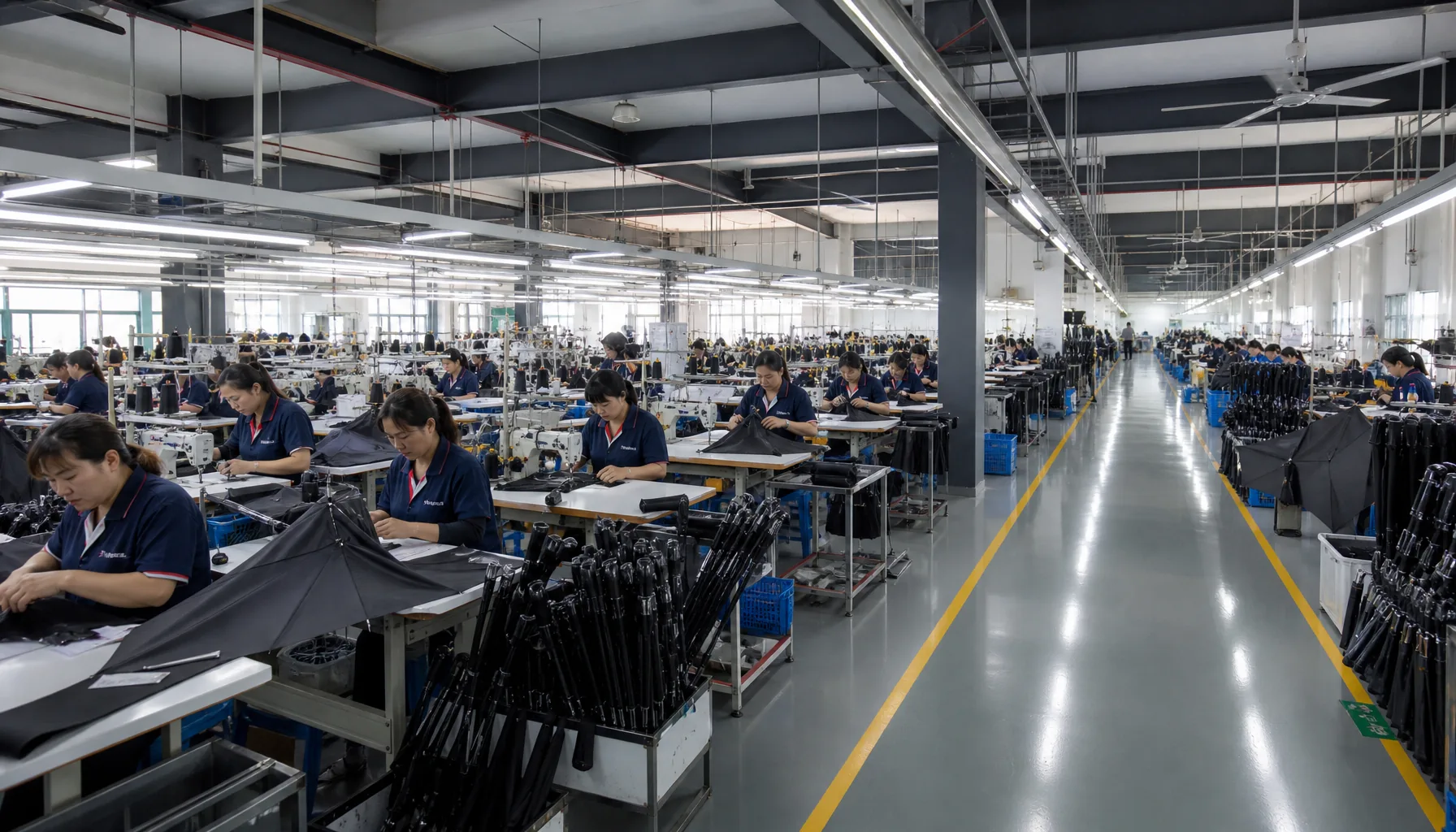
Umbrella Frame Riveting Process Controls for OEM Durability
See how rivet diameter, setting force, washer fit, and in-line pull tests prevent loose ribs, noisy frames, and AQL 2.5 ...
Read More »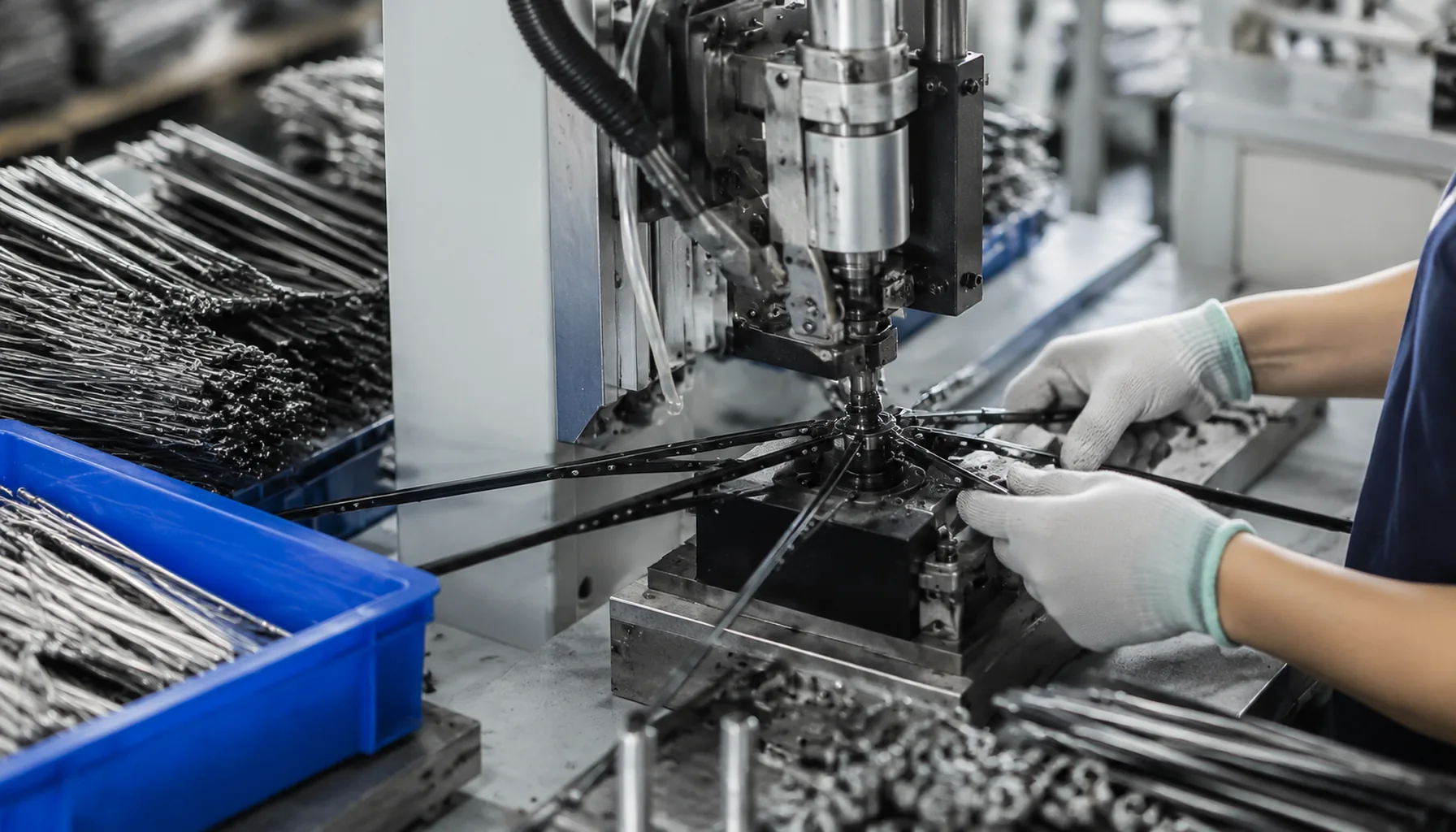
Umbrella Frame Riveting Process for Strong OEM Builds
See how rib riveting, runner assembly, and in-line pull checks improve umbrella frame strength before final canopy mount...
Read More »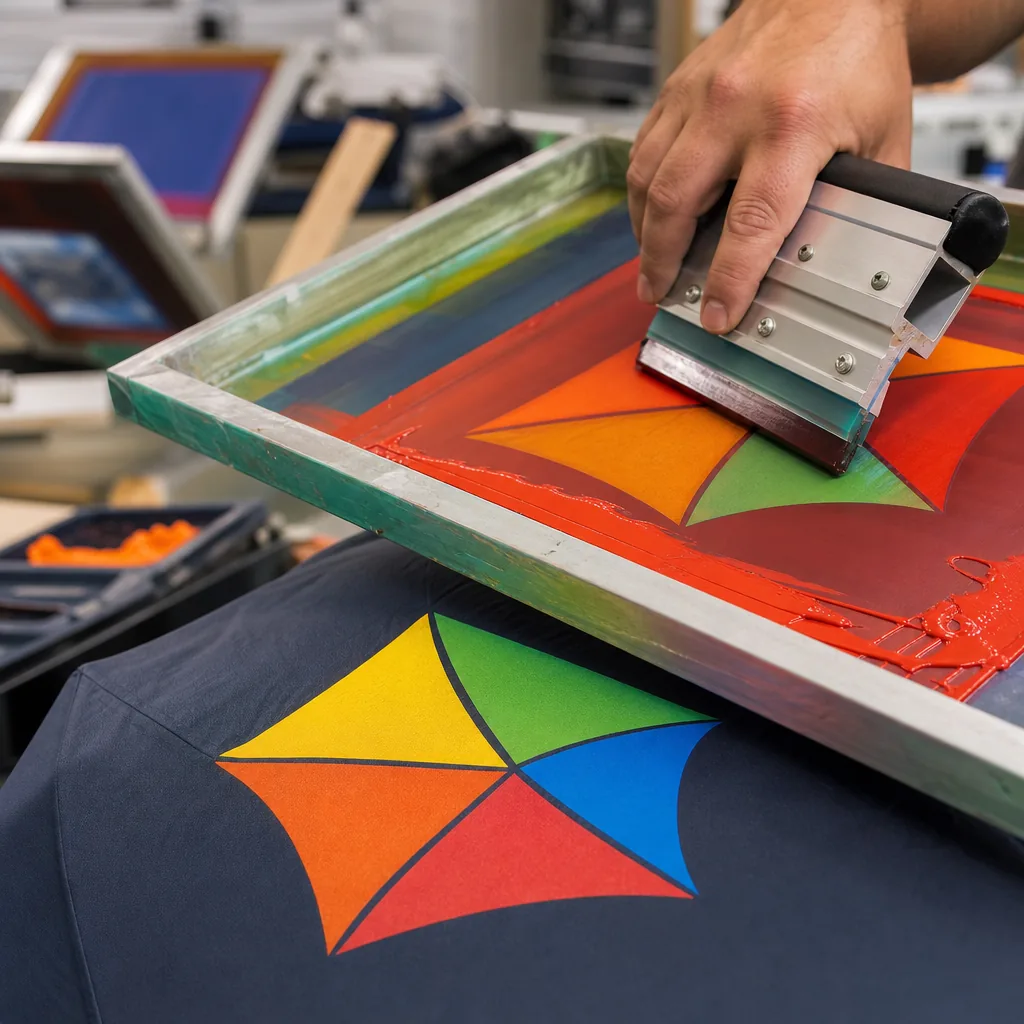
Umbrella Frame Riveting Process for Durable OEM Orders
See how rivet specs, hole tolerance, and pull-force checks keep 8K and 16K umbrella frames consistent before AQL inspect...
Read More »